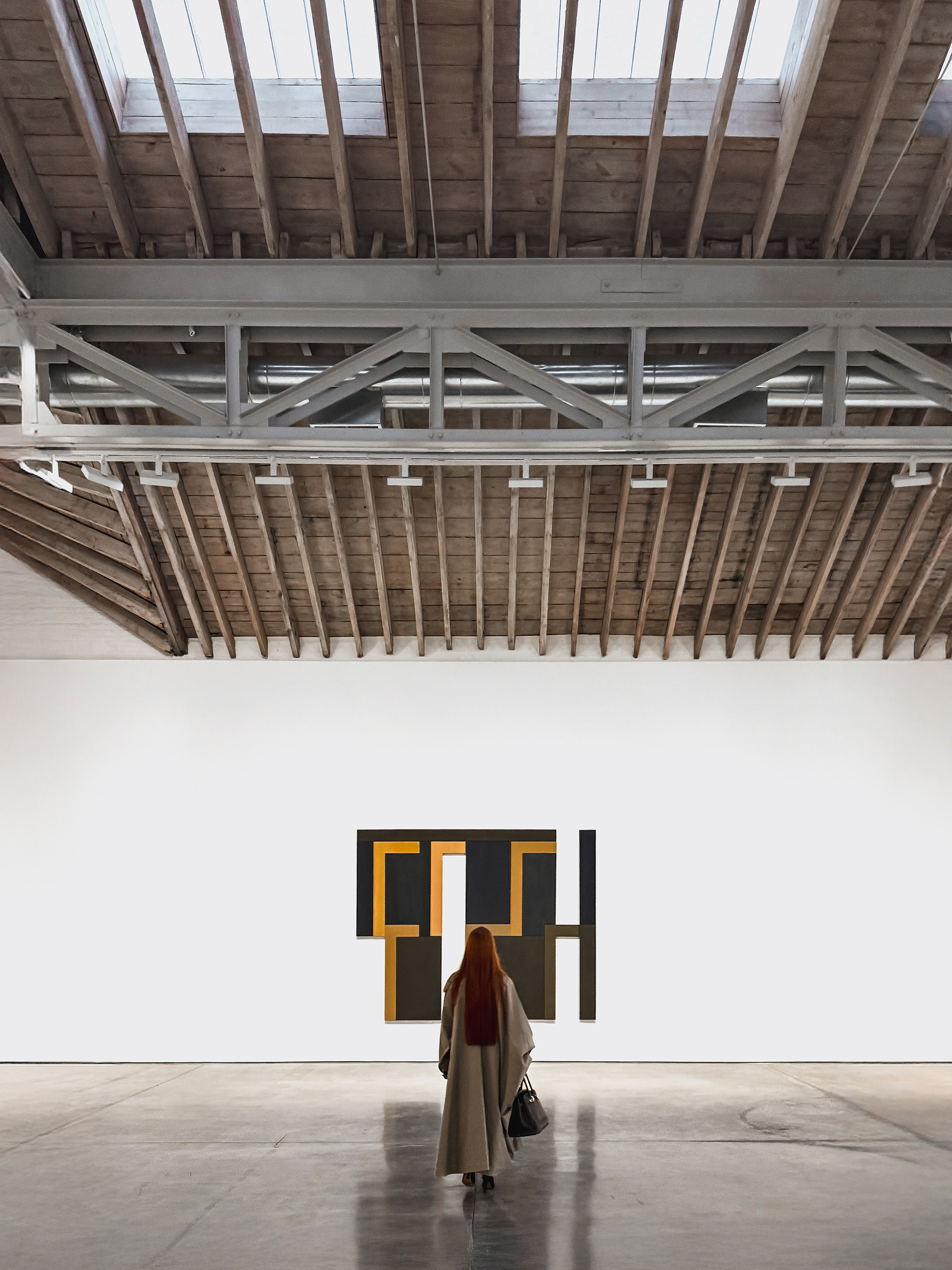
About

Quiet Modernism is a framework for structural discovery.

Quiet Modernism is a discovery engine built on structure.
It brings forward artists and works through proportion, perception, and material clarity — not market, medium, or trend.

It identifies the decisions that shape form and the relations they create.
The system is held by three instruments: Atlas, Observatory, and Taxonomy.

Together, they define a coherent method for seeing.

Quiet Modernism organizes work by structural intelligence — the logic that determines how a form holds, how it relates, and how clarity is built.
The system is trained on structural decisions, allowing it to recognize coherence rather than style.

It maps practices through proportion, spatial order, material behavior, and atmospheric presence.

A living index — a structural discovery system that allows works and ideas to be encountered relationally over time.

Field notes from the Atlas — rhythmic optical structure built through repeated bands. Lee Seung-Jio, Courtesy Tina Kim Gallery.
Field notes from the Atlas — proportion, pressure, and spatial clarity in modular form. Donald Judd, Untitled. Courtesy Dia Art Foundation.

About the Founder

Quiet Modernism was founded by Svetlana Zueva.
Her research focuses on how form is built — how material pressure, spatial alignment, and surface conditions create clarity and atmosphere.

Before Quiet Modernism was formalized, it developed as a structural way of seeing:
a method for reading coherence across art, architecture, and design through decisions rather than style.

As founder and architect of Quiet Modernism, she defines the system’s lens — how structural decisions shape perception and how meaning emerges through clarity and restraint.