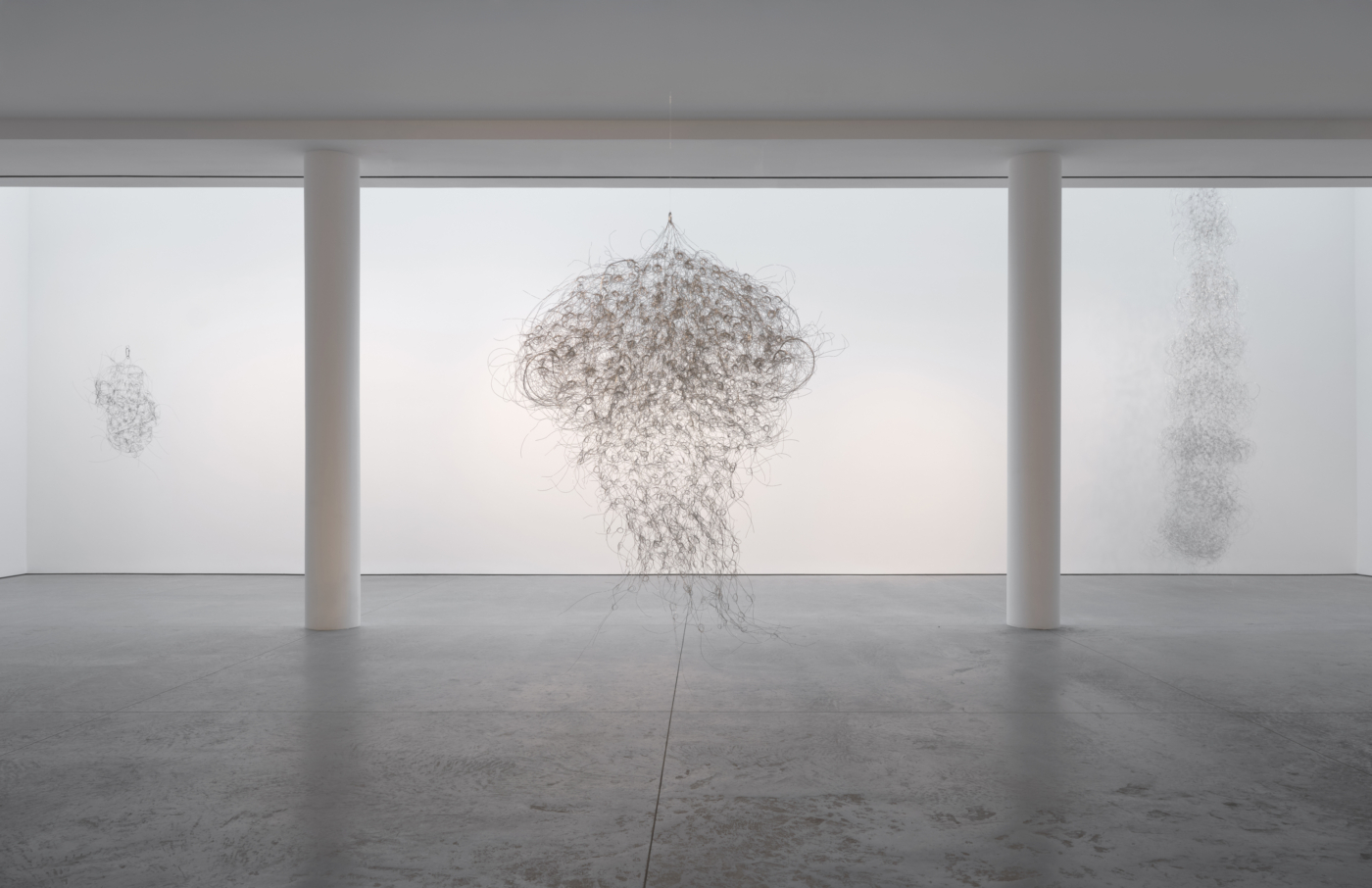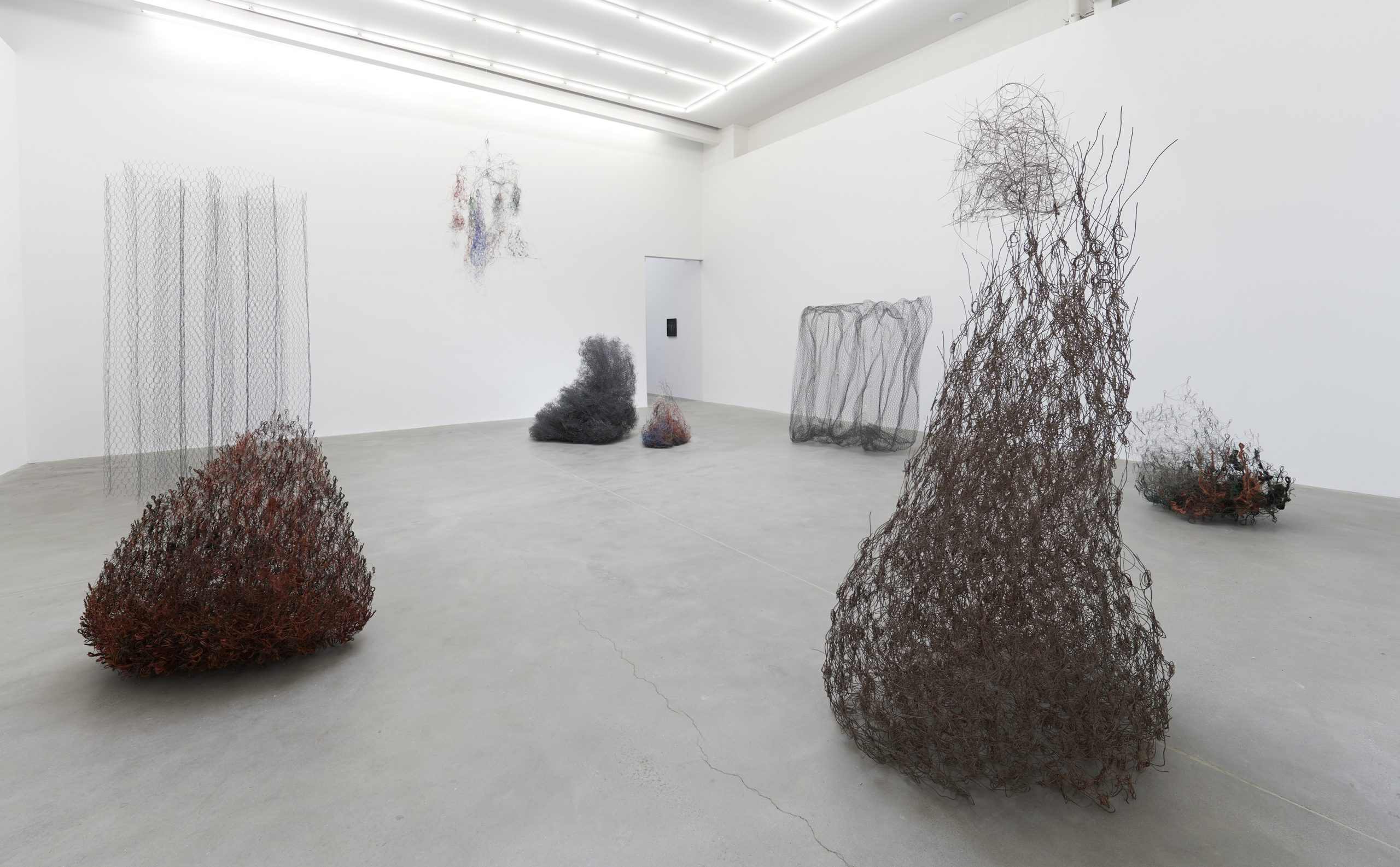
Alan Saret is an American artist associated with postminimal and process-based sculpture. Working with industrial materials such as wire mesh and metal rods, he developed forms that seem simultaneously improvised and precise, occupying space as clouds, knots, or open frameworks.
In the late 1960s and 1970s, Saret began creating wire “drawings in space” by bending, twisting, and looping metal into dense yet permeable volumes. These works hang from ceilings, lean against walls, or rest lightly on the floor, registering gravity and placement without asserting heavy mass.
The structures are neither fully controlled nor chaotic. Saret establishes initial conditions—lengths of wire, points of attachment—and then allows material behavior to shape the final form. This process-based approach aligns him with contemporaries in postminimal art, yet his works maintain a distinctive intimacy and delicacy.
Alongside sculpture, Saret has produced drawings and architectural studies that explore similar concerns with line, enclosure, and spatial flow. His interest in systems and spiritual traditions has informed installations and environments made outside conventional gallery settings.
Over time, Saret has cultivated a practice that resists monumentalism, favoring works that remain open, adaptable, and attuned to the spaces they occupy. The pieces invite close looking, revealing intricate paths and knots within apparently loose arrangements.
Alan Saret is an American artist known for postminimal sculptures made from twisted wire and industrial materials, which explore process, gravity, and spatial drawing. His work has been exhibited internationally and is included in major museum collections.
Alan Saret is an American artist known for postminimal sculptures made from twisted wire and other industrial materials. His works behave like drawings in space, exploring process, gravity, and porous structure.