

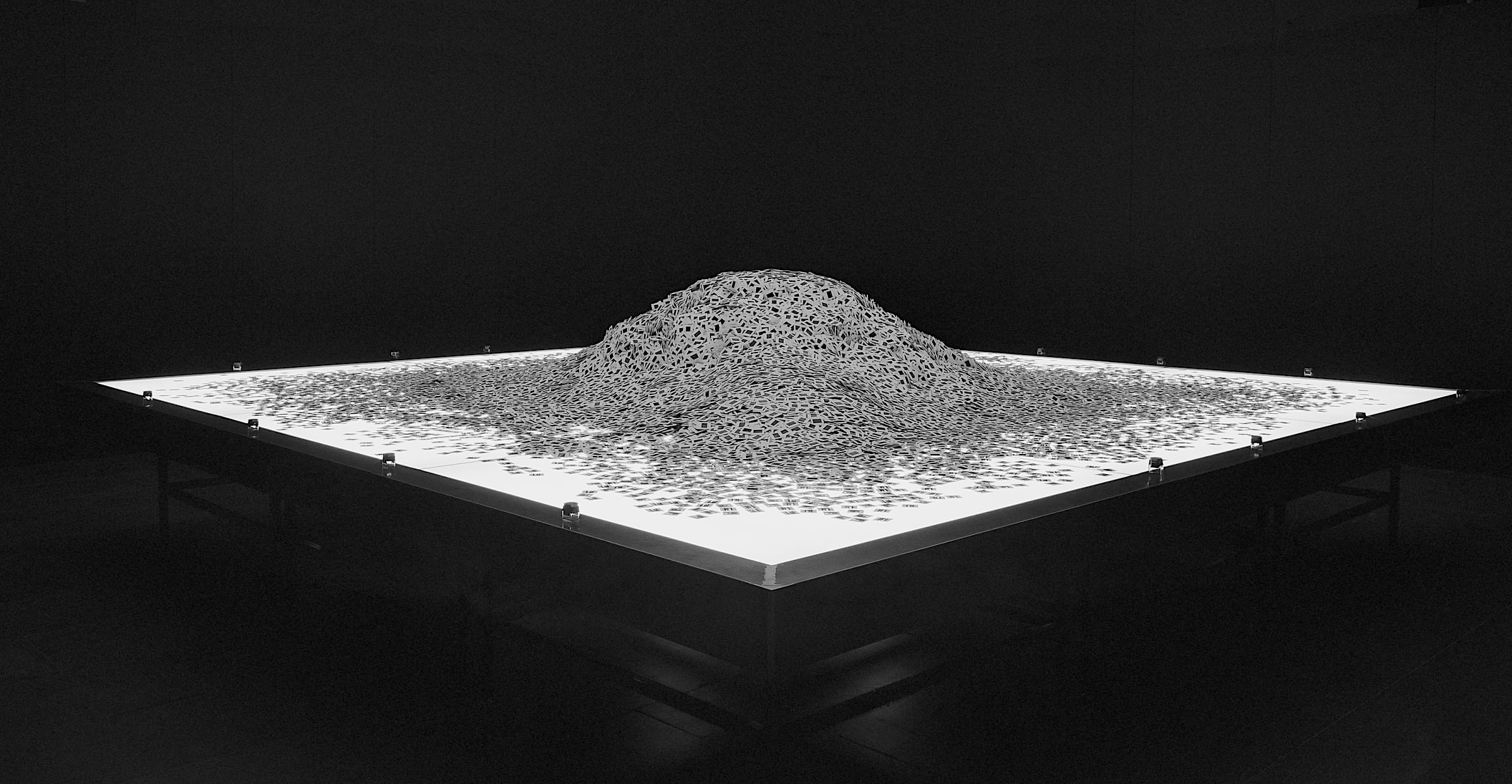
Alfredo Jaar is a Chilean-born artist, architect, and filmmaker whose work addresses political violence, media representation, and the ethics of looking. He often uses photographs, text, and constructed environments to examine how certain events are made visible or kept invisible.
Trained in architecture, Jaar approaches installations as carefully sequenced spaces. Viewers move through darkened rooms, encounter fragments of information, or confront single images held at deliberate distance. Light is used as both material and metaphor—illuminating, blinding, or withholding in ways that echo the subjects he addresses.
Many projects focus on specific situations: the Rwandan genocide, dictatorship in Chile, migration, or working conditions in globalized economies. Jaar researches these contexts extensively, then distills them into works that avoid spectacle, aiming instead for a concentrated, reflective encounter.
Often, the core image in a piece is withheld until late in the experience or is described rather than shown. This strategy emphasizes the gap between event and representation, asking what it means to see or not see distant suffering. Typography, statistics, and archival material are integrated into spatial structures that feel at once documentary and poetic.
Over several decades, Jaar has realized projects in museums, public spaces, and temporary sites around the world, maintaining a consistent interest in how art can intervene—carefully and critically—in the circuits of information that shape political memory.
Alfredo Jaar is a Chilean-born artist known for installations, photographs, and public projects that examine political violence, media representation, and the ethics of witnessing. His work has been exhibited extensively and is included in major international collections.
Alfredo Jaar is a Chilean-born artist, architect, and filmmaker whose installations and public works explore political violence, media representation, and the act of witnessing. Using light, text, and carefully sequenced spaces, he examines how images of conflict and power circulate.
