

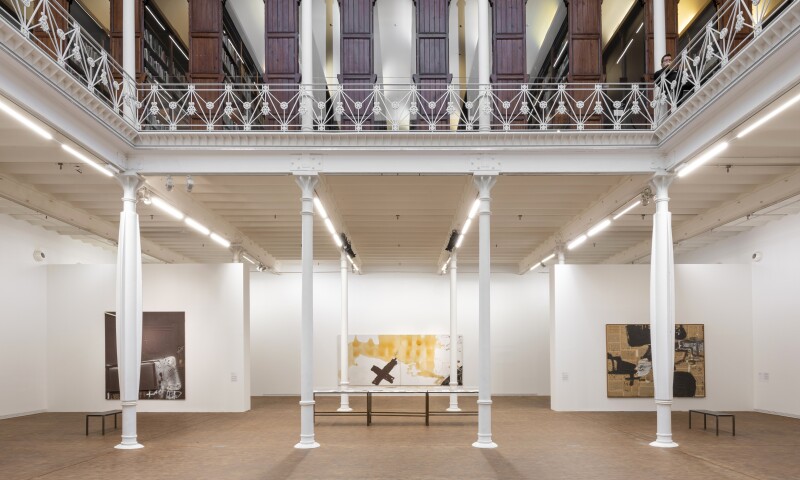
Antoni Tàpies was a Catalan painter and sculptor whose work integrates material texture, symbolic marks, and meditative abstraction. Emerging in the postwar period, he developed a vocabulary of rough surfaces—sand, dust, marble dust, and other aggregates mixed into paint—producing works that feel archaeological or architectural.
Tàpies treated the canvas as a site of inscription. Scratches, crosses, graffiti-like signs, and written fragments appear across thick, tactile surfaces. These marks suggest both personal iconography and universal signs, grounding the work in a dialogue between body, mind, and matter.
His interest in Zen Buddhism, Catalan identity, and everyday material culture shaped his approach. Doors, chairs, ropes, and clothing occasionally appear as sculptural elements, transforming humble objects into carriers of memory and presence.
Over the decades, he produced paintings, assemblages, reliefs, and large-scale sculptural installations. Despite shifts in scale and media, his commitment to material truth and symbolic resonance remained constant.
Tàpies became a central figure in Spanish and European postwar abstraction, receiving international recognition and influencing generations of artists.
Antoni Tàpies was a Catalan artist known for textured surfaces, symbolic marks, and material abstraction. His work merges painting and sculpture through rough, tactile planes that evoke walls, inscriptions, and the passage of time.
Antoni Tàpies was a Catalan painter and sculptor known for textured, tactile surfaces marked by symbolic signs and material abstraction. His works explore matter, memory, and inscription and have been widely exhibited internationally.
