

Atsuko Tanaka was a Japanese artist associated with the Gutai group, known for her pioneering exploration of performance, technology, and abstraction. Her work spans painting, sculpture, and wearable electrical circuits that merge body, color, and machine.
Her celebrated Electric Dress (1956) consists of hundreds of illuminated bulbs and tubes arranged across a wearable structure. The piece flickers with alternating color and rhythm, turning the body into a glowing network of electric signal and vulnerability.
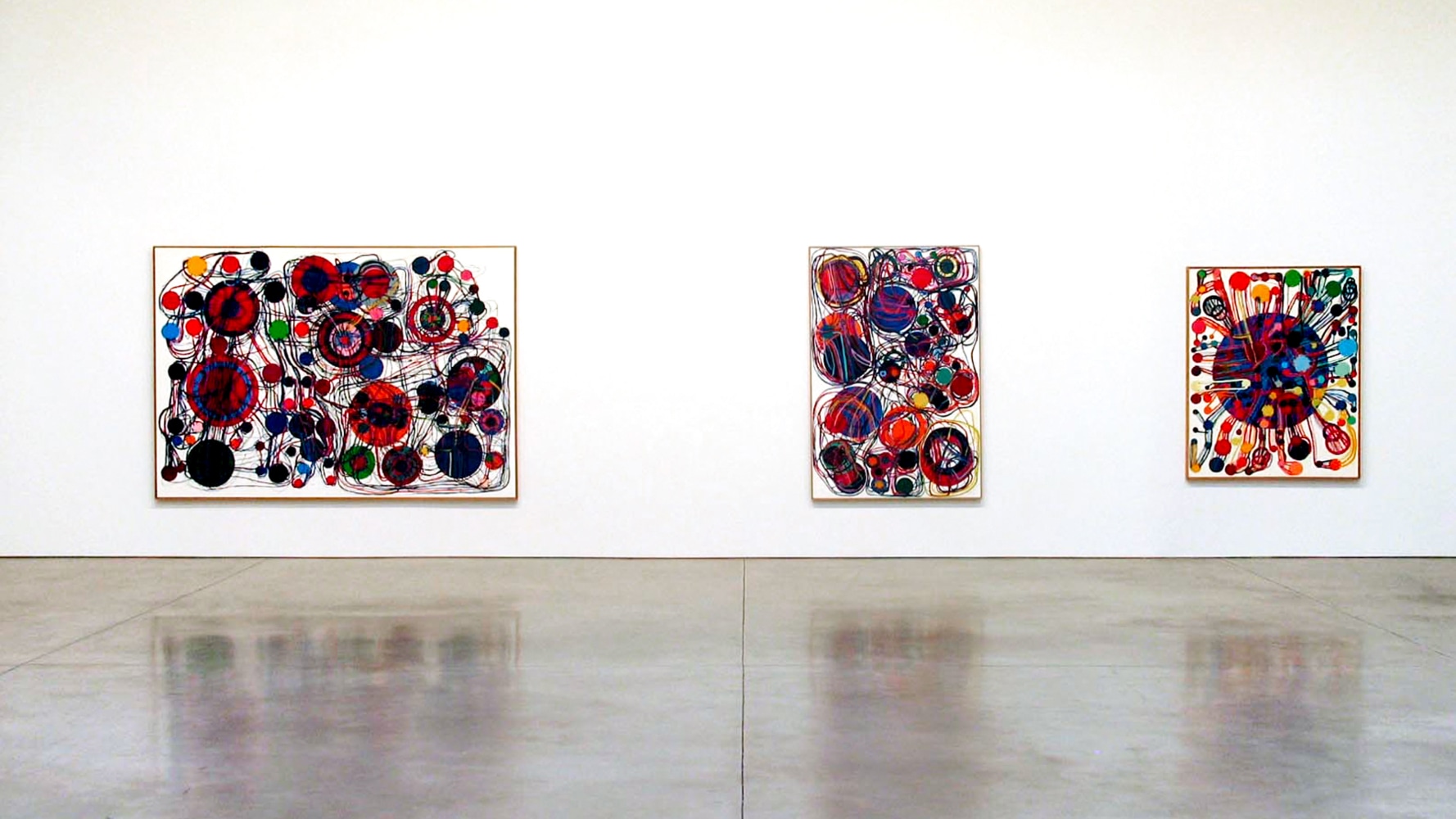
Tanaka’s paintings and diagrams extend this logic. Concentric circles, branching lines, and looping pathways appear across brightly colored surfaces, resembling wiring diagrams or signal maps. The forms suggest connectivity, repetition, and flow rather than static composition.
Throughout her career, she balanced experimental gestures with visual clarity. Even the most complex networks retain a sense of order, revealing how dynamic systems can be rendered accessible through rhythm and color.
As part of Gutai, she participated in performances and outdoor exhibitions, engaging with material transformation, process, and the visibility of action.
Atsuko Tanaka was a Japanese artist known for integrating electricity, performance, and abstraction, most famously in her Electric Dress and her diagrammatic, vibrantly colored paintings. Her work is held in major international collections.
Atsuko Tanaka was a Japanese Gutai artist known for Electric Dress and for abstract paintings that use circles and lines to evoke electrical circuits, rhythm, and connectivity.
