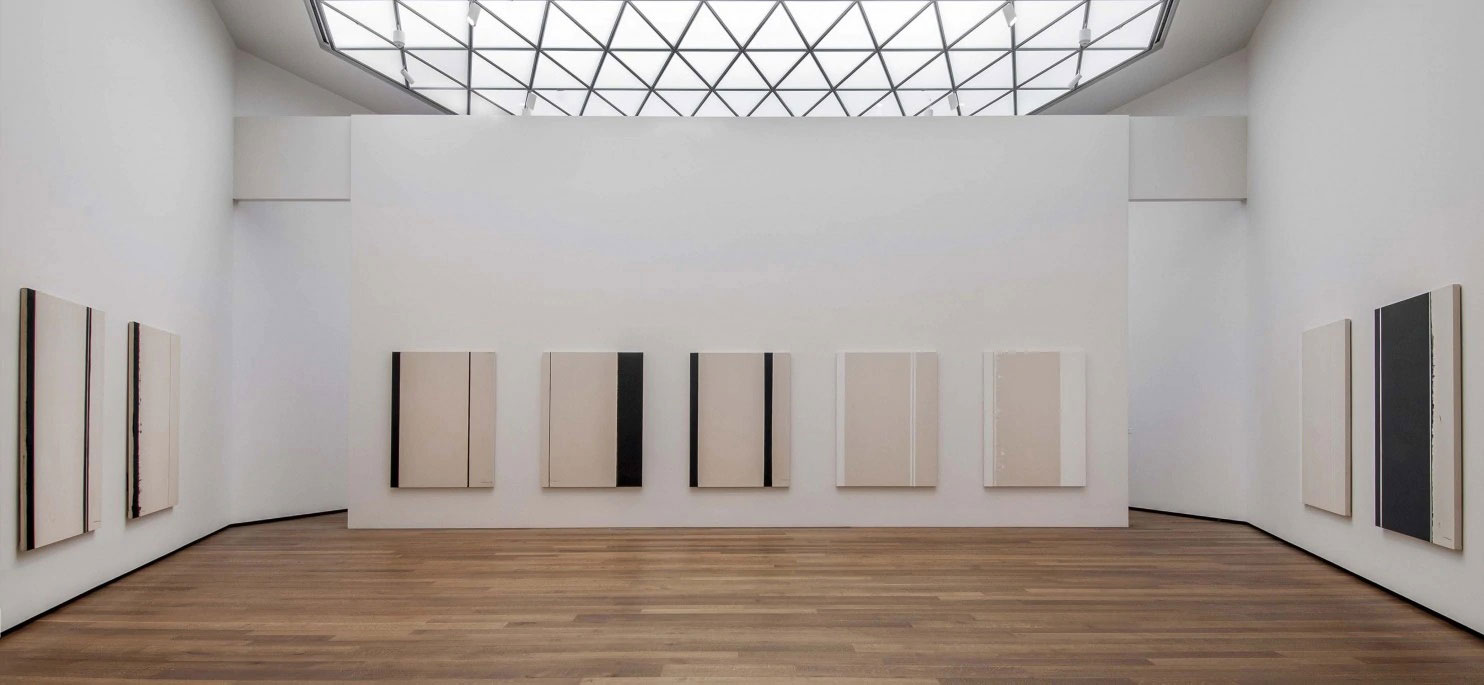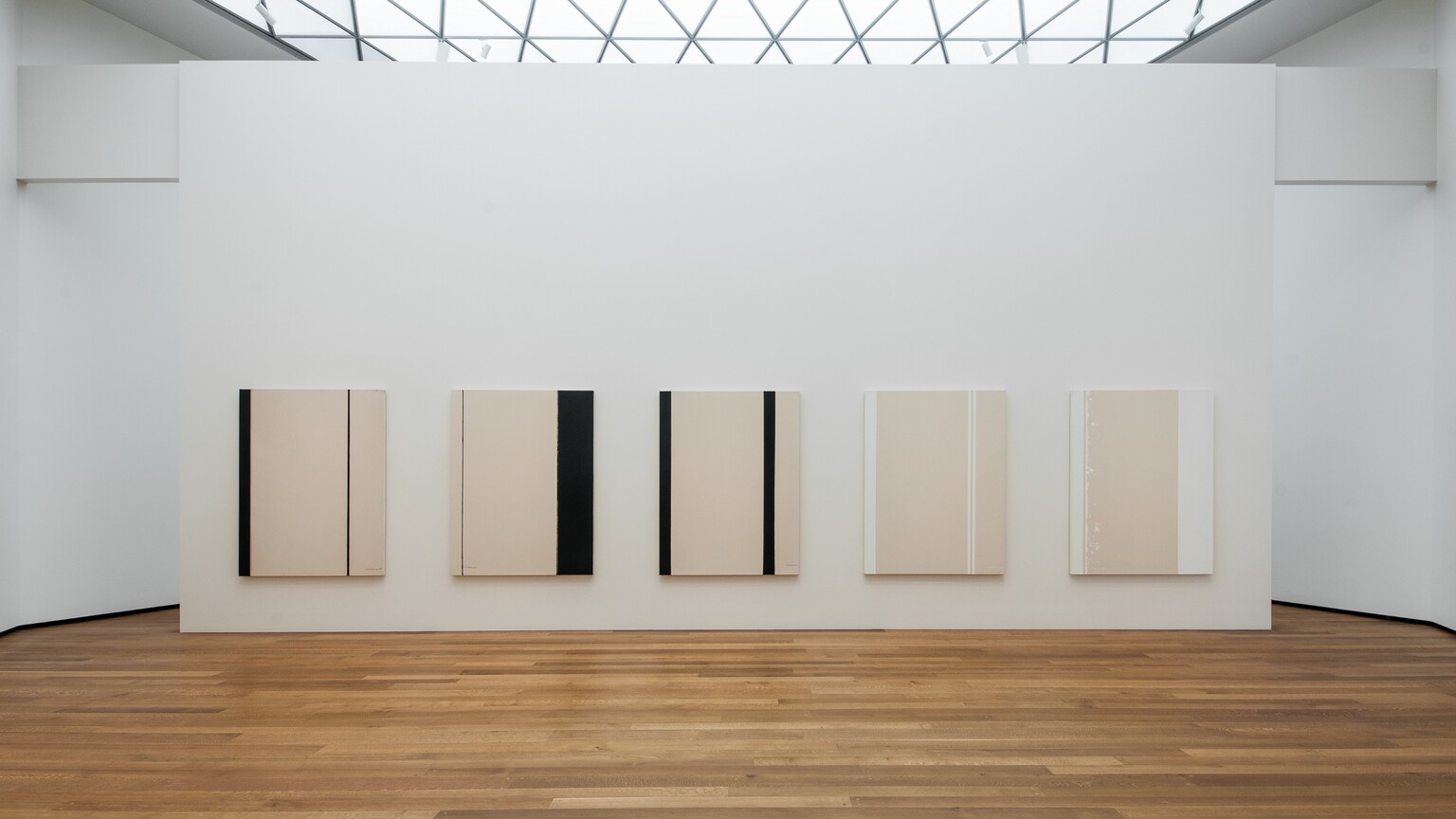
Barnett Newman was an American painter associated with Abstract Expressionism, though his work stands apart for its radical simplicity and conceptual rigor. His mature paintings consist of large, unmodulated color fields interrupted by vertical stripes—“zips”—that create spatial divisions and emotional charge.
Newman saw these works as arenas for existential encounter rather than formal abstraction. The zips act like thresholds or cuts, organizing the canvas while intensifying the experience of its surrounding color. Scale is crucial; many works are human-sized or larger, confronting viewers as environments rather than images.
His early writings and statements articulate a desire to move beyond European modernism toward a new beginning in art—one grounded in the sublime, the immediate, and the present.
Although initially controversial, Newman’s paintings later became central to discussions of minimalism, color field painting, and conceptual approaches to scale and perception.
Barnett Newman was an American painter known for large color-field paintings structured by vertical “zips.” His work has had profound influence on minimalism and postwar abstraction.
Barnett Newman was an American painter known for monumental color fields divided by vertical “zips,” shaping space through scale, interval, and simplicity. A key figure in postwar abstraction.