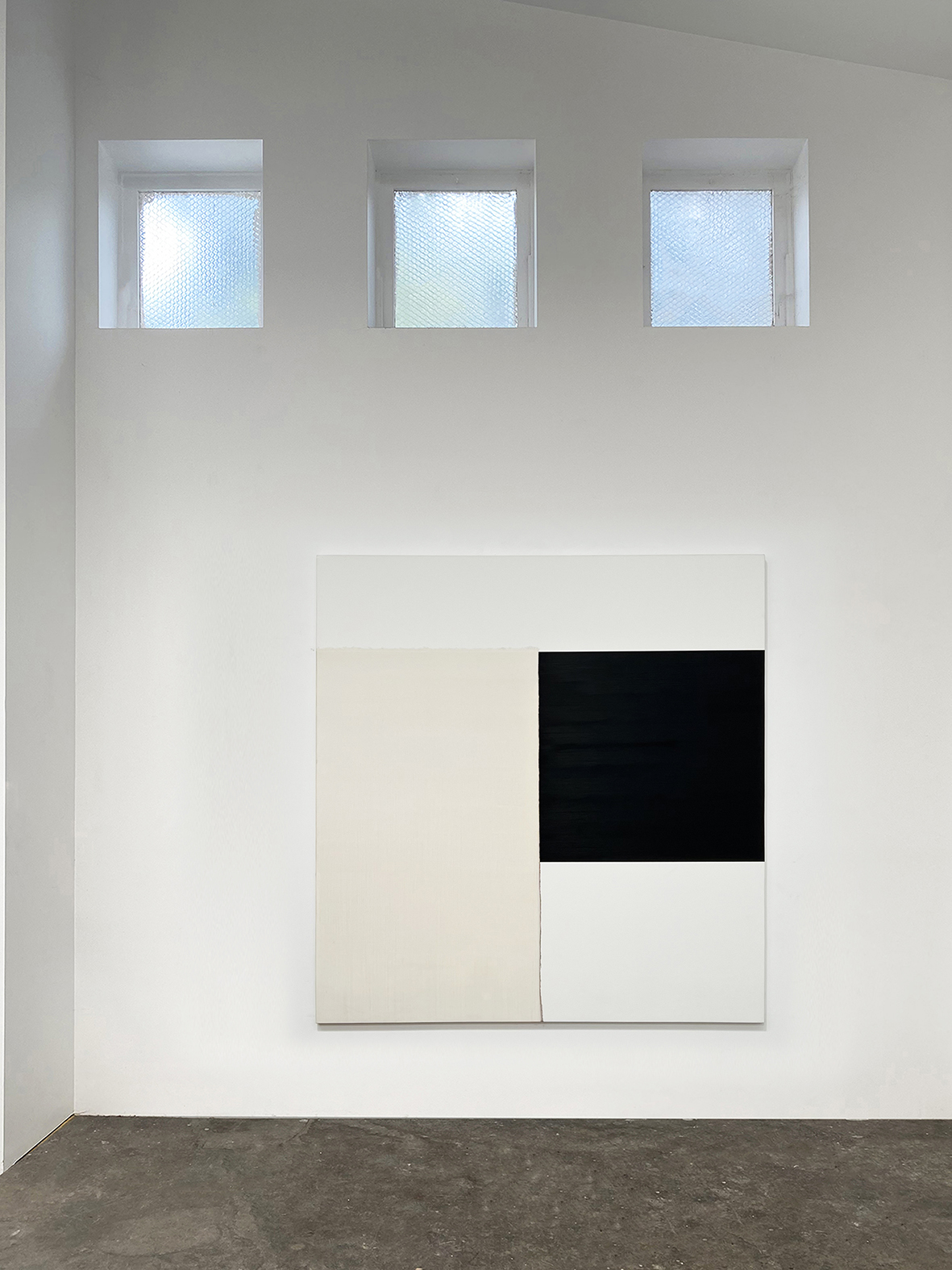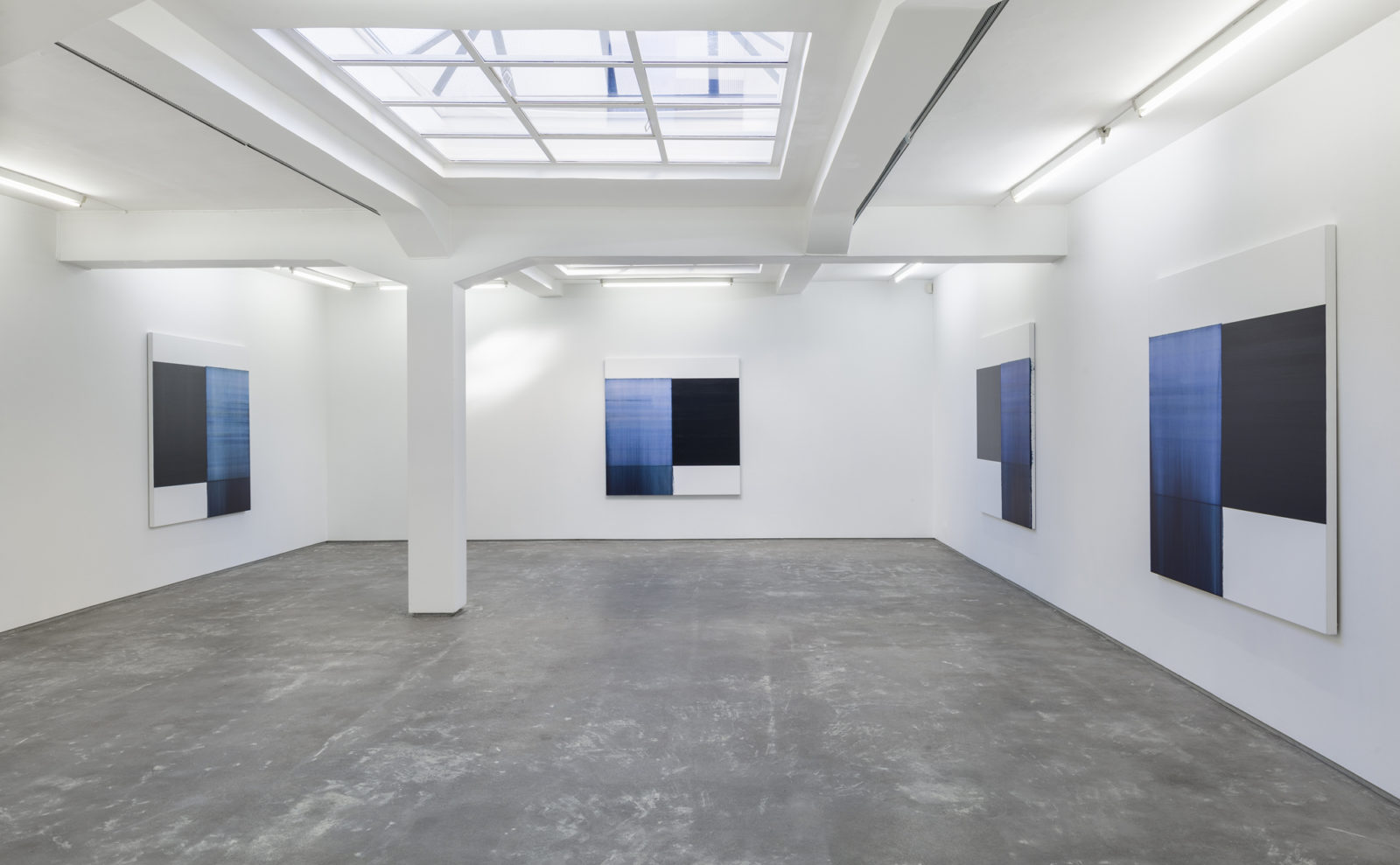
Callum Innes is a Scottish painter associated with a refined form of abstraction that balances addition and removal. His works often begin with monochrome or near-monochrome fields of paint, which he partially dissolves using turpentine, allowing drips and streaks to form.
This process of erasure creates gradients, vertical washes, and exposed underlayers. The contrast between the painted area and the dissolved section becomes the work’s central tension.
Innes repeats these procedures across series—“Exposed Paintings,” “Isolated Forms,” and others—testing how minimal adjustments produce shifts in mood, tone, and proportion.
The resulting surfaces are quiet yet dynamic, carrying the history of both deliberate action and chemical reaction.
Callum Innes is a Scottish painter known for abstract works in which paint is applied and partially removed, creating surfaces defined by erasure, tone, and slow process.
Callum Innes is a Scottish painter known for abstract works built from the interplay of painted fields and dissolved sections, emphasizing erasure, tone, and process.