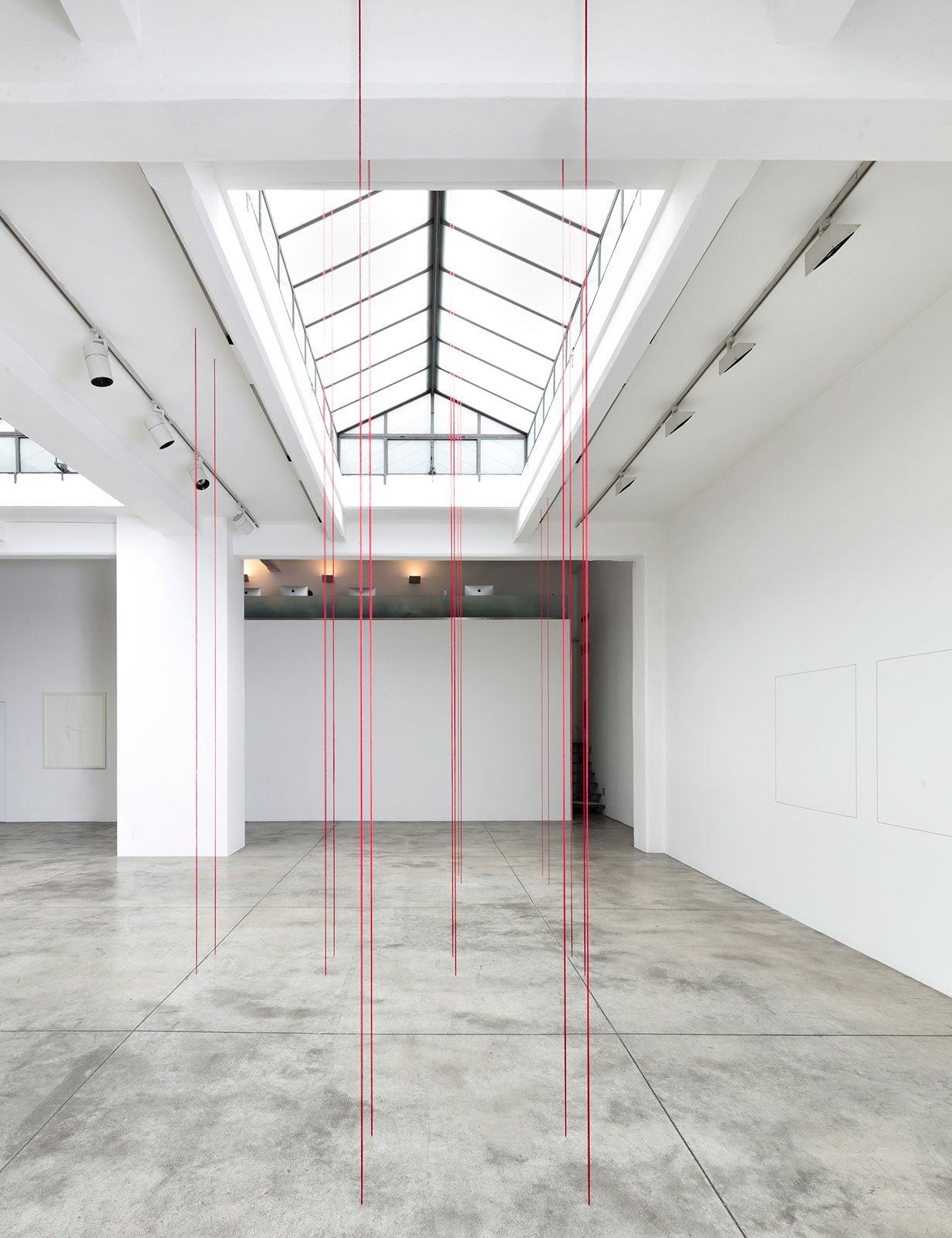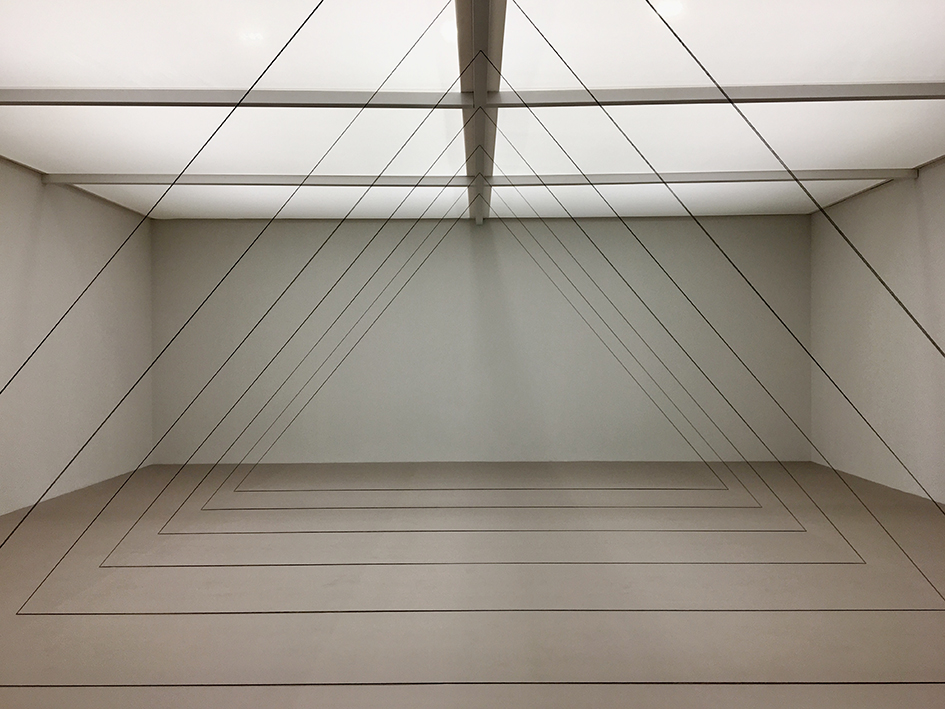
Fred Sandback was an American sculptor whose work redefined the relationship between line, space, and perception. Rejecting mass, surface, and volume, he used taut lengths of colored yarn to mark boundaries within architectural space, allowing viewers to perceive form through suggestion rather than enclosure.
Emerging in the early 1970s, Sandback’s practice positioned sculpture as a form of spatial drawing. Lines stretched across floors, walls, and ceilings delineated cubes, planes, and volumes that were fully legible yet materially absent. The work depended on tension, proportion, and precise placement, requiring the surrounding architecture to complete the form.
Sandback’s installations resist monumentality and spectacle. Their clarity lies in restraint: minimal intervention producing maximal spatial awareness. Color operates quietly, aiding orientation rather than expression. The viewer’s movement activates the work, as perception shifts with angle, distance, and position.
Across several decades, Sandback maintained a consistent vocabulary grounded in reduction and exactitude. His work occupies a critical position between Minimalism and conceptual practice, offering a model of sculpture where space itself becomes the primary material.
Fred Sandback was an American minimalist sculptor known for using colored yarn to define space through line rather than mass. His installations transformed sculpture into spatial drawing, emphasizing perception, proportion, and architectural context. Sandback’s work remains influential in discussions of Minimalism, spatial art, and conceptual sculpture.