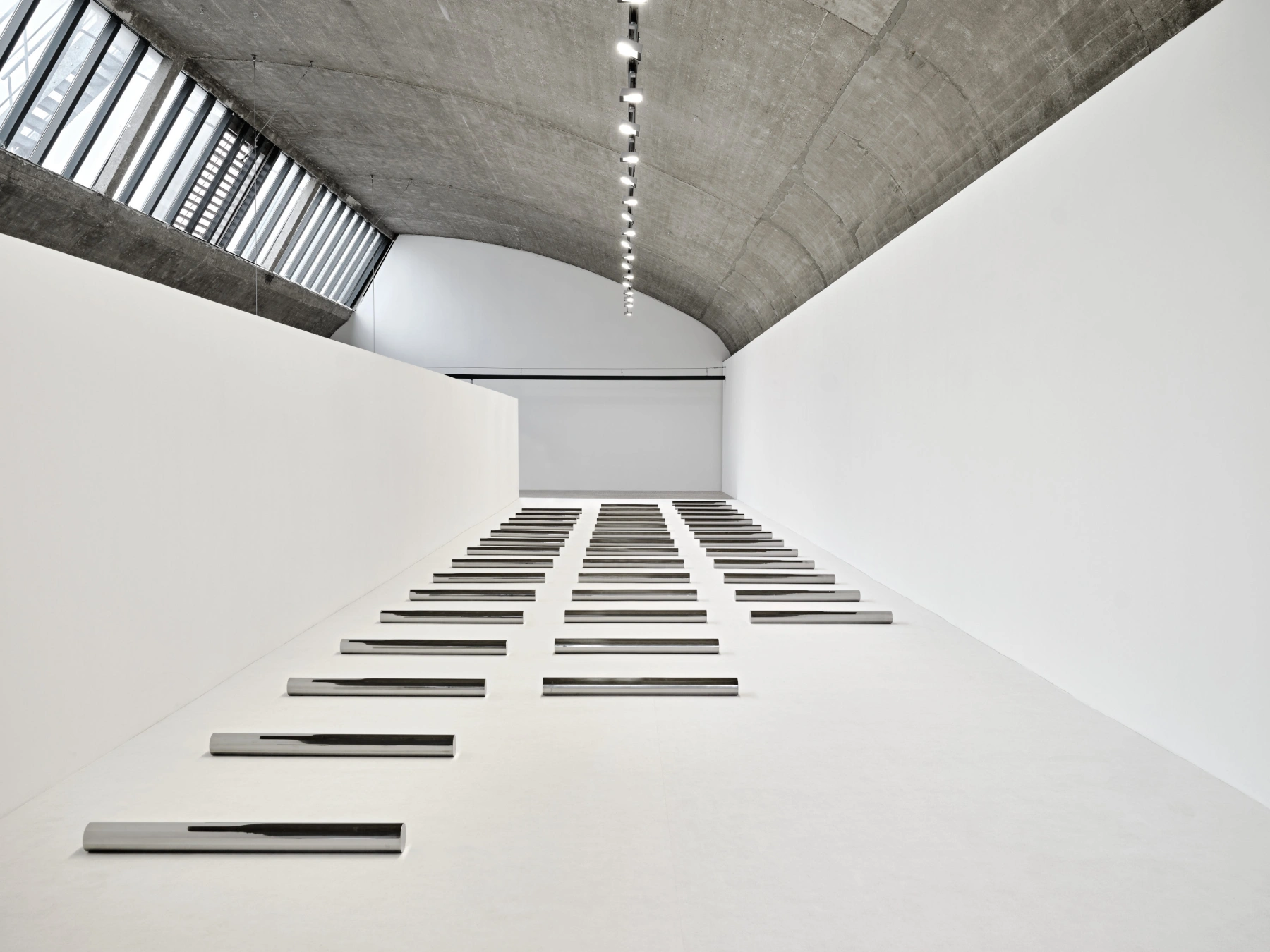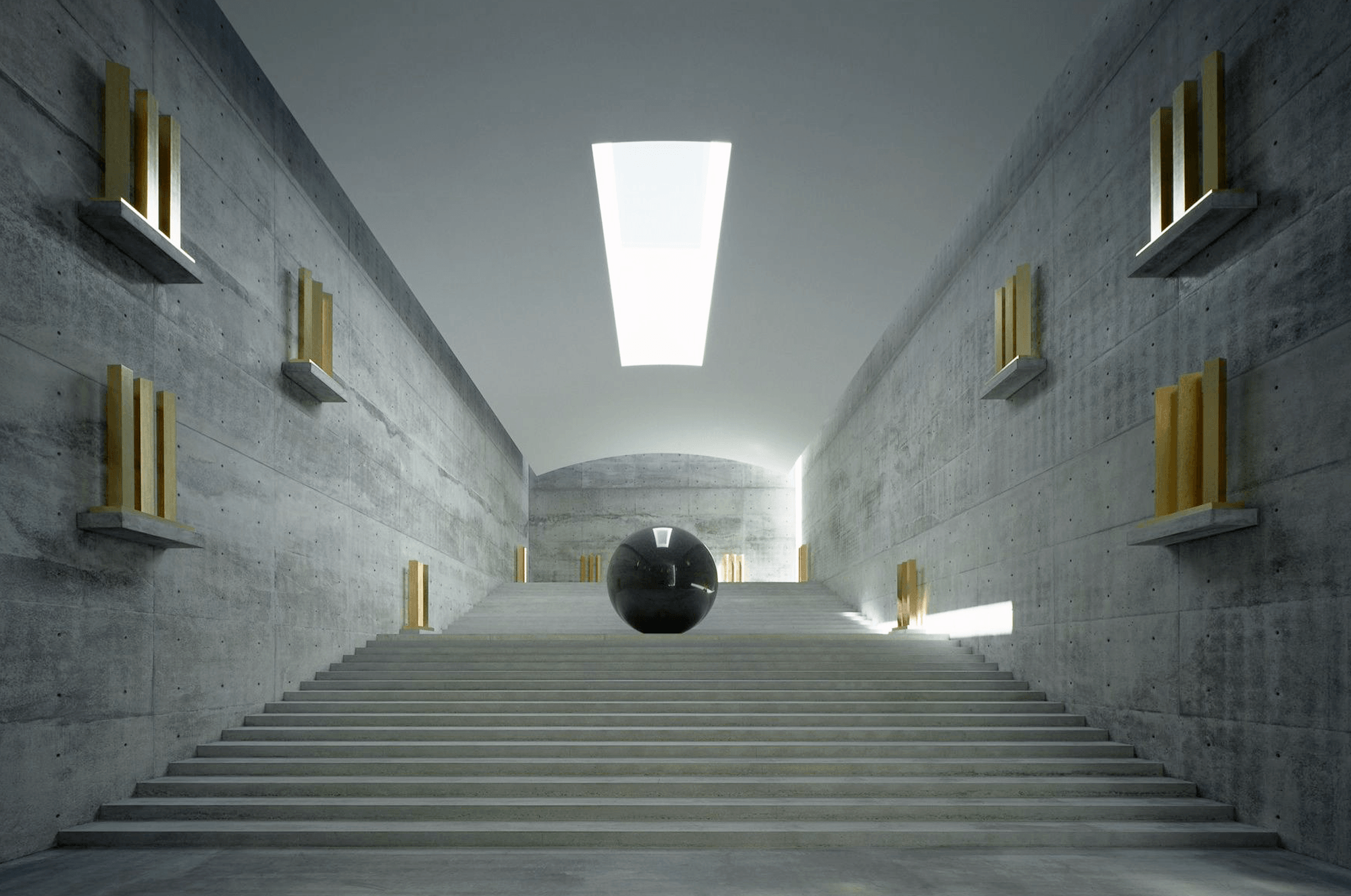
Walter De Maria’s work is organized around the construction of conditions rather than the production of images. Across sculpture, installation, drawing, and film, he reduced artistic decision-making to systems of measurement, interval, and repetition that continue to operate independently of interpretation. Once established, these systems do not respond to attention, explanation, or use; they persist.
De Maria’s practice replaces expression with calibration. Number, length, weight, and duration function not as symbols, but as governing structures that determine how space is occupied and time is registered. The viewer is present, but not centered. Movement activates perception without altering the work’s internal logic.
This approach situates De Maria at the foundation of multiple trajectories—Minimalism, Land Art, and Conceptual practice—without fully belonging to any of them. His work resists narrative, metaphor, and psychological projection, insisting instead on clarity enforced through structure. What remains is not meaning accumulated through interpretation, but form sustained through precise limitation.
De Maria’s legacy lies in demonstrating how art can operate as a system that neither explains itself nor requires explanation, holding its position through exacting restraint.
Walter De Maria is a foundational figure in postwar art whose work redefined how measurement, scale, and repetition operate as structure. Across sculpture, installation, and land-based works, De Maria established systems where number, interval, and duration govern form without recourse to narrative or symbolism. His practice situates clarity itself as a condition, positioning the viewer within calibrated spatial and temporal frameworks that persist independently of interpretation. De Maria’s work remains central to discussions of Minimalism, Land Art, and Conceptual practice, not as style, but as a sustained inquiry into how structure replaces expression.