



Jaiik Lee’s work is often described through material refinement — copper, porcelain color, gold leaf — surfaces brought to a high degree of control. But what holds these objects together is not finish. It is the way each form absorbs adjustment without losing itself.
Across the Transition series, the vessel remains constant. It is not a container in the functional sense, nor a sculptural metaphor in search of narrative. It behaves more like a calibrated body — a shape designed to register pressure and deviation while maintaining coherence.
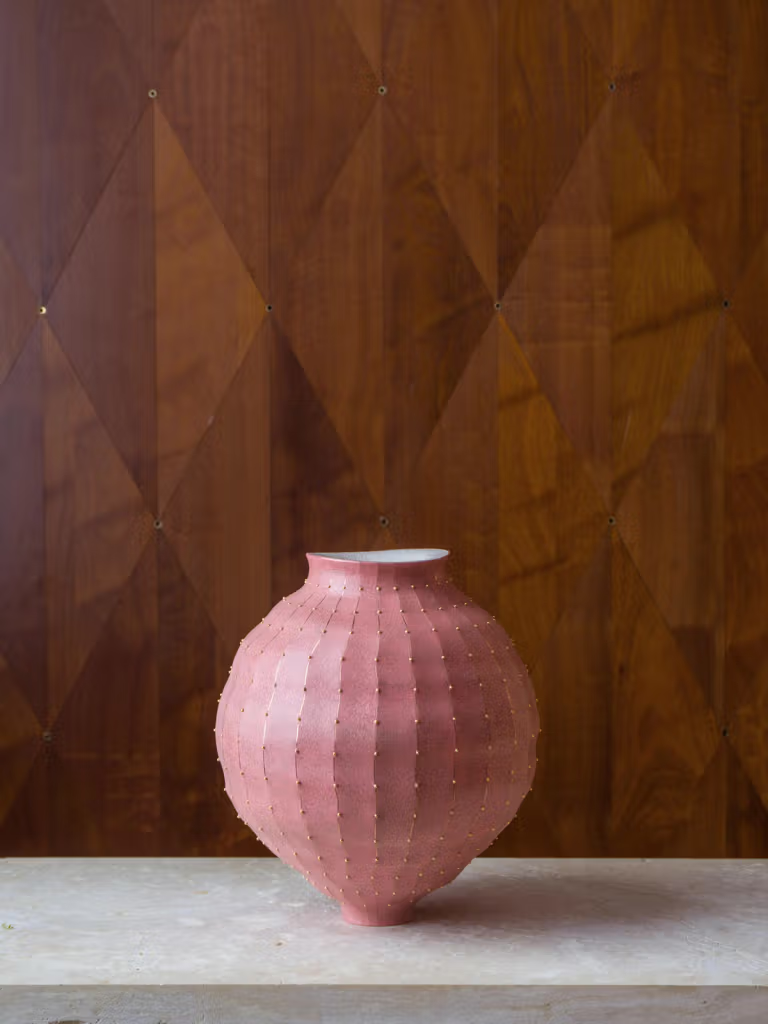
In Transition_Red (2025), vertical seams punctuate the surface at regular intervals. The red is dense, held back rather than displayed. Small brass nodes trace each line, not as ornament but as markers — points where the surface acknowledges change. The form does not open or close. It holds.
In Transition Metamorphosis (2024), the vessel’s profile subtly misaligns. A ridge interrupts the curvature. The shift is perceptible but restrained. Nothing collapses. The form accommodates the interruption without hierarchy. Adjustment becomes structural rather than eventful.
Rather than atmosphere or gesture, these works operate through calibration. Proportion, interval, surface, and deviation are tuned until the object regains equilibrium. The interest lies not in transformation, but in how much alteration the form can register before it would have to become something else.
The refinement here is not about polish. It is about control. Each object holds its position, steady under pressure, without asking for recognition beyond that fact.
In these vessels, change is permitted only along controlled seams. In Transition Metamorphosis (2024), the profile misaligns, but segmentation holds the form together. Color and gold register deviation without allowing it to dominate. Continuity is achieved not by resisting change, but by absorbing it within fixed limits.




1. Jaiik Lee, Transition IX, 2024. Copper, porcelain color, gold leaf, 23 3/8 × 21 5/8 × 21 5/8 inches (59.3 × 54.8 × 54.8 cm).
2. Jaiik Lee, Transition_Red, 2025. Copper, porcelain color, 18 1/8 × 16 7/8 × 16 7/8 inches (45.9 × 42.8 × 42.8 cm).
3. Jaiik Lee, Transition IX, 2024. Copper, porcelain color, gold leaf, 23 3/8 × 21 5/8 × 21 5/8 inches (59.3 × 54.8 × 54.8 cm).
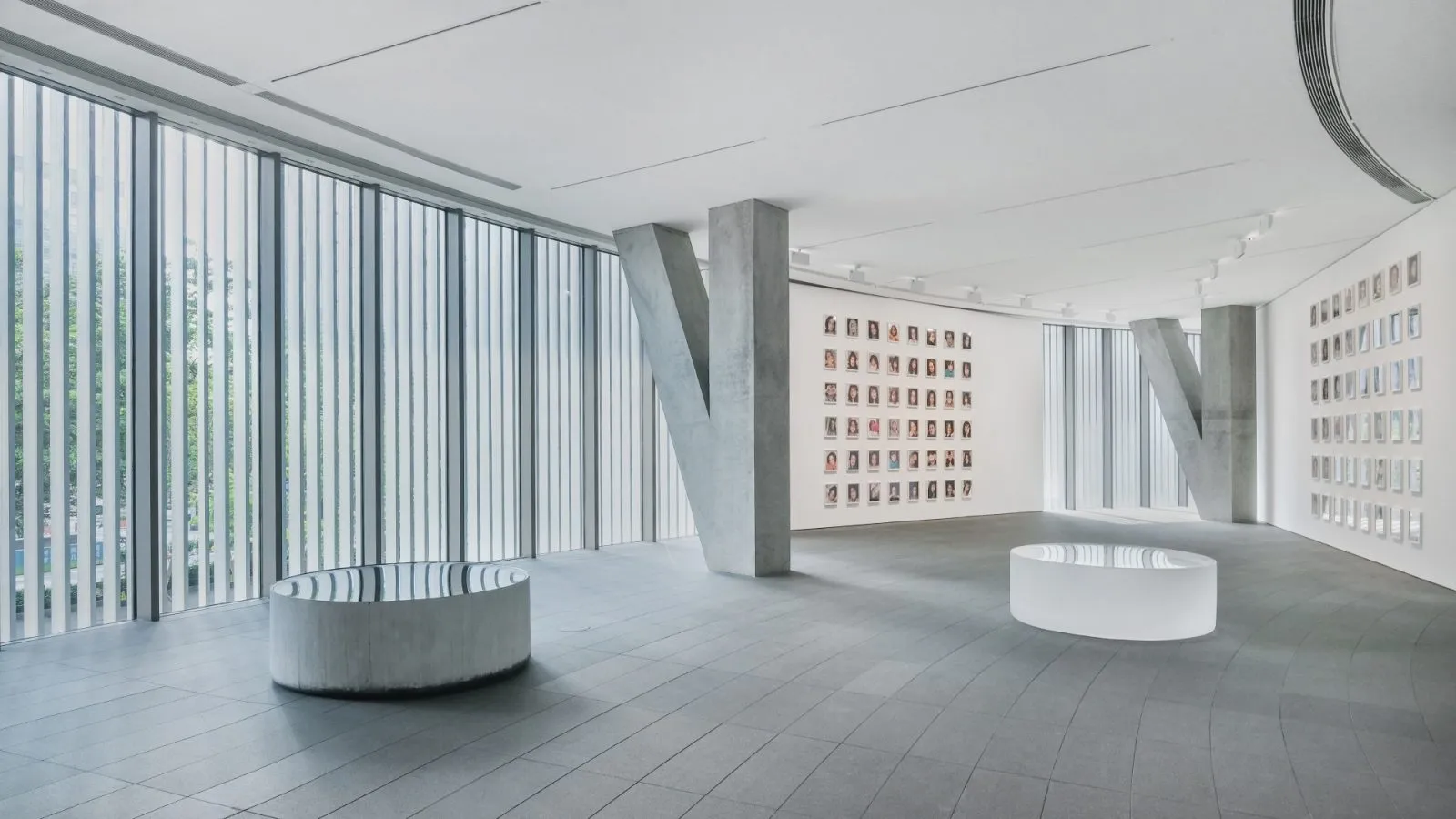
4. Installation view: Jaiik Lee, Still In Flux, Salon 94, New York, 2026.
5. Installation view: Jaiik Lee, Still In Flux, Salon 94, New York, 2026.
6. Jaiik Lee, Transition Metamorphosis, 2024. Copper, gold leaf, porcelain color, 15 3/4 × 14 1/2 × 14 1/2 inches (40 × 36.8 × 36.8 cm).
7. Jaiik Lee, Transition Cora, 2024. Copper, porcelain color, gold leaf, 17 3/8 × 15 3/8 × 15 3/8 inches (44 × 39.2 × 39.2 cm).
8. Jaiik Lee, Transition Metamorphosis, 2024. Copper, gold leaf, porcelain color, 19 1/2 × 19 1/2 × 17 7/8 inches (49.6 × 49.6 × 45.4 cm).
9. Jaiik Lee, Transition Metamorphosis, 2024. Copper, gold leaf, porcelain color, 19 1/2 × 19 1/2 × 17 7/8 inches (49.6 × 49.6 × 45.4 cm).
10. Installation view: Jaiik Lee, Still In Flux, Salon 94, New York, 2026.
11. Jaiik Lee, Transition_Iungo, 2025. Copper, porcelain color, 20 3/4 × 11 1/2 × 11 3/4 inches (52.6 × 29.3 × 30 cm).
All images © their respective rights holders.
Image rights & attribution →