



Josef Albers’s work is most often approached through perception — color relativity, optical effect, the training of the eye. That language is accurate, but it describes effect more than operation.
Here, perception is not being trained. It is being held in comparison.
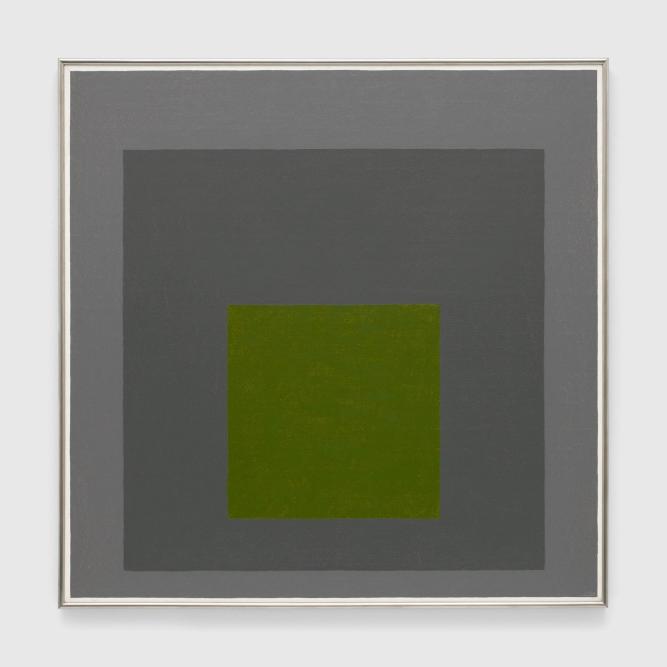
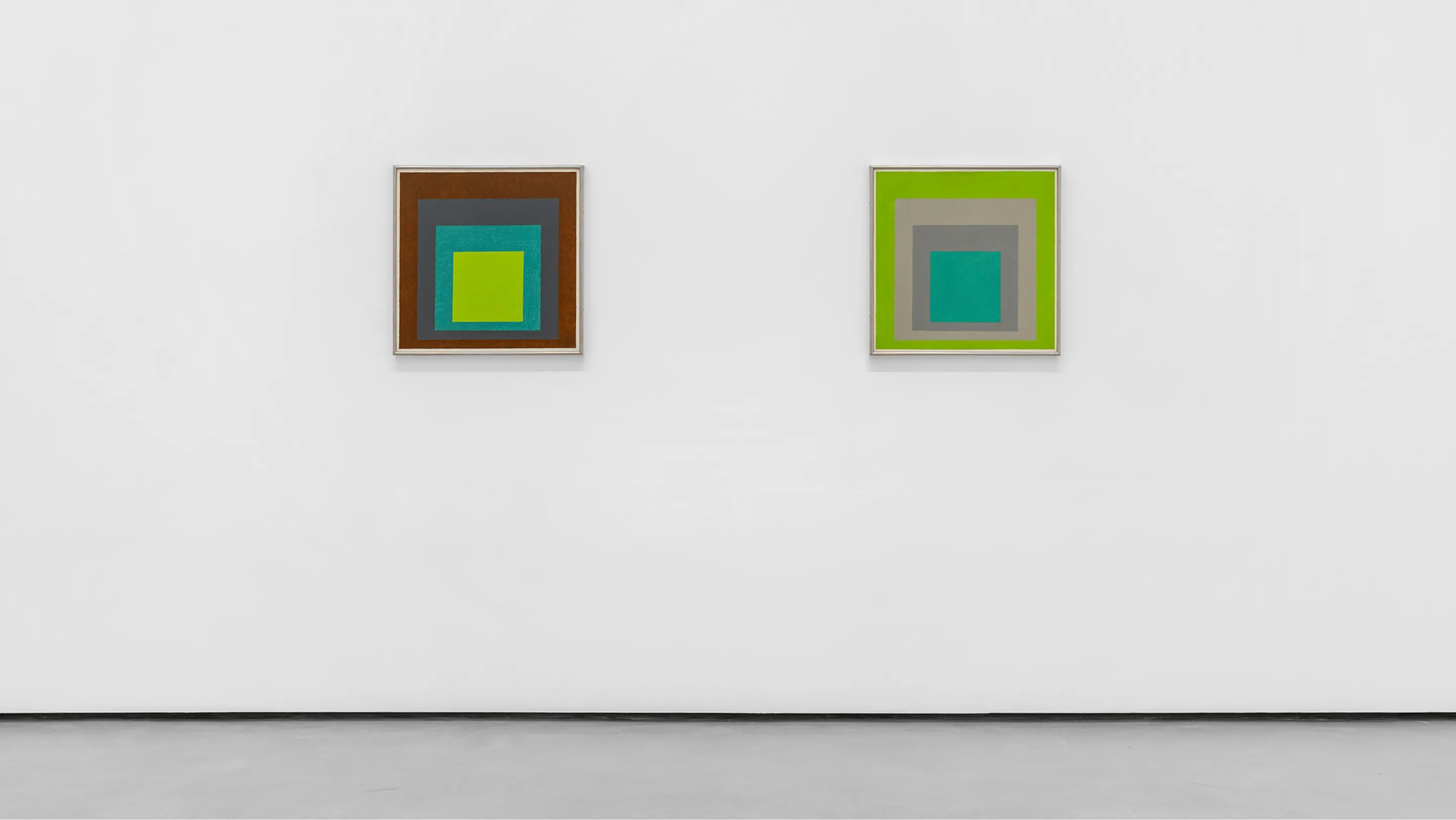
Across the exhibition, the Homage to the Square works do not function as images that resolve through looking. They function as comparison engines. Each painting sustains multiple color states at once, none of which settles into dominance. Difference is present, but it is never ranked.
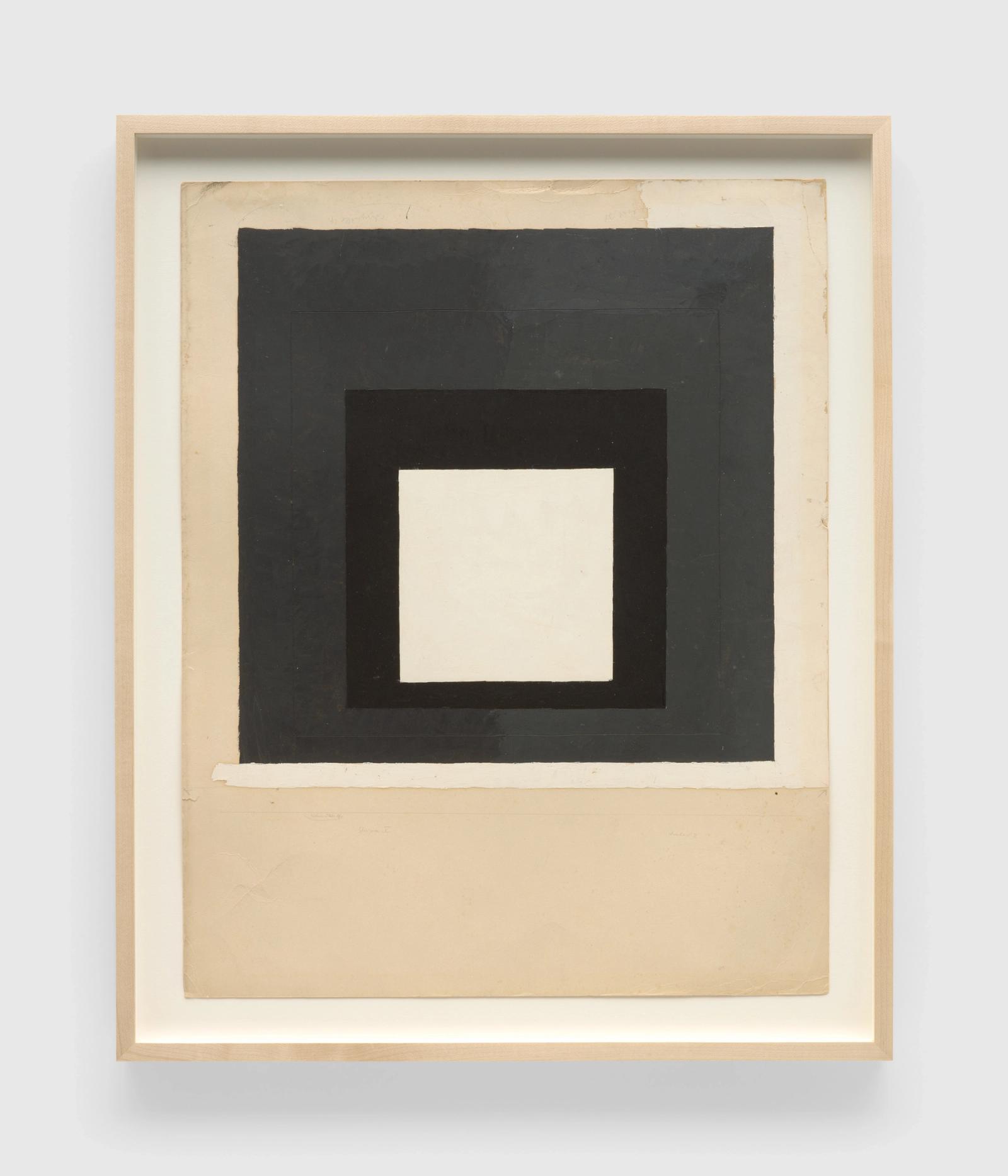
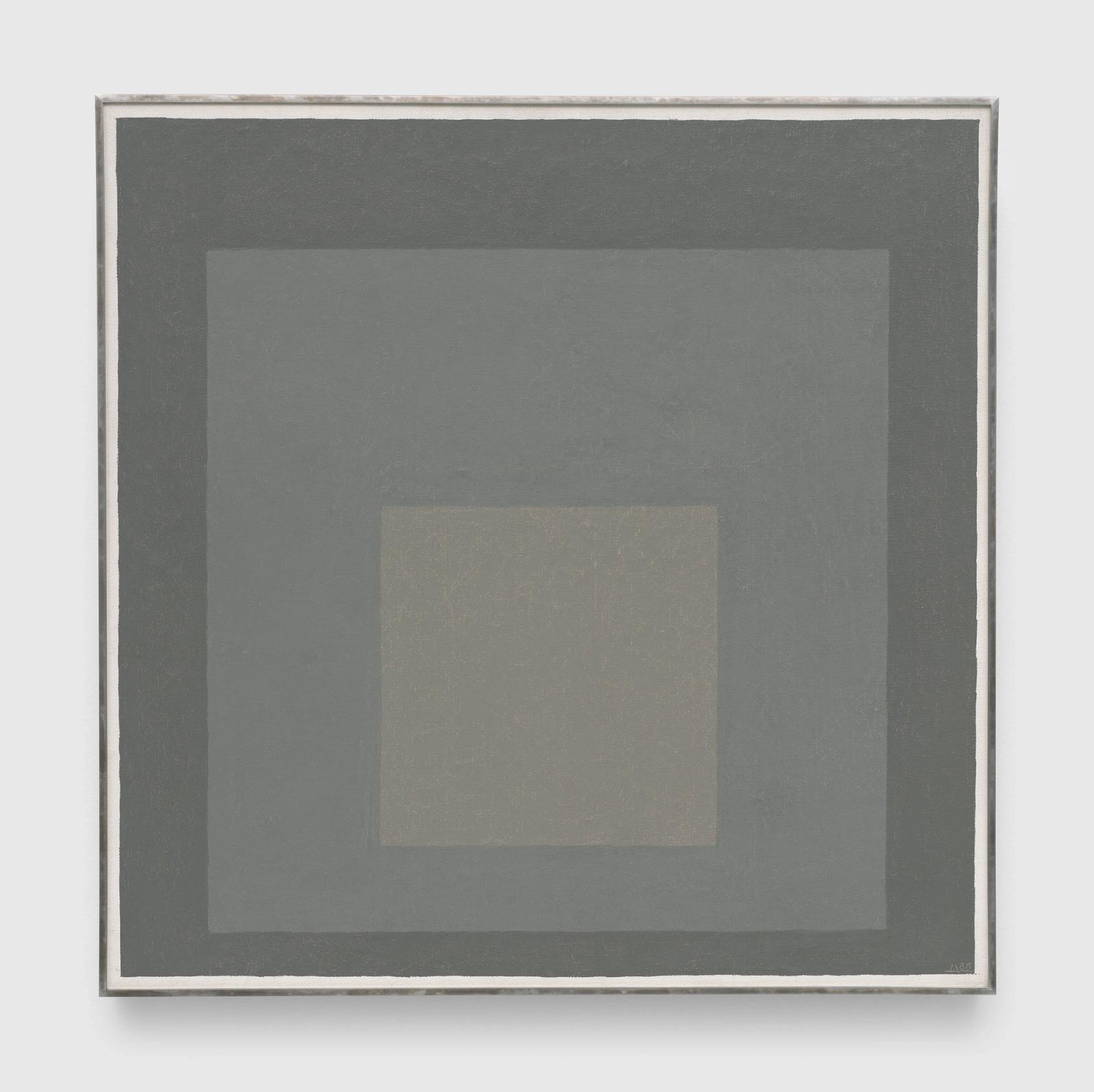
In the darker, grayscale works, tonal intervals narrow to the point where contrast no longer performs. Instead of producing clarity, the paintings hold equivalence. No square advances. No center asserts itself. The eye is kept inside difference without hierarchy.
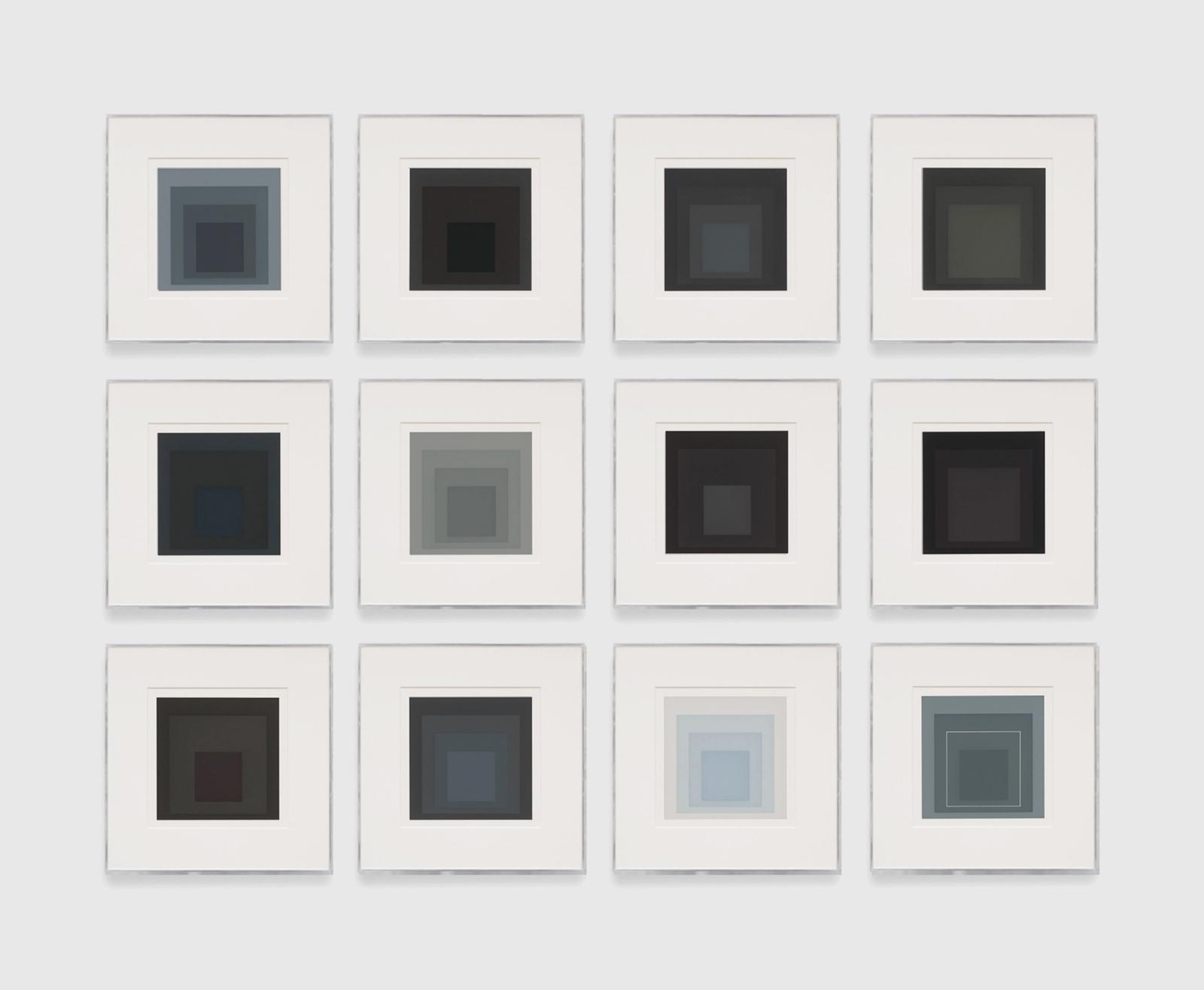
A grid of Gray Instrumentation prints on one wall makes this structure explicit. The variations are precise but withheld. Looking longer does not deliver resolution or reward. The system does not correct itself. It remains open, allowing undecidedness to persist.
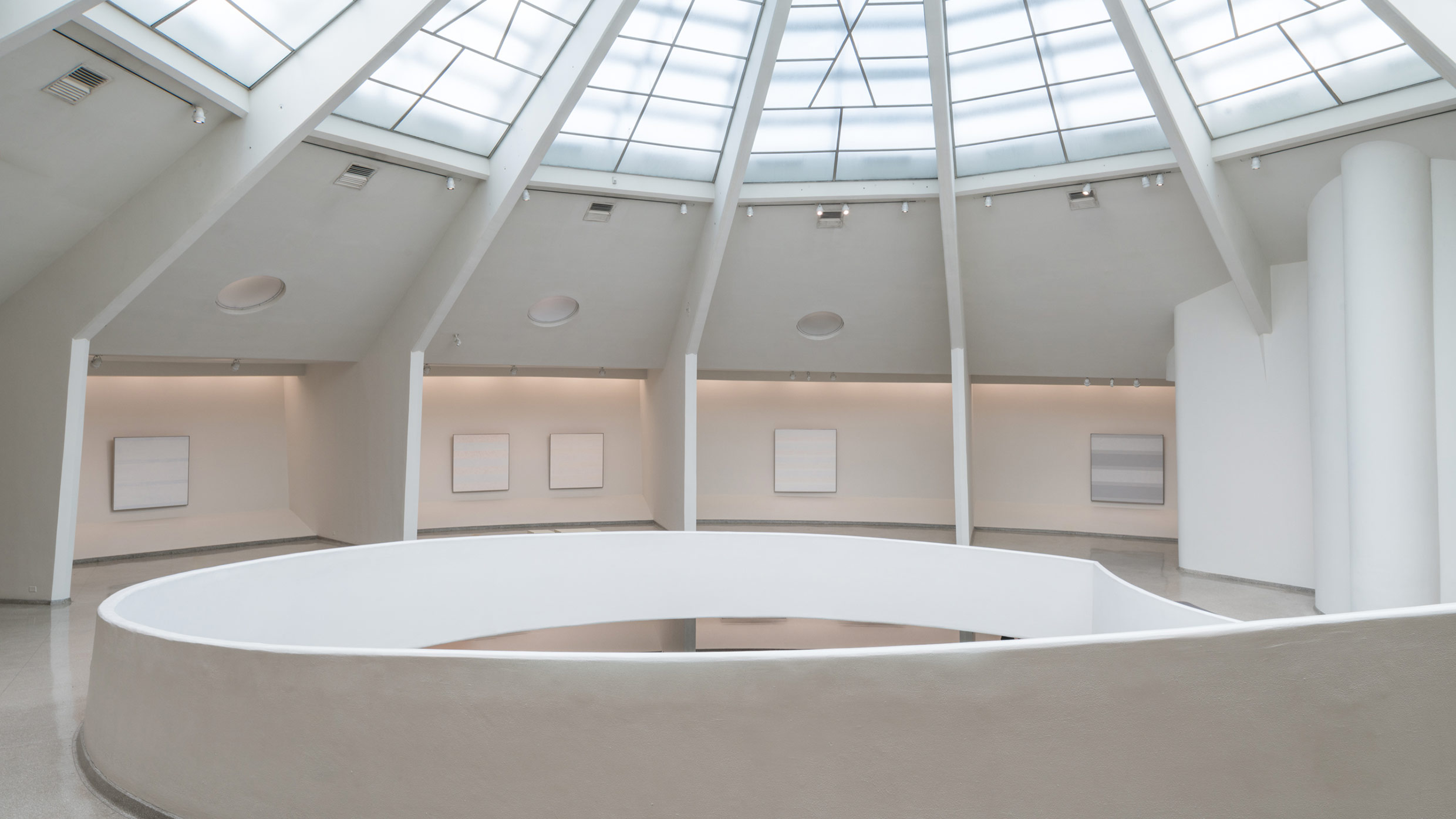
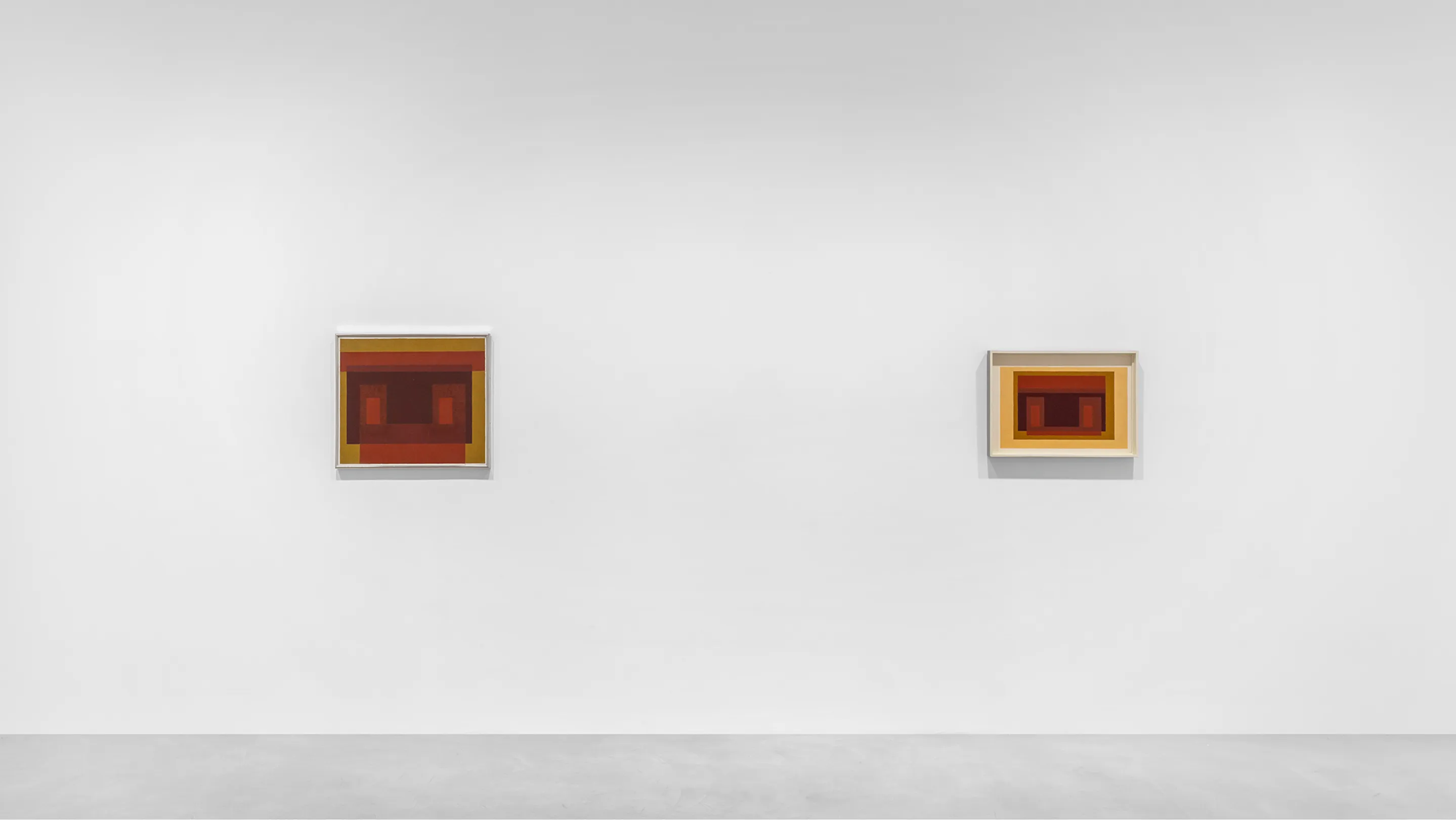
Pairs throughout the exhibition reinforce this logic. Works face one another without comparison being completed. One does not improve or negate the other. Composition is replaced by sustained equivalence — a structure that refuses culmination.
Time flattens under these conditions. Works made years apart operate as if contemporaneous, not because they repeat a motif, but because the governing logic does not evolve. Development is not the operative logic. Nothing resolves.
What the exhibition supports is not understanding, but endurance. The work does not reward looking longer. Comparison itself becomes the primary structure.
Here, comparison functions as a stable condition rather than a means toward judgment or resolution. Differences remain active without being organized into preference, dominance, or conclusion.
What persists is equivalence. Multiple states are held simultaneously, allowing perception to remain undecided while the structure continues unchanged.


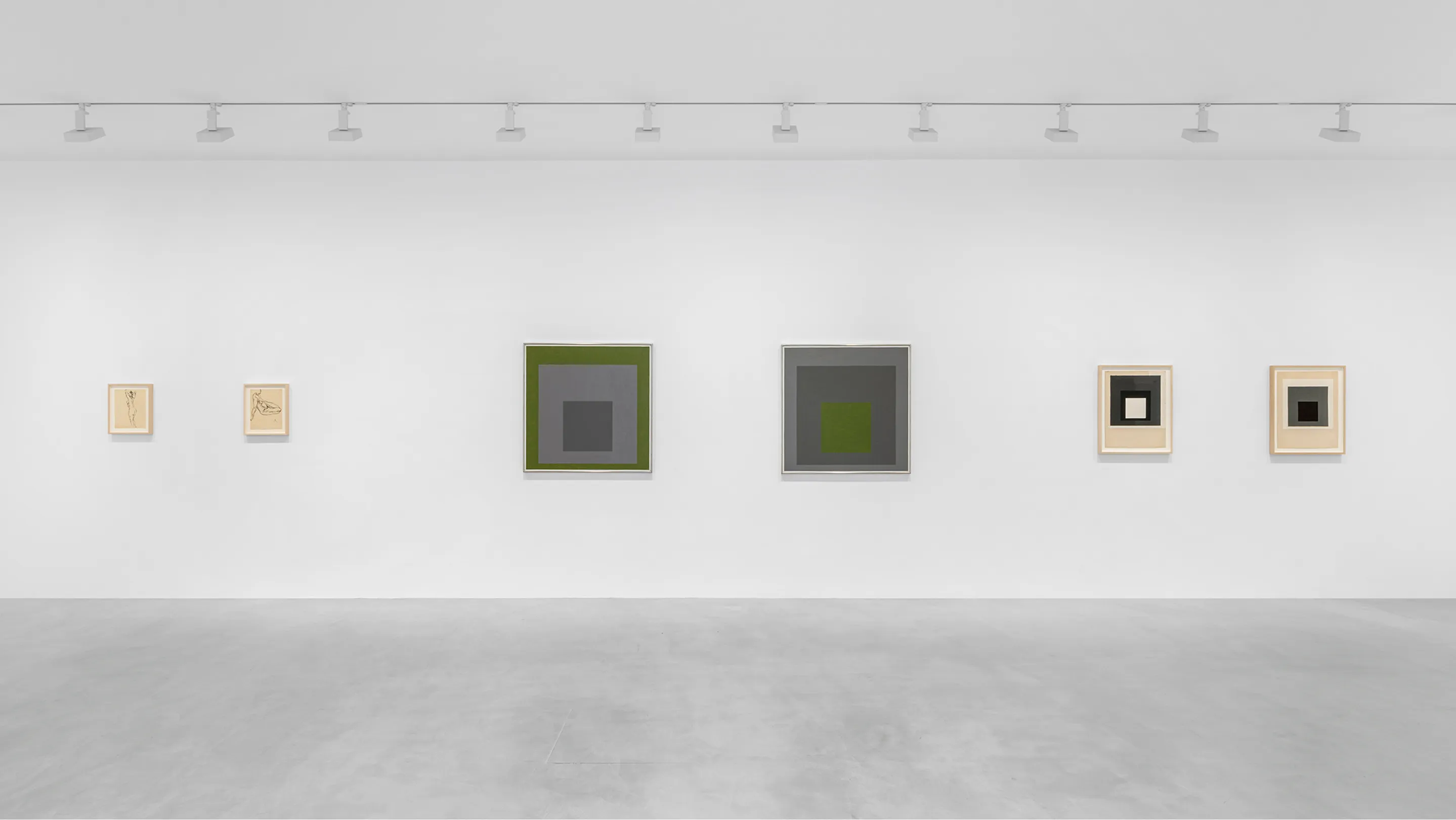

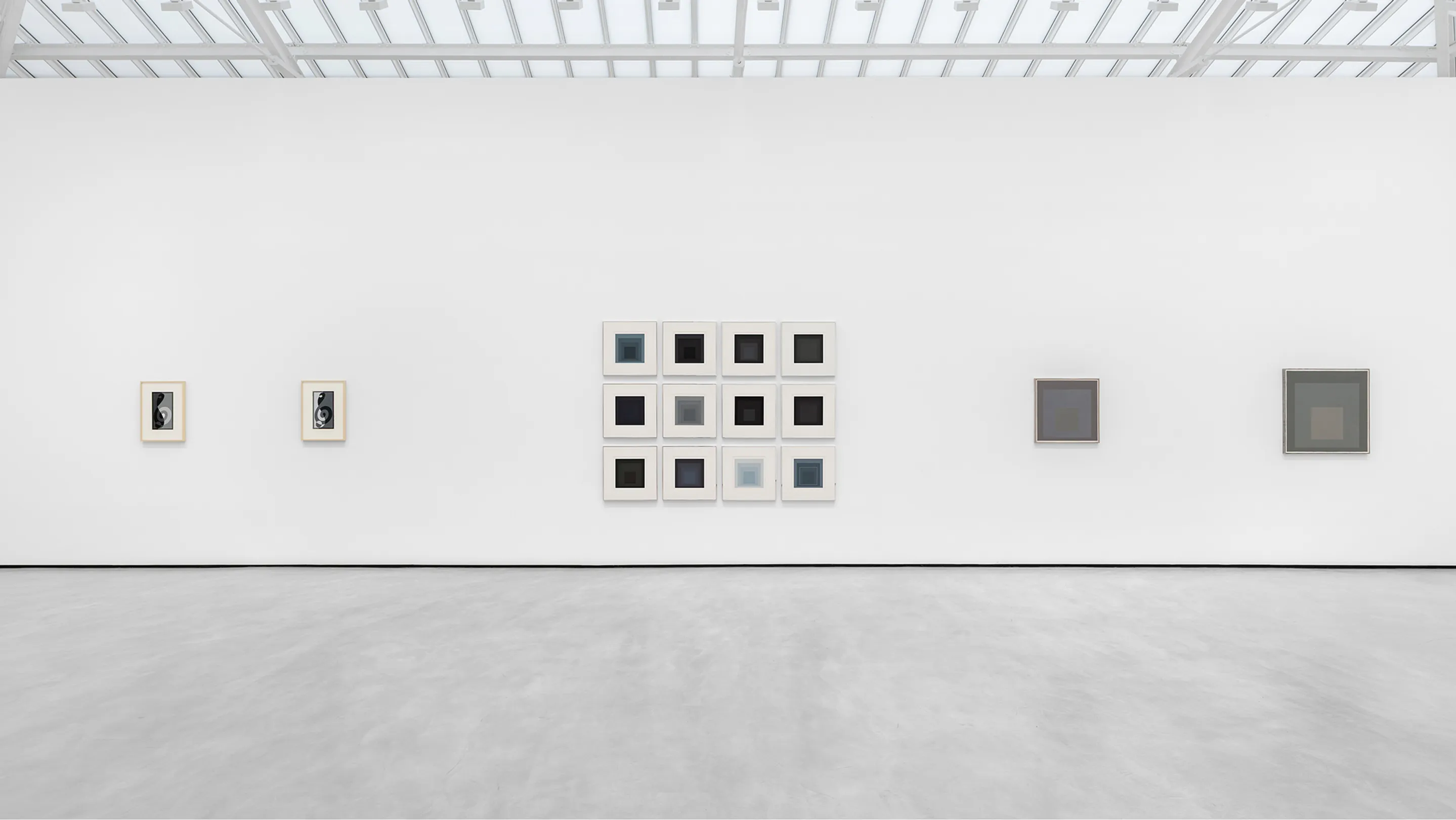


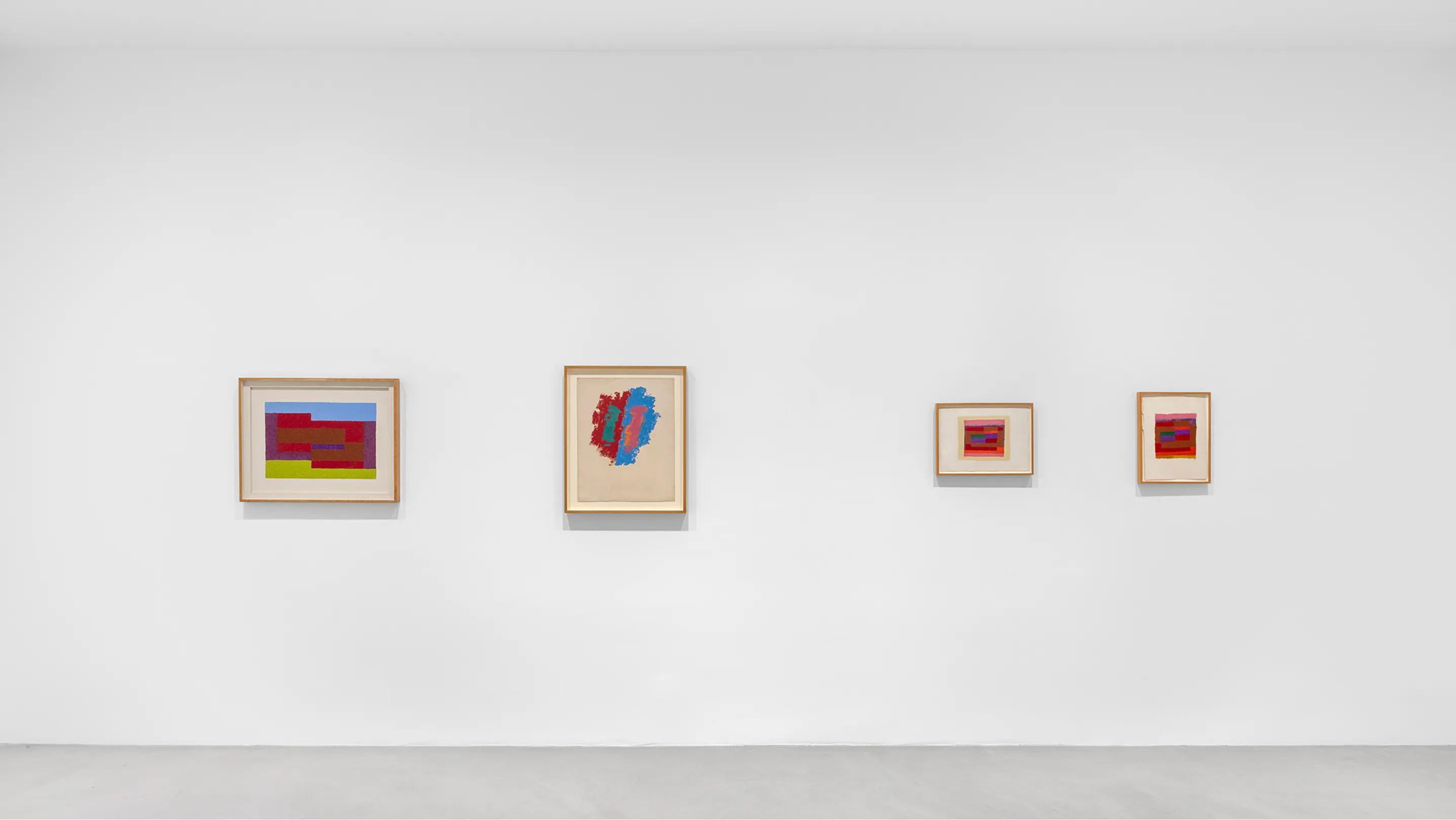

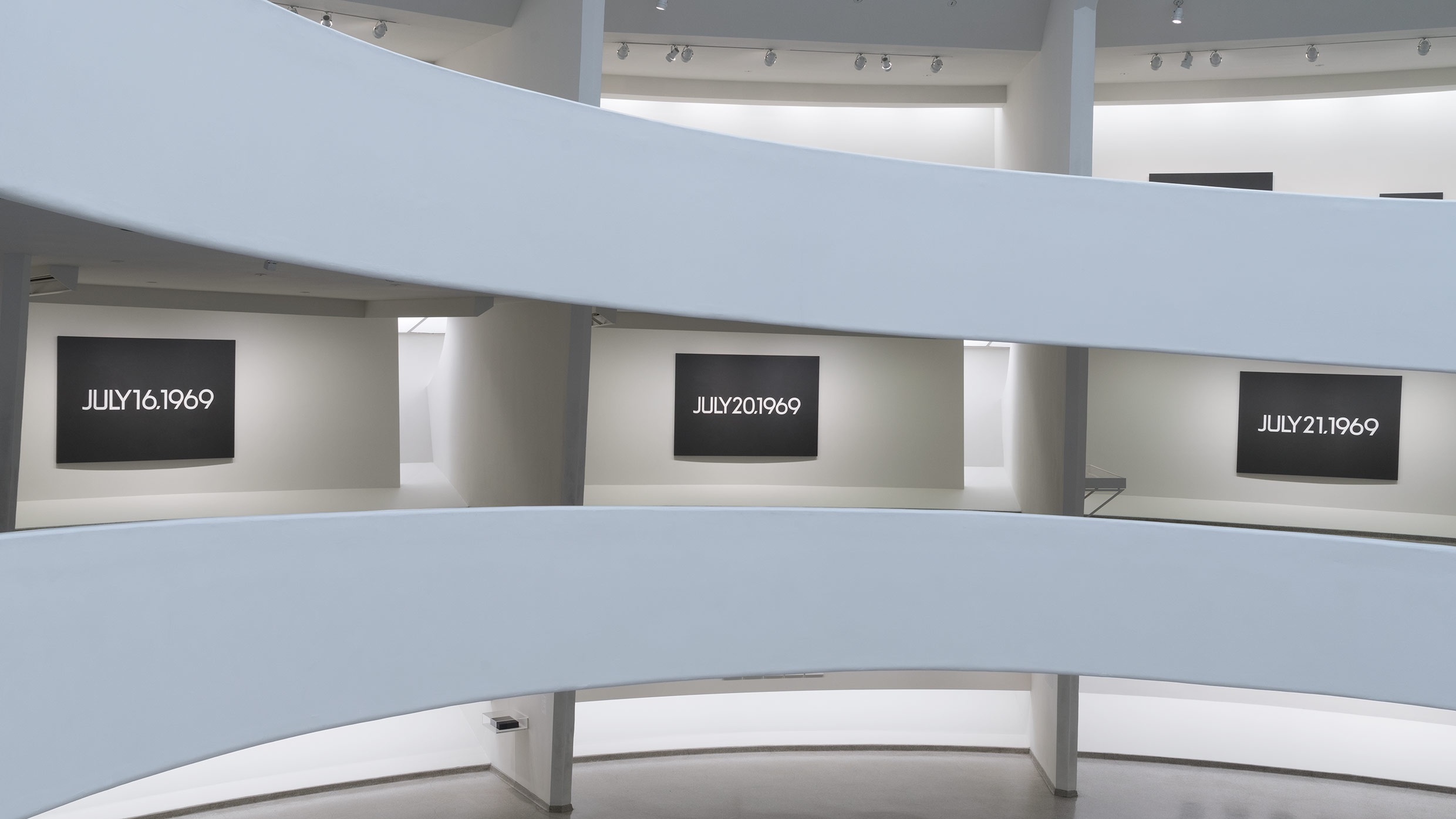
1. Installation view: Josef Albers, Duets, David Zwirner, Paris, 2026. © David Zwirner.
2. Josef Albers, Study for Homage to the Square, 1968. Oil on Masonite, 40 × 40 inches (101.6 × 101.6 cm). © Josef and Anni Albers Foundation / Artists Rights Society (ARS), New York.
3. Josef Albers, Study for Homage to the Square: Starting Anew, 1964. Oil on Masonite, 40 × 40 inches (101.6 × 101.6 cm). © Josef and Anni Albers Foundation / Artists Rights Society (ARS), New York.
4. Installation view: Josef Albers, Duets, David Zwirner, Paris, 2026. © David Zwirner.
5. Josef Albers, Color Study for Homage to the Square, c. 1950. Oil and pencil on blotting paper, 24 × 19 inches (61 × 48.3 cm). Framed: 27 5/8 × 22 3/4 inches (70.2 × 57.8 cm). © Josef and Anni Albers Foundation / Artists Rights Society (ARS), New York.
6. Installation view: Josef Albers, Duets, David Zwirner, Paris, 2026. © David Zwirner.
7. Josef Albers, Study for Homage to the Square: Spring Out, 1962. Oil on Masonite, 24 × 24 inches (61 × 61 cm). © Josef and Anni Albers Foundation / Artists Rights Society (ARS), New York.
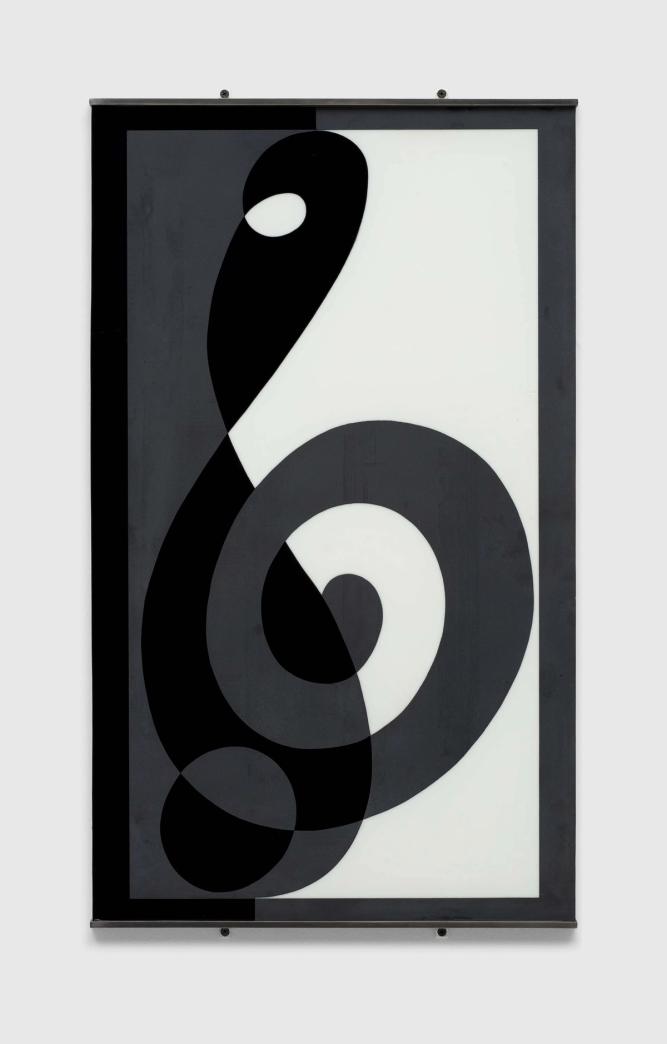
8. Josef Albers, Diskant VII, c. 1932. Sandblasted opaque flashed glass, 30 1/8 × 17 3/4 inches (76.5 × 45.1 cm). Framed: 30 1/4 × 17 7/8 inches (77 × 45.4 cm). © Josef and Anni Albers Foundation / Artists Rights Society (ARS), New York.
9. Installation view: Josef Albers, Duets, David Zwirner, Paris, 2026. © David Zwirner.
10. Josef Albers, Gray Instrumentation I, 1974. Complete portfolio of twelve screenprints on white Arches 88 paper, with title, colophon, and text pages on Japanese Masa Dosa paper, with portfolio box. Each print: 19 × 19 inches (48.3 × 48.3 cm). Edition of 36, 10 AP. © Josef and Anni Albers Foundation / Artists Rights Society (ARS), New York.
11. Josef Albers, Homage to the Square, 1965. Oil on Masonite, 32 × 32 inches (81.3 × 81.3 cm). © Josef and Anni Albers Foundation / Artists Rights Society (ARS), New York.
12. Josef Albers, 3 Browns + Ochre, 1948–1957. Oil on Masonite, 23 1/2 × 27 inches (59.7 × 68.6 cm). © Josef and Anni Albers Foundation / Artists Rights Society (ARS), New York.
13. Installation view: Josef Albers, Duets, David Zwirner, Paris, 2026. © David Zwirner.
14. Josef Albers, Browns, Ochre, Yellow, 1948. Oil on Masonite in the artist’s frame, 19 × 26 1/2 inches (48.3 × 67.3 cm). © Josef and Anni Albers Foundation / Artists Rights Society (ARS), New York.
15. Installation view: Josef Albers, Duets, David Zwirner, Paris, 2026. © David Zwirner.
16. Josef Albers, Study for Painting on a Victrola Gramophone Cover, c. 1940. Oil on blotting paper, 24 × 19 inches (61 × 48.3 cm). Framed: 25 3/4 × 20 5/8 inches (65.4 × 52.4 cm). © Josef and Anni Albers Foundation / Artists Rights Society (ARS), New York.
All images © their respective rights holders.
Image rights & attribution →