
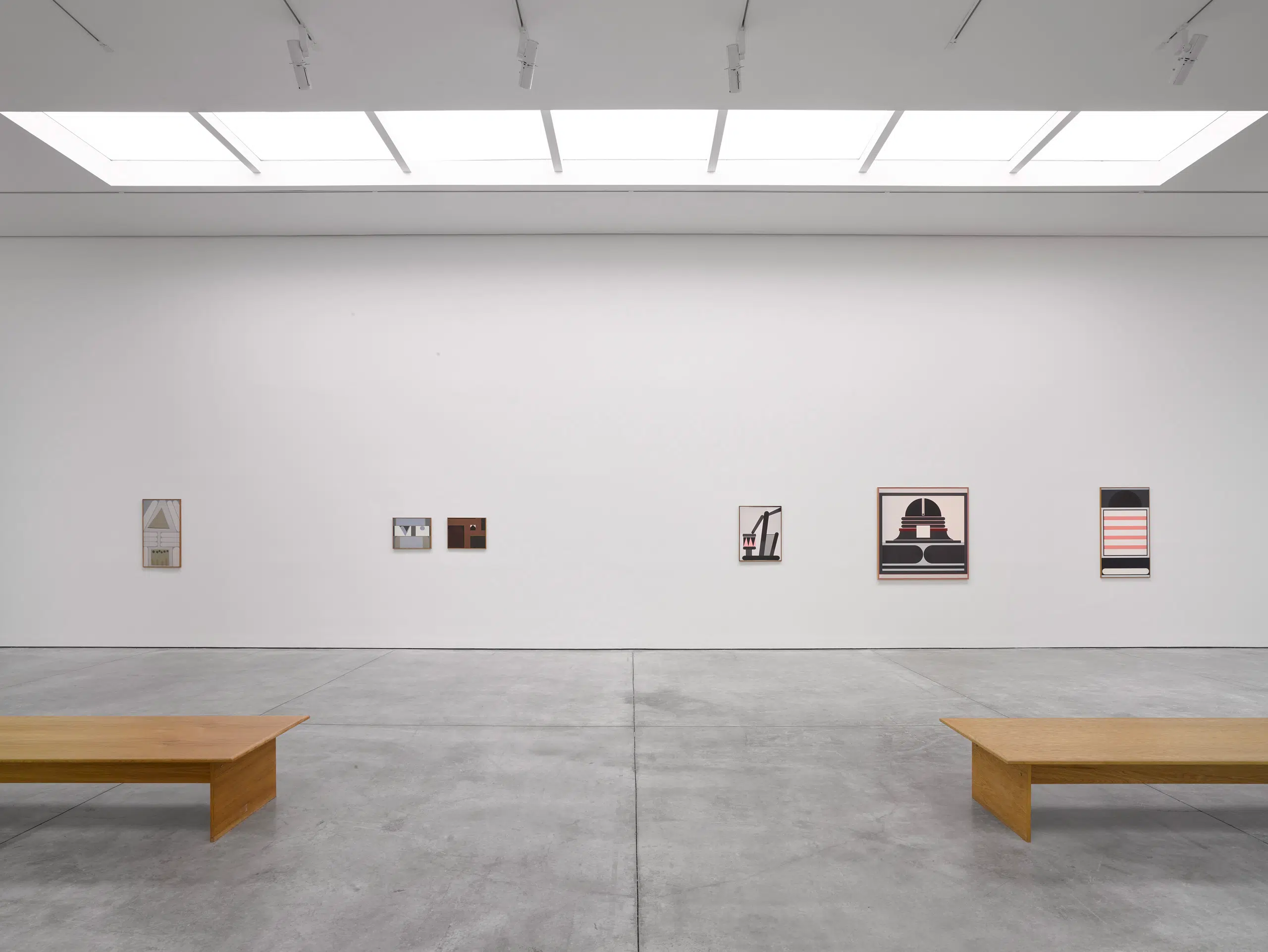


Léon Wuidar does not use geometry to declare ideas. He uses it to stay. The paintings gathered here do not assert themselves as statements or images, but return — again and again — to a limited set of forms, adjusted slightly, held steady over time.
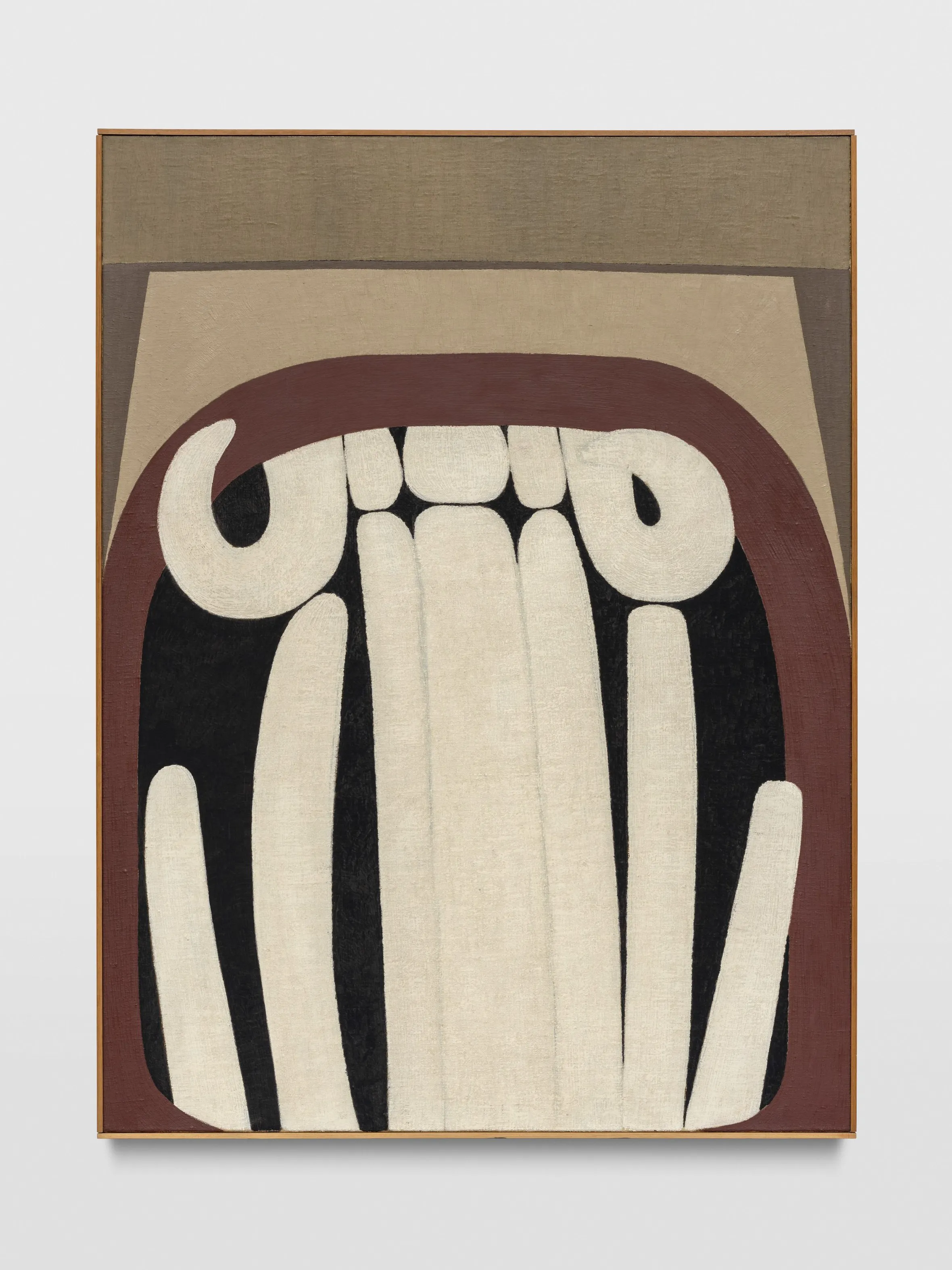
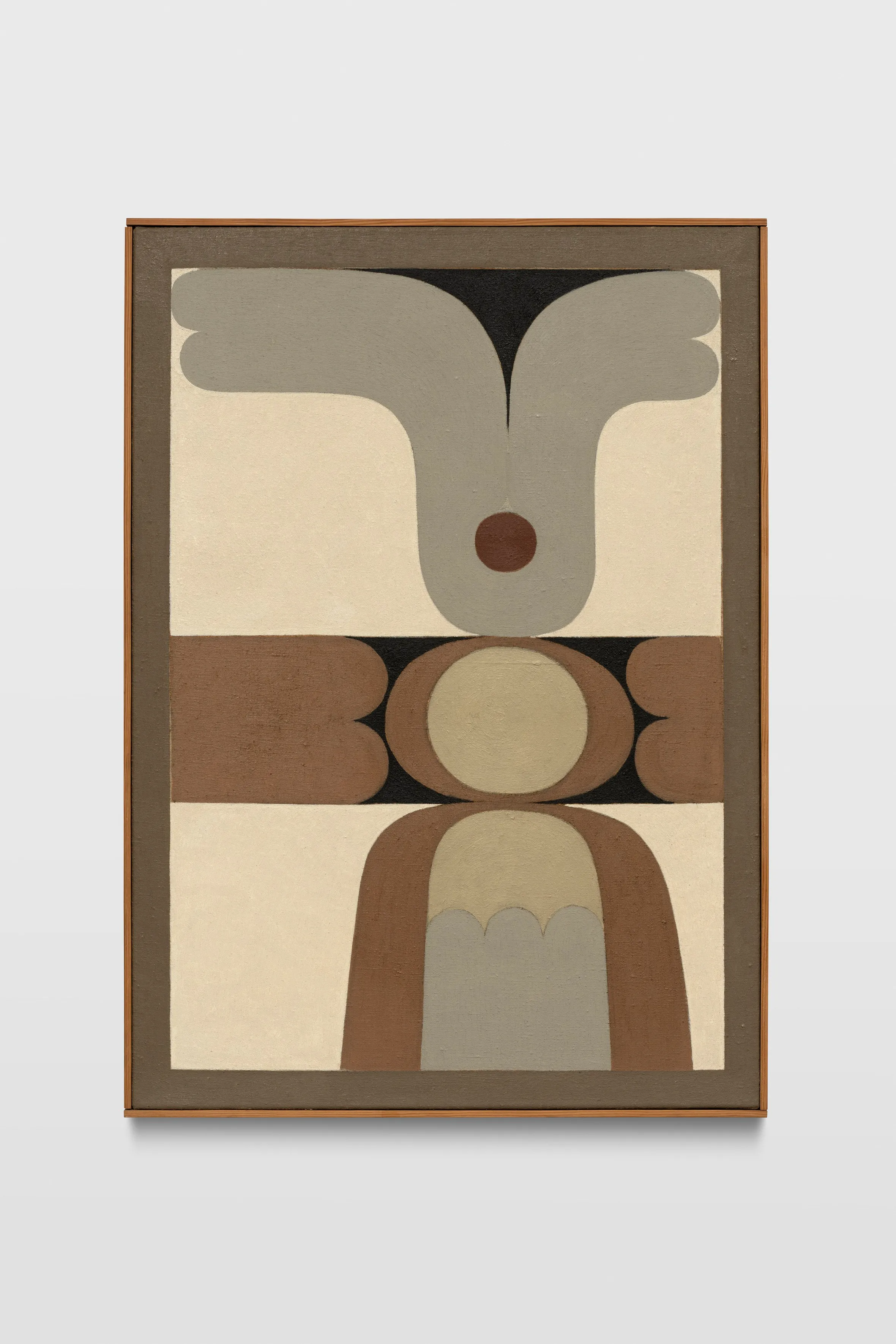
In early works such as Dentier (1965), recognition almost arrives. Curved elements gather into something mouth-like, architectural, almost bodily — then stop. The image pauses just before depiction. What holds the painting together is not what it becomes, but what it resists becoming. Balance replaces explanation.
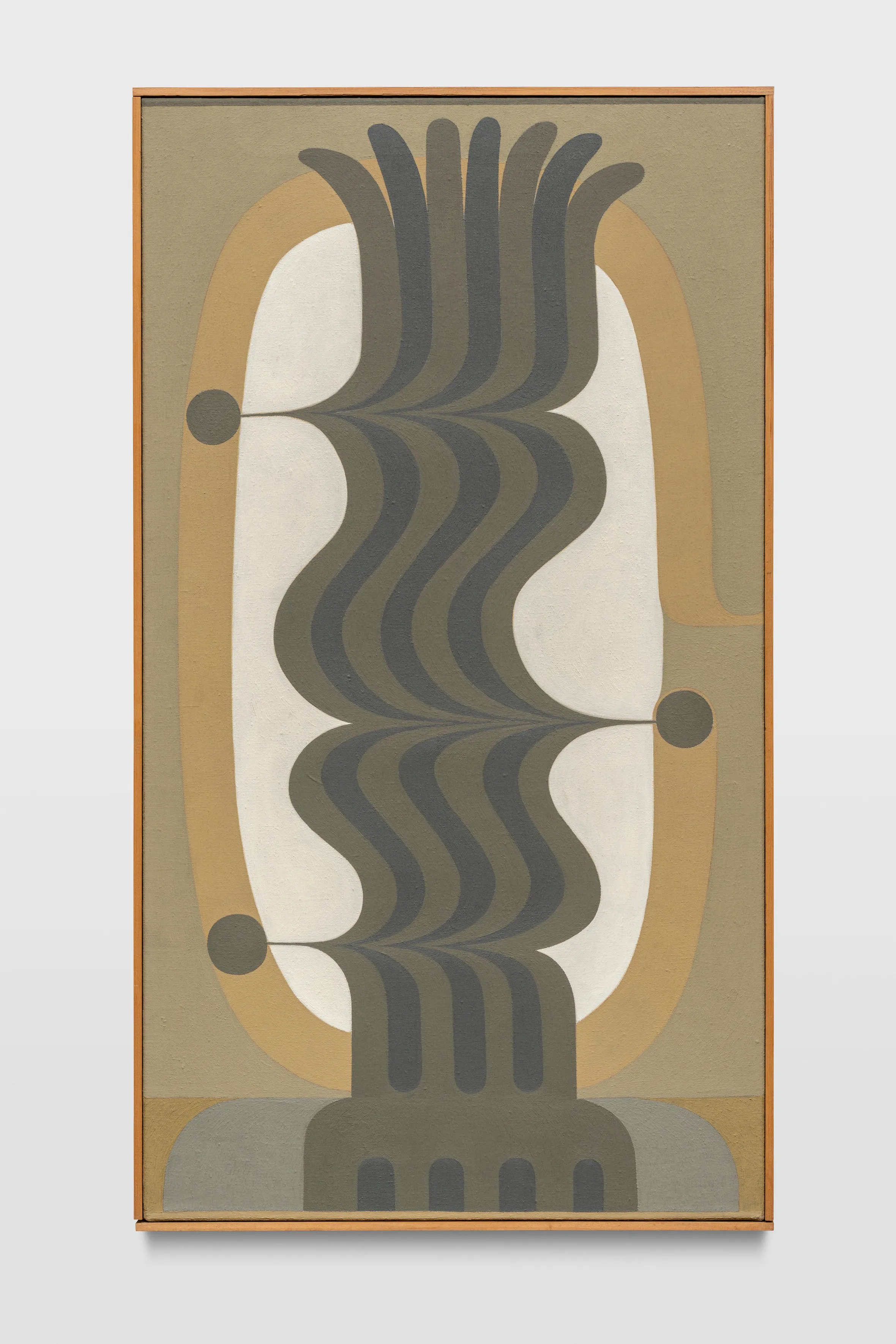
Across the works from the 1960s and ’70s, this refusal repeats with discipline. In Obstacle (1967), vertical elements ripple inward, pressing against an enclosing frame. The composition suggests movement, but nothing advances. Each form answers the one before it, not to progress the image, but to maintain it. The painting feels less composed than kept.
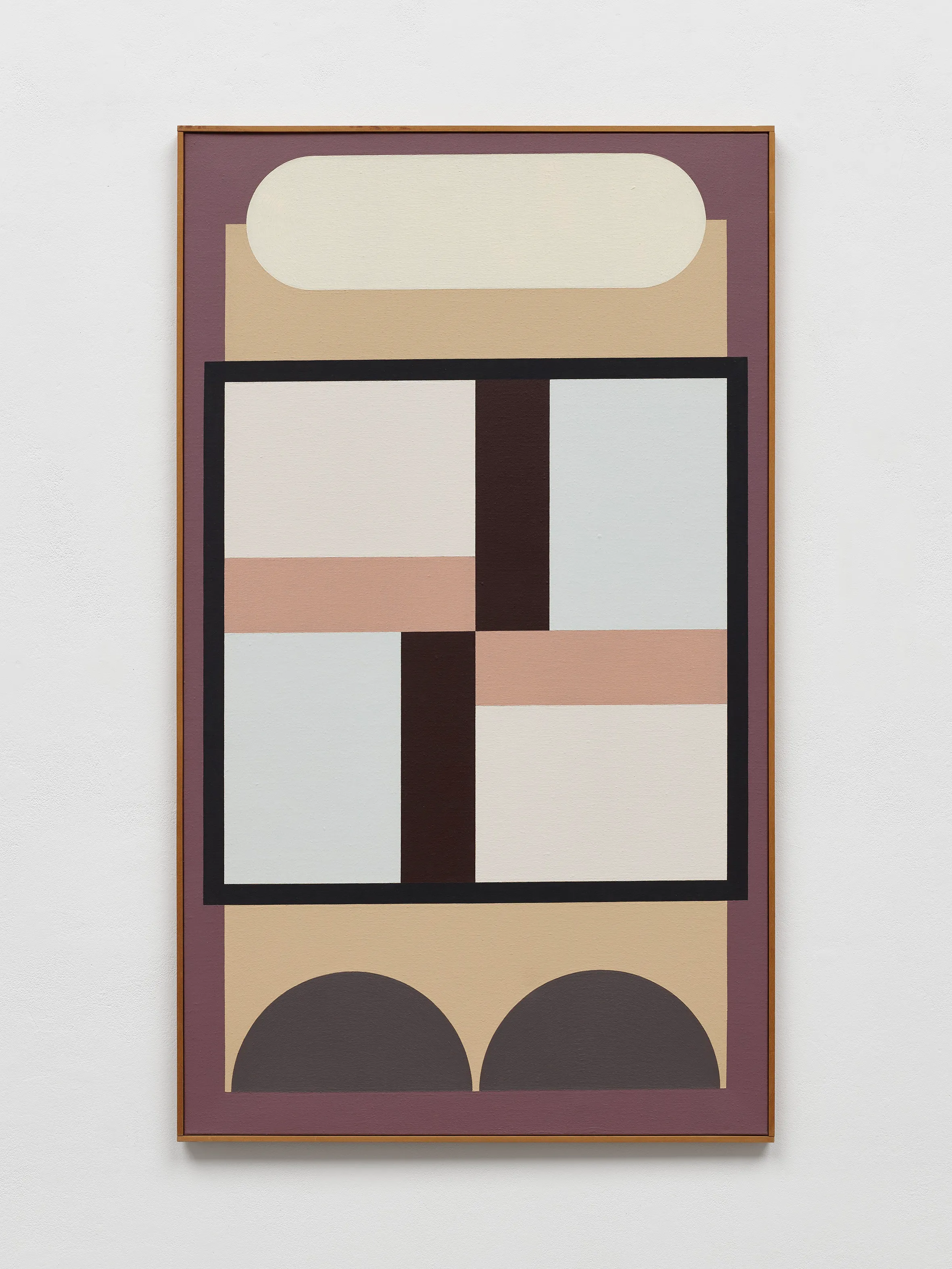
Later works make this condition explicit. In Carré au Bord Noir (18 juillet 1977), the border no longer simply contains the image — it participates in it. The black edge does not frame so much as steady the painting, acting as a limit against which internal proportions can hold. Calm here does not come from reduction, but from regulation.
Throughout the exhibition, repetition works quietly. Forms recur — arches, columns, thresholds — without accumulating meaning. Repetition does not heighten emphasis; it softens it. Gesture remains present, but disciplined. Each painting reads as a single measure within a larger rhythm, attentive to proportion and pause.
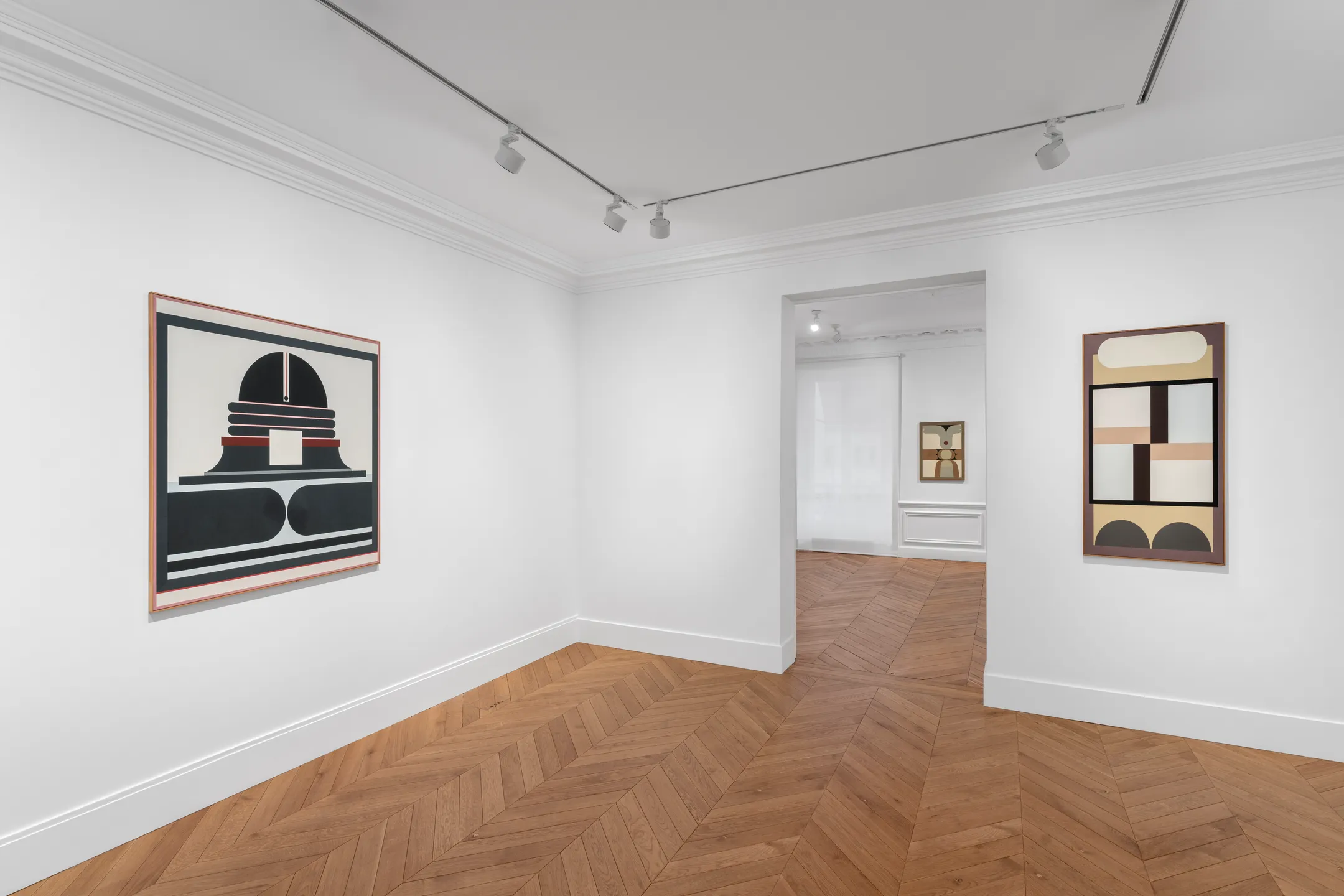
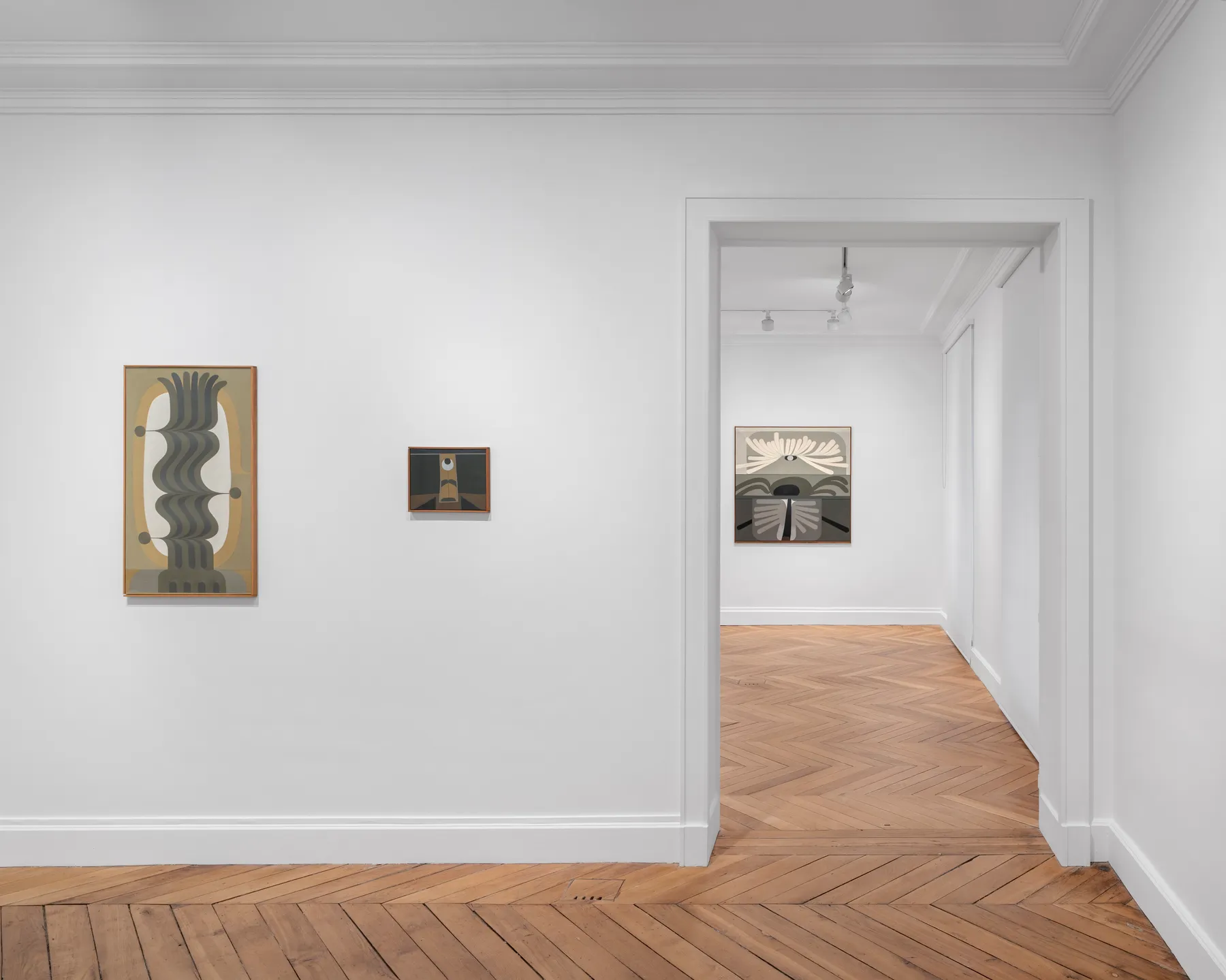
The installation reinforces this stance. Works are spaced to allow intervals to matter. No painting demands precedence. Moving through the rooms feels less like progression than return — encountering a familiar structure from a slightly altered angle. Attention shifts, but the logic does not.
Wuidar’s practice is guided less by expression than by maintenance. Construction is never dramatized. It remains visible, patient, intact. Over time, the forms grow more concise, but the operation remains unchanged — a steady calibration of line, colour, and limit.
Painting here becomes a way of holding space — interior, architectural, perceptual. Rhythm replaces narrative. Balance replaces expression. What remains is not meaning to decode, but a way of staying with form over time.
In Léon Wuidar’s work, structure does not organize meaning; it regulates duration. Repeated forms—frames, borders, intervals—operate as temporal devices rather than compositional ones. They slow perception, preventing emphasis from accumulating or resolving into narrative.
Geometry functions as a condition of attention rather than a language of expression. Each work maintains a narrow operational range in which variation is permitted without progression.
What holds is not interpretation, but rhythm: a system calibrated to sustain perception without directing it.
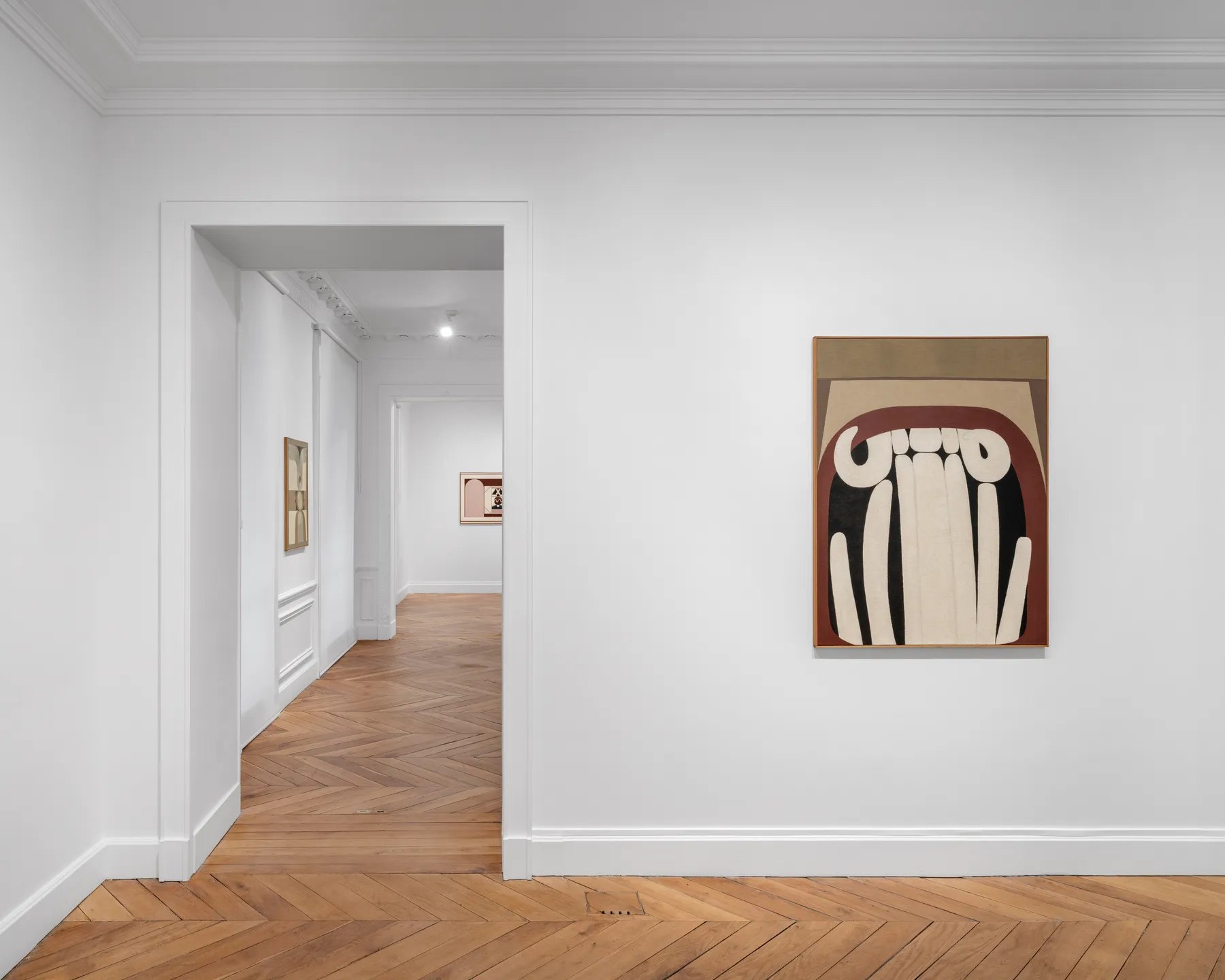
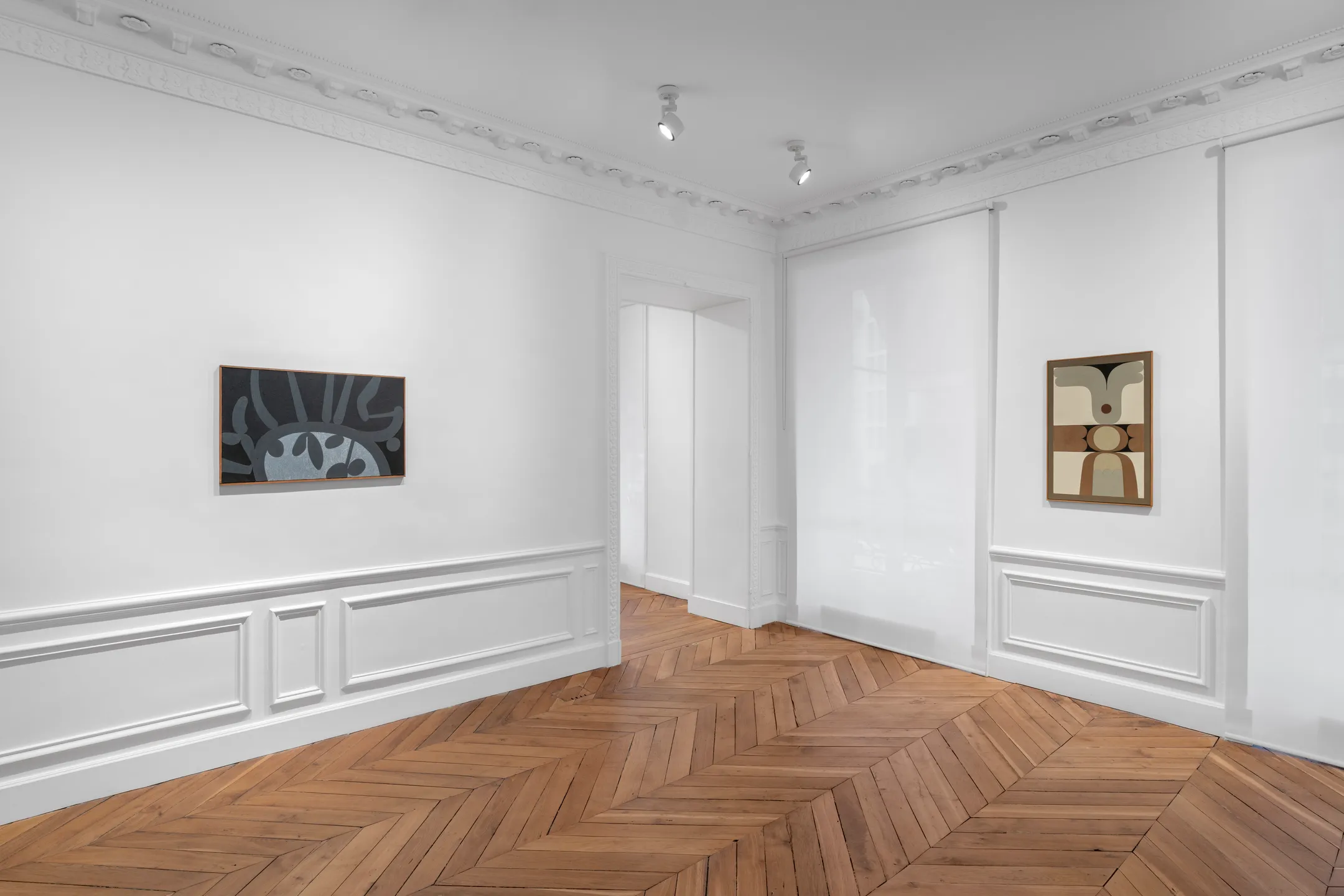
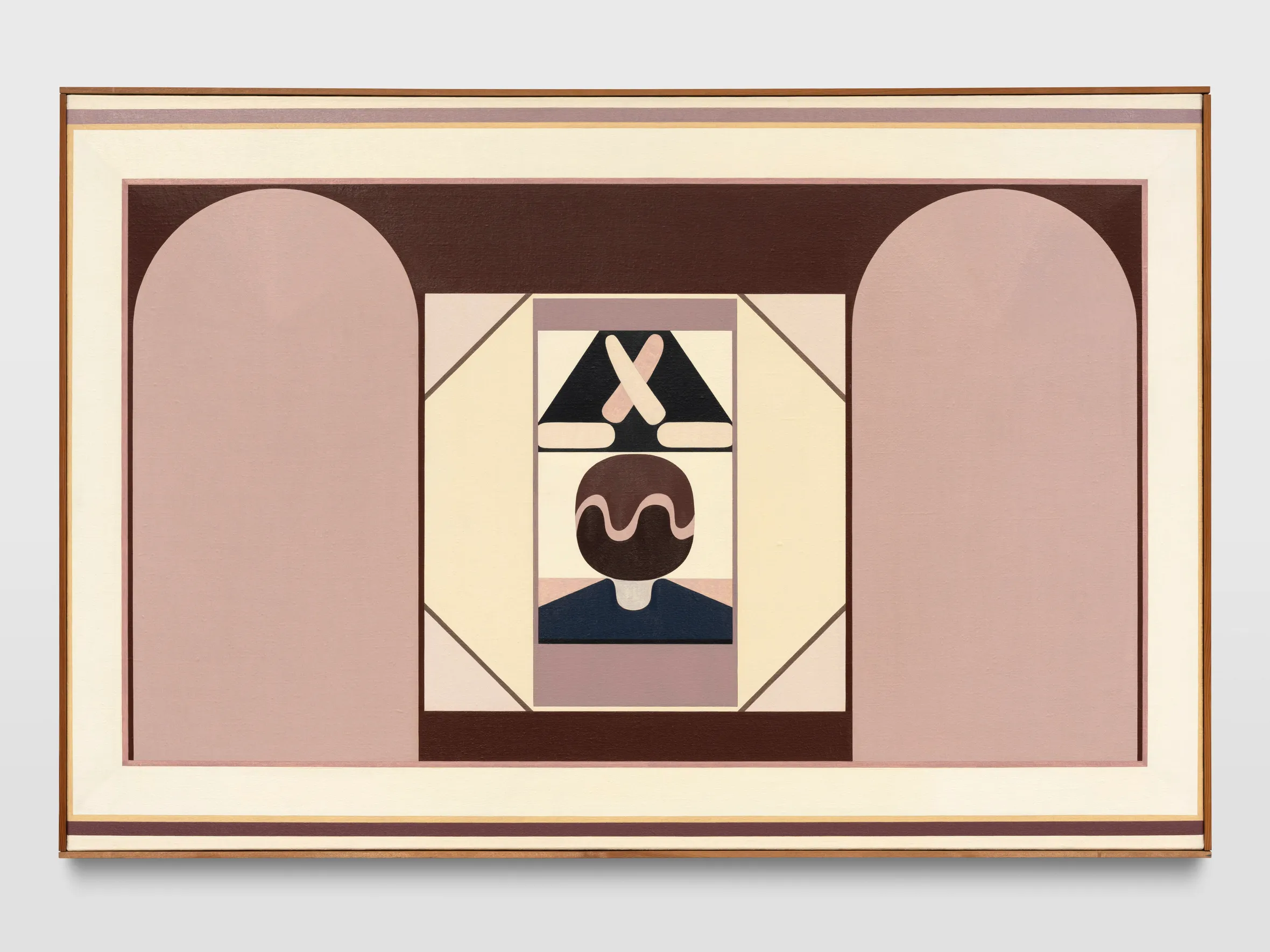
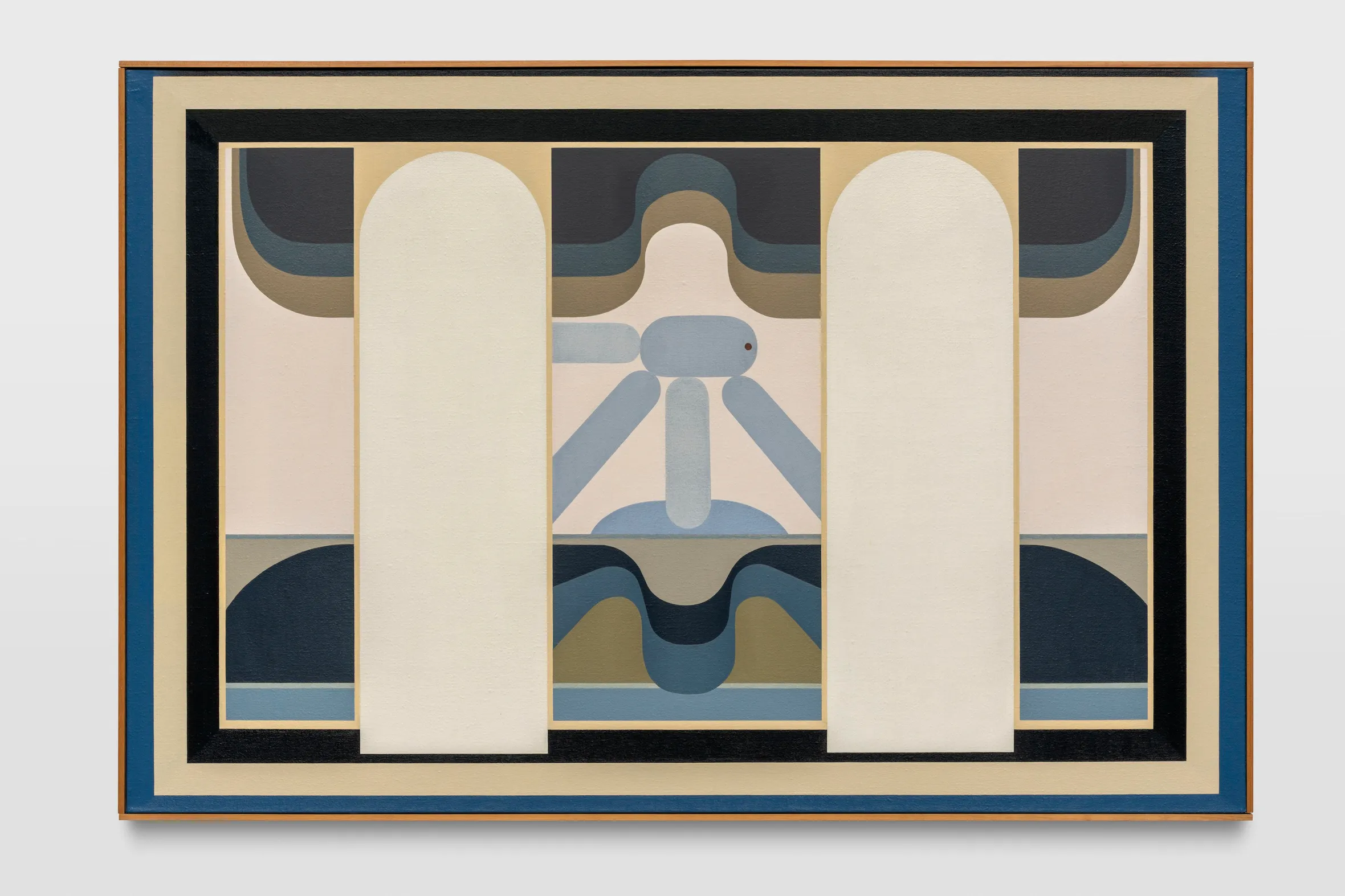
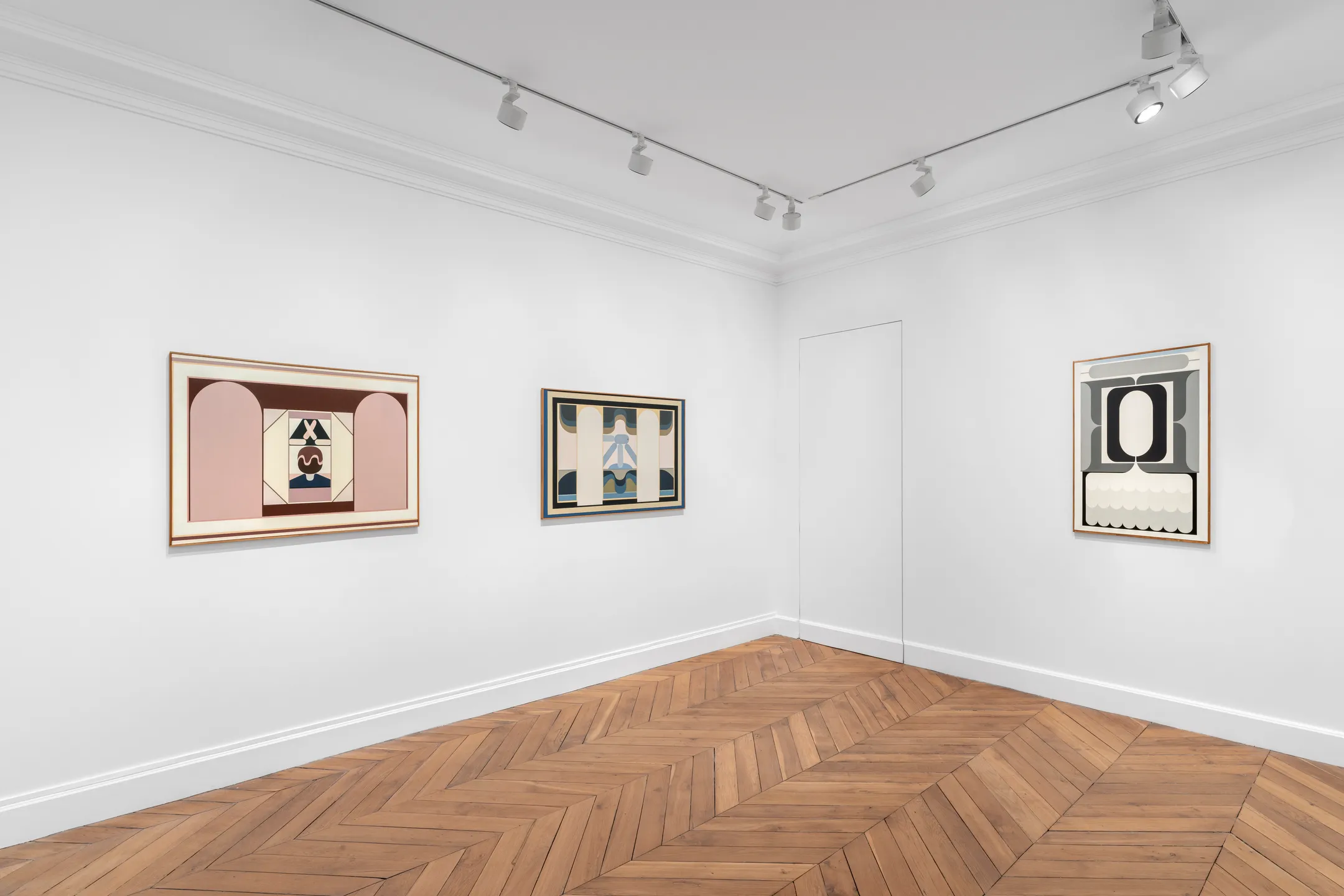
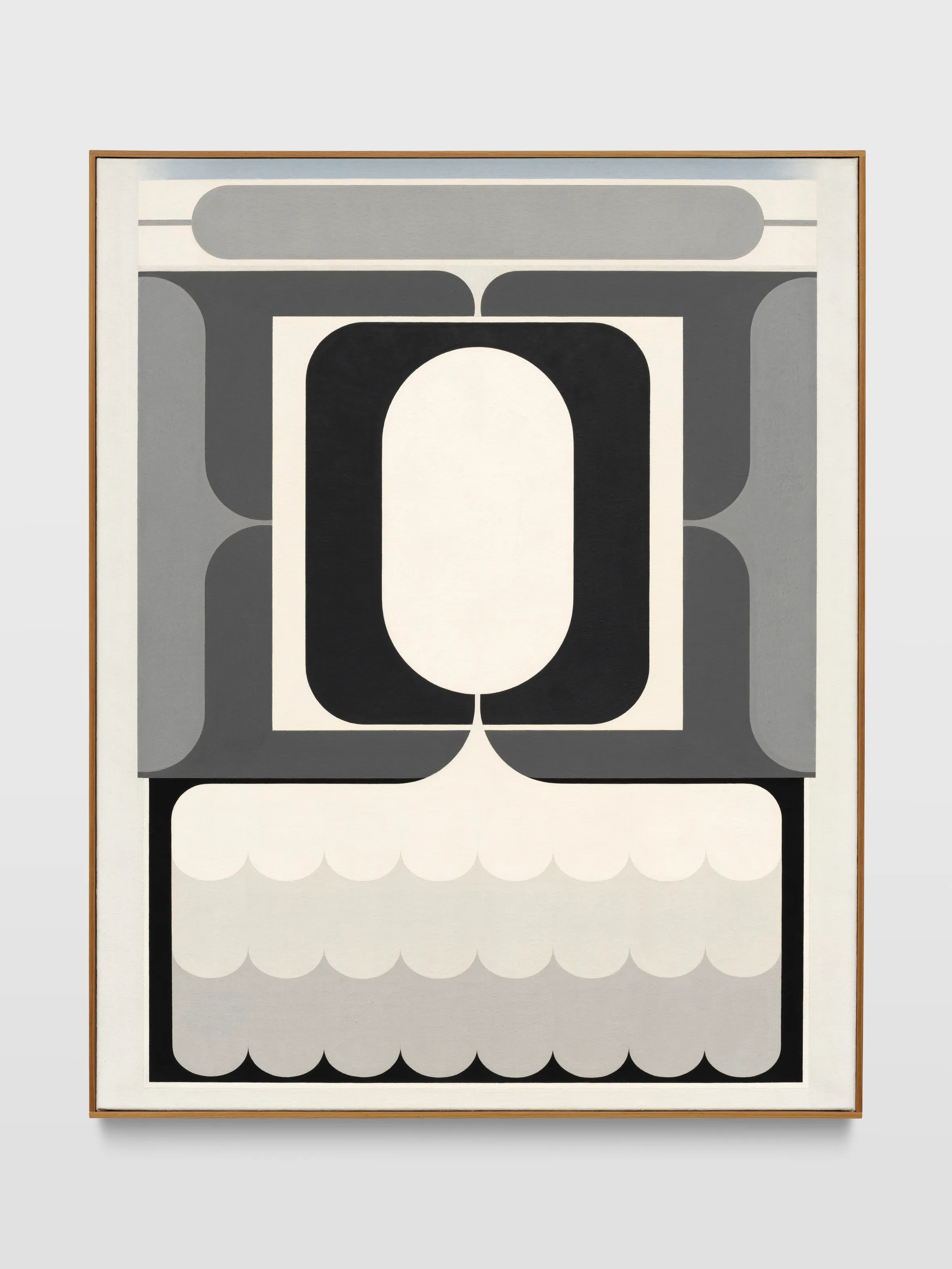
1. Installation view: Léon Wuidar, White Cube, Paris, 2026.
2. Léon Wuidar, Dentier, 1965. Oil on canvas, 120 × 90 cm (47 1/4 × 35 7/16 in).
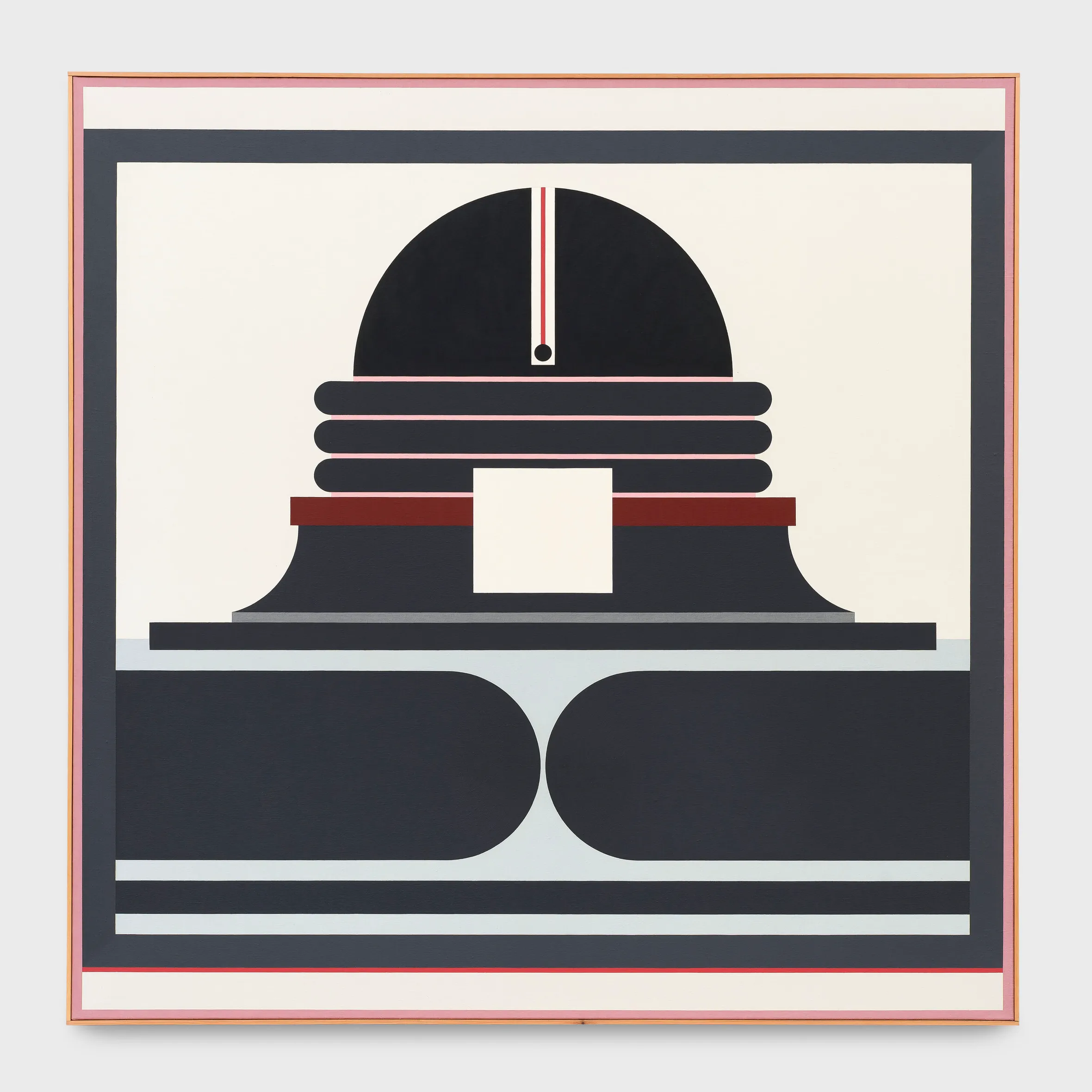
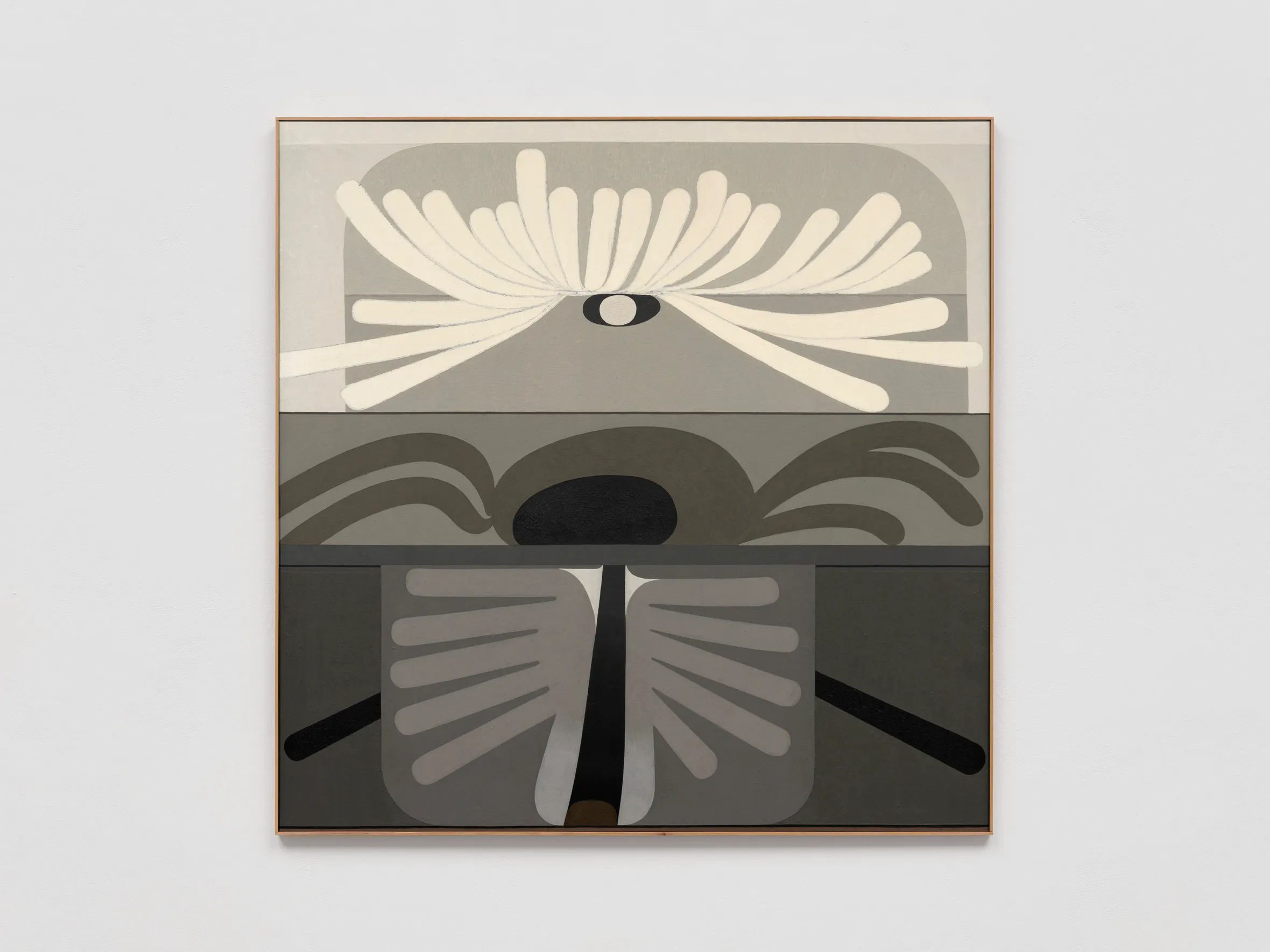
3. Léon Wuidar, Tige, 20 juillet 1977, 1977. Oil on canvas, 122 × 122 cm (48 1/16 × 48 1/16 in).
4. Installation view: Léon Wuidar, White Cube, Paris, 2026.
5. Léon Wuidar, Carré au bord noir, 18 juillet 1977, 1977. Oil on canvas, 120 × 70 cm (47 1/4 × 27 9/16 in).
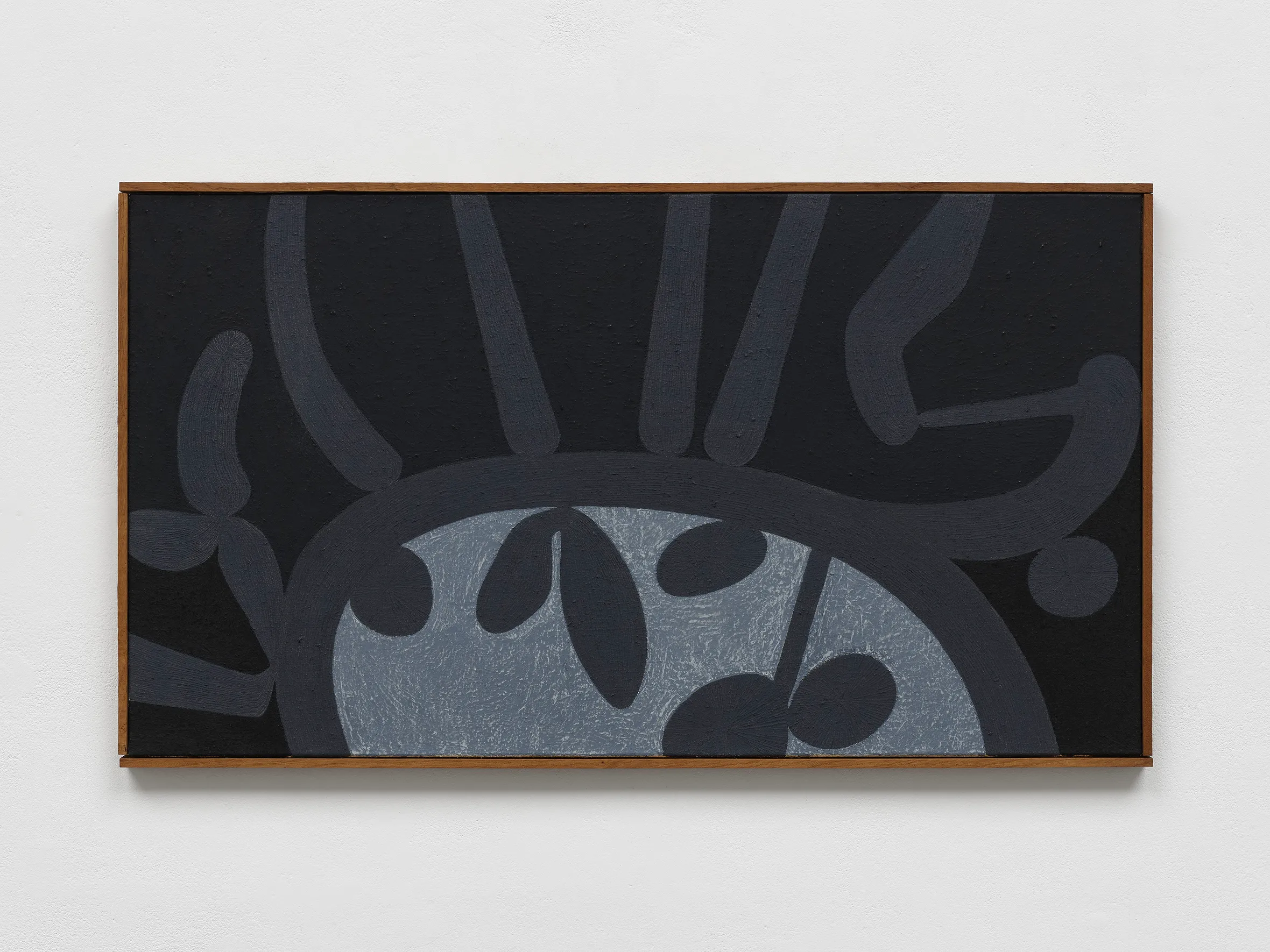
6. Léon Wuidar, Éclosion, 1964. Oil on canvas, 50 × 90 cm (19 11/16 × 35 7/16 in).
7. Installation view: Léon Wuidar, White Cube, Paris, 2026.
8. Léon Wuidar, Les beaux atours, 13 février 1966, 1966. Oil on canvas, 80.5 × 57 cm (31 11/16 × 22 7/16 in).
9. Léon Wuidar, Apparition, août 1970, 1970. Oil on canvas, 80 × 120.3 cm (31 1/2 × 47 3/8 in).
10. Léon Wuidar, L’appel de la sirène, juin 1970, 1970. Oil on canvas, 80 × 120 cm (31 1/2 × 47 1/4 in).
11. Installation view: Léon Wuidar, White Cube, Paris, 2026.
12. Léon Wuidar, Élévation, 27 novembre 1971, 1971. Oil on canvas, 80.1 × 100.1 cm (31 9/16 × 39 7/16 in).
13. Léon Wuidar, Obstacle, mai 1967, 1967. Oil on canvas, 90 × 50 cm (35 7/16 × 19 11/16 in).
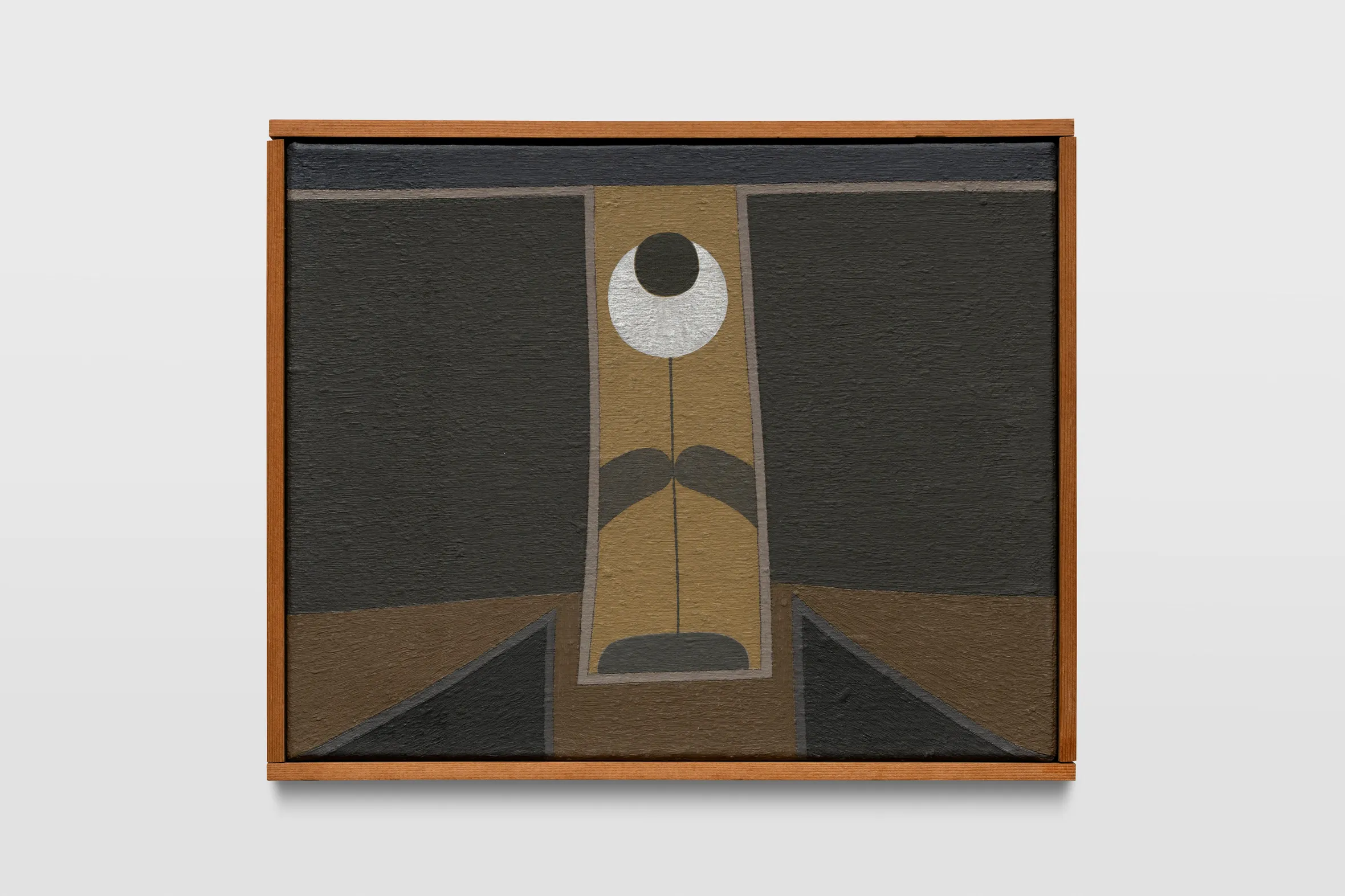
14. Léon Wuidar, Ambiguïté de l’image, 25 août 1967, 1967. Oil on canvas, 24.4 × 30 cm (9 5/8 × 11 13/16 in).
15. Installation view: Léon Wuidar, White Cube, Paris, 2026.
16. Léon Wuidar, La naissance de Vénus, 13 juin 1966, 1966. Oil on canvas, 122 × 122 cm (48 1/16 × 48 1/16 in).
Cover: Installation view: Léon Wuidar, White Cube, Paris, 2026.
All images © their respective rights holders.
Image rights & attribution →