

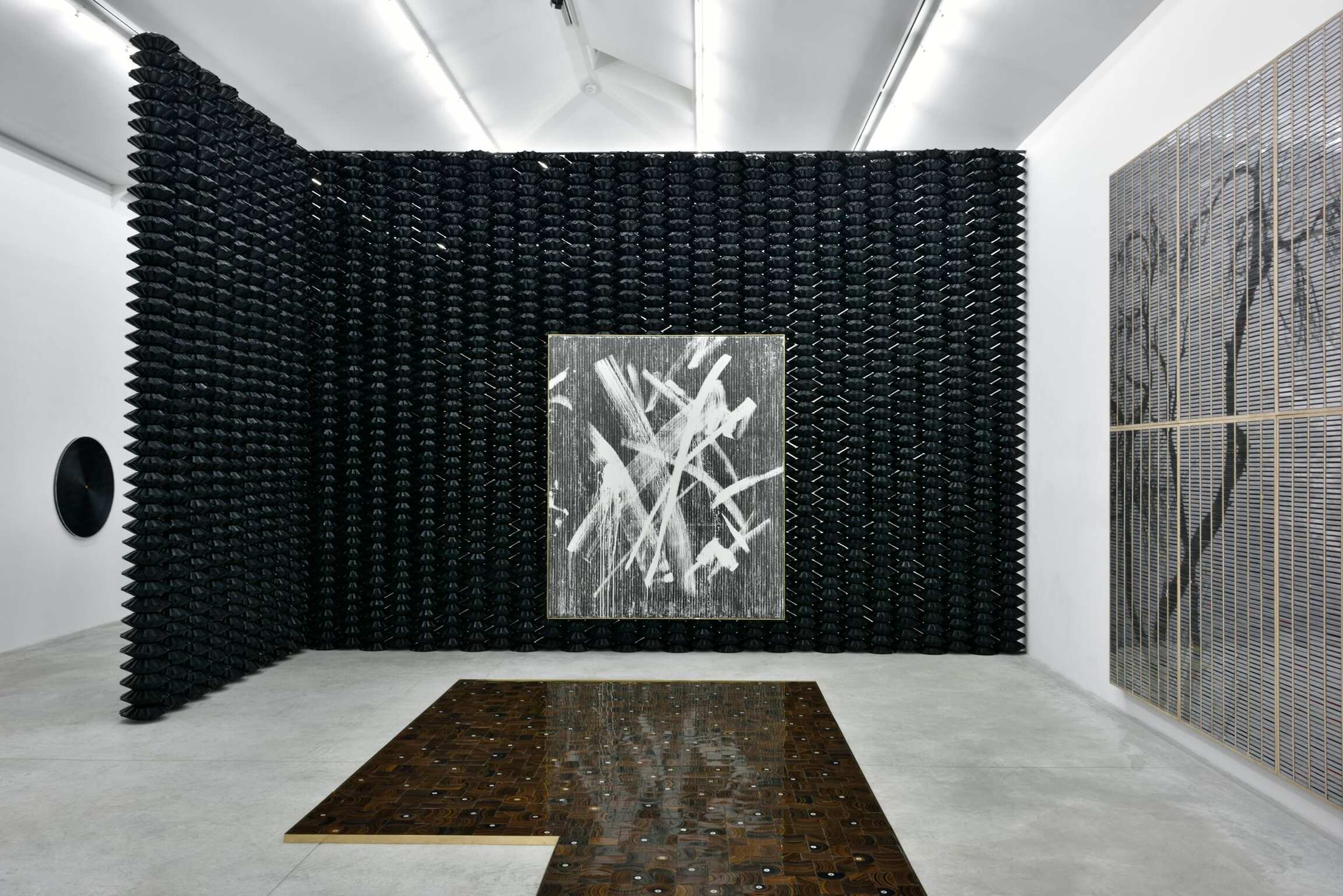
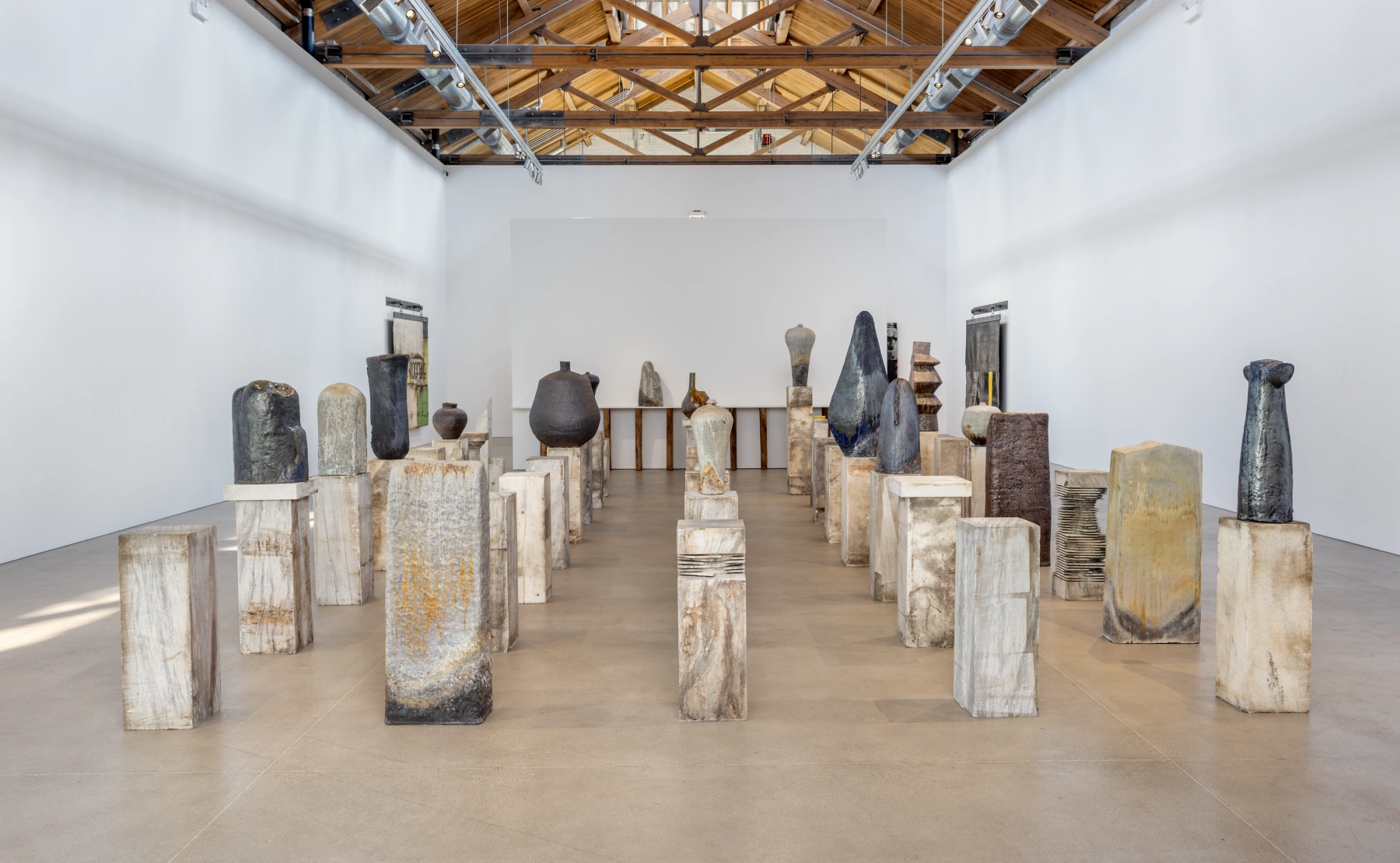


At first, everything feels immediately recognizable. Records, faces, familiar formats appear almost immediately. Images surface without resistance. The eye moves easily, picking up fragments, patterns, surfaces. Familiarity feels available — even generous.
The materials make that assumption feel natural. Recognition arrives intact, almost before you realize you’ve begun to look. Nothing initially pushes back.
But familiarity doesn’t quite begin to organize what follows. The images hold, yet they don’t gather. Recognition stays present, but it doesn’t carry you forward. What initially feels clear starts to slow — not through refusal, but through a quiet delay.
Across the exhibition, the same operations recur within a narrow range. Recognition is held just long enough to stay active, but never long enough to settle. Nothing develops into sequence. Attention keeps moving, though it doesn’t quite gather direction as it goes.
Over time, recognition begins to shift. What first feels like access starts to feel more like pressure. Familiar references no longer open the work; they lean back against it. The clearer something seems, the less it organizes the experience of looking.
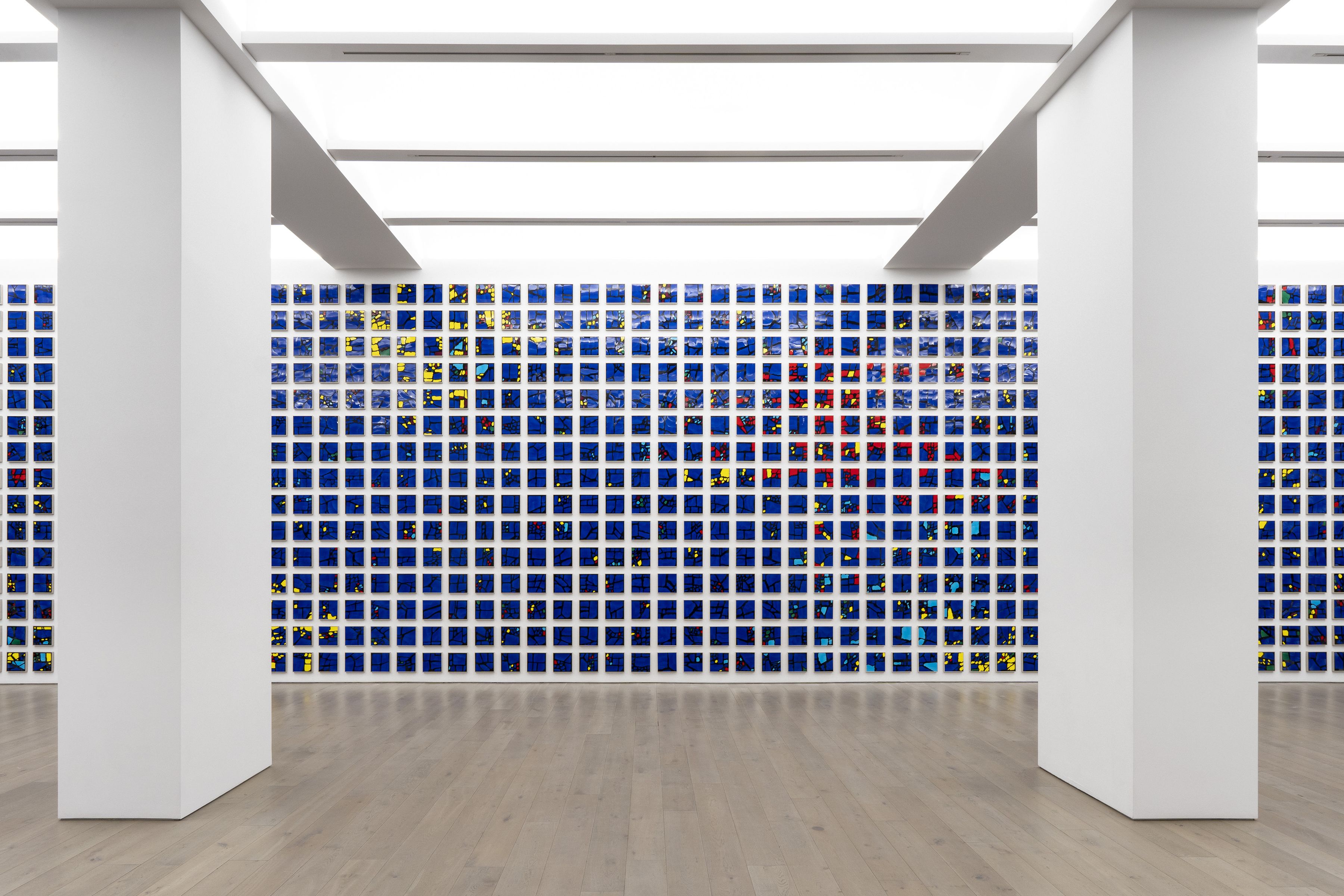
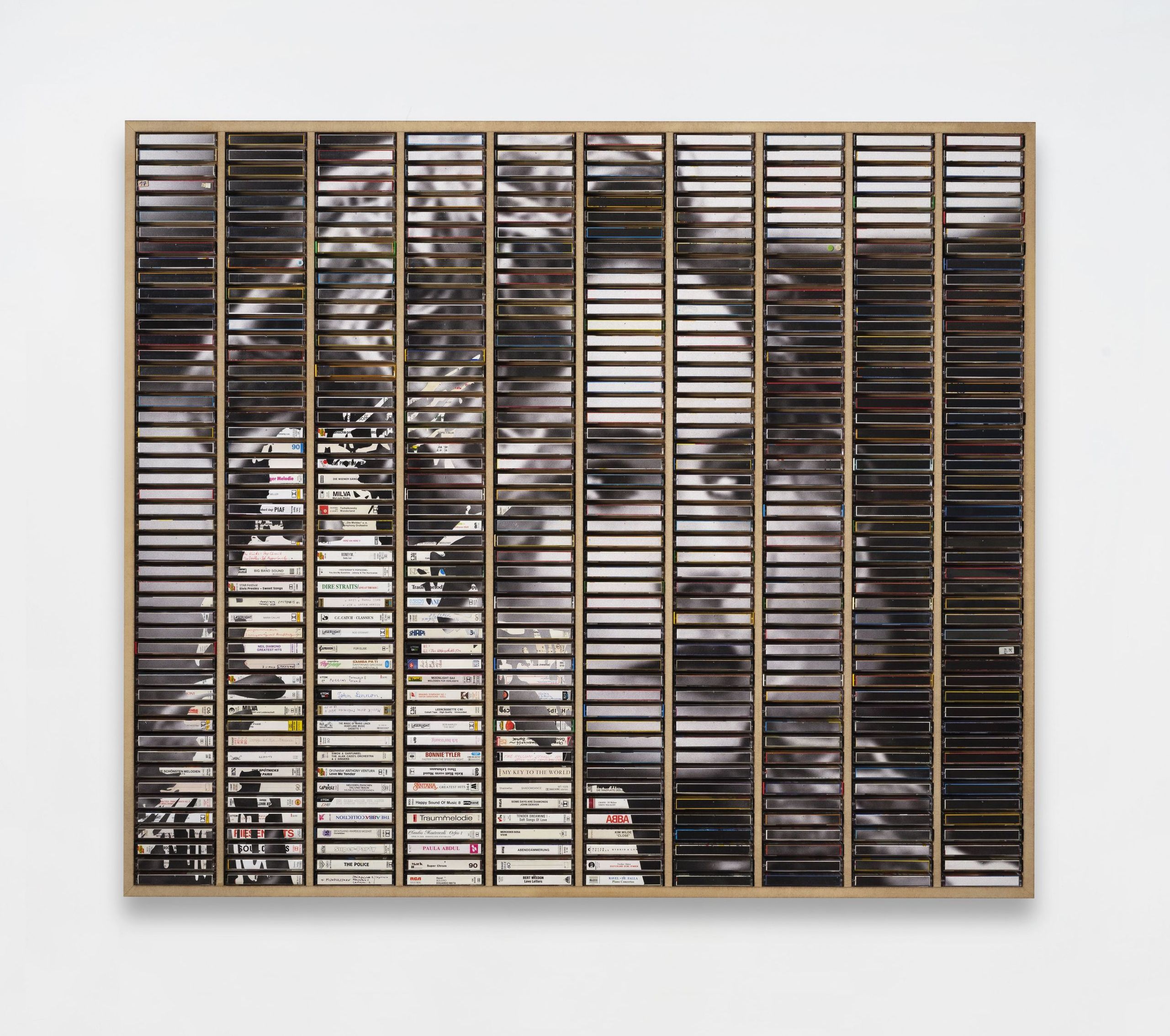
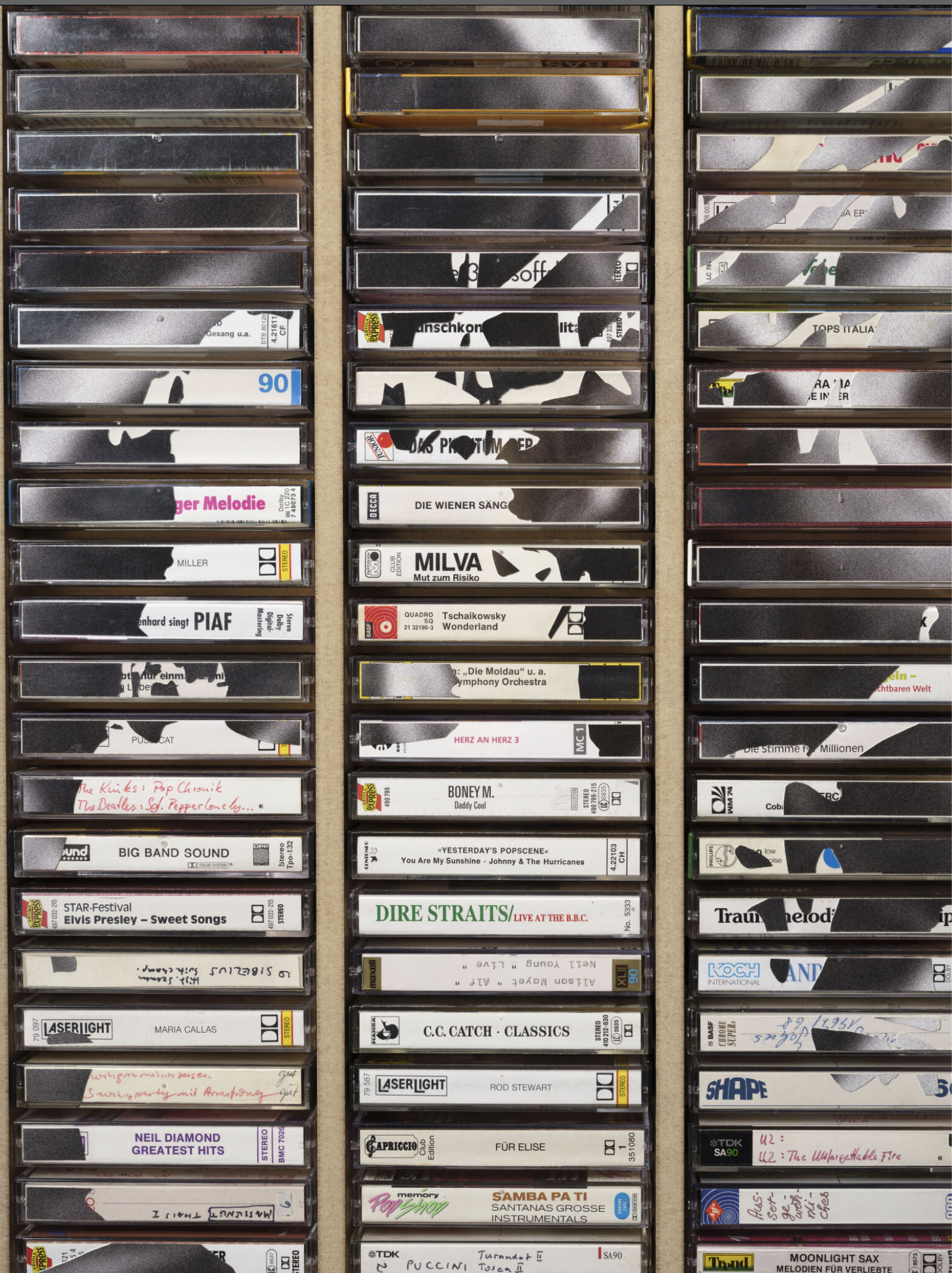
This is easiest to sense in the larger grid-based works. Density increases. Scale expands. Hierarchy never quite arrives. There is no position from which the work resolves into an image rather than a system. Each element holds its place, resisting coherence without asking to be noticed for that resistance.
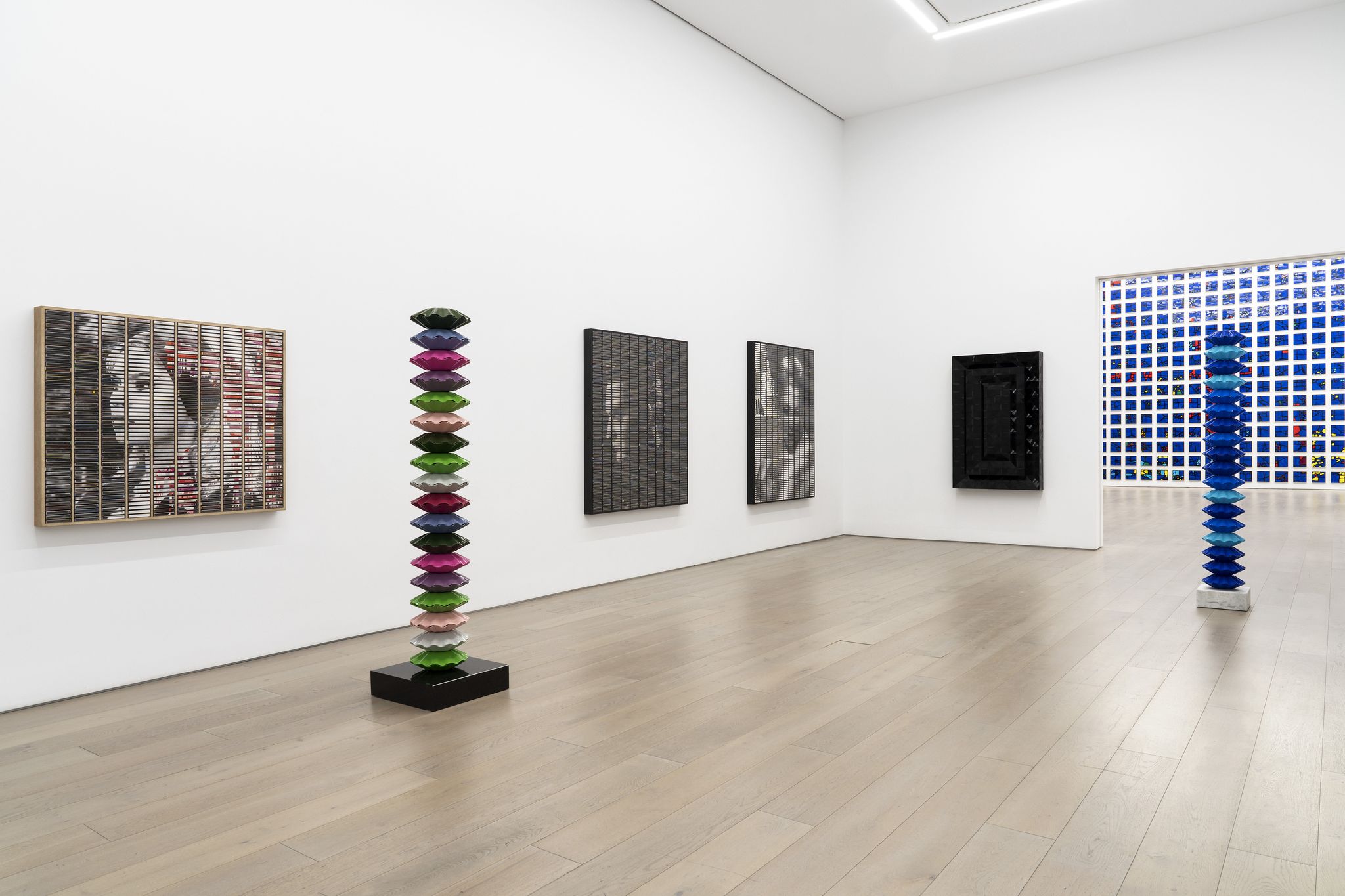
The portrait works remain under the same condition. Faces appear briefly, then fragment. Interruption comes early, before continuity has time to settle. What’s withheld isn’t emotion, but alignment.
As this pattern continues, the exhibition’s logic becomes clearer. It isn’t concerned with preserving memory. Recognition itself is treated as material — repeated, compressed, held until familiarity begins to obstruct rather than clarify.
The exhibition is careful in how steadily it maintains this condition.
By the end, interpretation feels less urgent than staying. Recognition remains present, but it no longer organizes attention.
Recognition is usually a form of access. It allows images, sounds, and references to organize experience, guiding attention toward meaning, memory, or narrative completion.
In this exhibition, recognition behaves differently. Familiar materials remain legible, but they no longer provide orientation. References register, then flatten. What might normally open interpretation instead presses against it, holding attention in place rather than moving it forward.
The result is a condition where recognition persists without authority. Looking continues, but without progression. Familiarity stays active, yet loses its organizing role — becoming material rather than message.





%202.jpg)
1. Gregor Hildebrandt, Blau im Gedächtnis / Blue in Memoriam, 2022–2026. Cut records, canvas, aluminium, wood (1,330 in total). Variable dimensions and layout; can be installed on one or multiple walls. © Gregor Hildebrandt.
2. Detail: Gregor Hildebrandt, Blau im Gedächtnis / Blue in Memoriam, 2022–2026. Cut records, canvas, aluminium, wood (1,330 in total). Variable dimensions and layout; can be installed on one or multiple walls. © Gregor Hildebrandt.
3. Gregor Hildebrandt, Blau im Gedächtnis (A196), 2025. Cut records, canvas, aluminium, wood, 24 × 24 cm (9 7/16 × 9 7/16 inches). © Gregor Hildebrandt.
4. Installation view: Gregor Hildebrandt, Blau im Gedächtnis / Blue in Memoriam, Perrotin, New York, 2026. © Perrotin.
5. Gregor Hildebrandt, Stephan Eicher Kasten, 2025. Inkjet print, plastic cases, inlays in wooden case, 154 × 136.5 × 8.6 cm (60 5/8 × 53 3/4 × 3 3/8 inches). © Gregor Hildebrandt.
6. Detail: Gregor Hildebrandt, Stephan Eicher Kasten, 2025. Inkjet print, plastic cases, inlays in wooden case, 154 × 136.5 × 8.6 cm (60 5/8 × 53 3/4 × 3 3/8 inches). © Gregor Hildebrandt.
7. Gregor Hildebrandt, Aggregat, 2025. Cut records, acrylic, MDF, wood, 153 × 96.3 × 16.4 cm (60 1/4 × 37 15/16 × 6 7/16 inches). © Gregor Hildebrandt.
8. Gregor Hildebrandt, S. Stone, 2025. Inkjet print, plastic cases, inlays in wooden case, 124.2 × 106 × 8.6 cm (48 7/8 × 41 3/4 × 3 3/8 inches). © Gregor Hildebrandt.
9. Detail: Gregor Hildebrandt, S. Stone, 2025. Inkjet print, plastic cases, inlays in wooden case, 124.2 × 106 × 8.6 cm (48 7/8 × 41 3/4 × 3 3/8 inches). © Gregor Hildebrandt.
10. Gregor Hildebrandt, Shove-it, 2025. Cut records, acrylic, MDF, wood, 97.1 × 73.4 × 16.4 cm (38 1/4 × 28 7/8 × 6 7/16 inches). © Gregor Hildebrandt.
11. Detail: Gregor Hildebrandt, Shove-it, 2025. Cut records, acrylic, MDF, wood, 97.1 × 73.4 × 16.4 cm (38 1/4 × 28 7/8 × 6 7/16 inches). © Gregor Hildebrandt.
Cover: Installation view: Gregor Hildebrandt, Blau im Gedächtnis / Blue in Memoriam, Perrotin, New York, 2026. © Perrotin.
All images © their respective rights holders.
Image rights & attribution →