

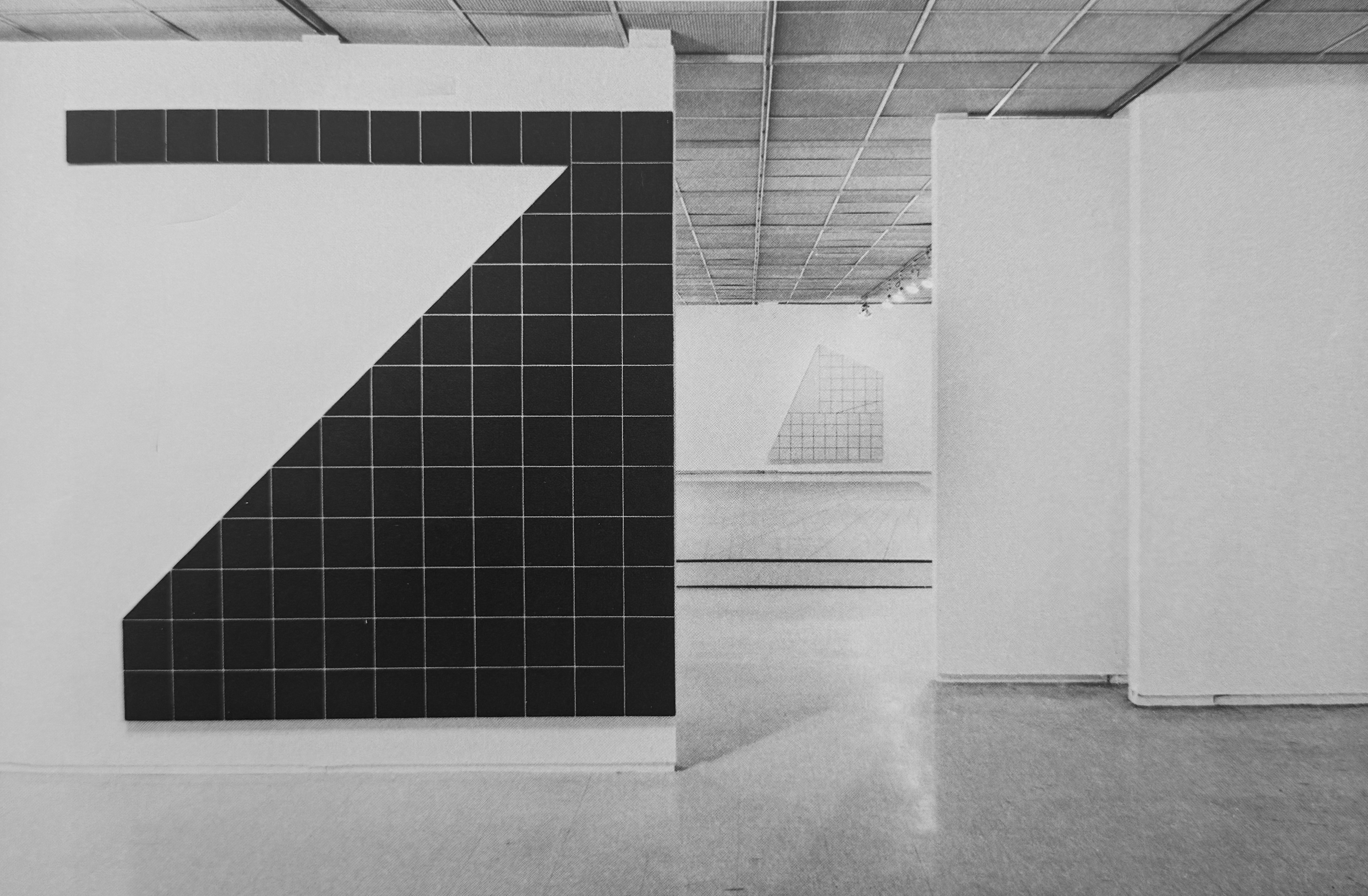
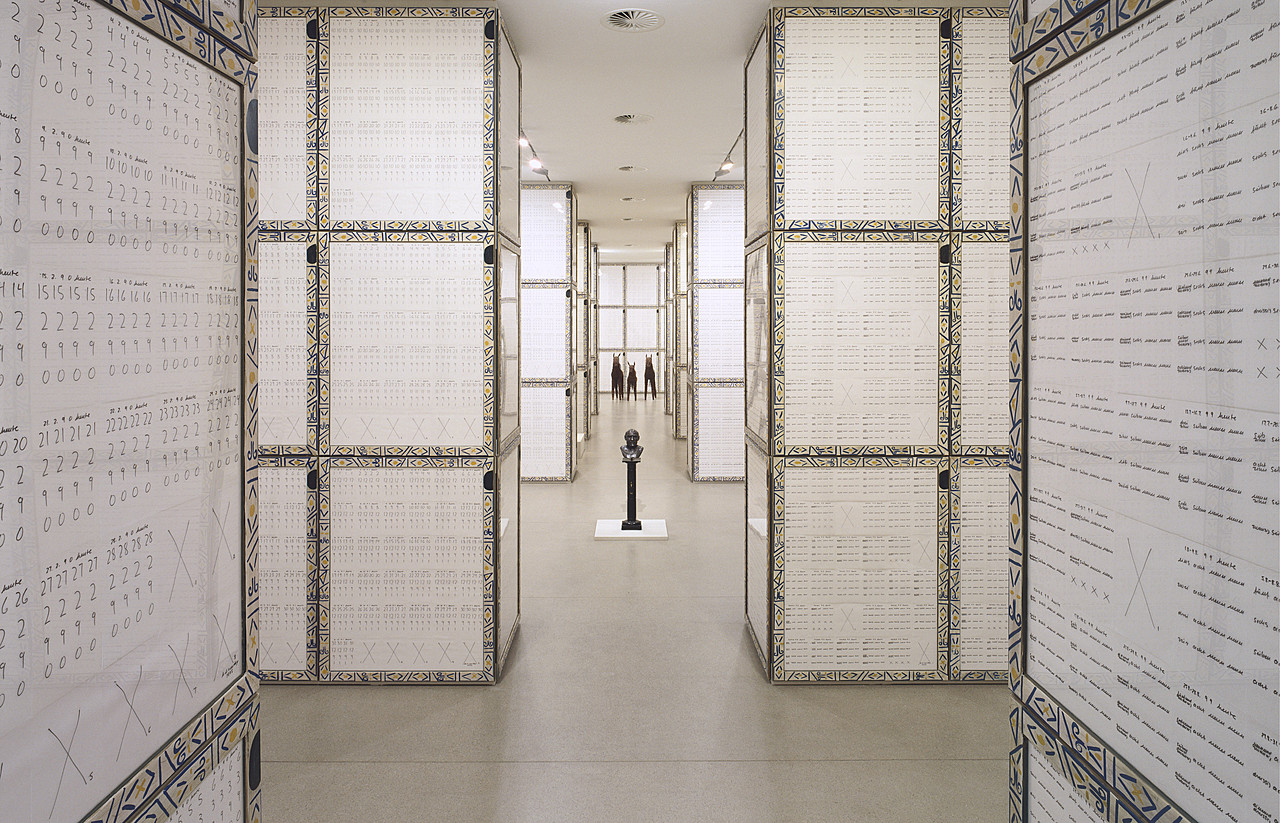
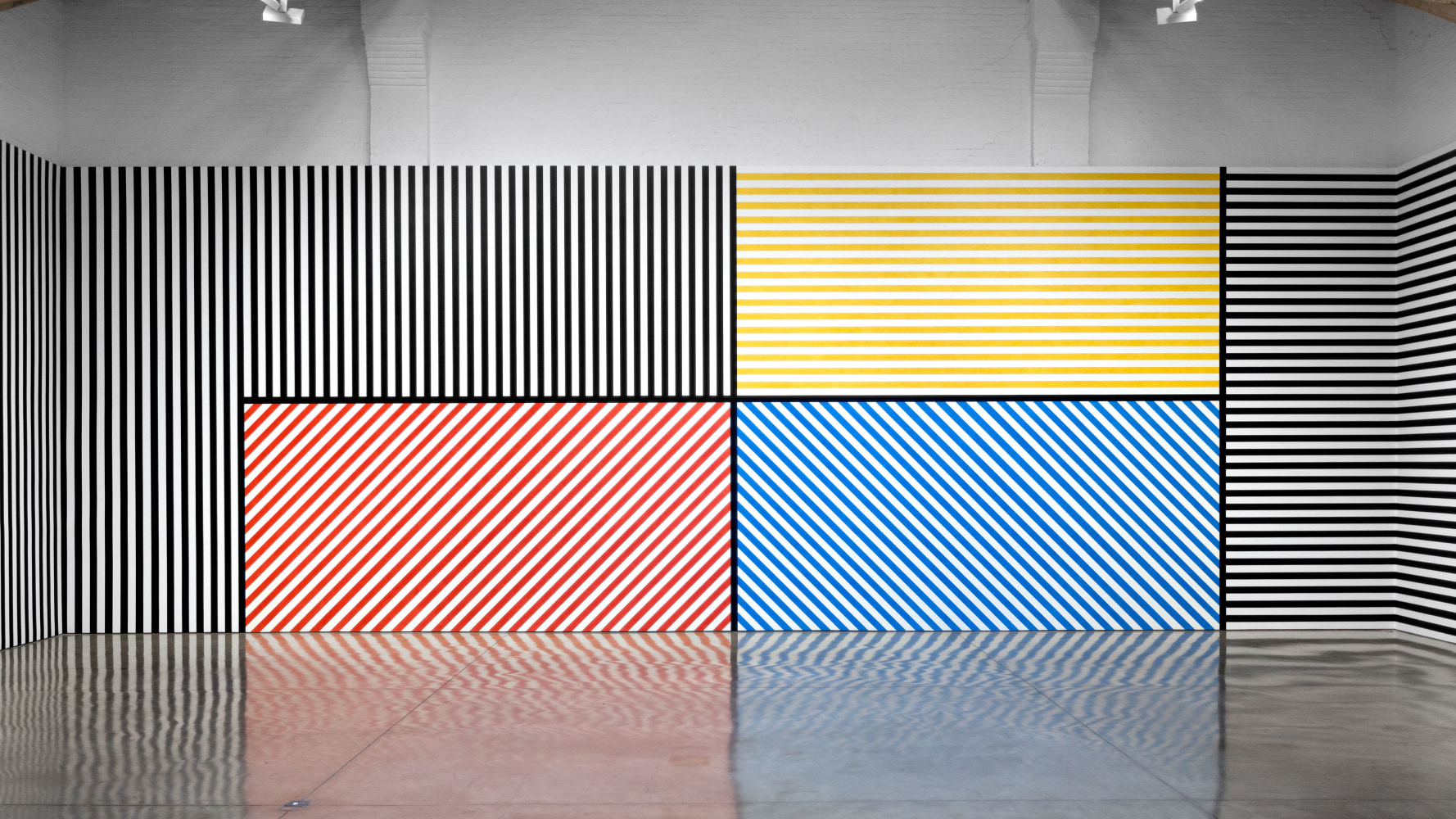


Systems are often understood as tools for producing images — diagrams, plans, or models that resolve into form. In Will Insley’s work, the system does not exist to generate an image. It replaces the need for one.
Before any single work asserts itself, attention is already being regulated. Drawings, fragments, and documents do not function as representations of a future city or speculative proposal. Relationships are fixed by rule. Architecture is not projected outward; it is held inward, as a regulating condition.
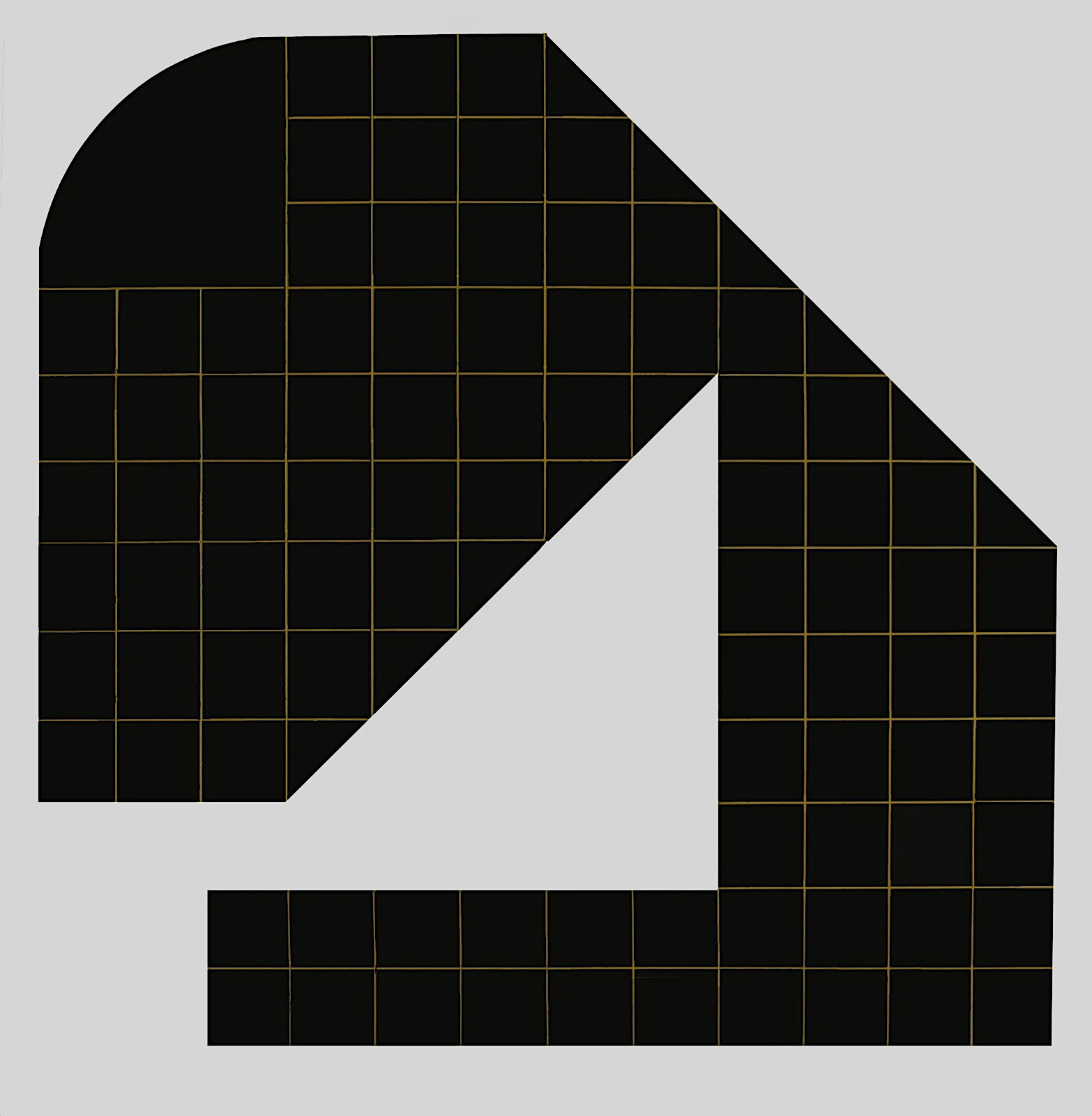
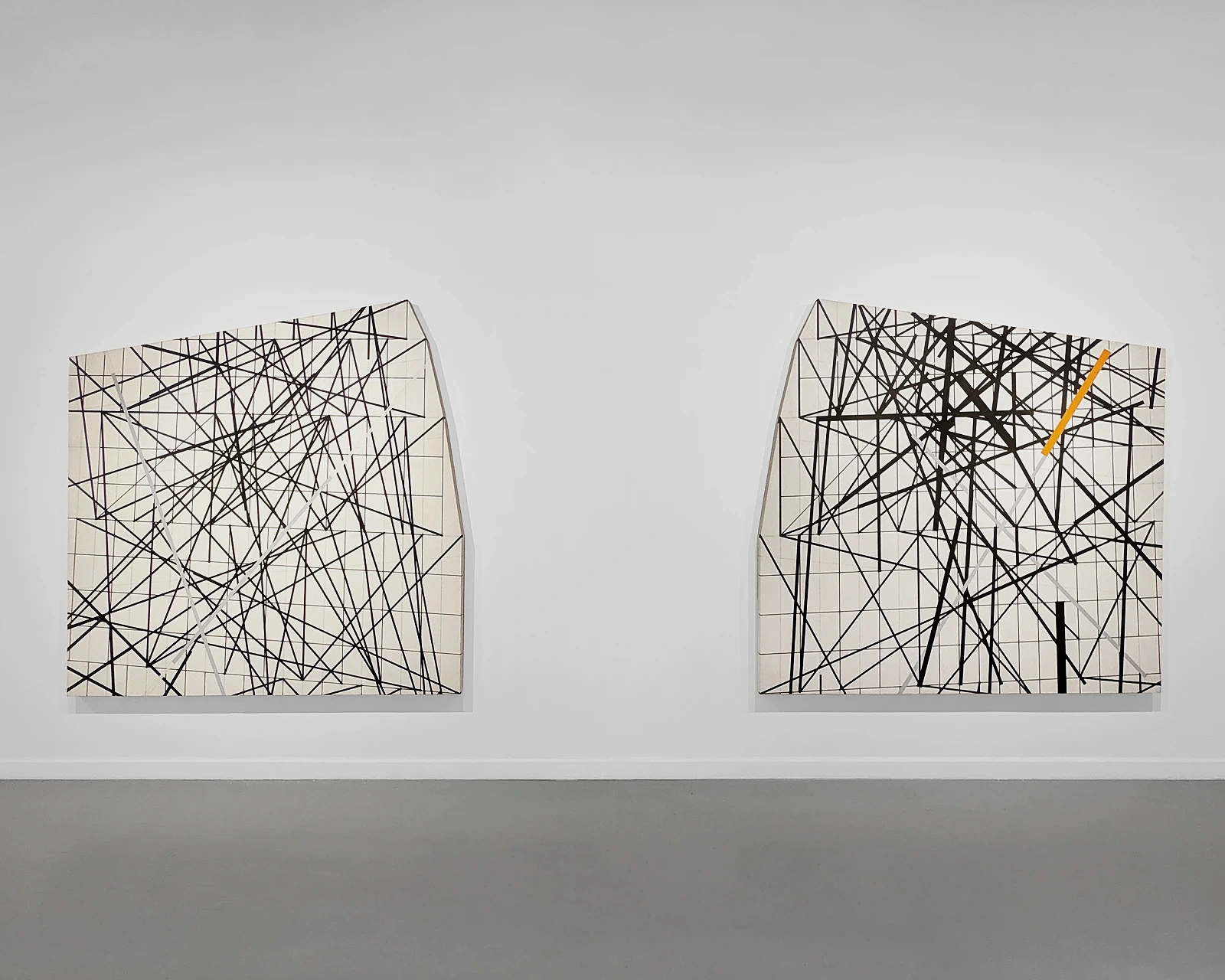
Across the gallery, geometry functions as syntax. Lines do not express movement or gesture; they delimit possibility. Grids, corridors, and sectional cuts recur not as motifs but as operational units. Each element advances through proportion, alignment, and sequence rather than visual emphasis. Nothing accelerates. Nothing culminates. Progress occurs through calibration, not escalation.
Because the system is complete, individual works do not seek autonomy. Drawings function as instructions already in force. Fragments appear as partial extractions from a larger structure that remains intact whether fully visible or not. When language enters, it does not clarify the work; it extends the system.
What the exhibition sustains is not a vision of architecture, but architecture as cognition. Resolution is withheld. Thought remains active — coherent, regulated, and unfinished.
A system collapses into representation when its rules serve an outcome rather than sustain a condition. In Insley’s work, the system remains operative because it never resolves into a final image or proposal.
Rules regulate continuity rather than generate form. Geometry holds relationships in place without directing them toward completion. Fragments remain partial not because they are unfinished, but because the system they belong to is already whole.
What persists is a mode of thinking that stays operative. Structure does not point beyond itself. It maintains coherence by refusing illustration and keeping thought in motion rather than fixing it in form.
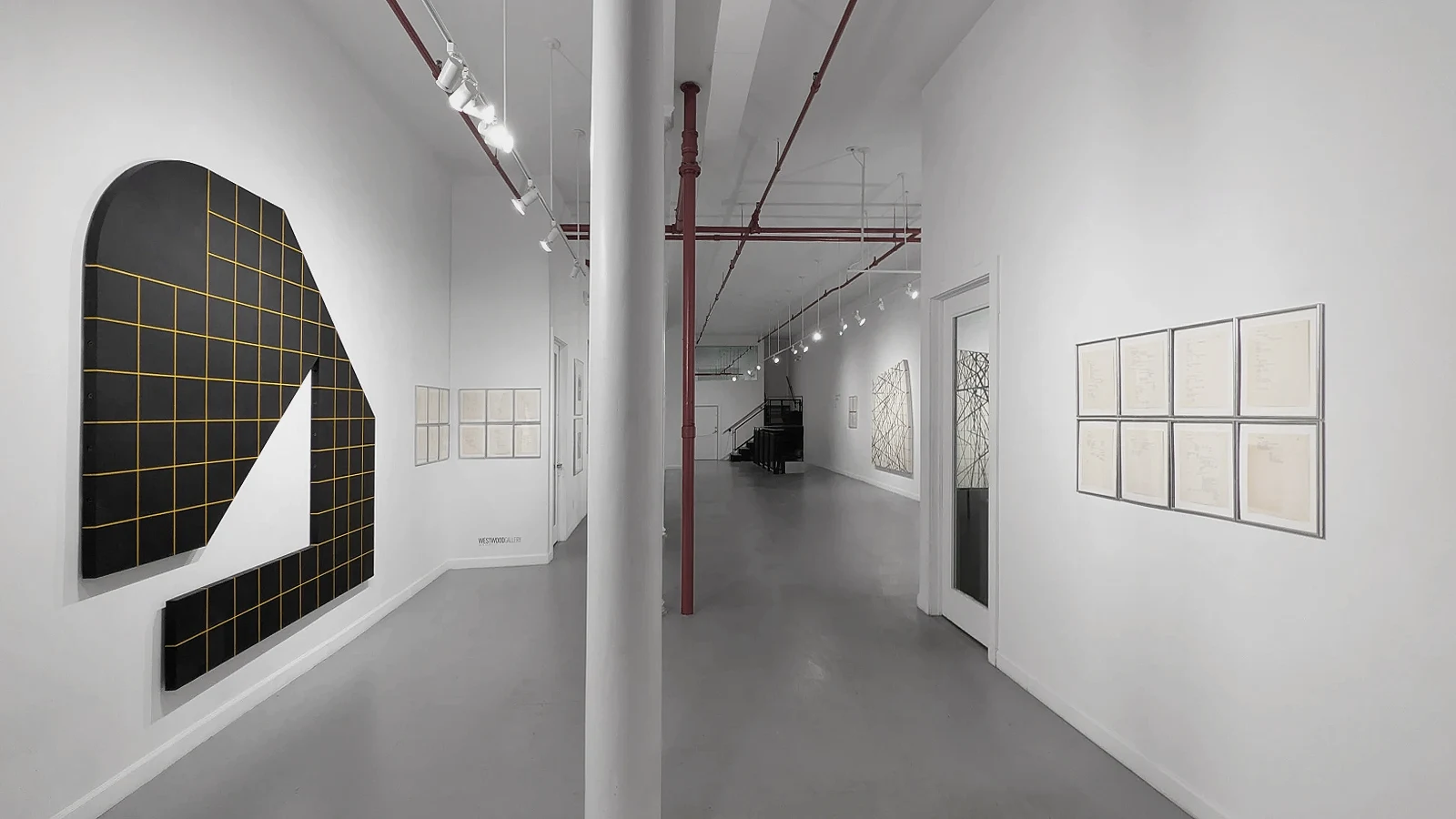
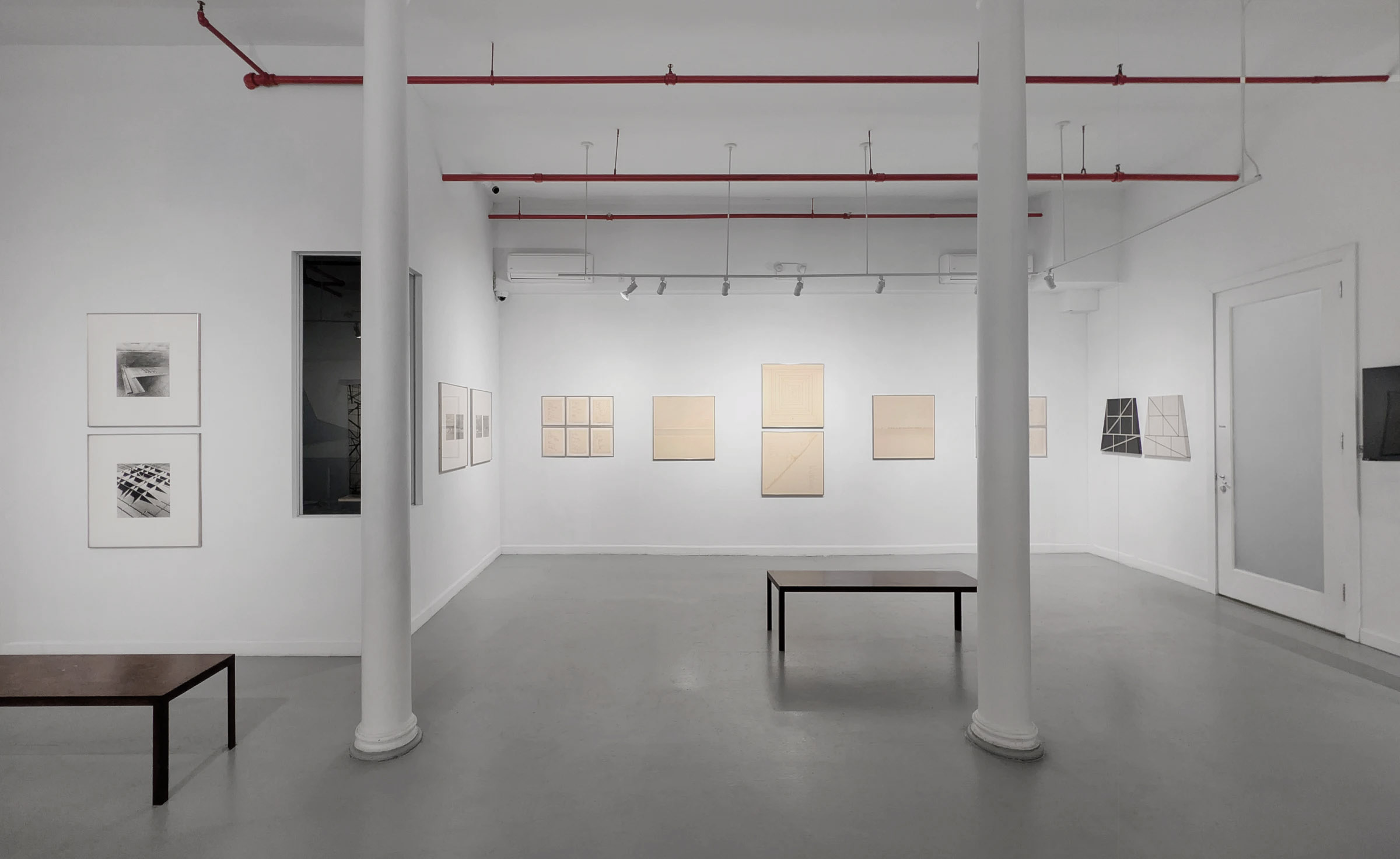



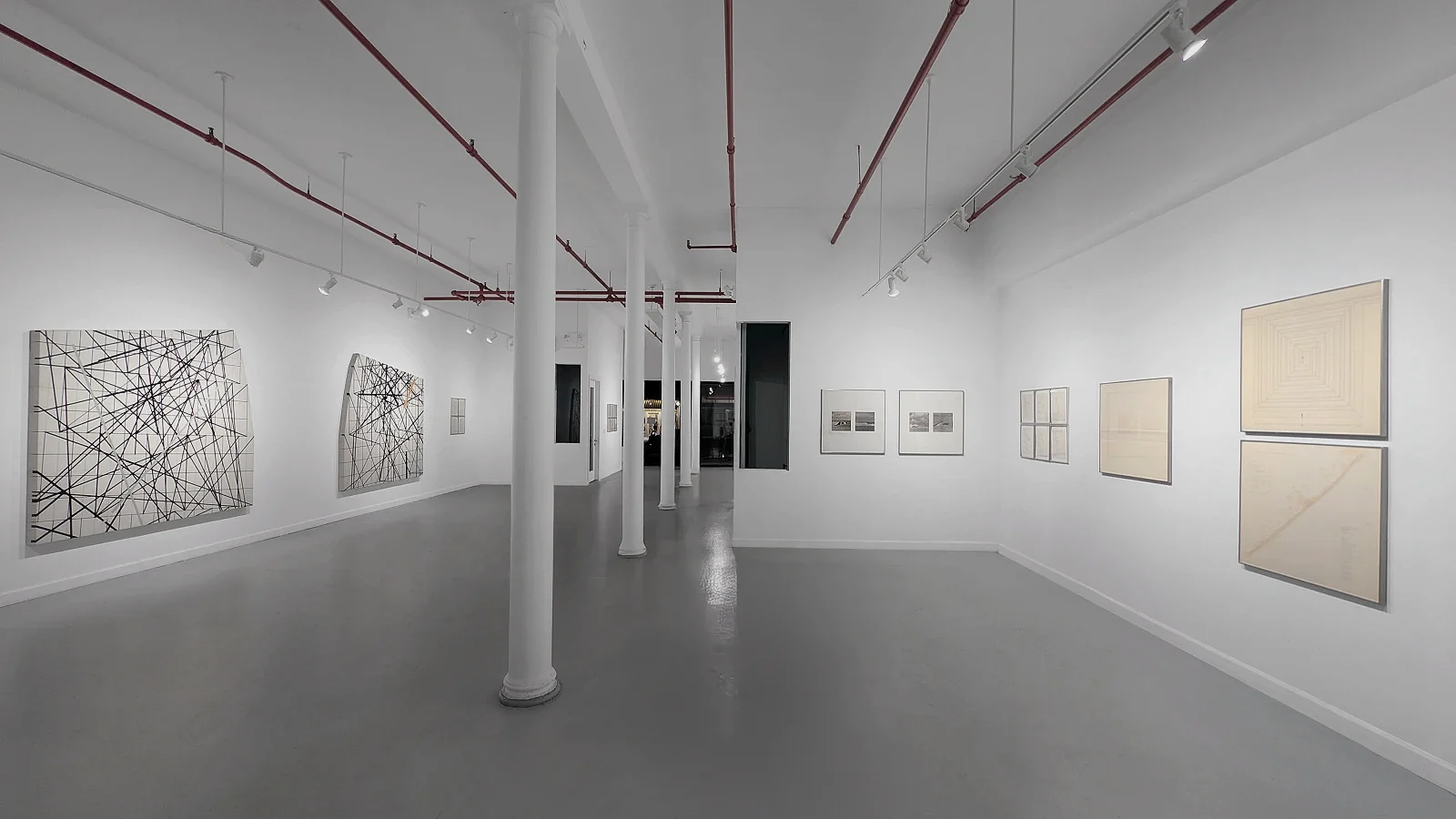
1. Will Insley: Architecture of the Mind | Installation view, Westwood Gallery, New York, 2026. Photograph by Westwood Gallery NYC.
2. Will Insley, Wall Fragment No. 66.4, 1966–1967. © Will Insley.
3. Will Insley: Architecture of the Mind | Installation view, Westwood Gallery, New York, 2026. Photograph by Westwood Gallery NYC.
4. Will Insley, /Building/ No. 14, Channel Space Auto-Run, Island Plan, Central Spiral, Plan and Section, 1969/74. © Will Insley.
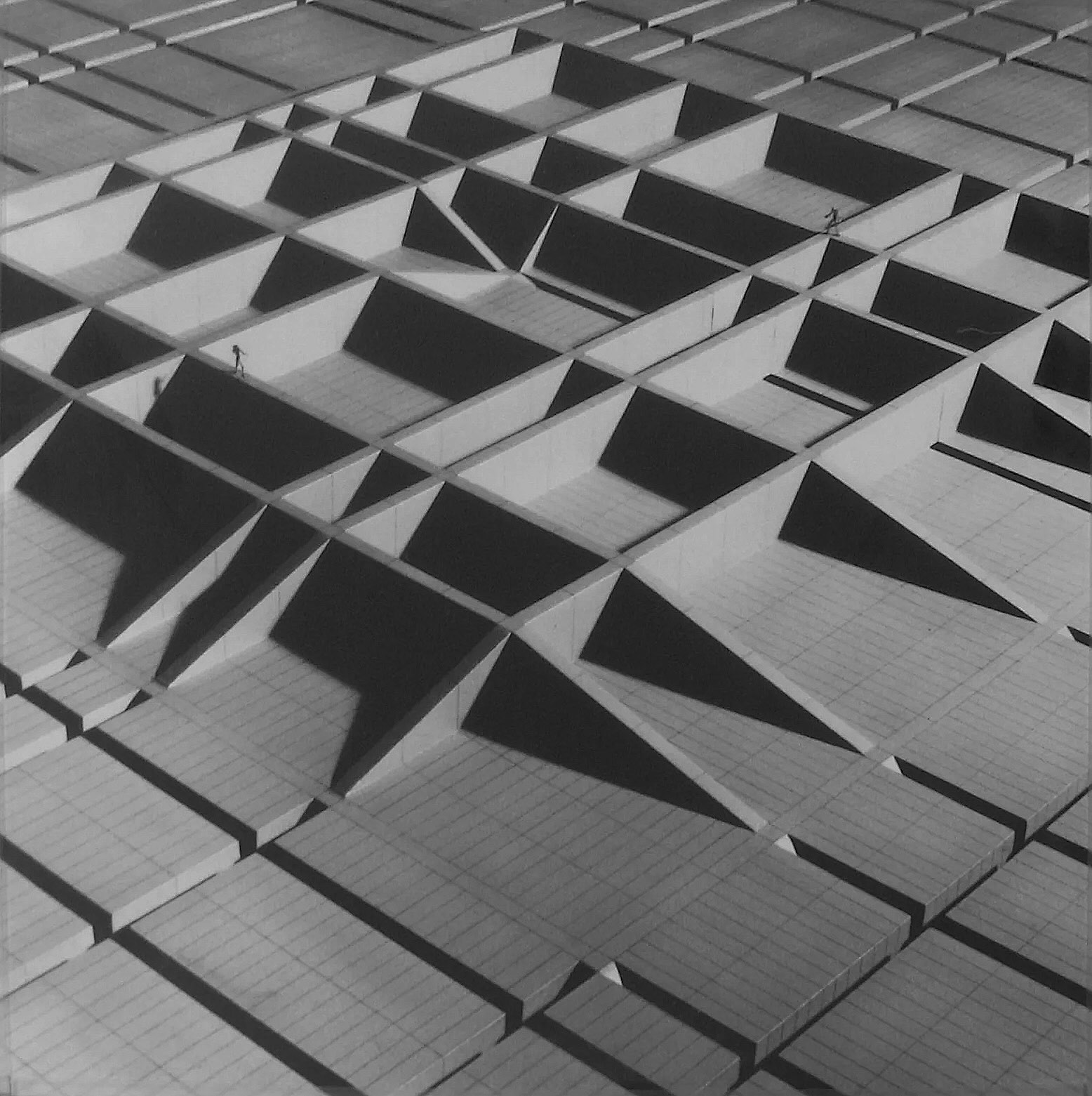
5. Will Insley, /Buildings/ Nos. 19–20, Interior Building Corridor of Life Gate, View from the Ground, 1970–1972, 1969/74. © Will Insley.
6. Will Insley, /Building/ No. 17, Passage Space Spiral and /Buildings/ Nos. 19–20, Interior Building Corridor of Life Gate, Views from the Ground, 1970–1972. © Will Insley.
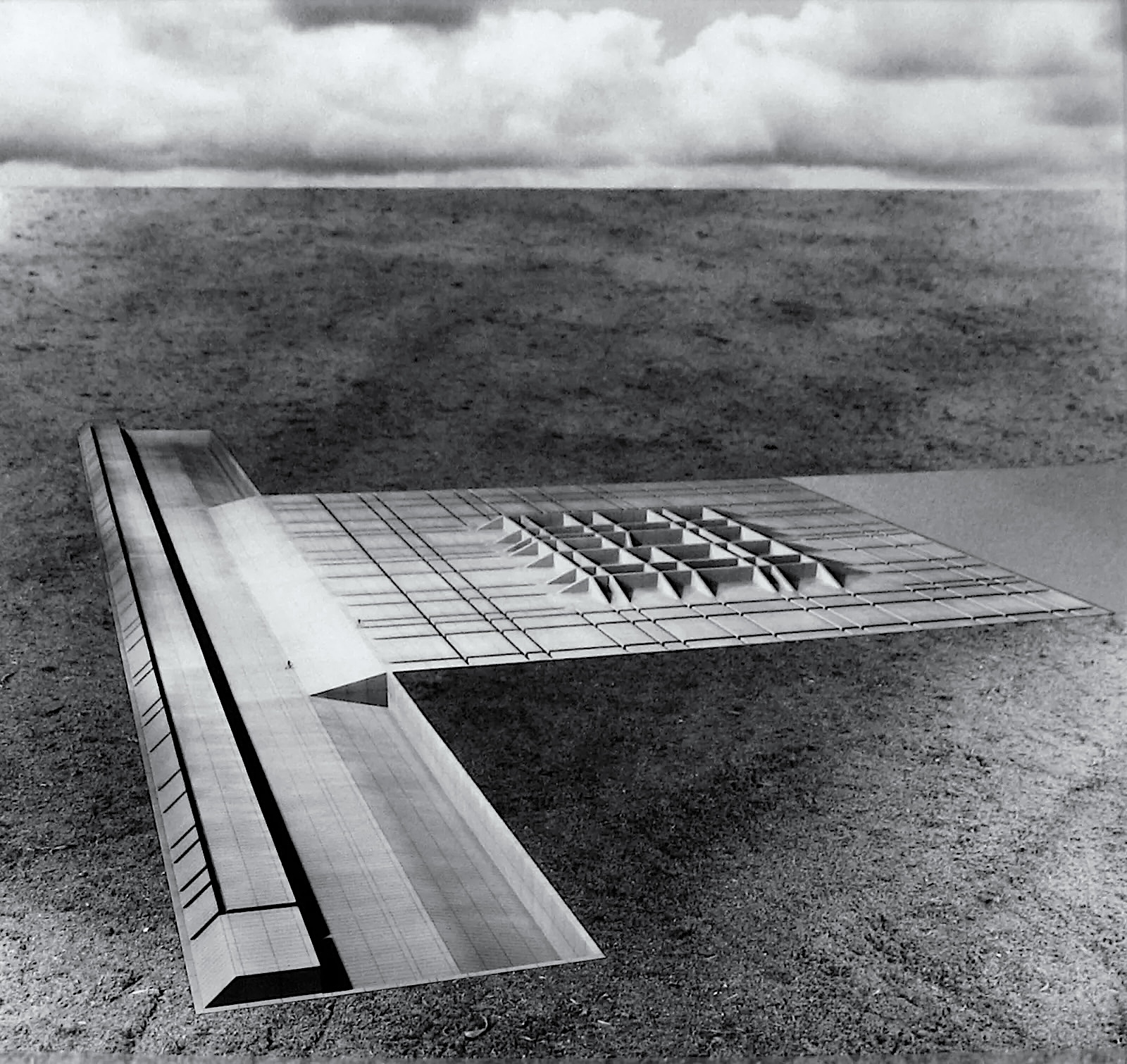
7. Will Insley, /Buildings/ Nos. 19–20, Interior Building Corridor of Life Gate, View from the Air, 1970–1972. © Will Insley.
8. Will Insley, Onecity Site, 1978/84. © Will Insley.
9. Will Insley: Architecture of the Mind | Installation view, Westwood Gallery, New York, 2026. Photograph by Westwood Gallery NYC.
10. Will Insley: Architecture of the Mind | Installation view, Westwood Gallery, New York, 2026. Photograph by Westwood Gallery NYC.
Cover: Will Insley, /Buildings/ Nos. 19–20, Interior Building Corridor of Life Gate, View from the Air, 1970–1972. © Will Insley.
All images © their respective rights holders.
Image rights & attribution →