

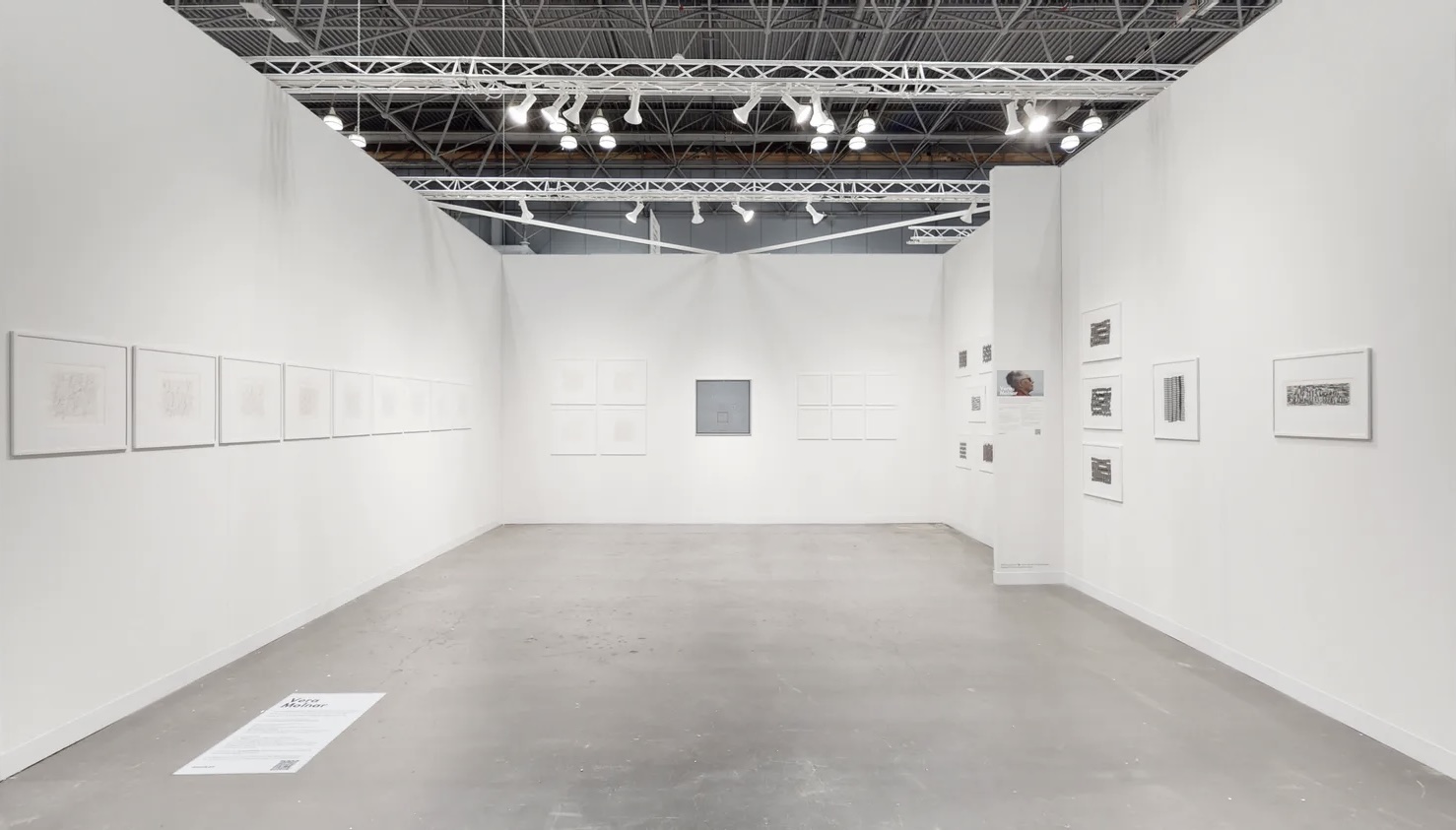


Vera Molnár’s work doesn’t announce itself. It settles in. The first impression is not invention, but care — each decision weighed, adjusted, and kept deliberately small. Nothing pushes forward. Nothing asks to be followed. The work holds its position.
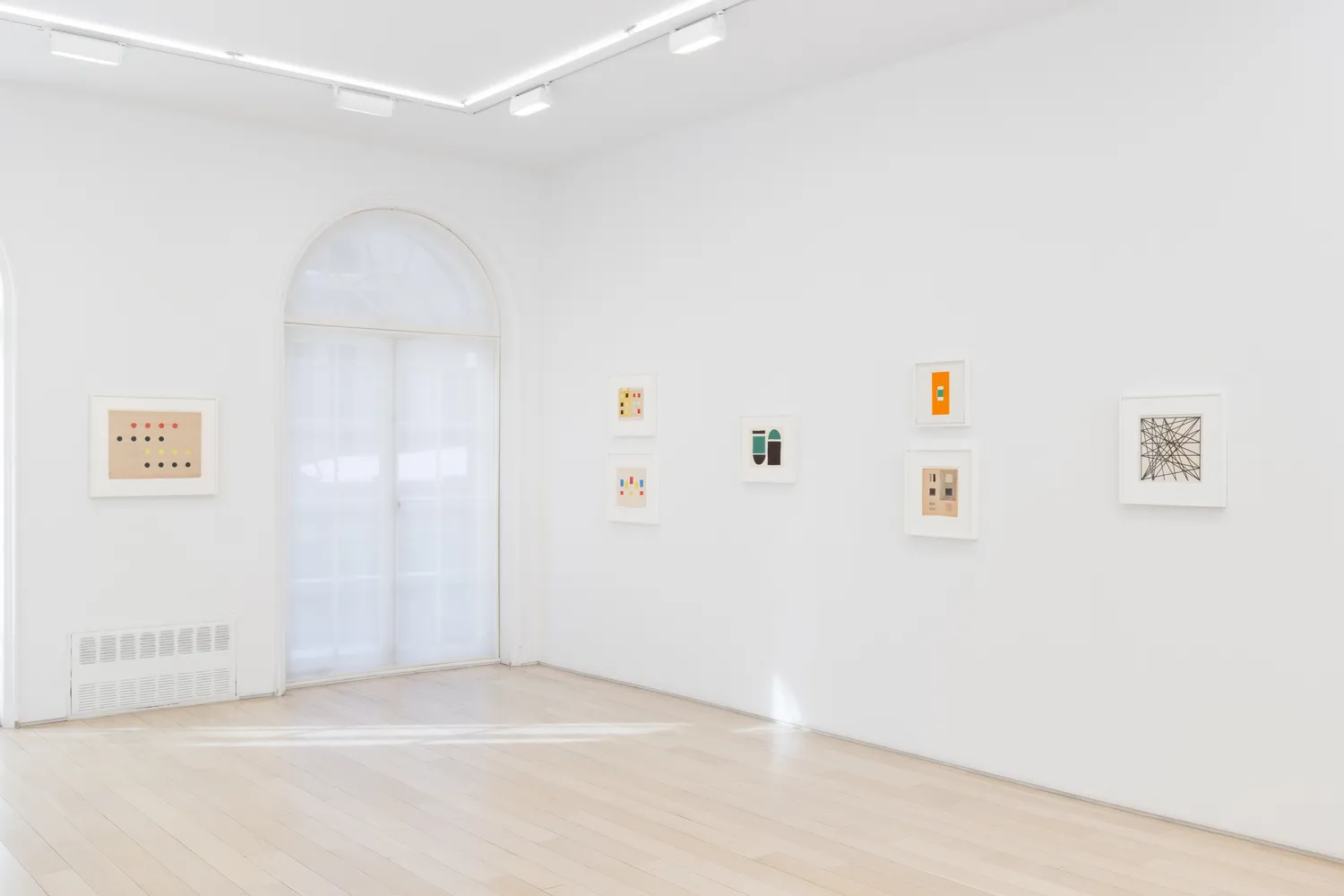
In Untitled (Circles) (1951), rows of colored dots sit in quiet alignment. The spacing is measured, the palette restrained. Color doesn’t behave emotionally here. Black, red, and yellow feel equivalent, each carrying the same visual weight. The arrangement doesn’t direct attention so much as hold it. Looking slows.
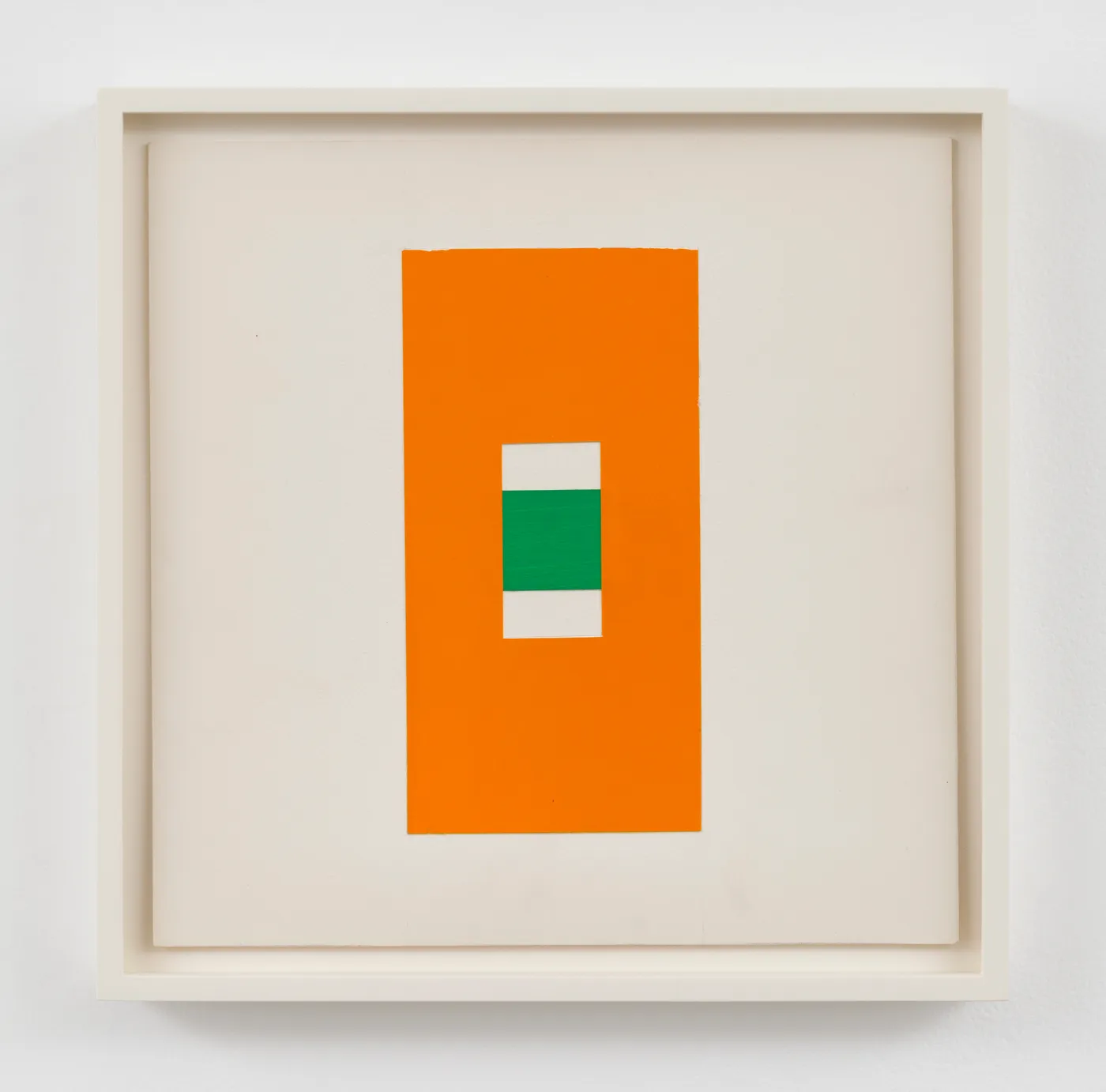
That steadiness carries into Icone (Icon) (1966). A vertical orange form occupies the field, interrupted by a smaller green rectangle set within it. The contrast is immediate, but it doesn’t resolve into focus or hierarchy. The inner form doesn’t demand attention; it remains held. Balance emerges not through symmetry, but through restraint.
As the works return, small adjustments begin to register — a shift in proportion, a change in spacing — just enough to matter without tipping into variation. The grid doesn’t feel imposed. It feels maintained. Each piece tests how much difference can enter while the overall condition still holds.
In Lettres de ma mère (1988–90), handwritten marks spread densely across the surface. From a distance, the field reads as almost intimate. Up close, language dissolves. The marks stop communicating and begin to behave like pattern. Whatever history they carry remains present, but contained — absorbed into repetition rather than released as narrative.
Nothing here asks to be decoded. Time doesn’t unfold through these works; it settles into them. The longer attention stays, the clearer it becomes that the work isn’t withholding meaning — it’s refusing to hurry it. Structure isn’t used to eliminate the human touch, but to prevent it from taking over. What’s offered is a steady place for attention to remain, without being led anywhere else.
These works share a way of holding decisions in place. Differences appear — in spacing, proportion, density — but they never escalate into emphasis. Nothing competes. Nothing resolves. The structure remains steady enough that small changes matter without becoming expressive. What connects them is not a system to be read, but a condition that allows attention to continue without demand.

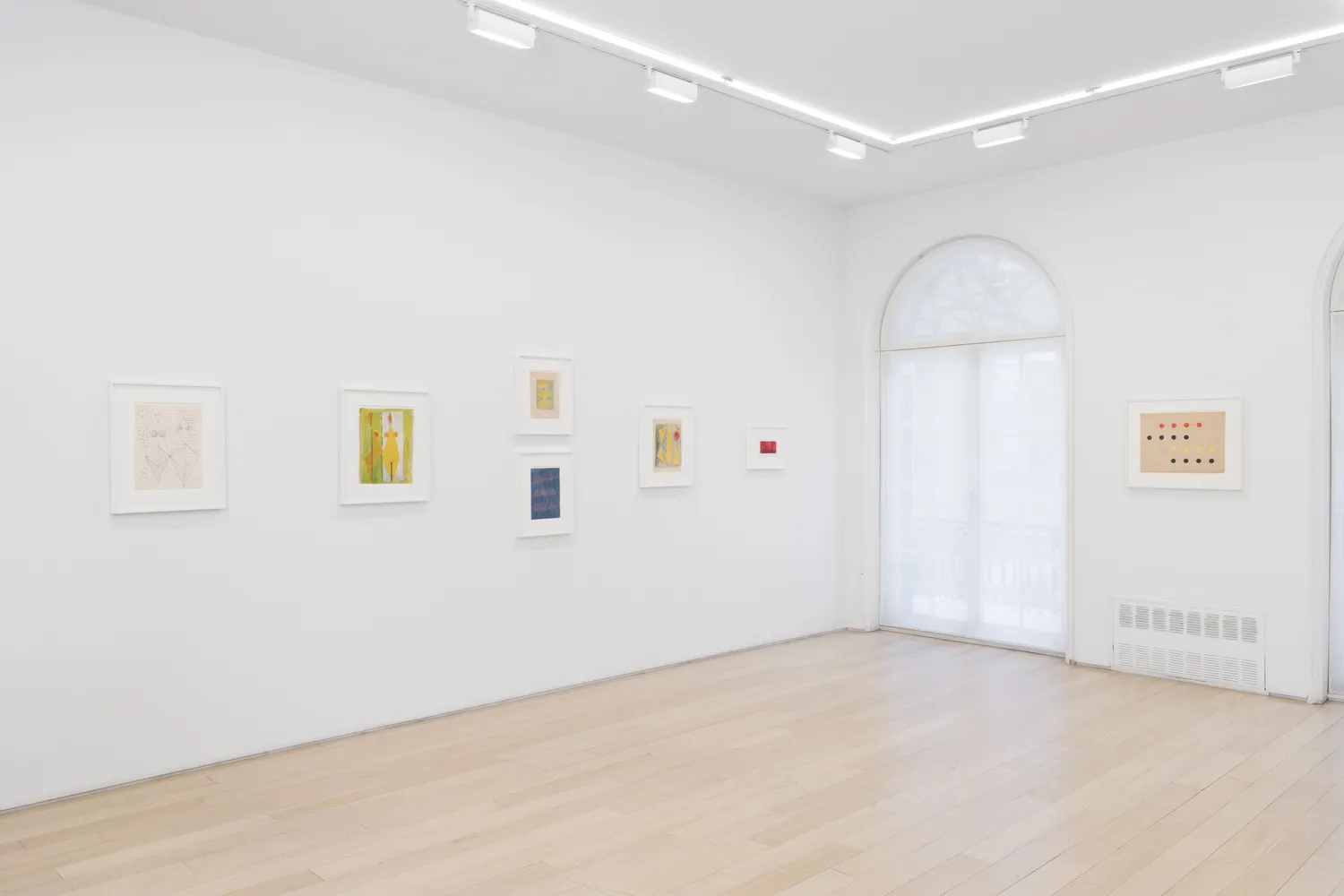


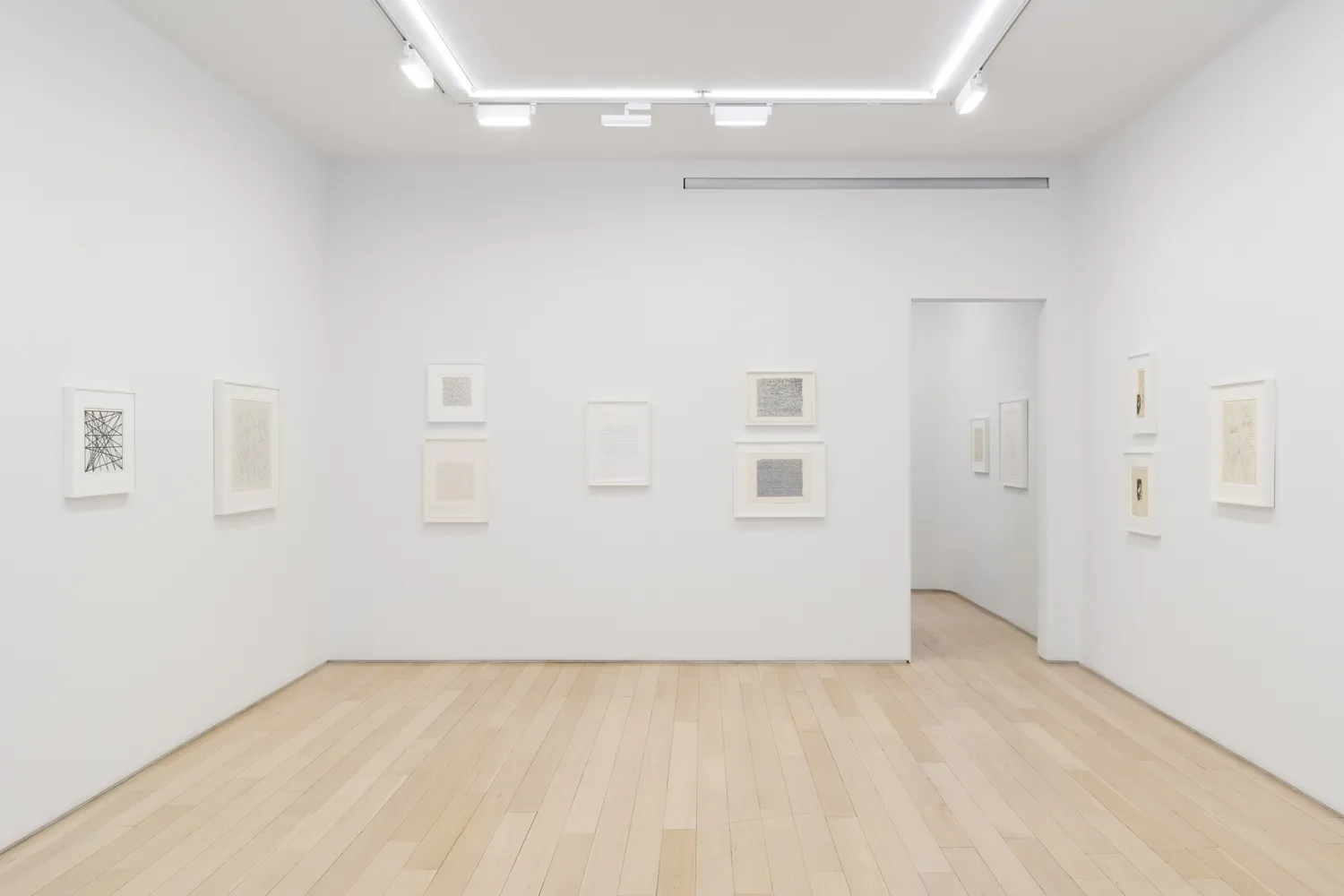




1. Installation view: Vera Molnar, What Matters Is the Adventure, Van Doren Waxter, New York, 2026. Courtesy Van Doren Waxter.
2. Vera Molnar, Untitled, 1949. Gouache, graphite, and collage on paper, 7 3/4 × 10 1/4 inches (19.7 × 26 cm). © Vera Molnar / ADAGP, Paris. Courtesy Van Doren Waxter.
3. Installation view: Vera Molnar, What Matters Is the Adventure, Van Doren Waxter, New York, 2026. Courtesy Van Doren Waxter.
4. Vera Molnar, Untitled (Circles), 1951. Gouache on paper, 14 1/2 × 19 1/2 inches (36.8 × 49.5 cm). © Vera Molnar / ADAGP, Paris. Courtesy Van Doren Waxter.
5. Vera Molnar, Inclinaisons (Inclinations), 1971. Computer graphic on Benson plotter paper, 19 3/4 × 19 3/4 inches (50 × 50 cm). © Vera Molnar / ADAGP, Paris. Courtesy Van Doren Waxter.
6. Installation view: Vera Molnar, What Matters Is the Adventure, Van Doren Waxter, New York, 2026. Courtesy Van Doren Waxter.
7. Vera Molnar, Lettres de ma mère (Letters from My Mother), 1988–1990. Computer ink and handwork on paper, 12 1/2 × 16 3/8 inches (31.8 × 41.6 cm). © Vera Molnar / ADAGP, Paris. Courtesy Van Doren Waxter.
8. Vera Molnar, Herbin est un imbécile (Herbin Is an Idiot), 1952. Collage of painted paper, 8 1/4 × 10 1/2 inches (21 × 26.7 cm). © Vera Molnar / ADAGP, Paris. Courtesy Van Doren Waxter.
9. Installation view: Vera Molnar, What Matters Is the Adventure, Van Doren Waxter, New York, 2026. Courtesy Van Doren Waxter.
10. Vera Molnar, Icône (Icon), 1966. Gouache and collage on board, 10 3/4 × 10 3/4 inches (27.3 × 27.3 cm). © Vera Molnar / ADAGP, Paris. Courtesy Van Doren Waxter.
11. Vera Molnar, Untitled, 1952. Watercolor and graphite on paper, 8 13/16 × 8 3/8 inches (22.4 × 21.3 cm). © Vera Molnar / ADAGP, Paris. Courtesy Van Doren Waxter.
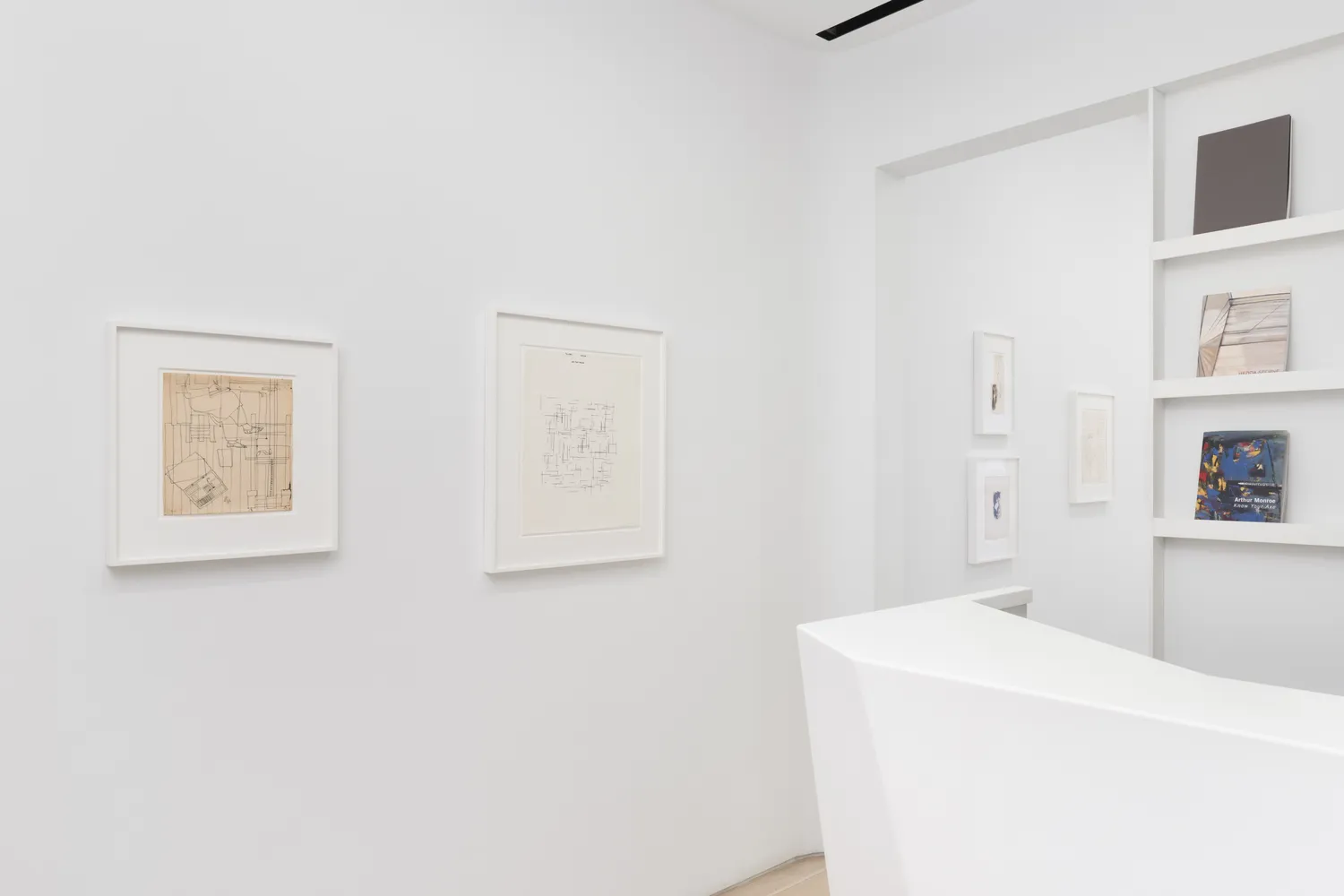
12. Installation view: Vera Molnar, What Matters Is the Adventure, Van Doren Waxter, New York, 2026. Courtesy Van Doren Waxter.
13. Vera Molnar, (Des) ordres ((Some) Orders), 1976. Computer graphic on Benson plotter paper, 19 1/2 × 14 inches (49.5 × 35.6 cm). © Vera Molnar / ADAGP, Paris. Courtesy Van Doren Waxter.
Cover: Installation view: Vera Molnar, What Matters Is the Adventure, Van Doren Waxter, New York, 2026. Courtesy Van Doren Waxter.
All images © their respective rights holders.
Image rights & attribution →