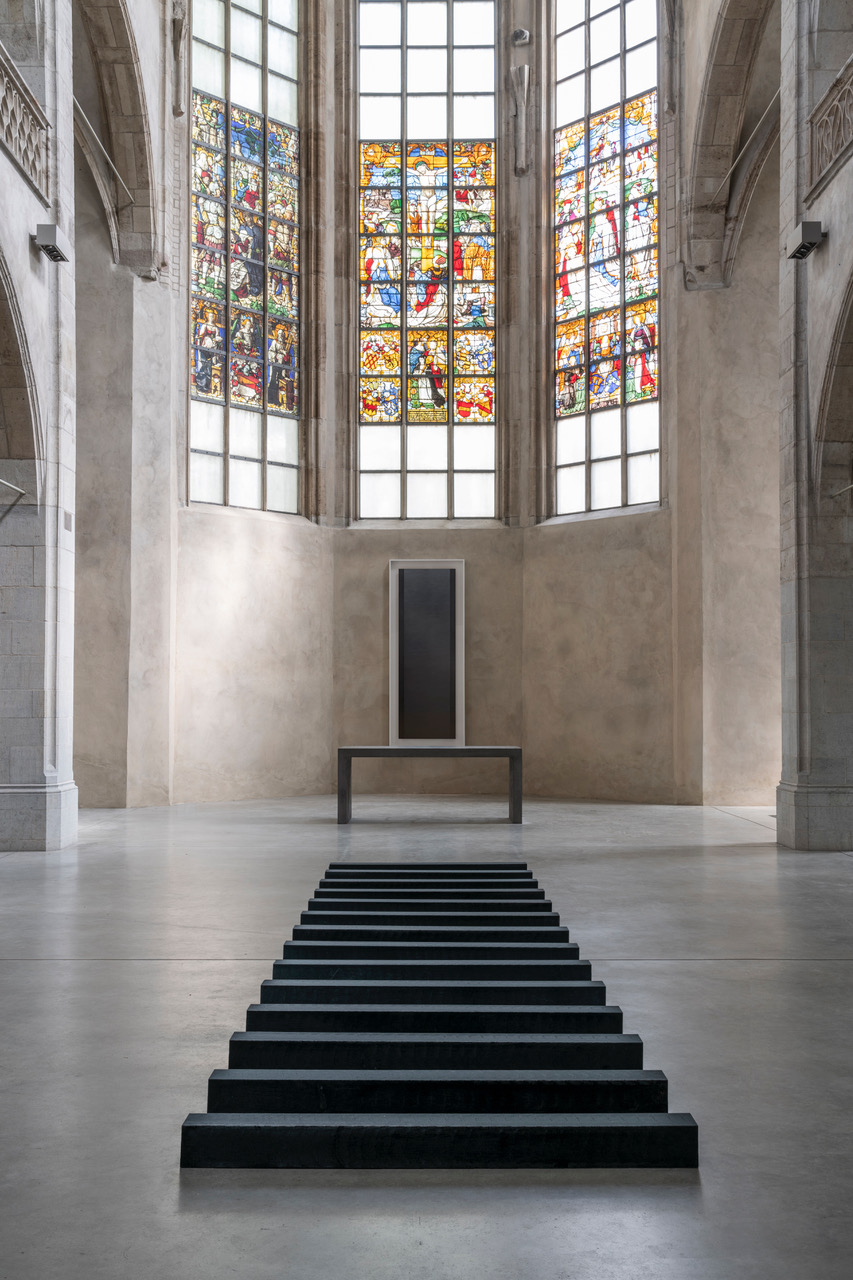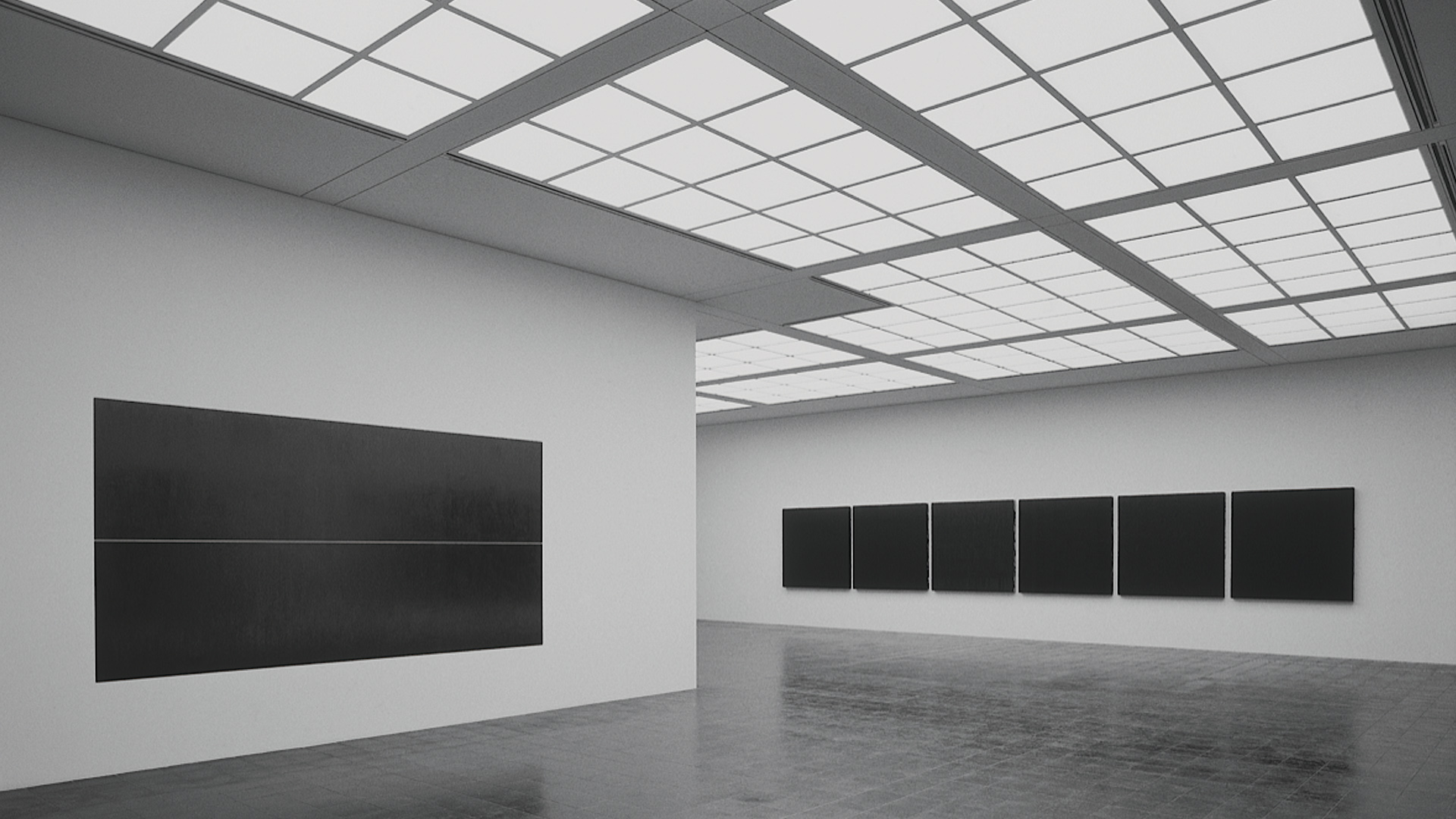
Frank Gerritz works at the boundary where drawing becomes spatial registration. His practice treats measurement not as representation, but as a condition that structures perception. Graphite is used less as a mark than as a calibrating surface, absorbing light unevenly and registering architectural scale through restraint and precision.
Across wall, floor, and planar works, Gerritz employs fixed systems of alignment and proportion. These systems do not describe space; they operate within it. Surfaces behave like architectural elements rather than images, requiring the viewer to navigate distance, position, and bodily orientation. The work shifts subtly with movement, revealing instability within an otherwise constant measure.
Gerritz’s approach removes expressive hierarchy in favor of controlled variation. Change emerges through light, angle, and proximity rather than compositional decision. Drawing, installation, and sculpture are treated as the same structural problem addressed at different scales: how a surface can hold space without depiction.
His work situates itself within a lineage of post-minimal and architectural abstraction, yet remains distinct in its insistence on measurement as an active spatial agent. Gerritz does not translate architecture into art; he registers space through calibrated surface, allowing perception itself to become the site of structure.
Frank Gerritz is a German artist whose work explores measurement, proportion, and architectural space through graphite drawings and installations.