

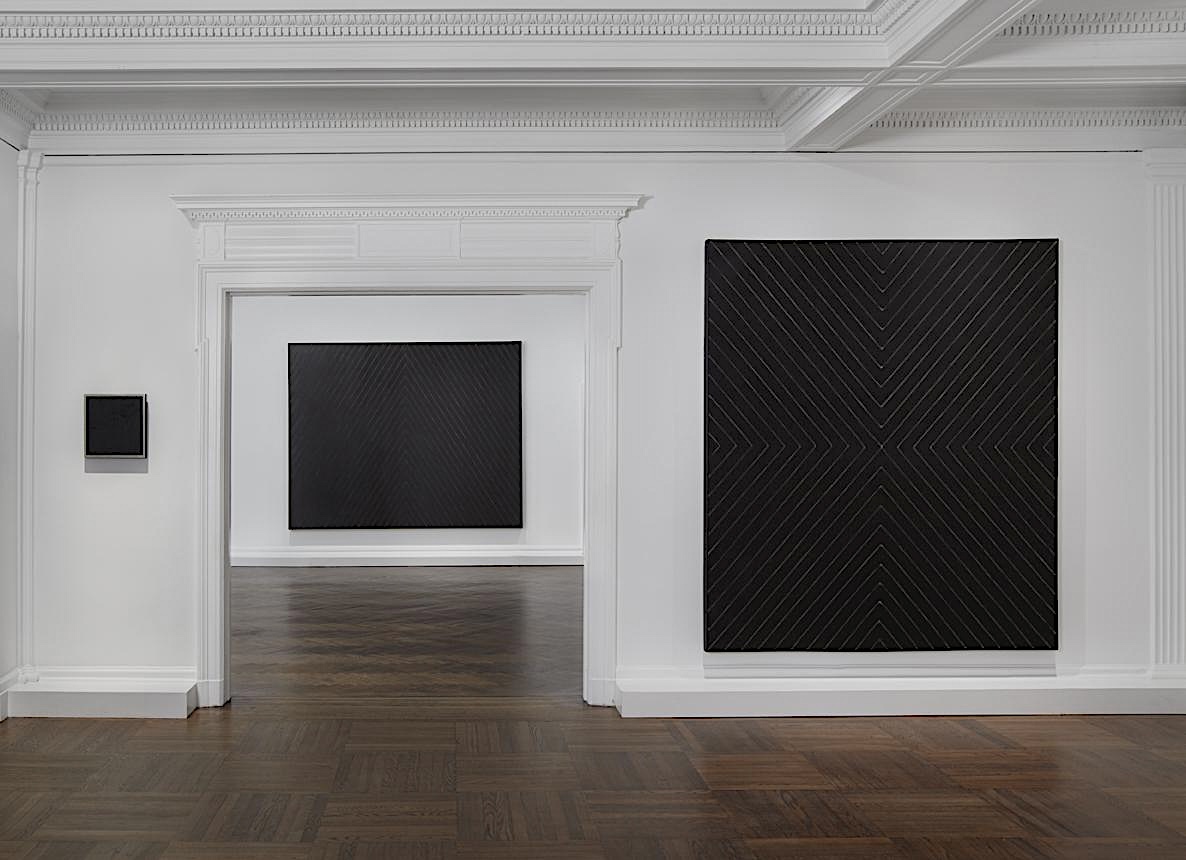
Frank Stella is an American painter whose early work redefined abstraction by placing structure ahead of composition and expression.
Emerging in the late 1950s, Stella’s Black Paintings introduced a system where shape, edge, and interval determined the image before gesture entered.
These works rejected illusionism and subjective mark-making, emphasizing literal form and external rules.
Across subsequent decades, Stella expanded his practice into shaped canvases and relief-like constructions, maintaining a commitment to systemic organization even as complexity increased.
Difference within his work emerges through variation within predefined parameters rather than expressive decision.
Stella’s practice demonstrates how painting can operate as a constructed object governed by structure, where the image follows the logic of the system that produces it.
