


This exhibition places two artists in conversation without forcing them into alignment. Etel Adnan and Seundja Rhee do not meet through style or chronology, but through a shared concern: how to continue building form when place, history, and belonging are no longer stable.
Across the gallery, abstraction is not used as an escape from experience, but as a way of staying with it. Rather than narrating displacement, the works hold distance — between memory and surface, between movement and loss. What emerges is not a story, but a condition: one in which form steadies what cannot be resolved.
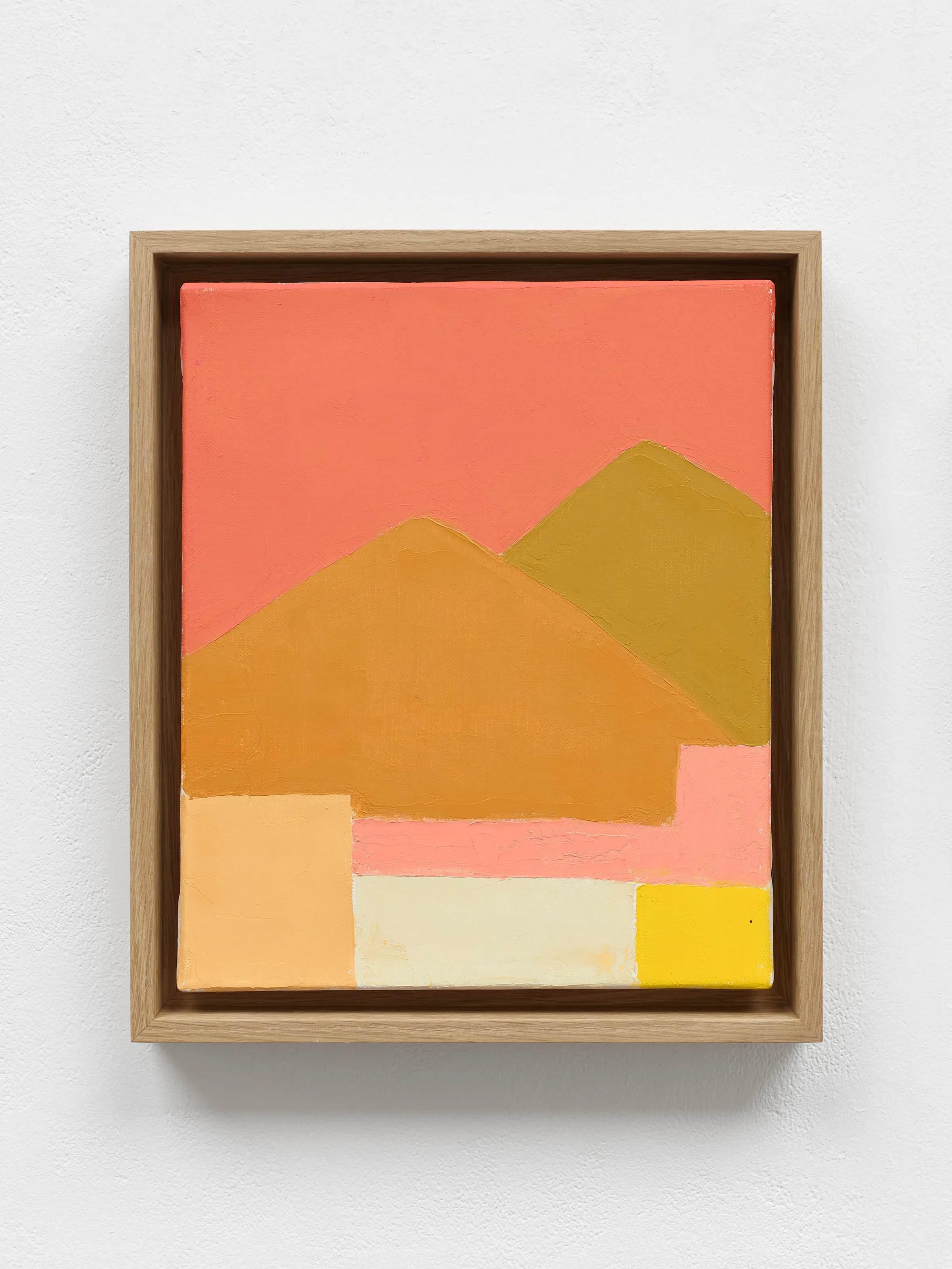
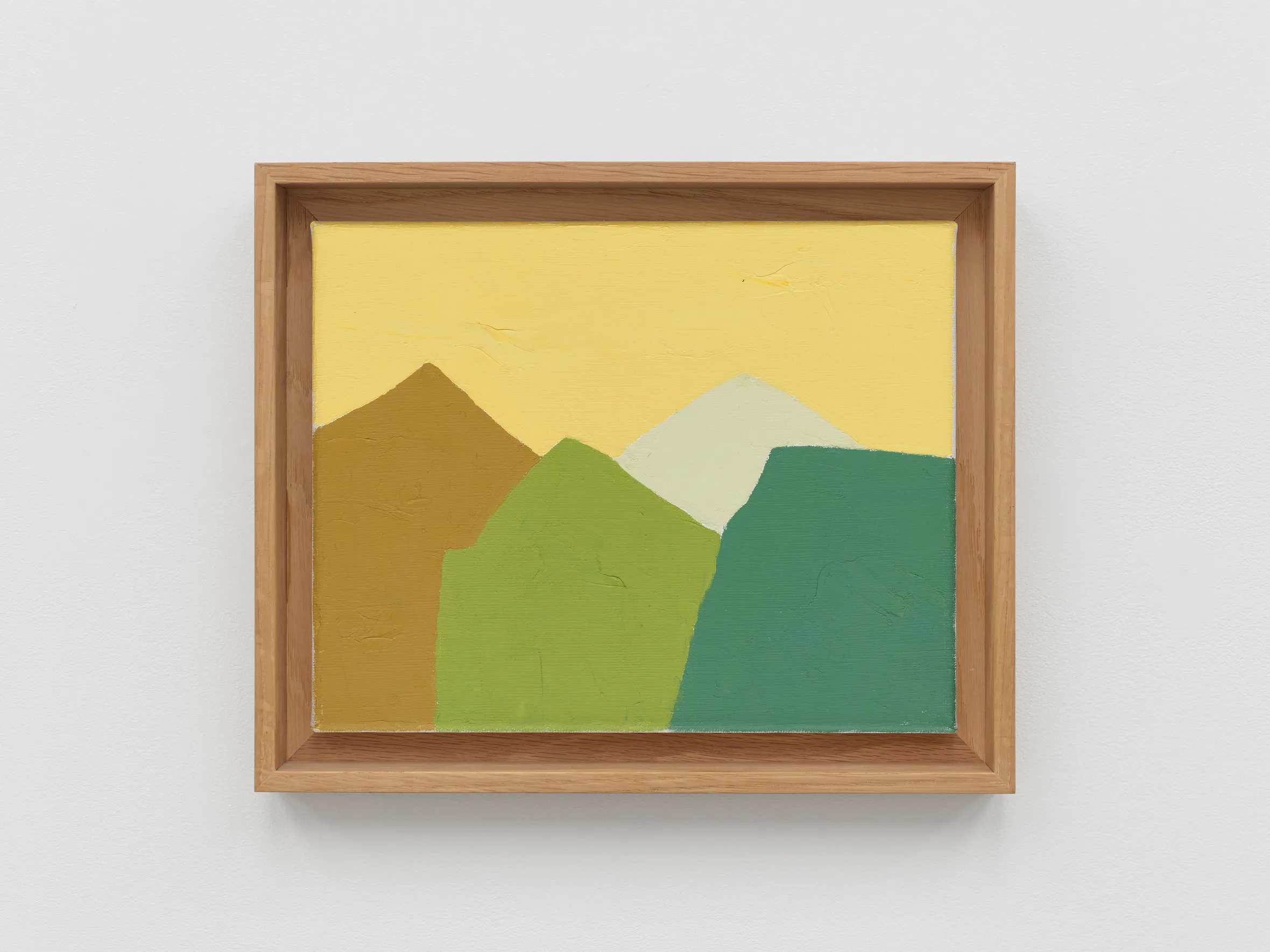
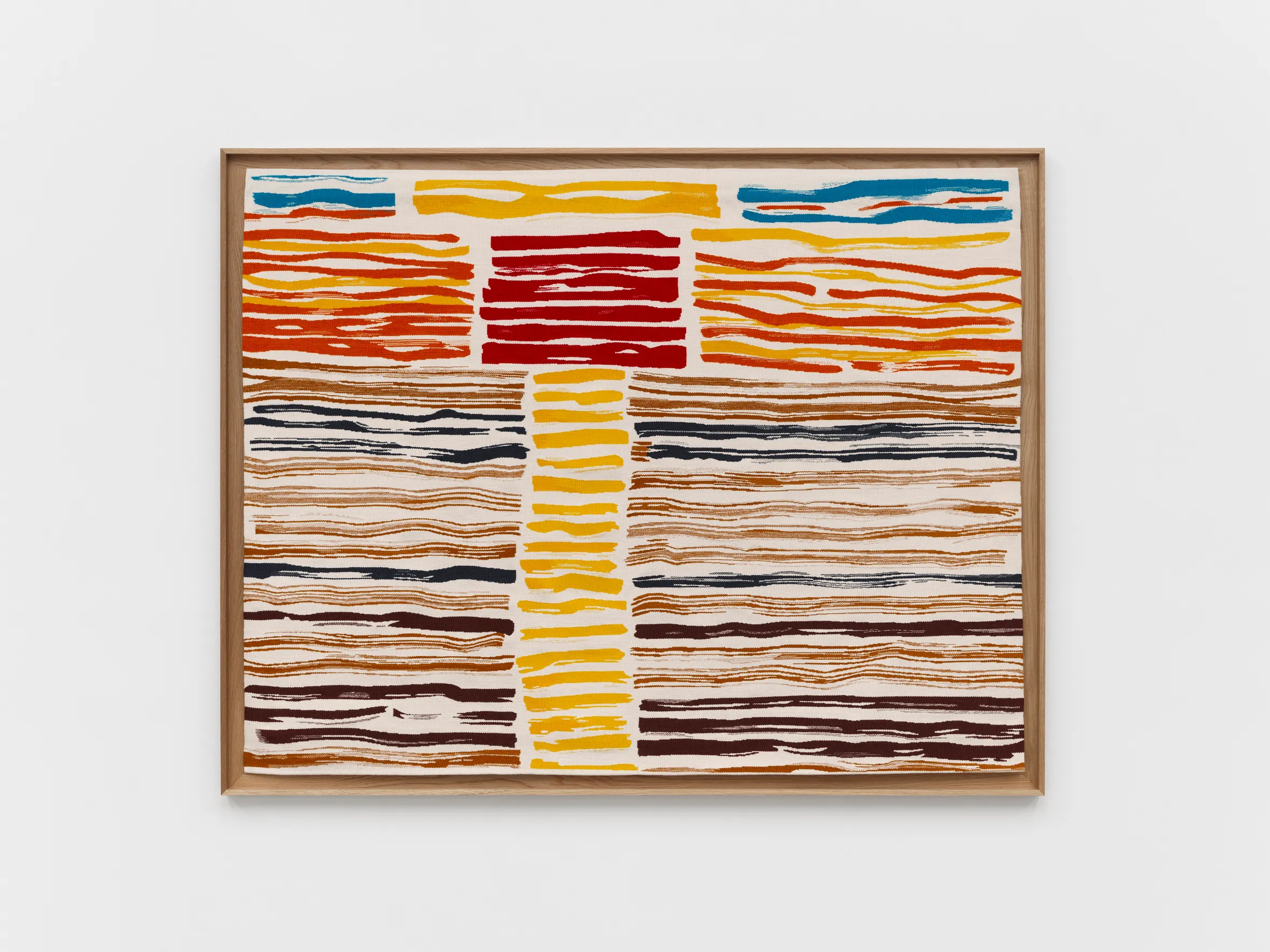
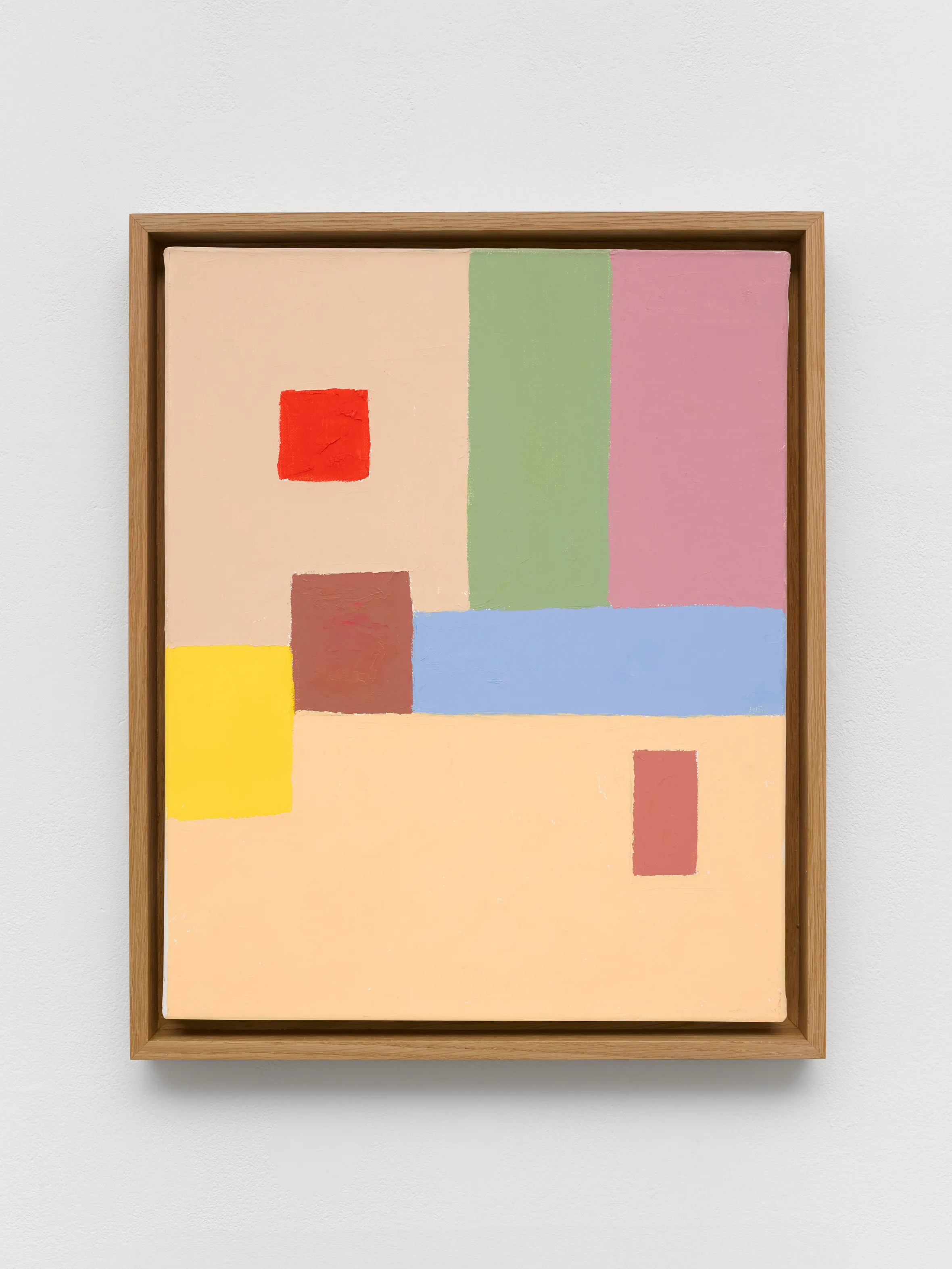
Adnan’s paintings approach this through color. Blocks and bands appear with clarity and restraint, resisting illusion or depth. Suns, horizons, and mountains surface not as landscapes, but as fixed points — shapes that keep the image intact. In works like Untitled (2014) and Plage Déserte (1960s), pigment is applied directly and decisively. Up close, the gesture feels confident, even intimate, yet never expressive in excess. Color does not drift or dissolve; it stays where it is placed, holding the painting together.
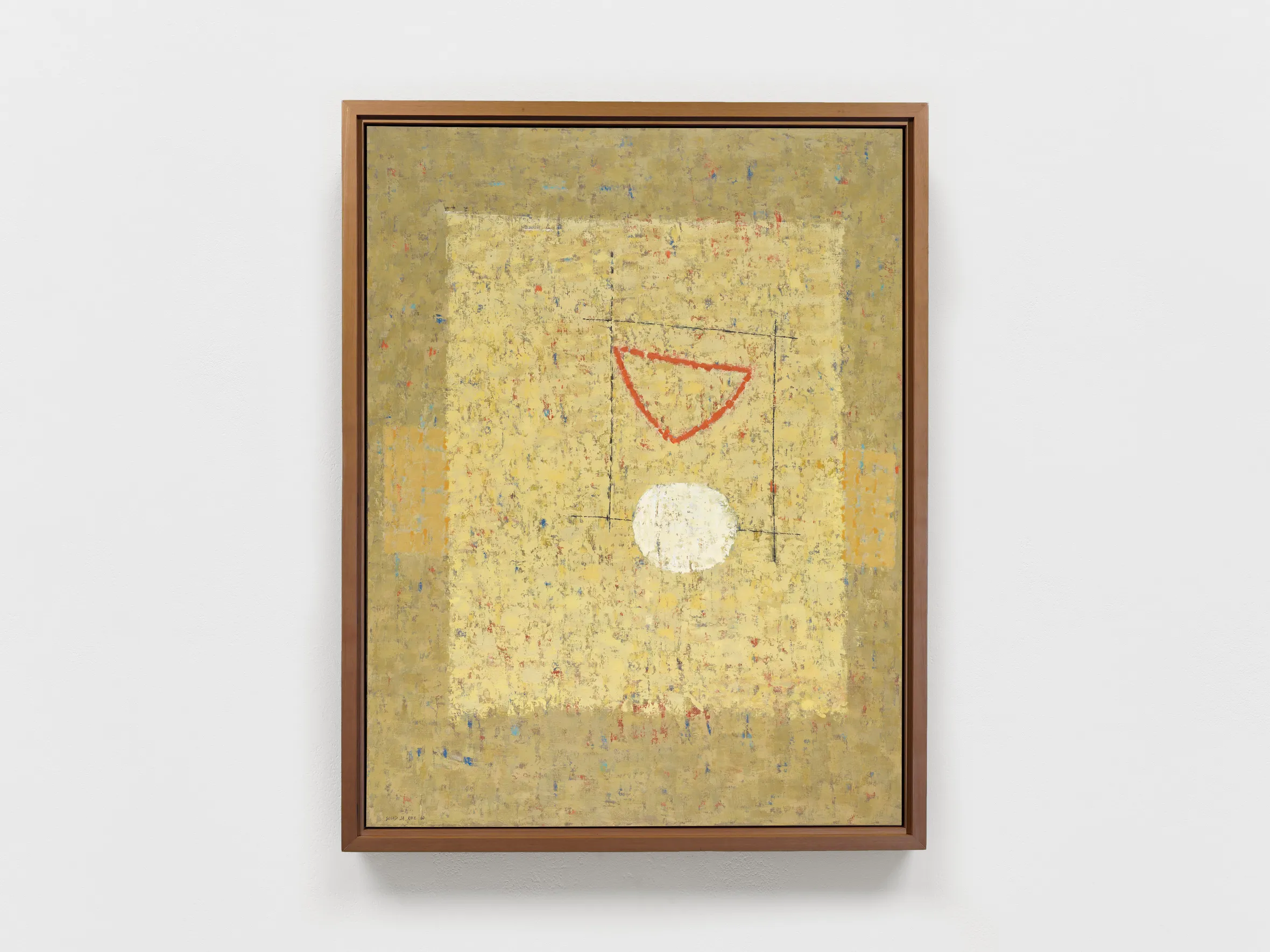
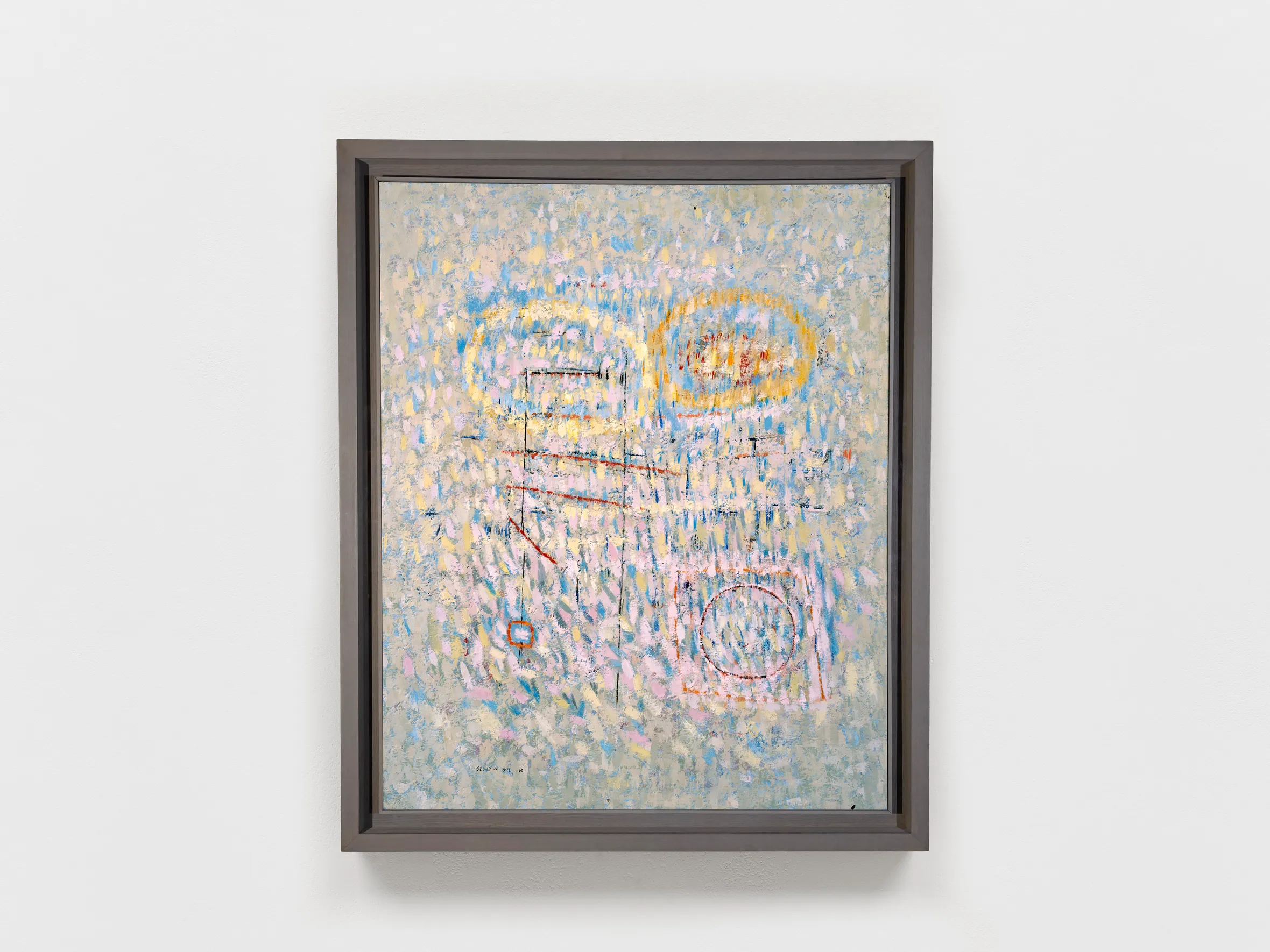
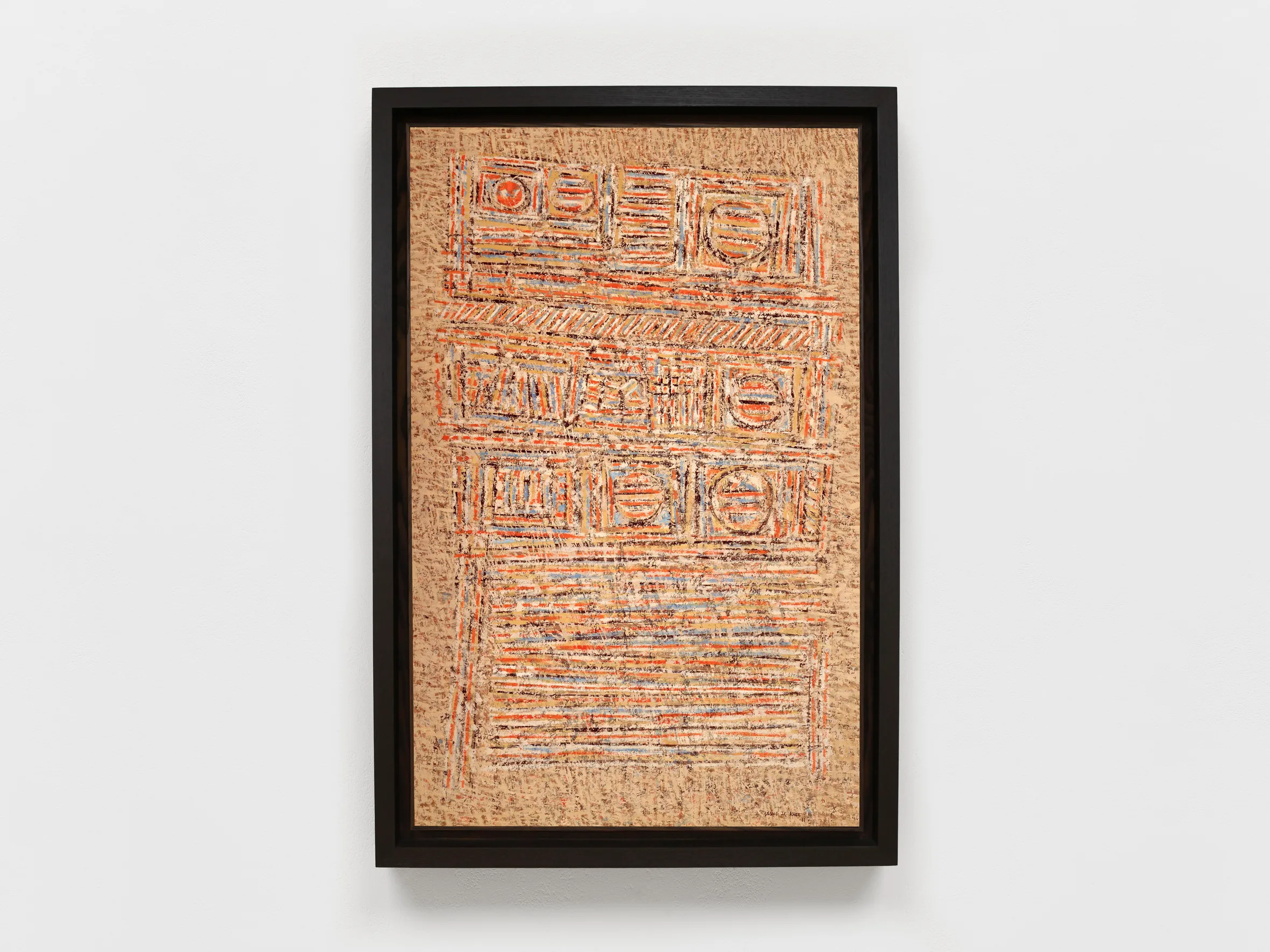
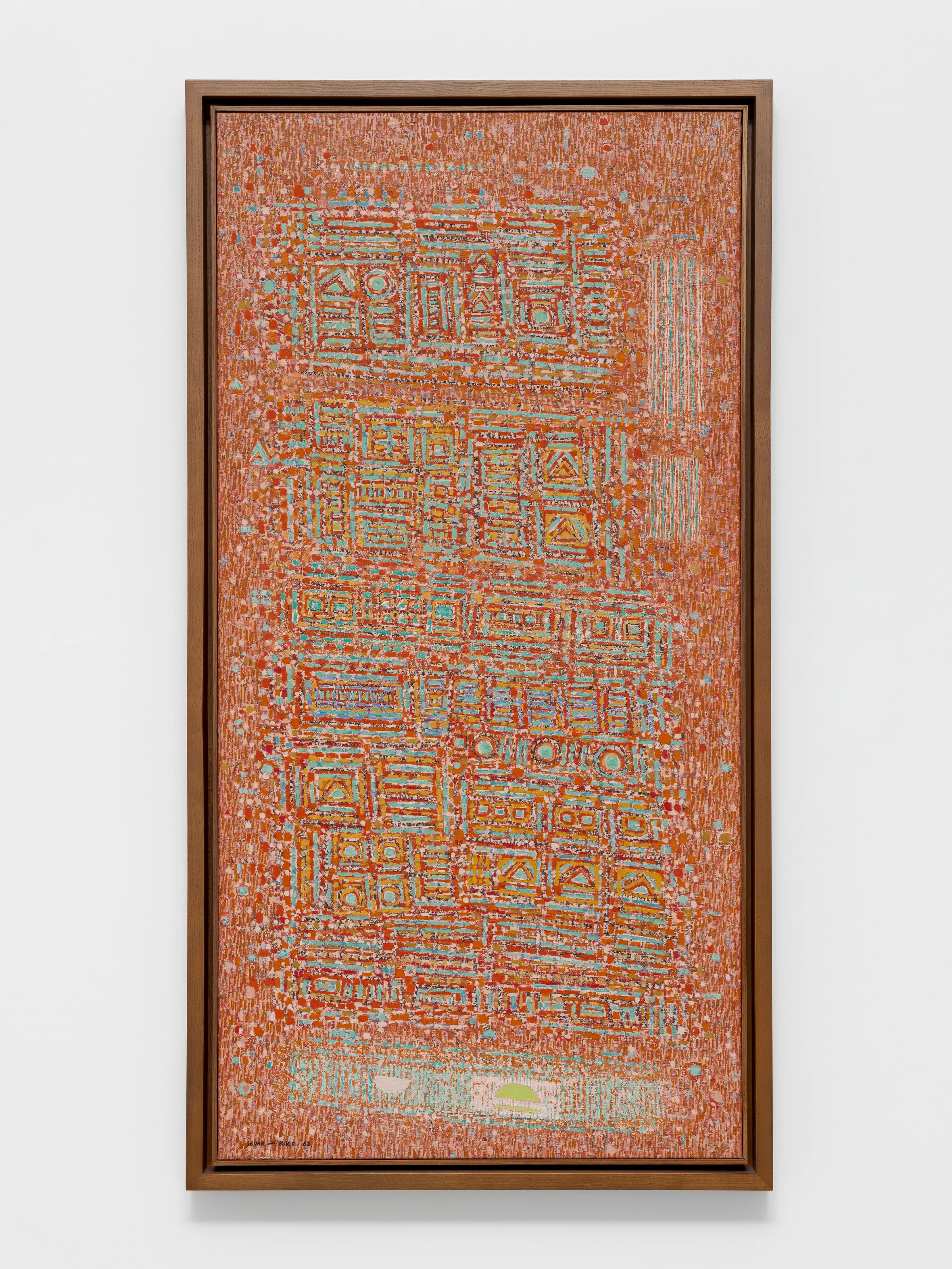
Rhee’s paintings arrive at a similar balance through repetition and accumulation. Her surfaces build slowly, stroke by stroke, forming dense fields that register time without dramatizing it. In works such as My Sweet City (1962) and In the Bed of Torrent (1961), geometric forms — squares, lines, intervals — emerge gradually, less as symbols than as structural guides. Variation is absorbed into the surface rather than emphasized, giving the work a quiet, calibrated rhythm.
Neither practice asserts mastery. Both came to painting later in life, and that delay registers as restraint rather than uncertainty. Biography is present — migration, rupture, exile — but it does not dominate the reading. Instead, it lingers at the edges, informing the work without defining it.
Here, abstraction does not aim to clarify experience. It steadies it. Color, geometry, and repetition become tools for keeping form intact when orientation falters. Nothing resolves. And nothing needs to.
The installation supports this sensibility. The works are given space, but not arranged into a narrative sequence. Attention moves slowly, between density and pause, surface and interval.
The exhibition’s title, To meet the sun, reads less as metaphor than as orientation. It suggests not arrival, but a way of facing — maintaining position in relation to something that remains just beyond reach.
Etel Adnan and Seundja Rhee arrive at abstraction from different histories, but under similar conditions of displacement.
Adnan’s work is shaped by movement between languages, countries, and political realities; Rhee’s by exile, delayed recognition, and a life lived largely outside dominant art histories. In both cases, place is unstable — not absent, but unreliable.
Abstraction becomes a way to hold position when geography, language, or belonging cannot. Color and geometry do not represent identity or loss; they regulate distance from it. Form remains intact not by narrating experience, but by refusing to let it overwhelm the surface.
What connects these practices is not style or influence, but a shared use of abstraction as a stabilizing condition — a way of continuing to work when location, history, or recognition cannot be assumed.



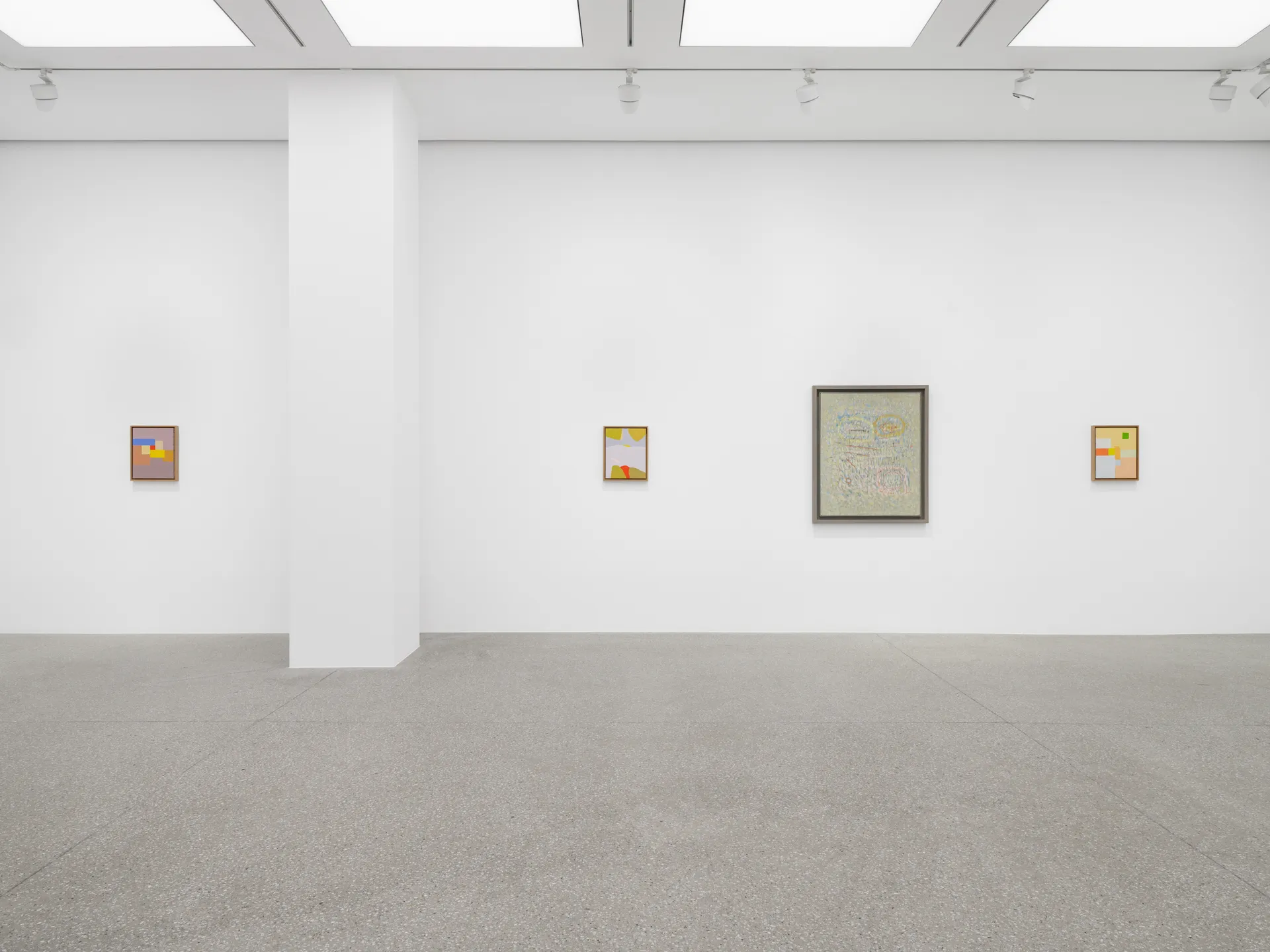



1. Exhibition view: Etel Adnan, Seundja Rhee, To Meet the Sun. White Cube, Seoul. 21 January–7 March 2026. Courtesy White Cube. © White Cube.
2. Etel Adnan. Untitled. 2014. Oil on canvas. 29.2 × 24.6 cm | 11 1/2 × 9 11/16 in. © The Estate of Etel Adnan.
3. Seundja Rhee. White Mirror. 1960. Oil on canvas. 116 × 81 cm | 45 11/16 × 31 7/8 in. © The Estate of Seundja Rhee.
4. Exhibition view: Etel Adnan, Seundja Rhee, To Meet the Sun. White Cube, Seoul. 21 January–7 March 2026. Courtesy White Cube. © White Cube.
5. Etel Adnan. Untitled. 2014. Oil on canvas. 24 × 30 cm | 9 7/16 × 11 13/16 in. © The Estate of Etel Adnan.
6. Exhibition view: Etel Adnan, Seundja Rhee, To Meet the Sun. White Cube, Seoul. 21 January–7 March 2026. Courtesy White Cube. © White Cube.
7. Etel Adnan. Plage Déserte. 1960s (2022). Tapestry. 135 × 177.5 cm | 53 1/8 × 69 7/8 in. © The Estate of Etel Adnan.
8. Exhibition view: Etel Adnan, Seundja Rhee, To Meet the Sun. White Cube, Seoul. 21 January–7 March 2026. Courtesy White Cube. © White Cube.
9. Seundja Rhee. The Vivid Dews. 1960. Oil on canvas. 100 × 81 cm | 39 3/8 × 31 7/8 in. © The Estate of Seundja Rhee.
10. Exhibition view: Etel Adnan, Seundja Rhee, To Meet the Sun. White Cube, Seoul. 21 January–7 March 2026. Courtesy White Cube. © White Cube.
11. Seundja Rhee. In the Bed of Torrent. 1961. Oil on canvas. 100 × 65 cm | 39 3/8 × 25 9/16 in. © The Estate of Seundja Rhee.
12. Exhibition view: Etel Adnan, Seundja Rhee, To Meet the Sun. White Cube, Seoul. 21 January–7 March 2026. Courtesy White Cube. © White Cube.
13. Etel Adnan. Untitled. 2018. Oil on canvas. 40.8 × 33.2 cm | 16 1/16 × 13 1/16 in. © The Estate of Etel Adnan.
14. Exhibition view: Etel Adnan, Seundja Rhee, To Meet the Sun. White Cube, Seoul. 21 January–7 March 2026. Courtesy White Cube. © White Cube.
15. Etel Adnan. Plage Déserte. 1960s (2022). Tapestry. 135 × 177.5 cm | 53 1/8 × 69 7/8 in. © The Estate of Etel Adnan.
16. Seundja Rhee. My Sweet City. 1962. Oil on canvas. 120 × 60 cm | 47 1/4 × 23 5/8 in. © The Estate of Seundja Rhee.
All images © their respective rights holders.
Image rights & attribution →