

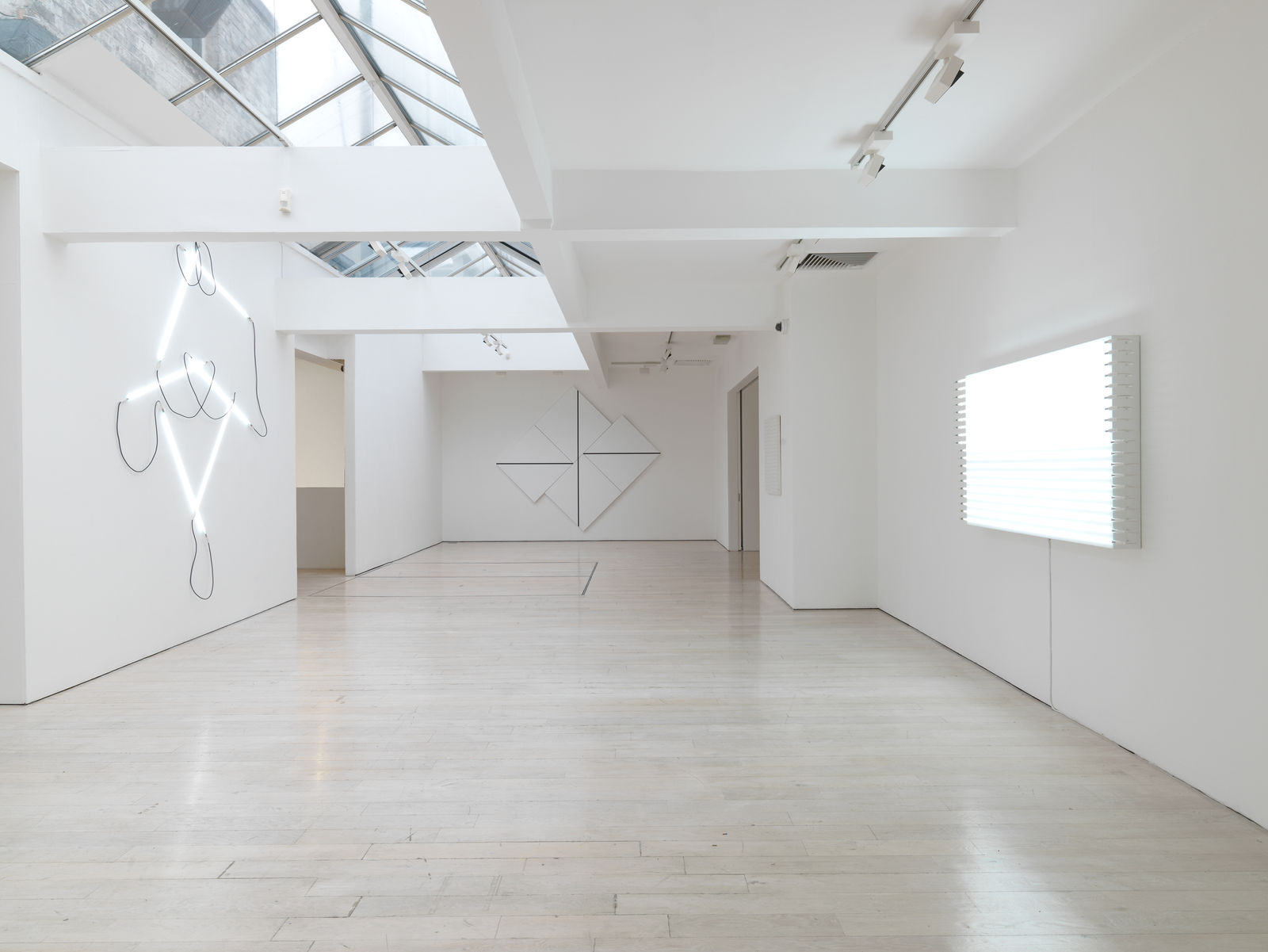
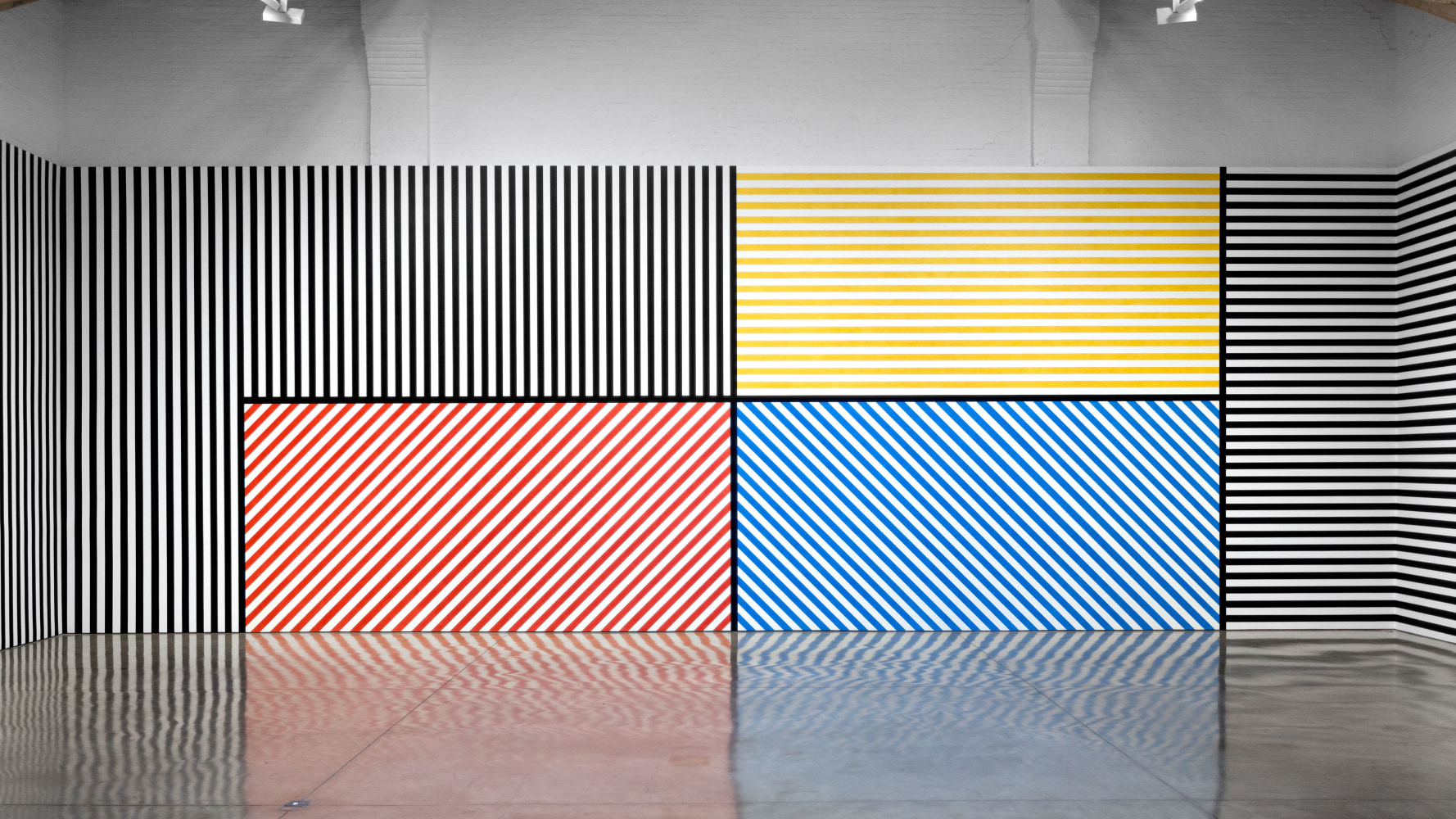
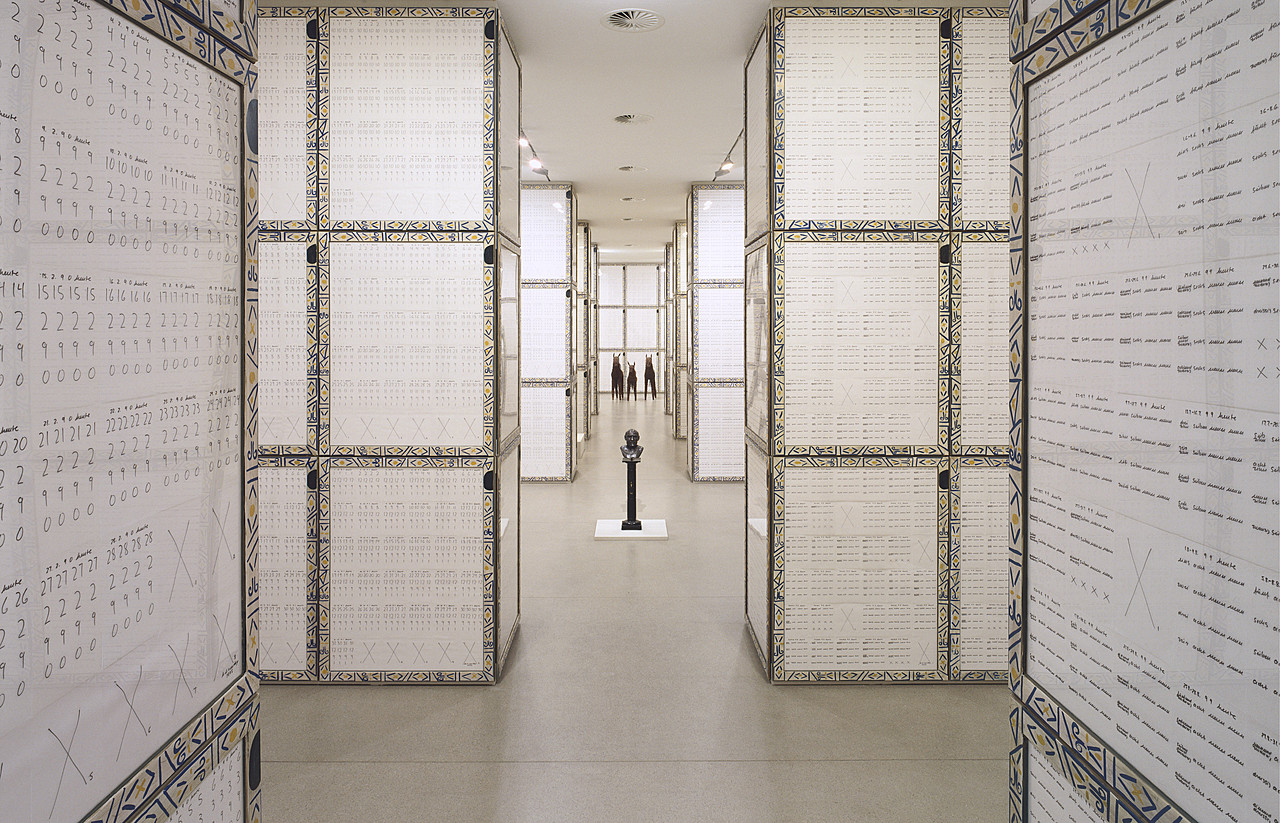


In 1986 the Centre Pompidou mounted its first Morellet retrospective. The same year, in Dijon, Morellet showed a new series of paintings in which paired squares and rectangles were titled with phrases drawn from pornographic vernacular — À la missionnaire, Par derrière à deux, En levrette — alongside smaller works, Figures hâtives, whose squares were bounded on each side by imprints of the artist’s penis. The series traveled to Galerie Facchetti in 1987. Forty years on, in the centenary year of the artist’s birth, Mennour returns it to Paris. The reading that has held since treats the series biographically: at the moment of institutional arrival, the artist earned the right to be irreverent. The reading is plausible. It has also held for forty years because the series has wanted it to.
In Morellet, the title is not caption. It is part of the system. More precisely, it is the point at which the rule that generates the work is made visible. His works have long been specified by their titles — 36 trames de tirets pivotées au centre, Répartition aléatoire de 40 000 carrés suivant les chiffres pairs et impairs d’un annuaire de téléphone, Néons avec programmation aléatoire-poétique-géométrique — where the title states the protocol the work executes. The title-slot is not descriptive. It is contractual. It binds rule to object. In caption, the title names what the work is. In Morellet, the title names how the work is made.
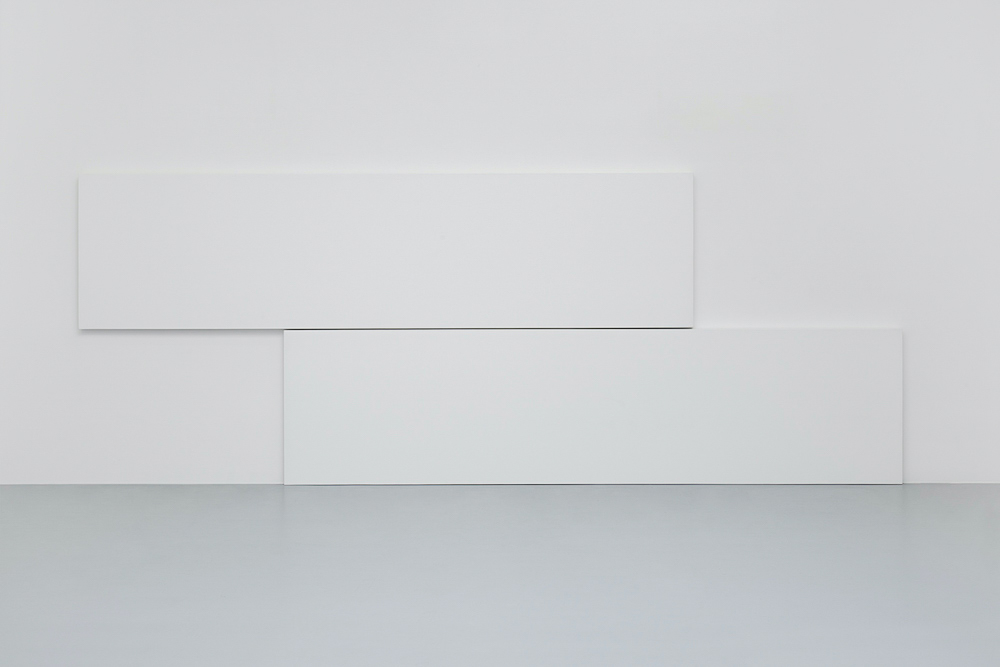
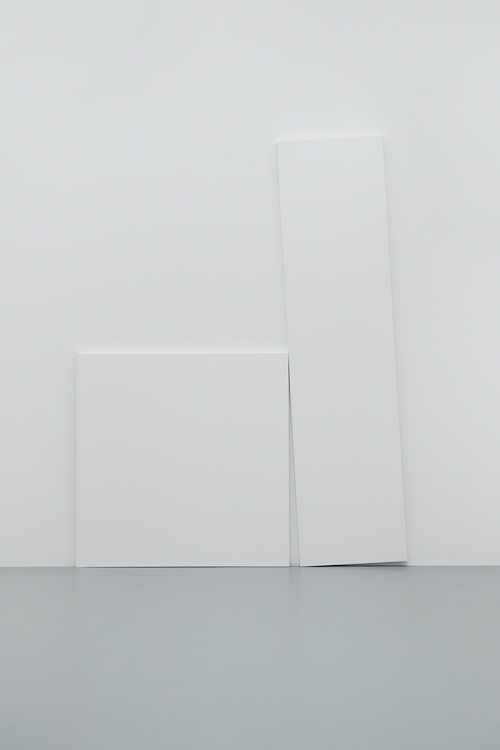
In Géométrie dans les spasmes, that contract holds. The paintings are pairs: square and rectangle, rectangle and rectangle, two forms set in relation before any title is read. Flat color, hard edge, acrylic on canvas: the works first present themselves as Morellet paintings, exact and impersonal. Then the titles arrive — À la missionnaire, Par derrière à deux, À croupetons, En levrette — and the relation is rewritten. What enters the slot the title normally uses to announce the rule is a sexual position, but what is named is not sex as content. It is relation: orientation, axis, inversion, stacking. The geometry does not change. What the system is permitted to name has widened.
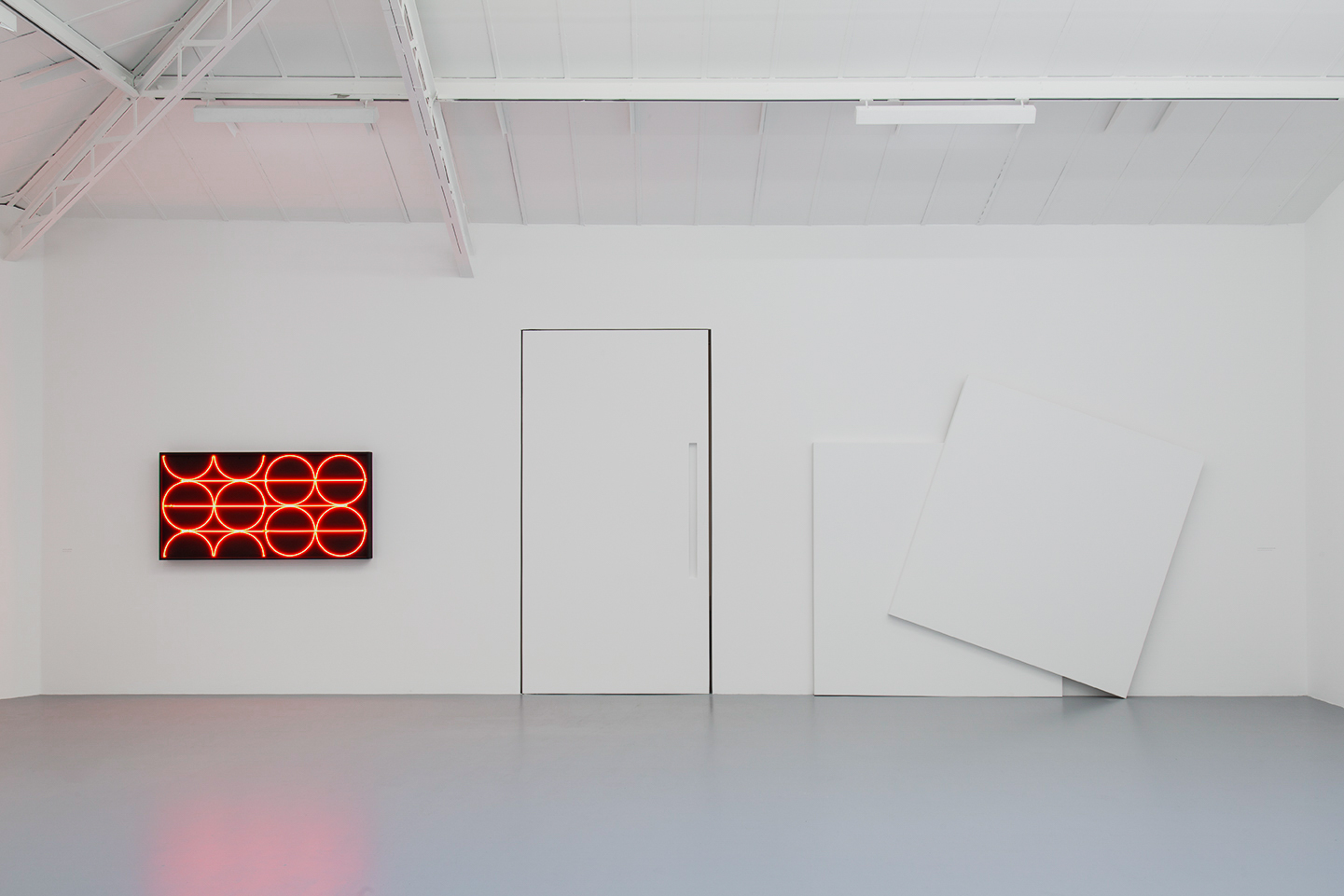
That shift happens in front of the viewer, now, at Mennour. Two rectangles hang side by side. Then the title is read. The pairing becomes a position. The geometry does not disappear. It is overwritten. You cannot return to seeing only rectangles once the relation has been named.
The series tests the protocol in three registers: referent, execution, notation.
Figures hâtives tests it at the level of execution. Each square is made by pressing the penis to the paper four times, once for each side. The edge is not drawn. It is pressed into being. On paper the imprint reads first as a dark, irregular border, a bodily trace before it resolves into its source. The same body, the same contact, repeated in four orientations to produce a closed form. Morellet’s method had long depended on depersonalization — the removal of subjective decision, the delegation of execution, the suppression of the hand. Here the body returns at the point where a line becomes a shape. The square remains square. Its means of construction has changed.
69, 1987 tests the system at the level of notation. The title belongs to two systems at once: number and sexual position. In a practice built on numerical and angular titles — 75089, 3°-87°-93°-183°, π = 7° — the coincidence is exact. The same mark names a quantity and a configuration. This is not a pun. It is a collision. The title continues to name the generating rule. What counts as a valid term in that rule has widened.
The usual categories do not hold. Geometric abstraction requires that form refer only to itself or to other forms; concrete art, as articulated by Max Bill, binds that referential closure to a procedural one, so that the work refers only to the logic of its own making. Morellet’s earlier titles did not disturb this condition. They named only the work’s own generation — count, angle, distribution, permutation. In Géométrie dans les spasmes, that closure is broken. The titles point outside the work to a shared bodily lexicon. The protocol is not broken. The contract between rule and execution still holds. Referential closure and procedural clarity separate here. They were not the same rule. Morellet’s practice is not exhausted by concrete art’s terms.
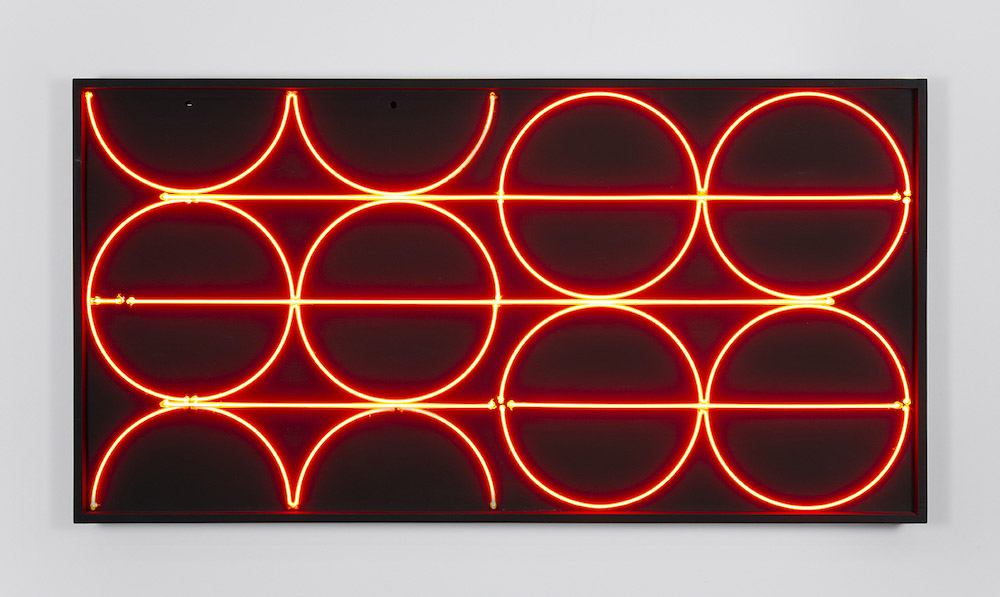
Néon abscon, 1968–1995, also in the exhibition, clarifies the distinction. Its random programming produces obscene configurations intermittently. There, the erotic is output: generated by the system itself. In Spasmes, the erotic is input. It enters the slot the system uses to announce its rule. The three works test the protocol’s internal tolerance in different ways; the series as a whole tests the coherence of the framework used to describe it.
Return to 1986. The retrospective secures Morellet’s system as canonical. In the same year, the series alters what that system is permitted to name. The two events have been kept apart because the available reading was biographical: the artist, newly secured, allows himself a joke. The protocol reading makes them inseparable. The system is tested at the moment it is fixed. That the series has been received for forty years as witty minor work is not evidence that the operation failed. It is the record of the pressure it applied. The biographical reading restores the artist — intention, personality, license — to a practice built to remove him. It is not simply a reading of the series. It is a defense against what the series asks.
The title is exact. Géométrie dans les spasmes — geometry in spasms. Not broken. Not abandoned. Not replaced by the body. Convulsed. The system remains geometry; its state has changed. What convulses is not the square but the title-slot: the stable layer remains geometric, while the descriptive layer is put under pressure. That is what the Mennour show returns to visibility in Paris now, forty years on. The squares stay square. The titles stop being neutral.
Morellet’s titles are not captions but part of the work’s structure: the place where the rule is declared. In Géométrie dans les spasmes, the protocol remains intact while its referential field widens. The series tests the system across referent, execution, and notation, separating procedural clarity from referential closure. The geometry does not break. It convulses.


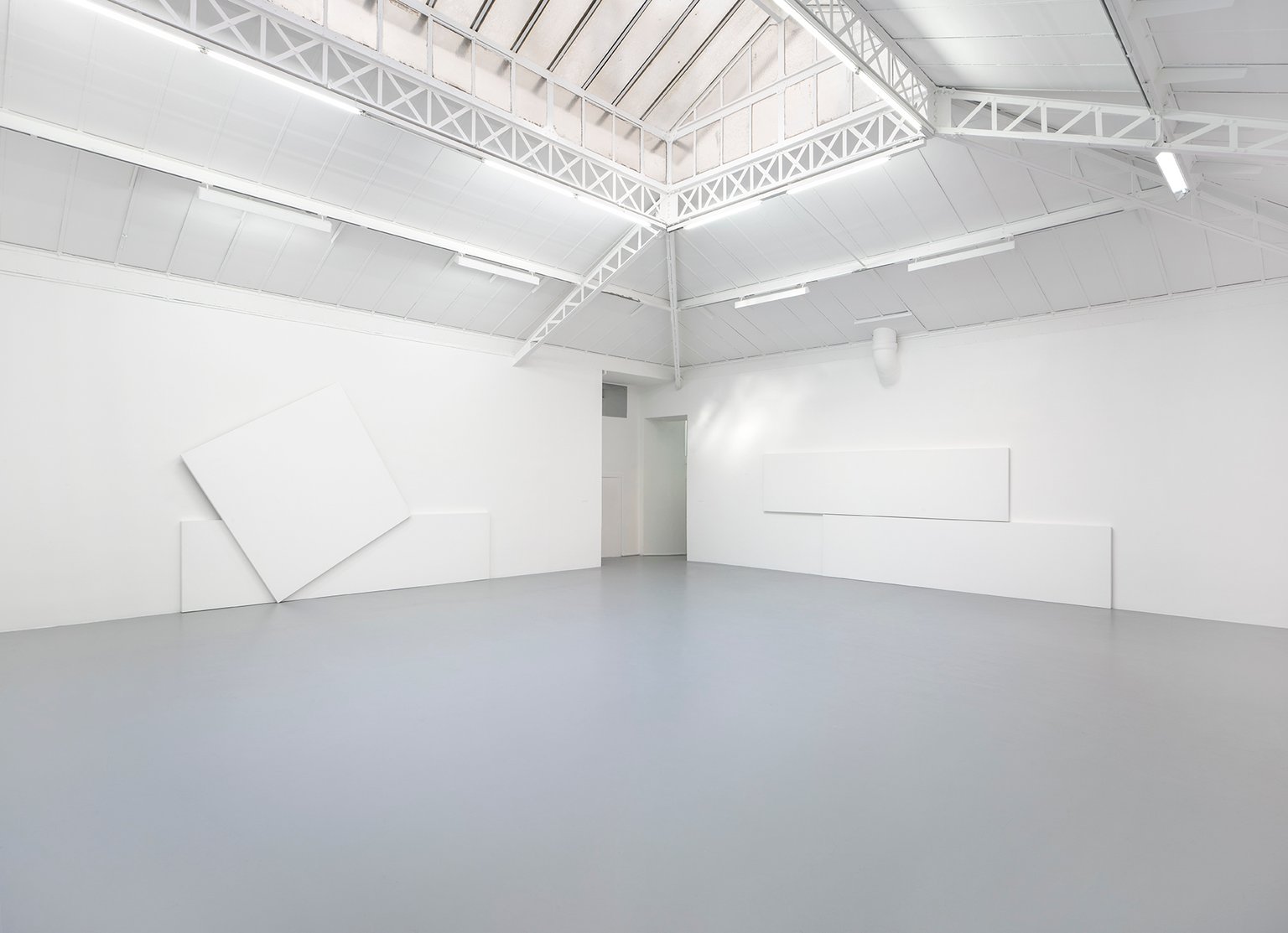

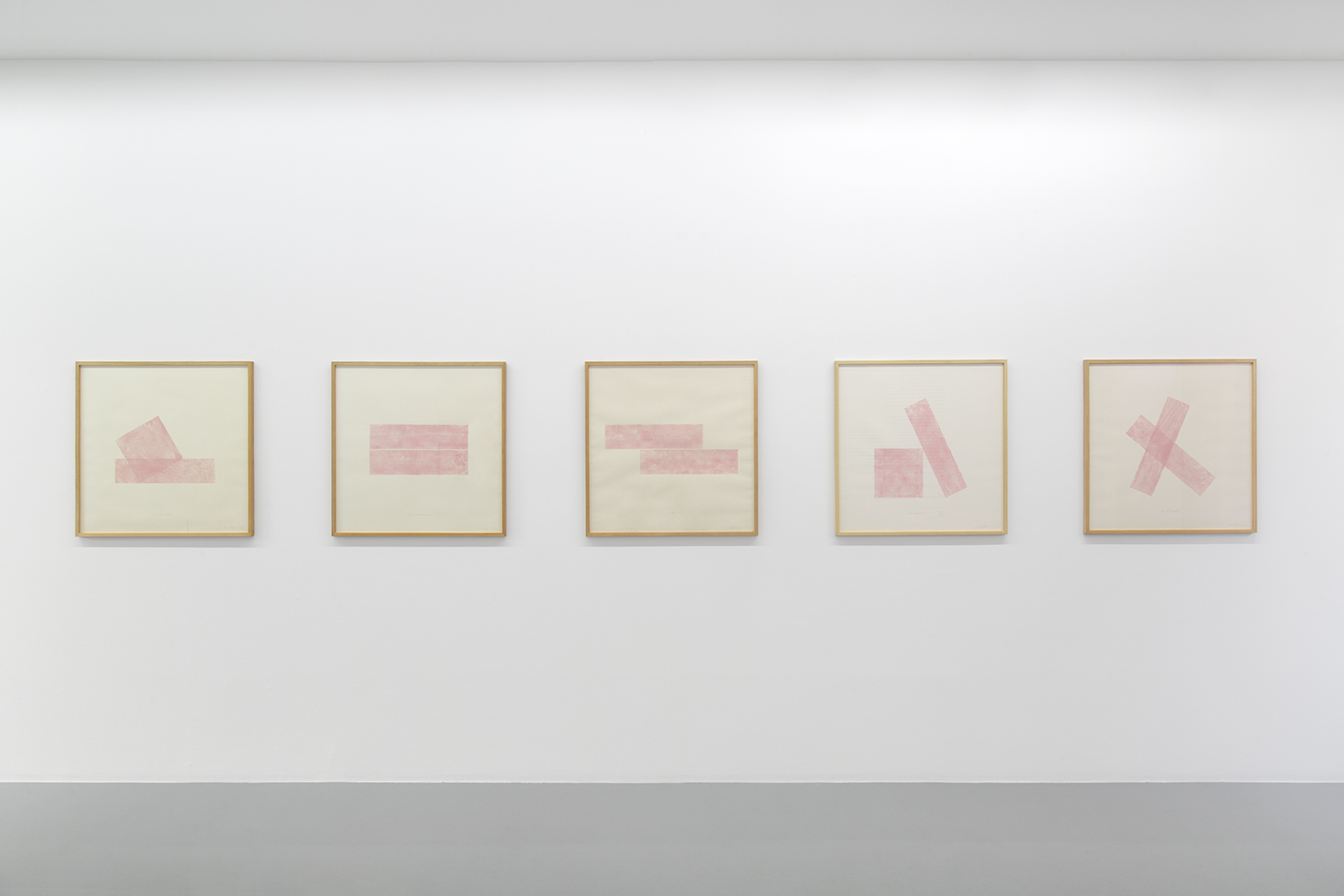

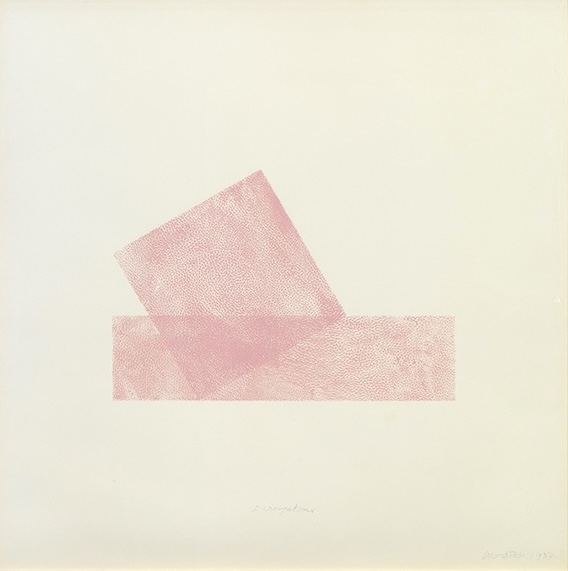
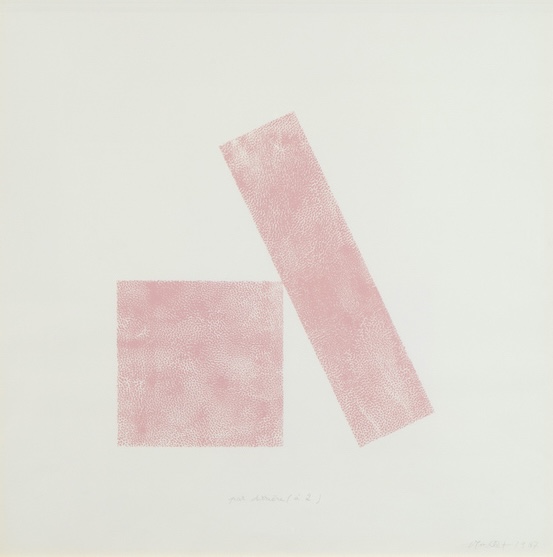

Cover: François Morellet, Géométrie dans les spasmes, installation view, Mennour, Paris. © François Morellet, Adagp, Paris, 2026. Photo © Archives Mennour. Courtesy Studio Morellet and Mennour, Paris.