


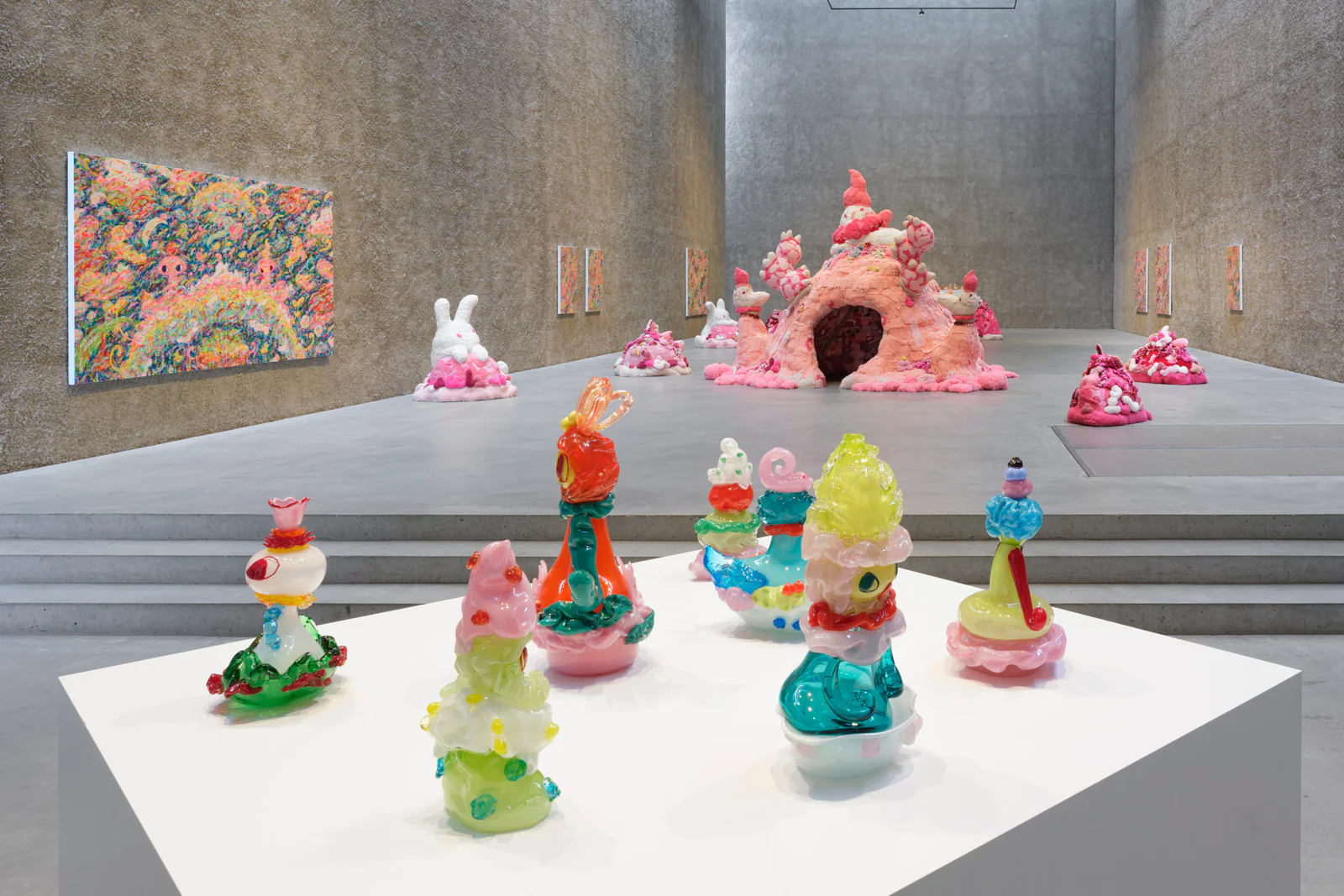
Entering the nave of König Galerie, visitors encounter an environment that feels closer to a gathering of organisms than a conventional exhibition. Large canvases by Ayako Rokkaku spread across the concrete walls in turbulent fields of color where fragments of figures drift in and out of visibility. Nearby, soft sculptural forms cluster across the floor, echoing the shapes and colors that animate the paintings. At first glance the imagery suggests a world of playful characters and vivid atmospheres. Under sustained looking, however, the figures begin to appear less drawn or placed onto the surface. Instead they seem to surface gradually from the paint itself — touching on one of the oldest problems in painting: how an image can emerge from the act of painting itself rather than from a composition designed in advance.
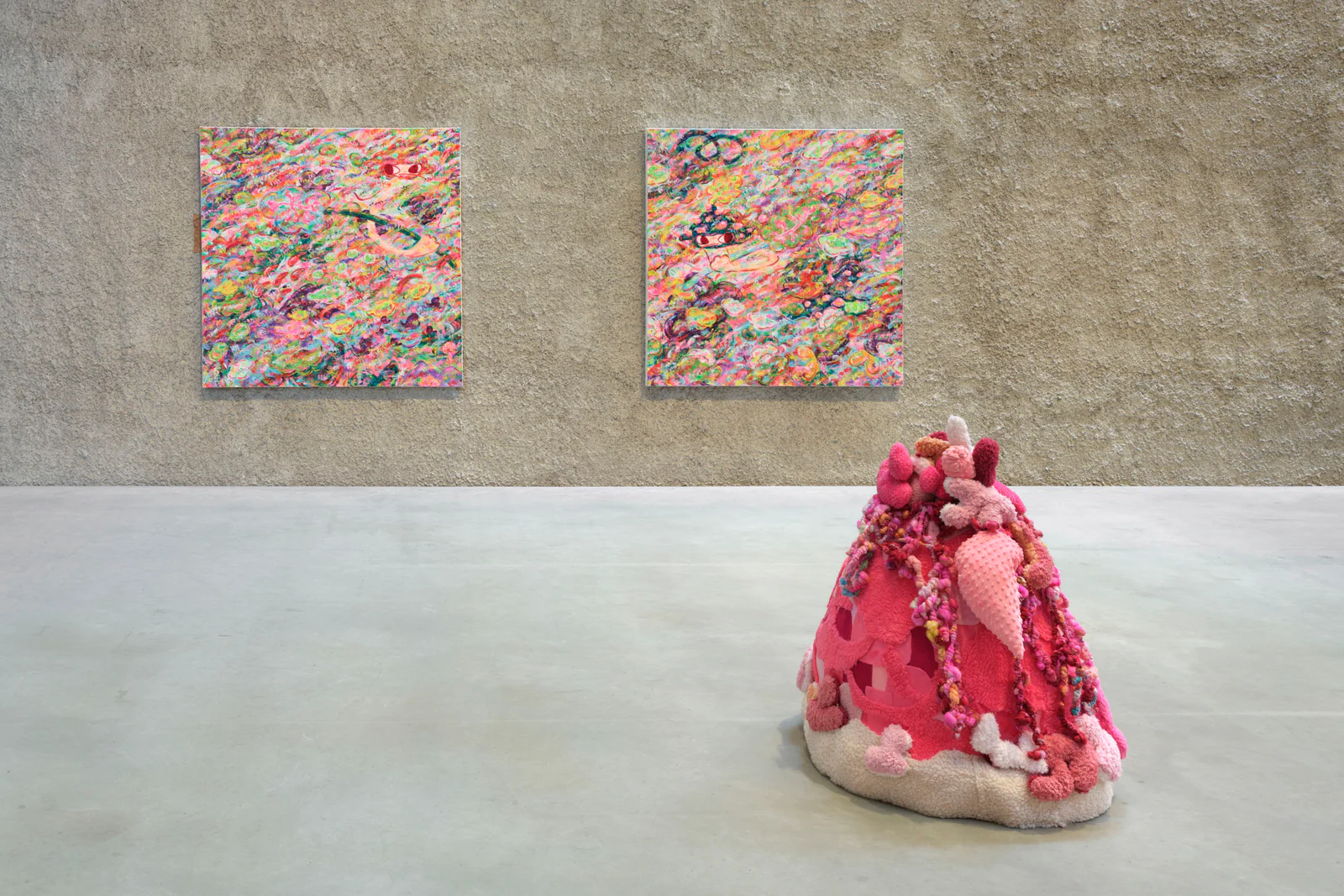
In Rokkaku’s paintings the image does not precede the act of painting. The canvases begin as fields of color applied directly by hand, spreading across the surface in dense layers of gesture and touch. Only gradually do fragments of bodies, faces, and creatures condense within this painterly turbulence, as if the figures were forming from the material process itself.
This dynamic connects Rokkaku’s work to a longer history of painting in which images arise from the internal movement of paint. In the poured fields of Janet Sobel, forms emerged from the accumulation and movement of liquid paint across the surface. Likewise, the gestural turbulence of Willem de Kooning allowed figuration to flicker in and out of abstraction. What distinguishes Rokkaku is that these emergent forms eventually resolve into recognizable characters drawn from a visual language closer to animation or popular imagery. Gesture and character therefore occupy the same painterly field.
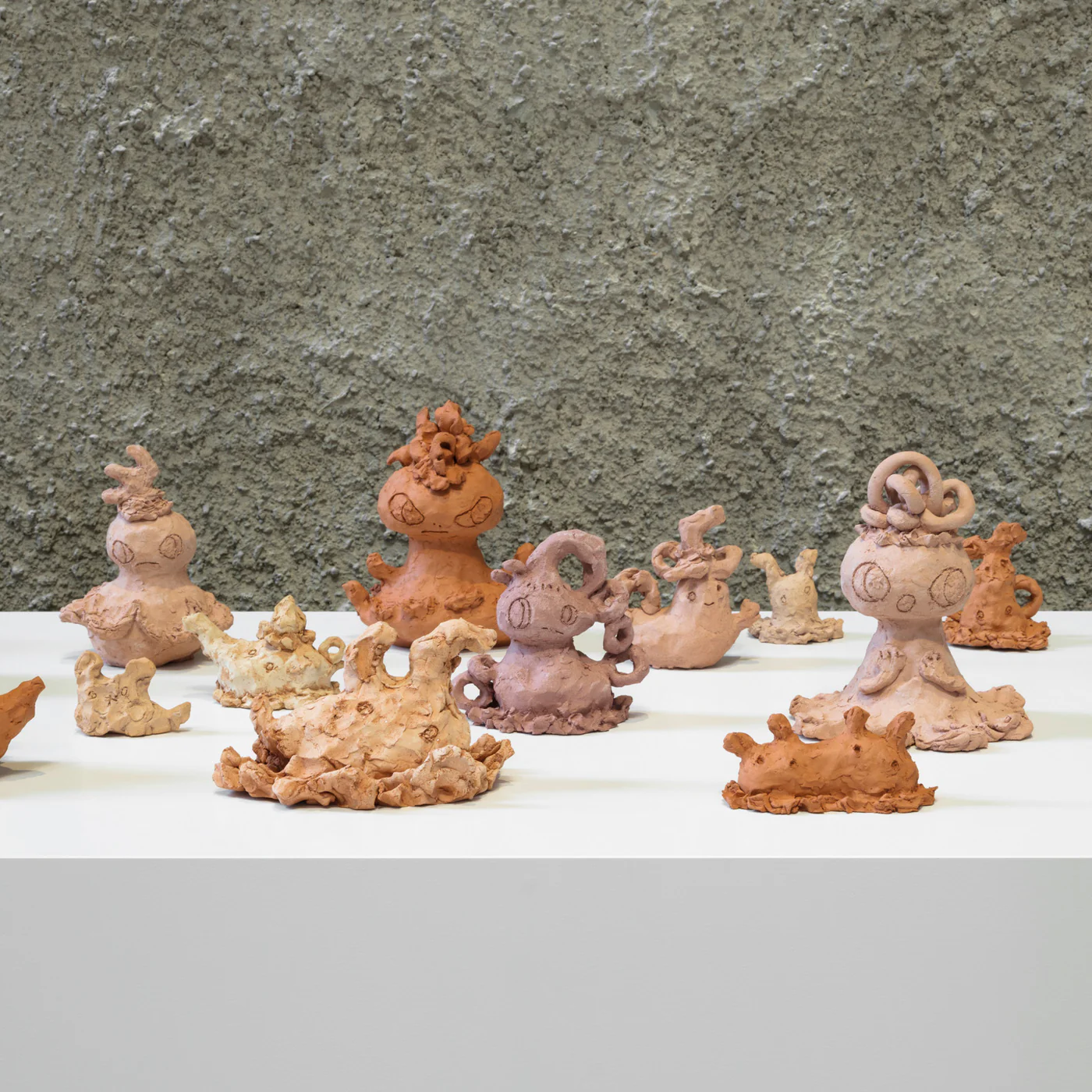
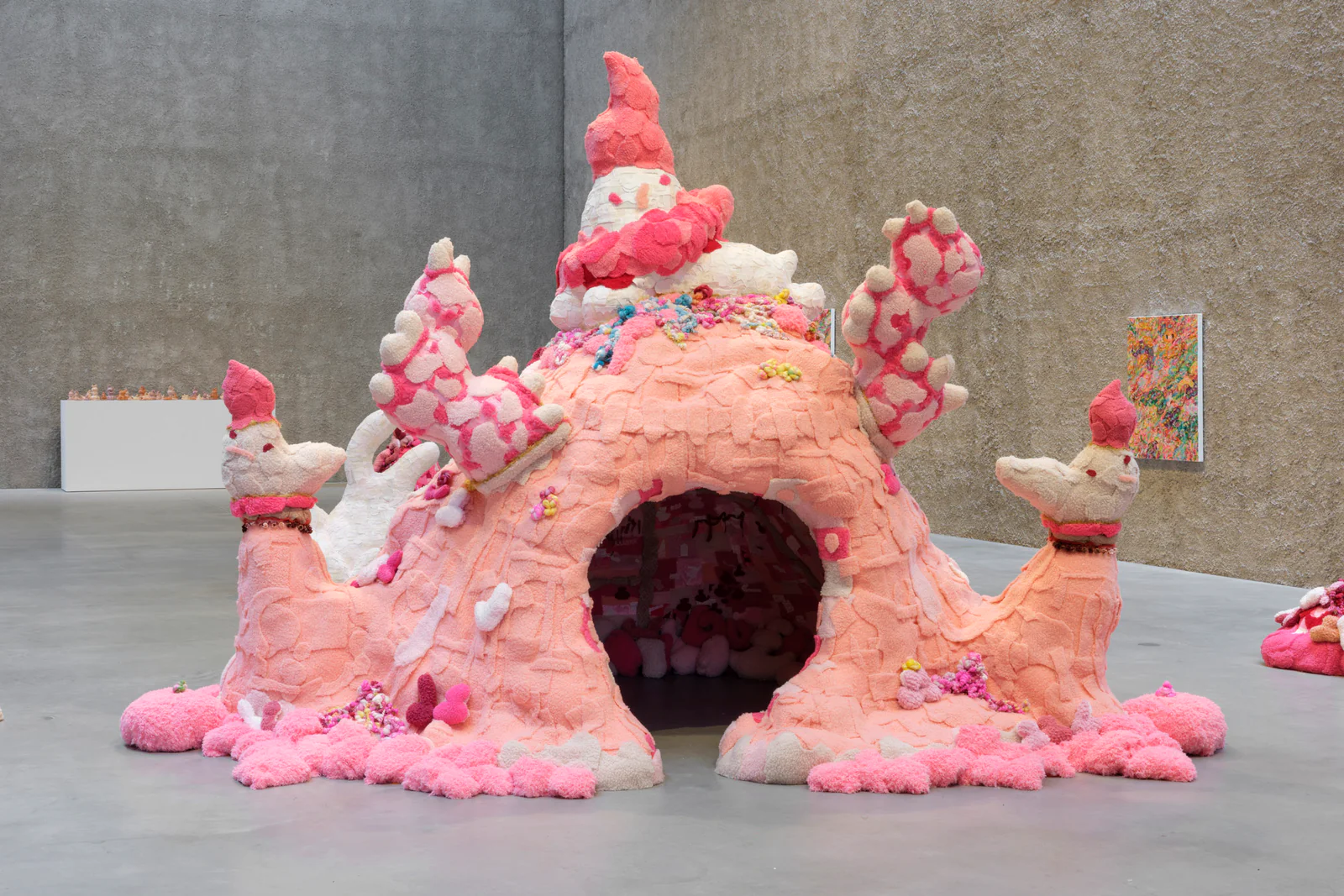
This painterly logic extends beyond the canvases. The figures that emerge within the paintings seem to migrate outward into the surrounding space, reappearing as soft sculptural forms scattered across the floor. Plush creatures, mounds, and biomorphic shapes echo the drifting bodies and fragments found in the painted surfaces, as though the gestures of the paintings had gradually taken on volume. What initially reads as a series of individual works begins to function more like a shared environment in which painting and sculpture participate in the same visual field.
The imagery that emerges from this process belongs to a visual language far removed from the traditions of modernist abstraction. Historically, painters who pursued the physical act of painting—from Sobel to de Kooning—often allowed the surface to remain within abstraction, where figures flicker only briefly before dissolving back into gesture. In Rokkaku’s work the movement reverses direction. Surfaces begin in painterly turbulence but gradually resolve into wide-eyed characters, animals, and drifting bodies drawn from a visual language closer to popular imagery. A painterly process rooted in gesture and material accumulation produces figures that belong to an entirely different visual tradition.
Placed within the scale of the installation, such imagery could easily be dismissed as playful decoration. Yet sustained attention reveals surfaces driven by painterly activity from which figural cues gradually emerge. Often only a pair of eyes becomes clearly legible within the dense field of color, prompting the viewer to search for faces or bodies within the surrounding paint. Recognition flickers briefly across a surface that remains fundamentally abstract.
Across the installation, painted surfaces and soft sculptural bodies gather into something closer to an environment than a sequence of discrete works. Forms that first surfaced within the canvases seem to take on physical presence in the surrounding space. Moving through the exhibition, the viewer encounters a landscape in which painting extends beyond its traditional boundaries, allowing creatures, atmospheres, and drifting bodies to arise from the same continuous field of color and gesture. What remains most striking is not the imagery itself but the sense that the world it inhabits is still forming.
In some painting practices the image does not begin as a predetermined drawing or composition. Instead it forms gradually through the accumulation of gesture, color, and material process. Shapes, figures, or motifs appear only after the surface has already been activated, condensing out of painterly activity rather than being imposed upon it. The image is therefore not the starting point of the work but a result of the painting’s internal dynamics.


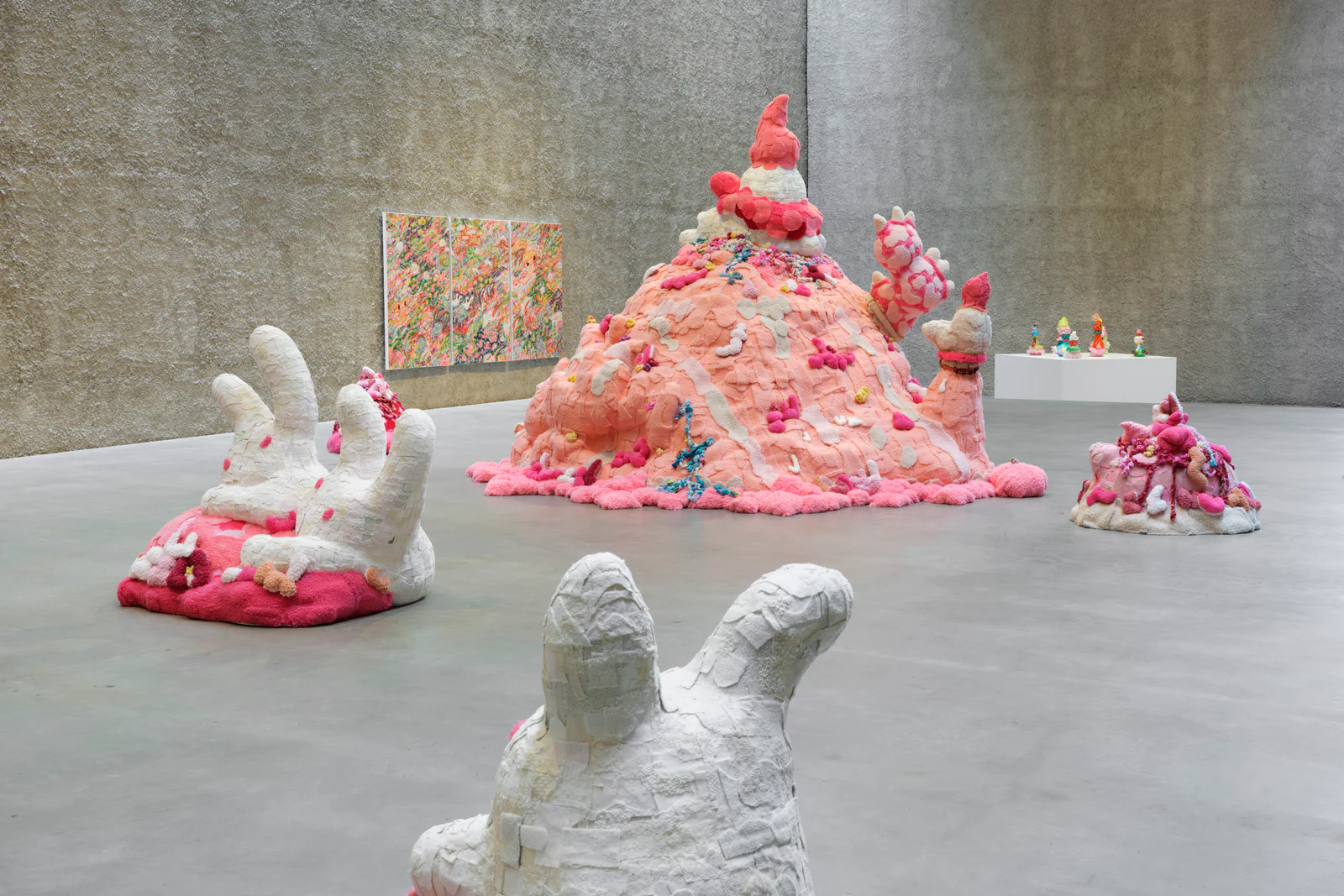
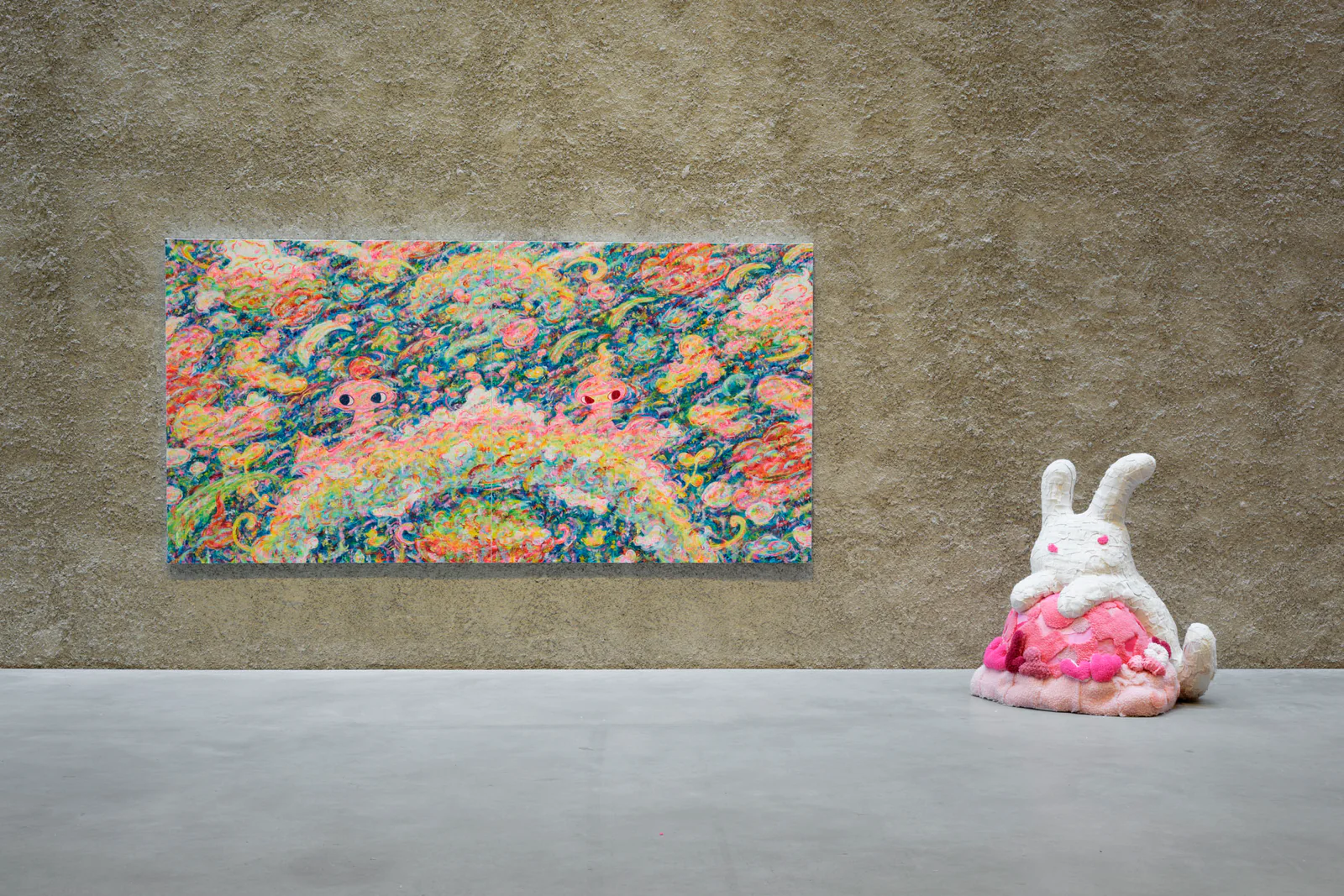

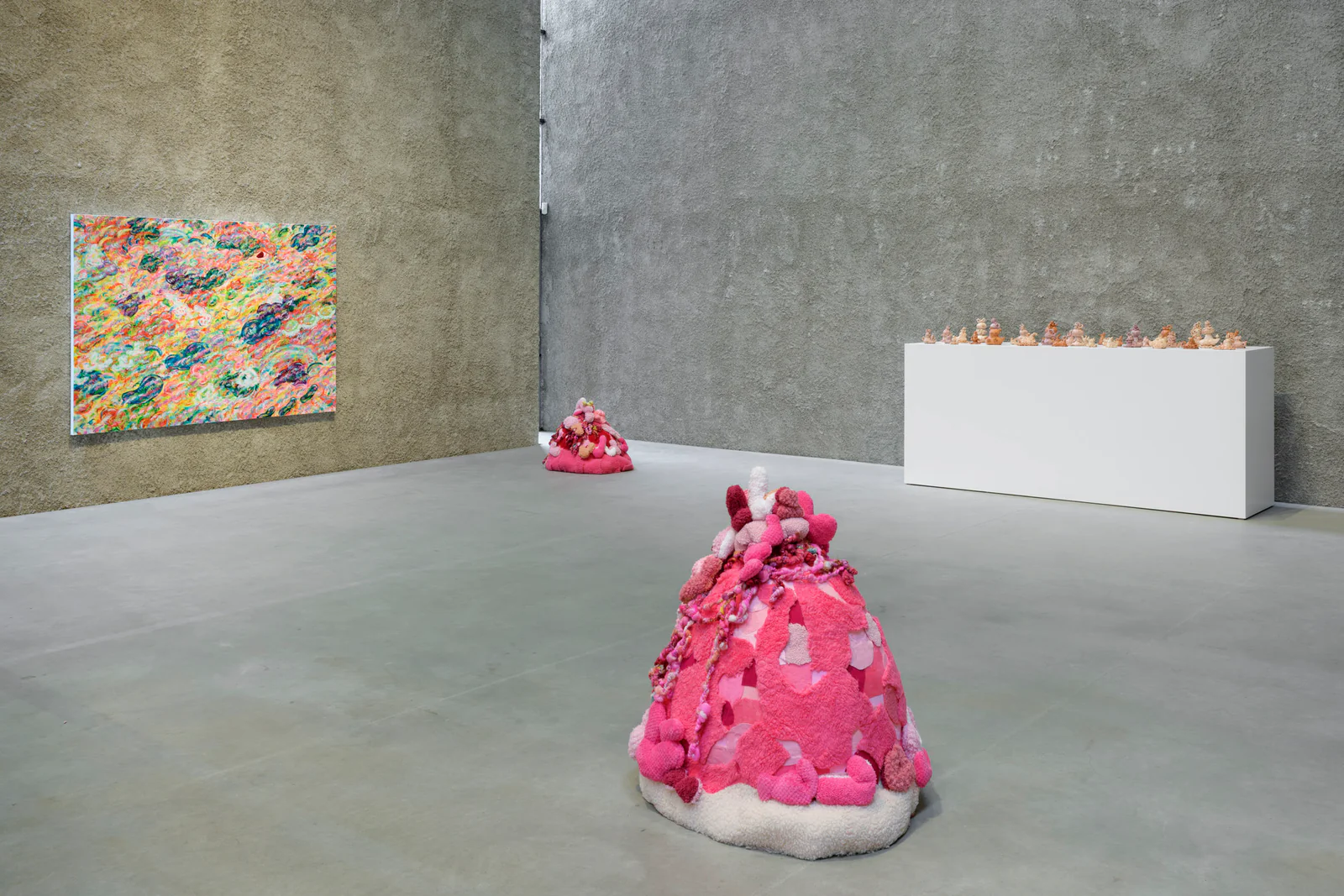







1. Installation view: Ayako Rokkaku, Scenery in the Process of Being Formed, KÖNIG GALERIE, Berlin, 2026. Artwork © Ayako Rokkaku. Photo © Roman März. Courtesy KÖNIG GALERIE.
2. Ayako Rokkaku, Untitled, 2025. Acrylic on canvas, triptych, 3 parts, each: 190 × 130 cm (74 3/4 × 51 1/8 in); total: 190 × 390 cm (74 3/4 × 153 1/2 in). Artwork © Ayako Rokkaku. Courtesy KÖNIG GALERIE.
3. Installation view: Ayako Rokkaku, Scenery in the Process of Being Formed, KÖNIG GALERIE, Berlin, 2026. Artwork © Ayako Rokkaku. Photo © Roman März. Courtesy KÖNIG GALERIE.
4. Installation view: Ayako Rokkaku, Scenery in the Process of Being Formed, KÖNIG GALERIE, Berlin, 2026. Artwork © Ayako Rokkaku. Photo © Roman März. Courtesy KÖNIG GALERIE.
5. Ayako Rokkaku, Untitled, 2026. Acrylic on canvas, diptych, each: 180 × 180 cm (70 7/8 × 70 7/8 in); total: 180 × 360 cm (70 7/8 × 141 3/4 in). Artwork © Ayako Rokkaku. Courtesy KÖNIG GALERIE.
6. Installation view: Ayako Rokkaku, Scenery in the Process of Being Formed, KÖNIG GALERIE, Berlin, 2026. Artwork © Ayako Rokkaku. Photo © Roman März. Courtesy KÖNIG GALERIE.
7. Ayako Rokkaku, Untitled, 2024. Ceramic, 36 parts, dimensions variable. Artwork © Ayako Rokkaku. Courtesy KÖNIG GALERIE.
8. Installation view: Ayako Rokkaku, Scenery in the Process of Being Formed, KÖNIG GALERIE, Berlin, 2026. Artwork © Ayako Rokkaku. Photo © Roman März. Courtesy KÖNIG GALERIE.
9. Ayako Rokkaku, Untitled, 2024. Acrylic on canvas, 180 × 250 cm (70 7/8 × 98 3/8 in). Artwork © Ayako Rokkaku. Courtesy KÖNIG GALERIE.
10. Installation view: Ayako Rokkaku, Scenery in the Process of Being Formed, KÖNIG GALERIE, Berlin, 2026. Artwork © Ayako Rokkaku. Photo © Roman März. Courtesy KÖNIG GALERIE.
11. Installation view: Ayako Rokkaku, Scenery in the Process of Being Formed, KÖNIG GALERIE, Berlin, 2026. Artwork © Ayako Rokkaku. Photo © Roman März. Courtesy KÖNIG GALERIE.
12. Ayako Rokkaku, Untitled, 2025. Acrylic on canvas, 120 × 90 cm (47 1/4 × 35 3/8 in). Artwork © Ayako Rokkaku. Courtesy KÖNIG GALERIE.
13. Ayako Rokkaku, Mountain of Nameless Emotions I, 2024. Mixed media, 446 × 312 × 301 cm (175 5/8 × 122 7/8 × 118 1/2 in). Artwork © Ayako Rokkaku. Courtesy KÖNIG GALERIE.
14. Ayako Rokkaku, Untitled, 2025. Acrylic on canvas, 170 × 170 cm (66 7/8 × 66 7/8 in). Artwork © Ayako Rokkaku. Courtesy KÖNIG GALERIE.
15. Installation view: Ayako Rokkaku, Scenery in the Process of Being Formed, KÖNIG GALERIE, Berlin, 2026. Artwork © Ayako Rokkaku. Photo © Roman März. Courtesy KÖNIG GALERIE.
16. Installation view: Ayako Rokkaku, Scenery in the Process of Being Formed, KÖNIG GALERIE, Berlin, 2026. Artwork © Ayako Rokkaku. Photo © Roman März. Courtesy KÖNIG GALERIE.
17. Ayako Rokkaku, Untitled, 2025. Acrylic on canvas, 170 × 170 cm (66 7/8 × 66 7/8 in). Artwork © Ayako Rokkaku. Courtesy KÖNIG GALERIE.
All images © their respective rights holders.
Image rights & attribution →