

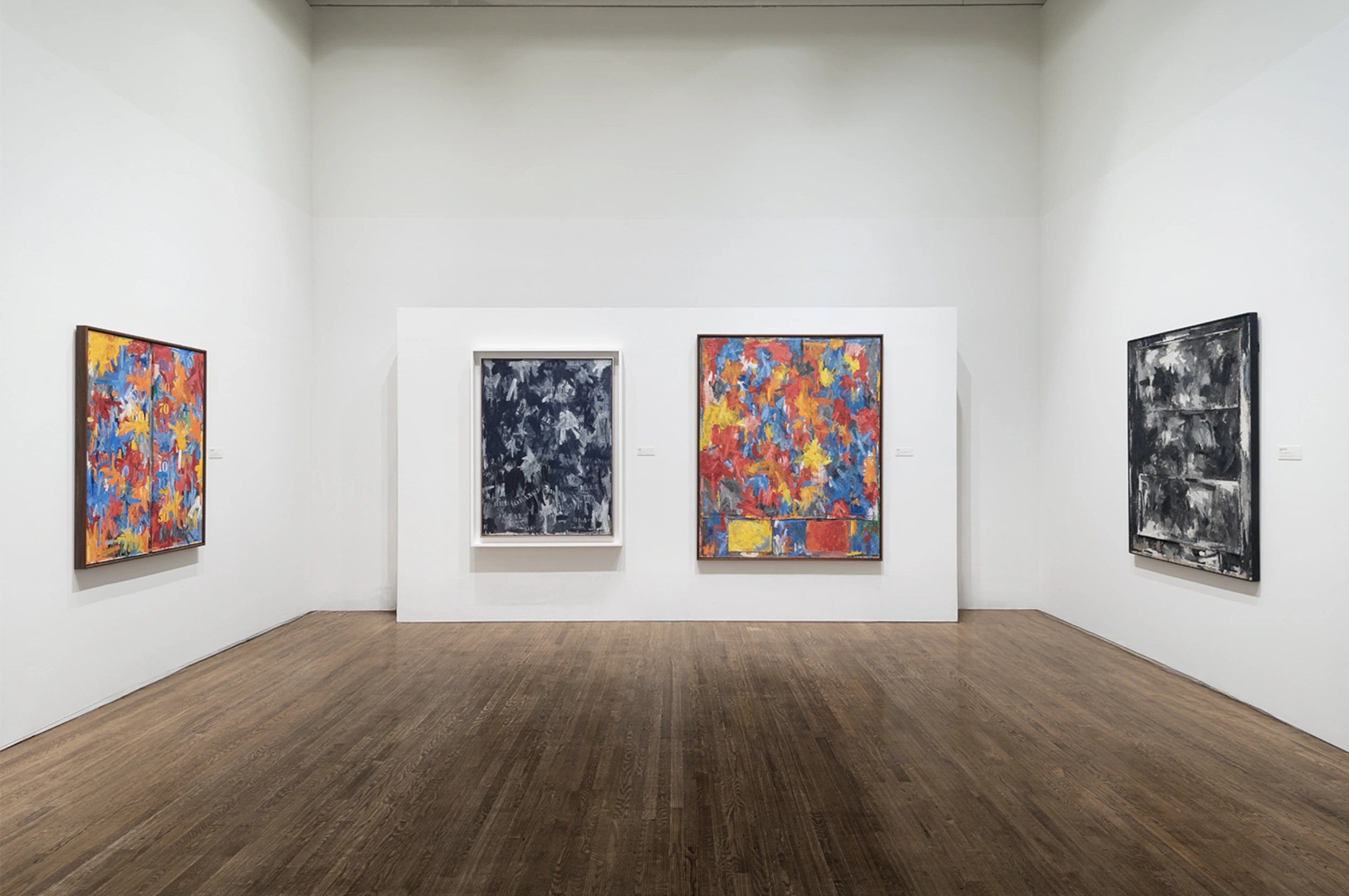
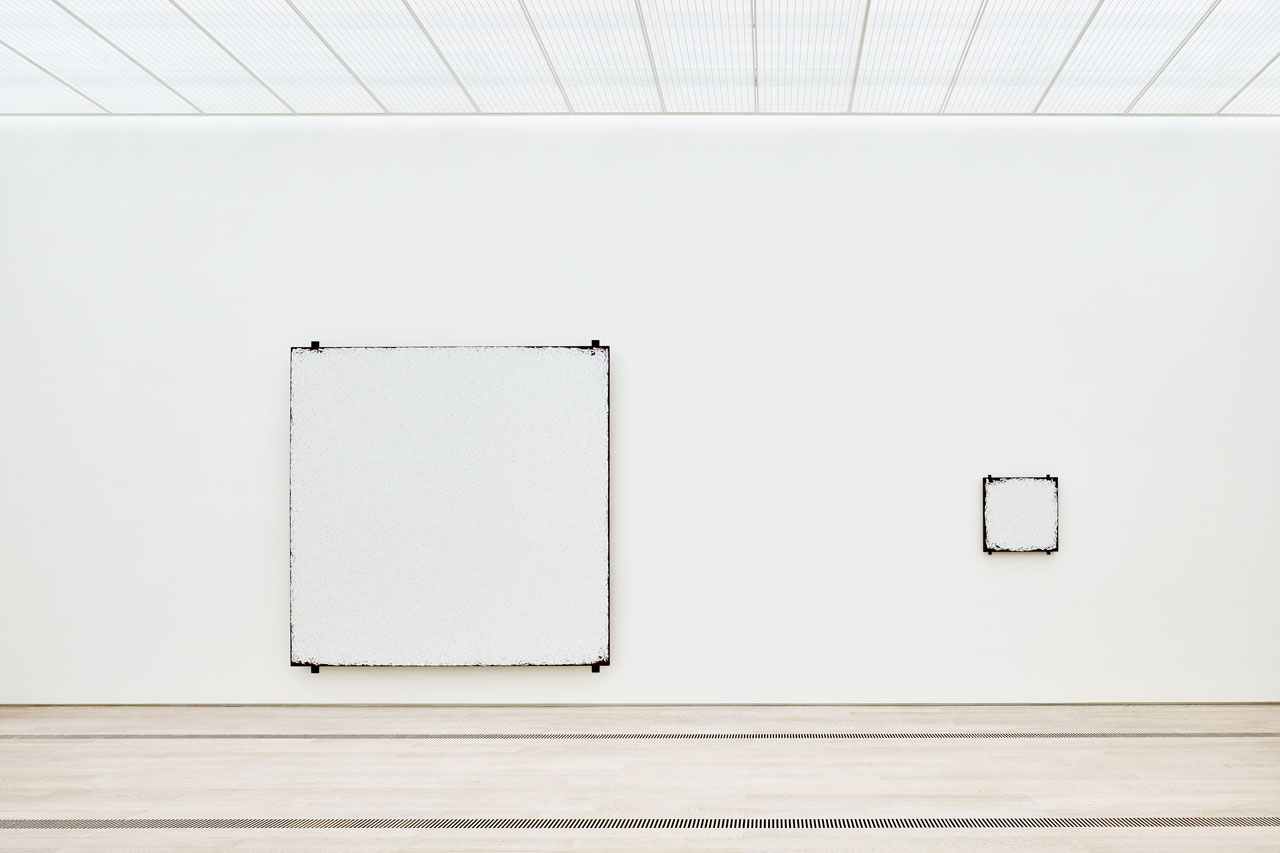
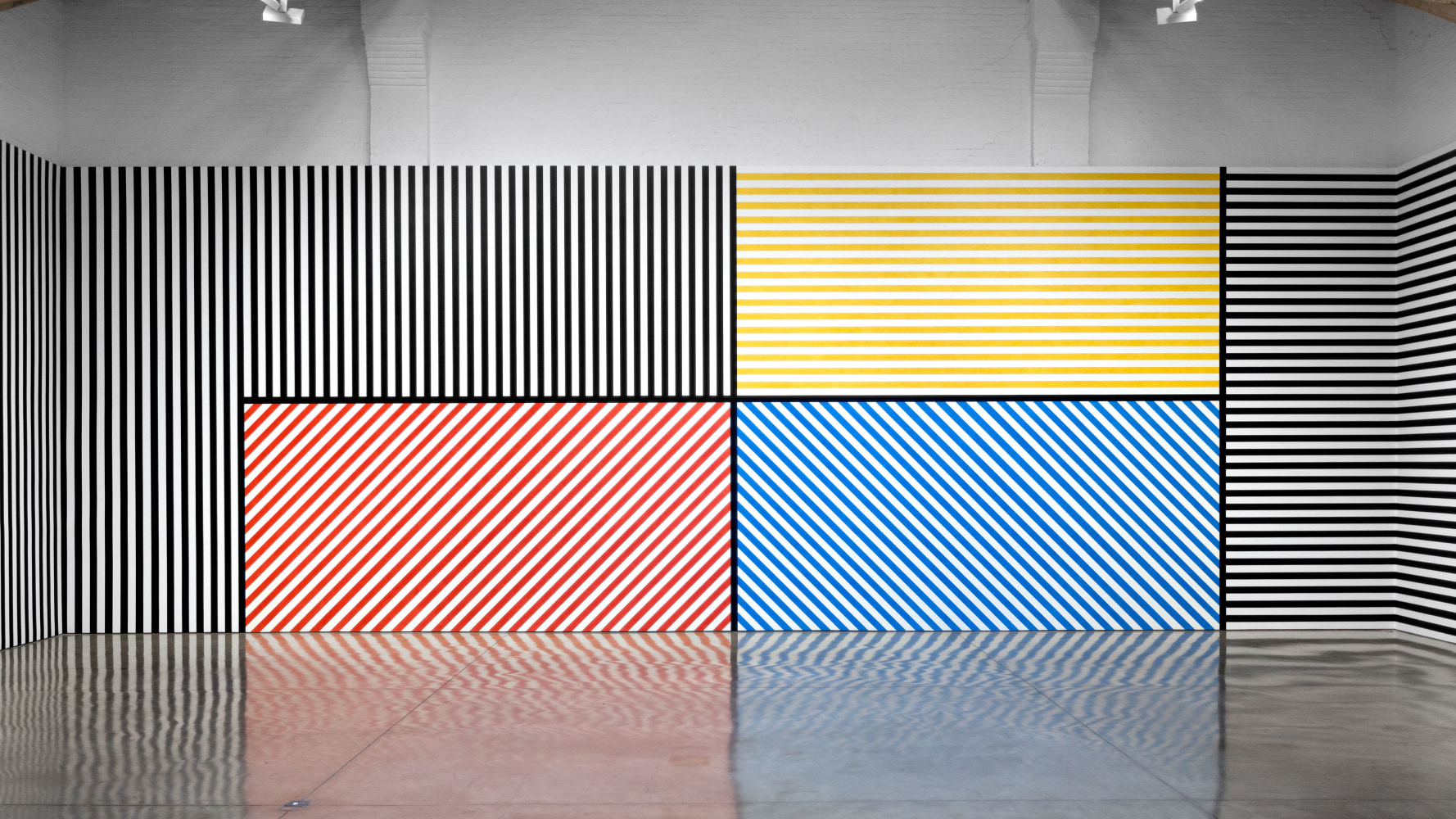


Jasper Johns is often encountered through recognition. Flags, targets, crosshatches — images that register immediately, before much looking has taken place. Over time, this familiarity has trained a certain kind of confidence: that the work is already understood, that meaning arrives early.
That expectation is difficult to loosen. Johns’ forms feel legible almost on contact. Interpretation tends to arrive before the room does. At first, this exhibition does little to resist that habit. The works are familiar. The spacing is calm. Nothing announces a break. The paintings hang with a steadiness that seems to allow recognition to proceed as usual.
But recognition doesn’t get very far here.
Spending time in the rooms, it becomes clear that familiarity isn’t being used to communicate ideas so much as to neutralize them. The images arrive quickly, then stop offering direction. Looking doesn’t build toward interpretation. It circles. What is known no longer advances attention.
Repetition begins to matter more than variation. The same structures return without emphasis or escalation. Differences appear, but they don’t accumulate into development. Meaning doesn’t unfold. It stays in place.
Gradually, the work feels less like image and more like containment. The paintings no longer guide attention; they hold it. Spacing prevents sequences from forming. Distance interrupts comparison. Each work stands on its own, encountered and released, without needing to contribute to a larger argument.
Time registers quietly. Not as history or evolution, but as density. Marks repeat without insistence. Surfaces retain evidence of return without dramatizing change. What’s present isn’t an idea progressing, but duration held steady.
By the end, the exhibition seems to have shifted how looking operates. Interpretation becomes less useful than patience. The question is no longer what does this mean? but how long can attention remain here without resolution?
In this exhibition, familiar images do not function as symbols to be decoded. They register immediately — and then stop guiding interpretation.
Recognition becomes inert. What replaces it is structure: repetition without development, spacing without sequence, material that records time without turning it into narrative.
Meaning does not accumulate through progression. It is contained — allowing duration, density, and restraint to become the primary experience of the work.


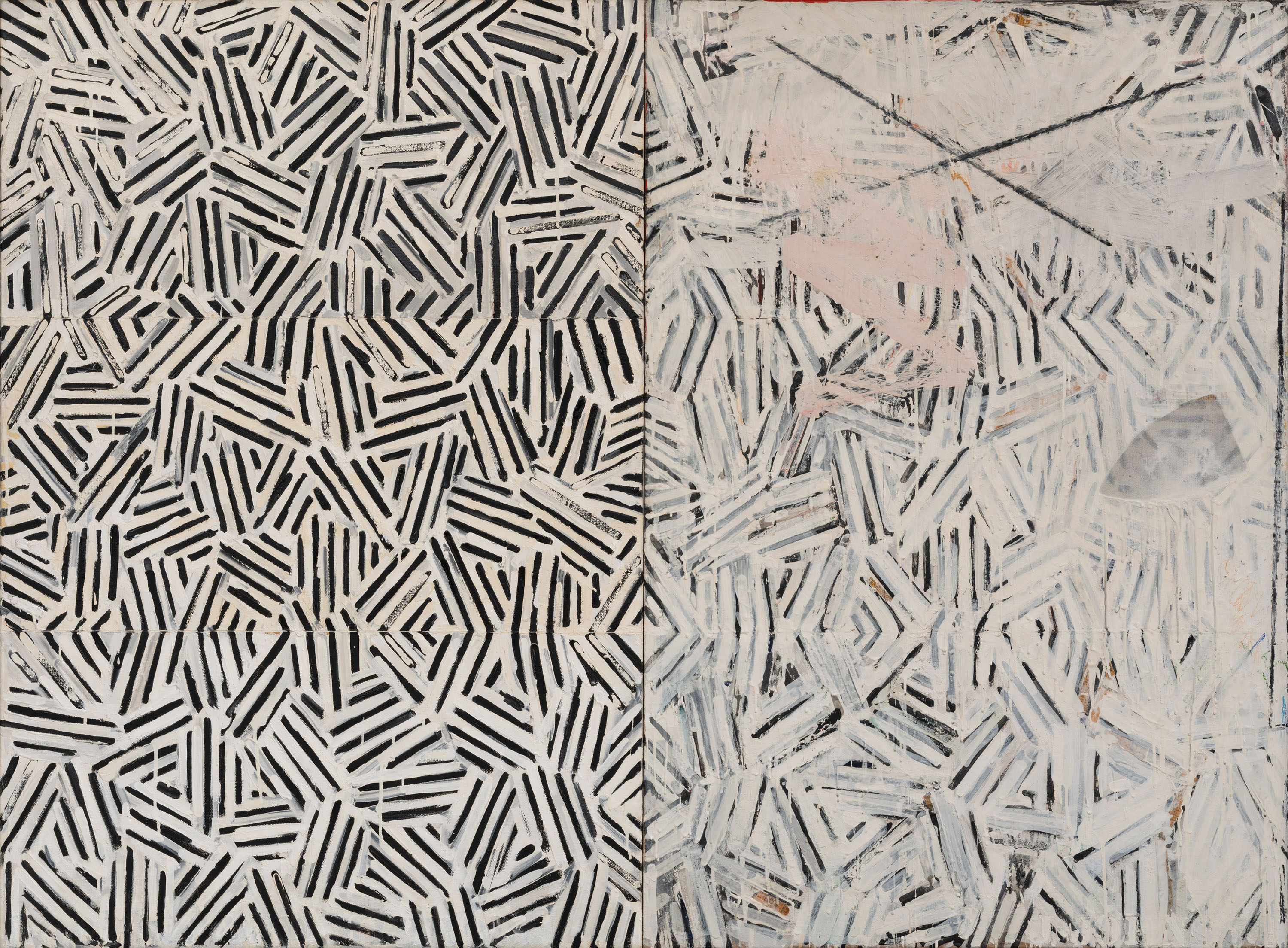
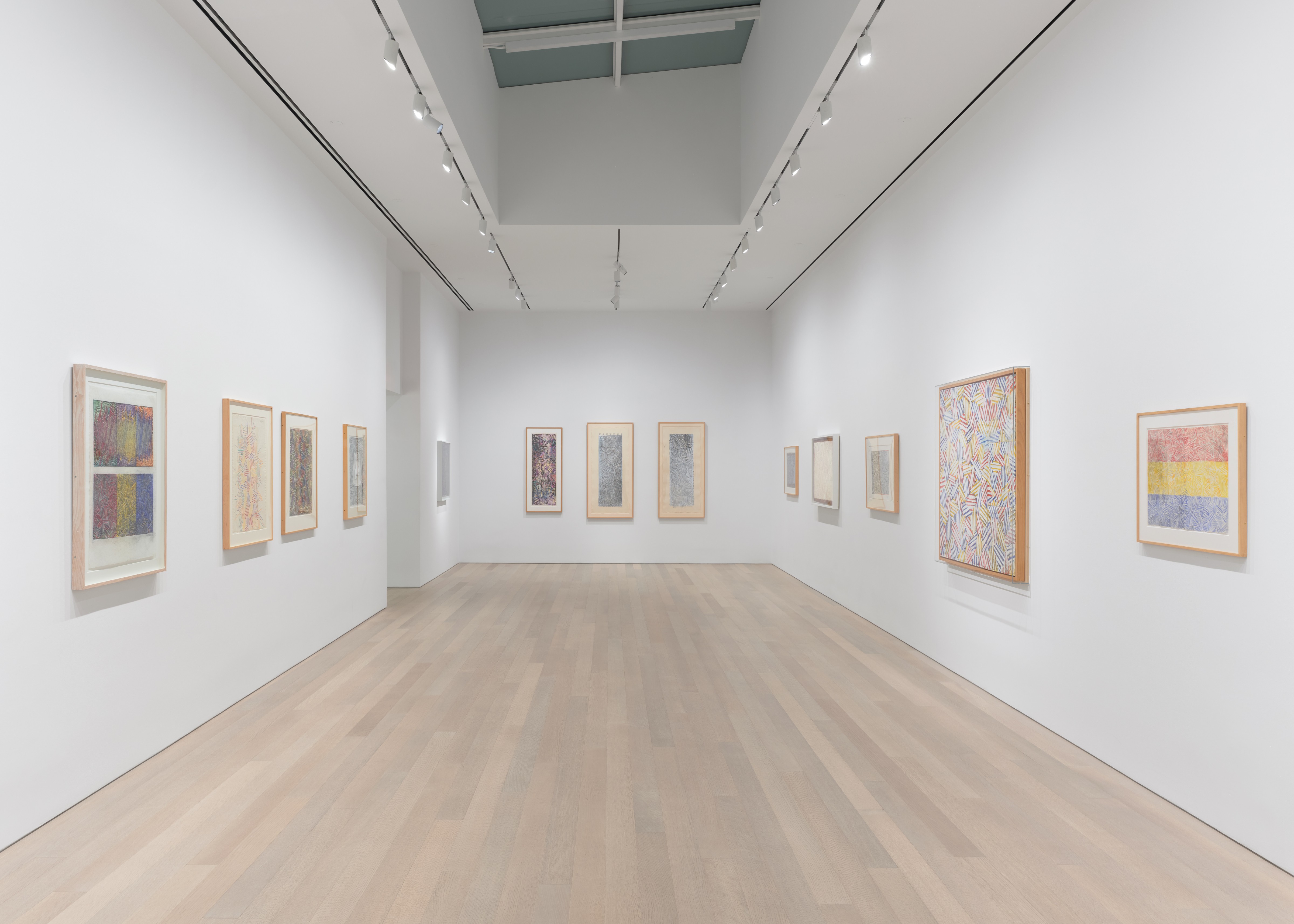


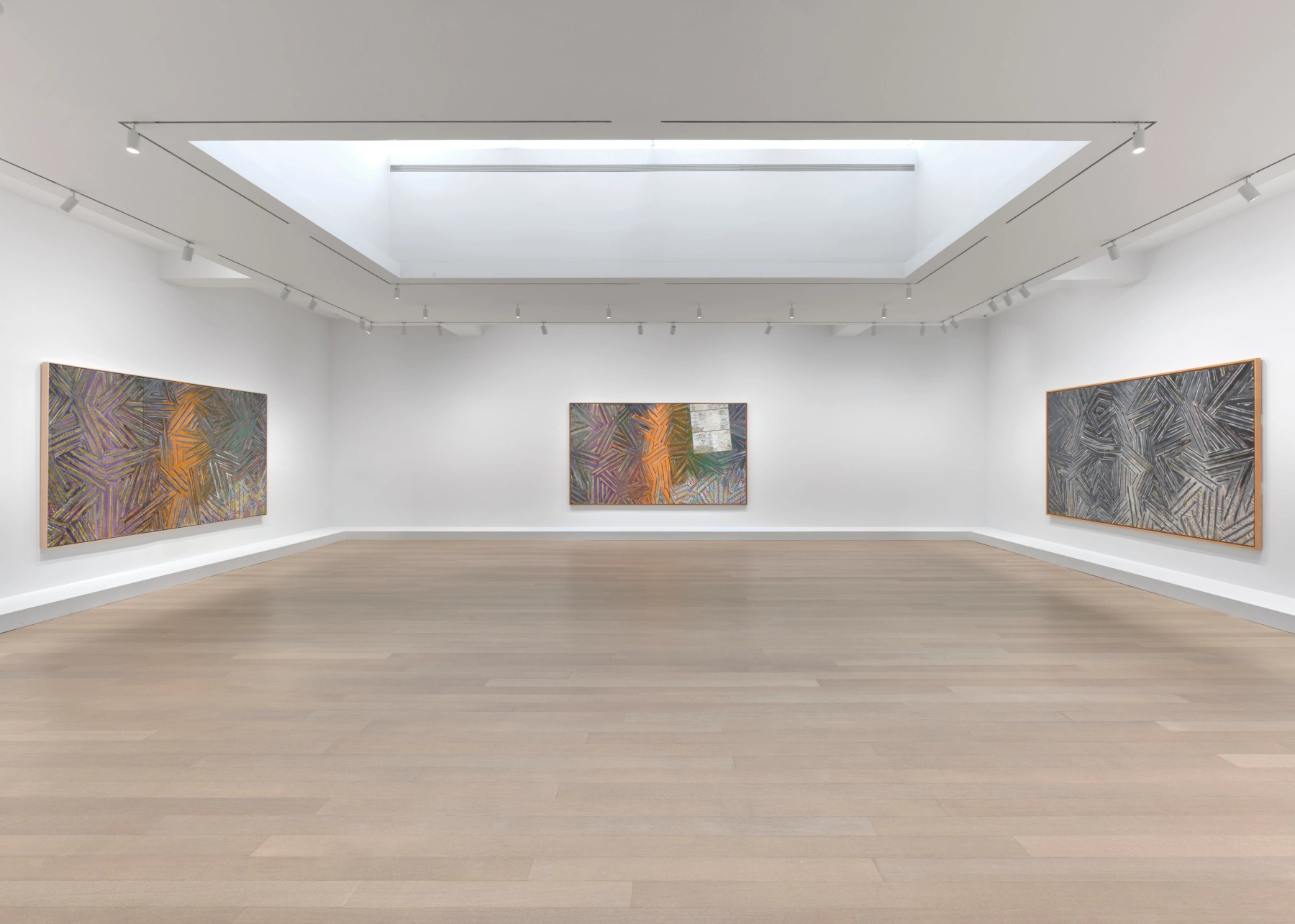
1. Installation View: Jasper Johns, Between the Clock and the Bed, 2026. © 2026 Jasper Johns / Licensed by VAGA at Artists Rights Society (ARS), New York. Photo: Owen Conway. Courtesy Gagosian.
2. Jasper Johns, Between the Clock and the Bed, 1982–83. Encaustic on canvas, in 3 parts (joined), 72 × 126 ¼ inches (182.9 × 320.7 cm). Virginia Museum of Fine Arts, Richmond. © 2025 Jasper Johns / Licensed by VAGA at Artists Rights Society (ARS), New York. Photo: Katherine Wetzel.
3. Installation View: Jasper Johns, Between the Clock and the Bed, 2026. © 2026 Jasper Johns / Licensed by VAGA at Artists Rights Society (ARS), New York. Photo: Owen Conway. Courtesy Gagosian.
4. Jasper Johns, Corpse and Mirror, 1974. Oil, encaustic, and collage on canvas, in 2 parts (joined), 50 × 68 ⅛ inches (127 × 173 cm). © 2025 Jasper Johns / Licensed by VAGA at Artists Rights Society (ARS), New York. Photo: Jeff McLane.
5. Installation View: Jasper Johns, Between the Clock and the Bed, 2026. © 2026 Jasper Johns / Licensed by VAGA at Artists Rights Society (ARS), New York. Photo: Owen Conway. Courtesy Gagosian.
6. Jasper Johns, Untitled, 1975. Oil, encaustic, and collage on canvas, in 4 parts (joined), 50 ⅛ × 50 ⅛ inches (127.3 × 127.3 cm). The Eli and Edythe L. Broad Collection. © 2025 Jasper Johns / Licensed by VAGA at Artists Rights Society (ARS), New York. Photo: Jamie Stukenberg, Professional Graphics, Rockford, Illinois. © The Wildenstein Plattner Institute, Inc., New York, 2025.
6. Installation View: Jasper Johns, Between the Clock and the Bed, 2026. © 2026 Jasper Johns / Licensed by VAGA at Artists Rights Society (ARS), New York. Photo: Owen Conway. Courtesy Gagosian.
7. Jasper Johns, Between the Clock and the Bed, 1981. Encaustic on canvas, in 3 parts (joined), 72 × 126 ¼ inches (182.9 × 320.7 cm). Museum of Modern Art, New York. © 2025 Jasper Johns / Licensed by VAGA at Artists Rights Society (ARS), New York. Photo: © The Museum of Modern Art / Licensed by SCALA / Art Resource, New York.
8. Installation View: Jasper Johns, Between the Clock and the Bed, 2026. © 2026 Jasper Johns / Licensed by VAGA at Artists Rights Society (ARS), New York. Photo: Owen Conway. Courtesy Gagosian.
9. Jasper Johns, End Paper, 1976. Oil on canvas, in 2 parts (joined), 60 × 69 ⅝ inches (152.7 × 176.8 cm). Museum of Modern Art, New York. © 2025 Jasper Johns / Licensed by VAGA at Artists Rights Society (ARS), New York. Photo: © The Museum of Modern Art / Licensed by SCALA / Art Resource, New York.
10. Installation View: Jasper Johns, Between the Clock and the Bed, 2026. © 2026 Jasper Johns / Licensed by VAGA at Artists Rights Society (ARS), New York. Photo: Owen Conway. Courtesy Gagosian.
Cover: Installation View: Jasper Johns, Between the Clock and the Bed, 2026. © 2026 Jasper Johns / Licensed by VAGA at Artists Rights Society (ARS), New York. Photo: Owen Conway. Courtesy Gagosian.
All images © their respective rights holders.
Image rights & attribution →