




A sheet of cold-rolled steel hangs on the wall. It does not absorb light so much as redirect it. As you move, the surface shifts—scratches brighten, bends darken, traces of handling appear and disappear. For a moment the band of paint reads as horizon, separating something like sky from something like water. Then the steel reasserts itself, and the image dissolves back into material.
The steel does not behave like a painting. A painting holds still. It offers a surface that has been resolved. The steel does not do this. What you are looking at changes depending on where you are standing.
In works like Coast (1994), Wagner begins from this instability. She does not paint landscape so much as approach the conditions that make it legible—terrain, weather, material, time—without fixing them into image. The distinction is structural. Representation captures a moment of seeing. Wagner’s work produces the conditions for seeing to occur.
Across steel, slate, and stone, her geometry acts less as composition than as orientation. A band across steel does not compose the surface. It orients the viewer within it—establishes a horizon, a division, a relationship that allows the eye to locate itself.
Wagner has described thinking about terrain while painting. Landscape, in this sense, is not scenery but organization—slope, fracture, horizon—the structure that emerges when land is observed over time. This becomes explicit in Gorges (1986), where twenty feet of irregular slate fragments lean against the wall. They do not hang—they rest, their weight settling into the floor. The painted bands do not read as marks imposed on stone. They read as evidence of a logic the stone already contained.
The tape works make this argument directly. Strips of masking tape were layered and pulled back across surfaces. The geometry that remains is not simply drawn. It is the record of a negotiation—between placement and resistance, between intention and what the material was willing to do.
The line is not drawn. It is revealed.
In Cat’s Cradle (1989), white waxed thread stretches between metal hooks across a large piece of slate. The thread does not mark the surface. It measures it—traces relationships the stone itself cannot show. The pattern that results is not a composition in the conventional sense. It is the record of what this particular piece of slate permitted.
The work does not hold still. Steel tarnishes, cedar weathers, pigments fade at different rates. Time enters not as subject but as condition.
In Time Piece #1 (1982–83), Wagner painted squares of pigment along a cedar fence and left them exposed for a year. What appears identical at the beginning begins to diverge. Each pigment reveals its own temporal behavior—its own way of lasting or not lasting under the same conditions. She has not made a painting. She has set up a situation in which painting and weather can discover each other.
A quieter form of this attention appears in smaller observational works—branches, flowers, clusters of leaves recorded at particular moments in the year. Compared with the steel, they feel intimate in scale, yet they operate through the same logic.
Landscape is no longer something depicted. It is something the work enters.
Merrill Wagner approaches landscape not as a scene to depict but as a structure to uncover. Across steel, slate, tape, and thread, sparse geometric interventions reveal the terrain already present within materials themselves—fracture, weight, horizon, and time.
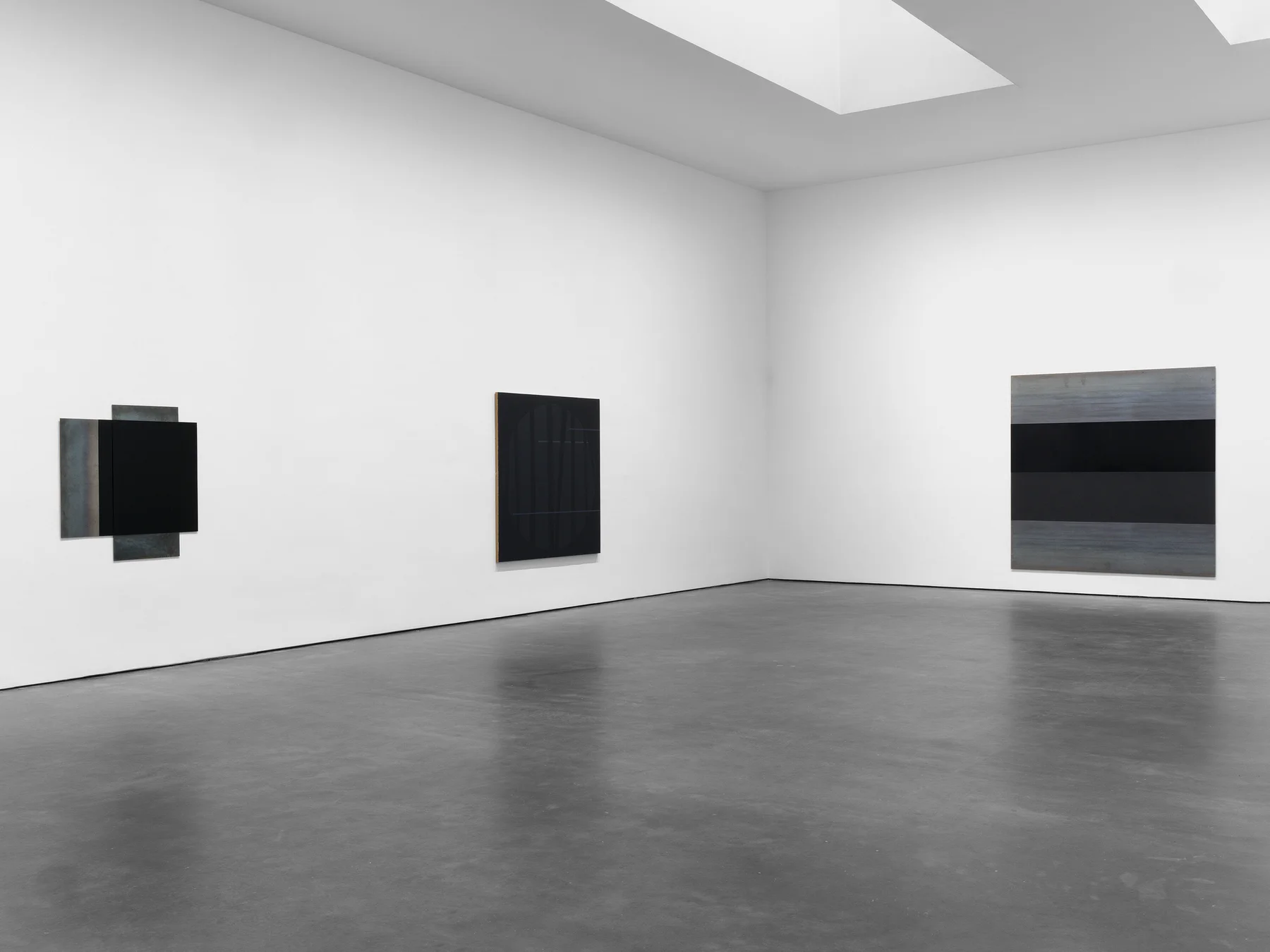



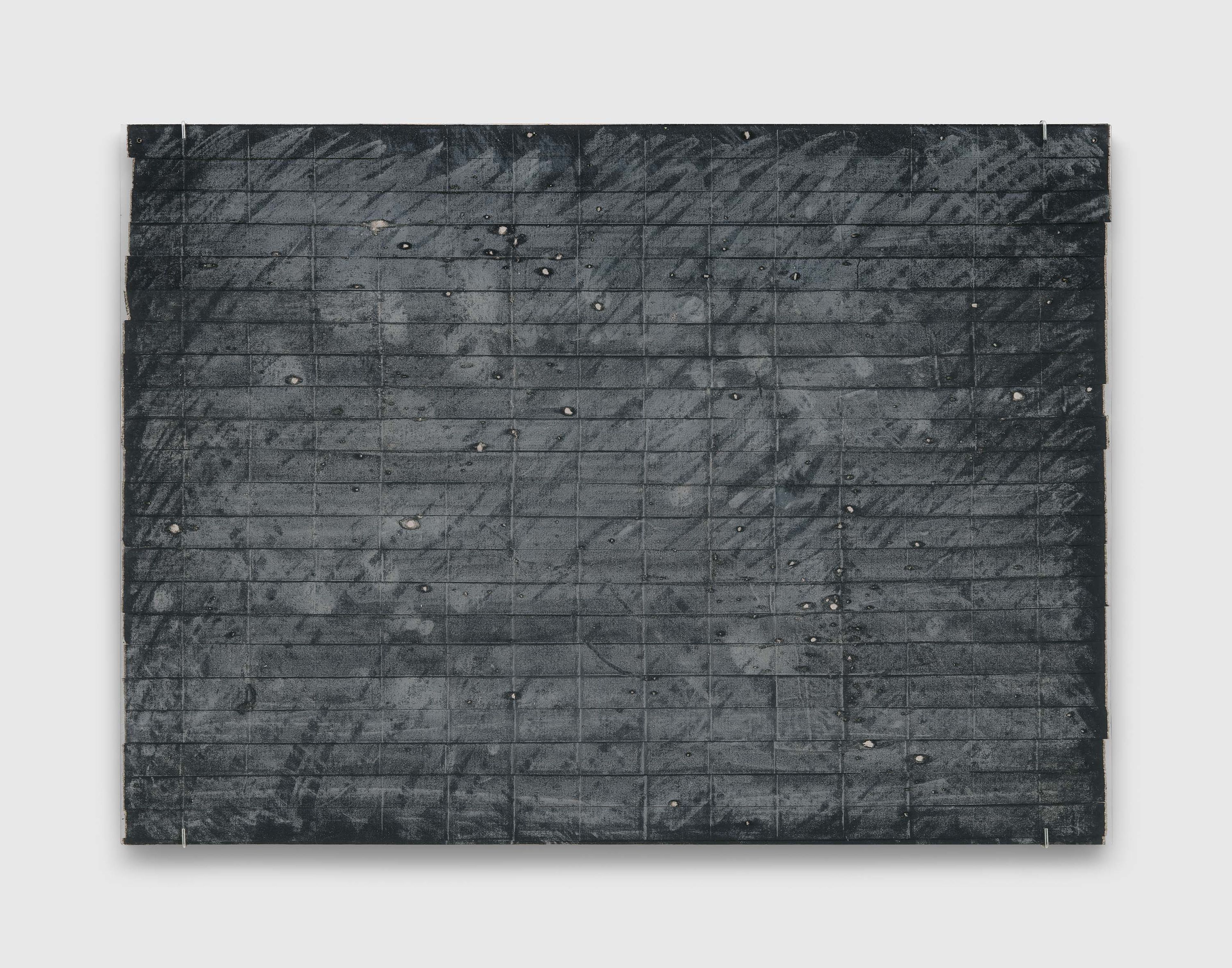
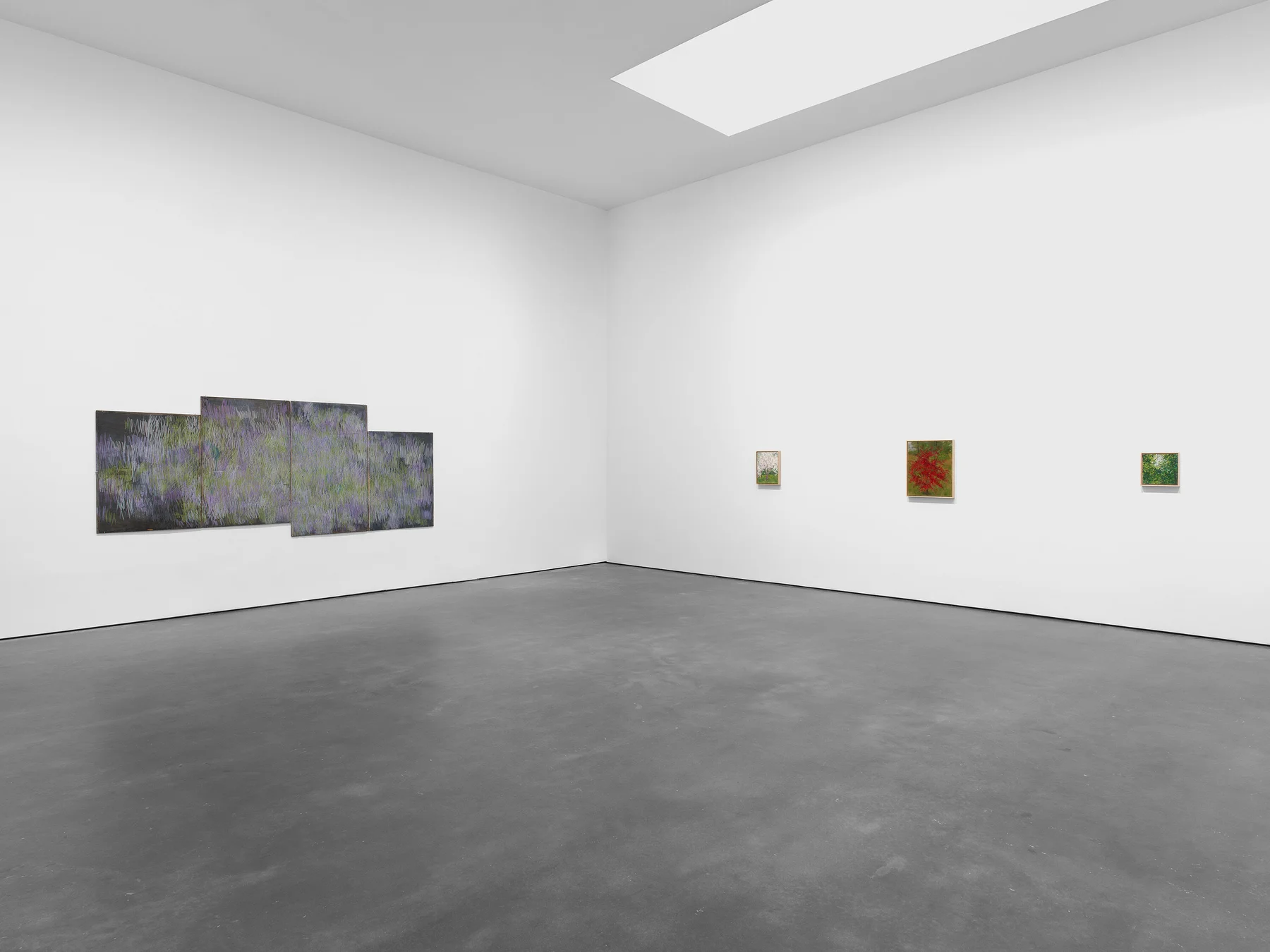


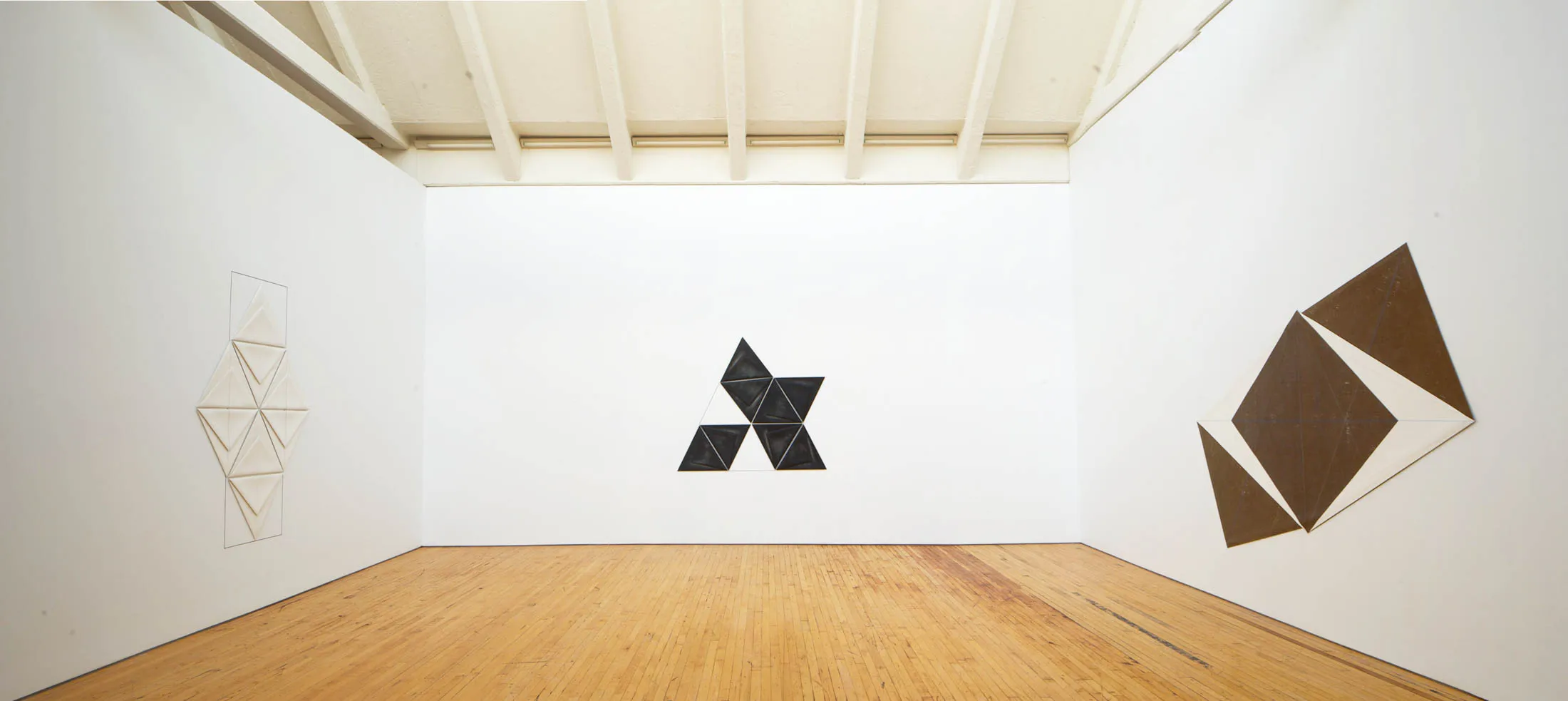
1. Installation view: Merrill Wagner, Marking Time, David Zwirner, New York, 2026. Artwork © Merrill Wagner. Courtesy David Zwirner.
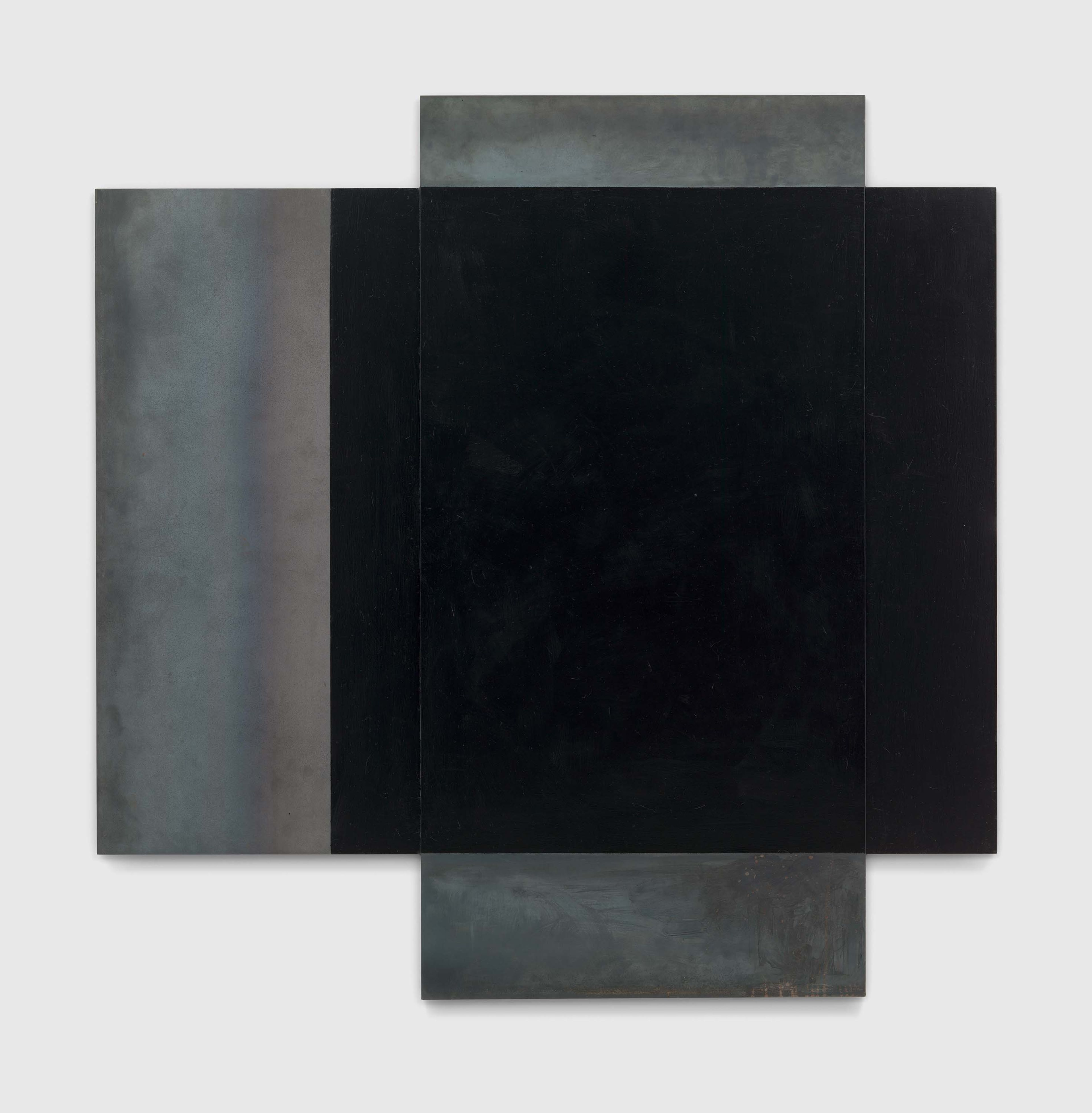
2. Merrill Wagner, Charleton Street, 1988. Rust preventative paint on steel, 48 3/4 × 48 3/4 in (123.8 × 123.8 cm). Artwork © Merrill Wagner. Courtesy David Zwirner.
3. Merrill Wagner, Untitled, 1967. Acrylic on linen, 72 × 72 1/4 in (182.9 × 183.5 cm). Artwork © Merrill Wagner. Courtesy David Zwirner.
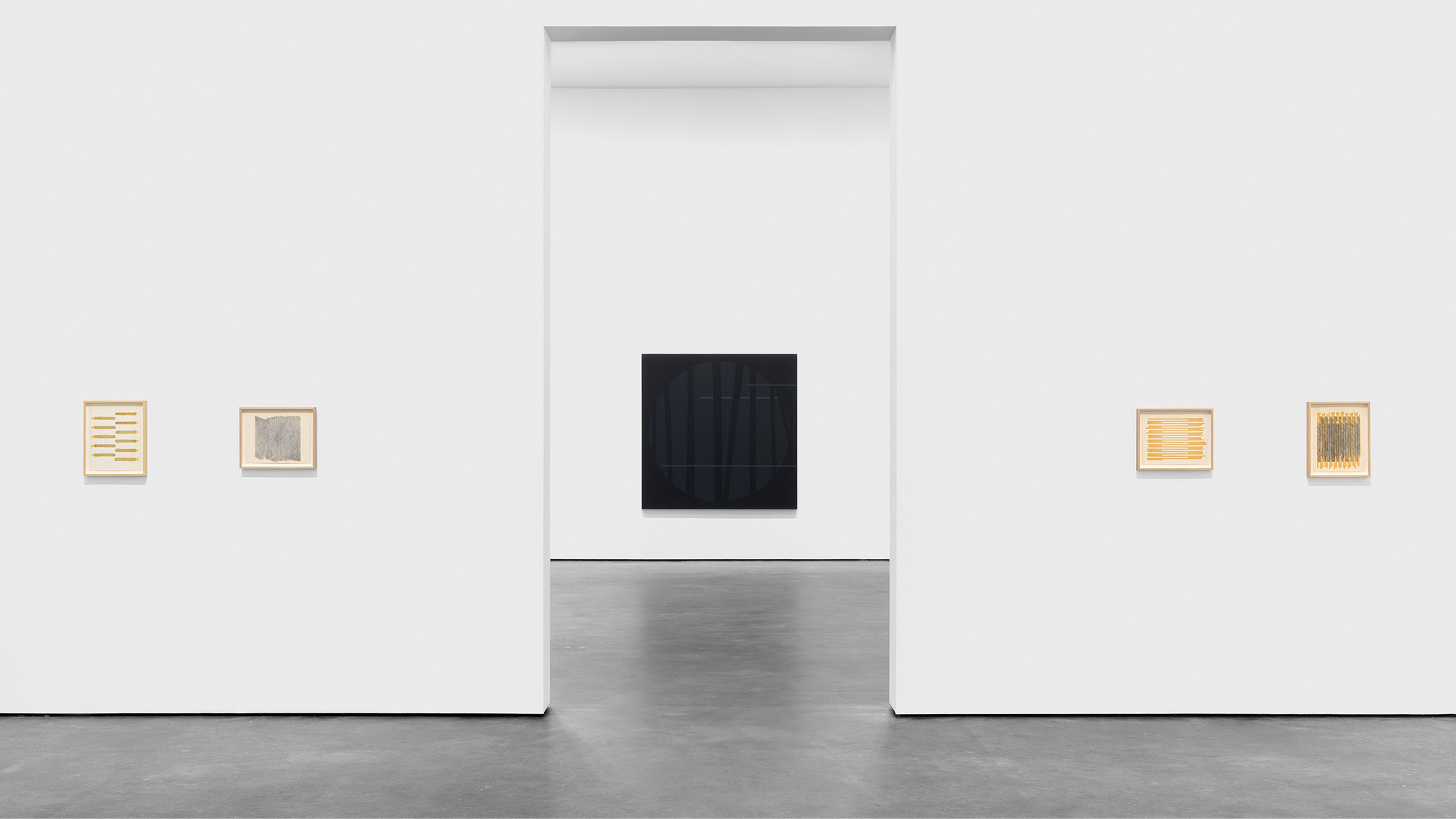
4. Installation view: Merrill Wagner, Marking Time, David Zwirner, New York, 2026. Artwork © Merrill Wagner. Courtesy David Zwirner.
5. Merrill Wagner, Untitled, 1975. Masking tape and pencil on paper, 14 × 11 in (35.6 × 27.9 cm); framed: 16 1/4 × 13 1/4 in (41.3 × 33.7 cm). Artwork © Merrill Wagner. Courtesy David Zwirner.
6. Merrill Wagner, Untitled, 1977. Masking tape and pencil on paper, 14 × 11 in (35.6 × 27.9 cm); framed: 16 1/8 × 13 1/4 in (41 × 33.7 cm). Artwork © Merrill Wagner. Courtesy David Zwirner.
7. Merrill Wagner, Knoll, 1982. Oil pastel on slate blackboard panels, 59 7/8 × 144 1/8 in (152 × 366 cm). Artwork © Merrill Wagner. Courtesy David Zwirner.
8. Merrill Wagner, Bank Street, 1990. Rust preventive paint on steel in two parts, 48 3/8 × 48 1/8 in (122.9 × 122.2 cm). Artwork © Merrill Wagner. Courtesy David Zwirner.
9. Merrill Wagner, Untitled, 1990. Conté crayon and oil on stone, 13 1/8 × 16 in (33.3 × 40.6 cm). Artwork © Merrill Wagner. Courtesy David Zwirner.
10. Installation view: Merrill Wagner, Marking Time, David Zwirner, New York, 2026. Artwork © Merrill Wagner. Courtesy David Zwirner.
11. Merrill Wagner, Untitled, 1978. Conté crayon and tape on plexiglass, 22 × 30 1/4 in (55.9 × 76.8 cm). Artwork © Merrill Wagner. Courtesy David Zwirner.
12. Installation view: Merrill Wagner, Marking Time, David Zwirner, New York, 2026. Artwork © Merrill Wagner. Courtesy David Zwirner.
13. Merrill Wagner, Untitled #6 (May), 1998. Oil on linen, 11 × 12 in (27.9 × 30.5 cm); framed: 12 1/4 × 13 1/4 in (31.1 × 33.7 cm). Artwork © Merrill Wagner. Courtesy David Zwirner.
14. Merrill Wagner, Gorges, 1986. Casein, oil, and acrylic on slate blackboard fragments in six parts, 50 × 240 in (127 × 609.6 cm). Artwork © Merrill Wagner. Courtesy David Zwirner.
15. Installation view: Merrill Wagner, Marking Time, David Zwirner, New York, 2026. Artwork © Merrill Wagner. Courtesy David Zwirner.
16. Merrill Wagner, Coast. Rust preventive paint on steel, 96 × 96 in (243.8 × 243.8 cm). Artwork © Merrill Wagner. Courtesy David Zwirner.
17. Merrill Wagner, Yellow, Summer Studio 1983–2003, 2017. Suite of nine digital chromogenic prints mounted on plexiglass, each: 20 1/8 × 29 7/8 in (51 × 76 cm). Artwork © Merrill Wagner. Courtesy David Zwirner.
18. Merrill Wagner, Cat’s Cradle, 1989. Oil pastel, sewing thread, sewing hooks, steel, and slate in three parts, 42 × 69 in (106.7 × 175.3 cm). Artwork © Merrill Wagner. Courtesy David Zwirner.
19. Installation view: Merrill Wagner, Marking Time, David Zwirner, New York, 2026. Artwork © Merrill Wagner. Courtesy David Zwirner.
20. Merrill Wagner, Untitled (Study), c. 2005. Rust preventive paint and graphite on steel, 15 1/8 × 9 1/8 in (38.4 × 23.2 cm). Artwork © Merrill Wagner. Courtesy David Zwirner.
21. Merrill Wagner, Untitled, 1979. Oil and cloth tape on plexiglass in four parts, quadriptych, each: 40 × 40 in (101.6 × 101.6 cm). Artwork © Merrill Wagner. Courtesy David Zwirner.
22. Merrill Wagner, Untitled, 1995. Rust preventive paint on steel, 48 5/8 × 48 in (123.5 × 121.9 cm). Artwork © Merrill Wagner. Courtesy David Zwirner.
23. Merrill Wagner, Untitled, 1987. Oil on marble, 15 1/2 × 39 in (39.4 × 99.1 cm). Artwork © Merrill Wagner. Courtesy David Zwirner.