


Lynne Woods Turner has spent decades working with a narrow vocabulary of arcs and bands, adjusting them gradually from painting to painting. The materials are spare — oil, graphite, panel — but the shifts are precise. Her work moves between geometry and touch, where measured structure meets the pressure of the hand. What holds across the paintings is not a motif, but a condition: how much change can enter a surface before its balance begins to tilt.
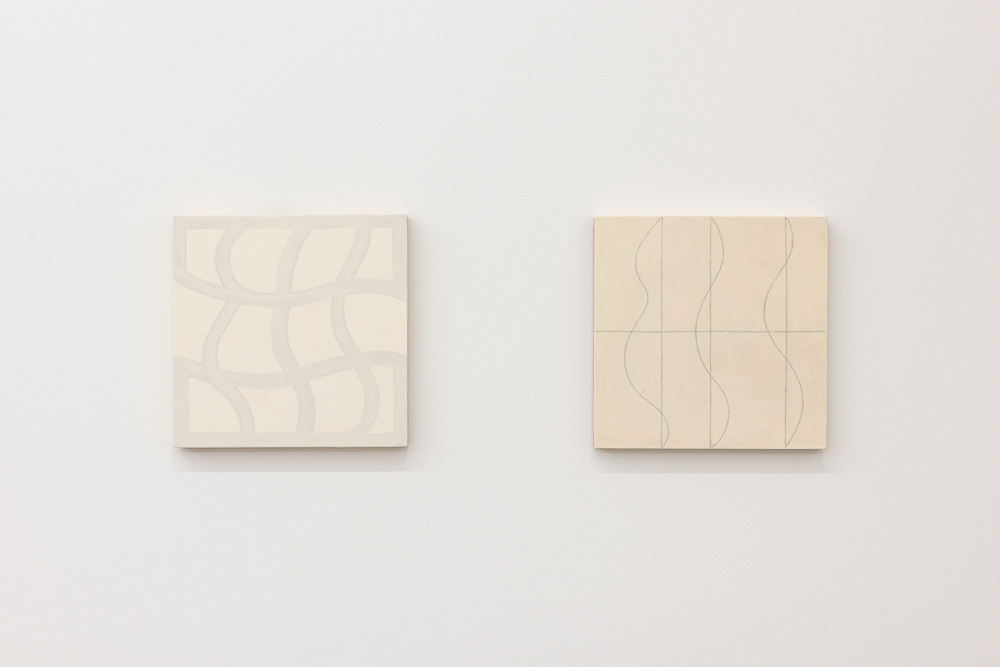
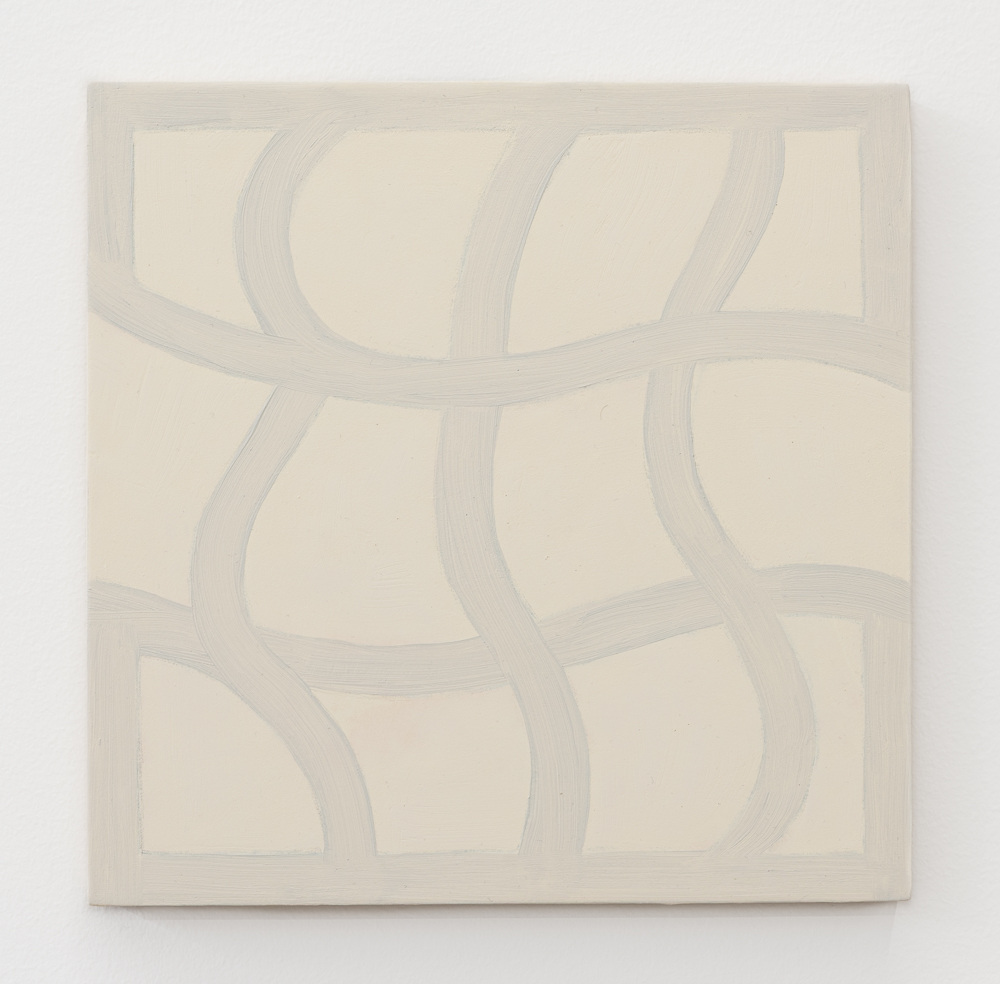
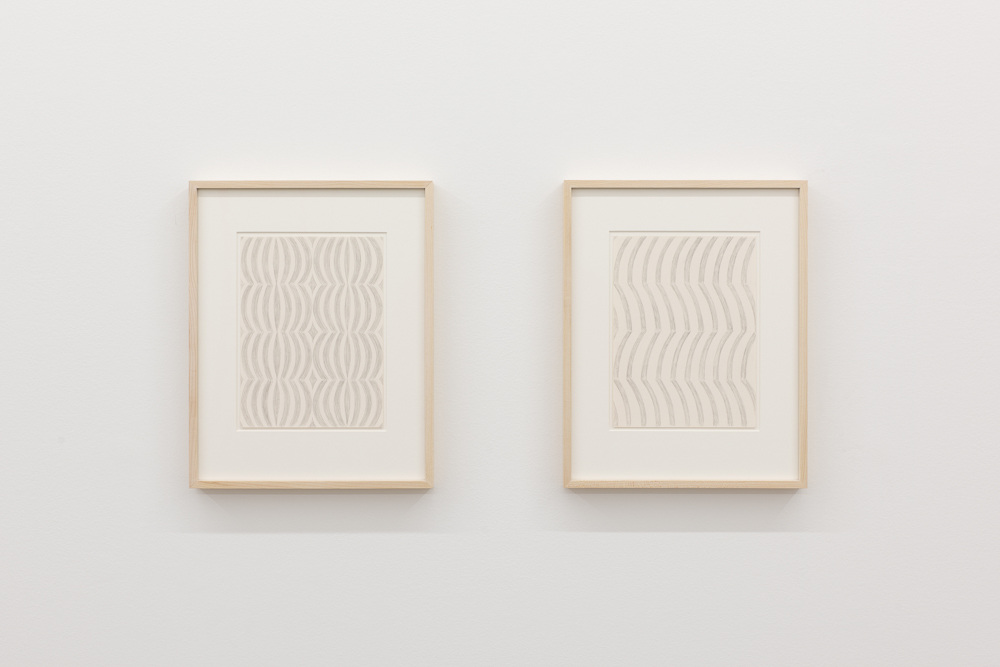
Barely perceptible at first, pale bands cross the panels in Untitled #9570 and Untitled #9571 (2025). The two hang beside one another, nearly indistinguishable. Then the eye adjusts. A spacing tightens. A curve leans. The difference is slight, but it alters the balance.
Only after time does difference register — not as variation, but as pressure gathering along an edge. The surface remains steady, though never static.
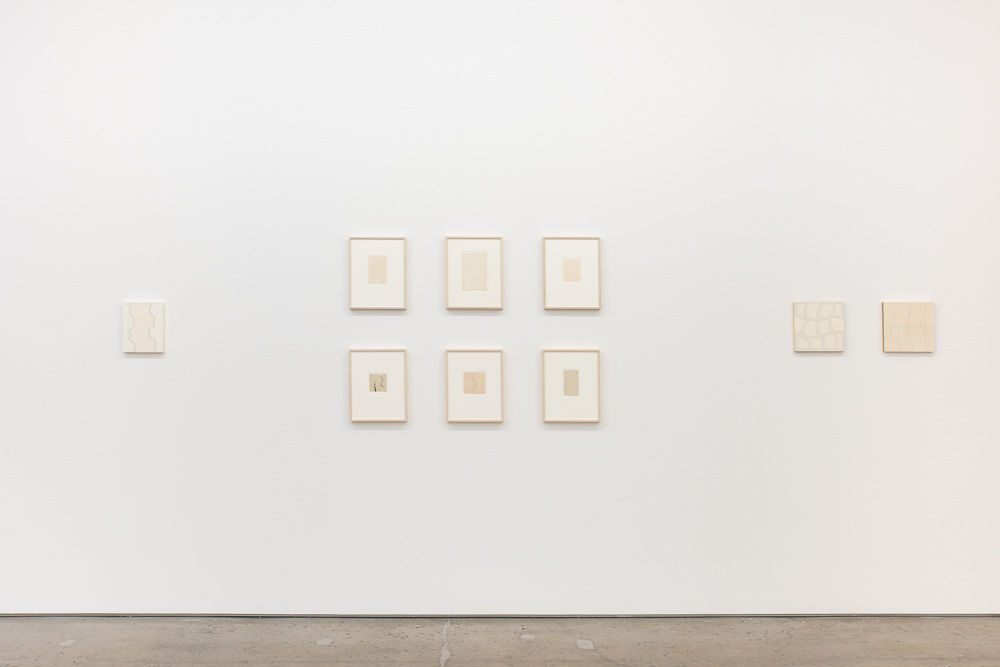
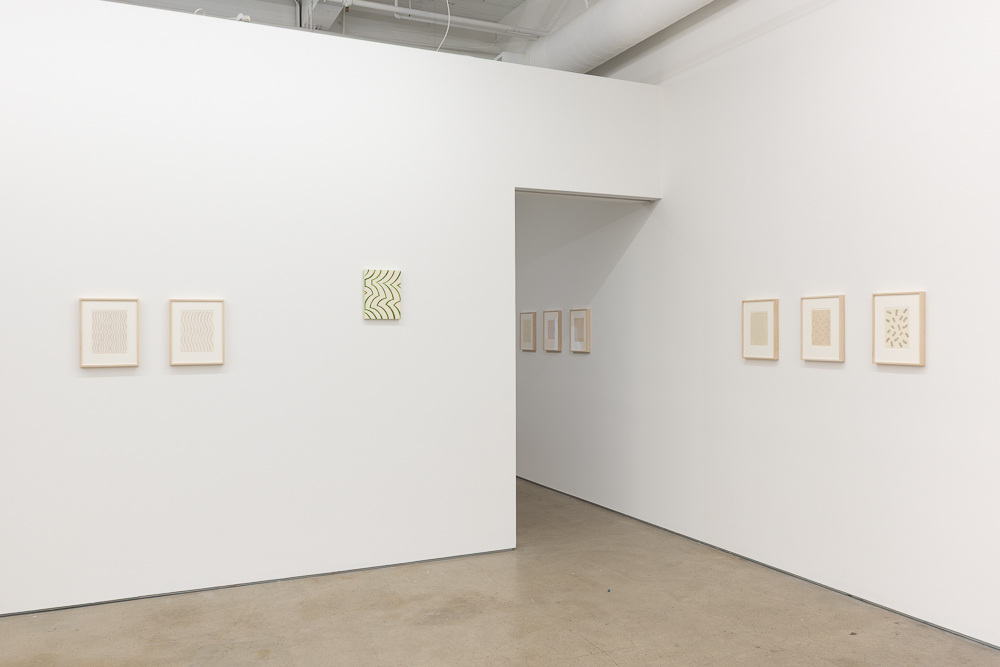
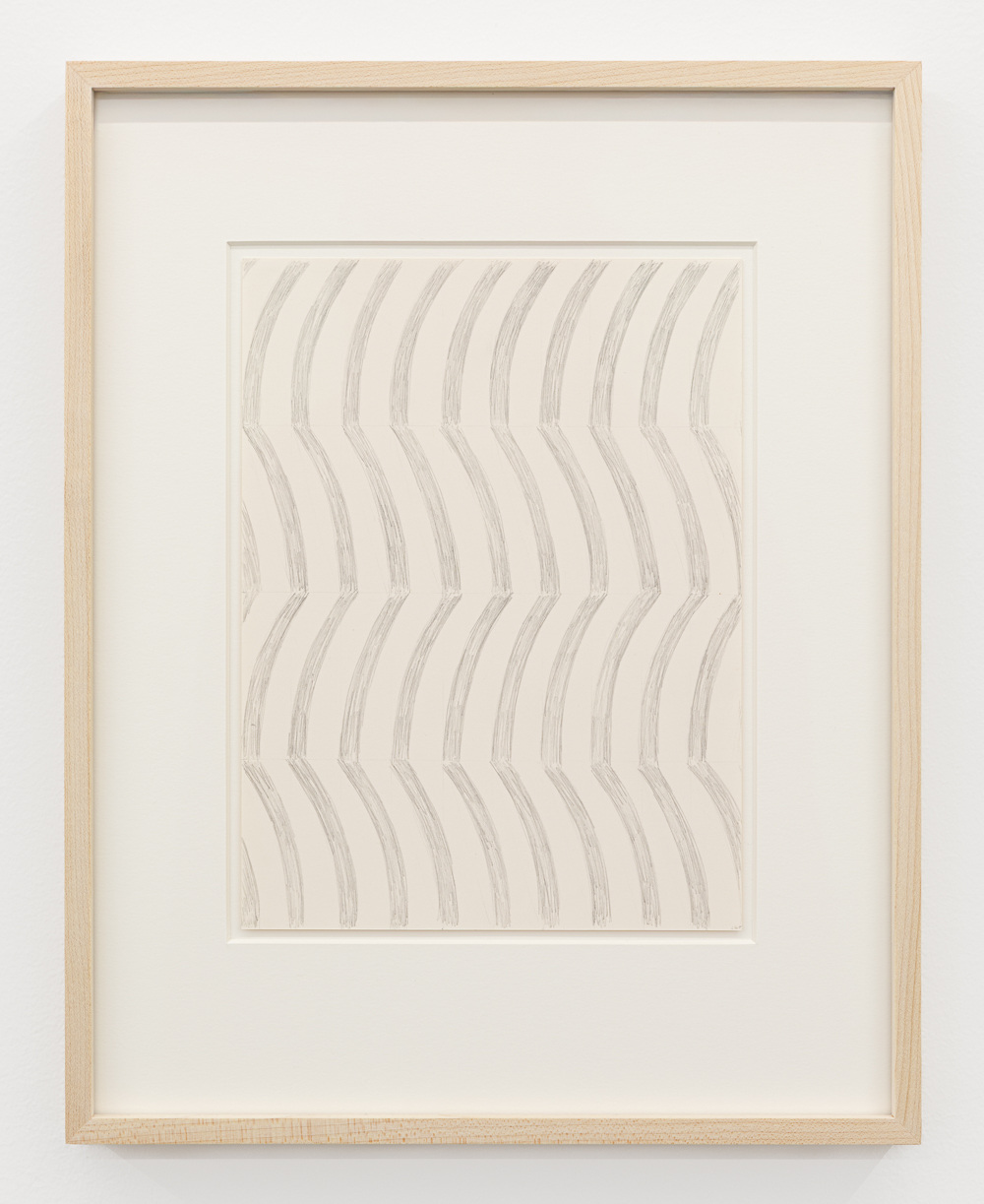
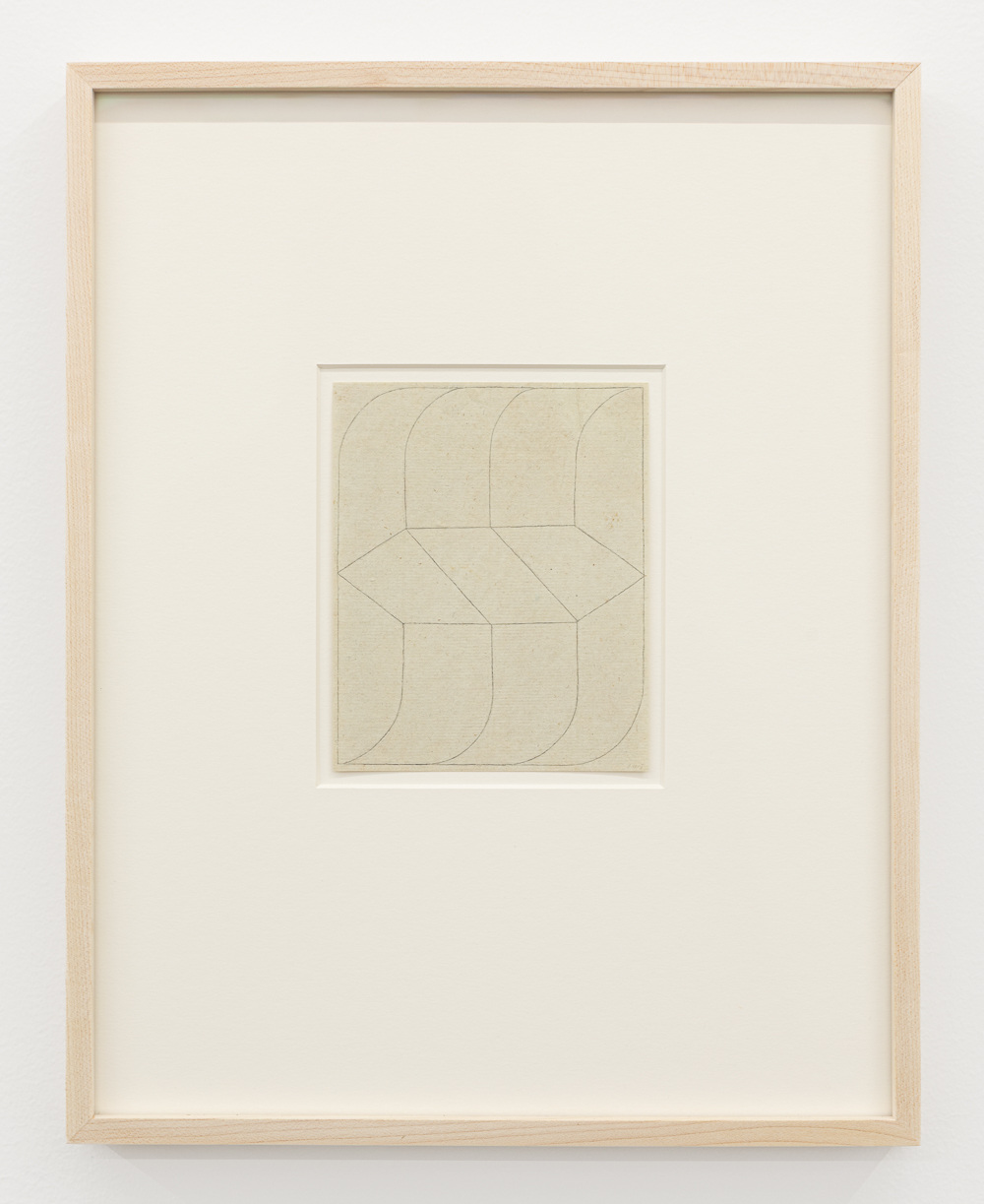
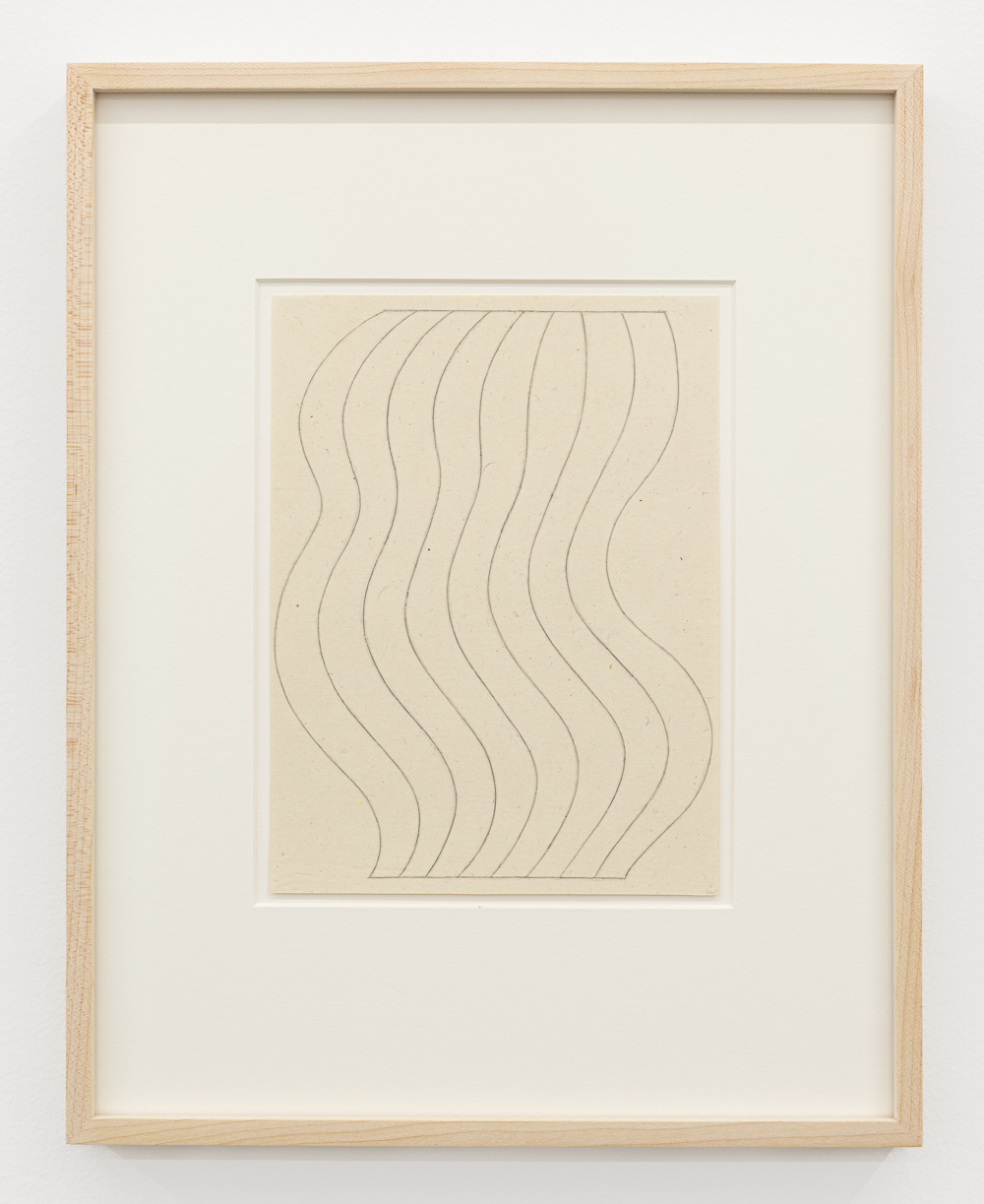
The graphite works from 2014 move with similar restraint. Arcs repeat and soften at the edges, worked and reworked until gesture gives way to duration. The hand is present, though never emphatic. Pressure accumulates quietly.
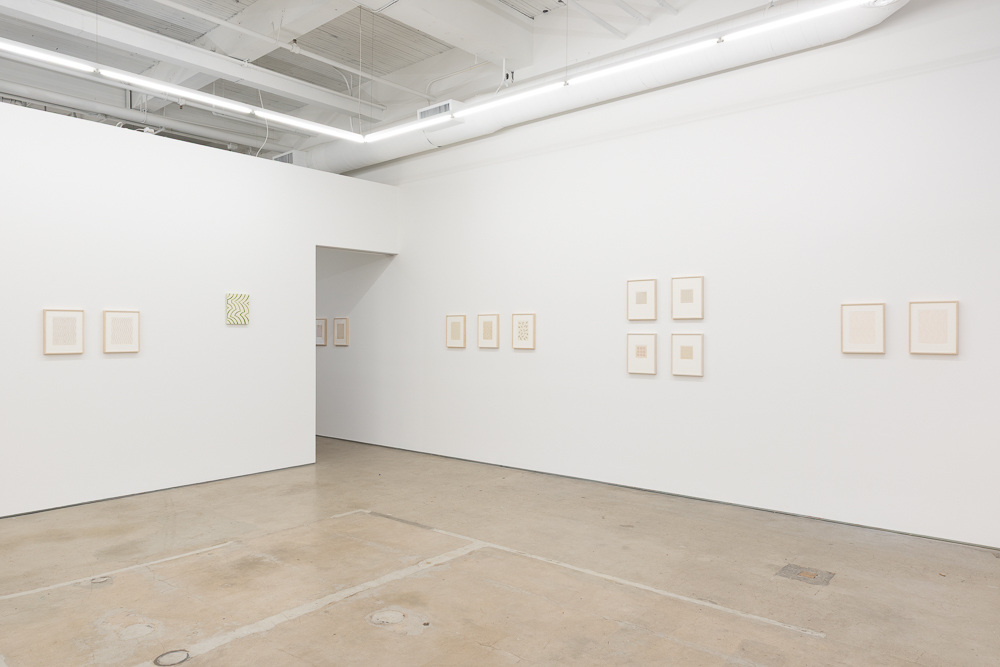
Across the room, the drawings repeat with almost stubborn consistency. Nothing pushes forward. Nothing insists. What emerges instead is a different kind of authority — not expressive, but measured.
Mid-century conceptual artists often treated structure as a fixed plan, something determined before execution. Turner’s geometry feels revised in real time. The rule is present, but it remains negotiable. Planning and touch are not separated; they fold into one another.
The work proposes that stability can be radical. That control, sustained over time, can carry more tension than contrast ever could.
Placed side by side, Turner’s near-identical works begin to separate only over time. The eye compares rather than interprets. A curve shifts by degrees. A crossing sits closer to the edge. Meaning does not expand outward; it settles inward. The drawing holds because nothing is allowed to tip.
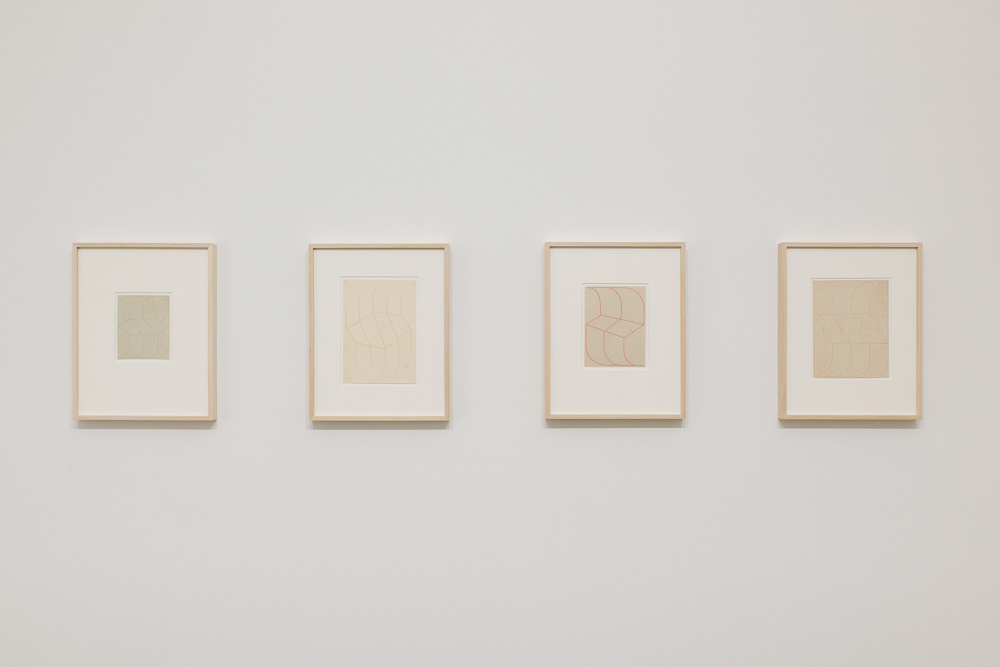
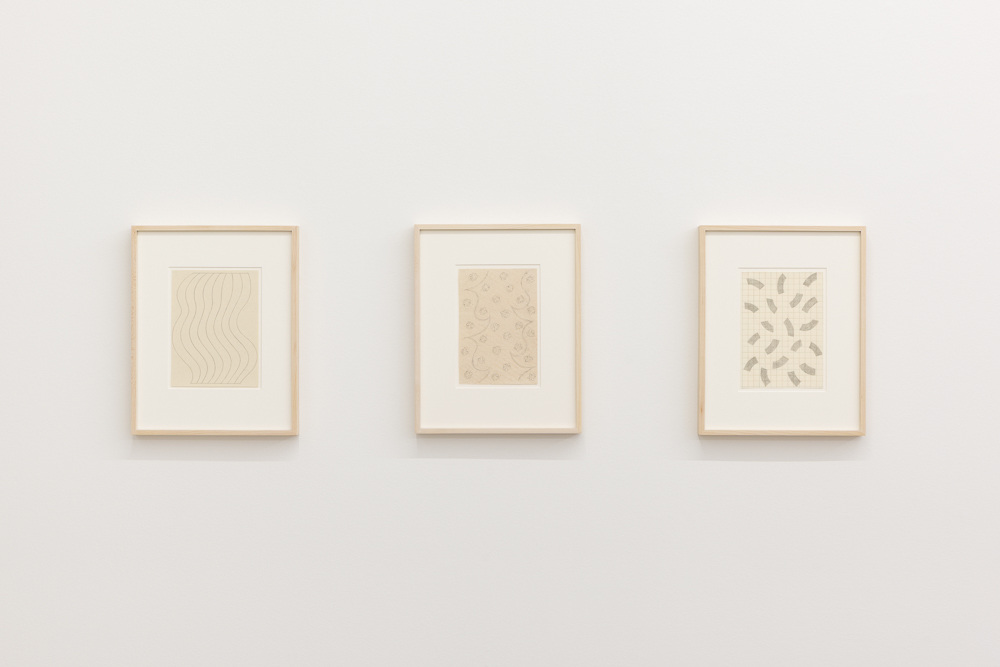
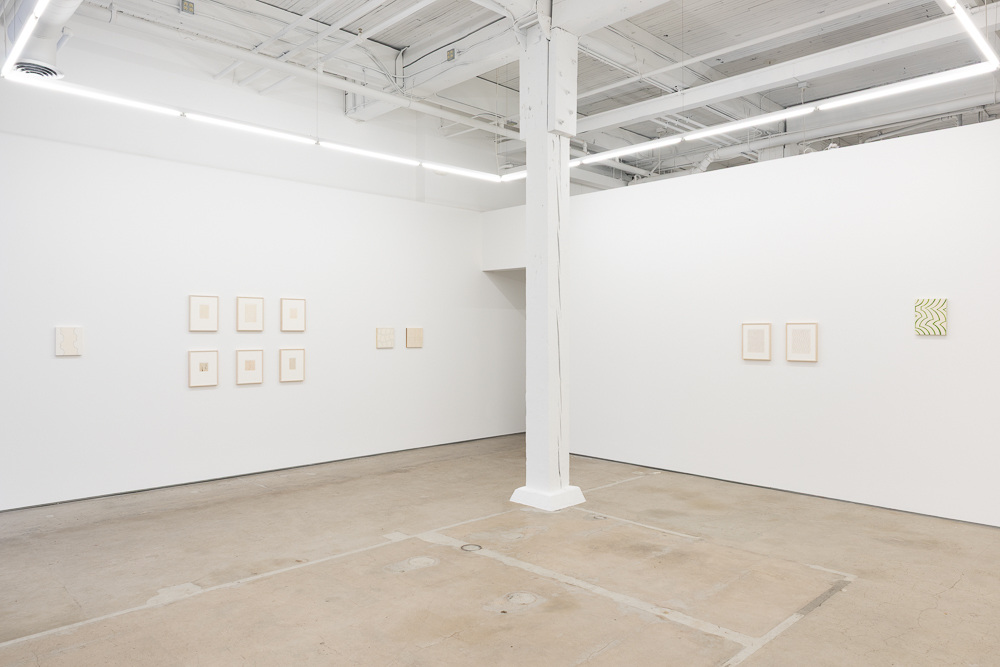
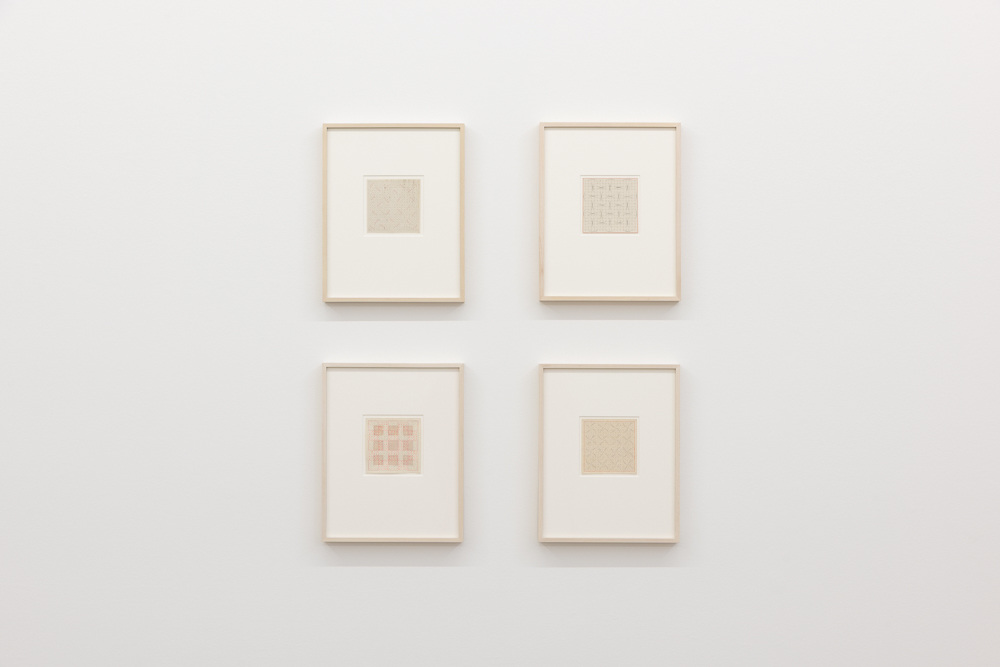
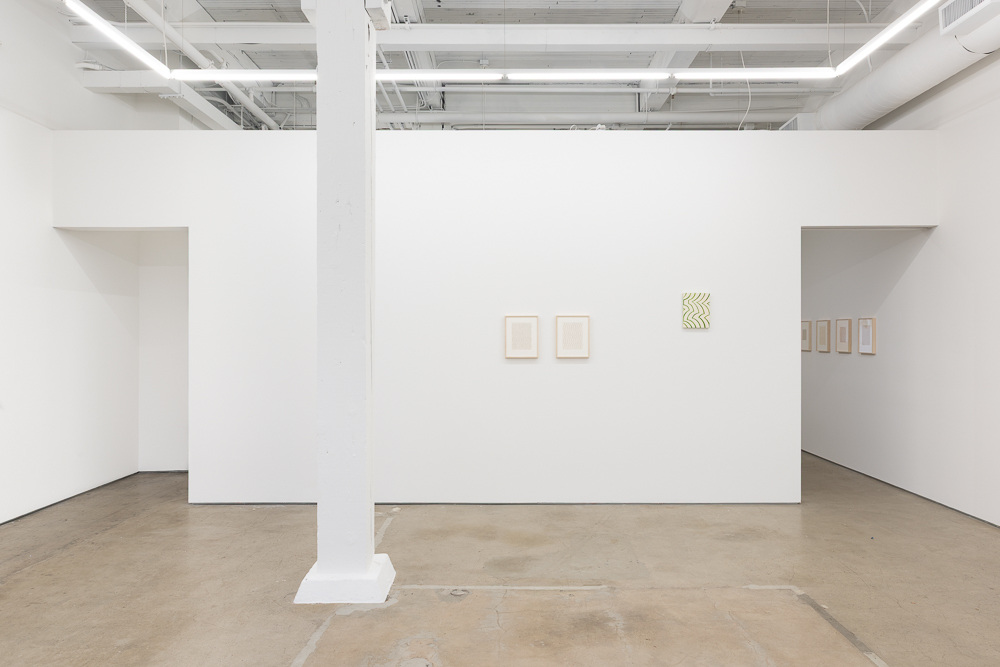
1. Installation view: Lynne Woods Turner, one thing and another, Adams and Ollman, January 17–February 28, 2026. © Lynne Woods Turner. Courtesy Adams and Ollman.
2. Installation view: Lynne Woods Turner, one thing and another, Adams and Ollman, January 17–February 28, 2026. © Lynne Woods Turner. Courtesy Adams and Ollman.
Lynne Woods Turner, Untitled #9570, 2025; Untitled #9571, 2025. © Lynne Woods Turner.
3. Lynne Woods Turner, Untitled #9570, 2025. Pencil and oil on panel, 10 × 10 in (25.40 × 25.40 cm). © Lynne Woods Turner. Courtesy Adams and Ollman.
4. Installation view: Lynne Woods Turner, one thing and another, Adams and Ollman, January 17–February 28, 2026. © Lynne Woods Turner. Courtesy Adams and Ollman.
5. Lynne Woods Turner, Untitled #1157, 2014. Pencil on paper, 9 × 6 3/4 in (22.86 × 17.14 cm). © Lynne Woods Turner. Courtesy Adams and Ollman.
6. Installation view: Lynne Woods Turner, one thing and another, Adams and Ollman, January 17–February 28, 2026. © Lynne Woods Turner. Courtesy Adams and Ollman.
7. Lynne Woods Turner, Untitled #1129, 2014. Pencil on paper, 5 1/4 × 4 1/4 in (13.34 × 10.79 cm). © Lynne Woods Turner. Courtesy Adams and Ollman.
8. Installation view: Lynne Woods Turner, one thing and another, Adams and Ollman, January 17–February 28, 2026. © Lynne Woods Turner. Courtesy Adams and Ollman.
Lynne Woods Turner, Untitled #1160, 2014; Untitled #1157, 2014. © Lynne Woods Turner.
9. Installation view: Lynne Woods Turner, one thing and another, Adams and Ollman, January 17–February 28, 2026. © Lynne Woods Turner. Courtesy Adams and Ollman.
10. Installation view: Lynne Woods Turner, one thing and another, Adams and Ollman, January 17–February 28, 2026. © Lynne Woods Turner. Courtesy Adams and Ollman.
11. Lynne Woods Turner, Untitled #1715, 2023. Pencil on paper, 8 × 6 in (20.32 × 15.24 cm). © Lynne Woods Turner. Courtesy Adams and Ollman.
12. Installation view: Lynne Woods Turner, one thing and another, Adams and Ollman, January 17–February 28, 2026. © Lynne Woods Turner. Courtesy Adams and Ollman.
13. Installation view: Lynne Woods Turner, one thing and another, Adams and Ollman, January 17–February 28, 2026. © Lynne Woods Turner. Courtesy Adams and Ollman.
14. Installation view: Lynne Woods Turner, one thing and another, Adams and Ollman, January 17–February 28, 2026. © Lynne Woods Turner. Courtesy Adams and Ollman.
Cover: Installation view: Lynne Woods Turner, one thing and another, Adams and Ollman, January 17–February 28, 2026. © Lynne Woods Turner. Courtesy Adams and Ollman.
All images © their respective rights holders.
Image rights & attribution →