



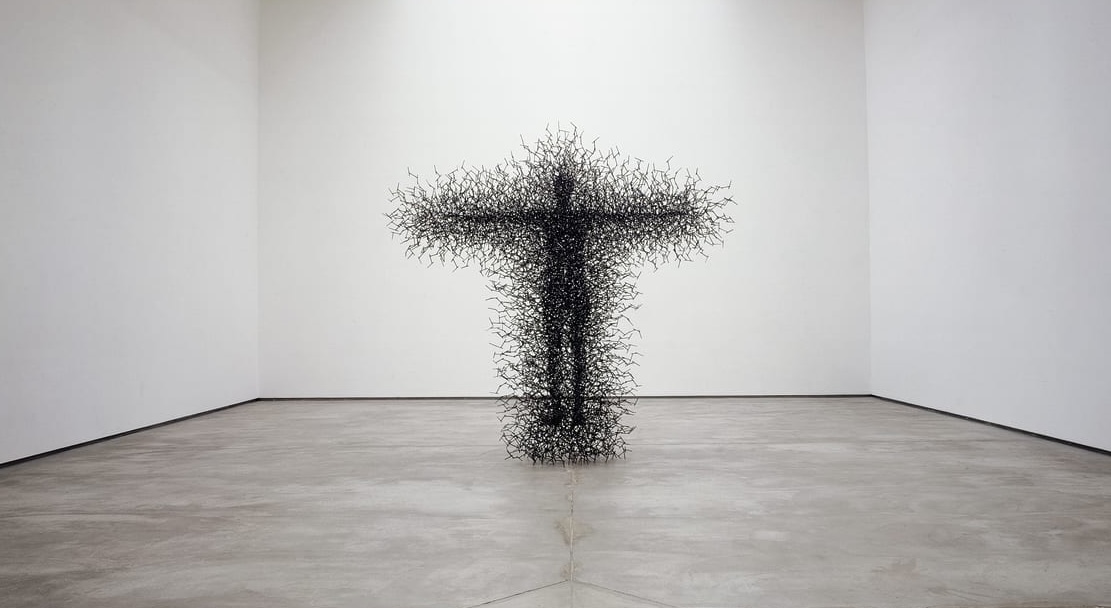


Rick Owens’s work is often framed through symbolism, ritual, or subcultural identity.
In Rust Never Sleeps, what governs the exhibition is not narrative meaning but structural burden.
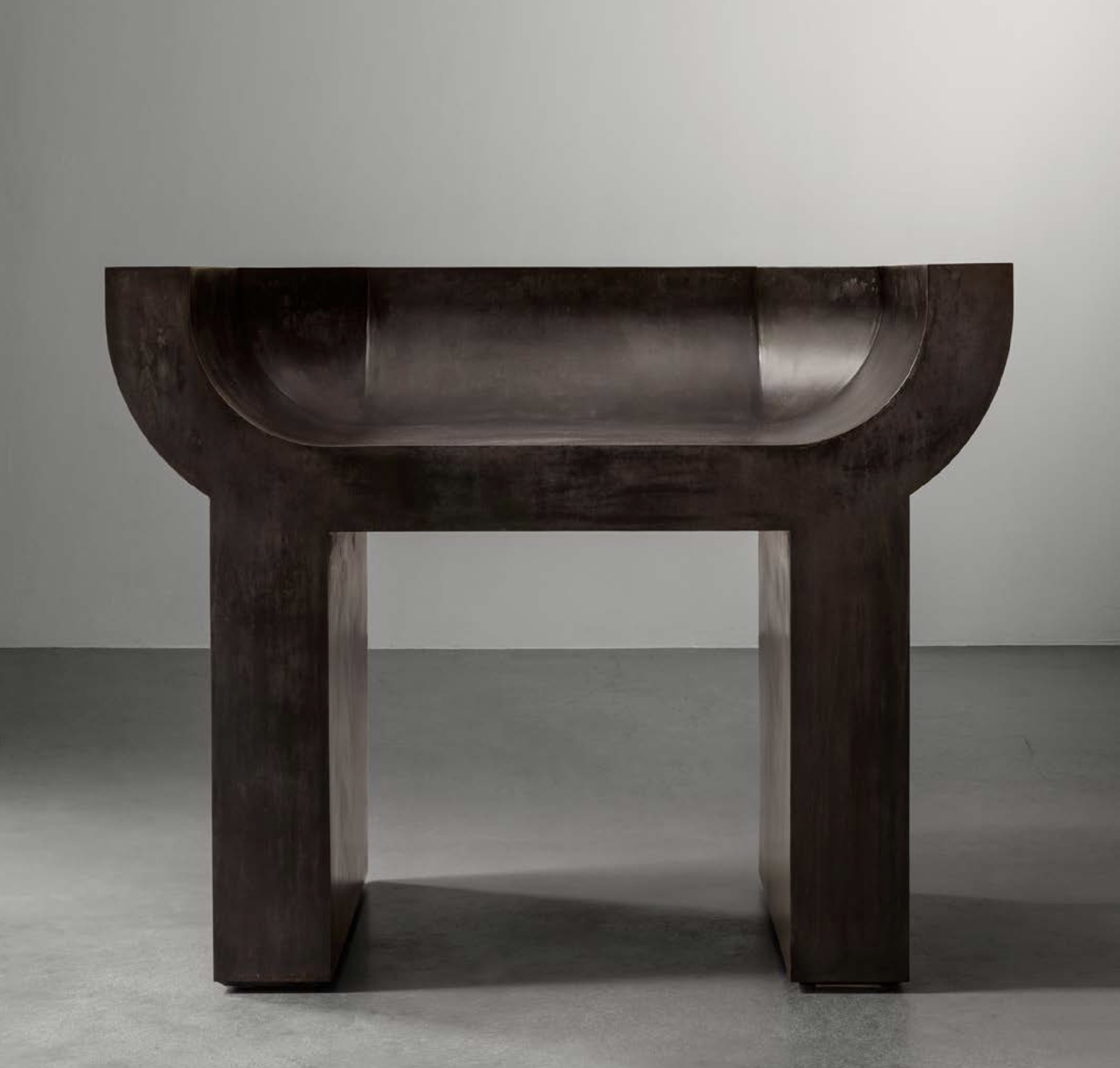
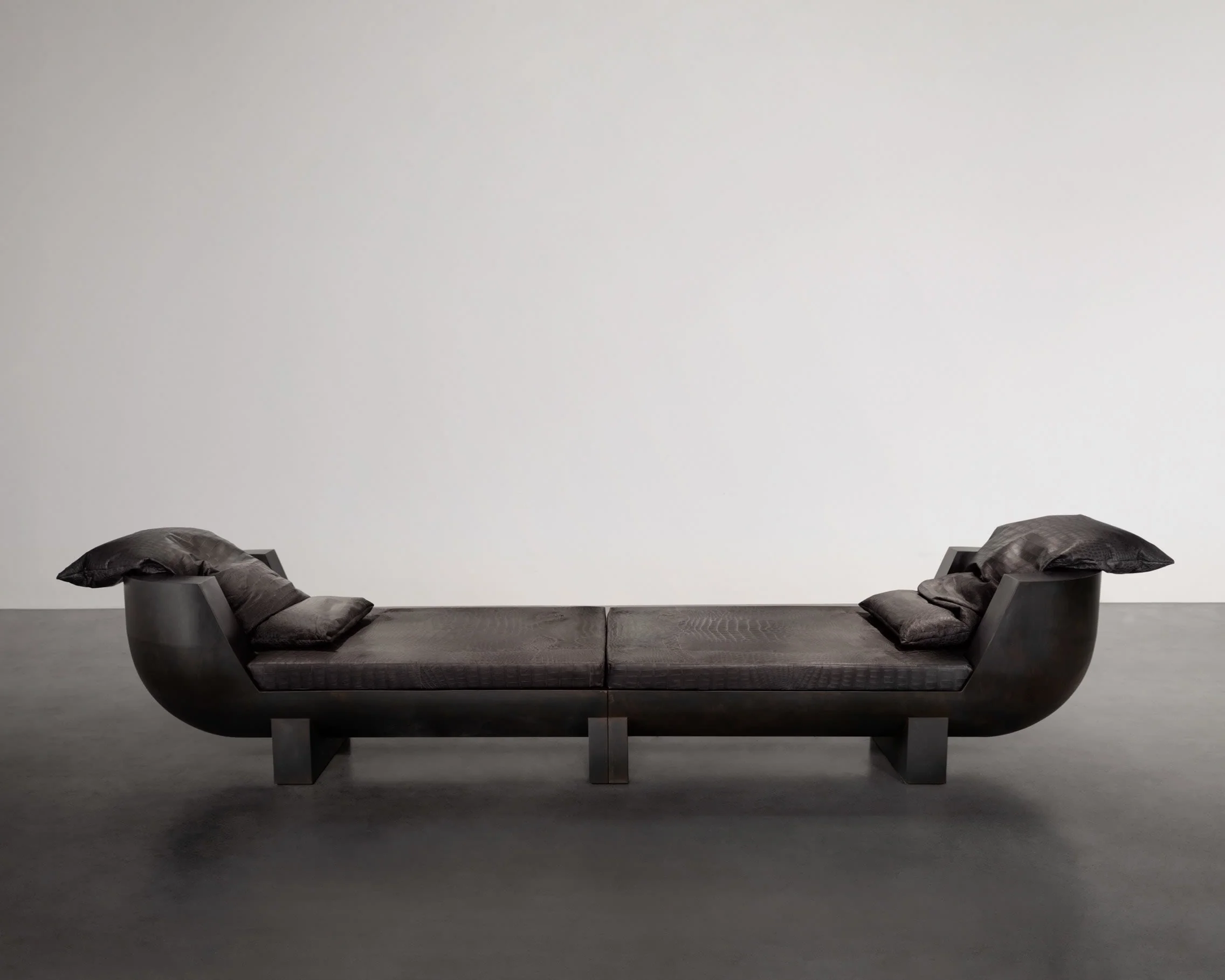
What registers first is not expression but weight. Beds, benches, platforms, and seating assert themselves as grounded presences before they resolve into use or meaning. Their scale slows perception. Form does not announce itself through detail or gesture; it establishes itself through mass and placement.
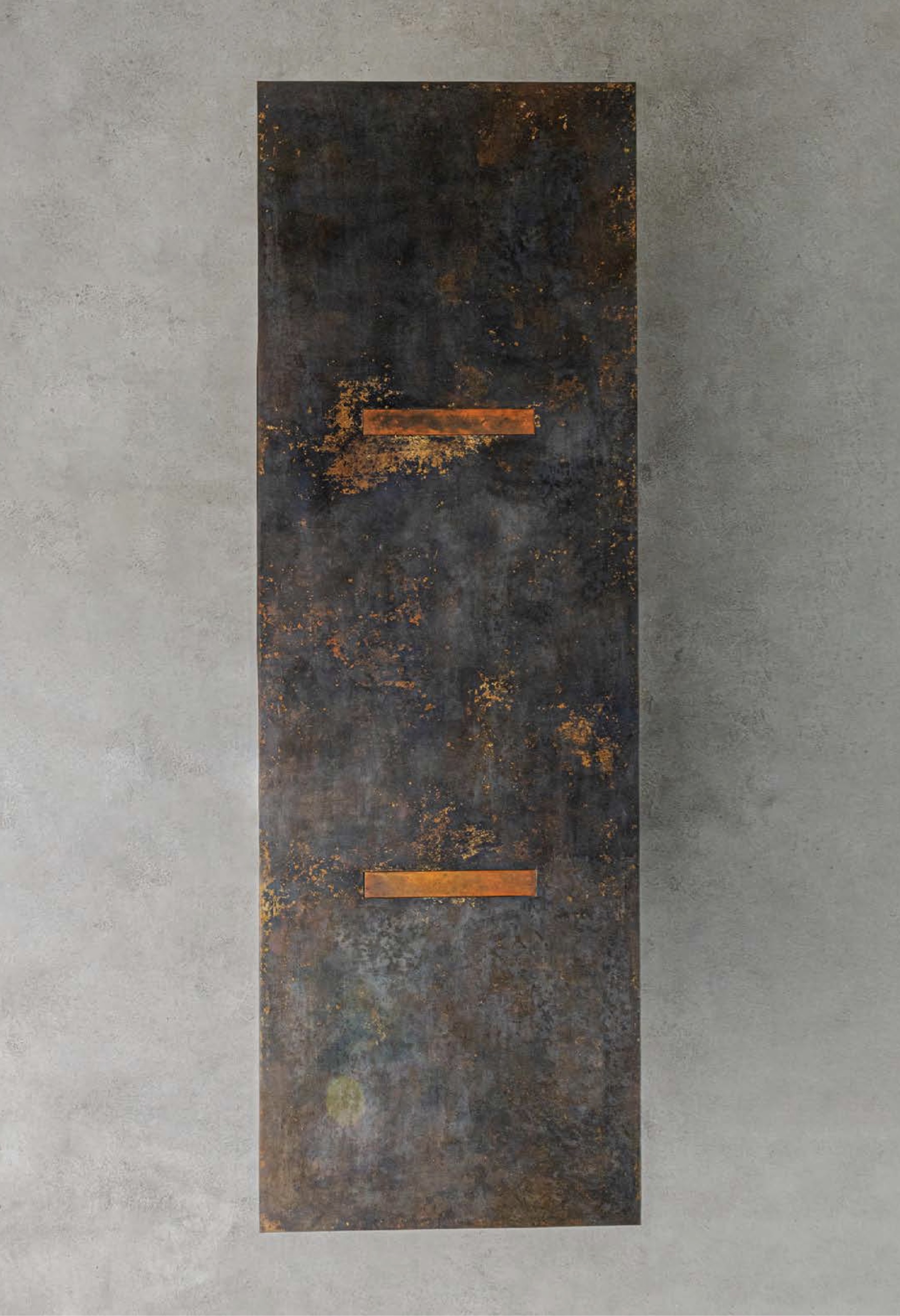
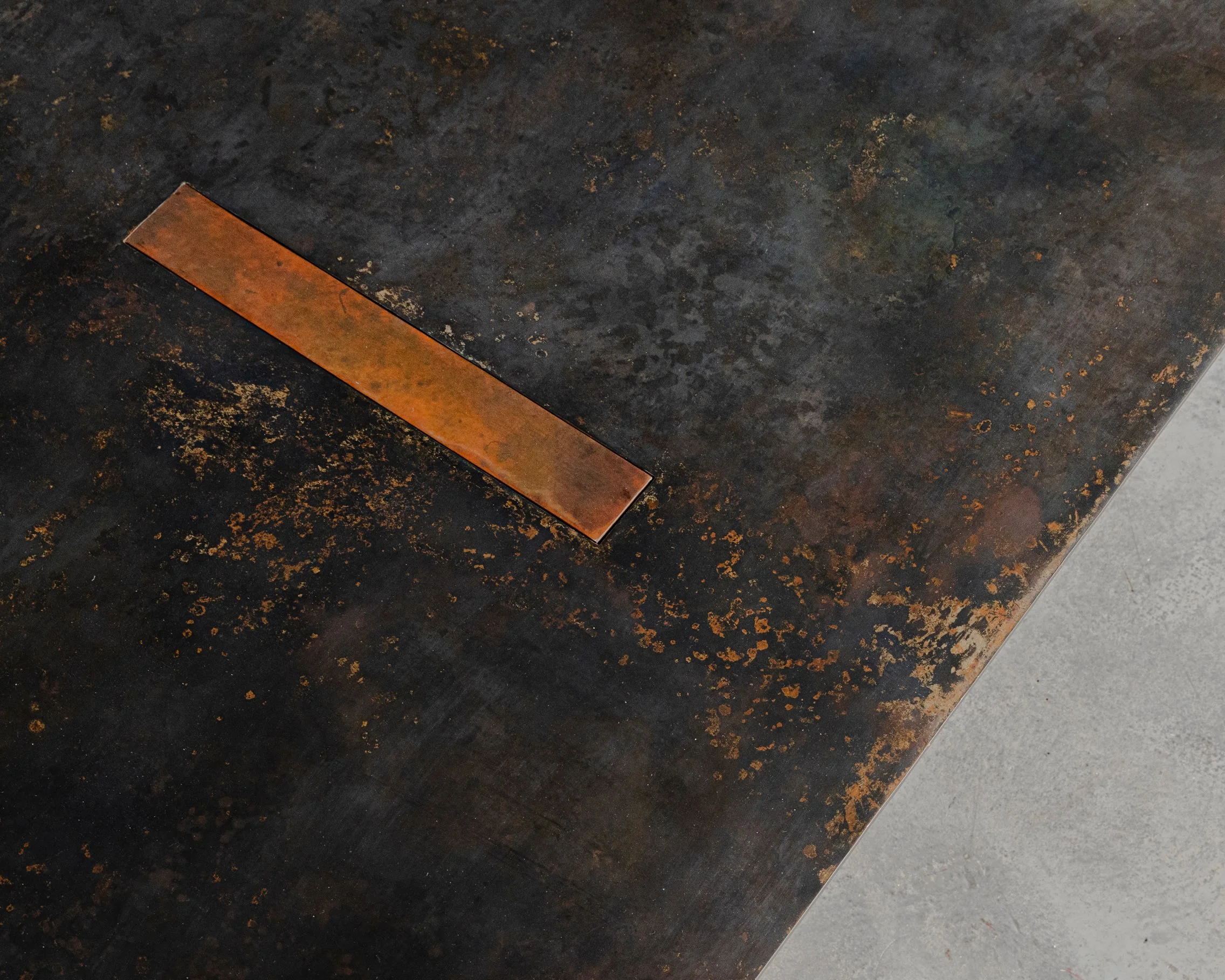
Across the exhibition, materials do not signify time so much as hold it. Wood, steel, leather, and oxidation accumulate evidence of pressure, weathering, and contact without altering the underlying form. Surfaces remain legible not because they are preserved, but because they are stable enough to absorb change. Time registers as accumulation rather than transformation.
This stability clarifies how repetition operates. Beds return as beds. Benches remain benches. Tables do not evolve into new forms. Difference emerges through thickness, proportion, and surface condition rather than variation or refinement. The system does not develop; it persists. Change occurs without progression.
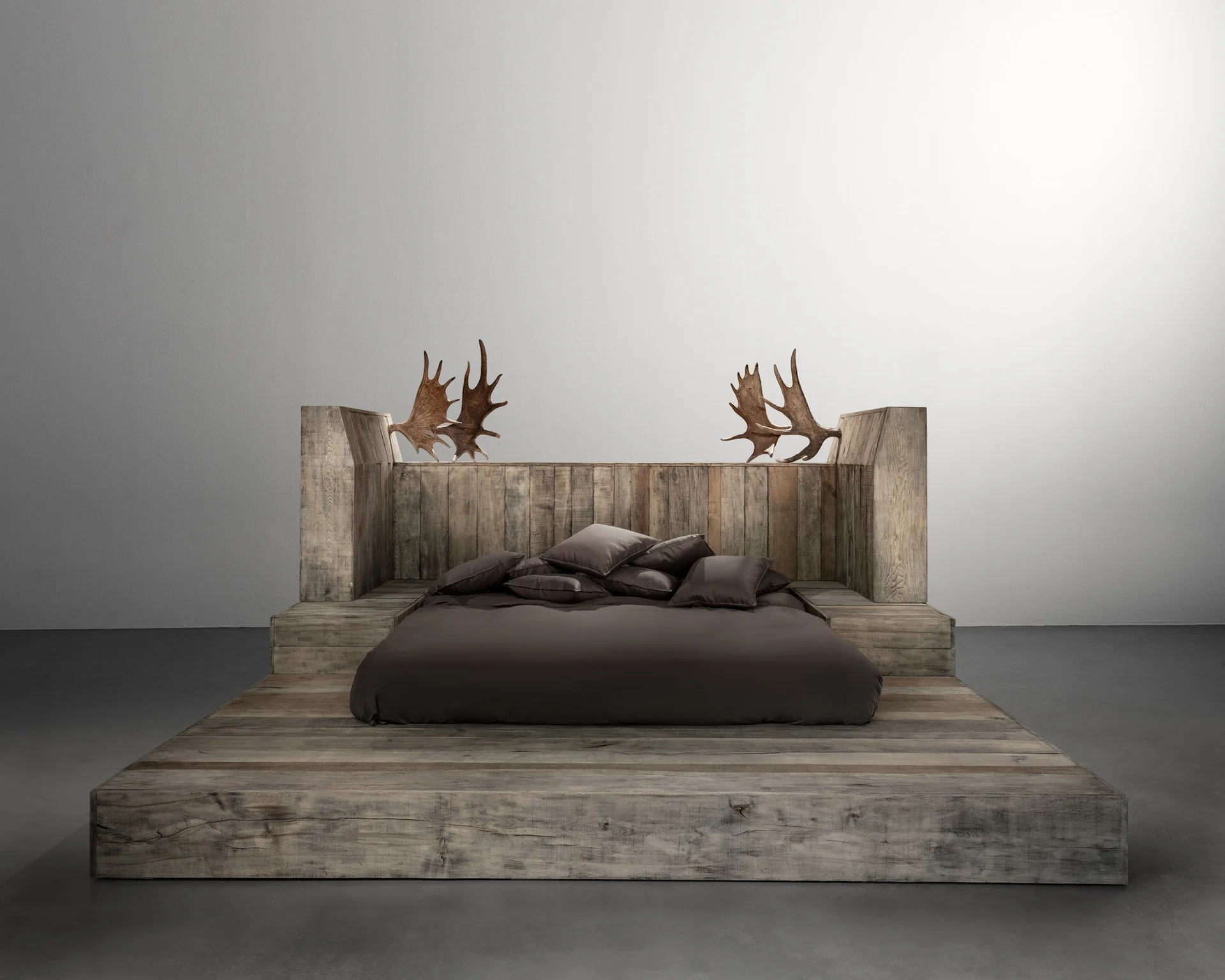
Because structure is load-bearing, elements are arranged to counterbalance rather than compose. Antlers interrupt planes as fixed weights. Platforms thicken the ground plane rather than elevate the body. Furniture does not invite adjustment or interaction; it holds position. The room operates as a field of resistance rather than a sequence of objects.
What the exhibition sustains is persistence as a structural condition. Time is neither represented nor narrated; it is contained. Oxidation records exposure without dramatizing decay. Structure does not organize expression — it bears it, allowing endurance to remain the primary fact of the work.
In Rust Never Sleeps, time does not appear as metaphor or image. It is carried by form that is stable enough to remain unchanged as surfaces accumulate wear.
Weight determines proportion. Mass governs scale. Oxidation, patina, and surface irregularity register exposure without altering the structure that supports them. Change settles onto form rather than reshaping it.
Furniture operates here as a load-bearing system rather than a responsive object. Structure absorbs duration through pressure, repetition, and restraint, allowing time to register materially without resolving into narrative meaning.




1. Installation view: Rick Owens, Rust Never Sleeps, Carpenters Workshop Gallery, London, 2026.
2. Rick Owens, Tomb Chair, Black Oak (Right), 2012.
3. Installation view: Rick Owens, Rust Never Sleeps, Carpenters Workshop Gallery, London, 2026.
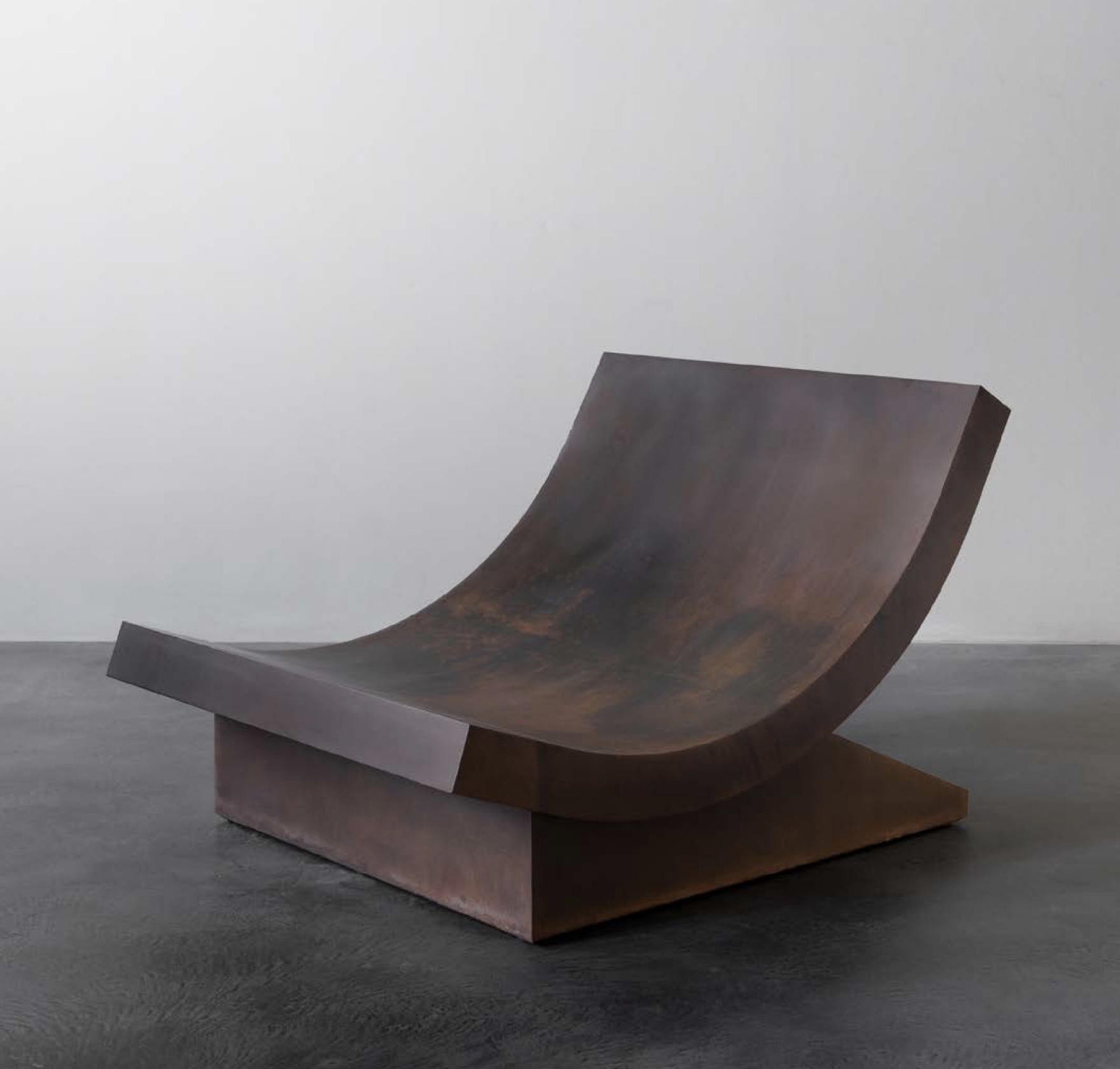
4. Rick Owens, Curial Steel Rust, 2022.
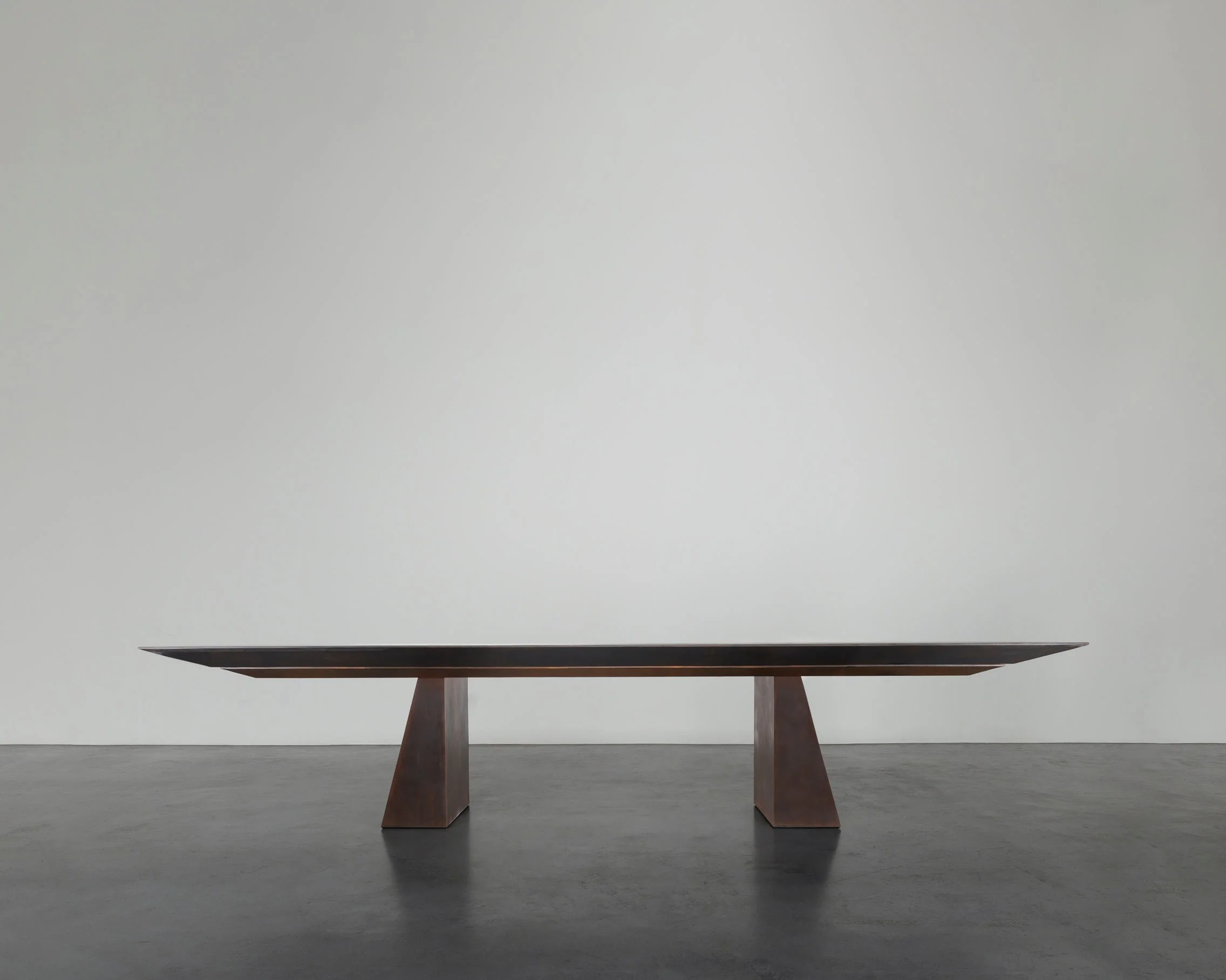
5. Rick Owens, K Plug Table, Steel Rust, 360 cm, 2022.
6. Rick Owens, K Plug Table, Steel Rust, 360 cm, 2022.
7. Detail: Rick Owens, K Plug Table, Steel Rust, 360 cm, 2022.
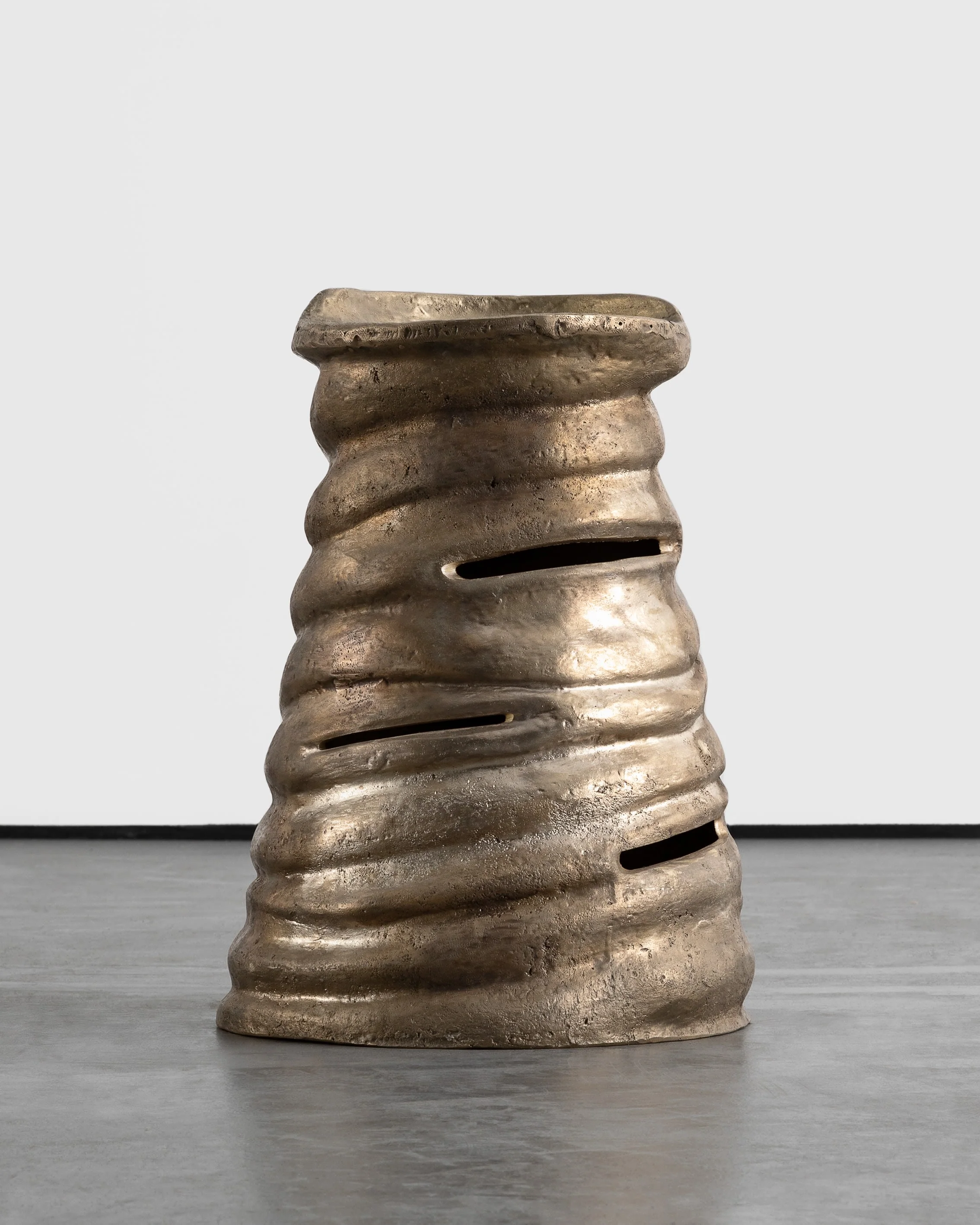
8. Rick Owens, Hunstool Gold, 2022.
9. Rick Owens, Antler Bed, 2025.
10. Detail: Rick Owens, Antler Bed, 2025.
11. Rick Owens, Pedalò Rust, 2025.
12. Rick Owens, Double Bubble Steel Rust, 2025.
Cover: Installation view: Rick Owens, Rust Never Sleeps, Carpenters Workshop Gallery, London, 2026.
All images © Carpenters Workshop Gallery.