


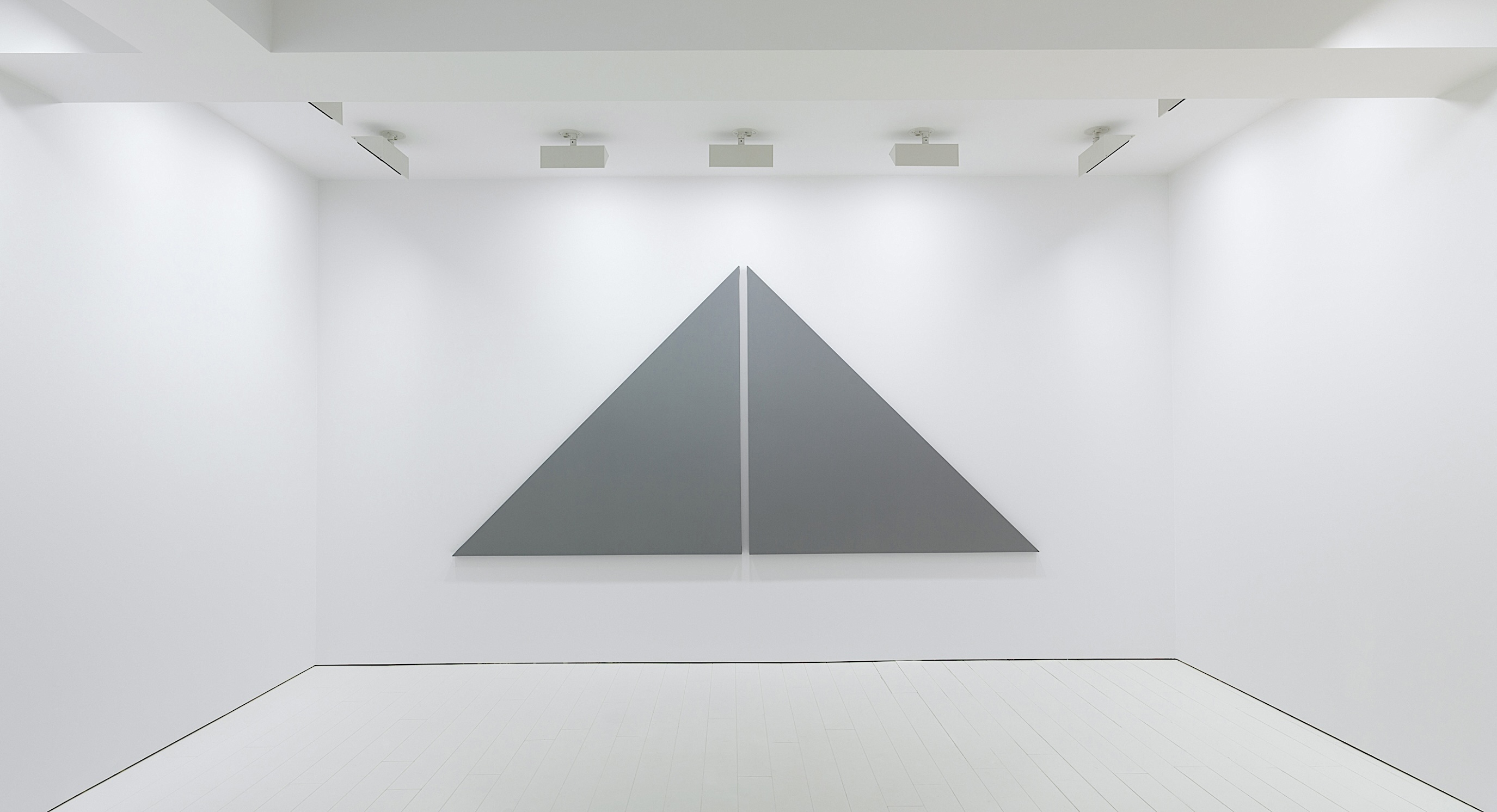
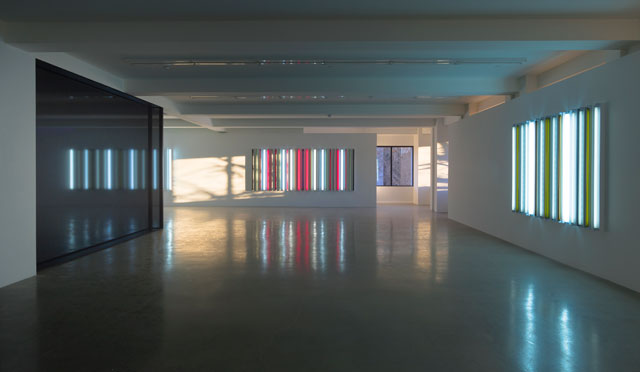


James Bishop’s paintings are often approached as quiet abstraction. They don’t resist the eye, and they don’t announce difficulty. Looking feels competent here. Forms are contained. Scale is humane. Color remains measured. The paintings allow attention to move smoothly across their surfaces without interruption.
This ease is not accidental. It is the condition the exhibition establishes.
Across the gallery, nothing builds. Paintings do not accumulate into sequences, and comparison does not advance understanding. Each work appears complete on its own, but completion leads nowhere. Looking proceeds comfortably and does not accumulate consequence.
What becomes apparent over time is that fluency does not lead to insight. Familiarity does not deepen. The paintings remain legible without becoming informative. Attention continues, but progress does not occur.
Repetition reinforces this condition. Similar proportions recur without escalation. Boundaries appear, soften, and reappear without developing into a structure that can be followed. The eye moves easily, but nothing pulls it forward. There is no pressure toward resolution.
At a certain point, interpretation begins to feel beside the point. Not because the work is opaque, but because it offers no path of advancement. Looking is sustained without direction. Meaning remains available, without exerting pressure.
The exhibition sustains this condition deliberately, holding fluency and repetition as its primary material.
The title, To continue painting, stops reading as intention and begins to register as a condition. Continuation without development. Persistence without outcome. The work does not insist on attention; it absorbs it.
In this exhibition, ease becomes a constraint. The paintings allow attention to move freely, but do not permit it to accumulate. Familiarity does not deepen into understanding. Repetition stabilizes looking rather than advancing it.
Because progress never occurs, interpretation loses urgency. Attention remains present without direction, sustained by continuity rather than development. The work does not refuse meaning; it makes it unnecessary.
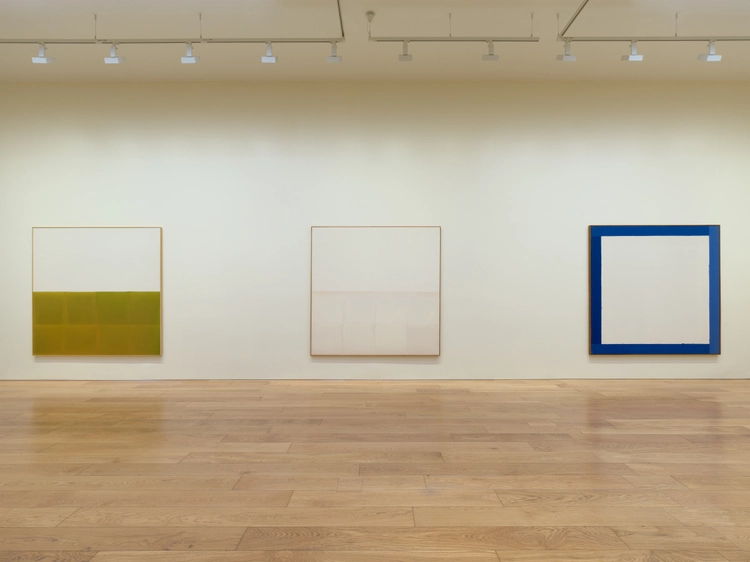


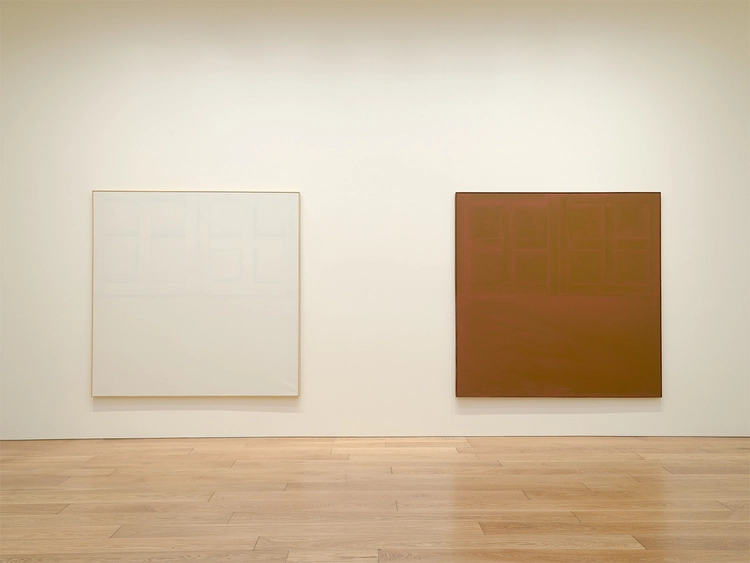
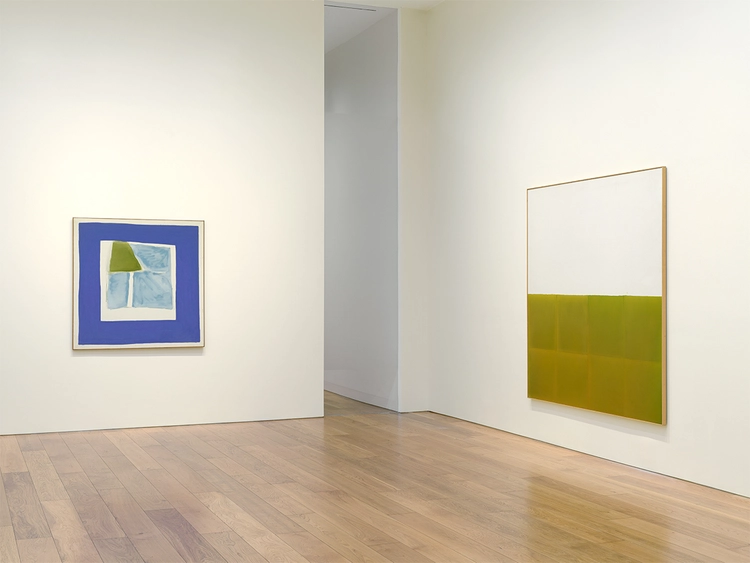

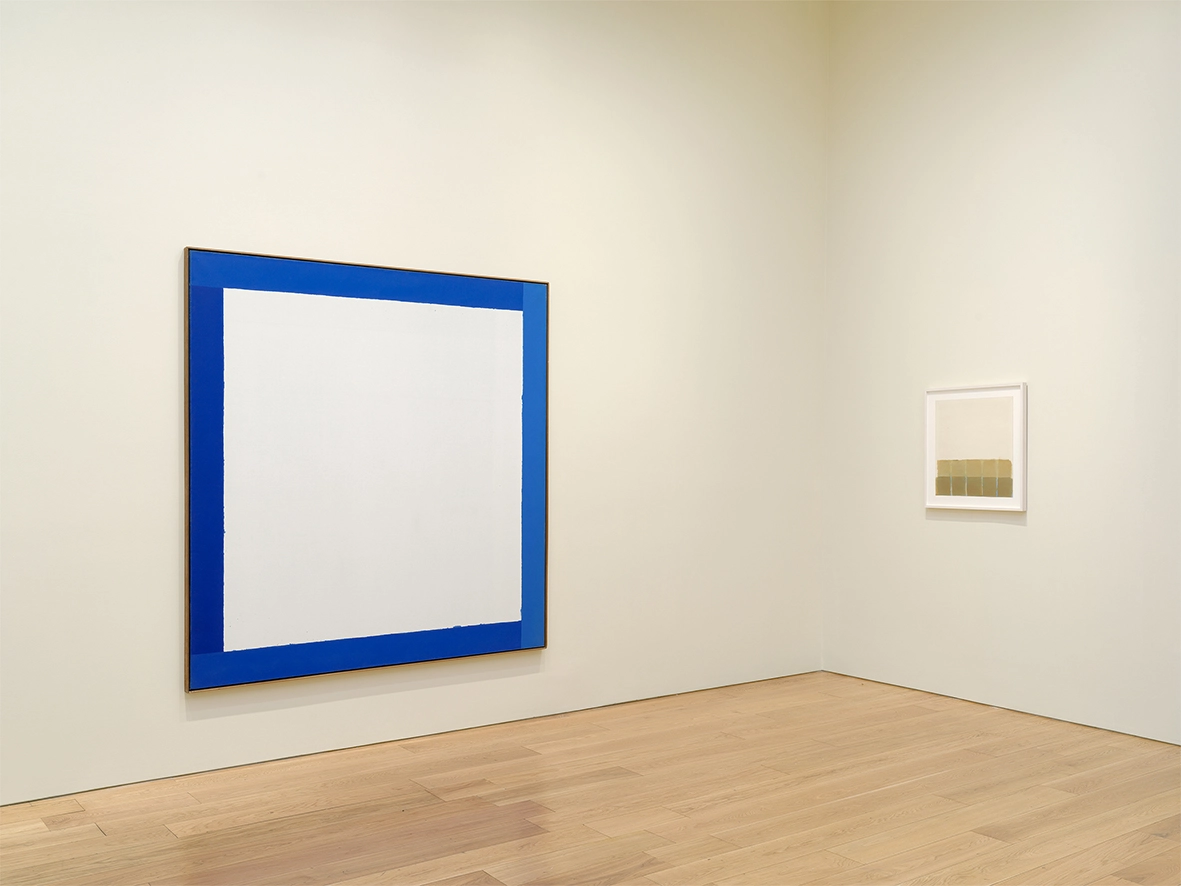
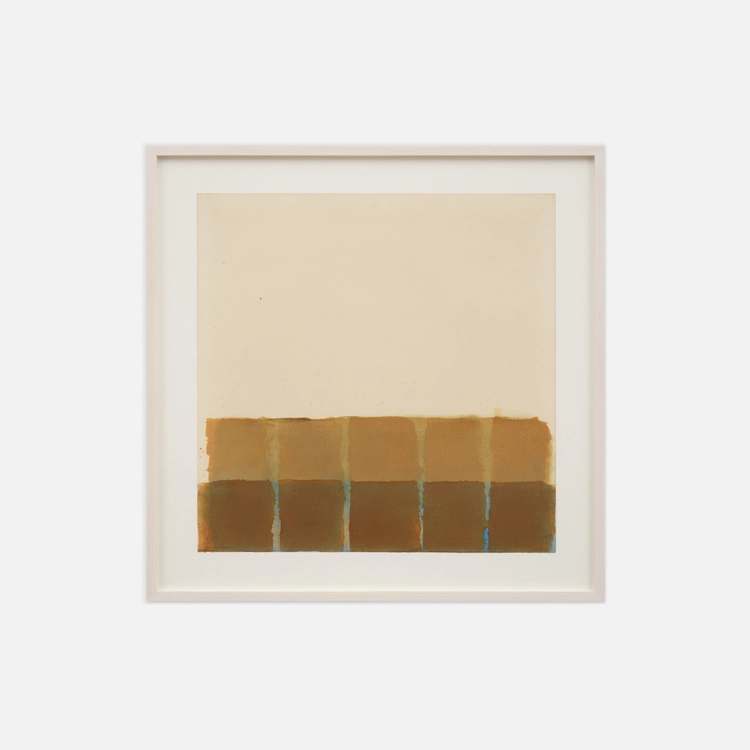
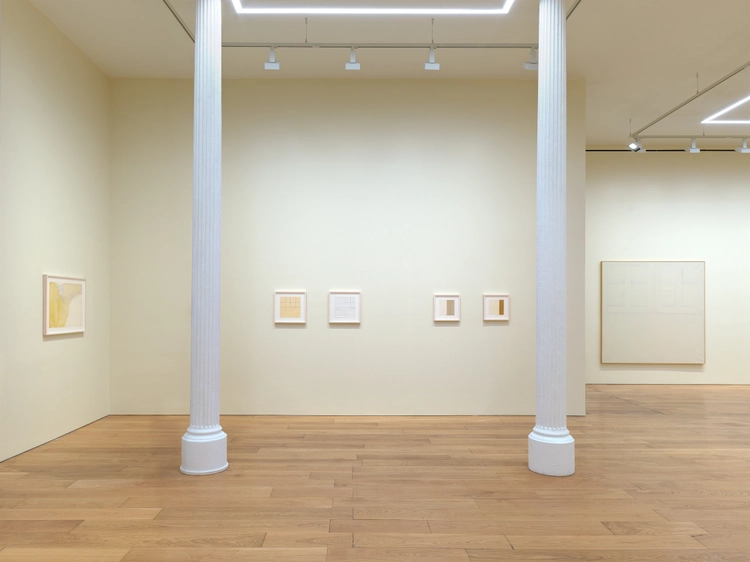

1. Installation view: “To Continue Painting”: James Bishop and New York, Timothy Taylor, New York, 2026.
2. James Bishop, Old Holland, 1979. Oil on canvas, 76 1/2 × 76 1/2 in. (194.3 × 194.3 cm).
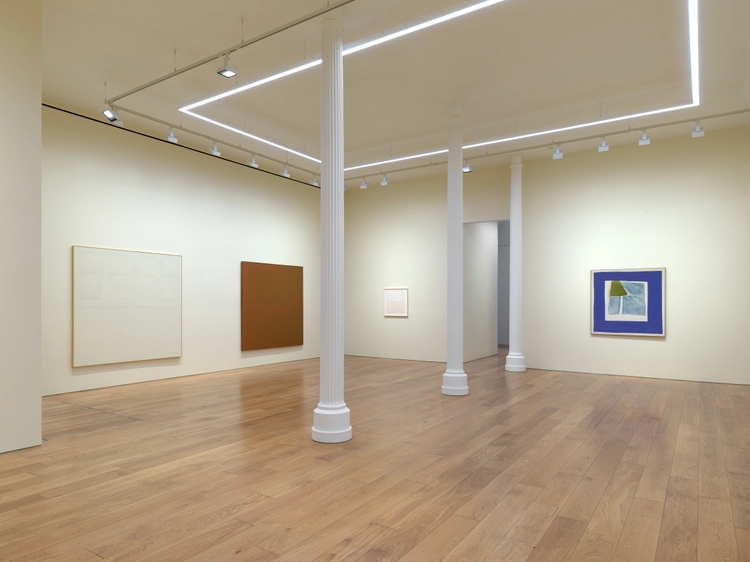
3. Installation view: “To Continue Painting”: James Bishop and New York, Timothy Taylor, New York, 2026.
4. James Bishop, Limited, 1971. Oil on canvas, 77 × 77 in. (195.6 × 195.6 cm).
5. Installation view: “To Continue Painting”: James Bishop and New York, Timothy Taylor, New York, 2026.
6. Installation view: “To Continue Painting”: James Bishop and New York, Timothy Taylor, New York, 2026.
7. James Bishop, Hours, 1963. Oil on canvas, 50 × 51 1/2 in. (127 × 130.8 cm).
8. Installation view: “To Continue Painting”: James Bishop and New York, Timothy Taylor, New York, 2026.
9. James Bishop, Oil on paper. 22 1/8 × 22 1/8 in. (56.2 × 56.2 cm). Framed: 27 7/8 × 27 7/8 in. (70.9 × 70.9 cm).
10. Installation view: “To Continue Painting”: James Bishop and New York, Timothy Taylor, New York, 2026.
11. James Bishop, Untitled, c. 1960–62. Oil on paper, 19 7/8 × 25 3/4 in. (50.5 × 65.4 cm). Framed: 25 5/8 × 31 1/2 in. (65.1 × 80.0 cm).
Cover: Installation view: “To Continue Painting”: James Bishop and New York, Timothy Taylor, New York, 2026.
All images © their respective rights holders.
Image rights & attribution →