James Bishop builds a world where where restraint governs perception.
Color fields hover without resolution.
Difference registers through tonal adjustment rather than gesture.
Understatement functions as structure.

James Bishop builds a world where where restraint governs perception.
Color fields hover without resolution.
Difference registers through tonal adjustment rather than gesture.
Understatement functions as structure.
In James Bishop’s work, quiet modulation operates as a structural system rather than an expressive one. Subtle shifts in tone and color organize surface relationships without directing attention or emphasizing gesture.
Intervals, edge gradations, and chromatic restraint maintain equilibrium across the field. The paintings hold tension through duration and proximity, allowing difference to emerge through sustained looking rather than immediate recognition.
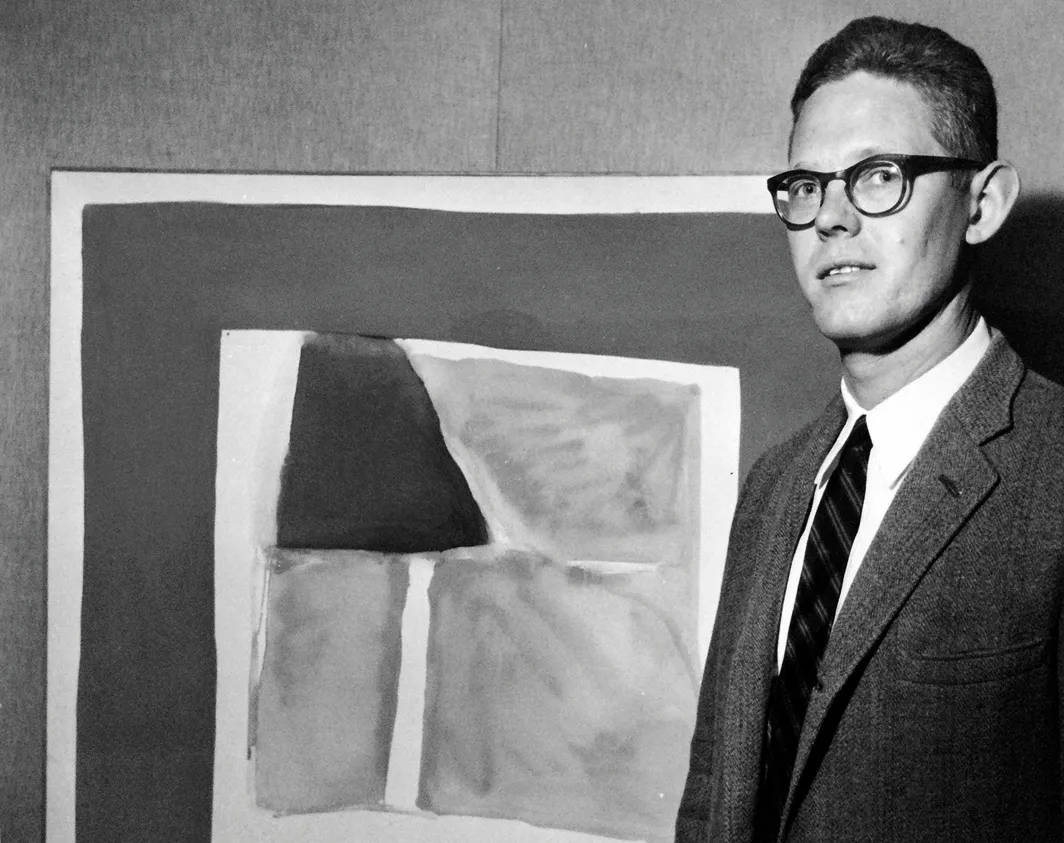


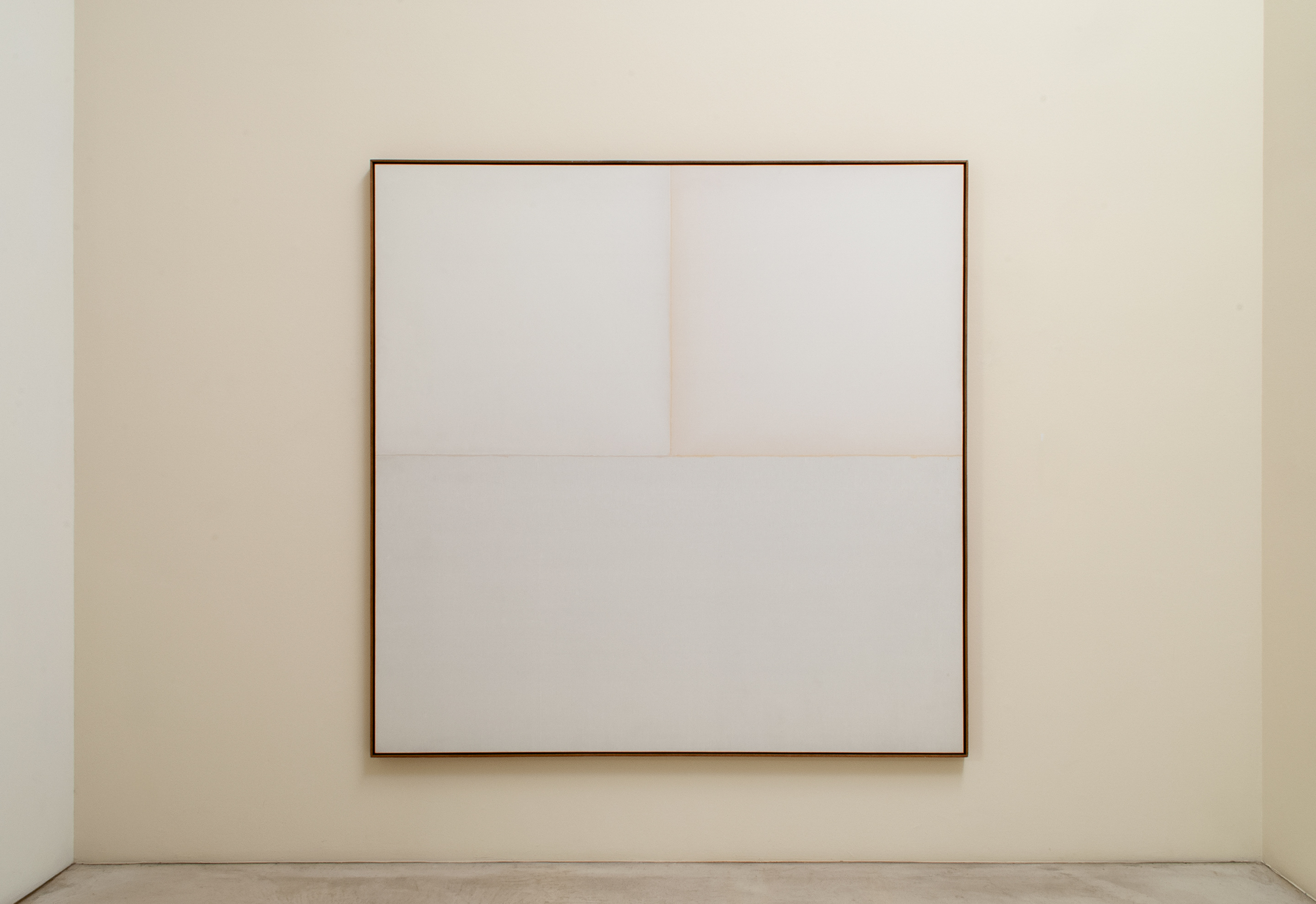
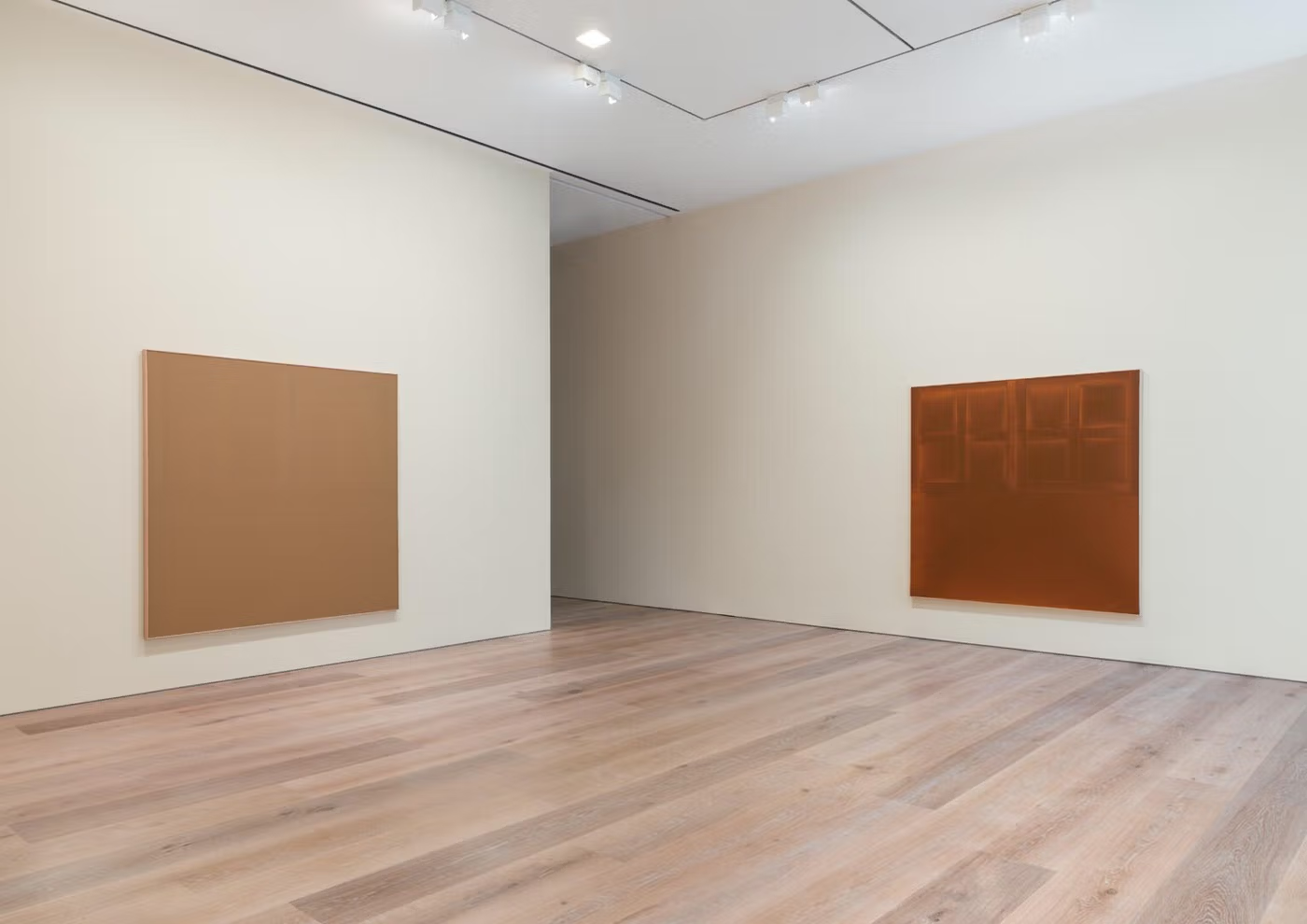


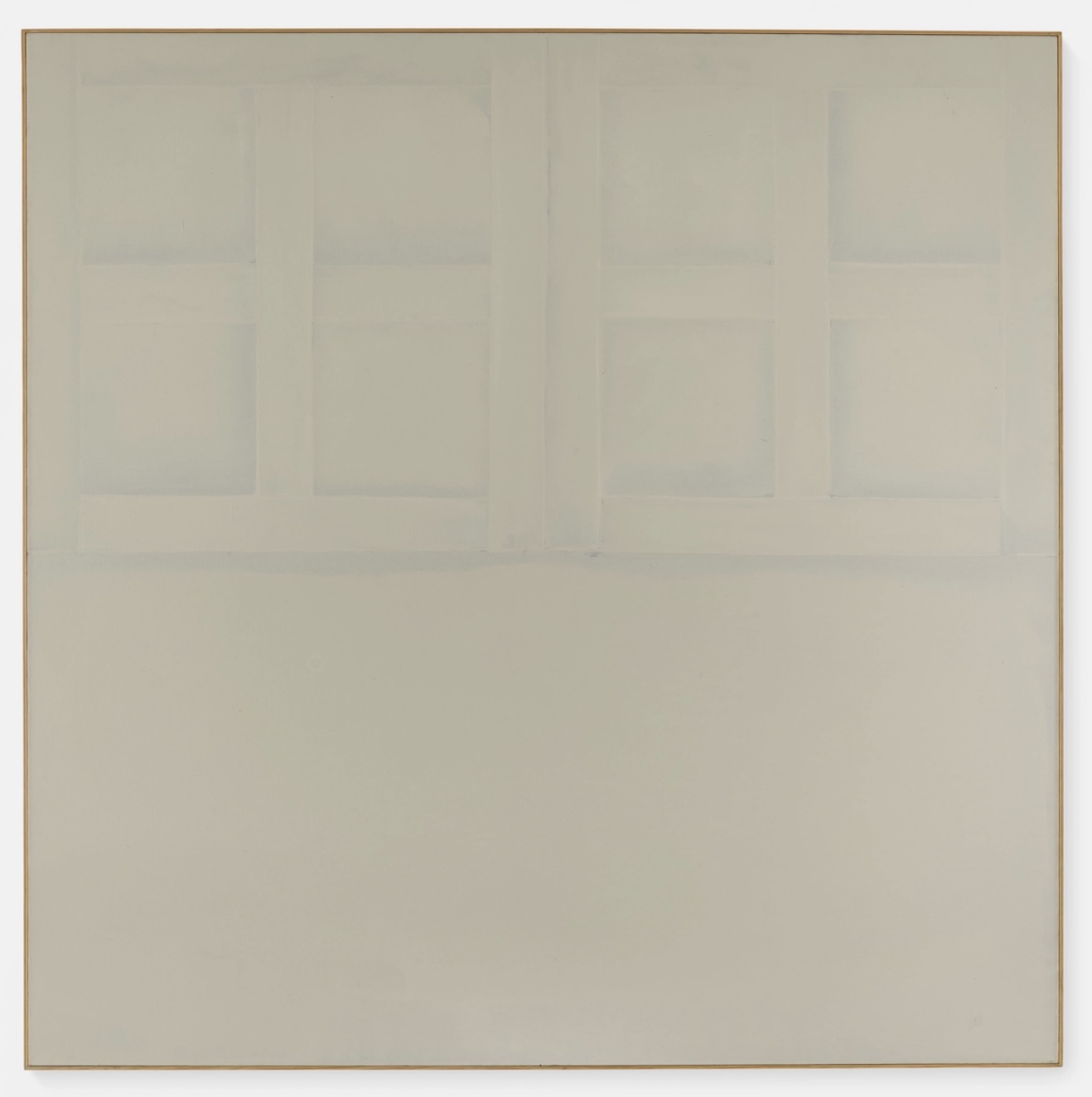
1. James Bishop with his painting Hours, c. 1963. American Center for Art & Culture, Paris, 1963.
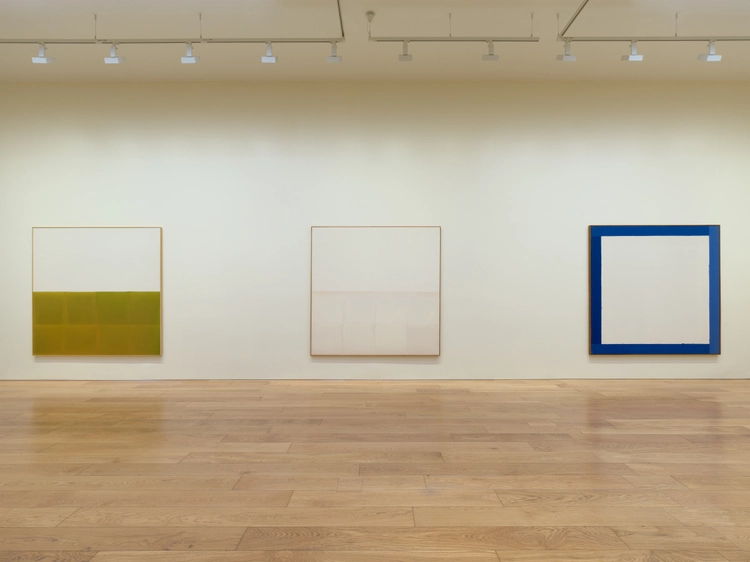
2. Installation view: James Bishop, David Zwirner, 2014.
3. James Bishop, Other Colors, 1965. Oil on canvas, 76 3/4 × 76 3/4 inches. Photograph by Tim Nighswander / IMAGING4ART. © 2014 James Bishop. Courtesy David Zwirner, New York/London.
4. Installation view: James Bishop, David Zwirner, 2014.
5. James Bishop, Untitled, 1967. Oil on canvas, 195.6 × 195.6 cm. Annemarie Verna Gallery, Zurich.
6. Installation view: James Bishop, David Zwirner, 2014.
7. James Bishop, State, 1972. Oil on canvas, 72 × 72 1/8 inches.
8. Installation view: James Bishop, David Zwirner, 2014.
9. James Bishop, Old Holland, 1979. Oil on canvas, 76 1/2 × 76 1/2 inches (194.3 × 194.3 cm).
Cover: James Bishop, 2006, Annemarie Verna Gallery, Zurich. Photograph by Thomas Cugini, Zurich.
All images © their respective rights holders.
Image rights & attribution →