


Anne Truitt often described a memory from childhood: standing in the open fields of Maryland, where the land stretched flat to the horizon and a single tree might stand alone in the distance. The landscape was almost empty. What remained were a few vertical markers—trees, posts, distant structures—quietly holding the space in place.
Against the long horizontal spread of the fields, these upright forms did more than interrupt the horizon. They structured the landscape. A tree or fence post became a point of orientation, something the eye could measure itself against as it moved outward across the open distance. Without those markers the land would remain continuous and undifferentiated. With them, space acquired rhythm: horizon, marker, horizon again.
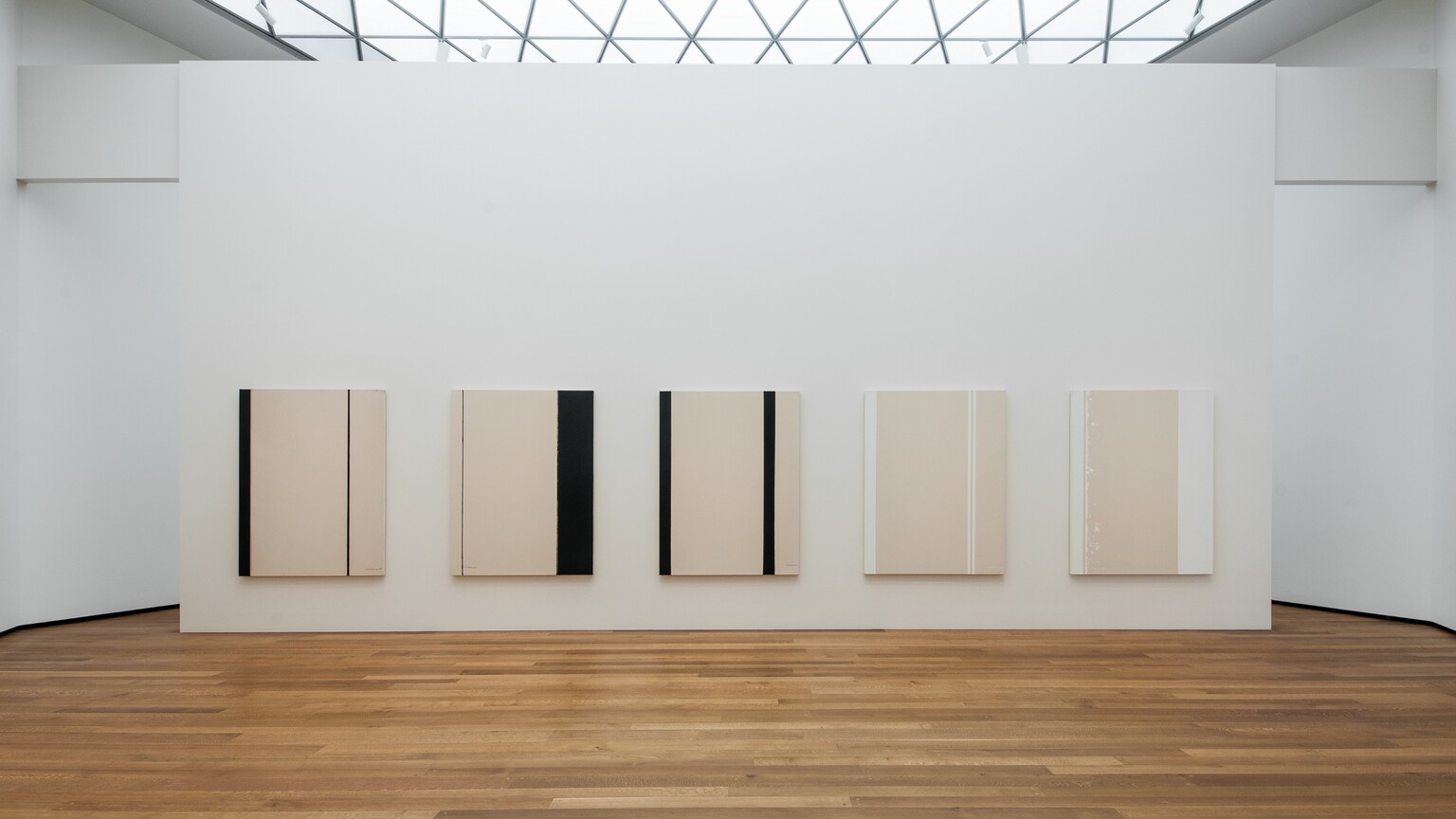
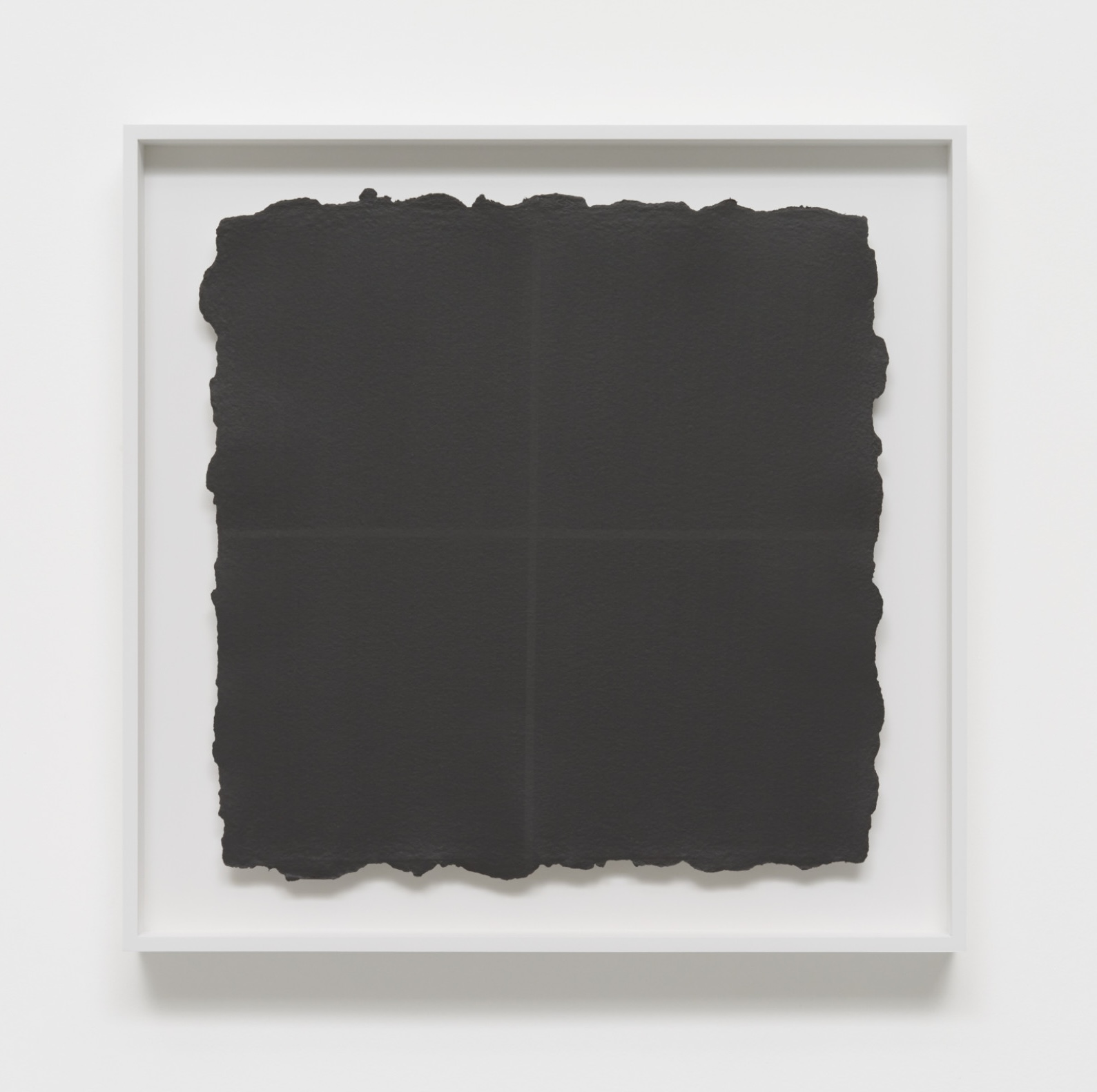
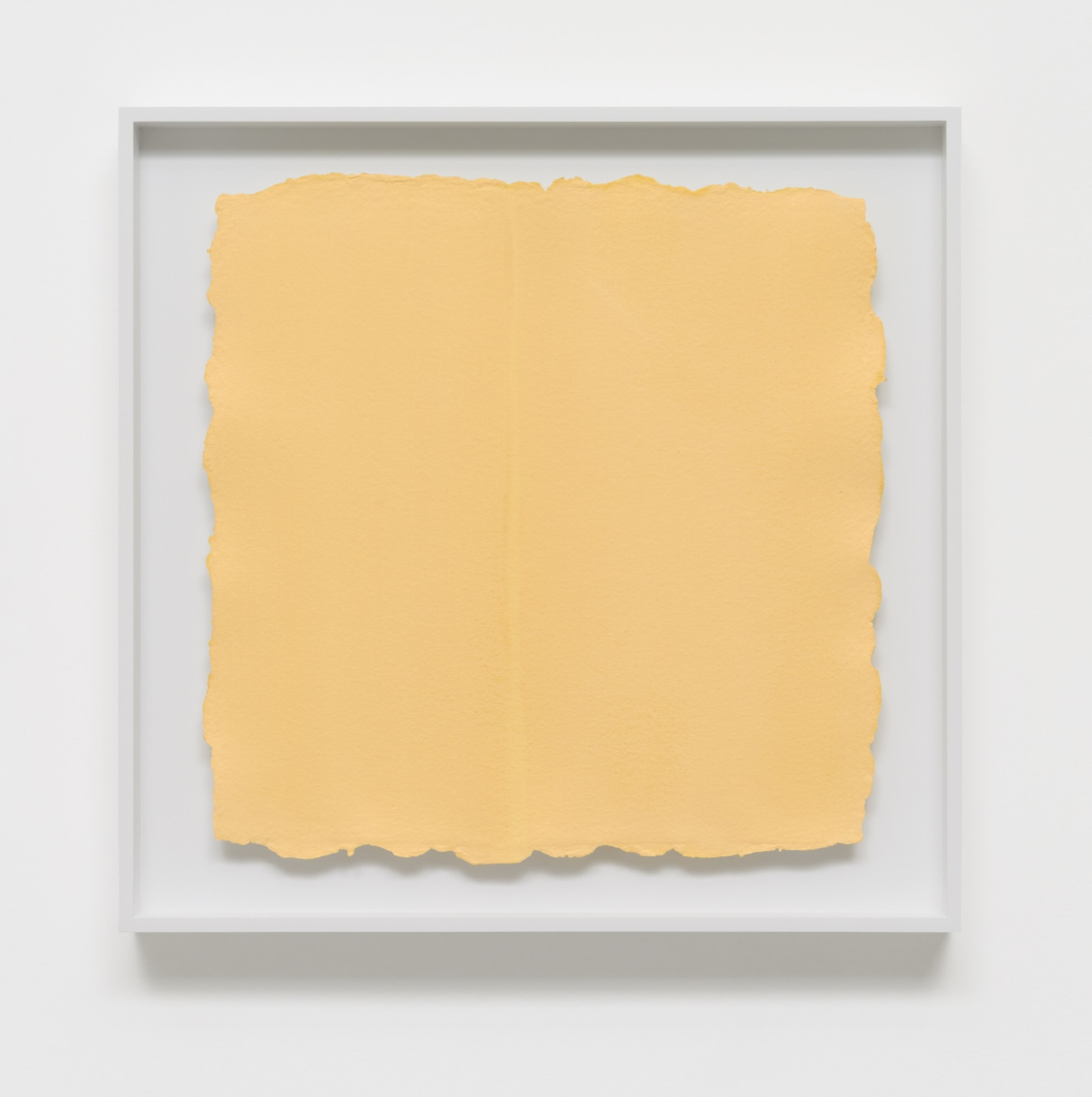
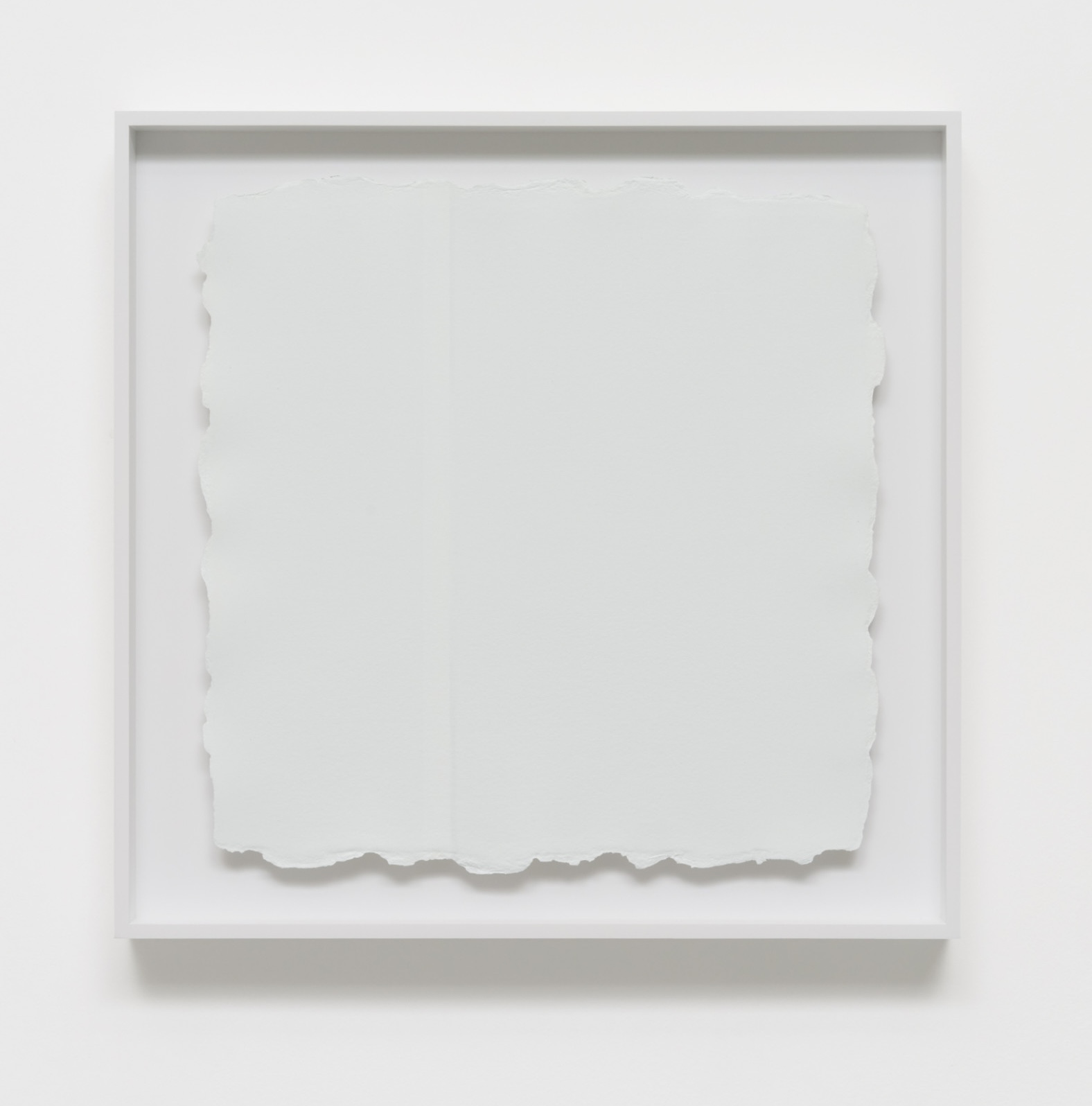
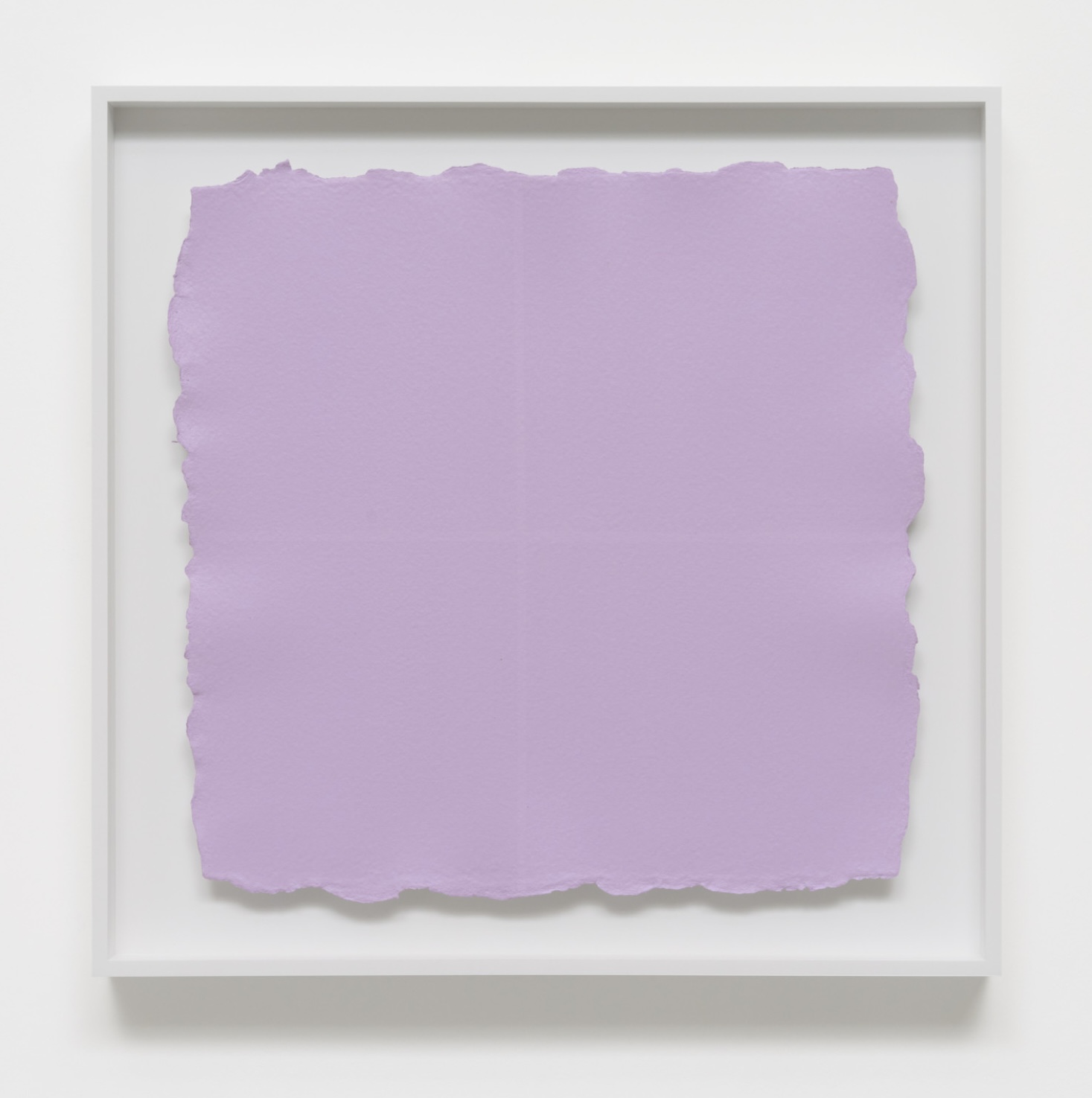
At first glance the works on paper in Anne Truitt: Waterleaf appear almost empty. Each sheet holds only the faintest divisions—subtle chromatic shifts that separate the surface into vertical or horizontal zones. In some works a nearly invisible seam runs down the page; in others the sheet resolves slowly into quiet quadrants that emerge only after the eye has spent time adjusting to the delicate changes in tone.
These divisions do not behave like compositional devices. They function more like coordinates.
In her own account of the sculptures' orientation, Truitt used explicitly cartographic terms, noting that their alignment reflected her concern with "east–west and north–south coordinates, latitude and longitude"—a way of locating herself within space. In the Waterleaf works that spatial logic appears in an unusually distilled form. The faint axes across the sheets establish a coordinate system so quiet that it reveals itself only gradually as the eye begins to move through the field, steadying the surface as perception adjusts.
Her drawings often operated less as images than as a form of spatial notation. They did not attempt to depict the appearance of a place so much as record its relationships. What mattered was not how something looked, but where it stood.
Seen this way, the Waterleaf works begin to read less like paintings than like perceptual maps. Their subtle divisions organize the field of the page in the same way the distant tree once organized the horizon. The seam across the sheet performs a function similar to the vertical marker in the Maryland landscape, establishing an axis against which the viewer’s perception can orient itself.
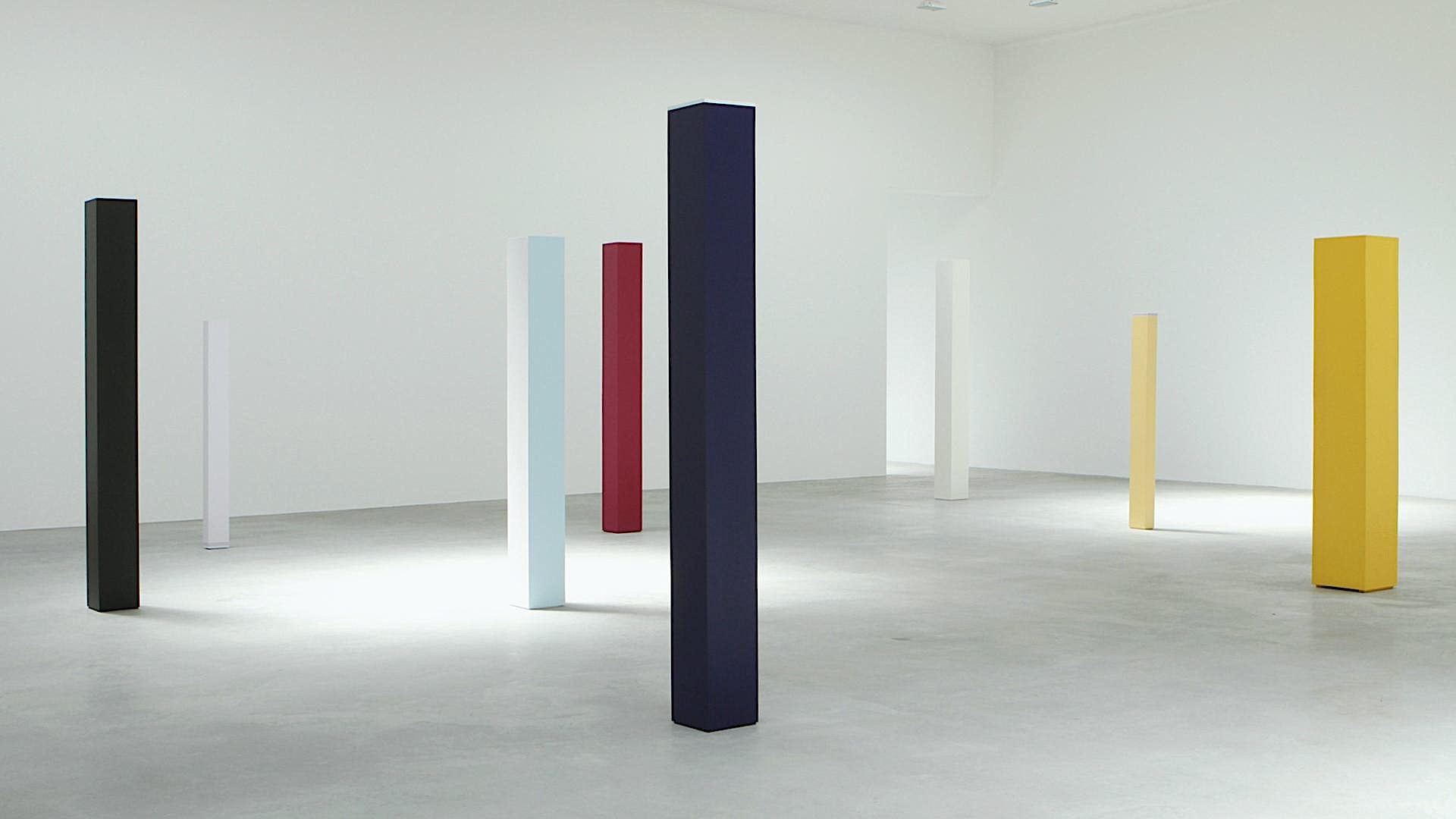
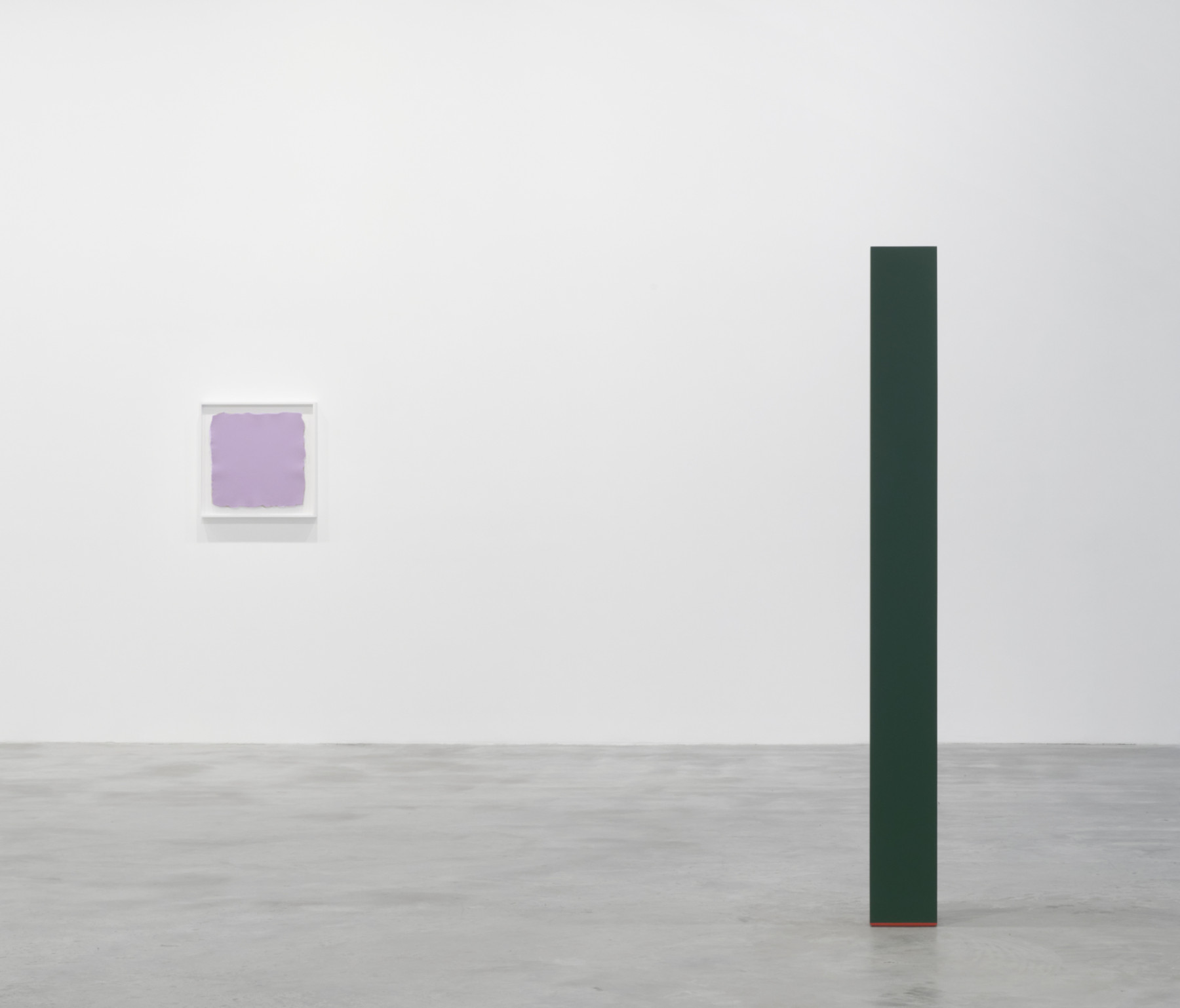
The sculptures extend that logic into the room. Truitt’s vertical columns are often grouped with Minimalism, yet their presence operates differently from the industrial objecthood associated with that movement. Their proportions rarely exceed human scale. Instead they rise just slightly above it, creating a quiet alignment between the standing body and the upright form.
The sculpture does not dominate the room in the manner of monument or architecture. It occupies space the way a person does: upright, balanced, and still. Encountering the work becomes less an act of circling an object than standing before a presence.
Often a narrow band of contrasting color anchors the base of the sculpture, fixing the vertical plane to the floor like a horizon line. The column registers the body’s own orientation in space.
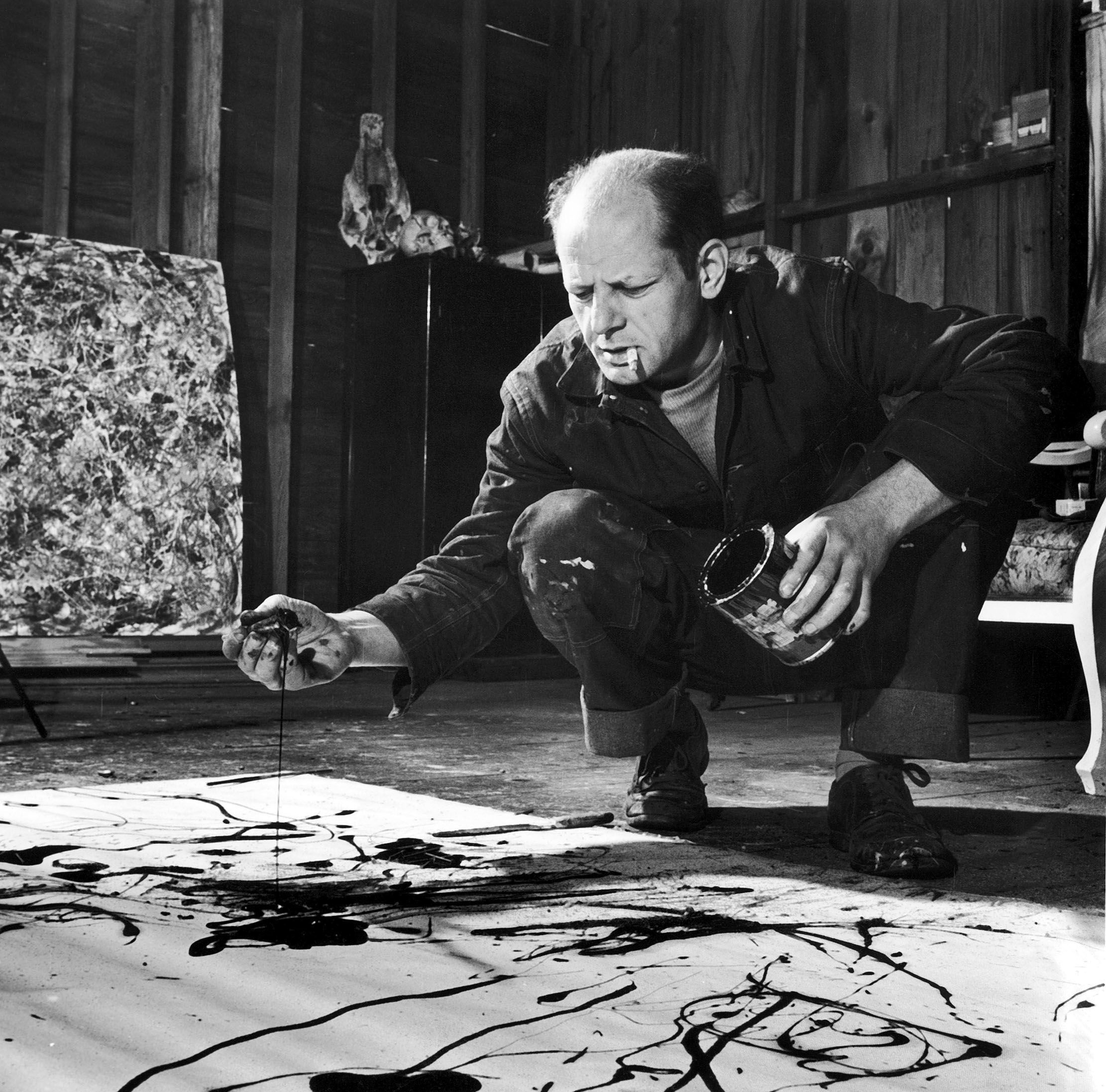
In this respect Truitt’s work is closer in spirit to the vertical structure of Barnett Newman than to Minimalist objecthood. Newman’s “zip” paintings divide the canvas into upright fields that heighten the viewer’s awareness of bodily scale. Truitt carries that logic into space, allowing the vertical field to detach from the canvas entirely.
The sculpture becomes a standing plane of color.
Seen alongside the sculptures, the Waterleaf works begin to appear like flattened columns—vertical fields translated back into the language of paper. The faint axes across the sheets anticipate the upright orientation of the sculptures, while the sculptures extend those divisions outward into the surrounding space.
Drawing becomes painting. Painting becomes sculpture. Sculpture returns to the field of perception.
The sensation Truitt described from childhood: a solitary structure in an open landscape—simple, upright, unmistakably there.
Anne Truitt’s sculptures and works on paper organize space through vertical orientation.
In the Waterleaf drawings, faint seams and chromatic divisions act like perceptual coordinates, quietly structuring the surface of the page.
The sculptures extend this logic into the room, aligning vertical form with the standing body.
Across drawing and sculpture, Truitt uses vertical structure to stabilize perception.
Space becomes legible through a single upright axis.









1. Installation view: Anne Truitt, Waterleaf, Matthew Marks Gallery, New York, through April 18, 2026. Artwork © Anne Truitt. Courtesy Matthew Marks Gallery.
2. Anne Truitt, Tribute, 1997. Acrylic on wood, 81 1/4 × 8 × 8 in (206 × 20 × 20 cm). Artwork © Anne Truitt. Courtesy Matthew Marks Gallery.
3. Anne Truitt, Waterleaf No. 12, 2003. Acrylic on paper, 19 1/4 × 19 1/2 in (49 × 50 cm). Artwork © Anne Truitt. Courtesy Matthew Marks Gallery.
4. Installation view: Anne Truitt, Waterleaf, Matthew Marks Gallery, New York, through April 18, 2026. Artwork © Anne Truitt. Courtesy Matthew Marks Gallery.
5. Anne Truitt, Waterleaf No. 5, 2003. Acrylic on paper, 19 1/2 × 19 1/4 in (50 × 49 cm). Artwork © Anne Truitt. Courtesy Matthew Marks Gallery.
6. Anne Truitt, Australian Solstice, 1983. Acrylic on wood, 96 1/4 × 9 × 9 in (245 × 23 × 23 cm). Artwork © Anne Truitt. Courtesy Matthew Marks Gallery.
7. Installation view: Anne Truitt, Waterleaf, Matthew Marks Gallery, New York, through April 18, 2026. Artwork © Anne Truitt. Courtesy Matthew Marks Gallery.
8. Anne Truitt, Waterleaf No. 13, 2003. Acrylic on paper, 19 1/2 × 19 1/4 in (50 × 49 cm). Artwork © Anne Truitt. Courtesy Matthew Marks Gallery.
9. Installation view: Anne Truitt, Waterleaf, Matthew Marks Gallery, New York, through April 18, 2026. Artwork © Anne Truitt. Courtesy Matthew Marks Gallery.
10. Detail: Anne Truitt, Waterleaf No. 12, 2003. Acrylic on paper, 19 1/4 × 19 1/2 in (49 × 50 cm). Artwork © Anne Truitt. Courtesy Matthew Marks Gallery.
11. Installation view: Anne Truitt, Waterleaf, Matthew Marks Gallery, New York, through April 18, 2026. Artwork © Anne Truitt. Courtesy Matthew Marks Gallery.
12. Installation view: Anne Truitt, Waterleaf, Matthew Marks Gallery, New York, through April 18, 2026. Artwork © Anne Truitt. Courtesy Matthew Marks Gallery.
13. Anne Truitt, Waterleaf No. 1, 2003. Acrylic on paper, 19 3/4 × 19 in (50 × 48 cm). Artwork © Anne Truitt. Courtesy Matthew Marks Gallery.
14. Anne Truitt, Oak, 2003. Acrylic on wood, 81 × 8 × 8 in (206 × 20 × 20 cm). Artwork © Anne Truitt. Courtesy Matthew Marks Gallery.
15. Installation view: Anne Truitt, Waterleaf, Matthew Marks Gallery, New York, through April 18, 2026. Artwork © Anne Truitt. Courtesy Matthew Marks Gallery.
16. Anne Truitt, Waterleaf No. 10, 2003. Acrylic on paper, 19 1/4 × 19 1/2 in (49 × 50 cm). Artwork © Anne Truitt. Courtesy Matthew Marks Gallery.
17. Installation view: Anne Truitt, Waterleaf, Matthew Marks Gallery, New York, through April 18, 2026. Artwork © Anne Truitt. Courtesy Matthew Marks Gallery.
18. Anne Truitt, Waterleaf No. 11, 2003. Acrylic on paper, 19 1/4 × 19 in (49 × 48 cm). Artwork © Anne Truitt. Courtesy Matthew Marks Gallery.
19. Installation view: Anne Truitt, Waterleaf, Matthew Marks Gallery, New York, through April 18, 2026. Artwork © Anne Truitt. Courtesy Matthew Marks Gallery.
Cover: Installation view: Anne Truitt, Waterleaf, Matthew Marks Gallery, New York, through April 18, 2026. Artwork © Anne Truitt. Courtesy Matthew Marks Gallery.
All images © their respective rights holders.
Image rights & attribution →