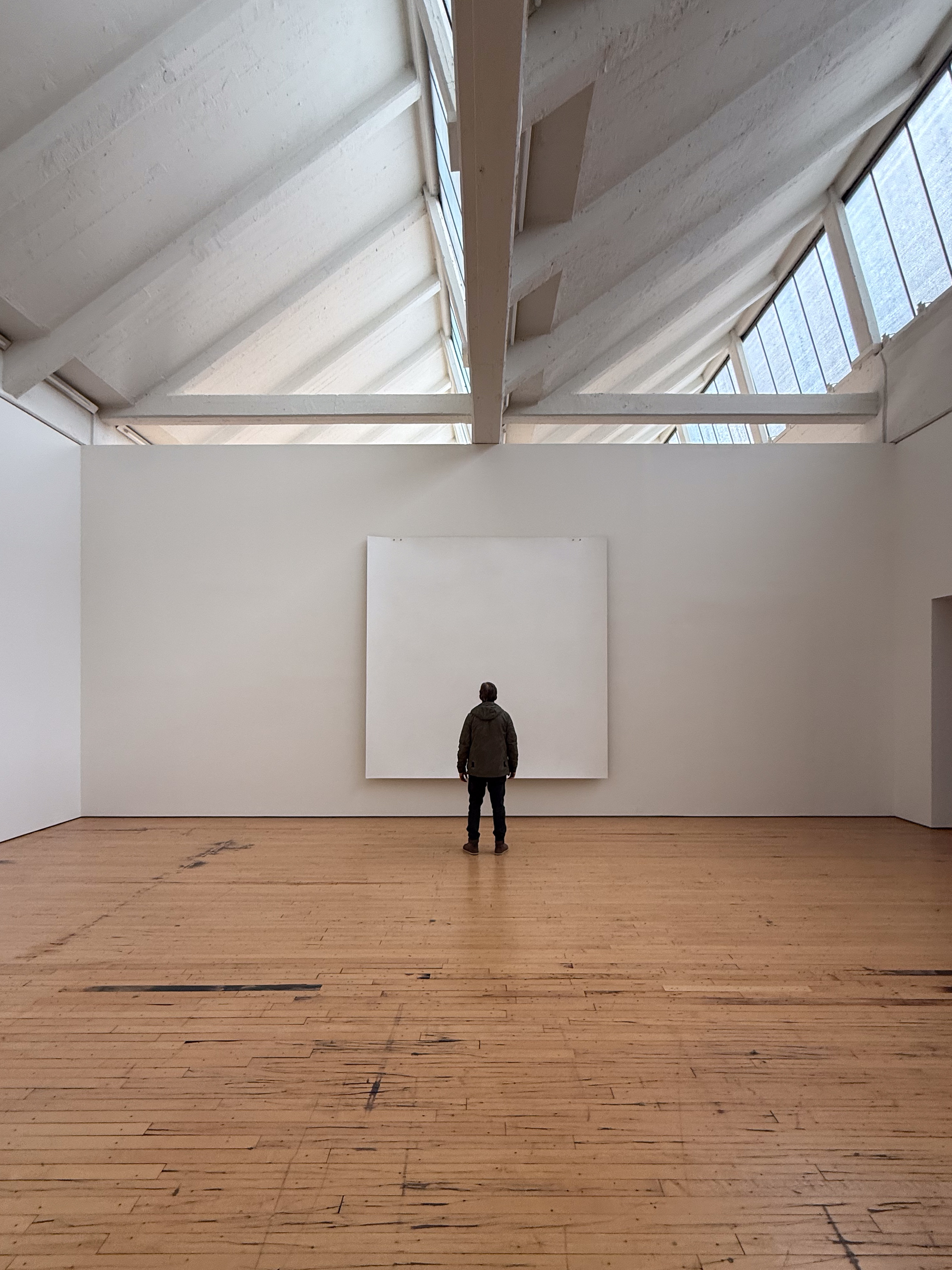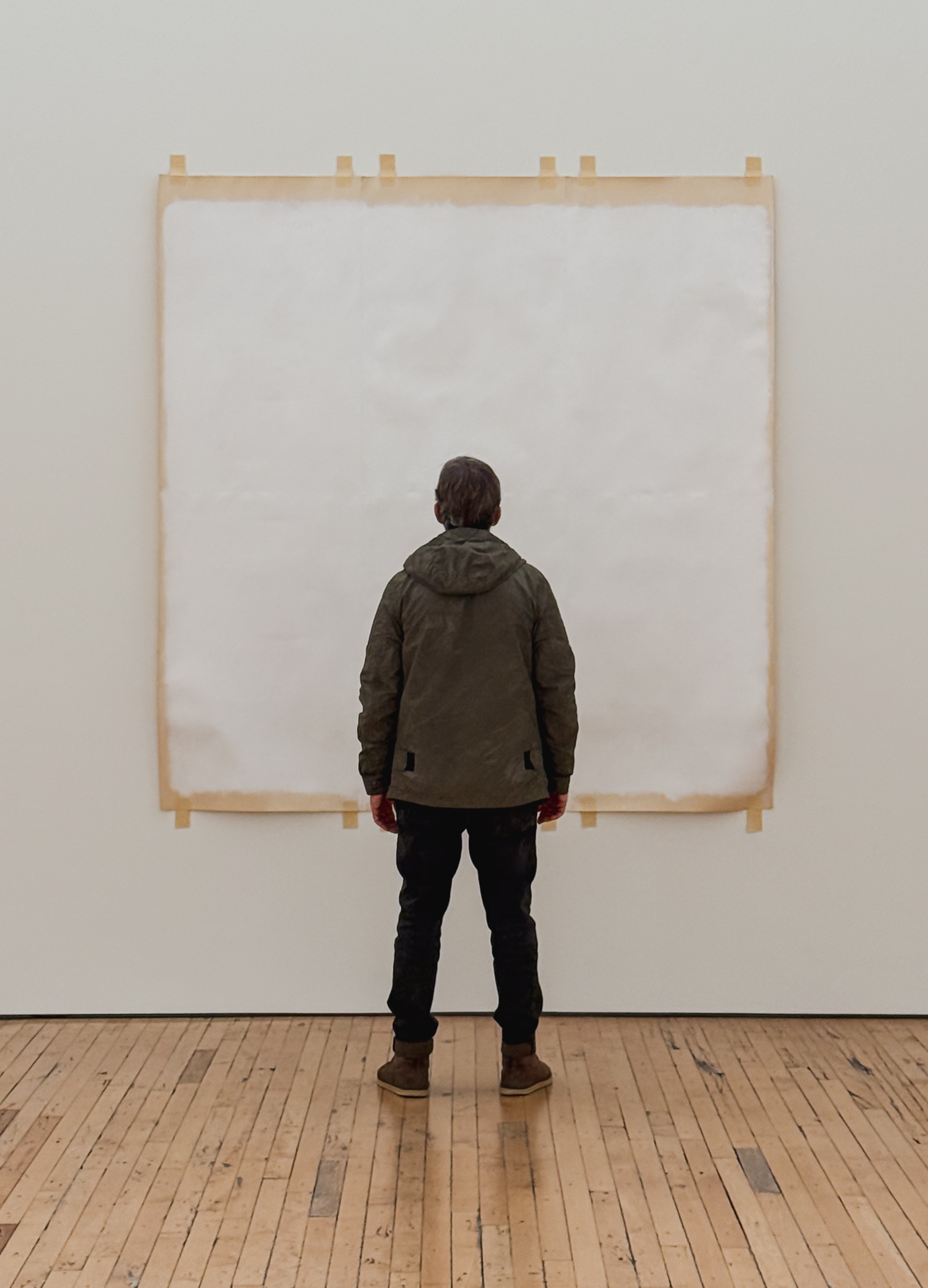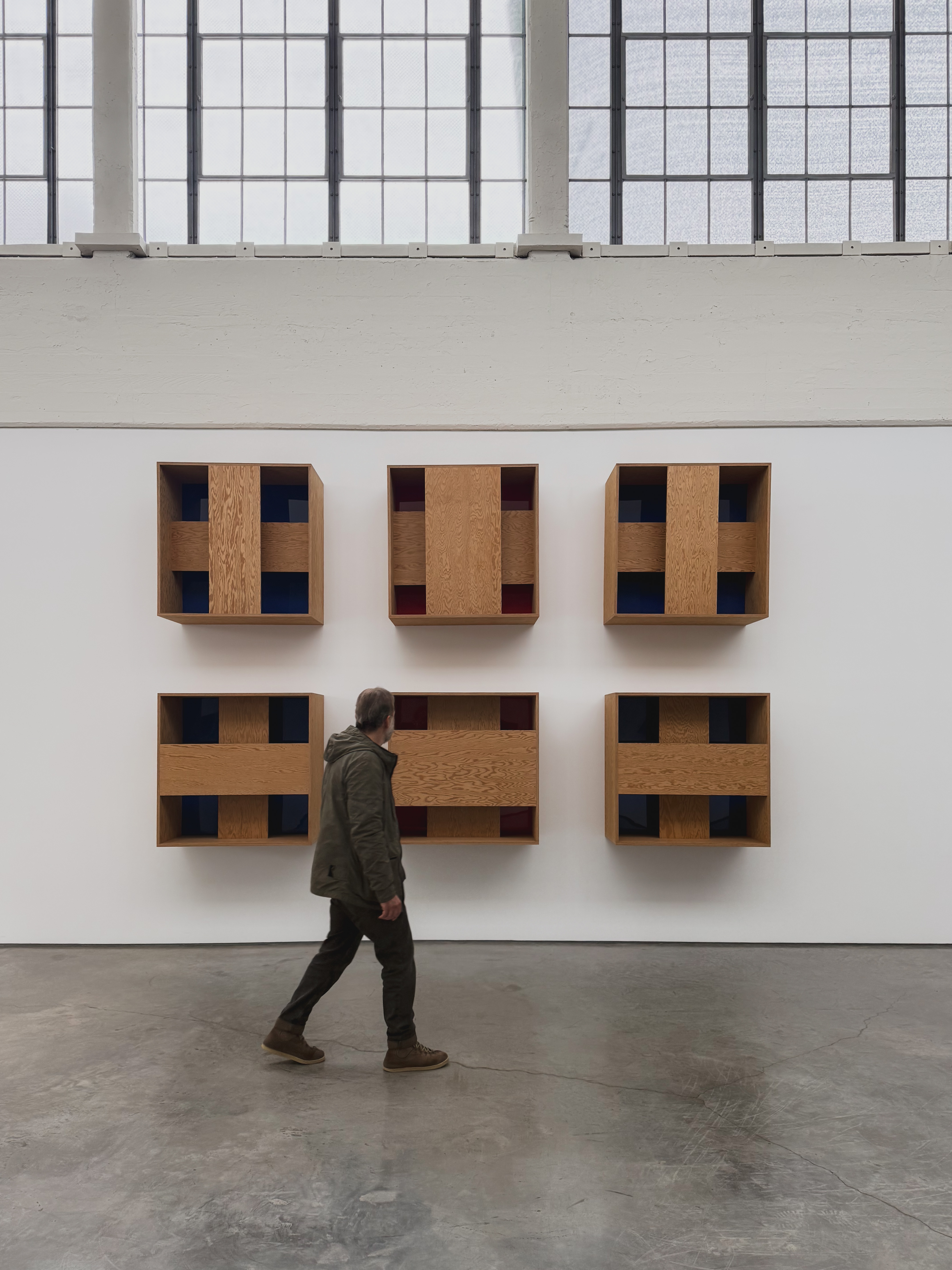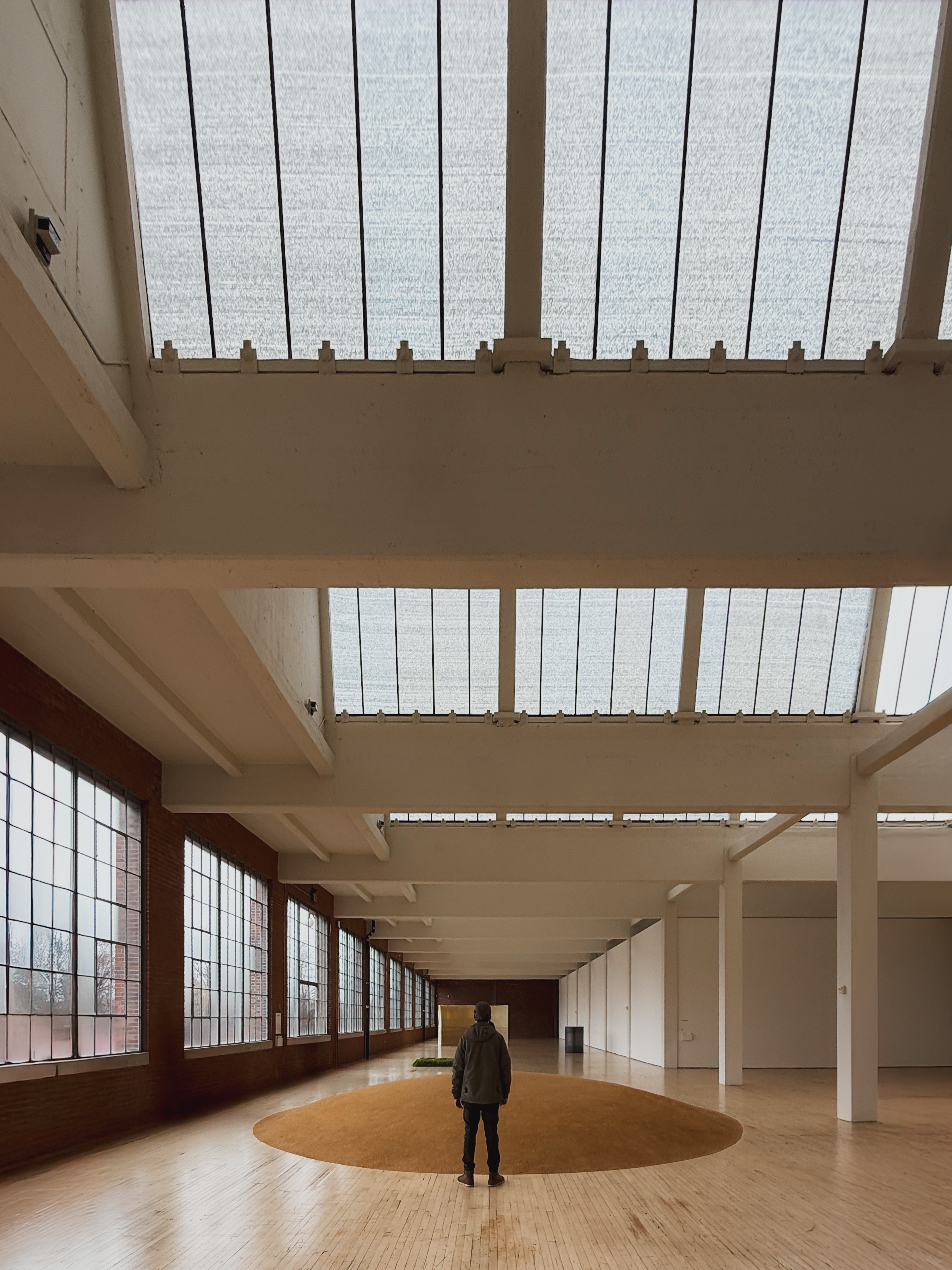


In the long rooms at Dia Beacon, I watched Fabio stand in front of works he had known for years and works he had never seen. The ones he knew, he moved toward immediately. The ones he didn’t, he approached with his hands.
Most essays in Structure are written without access. The method is deliberate. A practice can be read through its objects and the conditions it builds, whether or not the maker is present to account for them. Structure, if it is really there, does not need to be narrated by its author in order to become legible.
This piece begins from the one thing that method cannot provide: the chance to watch what happens when the maker stands inside a lineage already mapped independently of him. Not to ask him to explain his work, and not to substitute conversation for criticism, but to see whether what was visible from outside remains legible from within.
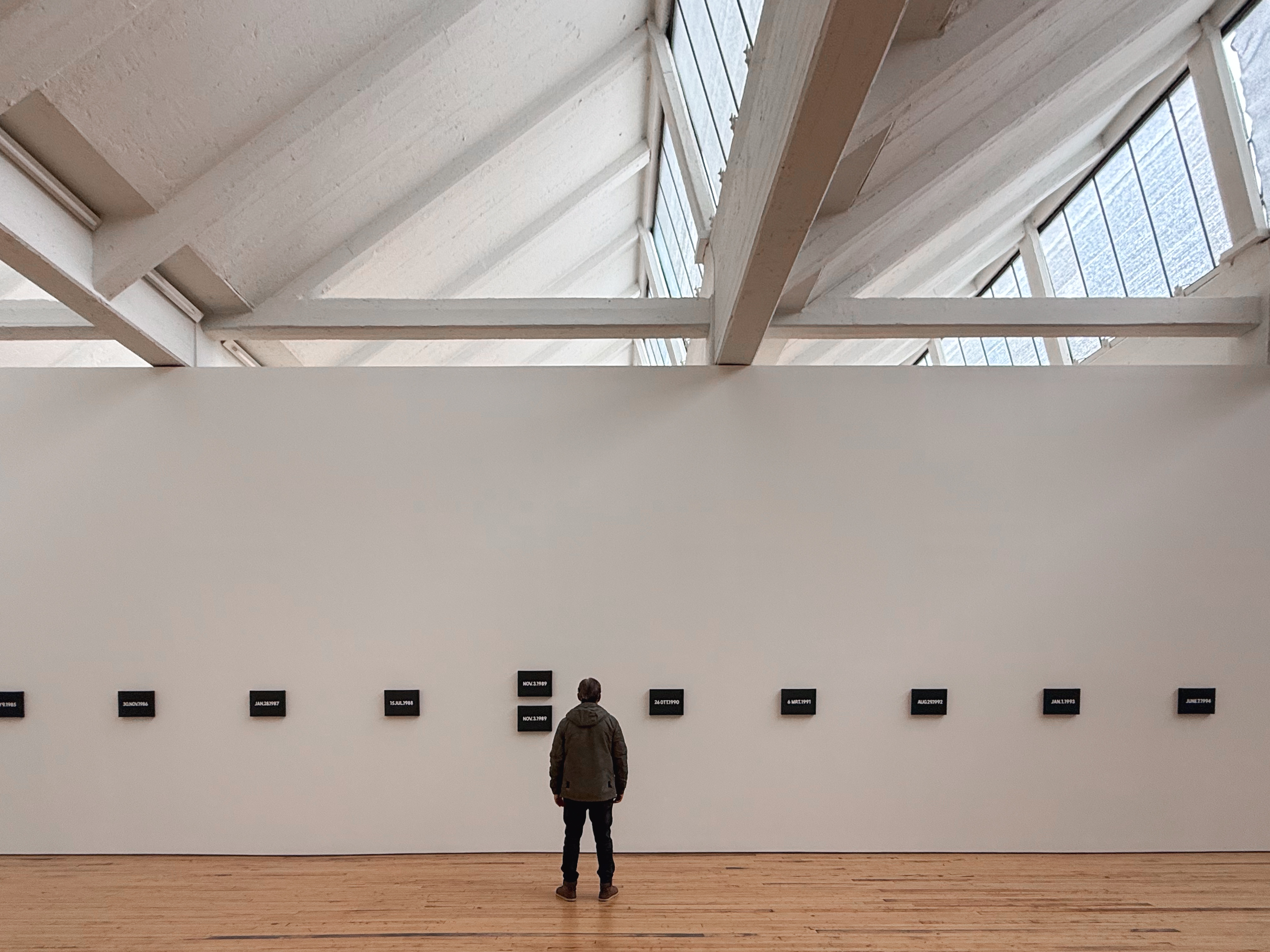
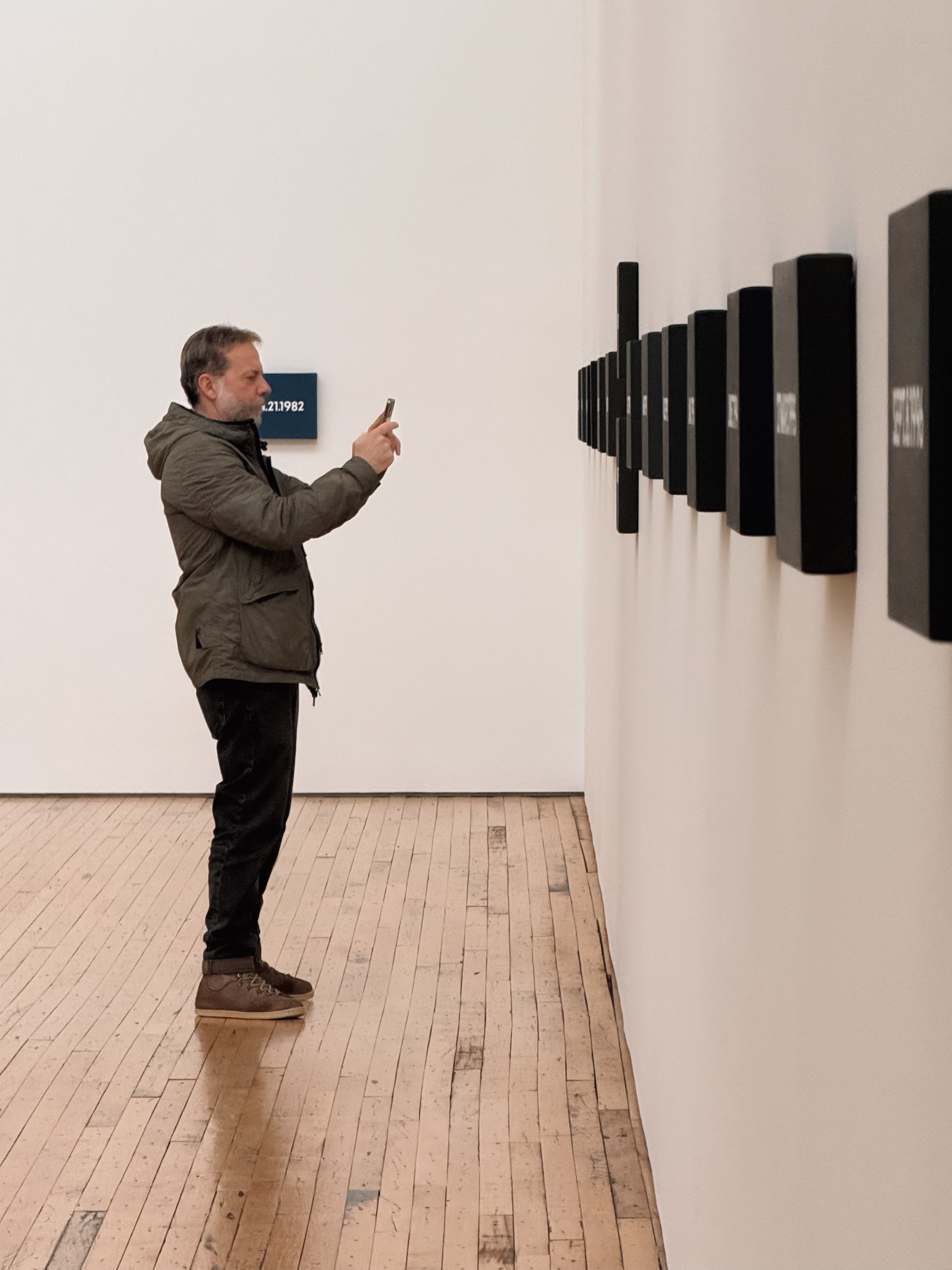
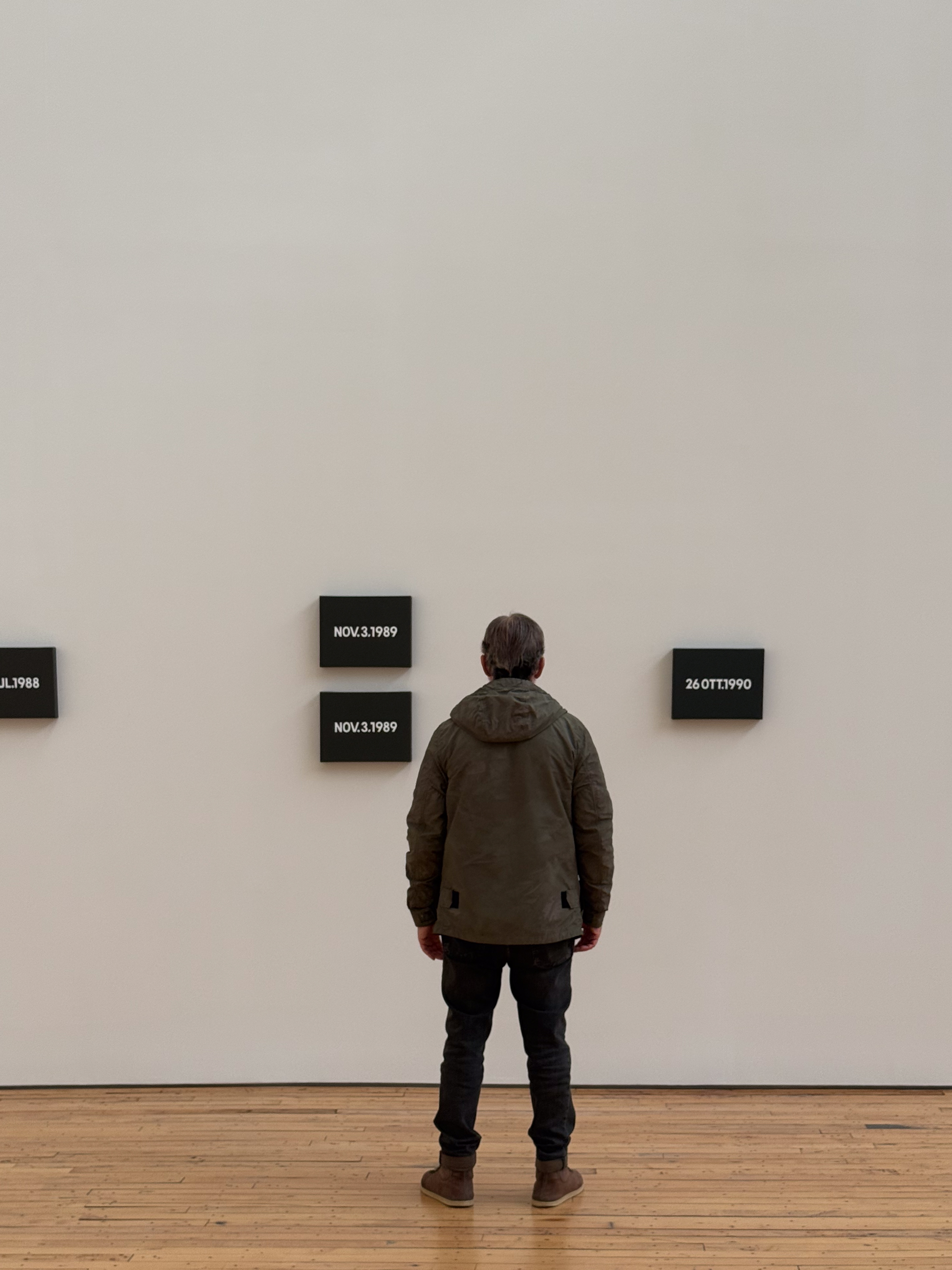
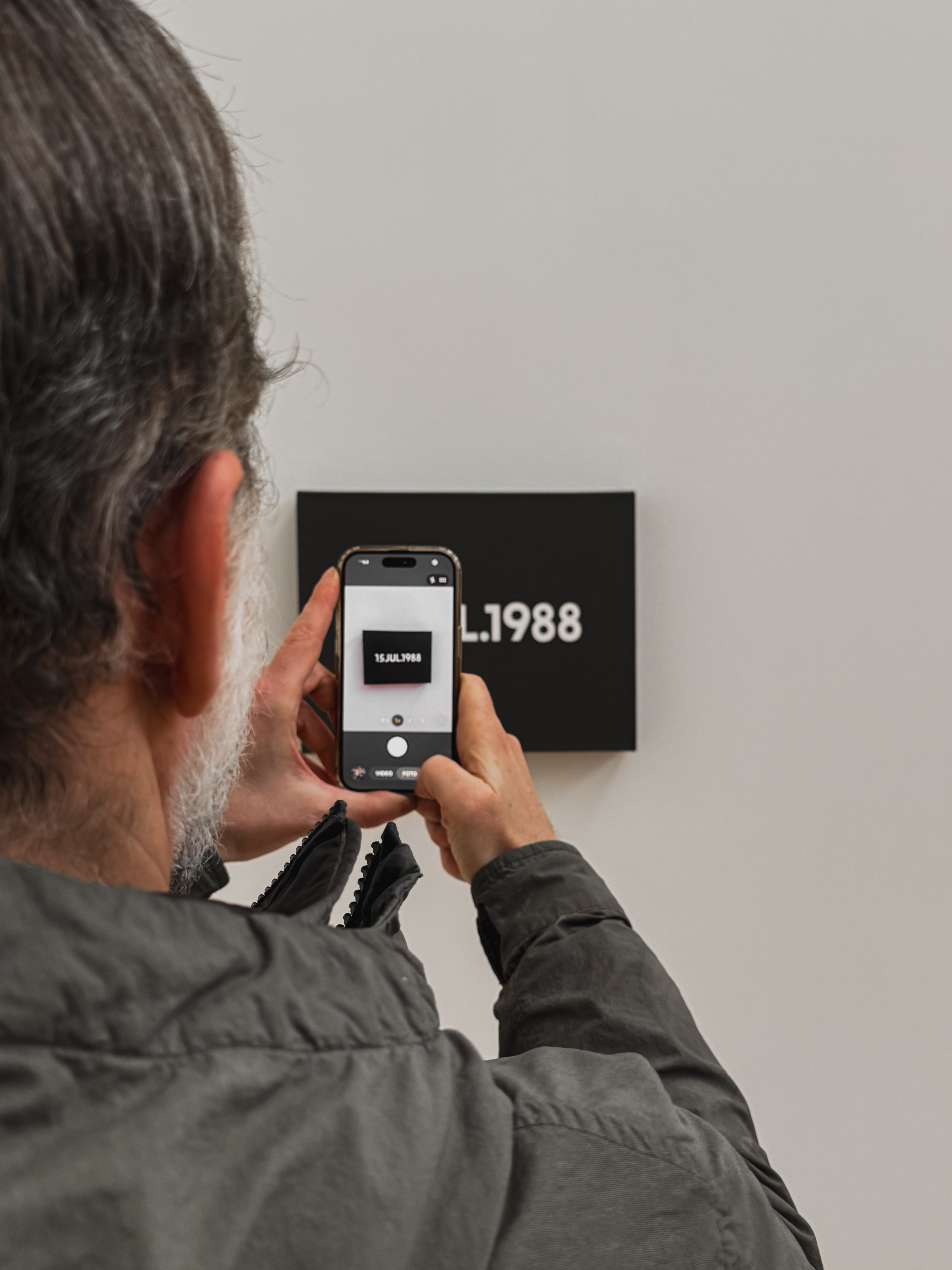
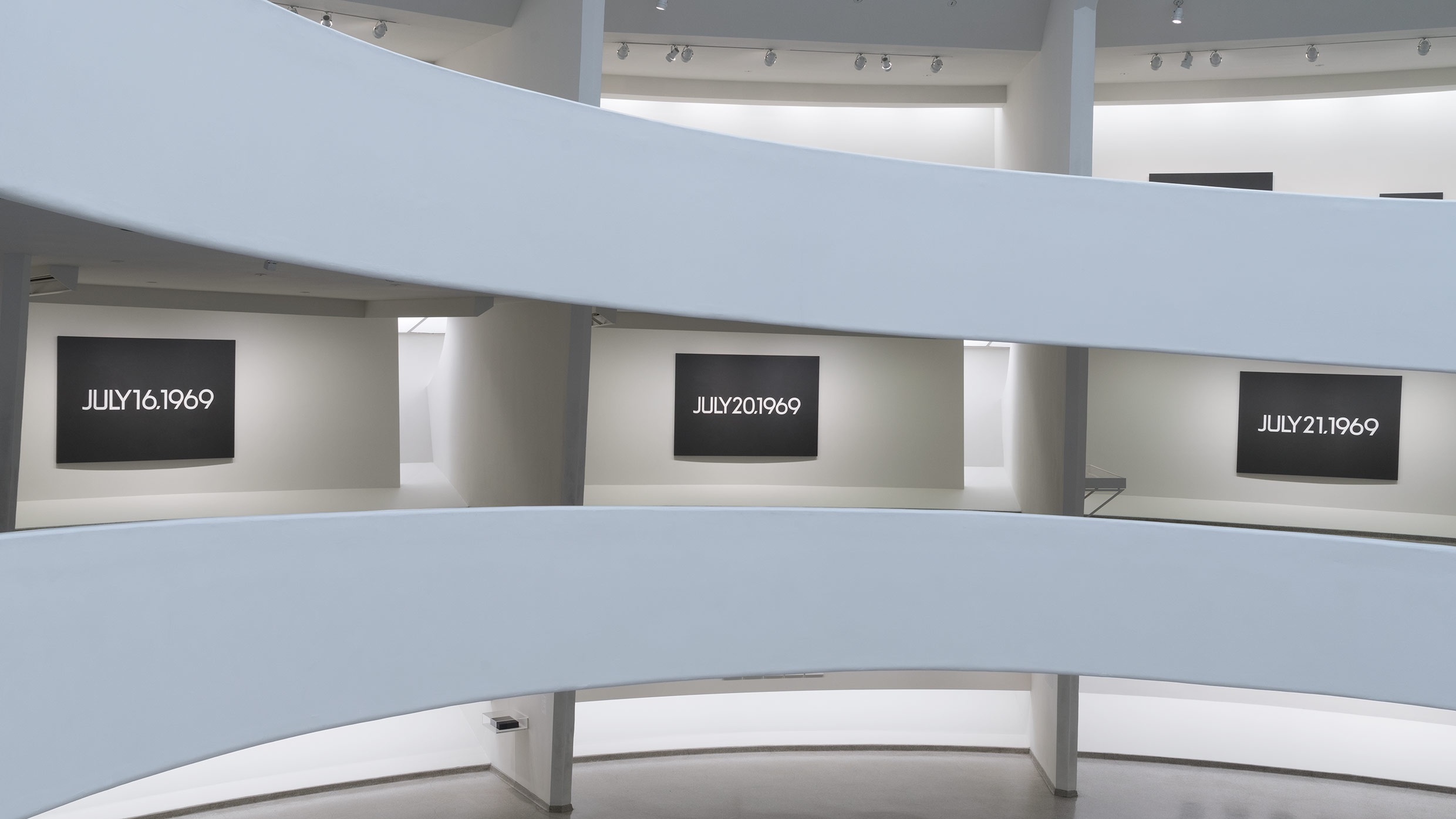
One of the first works he wanted to see was On Kawara. He moved toward the wall before I had fully stopped walking, phone already raised — not aimed at a single canvas but held back, taking the sequence. He was reading the series before any single canvas stopped him.
He stood there. Then, without turning:
“What I keep coming back to is the ones that don’t exist. You know he destroyed them — if it wasn’t finished by midnight, gone. So you’re looking at this wall and somewhere in there are days that just — aren’t. The sequence has absences built into it.”
He lowered his phone.
“We have pieces like that. Garments I designed that never went into production. Not because something went wrong. The moment wasn’t right, or the fabric wasn’t there yet. They exist somewhere but not as objects.”
I wrote that down. I didn’t ask anything.
If Kawara made sequence visible through the gap, Warhol made it visible through accumulation — a field so large that no single unit could stand for the whole.
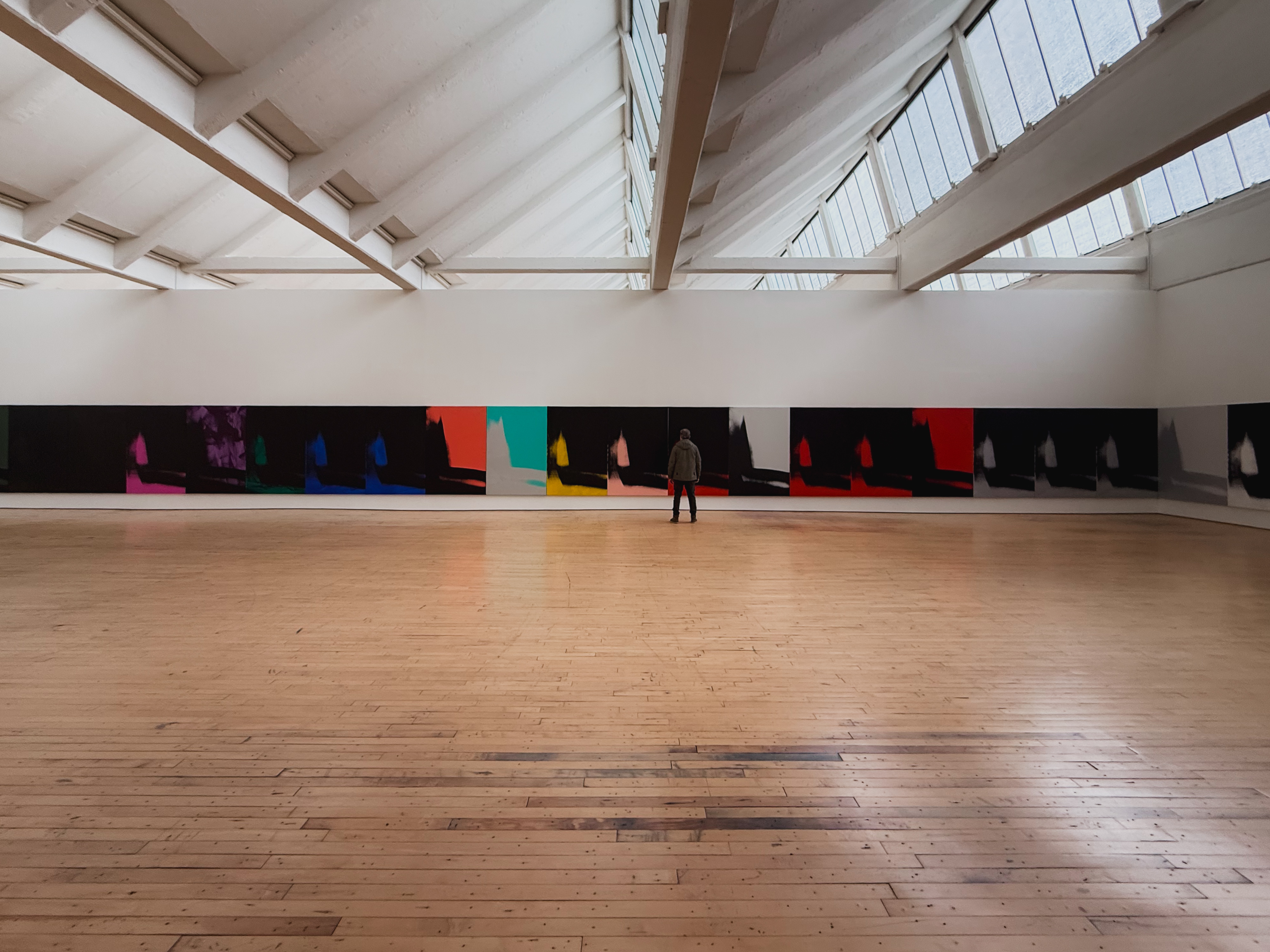
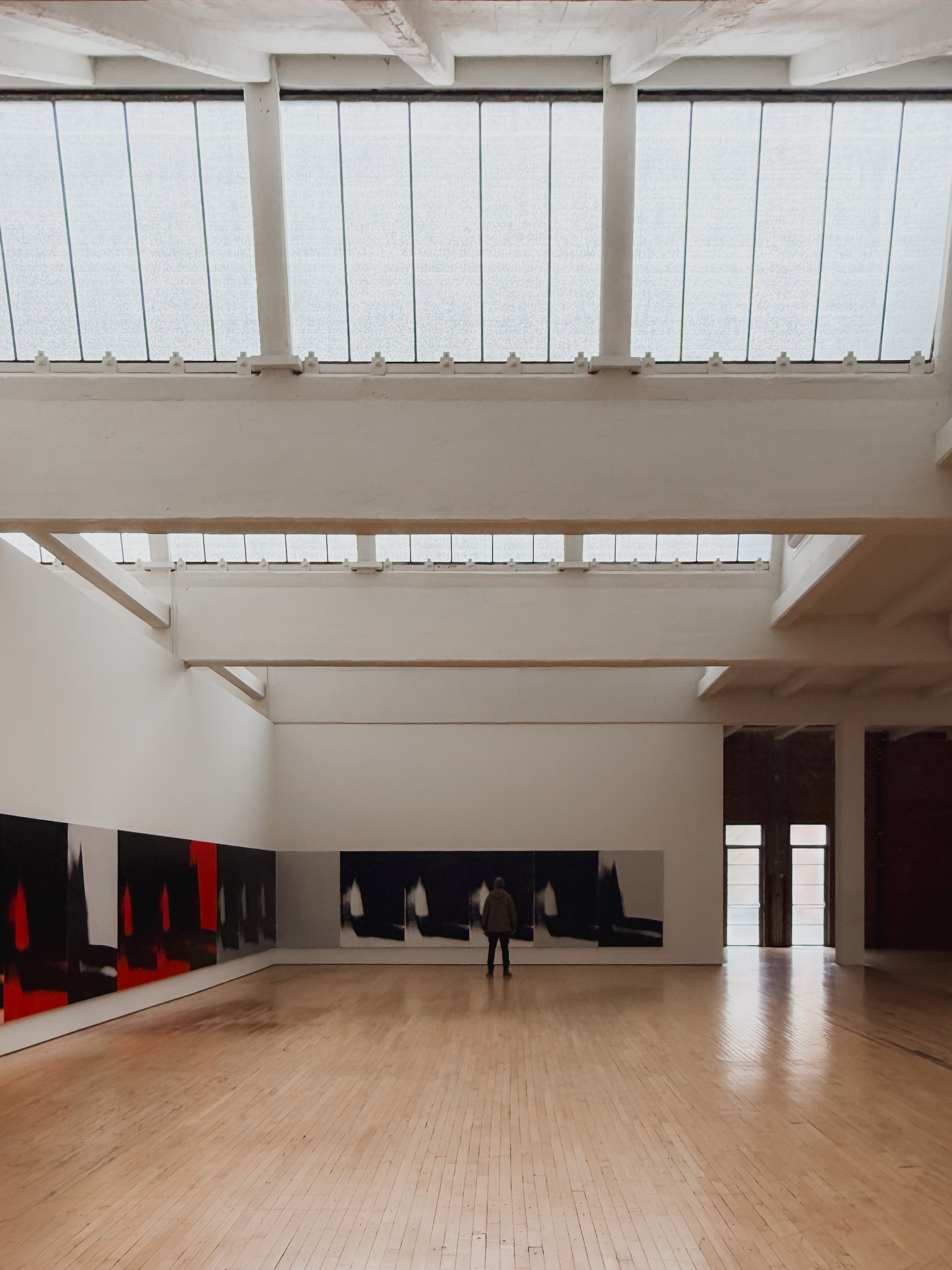
The Shadows room stopped him differently. He walked the length of it first — all 102 panels, the full sequence of black and pink and teal and red and gray — then came back to the middle. He remained there longer than anywhere else. Then he put his phone in his pocket.
“People always want to talk about the color. But that’s not what this is. The color is almost a distraction — what Warhol understood is that you can’t possess this. You can buy one panel. But the work is the whole wall. Nobody has a room this long.”
He walked a few steps.
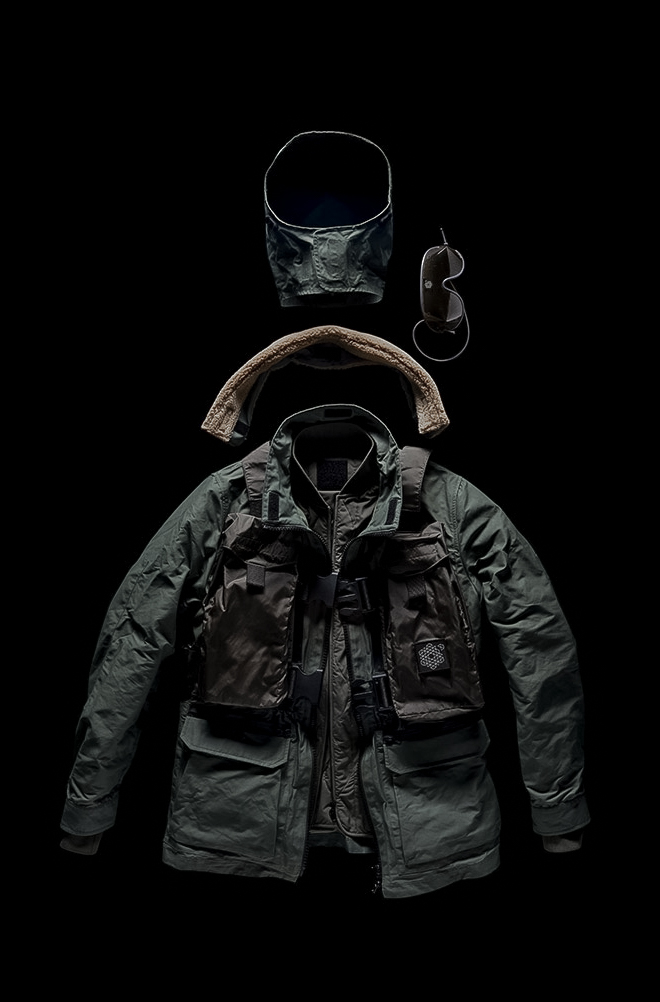
“This is what I was trying to solve with the sets. Each piece is designed in relation to the others — not as a standalone object. The outerwear organizes everything around it. But people come wanting just the jacket.”
A pause.
“I understand it. But if you take only the jacket you’ve already misread what it is. The jacket isn’t the point of departure. It’s the last thing you should arrive at.”
In the Shadows room, indifference still belonged to the work. With Hsieh, it moved into the life that sustained it.
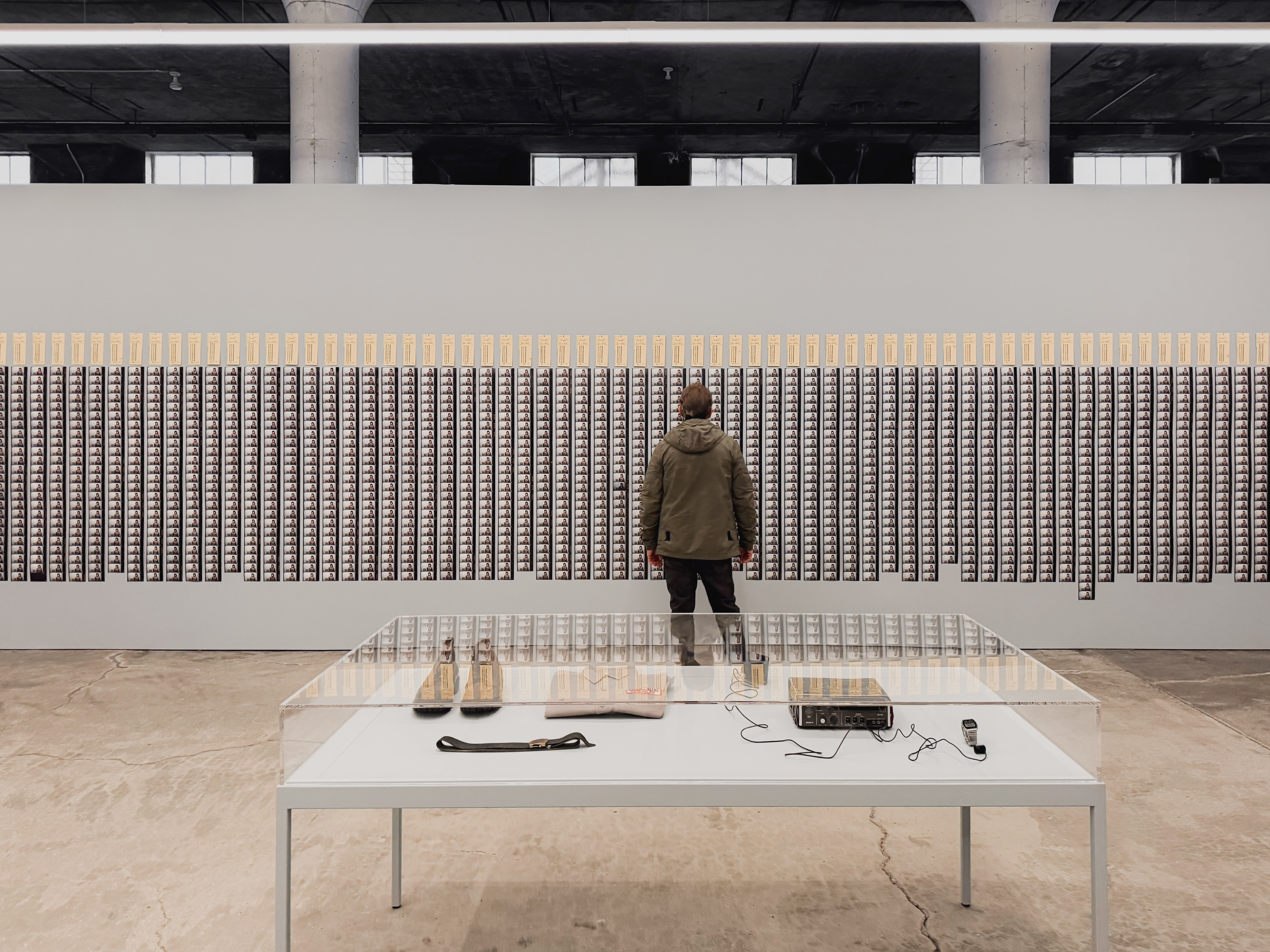
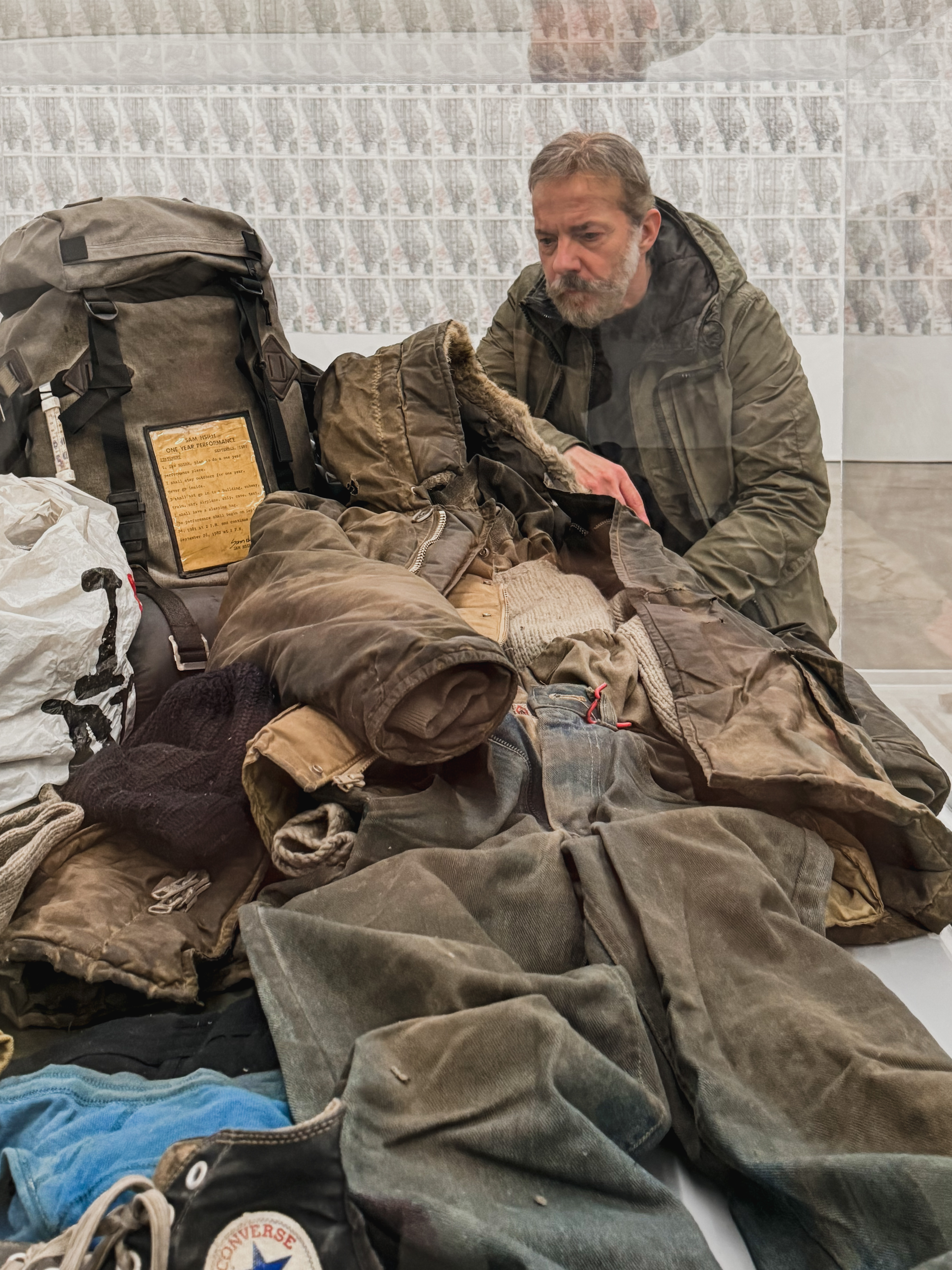
Tehching Hsieh he didn’t know. I gave him the minimum: one rule, punch a time clock every hour for a year; the photographs record every instance.
He went to the glass case. The wall of photographs he saved for later.
The case held what he wore for a separate year entirely — the year he spent outside, never once entering a building. The jacket, the backpack, the gear. Everything worn past recognition, the fabric carrying exposure not as documentation but as consequence. He leaned close without touching the glass. He stayed there while I moved along the photographs above him, 8,627 of them, a year laid flat across the entire wall.
When he straightened up:
“This is frightening to me actually.”
I waited.
“Not because of what he did physically. It’s that he removed the option to correct. Whatever happened — that was the work. You can’t decide after a year that it went wrong. The year already happened.”
He was quiet for a moment.
“With the dyeing I try to work close to this. Each piece goes through a process that I set up but don’t fully control. The result belongs to the material as much as to my decision. But I still look at every piece when it comes out. I can’t stop myself from assessing.”
He turned back to the case.
“Maybe that’s the honest answer. I’m not Hsieh. I still want to know if it’s right.”
I stood at the glass for a moment. Then:
“The photographs exist to prove he did it. The jacket exists because he did it.”
He nodded once.
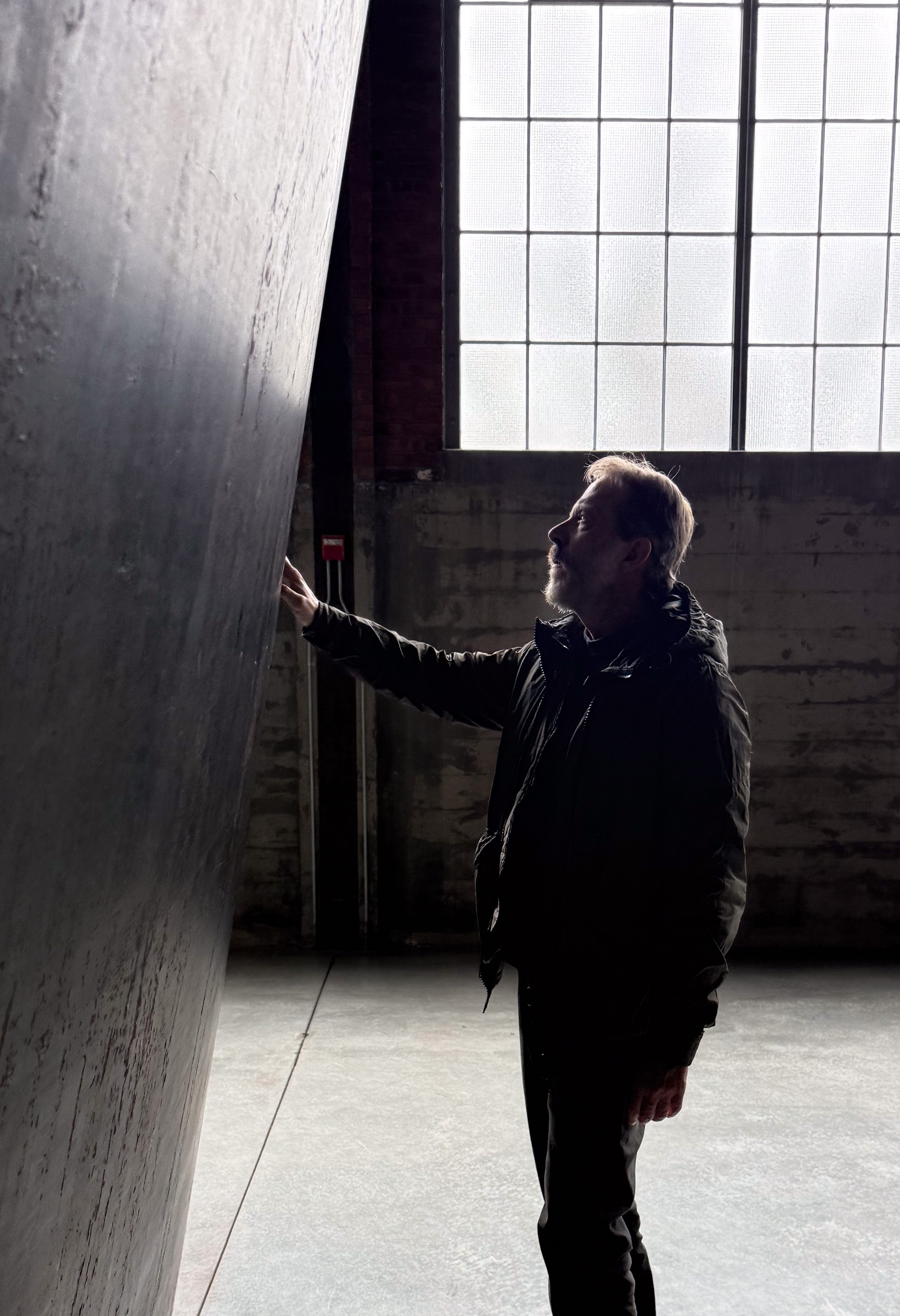
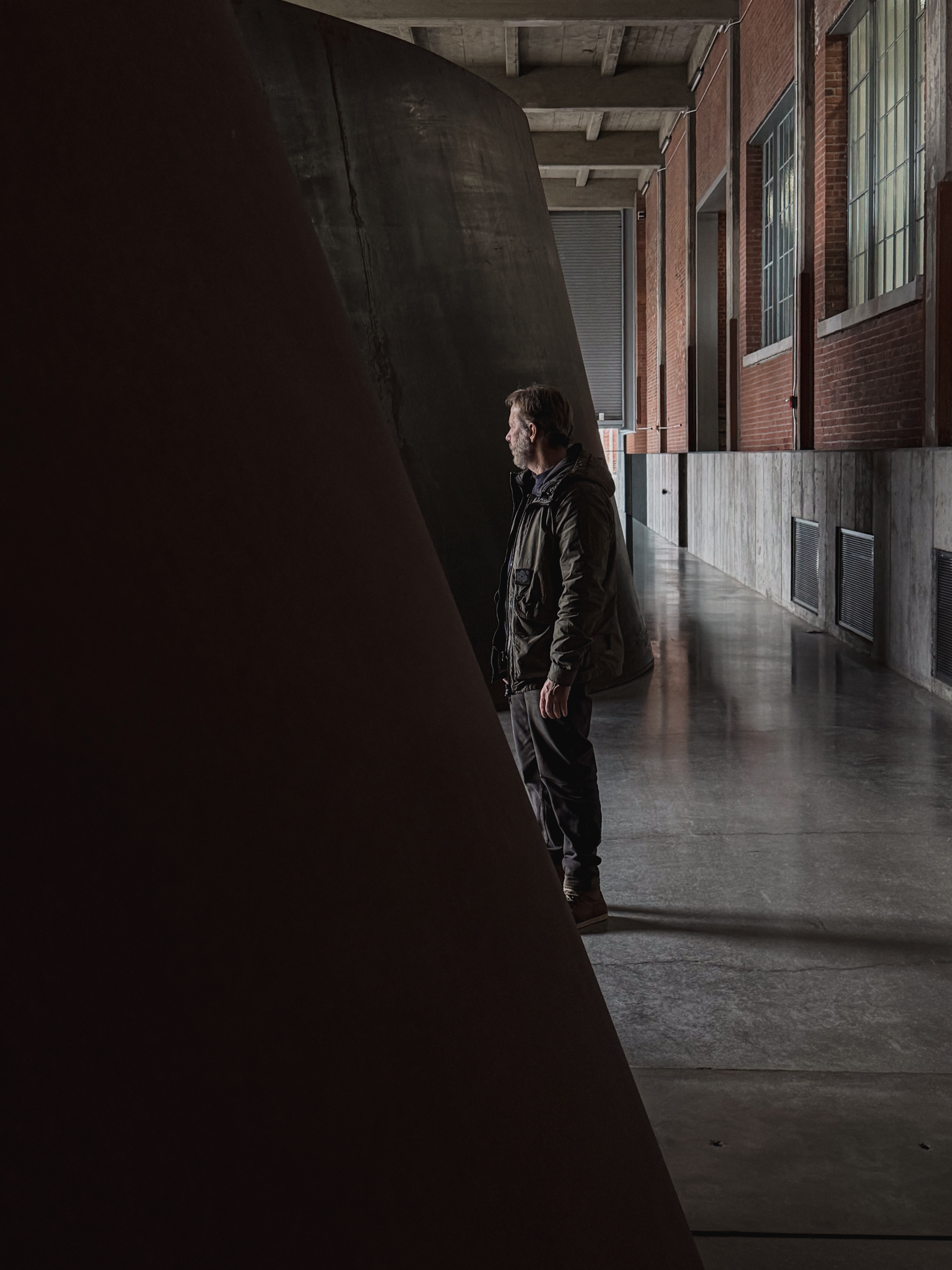
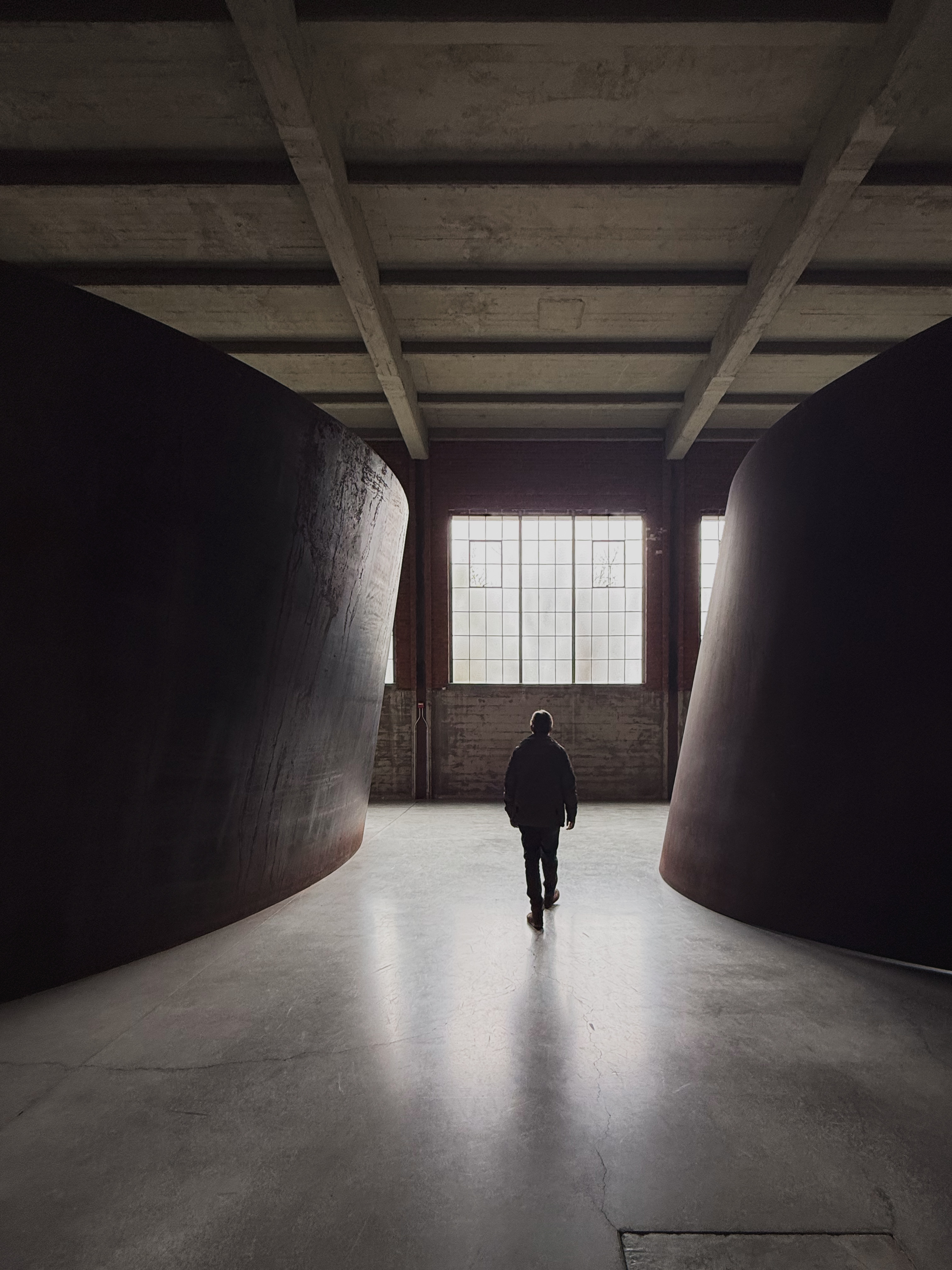
The Serra halls don’t allow distance. You enter and the steel is already above you, curving. Fabio slowed almost immediately. Not stopped — slowed. Then he touched the surface.
He walked the interior curve like that, fingers trailing, not attending to where he was going but to the point of contact. It was the same attention he had given the glass case in the Hsieh room — reading through touch first.
I waited until he had walked the full curve and come back. Then:
“Serra fought for decades to keep the large works in public institutions. Refused private sale. He said the public dimension was structural — the work requires being encountered by people who didn’t choose to encounter it. The material only means something if the relation to it is real.”
He was quiet for a moment.
“This takes time. Not just the making — the relationship that lets the material answer back. Serra didn’t call someone new when he needed something difficult.”
He ran his fingers along the surface again briefly.
“In Bologna I’ve worked with the same people for years on the outerwear. Sometimes they call me when they find something — a new lamination, a different finish. I don’t always use it. But that call only happens because of time. You can’t manufacture that. You can’t start fresh and ask someone to trust you immediately.”
I asked him what happens to Plurimus if those relationships disappear.
The steel. The floor. The steel.
“The work continues. But something real is lost. Not the knowledge — we can write things down. The trust. Knowing that when I ask for something that doesn’t exist yet, someone will try to find it anyway. That’s not in any document.”
He turned back toward the curve.
“Steel remembers everything. You put your hand there and Serra’s decisions are still present. With fabric — one wash and most of that is gone. We’re always working against that. Making things that carry less of their own history than we’d like.”
By the time we reached the car the light was almost gone. He was talking about Bologna. A supplier. A fabric that had taken three years to get right. The method, described again in its own language — not as structure but as time, relation, and the slow accumulation of trust between people who make things together.
I wrote none of it down. Not confirmation, exactly, but the shape of the difference. The structure was there before he spoke. What the day clarified was where he meets it, where he resists it, and where the practice still exceeds his own language for it.
Authorship does not begin with the object. It begins with the conditions that allow the object to appear. At Dia Beacon, Fabio Cavina moves through works built on rule, sequence, and indifference, clarifying a practice in which the garment is not the origin, but the result.