Will Insley’s work occupies a singular position between art, architecture, and philosophy. Across drawings, models, writings, and speculative constructions, he developed a comprehensive system in which architecture functions not as a built solution, but as a cognitive framework—a way to organize thought, perception, and belief.
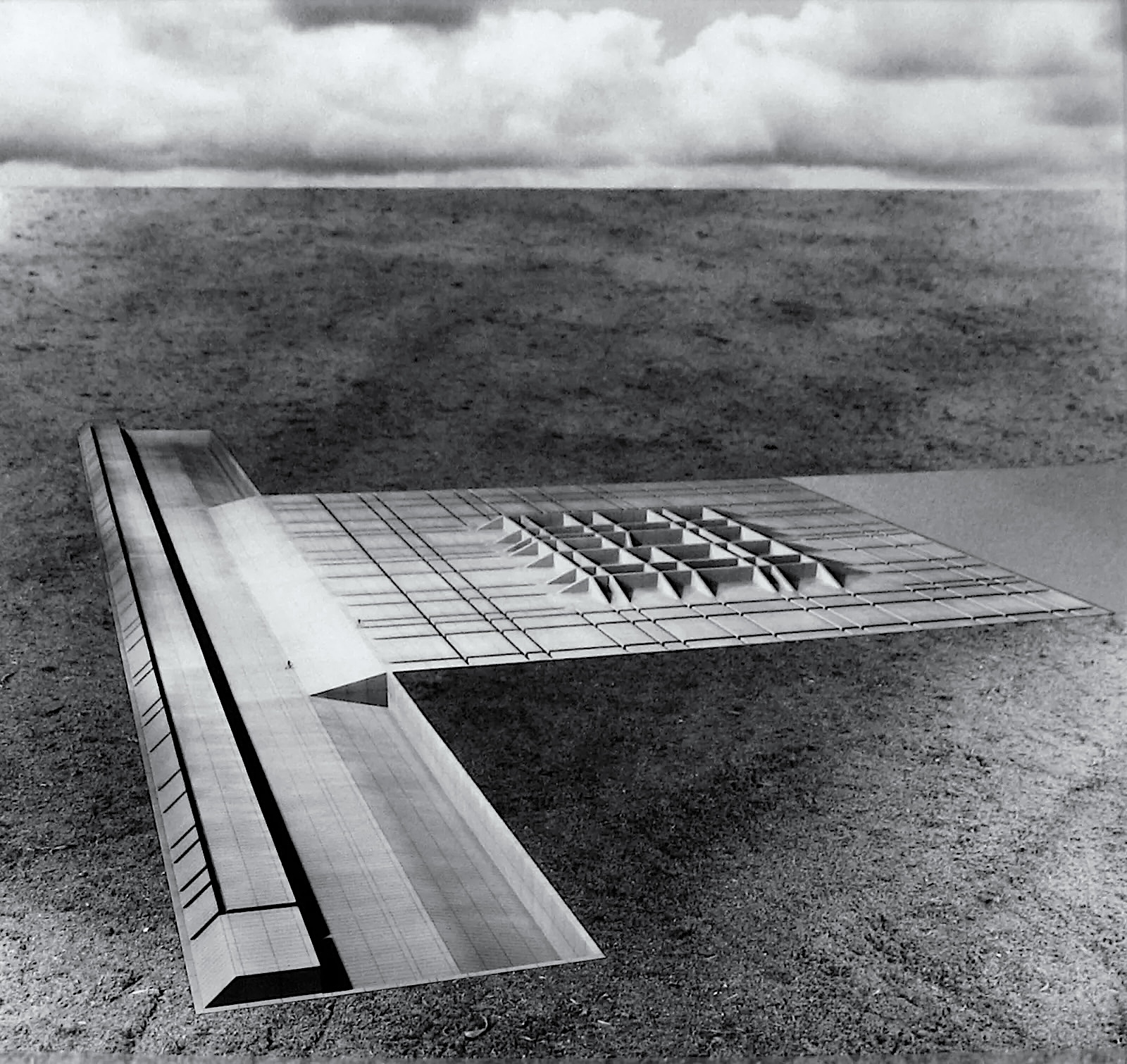
Beginning in the 1960s, Insley dedicated himself to a lifelong project he termed ONECITY: a continuously evolving, internally consistent city conceived as a total environment. This was not a proposal for construction, nor an exercise in futuristic design. It was a closed system—self-contained, rule-governed, and conceptually complete. Within it, architecture becomes a medium for examining how worlds are formed, maintained, and understood.
Insley trained as an architect, but quickly moved away from professional practice. Conventional architecture, bound by function, economics, and politics, offered insufficient freedom for the kind of inquiry he pursued. Instead, he turned to drawing as a primary site of construction. Plans, sections, elevations, and axonometric views became tools for thinking rather than steps toward realization. In Insley’s work, drawing is not preparatory—it is the architecture.
The forms that populate ONECITY—corridors, towers, passageways, and zones of ritual or passage—are rigorously ordered. Geometry governs movement; symmetry stabilizes meaning; repetition produces coherence. Yet despite their monumental scale, these structures are not expressive or heroic. They are neutral, even austere. Their power lies in their consistency. Each component exists because the system requires it.
Insley’s architecture is deeply inward-facing. Unlike modernist utopias aimed at social reform or technological progress, ONECITY is concerned with interior life—memory, belief, transcendence, and the architecture of the mind. Spaces are designed not for habitation, but for orientation. Passage replaces function. Movement becomes symbolic. The city reads less as an urban plan than as a metaphysical diagram.
Language plays a crucial role in this system. Insley’s texts—manifestos, reflections, and theoretical notes—do not explain the work so much as extend it. Words operate as parallel structures, reinforcing the internal logic of ONECITY rather than interpreting it from the outside. Titles and inscriptions behave like architectural elements: naming thresholds, zones, and states of being.
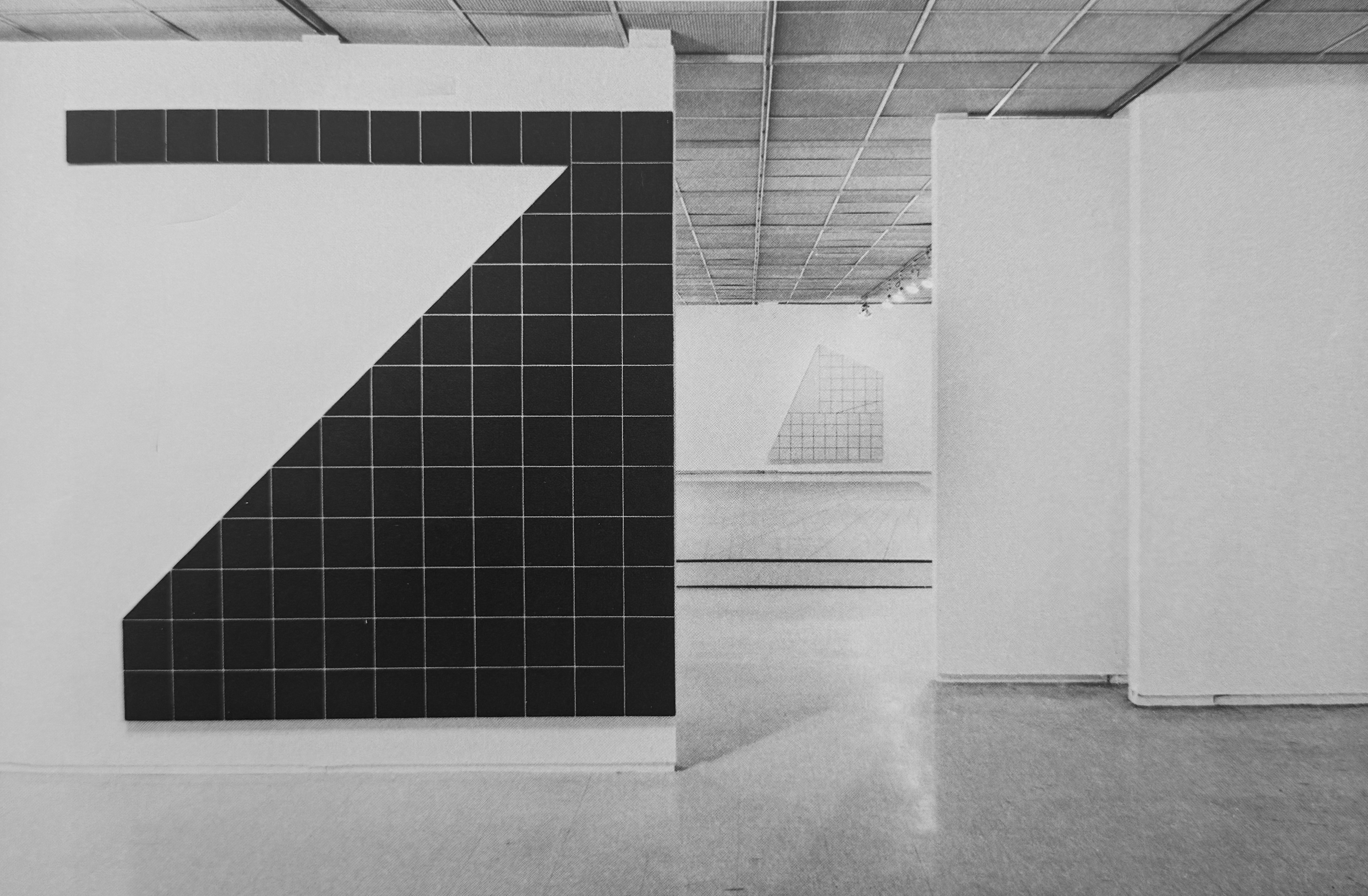
Materially, the work remains restrained. Drawings are executed with precision and economy, often in graphite, ink, or muted tonal fields. Models, when present, are schematic rather than tactile. This restraint prevents the work from drifting into illustration or spectacle. The emphasis remains on structure, order, and internal necessity.
Over decades, Insley refined ONECITY without abandoning its original premise. There is no stylistic progression, only deepening. The same forms recur, clarified and recalibrated. This sustained commitment situates his work closer to systems-based conceptual practices than to visionary architecture. Like a philosophical treatise or a mathematical proof, the work unfolds through internal consistency rather than external reference.
Insley’s practice resists easy categorization. It is not architecture, yet it relies on architectural language. It is not conceptual art, yet it operates through rigorous abstraction and rule-based thinking. What ultimately defines his work is its refusal to resolve into utility or image. Architecture, for Insley, is not something to be built. It is something to be believed in.
In this sense, ONECITY functions as a complete world—an autonomous structure sustained by its own logic. It stands as one of the most thorough investigations of architecture as a mental and symbolic system, where form, thought, and belief are inseparable.
Will Insley was an American conceptual artist known for speculative architectural systems developed through drawings and models.