

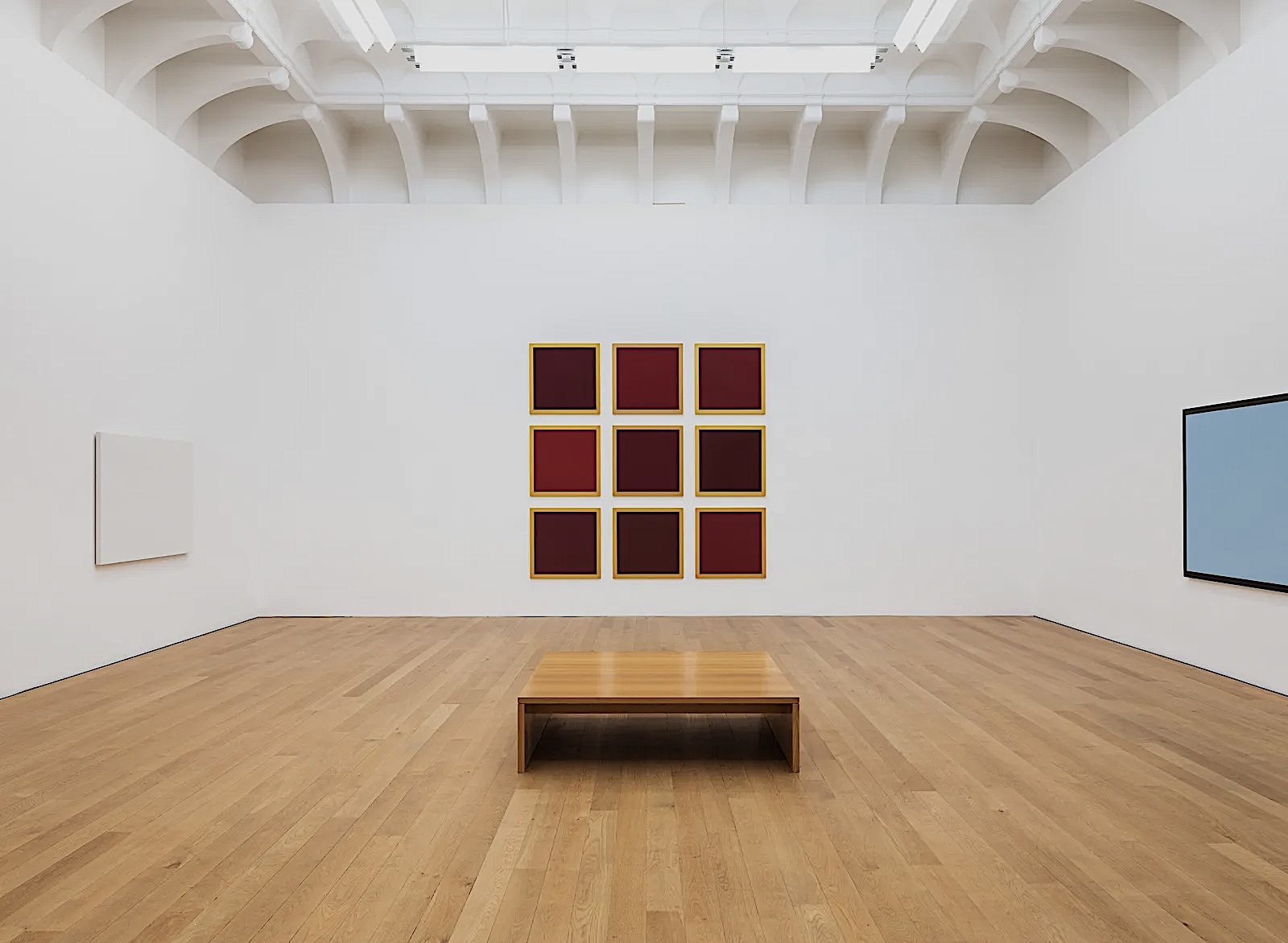
Winston Roeth (b. 1944, United States) is an American painter whose work investigates how color generates spatial and perceptual structure. Emerging in the 1970s, Roeth developed multi-panel color systems that emphasize relational contrast over singular gesture. His paintings are constructed through layered acrylic surfaces in which hue adjacency, tonal calibration, and edge conditions regulate optical vibration and duration.
Rather than using color to describe image or emotion, Roeth treats pigment as a testing ground for perception. Borders regulate speed while interiors suspend it, allowing subtle shifts in saturation and density to accumulate through comparison. Grids and panel divisions organize relation without hierarchy, creating fields where difference emerges through proximity rather than composition.
Illumination in Roeth’s work is not depicted as light but generated through chromatic structure. The paintings activate through sustained viewing, as perception adjusts to calibrated shifts in color and surface. Across decades of practice, Roeth has maintained a disciplined investigation into how painting can function as a system of relational testing rather than narrative expression.
Winston Roeth is an American abstract painter known for developing multi-panel color systems that investigate relational contrast, hue adjacency, and optical vibration. Emerging in the 1970s, Roeth constructs layered acrylic surfaces where chromatic shifts generate spatial and perceptual structure. His work emphasizes calibrated comparison, duration, and surface conditions rather than narrative image. Across decades, Roeth has sustained a disciplined inquiry into how color can function as a structural system within contemporary abstraction.

