

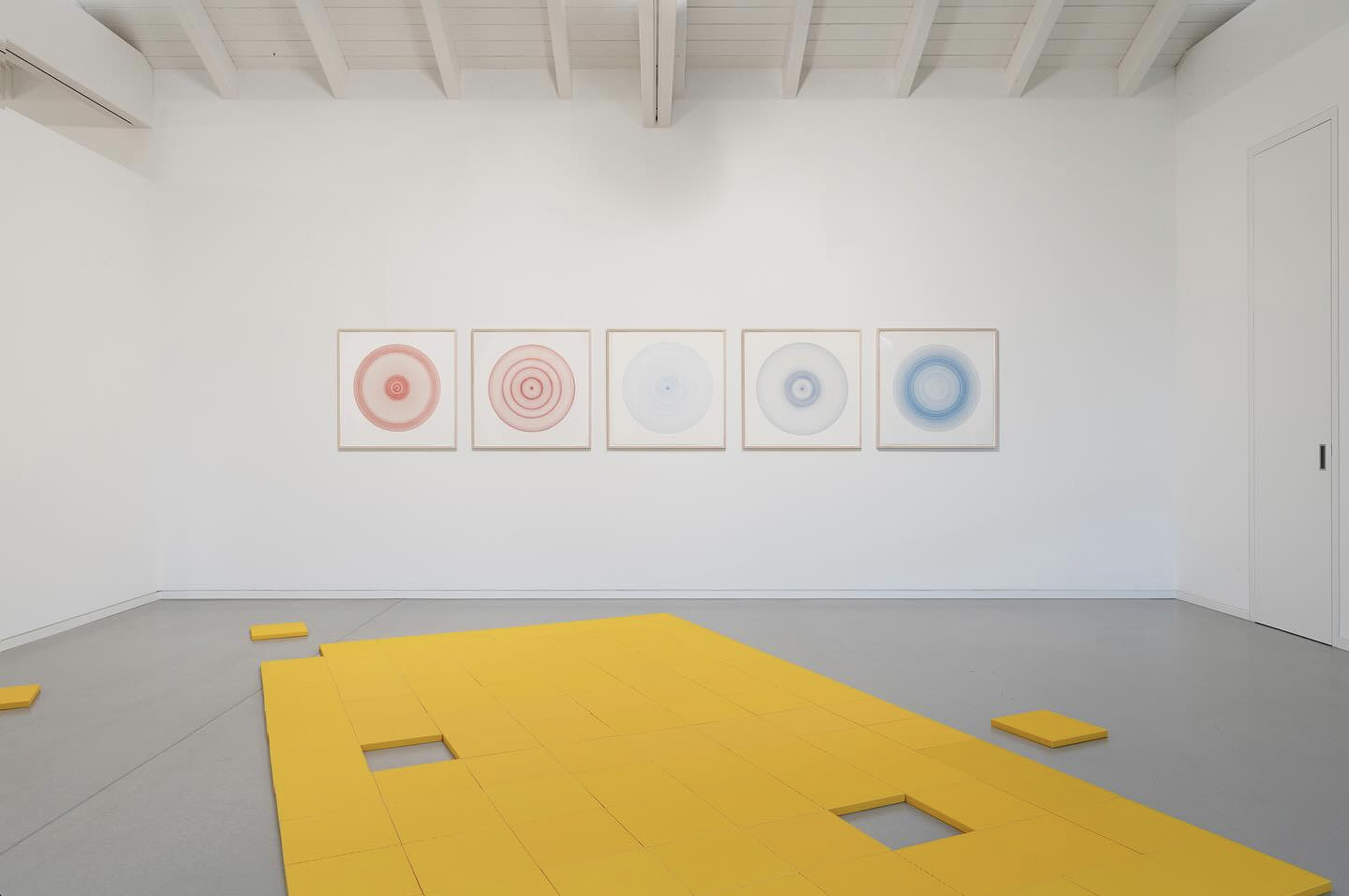
Jill Baroff (b. 1954, United States) is an American painter and draftsman whose work investigates how accumulation, measurement, and time can structure an image. Her practice is best known for the tide drawings, a long-running series in which tidal data is translated into dense fields of small marks. Rather than depicting landscape or water, the drawings register tidal fluctuation as a visual system.
Each drawing begins with recorded tidal measurements that guide the accumulation of marks across the surface. Individual gestures remain small and restrained, yet through repetition they generate shifting densities and atmospheric formations. The image emerges slowly as clusters gather, disperse, and reorganize across the field.
Baroff’s work operates between drawing, painting, and data translation. The surface functions as a temporal register where information unfolds through sustained attention. Meaning is not located in any single mark but in the gradual formation of relational structures across the page.
Across decades of practice, Baroff has developed a disciplined visual language in which observation, measurement, and repetition produce atmospheric image fields. The work transforms environmental rhythm into visual structure, allowing time and accumulation to become the governing forces of the image.
Jill Baroff is an American artist known for her tide drawings, a series that translates tidal measurements into dense accumulative mark systems. Working primarily with ink and graphite on paper, Baroff builds atmospheric fields through thousands of small gestures guided by recorded tidal data. Her work investigates how measurement, repetition, and duration can structure an image without relying on representation. Across decades of practice, Baroff has developed a disciplined visual language in which environmental rhythms are translated into visual structure.

