



The movement of the tide cannot be grasped in a single view. It unfolds slowly, rising and falling over hours according to forces that remain largely unseen. The pattern is real, yet it exceeds direct perception.
Historically, this problem was solved through cartography. Tide charts translated the shifting level of water into diagrams that could be read at a glance. They did not depict the ocean. Instead, they converted its motion into a stable visual form, allowing a temporal rhythm to become legible in space.
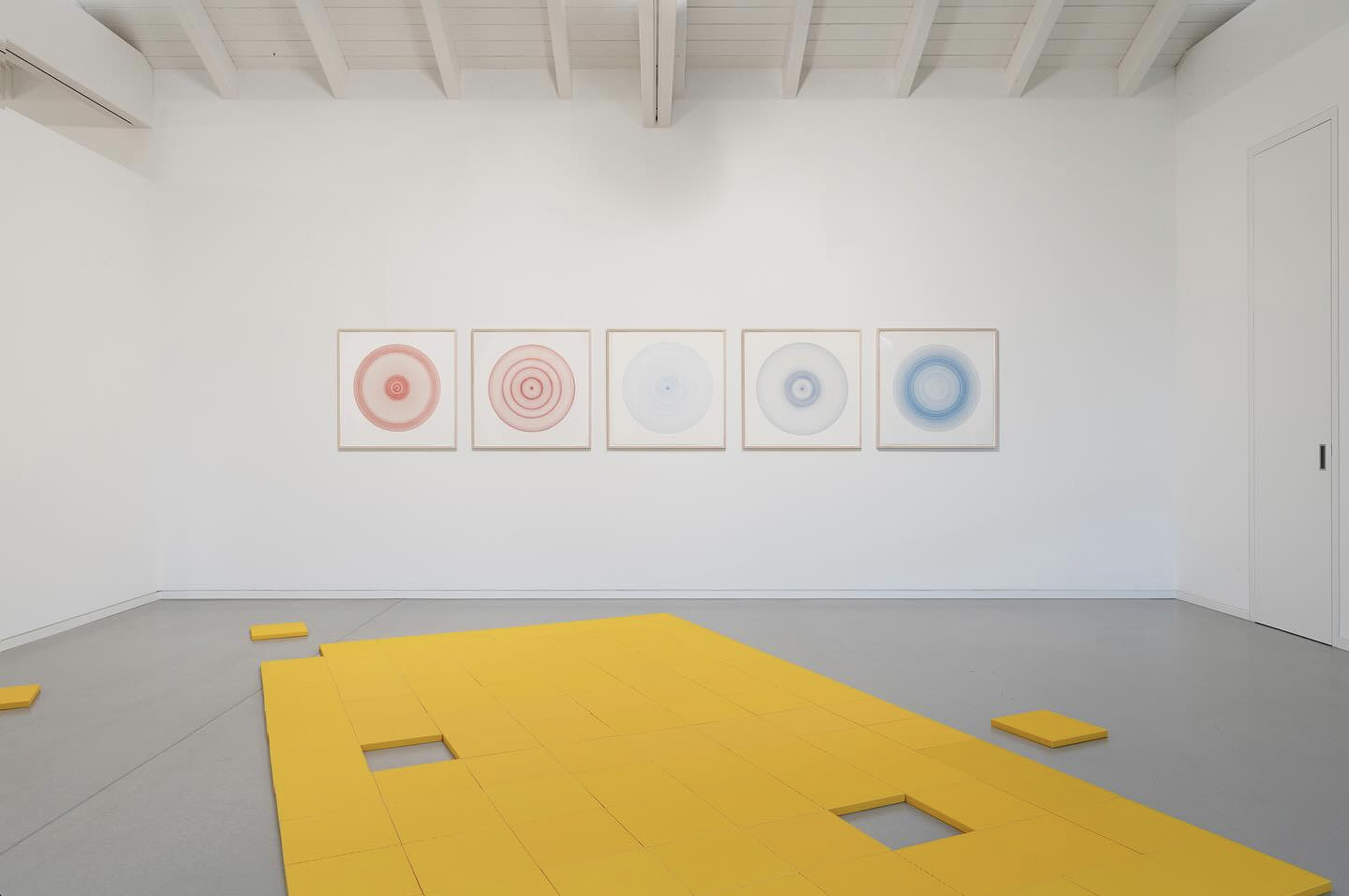
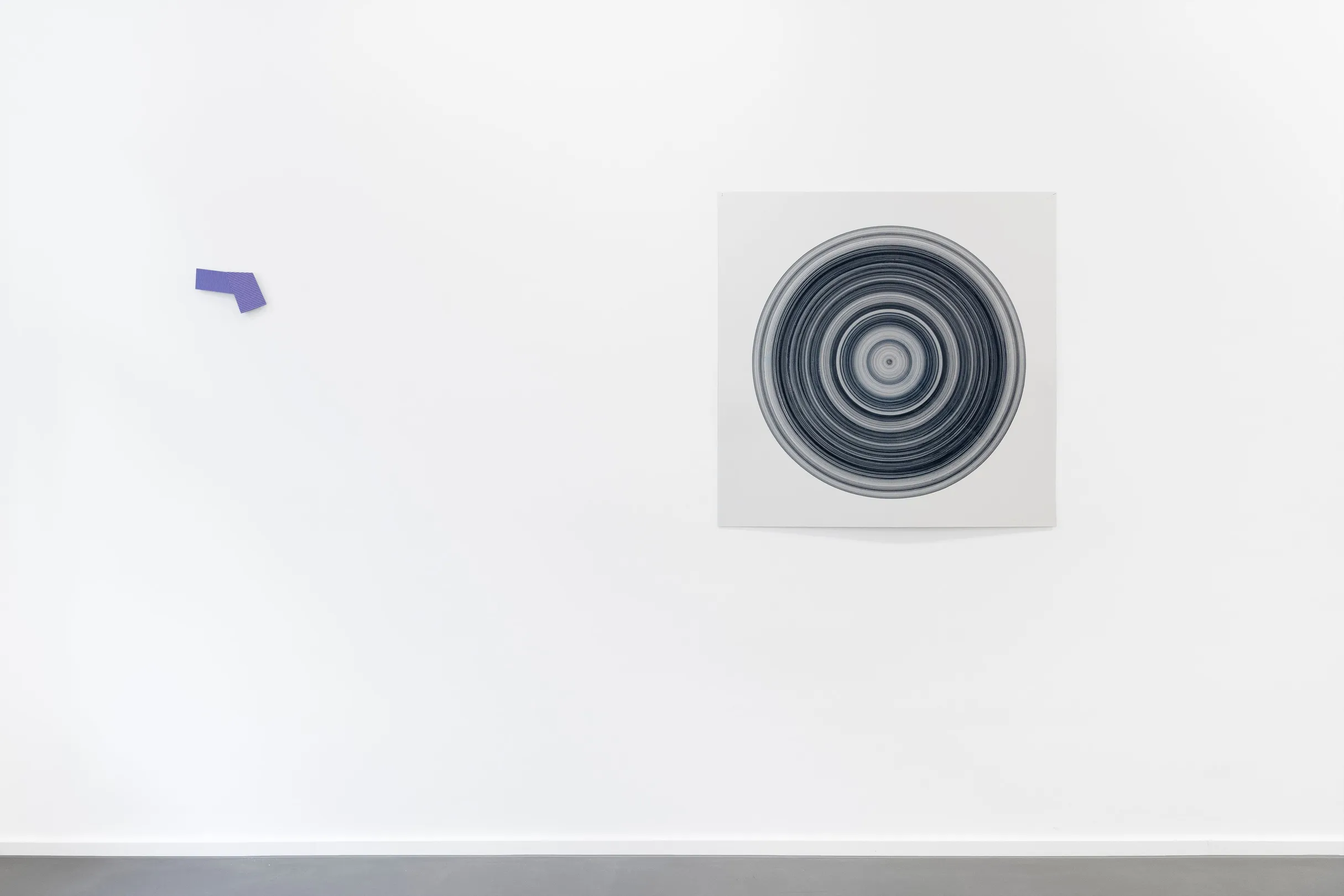
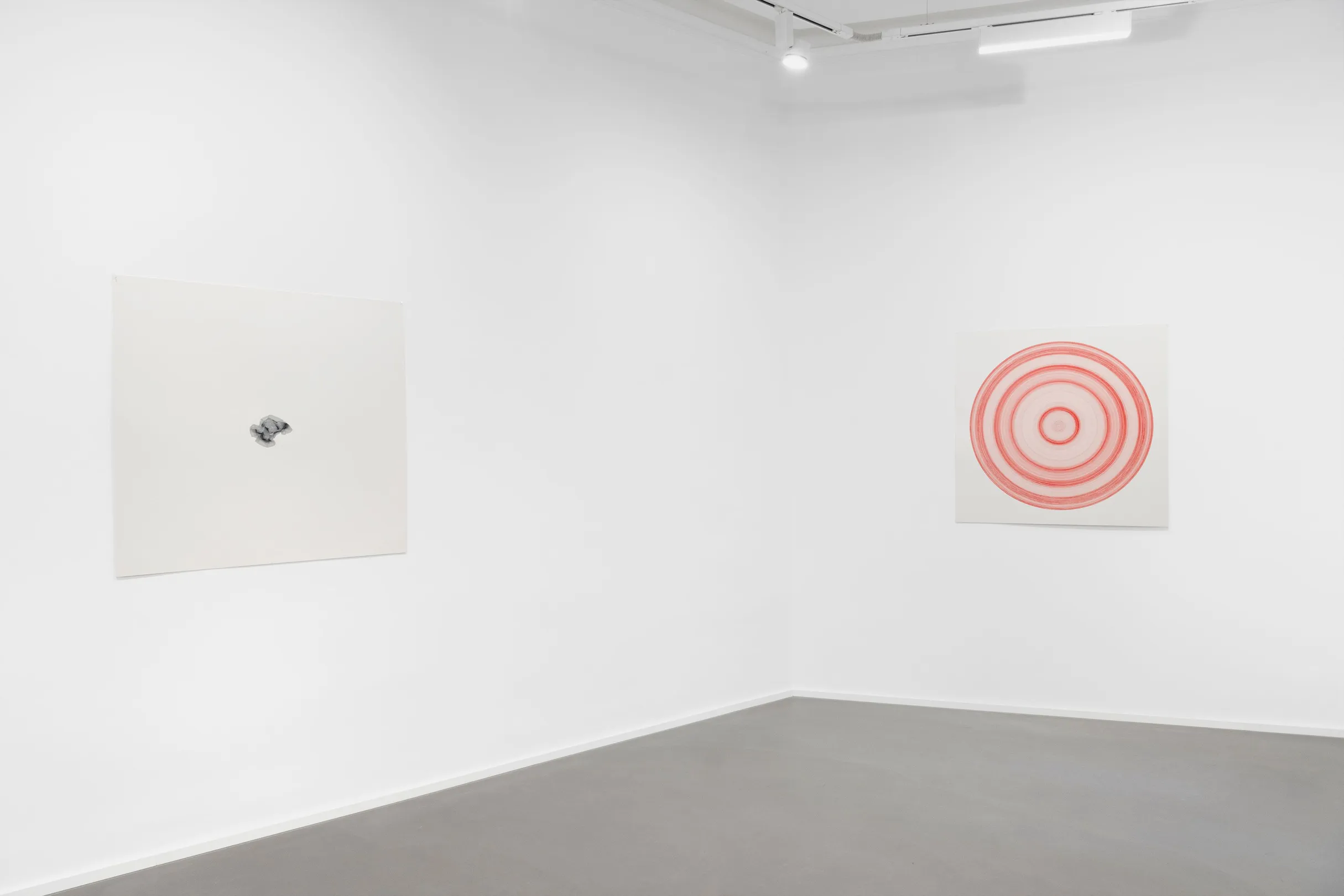
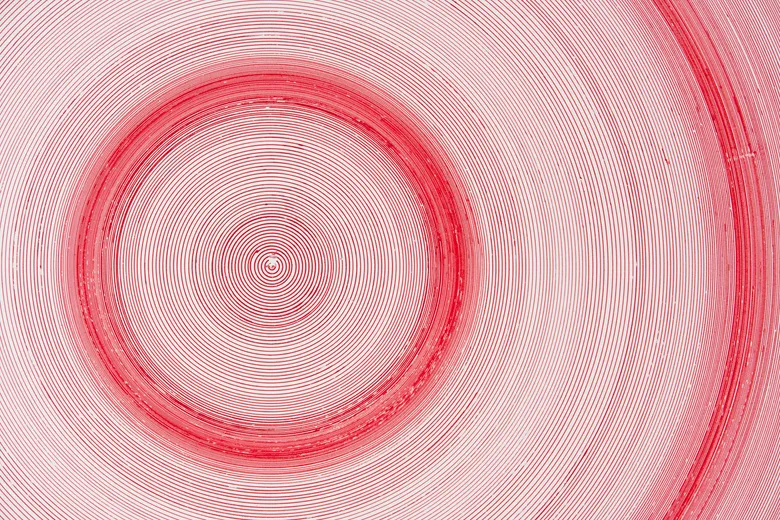
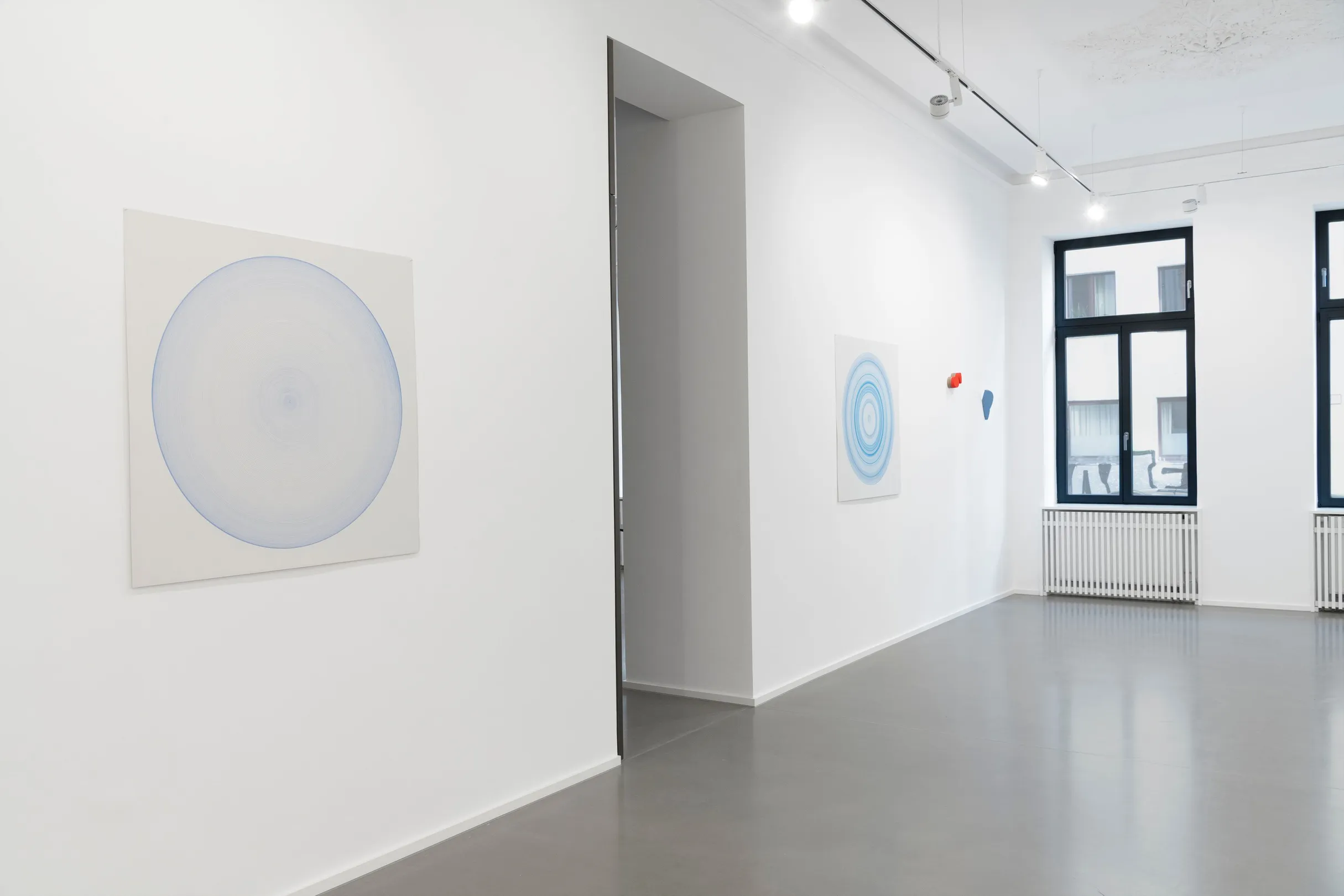
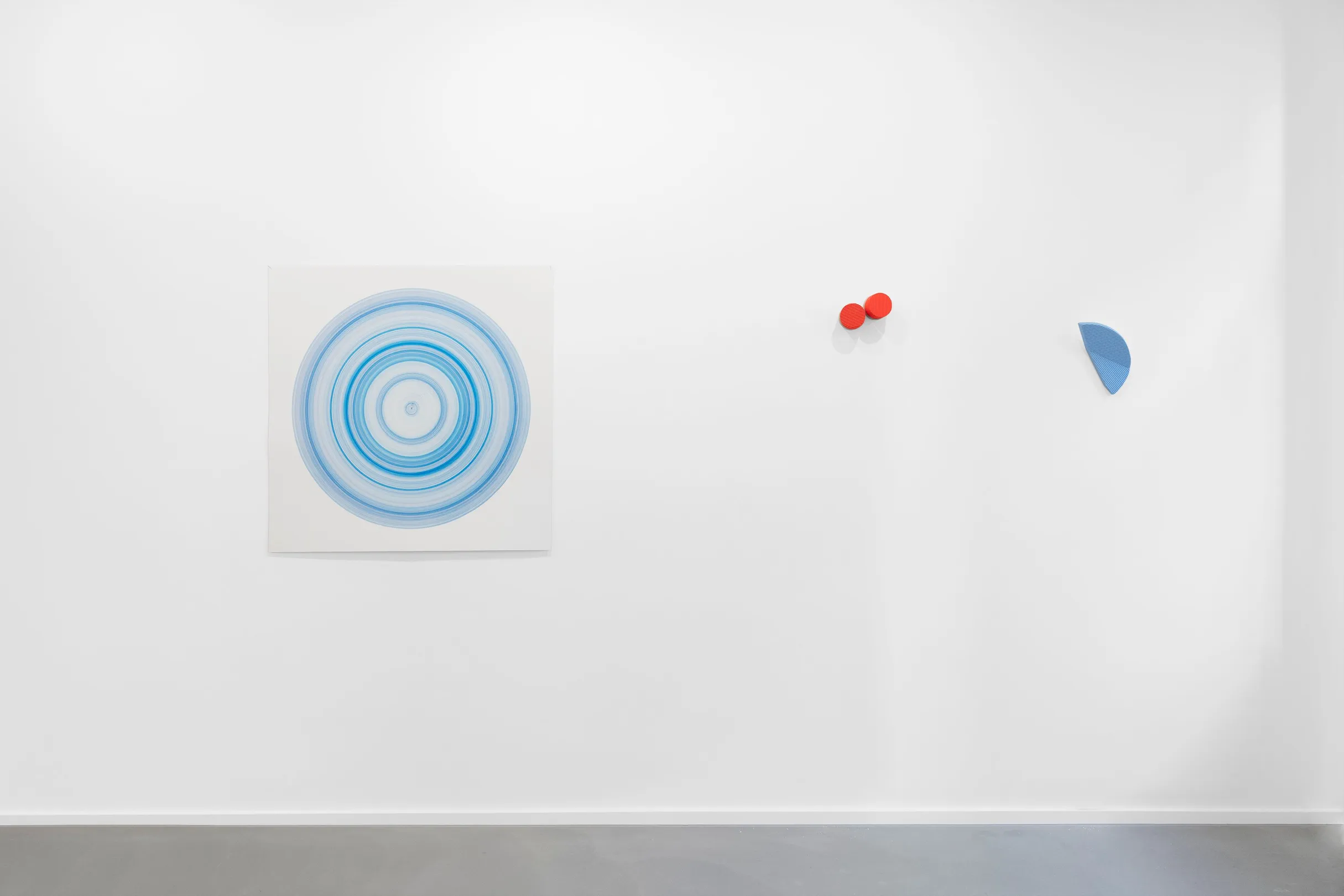
Jill Baroff’s Tide Drawings address this same problem. Using publicly available tidal data recorded at six-minute intervals, Baroff translates each change in water level into a line drawn with compass and technical pen. Over the course of days, these measurements accumulate into concentric rings that expand across the page.
A work such as New York Harbor (Storm) presents this structure clearly. Rings expand outward from a central point, each marking a measured change in water level. The drawing reads almost like a clock of environmental time, where duration becomes visible as spatial form. Yet the system is not perfectly regular. Variations in density, pressure, and spacing interrupt the pattern. Storms and environmental disturbances occasionally disrupt the steady rise and fall of the tide, producing subtle distortions in the rings. What first appears mechanical reveals itself as a record of a living system shaped by weather, geography, and chance.
These works make time visible through measurement. Other works in the exhibition approach the same problem through perception rather than data.
In Pivot (New York Harbor) the structure begins to compress and fold. Instead of expanding evenly across the page, the lines coil into a dense cluster near the center. The temporal accumulation of the tide becomes spatial mass. The drawing no longer reads simply as a diagram of measurement but as a physical concentration of time.
Despite their reliance on data, the works remain intensely manual. Each line must be drawn by hand, sometimes thousands within a single sheet. The artist follows a predetermined system, yet the drawing unfolds slowly through sustained attention. The work exists between two kinds of duration: the measured rhythm of the tides and the time required to trace them.
Material plays a crucial role in this translation. Baroff works on traditional Japanese gampi paper, a surface known for its strength and translucency. Ink settles lightly on the sheet rather than sinking into it, allowing the lines to remain suspended above the page. The accumulation of marks reads not as gesture but as the gradual construction of a temporal field.
Baroff’s work belongs to a longer lineage of artists who have used systematic processes to give form to time. Yet her approach differs in a significant way. Artists such as On Kawara and Roman Opałka measured duration through their own lives, recording the passage of days or numbers as extensions of personal time. Baroff traces a rhythm that exists entirely outside the artist. The system being drawn does not belong to her. It belongs to the environment itself.
The Tide Drawings translate an external rhythm into spatial form.
In the Dial series, grooved surfaces catch and refract light so that color and shadow shift gradually across the form as the day changes. Instead of diagramming duration through measurement, these works allow time to appear through changing light. Both bodies of work render temporal change legible through different systems—one environmental, the other perceptual.
What appears in Baroff’s work is not the ocean itself but a visual structure through which its movement can be understood. The Tide Drawings render that rhythm through measurement; the Dial works allow it to emerge through light. Different mechanisms, but the same question: how to give form to a pattern that normally passes unseen.
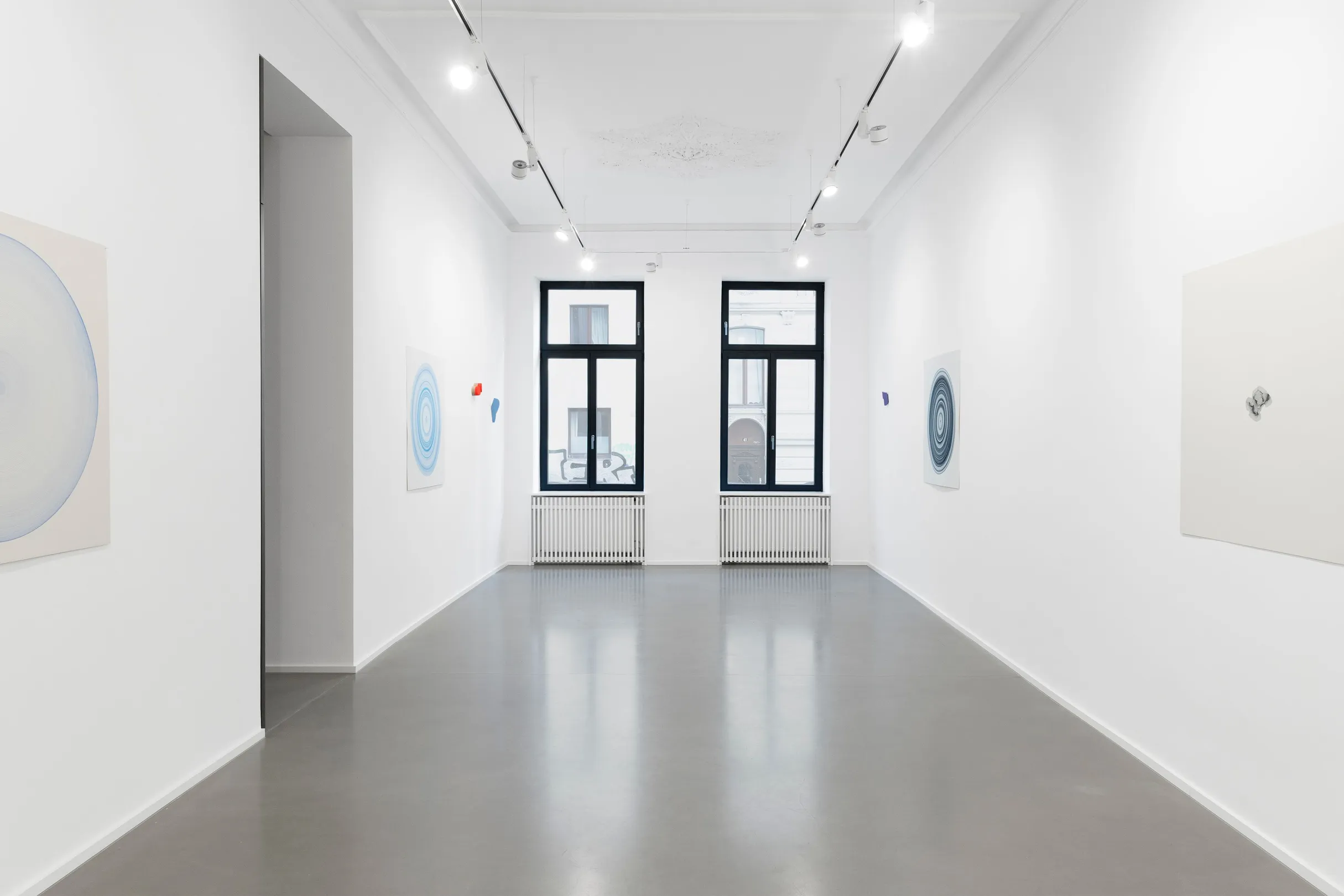
In Always, Sometimes, Jill Baroff approaches time through two mechanisms. The Tide Drawings translate tidal measurement into spatial diagrams of duration. The Dial works allow time to appear through shifting light across grooved surfaces.
One records environmental rhythm. The other reveals perceptual change.
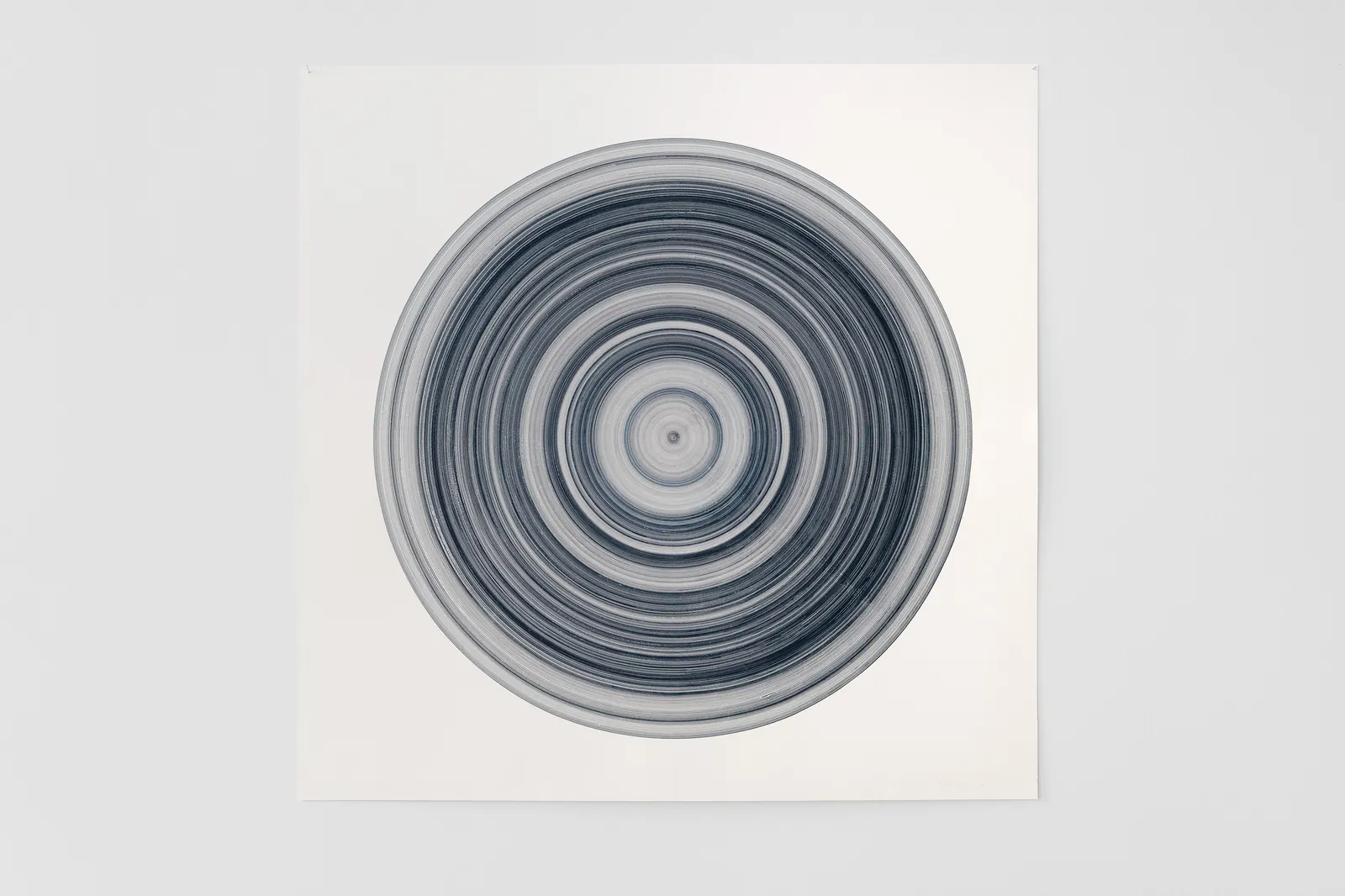



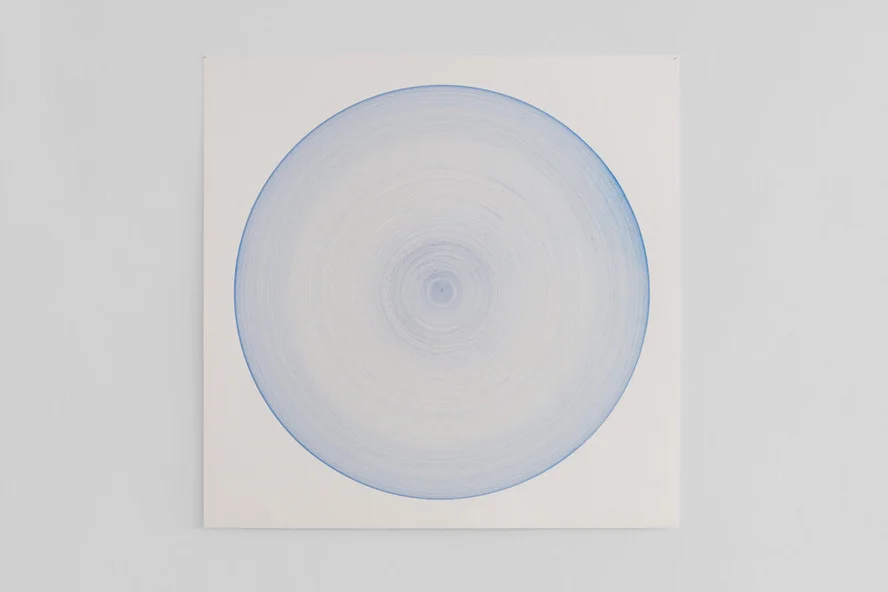



1. Jill Baroff, Cuxhaven (Negative Tidal Surge), 2025. Ink on Japanese gampi paper, mounted, 101 × 101.5 cm. Artwork © Jill Baroff. Courtesy Galerie Christian Lethert.
2. Detail view: Jill Baroff, Cuxhaven (Negative Tidal Surge), 2025. Ink on Japanese gampi paper, mounted, 101 × 101.5 cm. Artwork © Jill Baroff. Courtesy Galerie Christian Lethert.
3. Installation view: Jill Baroff, Always, Sometimes, Galerie Christian Lethert, Cologne, 6 March–24 April 2026. Artwork © Jill Baroff. Courtesy Galerie Christian Lethert.
4. Detail view: Jill Baroff, Pivot (New York Harbor), 2025. Ink on Japanese gampi paper, mounted, 102 × 102 cm. Artwork © Jill Baroff. Courtesy Galerie Christian Lethert.
5. Installation view: Jill Baroff, Always, Sometimes, Galerie Christian Lethert, Cologne, 6 March–24 April 2026. Artwork © Jill Baroff. Courtesy Galerie Christian Lethert.
6. Jill Baroff, New York Harbor (Storm), 2025. Ink on Japanese gampi paper, mounted, 102 × 101.5 cm. Artwork © Jill Baroff. Courtesy Galerie Christian Lethert.
7. Detail view: Jill Baroff, New York Harbor (Storm), 2025. Ink on Japanese gampi paper, mounted, 102 × 101.5 cm. Artwork © Jill Baroff. Courtesy Galerie Christian Lethert.
8. Installation view: Jill Baroff, Always, Sometimes, Galerie Christian Lethert, Cologne, 6 March–24 April 2026. Artwork © Jill Baroff. Courtesy Galerie Christian Lethert.
9. Jill Baroff, Ophelia’s Surge, 2024. Ink on Japanese gampi paper, mounted, 101 × 101.5 cm. Artwork © Jill Baroff. Courtesy Galerie Christian Lethert.
10. Jill Baroff, Fluorescent Dials, 2026. Paint on wood, 12 × 16 × 7 cm. Artwork © Jill Baroff. Courtesy Galerie Christian Lethert.
11. Installation view: Jill Baroff, Always, Sometimes, Galerie Christian Lethert, Cologne, 6 March–24 April 2026. Artwork © Jill Baroff. Courtesy Galerie Christian Lethert.
12. Jill Baroff, Clock (Sky Blue), 2026. Paint on wood, 28 × 12 × 6 cm. Artwork © Jill Baroff. Courtesy Galerie Christian Lethert.
13. Installation view: Jill Baroff, Always, Sometimes, Galerie Christian Lethert, Cologne, 6 March–24 April 2026. Artwork © Jill Baroff. Courtesy Galerie Christian Lethert.
14. Jill Baroff, Yellow Dials, 2026. Paint on wood, 13.5 × 18 × 5.8 cm. Artwork © Jill Baroff. Courtesy Galerie Christian Lethert.
Cover: Detail view: Jill Baroff, Cuxhaven (Negative Tidal Surge), 2025. Ink on Japanese gampi paper, mounted, 101 × 101.5 cm. Artwork © Jill Baroff. Courtesy Galerie Christian Lethert.
All images © their respective rights holders.
Image rights & attribution →