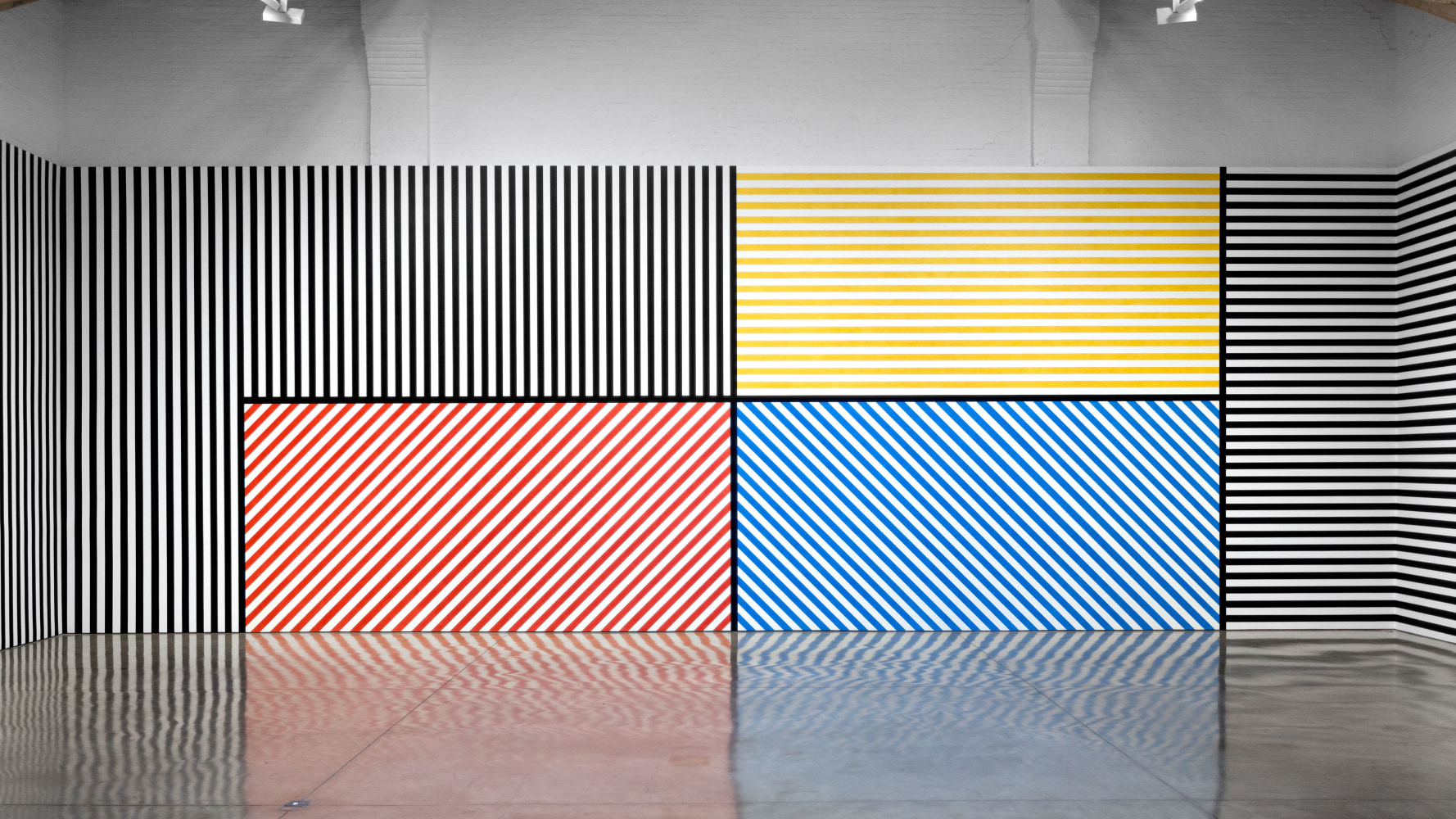


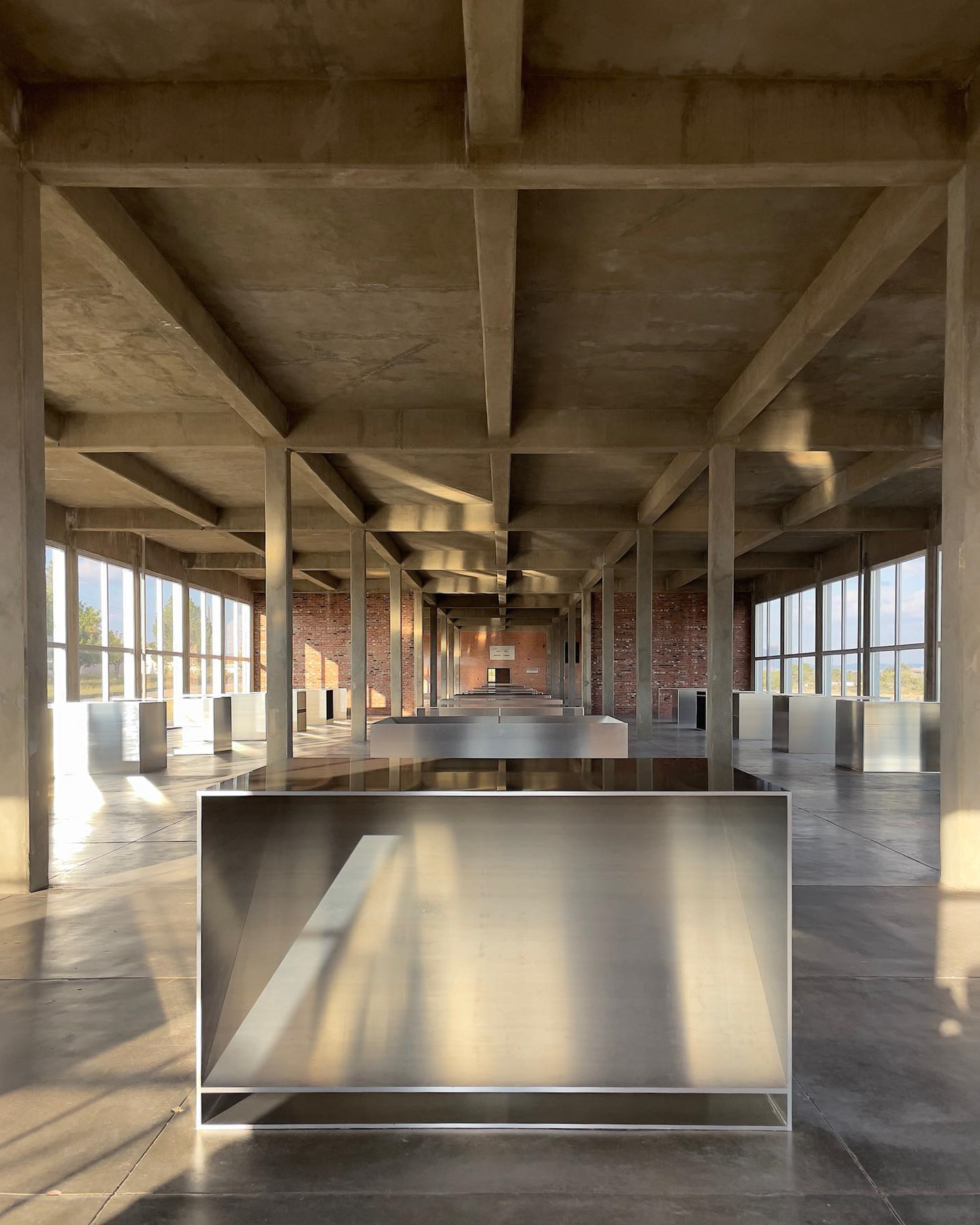
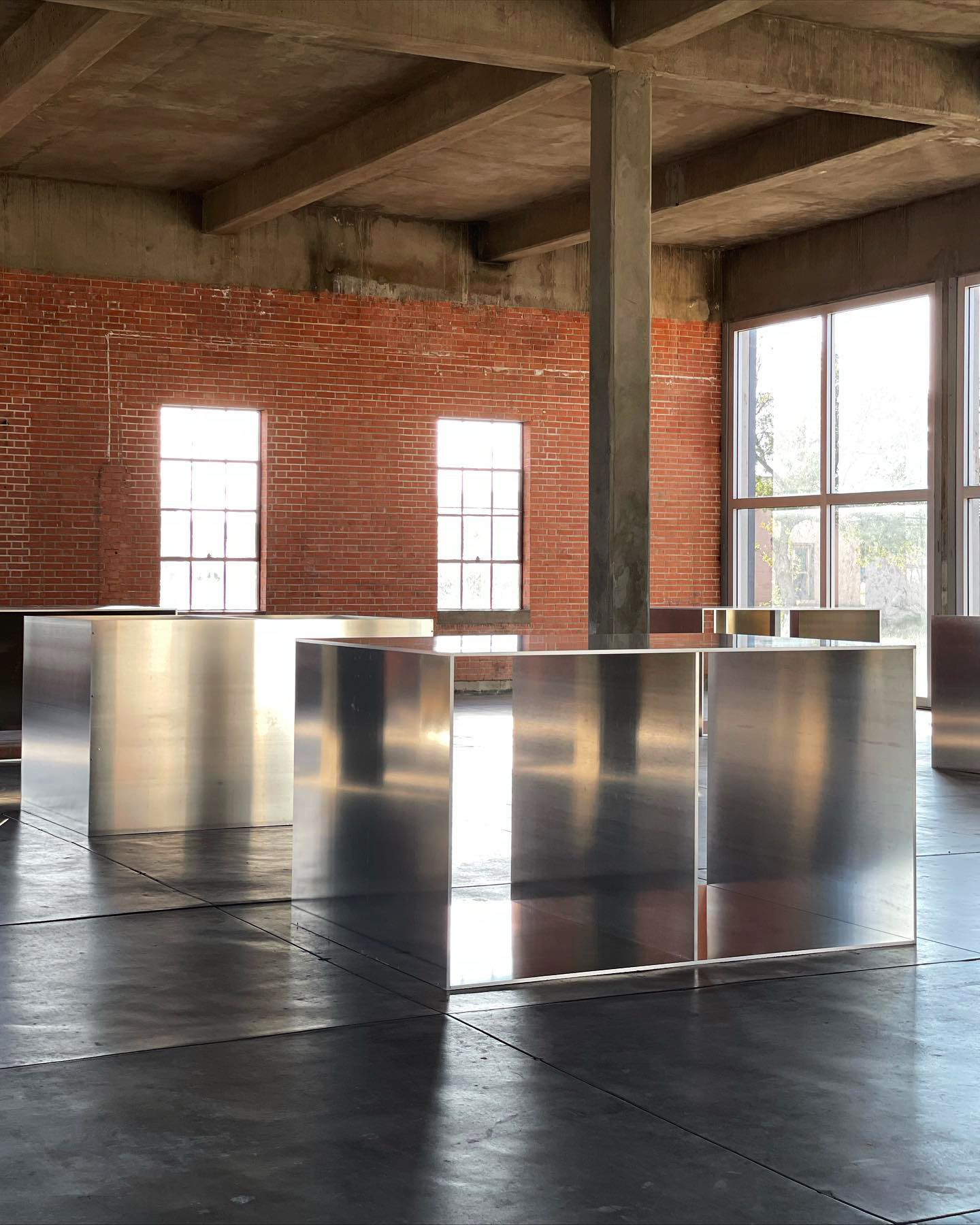
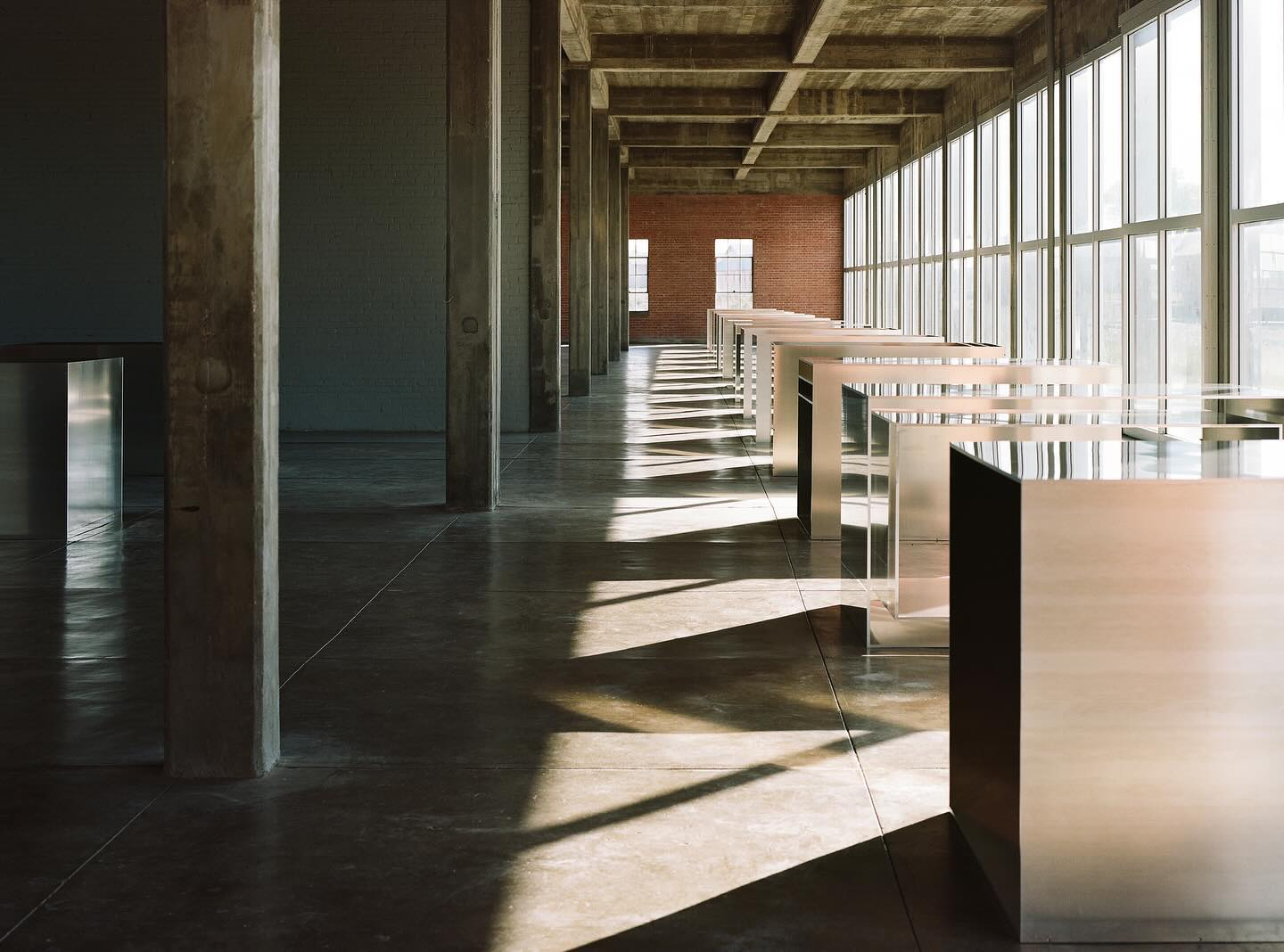
Walk the length of either shed and you are looking at the same object. The exterior dimensions do not change: forty-one inches high, fifty-one inches wide, seventy-two inches deep, in mill aluminum, the surface left to hold the light without finish or color. One box, then another, then another.
The reading is immediate: repetition, reduction, the family of works criticism has called minimalist for sixty years and will probably continue to call minimalist for sixty more. The reading is not wrong. Nothing about the surface behavior of these objects contradicts it.
Then the interior changes.
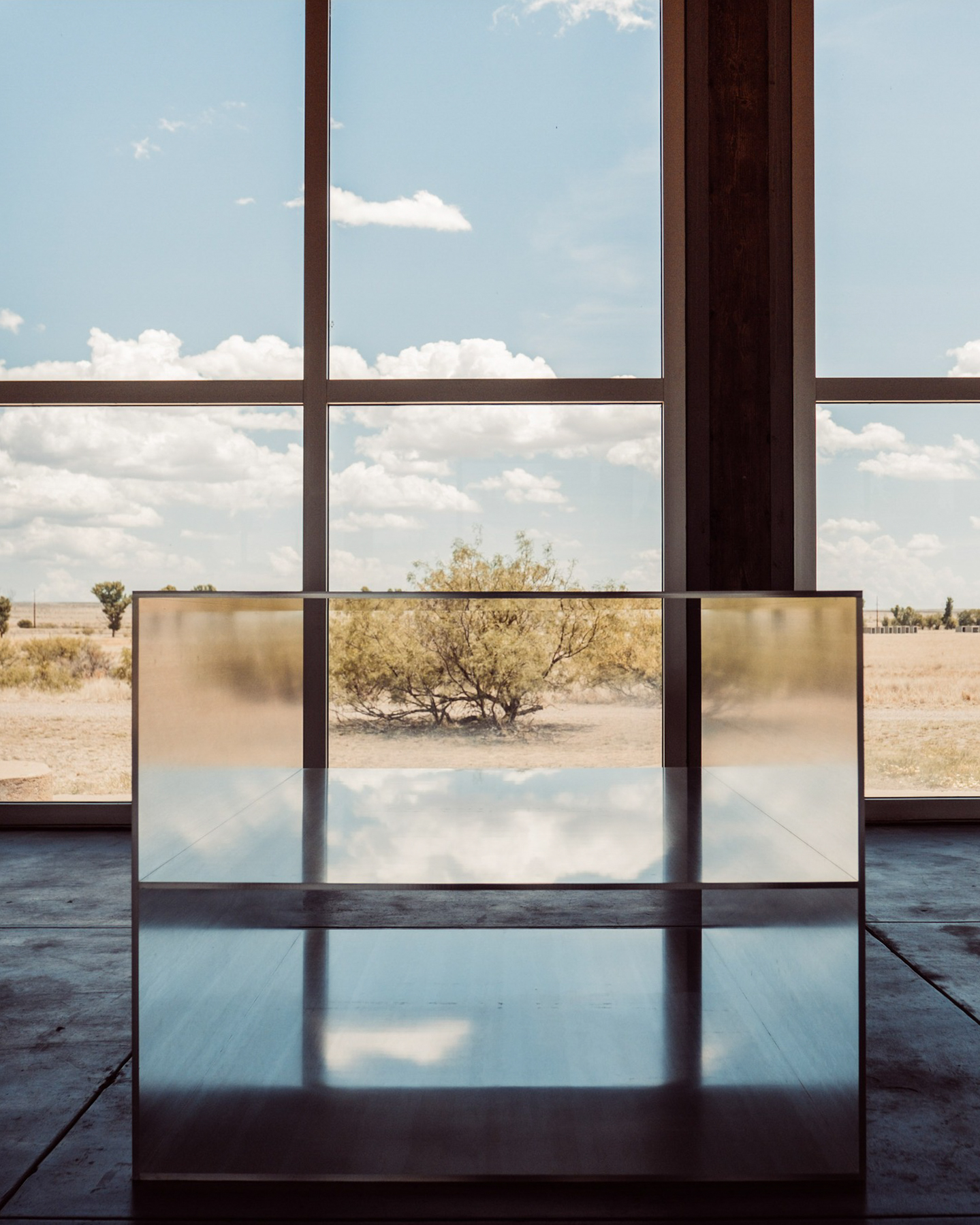
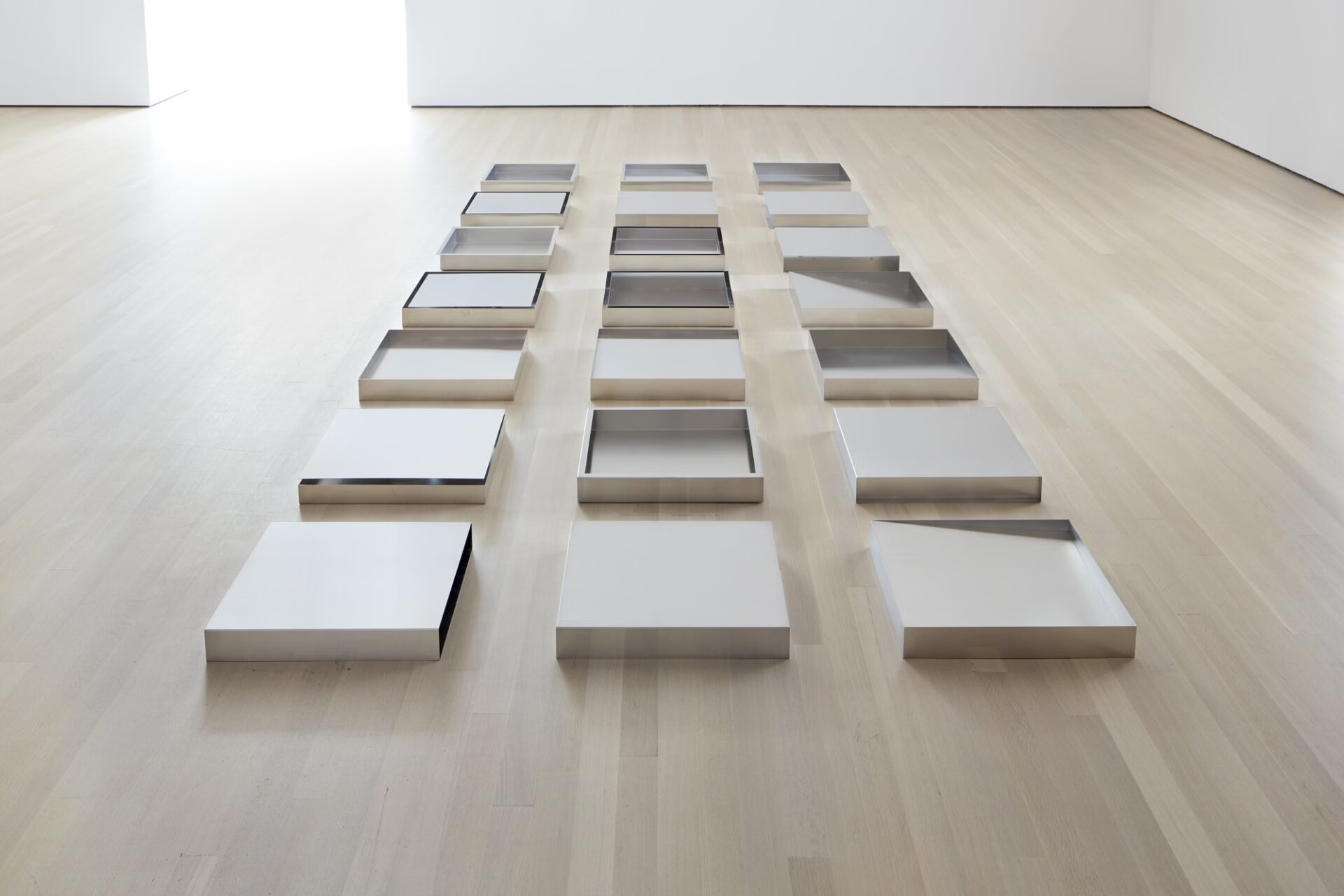
The second box does not receive the eye the way the first one did. One is nearly closed. Another is divided down the center. Another holds a horizontal plane halfway through the volume. Another opens differently, recesses itself from within, or sends a diagonal across the space the exterior has kept stable.
The outside has prepared you for repetition. The inside refuses it.
One hundred works in two former artillery sheds — forty-eight in one, fifty-two in the other, close enough to suggest division and uneven enough to refuse symmetry — and no interior repeats.
At the exterior, minimalism still seems to hold: reduction, geometric form, industrial surface, the eliminated hand. But the word begins to fail once the exterior stops behaving as the object and becomes the condition under which the interior can change. A reductive method would not need one hundred internal variations. It would arrive at one. If the work were moving toward a minimum, the minimum would be sufficient.
Here, sameness does not suppress difference. It makes difference legible. Minimalism names the result. It does not name the operation.
Judd had already objected to the language of reduction in 1966, in the catalogue for Primary Structures at the Jewish Museum. “I don’t think anyone’s work is reductive,” he wrote.
The sentence is often treated as a familiar artist’s refusal of a label that stuck anyway. But reduction looks backward. It describes what has been removed: image, gesture, illusion, composition, excess. Specification looks forward. It fixes the conditions under which something will appear.
Judd’s work does not begin with subtraction. It begins with decision.
Primary Structures gave the visual family a public form: Judd, Andre, Flavin, Morris, repeated units, industrial materials, geometric volumes, no visible hand. The grouping was not arbitrary. It saw something real. But it saw it late. It described the work once it had already arrived before the eye.
The category did not remain inside criticism. Once Judd is read as minimalism, the work becomes portable: a clean volume, a repeated unit, an industrial surface, a style of restraint any context can borrow. Museum, lobby, interior, fashion image, design vocabulary — the look travels because the operation has been left behind.
Judd’s work was built against that portability. Its identity depends on conditions that do not travel easily: exact dimension, specified surface, executed fabrication, measured interval, modified building, fixed placement.
The category makes the work easiest to recognize at the level where the work is least itself.
In 1967, before Chinati, before the hundred works, Judd had a single clear anodized aluminum work fabricated by Bernstein Brothers in New York. Its exterior dimensions were forty-one by fifty-one by seventy-two inches. Fifteen years later, at the start of the Chinati project, those same dimensions became the exterior condition for the one hundred mill aluminum works.
The dimension precedes the count. Fifteen years changes what that dimension is. It is no longer only the measure of one object. It becomes a condition capable of holding a hundred internal decisions without dissolving into a hundred unrelated works. The outside does not summarize the series. It gives the interiors a shared limit against which their differences can be read.
In Cologne, in January 1990, Judd wrote: “One good piece naturally becomes a category of good pieces.” He identified the one hundred aluminum works as the successful case. A good piece, in this sense, is not a minimum. It is a decision strong enough to generate further decisions.
One object ends there. A specification opens a field. A horizontal tube carries the Progressions. Along it, solids and intervals alternate according to numerical sequence: additive, doubling, inverse, Fibonacci. Variation occurs, but composition does not decide it. Once the sequence is chosen, the relations follow.
Judd compared the arithmetic to a grocery bill, which is exactly the point. There is no mysticism in the number. The sequence is ordinary. Its consequence is spatial. What the viewer reads as form began as a relation fixed before the object had a body.
In the 1967 stack at MoMA, nine inches of lacquered galvanized iron is followed by nine inches of air. Twelve units rise from the wall, each the same height, each separated by the same interval. The empty space is not left over. It has the same measure as the unit above and below it. Nine inches of nothing carries the same authority as nine inches of galvanized iron. The void is not the absence of work; it is one of the work’s terms. The eye counts boxes and then spaces, and the work holds both counts in the same structure.
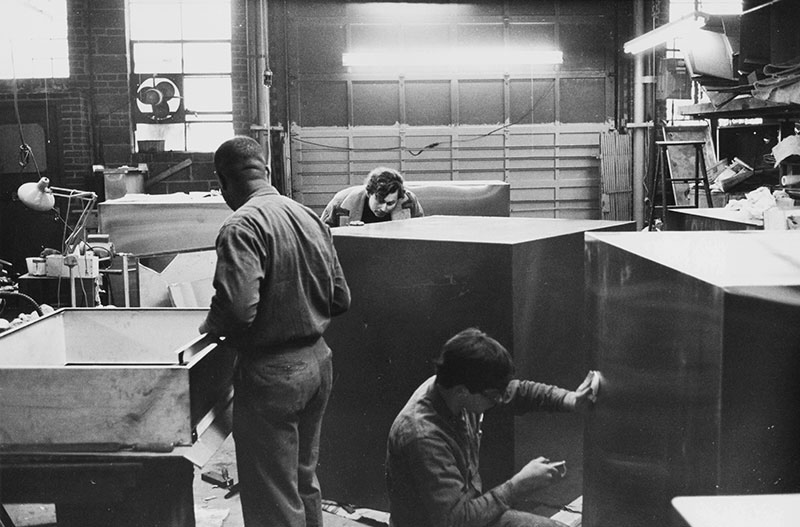
A drawing leaves Judd’s studio and arrives at Bernstein Brothers, or Ballantine, or Lippincott, or Lehni. The shops change. The materials change. Sheet metal, plywood, mill aluminum, furniture-grade metal. The network is not consistent in material, location, or method. What remains consistent is what travels between the shops: the specification.
This was possible because Judd was working inside a postwar fabrication world capable of making the decision exact. Sheet-metal shops, industrial finishers, furniture manufacturers, aluminum fabricators — these were not neutral suppliers. They were the infrastructure through which specification could become object.
Fabrication was not a stylistic removal of the hand. In the 1990 interview with Claudia Jolles, Judd spoke of parts carrying specific determination, the factory making the work from beginning to end, and the work not being adjusted after fabrication. The factory was not being asked to interpret. It was being asked to execute.
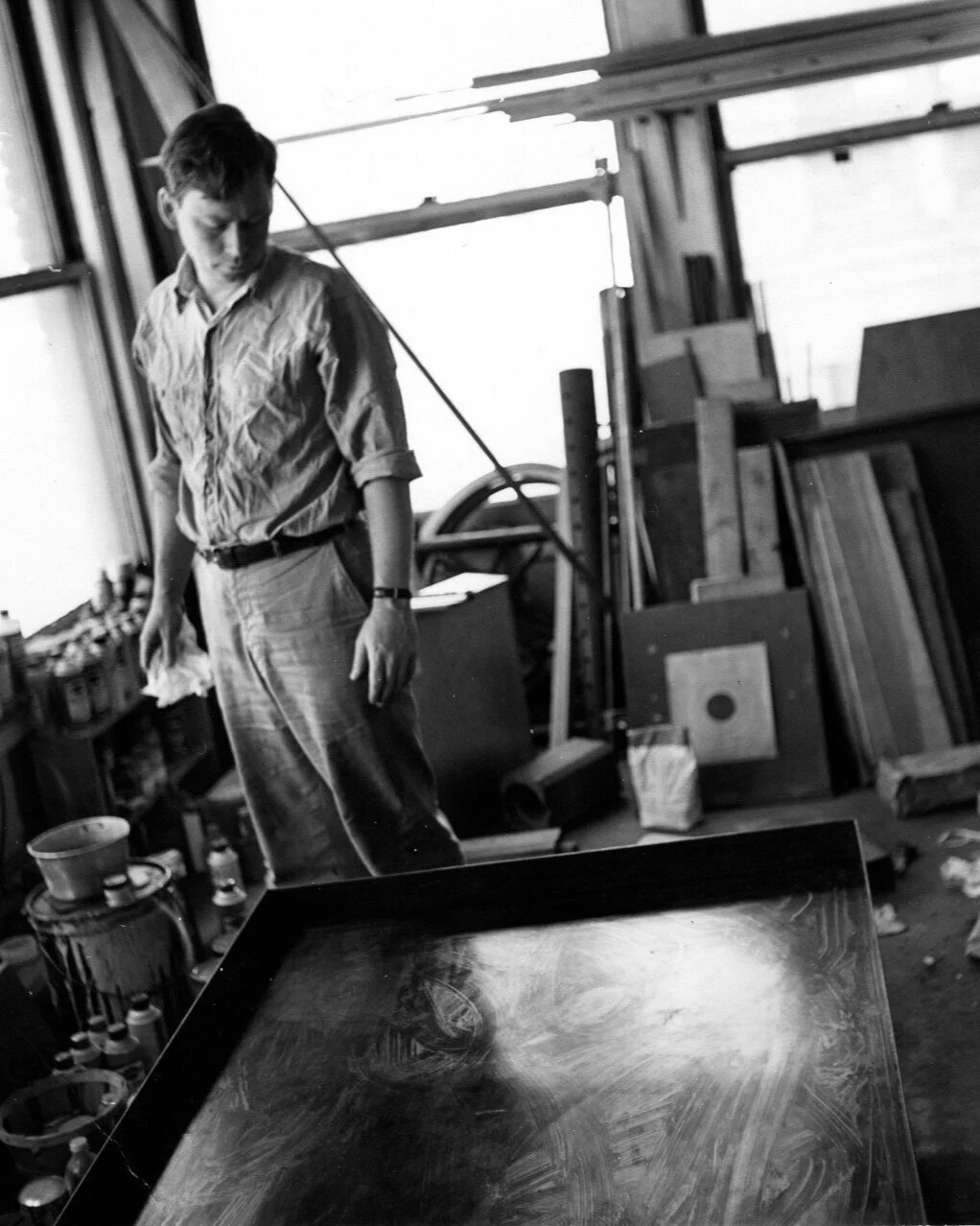
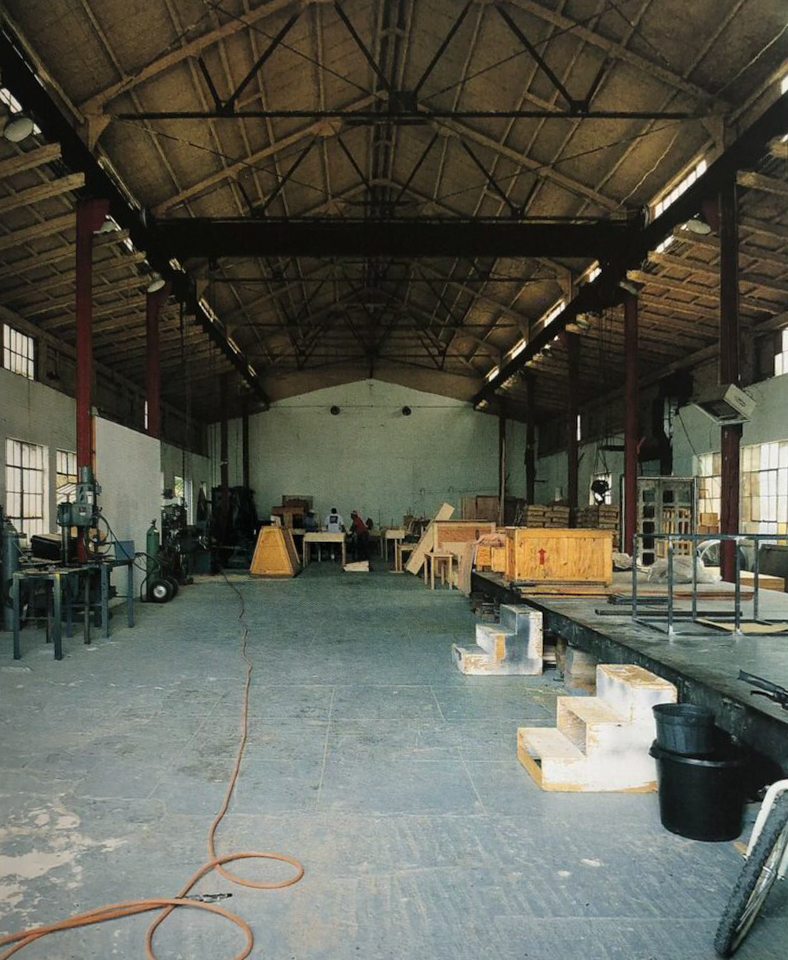
In Marfa, Judd acquired a former ice factory and turned it into El Taller Chihuahuense. There he fabricated the Cor-Ten works himself. But this was not a return to handcraft. He built the workshop because the specification required a means of execution he could not otherwise secure. The factory was acquired in service of the specification. The hand does not reappear as expression. The workshop appears as another instrument of control.
The Malnati wall did not look like the Bernstein wall. In 1970, Bernstein Brothers had fabricated a galvanized iron wall work using hot-dipped galvanization, giving the surface its characteristic spangled, diagonal activity. A later version made for Giuseppe Panza’s villa at Varese by Malnati in Milan produced a different surface: more uniform, grayer, less visibly marked by the same process.
Judd objected to the difference.
This was not a private dispute about taste. It was the moment specification met the condition it had been built to resist: ownership treated as final authority, fabrication treated as approximation, the work treated as a style that could be reproduced as long as it looked enough like a Judd.
In Una Stanza per Panza, Judd described his dissatisfaction with the surface, the corner conditions, and the platform beneath the work. His eventual acceptance was not the acceptance of free variation. It was an approval given after the fact, under conditions he did not regard as ideal. When an unauthorized exhibition copy appeared in 1989, he disowned it publicly.
Surface could not simply change without consequence. It was part of the work’s terms.
In 1974, Judd sent Panza a drawing of the wall work. On it, he noted that the work could also be made in brass, copper, iron, stainless steel, or plywood. A material change could occur, but only when it had been specified in advance. The work could survive translation when translation belonged to the decision. It could not survive fabrication drifting outside the terms that made the work possible.
The two artillery sheds at Chinati were built in 1939. Judd did not treat them as neutral containers. He removed the garage doors and replaced them with continuous gridded windows running the length of the buildings. He added vaulted galvanized iron roofs, doubling the height. He specified glass ends for the vaults so that light could move through the sheds as part of the condition under which the aluminum works would be seen.
The works are arranged in a strict grid following the floor and column geometry of the buildings. The architecture is not a backdrop. It is specification at another scale.
Morning light enters one box and stops against a nearly closed interior. In another, it crosses a partition and breaks. In another, it runs along a recessed plane before disappearing into the back of the volume. The exterior has not changed. The day has. The same dimension receives light differently because each interior has been decided differently.
In the 1987 Statement for the Chinati Foundation, Judd argued that installation itself is substantial work, that some fragile works should be placed and left, and that art of the time needed a fixed measure somewhere, as the standard meter once gave measurement its authority by existing in one place.
Museum circulation did more than move work around. For Judd, it conquered the work by separating it from the conditions that allowed it to be understood: room, light, proportion, relation, permanence. Work moved from room to room, context to context, light to light, until the specification that held it together was broken apart.
Chinati was not an atmosphere added around the work. It was an answer to a structural problem.
The aluminum works at Chinati are not displayed there. They are completed there. Remove one condition and the work does not merely change setting. It loses part of what lets it occur.
Placement is not the last stage of display. It is the last act of specification.
A Stack is not a column of boxes; it is a specified relation between unit and interval. A Progression is not a row of forms; it is a number sequence made dimensional. The Chinati aluminum works are not a hundred boxes; they are a category opened by one exterior dimension and completed through interiors, fabrication, architecture, light, and placement.
The object registers a decision already made.
Judd’s own word for the experience was proportion. In his 1986 essay “On Furniture,” written for Lehni AG, he used the phrase “visible reasonableness.” The phrase is exact. Proportion is not decorative balance or refinement by taste. It is the visible form of a decision: dimension, interval, material, and placement made legible as reason.
Standing among the aluminum works, the feeling that nothing could be otherwise is not the feeling of reduction. It is the feeling of a specification completed.
Minimalism survived into culture more easily than specification did. The clean volume, the restrained surface, the industrial calm, the look of seriousness — all could be borrowed once the operation had been forgotten. That is why the misreading matters. It turns Judd into a vocabulary of appearance when his work was built as a refusal of appearance alone.
Minimalism sees what the decision looks like once it has entered the world. Judd specified the conditions. The object followed.
Minimalism describes how Judd’s work often first appears: repeated forms, industrial surfaces, reduced volumes, no visible hand.
But the work begins before that appearance. A dimension is fixed. An interval is measured. A material is specified. A fabricator is chosen. A building is altered. A placement is determined.
In Judd, the object does not come first. The conditions do. The object follows from them.
Source material: Judd Foundation and Chinati Foundation archival documentation.
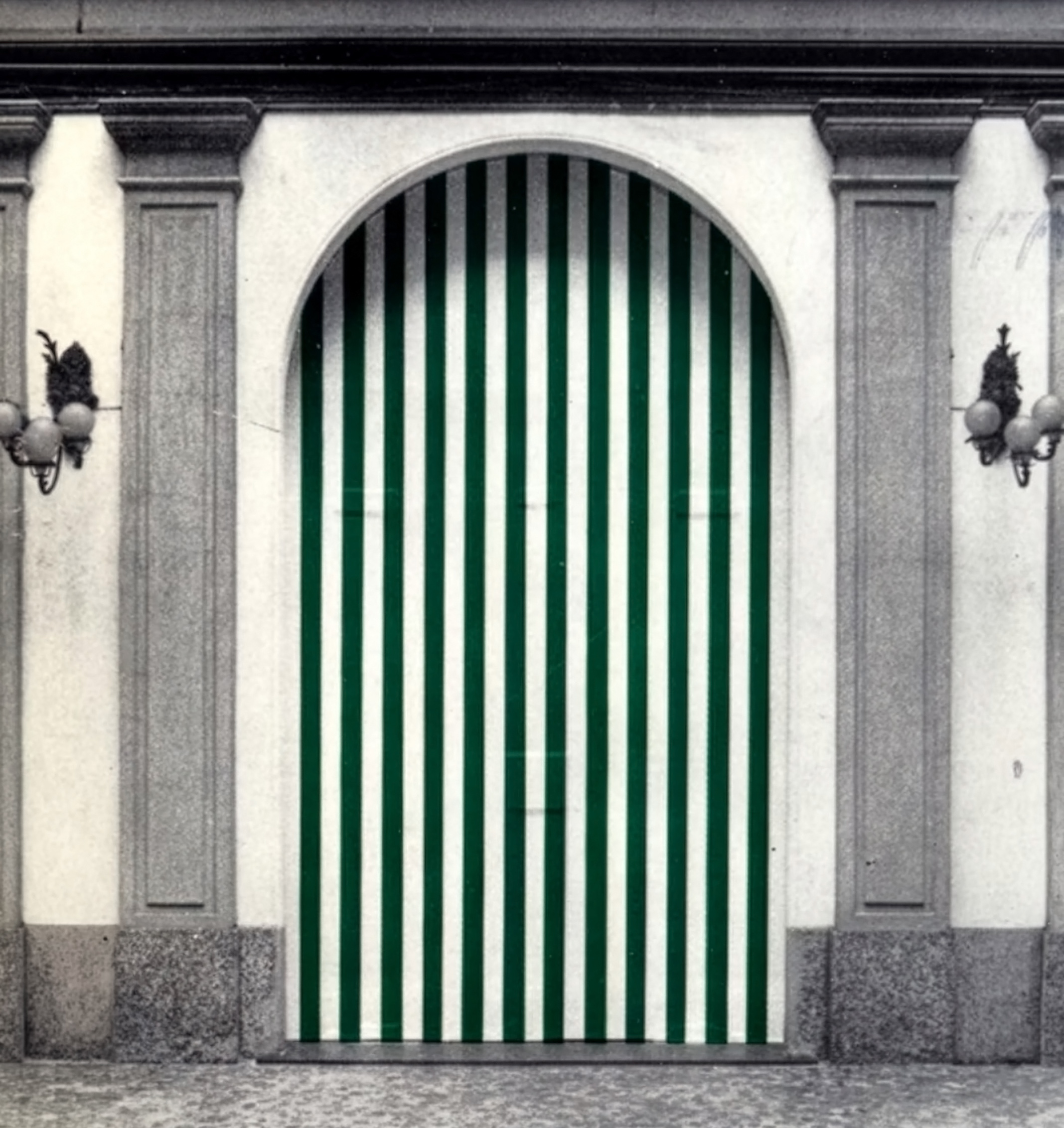
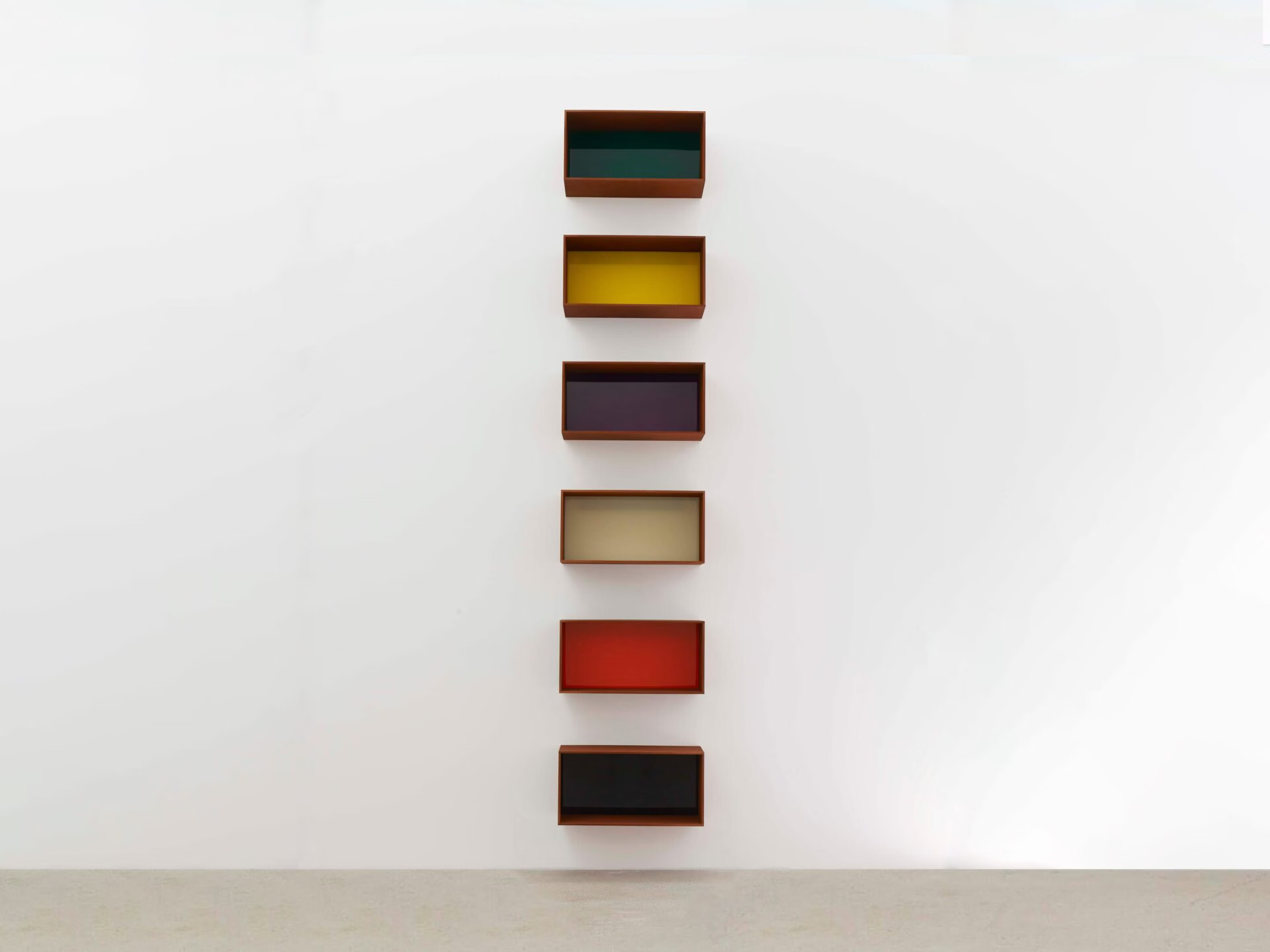
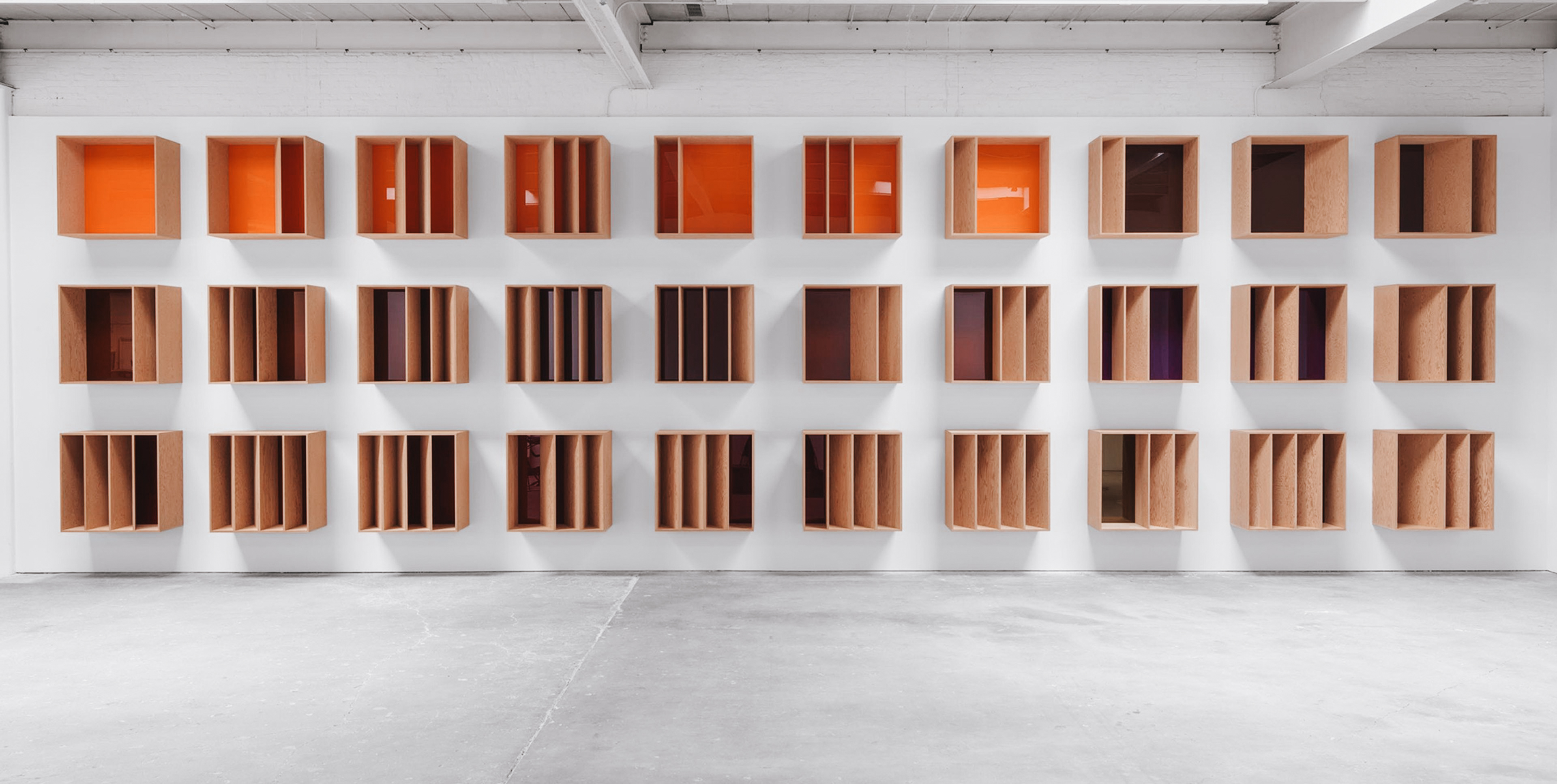
Cover: Donald Judd, Untitled, 1992. Corten steel and plexiglass (green, yellow, purple, ivory, orange, and black), 6 units, each 50 × 100 × 50 cm (19 5/8 × 39 5/16 × 19 5/8 in). Artworkers Retirement Society. Photo © Judd Foundation.
All images © their respective rights holders.