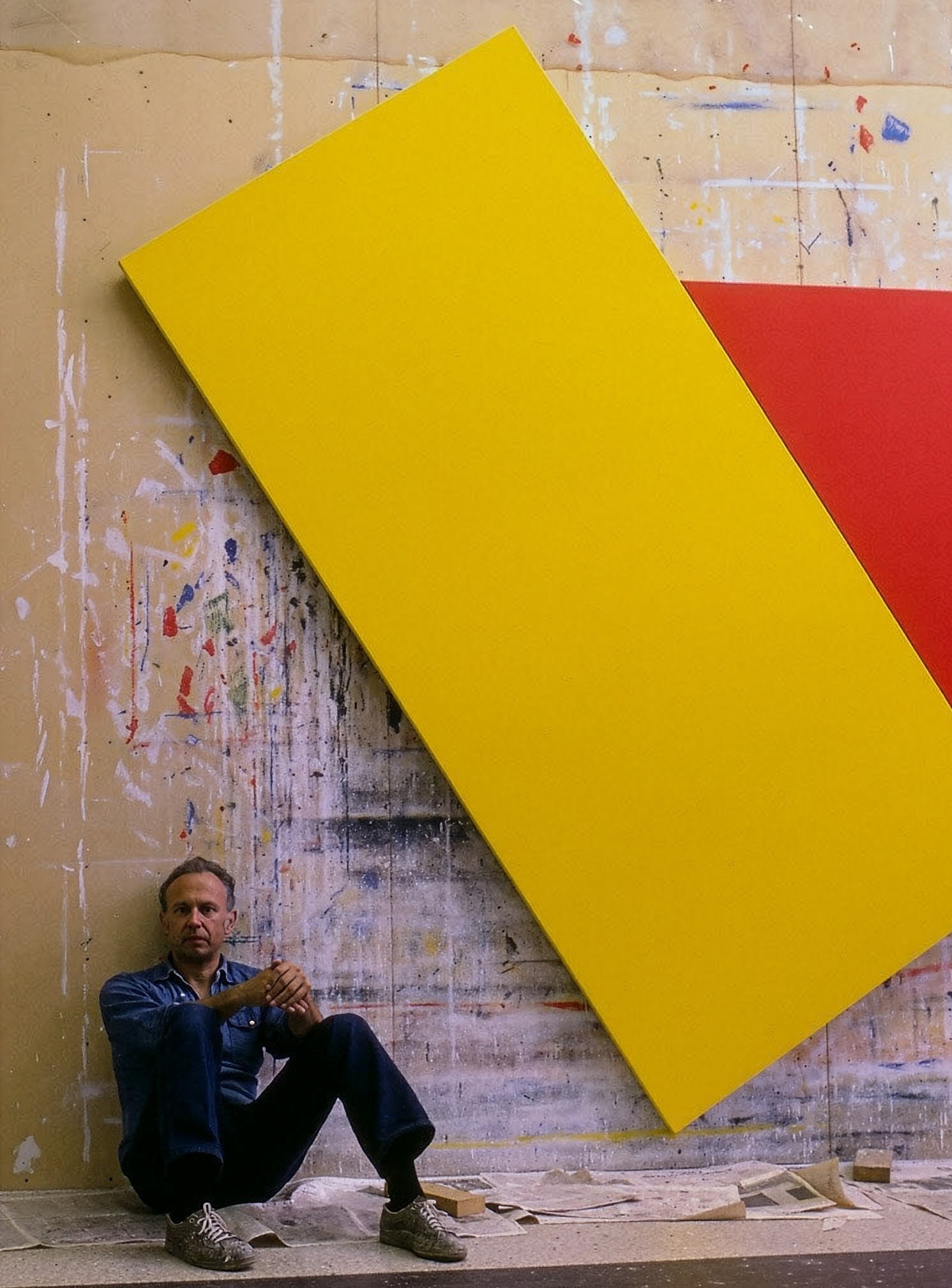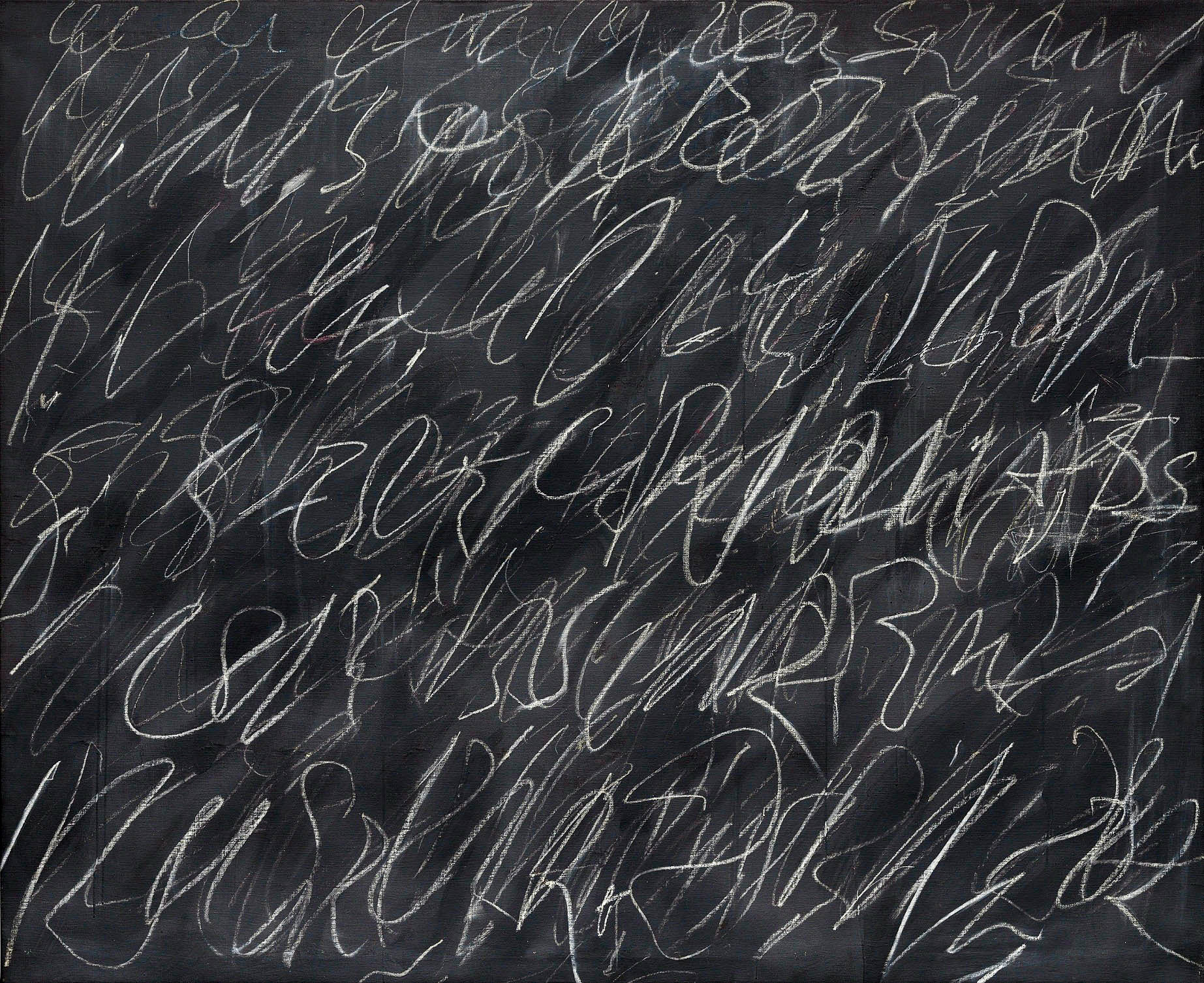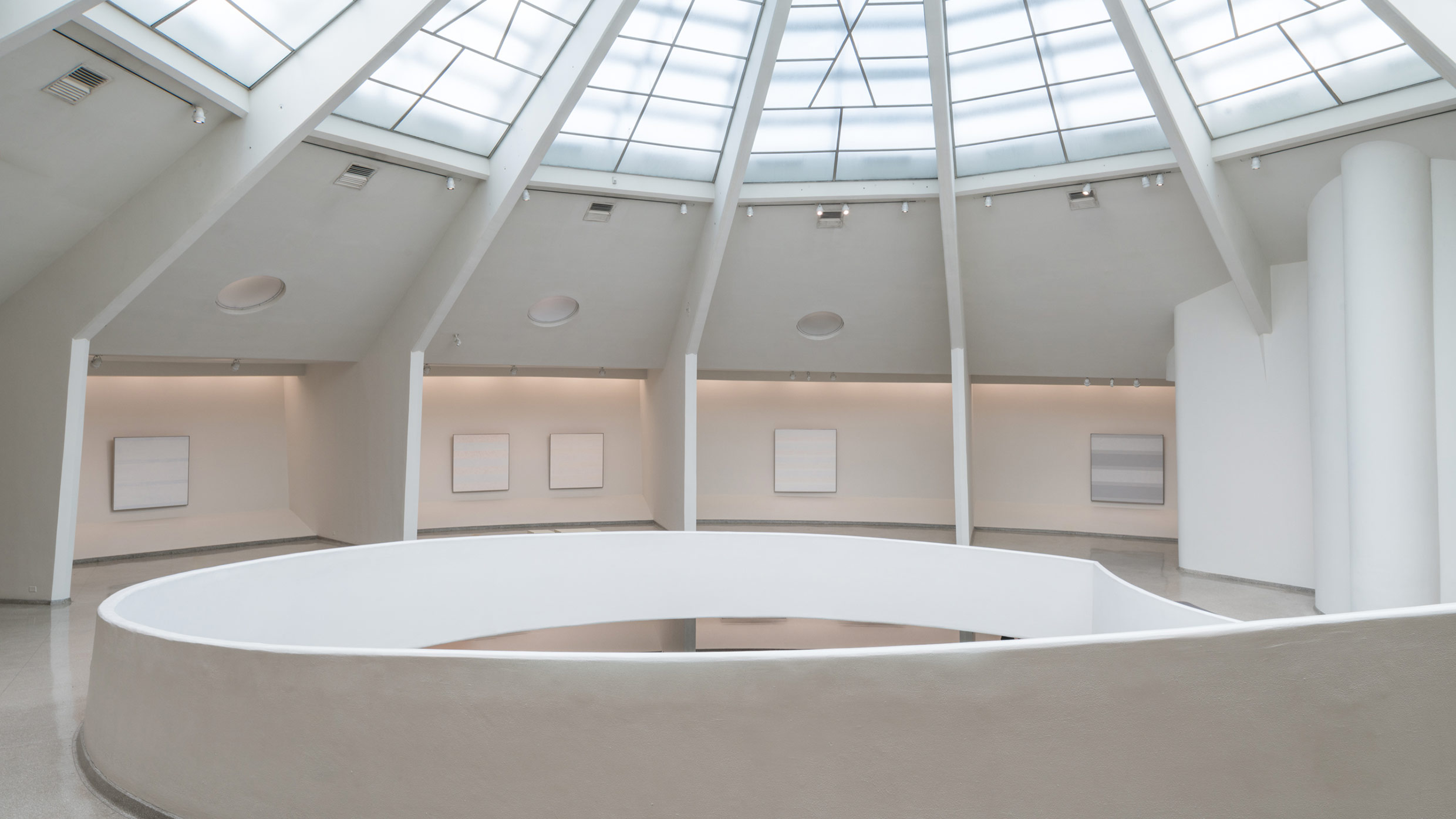
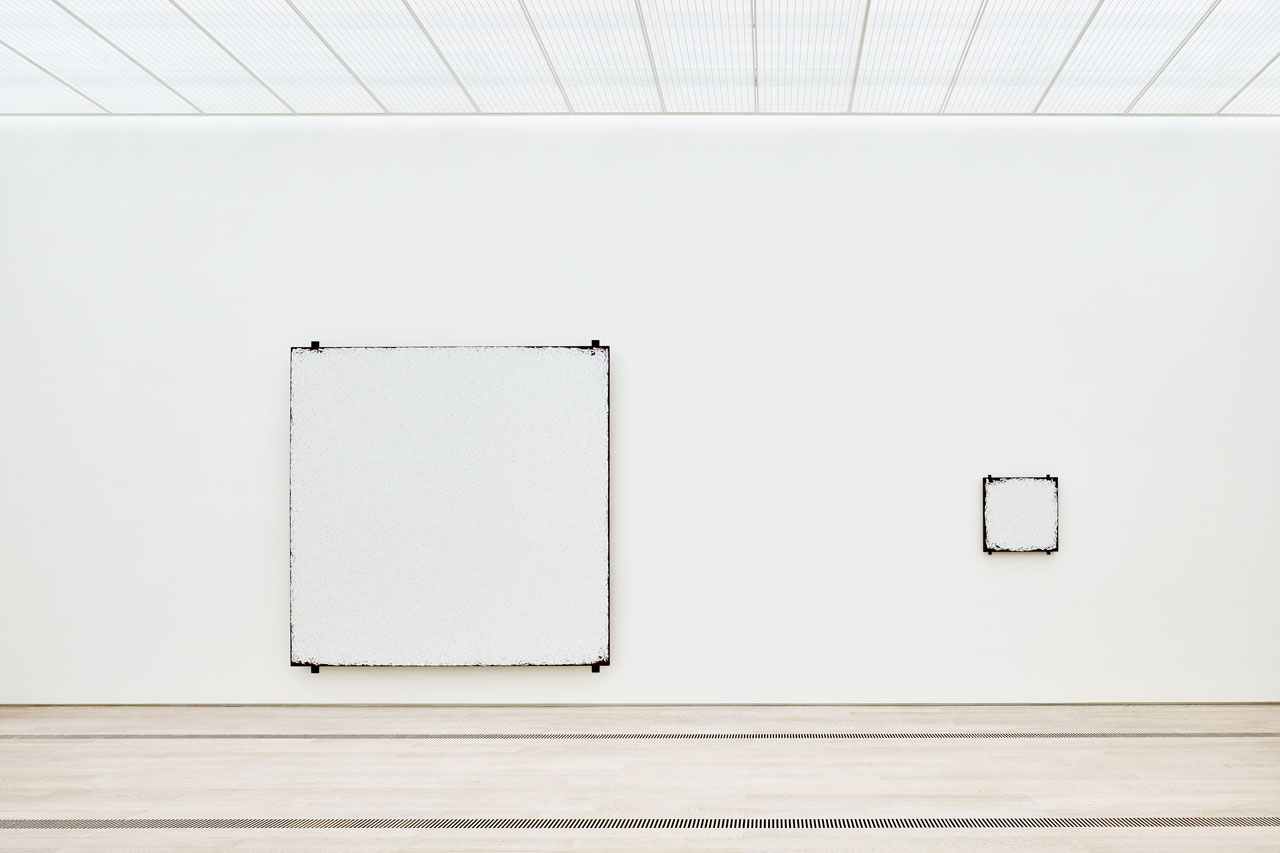


A canvas on the floor. A vertical division fixed to the wall. A field that appears only after the eye adjusts. A surface that pulls the eye outward and returns it before it can settle.
Jackson Pollock on the floor, Barnett Newman on the wall, Mark Rothko building thresholds, Joan Mitchell opening color into air. The works appear to belong together. The agreement feels visible. It does not need to be argued. The room has already argued it.
The continuity is real. The method is not.
Three things have to be kept distinct: what the paintings share when they are seen, what they share when they are made, and what the grouping claims about them. The first is real. The second is not. The third survives by being mistaken for the first. The category first describes a visible agreement. Then it licenses a claim about method.
The claim becomes believable through one painter. What the group is said to share — scale, urgency, bodily decision, paint turned into event — appears to take visible form in Pollock, and gesture is the word one wing of the criticism reached for to carry it: general enough to span the room, specific enough to sound like method. Not every account leaned on it — the opticians read the same paintings for flatness, not for the hand — but gesture is the term that hardened into the popular sense of what the work was, and it holds until you watch the work being made.
Pollock’s canvas lies on the floor, and in Namuth’s photographs from Springs he stands on it. His shoes are inside the picture, black skeins circling them, ground and line running on under his feet. One hand carries the can, tilted and held away from his body; the other holds a stick that mostly stays clear of the surface, so that the paint is carried across a gap by air and gravity as often as it is laid on. The crossing stays in the mark: the heavier ropes travel with a fringe of droplets flung off alongside them in flight, and the lines loop wider than a wrist could carry them because the whole arm, the walk around the canvas, and the fall of the paint are all folded into the loop. At the edge of the linen the skeins do not stop. They run out onto the floorboards. While the painting is horizontal, its edge is not a boundary but an accident of where the canvas happens to end.
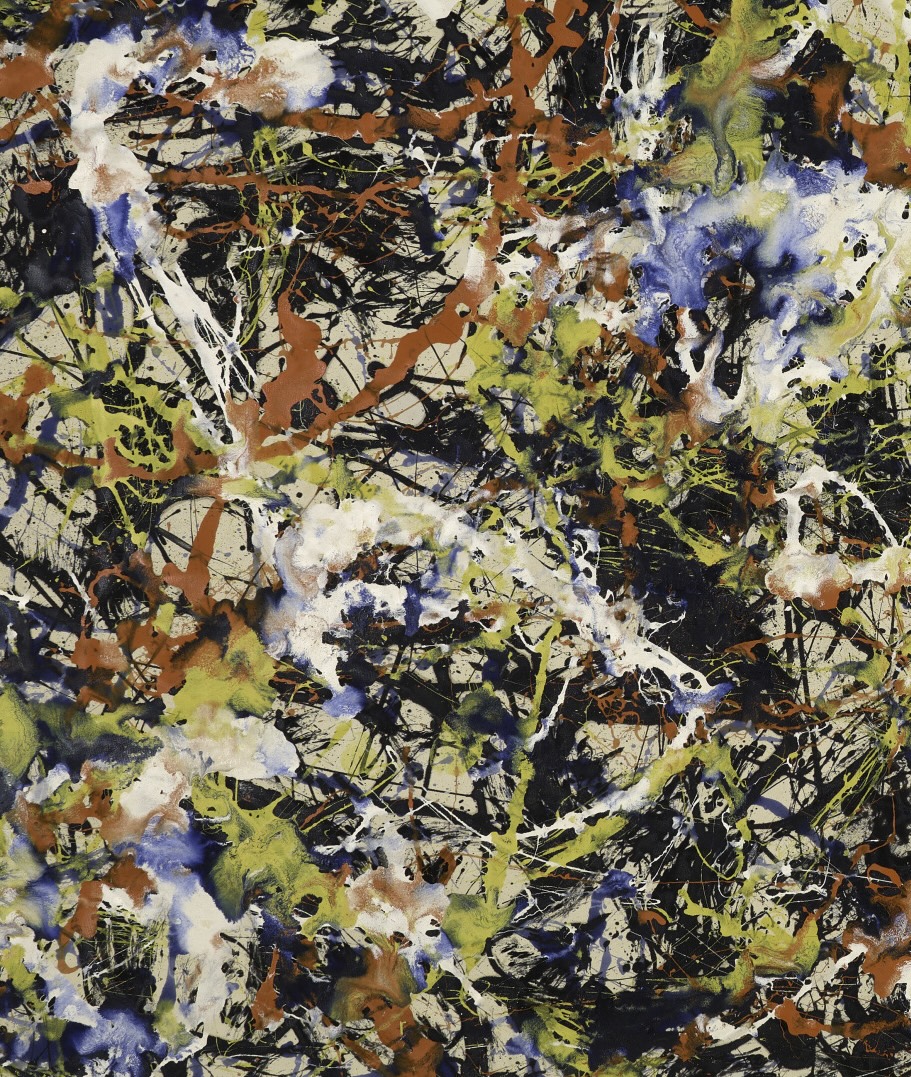
The finished surfaces keep the same logic. In the 1952 canvas at Buffalo, at the visible crossings opaque white and orange cover sections of black line. The black runs as continuous line; the color arrives as patch, some of it hard-edged; raw canvas holds the intervals between. No one passage governs the others. The surface accrues — thread over thread, layer over open interval — until the question of which mark leads and which follows has no answer, and what looks like the most personal handwriting in the room turns out to be the most thoroughly impersonal: a surface where local authority has dissolved into accumulation, gravity, and the length of the session.
Gesture names the trace and misses the decision.
It presumes a singular mark, a located choice, a fixed relation between the body and the surface, and the poured line refuses all three. Pollock does not organize the painting through marks. He organizes the conditions under which marks stop functioning singularly. Then the canvas rises to the wall, and none of that procedure survives the move. Vir Heroicus Sublimis is close to eighteen feet across and nearly eight high — large enough that from the front, near to, it exceeds the span of vision and stops offering itself as an image to be scanned. It stands. What crosses it are the divisions Newman called zips, and the first thing the painting establishes is that they are not one thing repeated. Several of them cross the field, and no two are made alike: one is a narrow band of pale cream, clean-edged; another is darker, nearer maroon than red; they differ in width, and they fall at uneven intervals across the wall, some set close to an edge, others well inside it. Each runs the full height. Between them the red holds continuous — warmer and cooler as it travels, but unbroken — so that the divisions interrupt the field without breaking it into separate pictures.
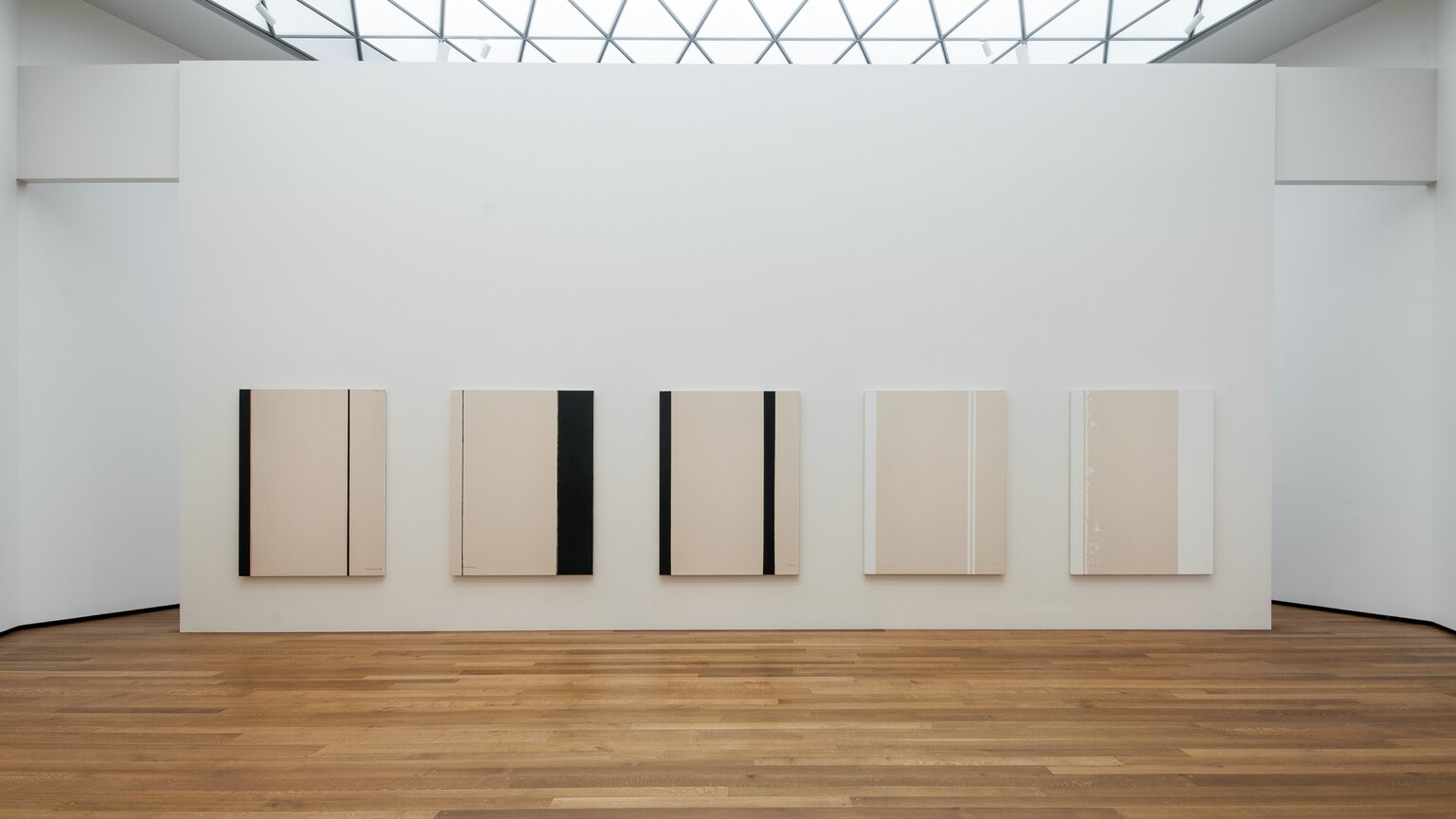
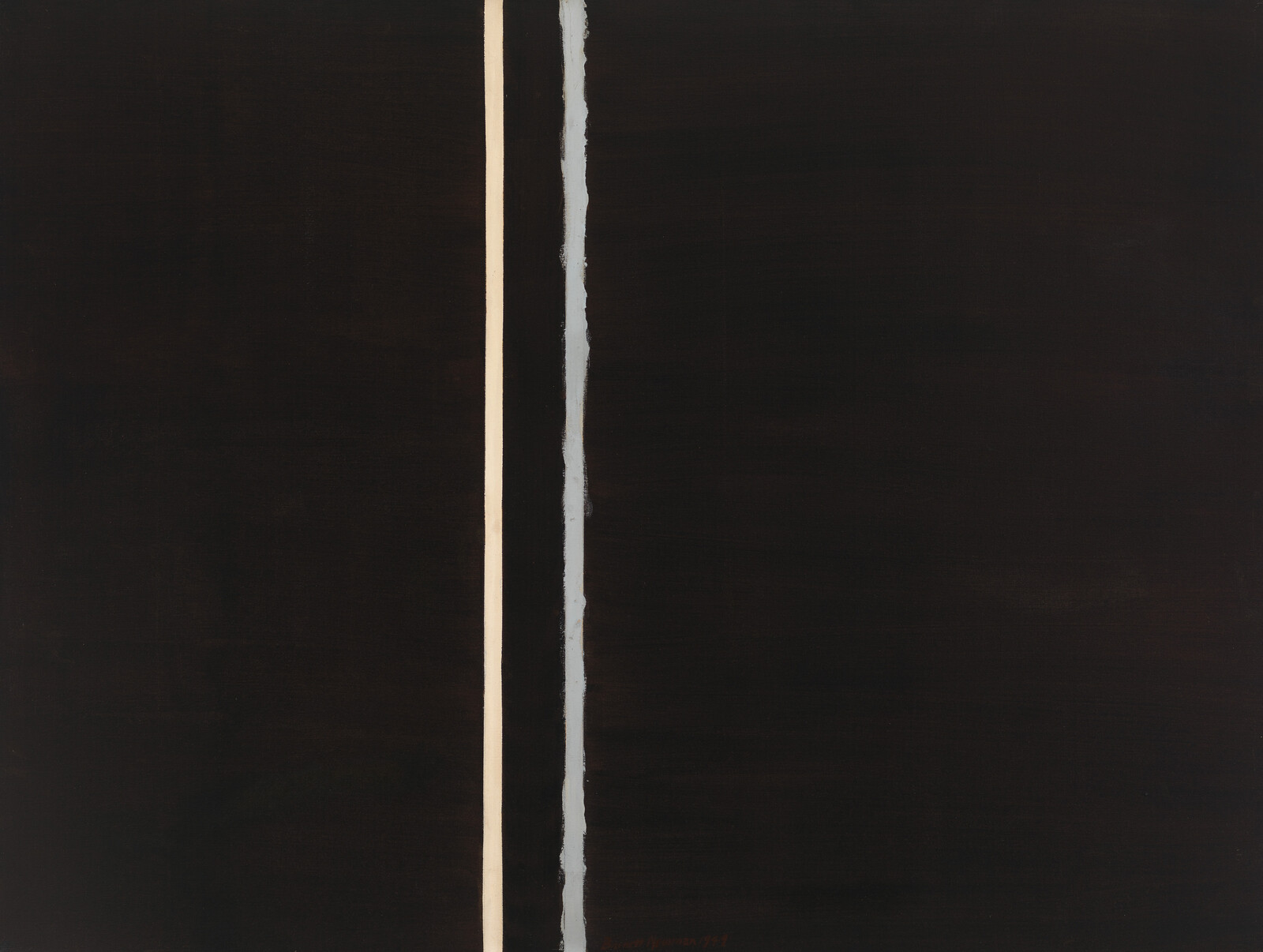
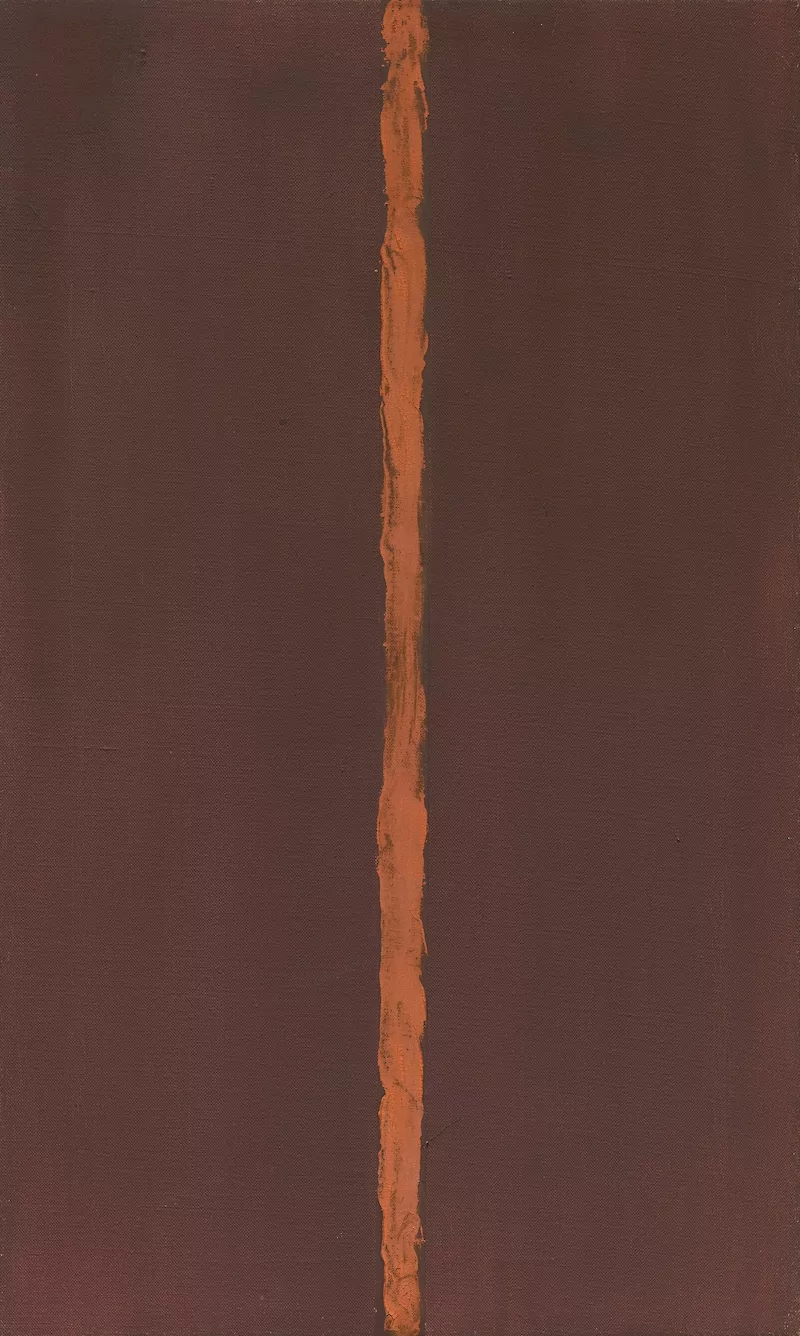
Seen close, in the other paintings, the division keeps declaring its variety. In The Promise two verticals stand a hand’s width apart, and they are two different whites: one a warm cream, narrow, its edges clean and uninterrupted down both sides; the other cooler and wider, its edges broken, with dark passages crossing into it. The brown they cross is not one brown — denser and cloudier zones move through it — and up close the whole field carries directional brushwork, covered rather than poured. In Onement I a single band runs up near the center, and even that one band is not uniform: it swells and pinches along its length, brighter where the paint gathers thick, its edges bulging rather than fraying. And the division can thin almost to nothing without ceasing to work. Hung in a row at the National Gallery, full black verticals appear beside divisions so pale they nearly disappear into the ground — and still the field organizes around them. No two bands sit at the same place on their canvas, and the even intervals of wall between the paintings read as measured as the divisions inside them.
Pollock removes the deciding mark. Newman removes nearly everything but it. Between them there is no shared method — only opposite answers to one question, about where in a painting authority is allowed to live.
To hold the two together under a single word, the word has to widen until it stops naming an operation. “Gesture” comes to cover any visible decision left on a surface, marking only that something was done. The category keeps its central term by emptying it.
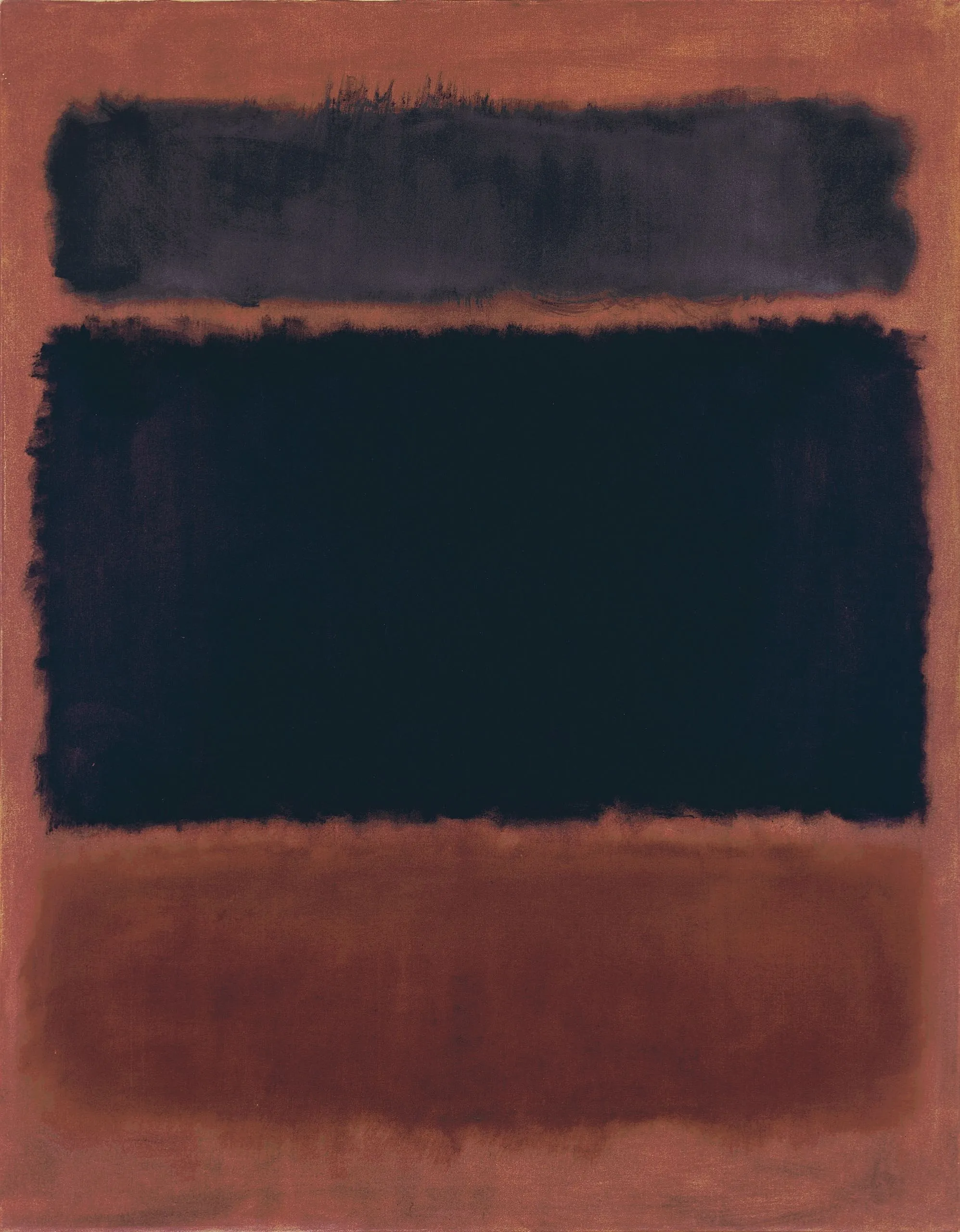
By the time Rothko’s paintings enter the room, the word that was meant to hold them has already been spent. They carry the scale and seriousness the category leans on, and they are the easiest to file under it and the hardest to account for once filed. In Black in Deep Red three bands hold the height — a thin gray-blue at the top, a near-black through the middle taking up about half, a red-brown along the base — and the ground returns as a margin around all three, so the bands sit within the color rather than on it. Each boundary behaves differently: the top band’s lower edge breaks raggedly into the dark; the boundary beneath it loosens by slower degrees. None of the corners closes to a right angle; every rectangle rounds off before it arrives. Inside the black, cloudier zones keep shifting, so that the darkest band is never quite one black. The color is laid thin and built until the rectangles begin to hover at the edge of separating from their ground.
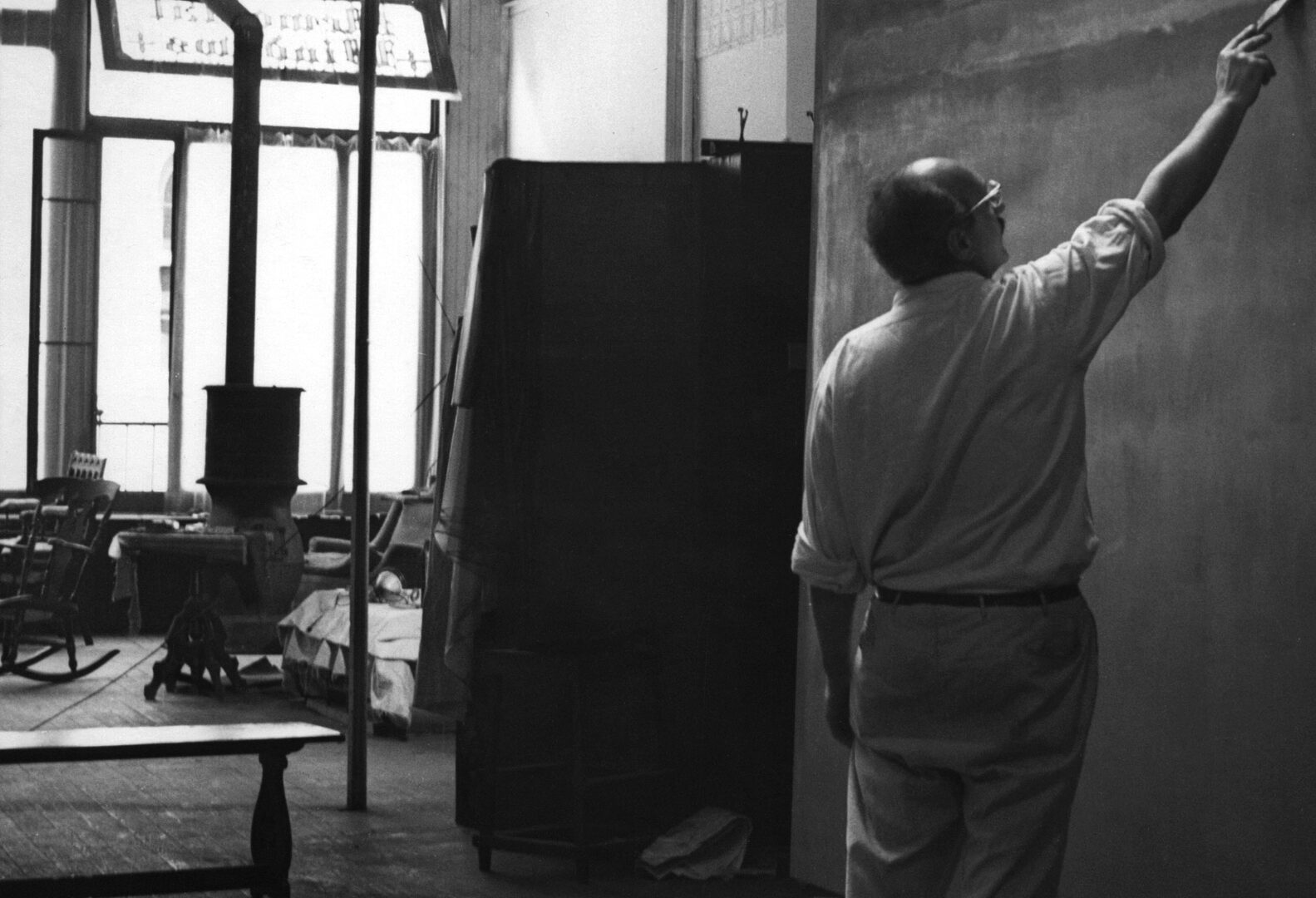
How they were reached is visible in the studio. In the Bowery photograph the canvas stands on the floor, its bottom edge on the boards, and it leaves the top of the frame before it ends; Rothko’s arm is extended full overhead, a small brush touching a point higher than any part of his body, his head tilted back to watch the contact. Across the room a rocking chair sits empty by the window. The distance the finished painting will ask of a viewer is already in the room with him: he works close, at the reach of his arm, and the room also preserves a position from which the canvas can be seen across open floor.
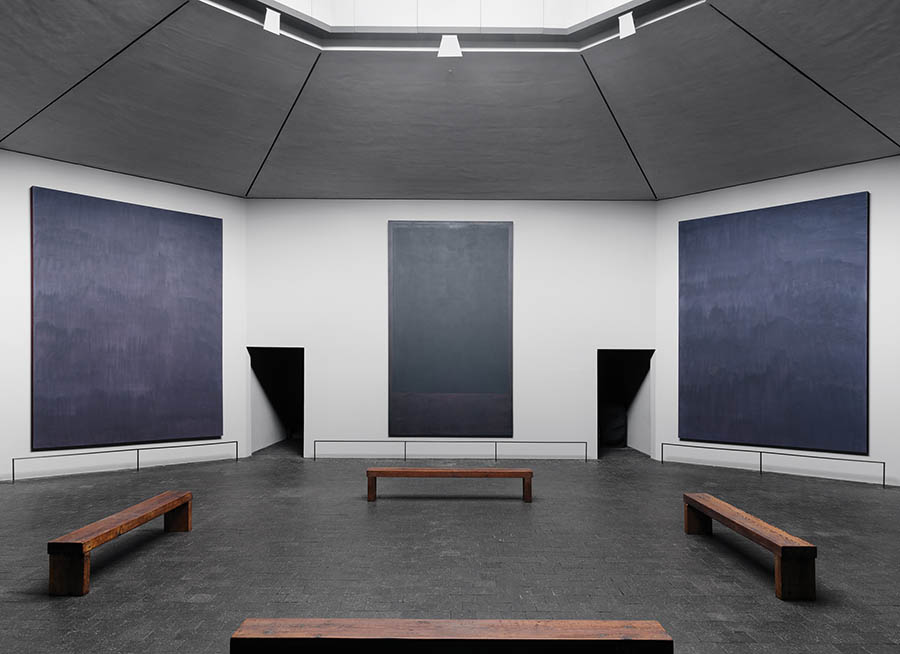
The Chapel, as completed, builds that distance into architecture. The room is an irregular octagon containing fourteen paintings: triptychs occupy three walls, while single canvases occupy the other five. Because the walls meet obliquely, no panel presents itself alone. To face one is to hold others at the edge of sight; the room offers no single position from which the cycle resolves. The brightest element is not a painting but the light descending from the skylight, and the walls darken as they fall toward the work. You wait. The panels do not hand themselves over at a glance. They come forward and withdraw as the eye adjusts to the low, even light, and the plum in some separates from the grayer black of others only after time in the room. A photograph can frame only part of the cycle. It fixes where the panels hang and how the benches sit, but on the paintings themselves it resolves nothing — no mark, no sheen, no incident. It documents the location of an encounter it cannot deliver.
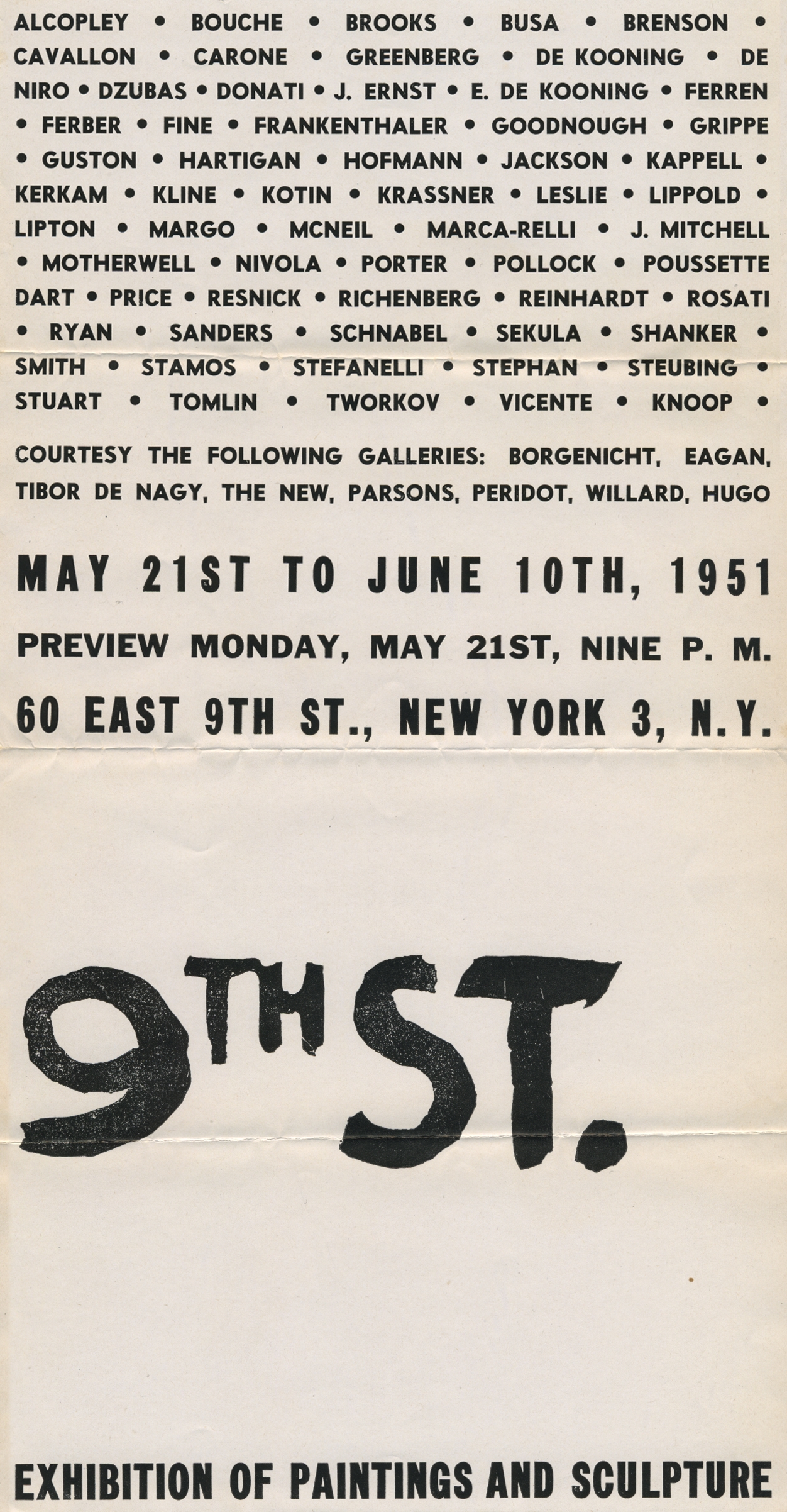
Her name is already on the poster. Mitchell is usually placed in a second generation — the founders’ gestural language received, lightened, carried on at a higher pitch — yet her name appears on the poster for the Ninth Street Show in 1951. The exhibition the category later treated as its founding room already contained her.
So “second generation” is not a simple fact about when she worked. It is also a fact about how she was later filed. The category settled over her work after exhibitions, criticism, and teaching had hardened a provisional adjacency into a school, and it cast her as the inheritor of a method that never existed as one thing to inherit.
The dates make the arrangement stranger. Newman’s Onement I is from 1948. Mitchell’s Evenings on 73rd Street and Rothko’s Black in Deep Red are both from 1957, though one painter is filed as inheritor and the other absorbed into the category’s first generation. The distinction may still describe reception, position, and authority. It cannot be read as simple succession in time.
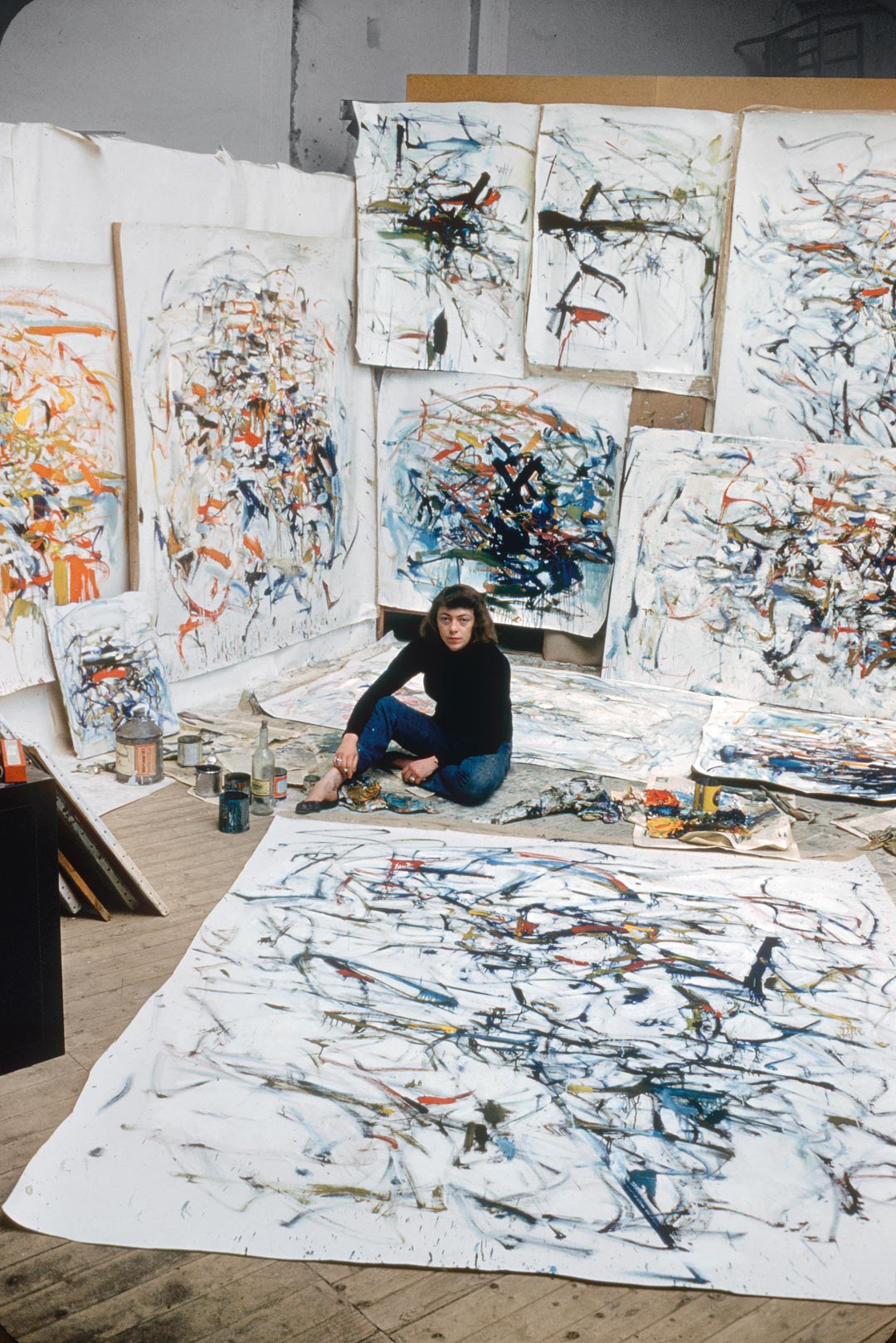
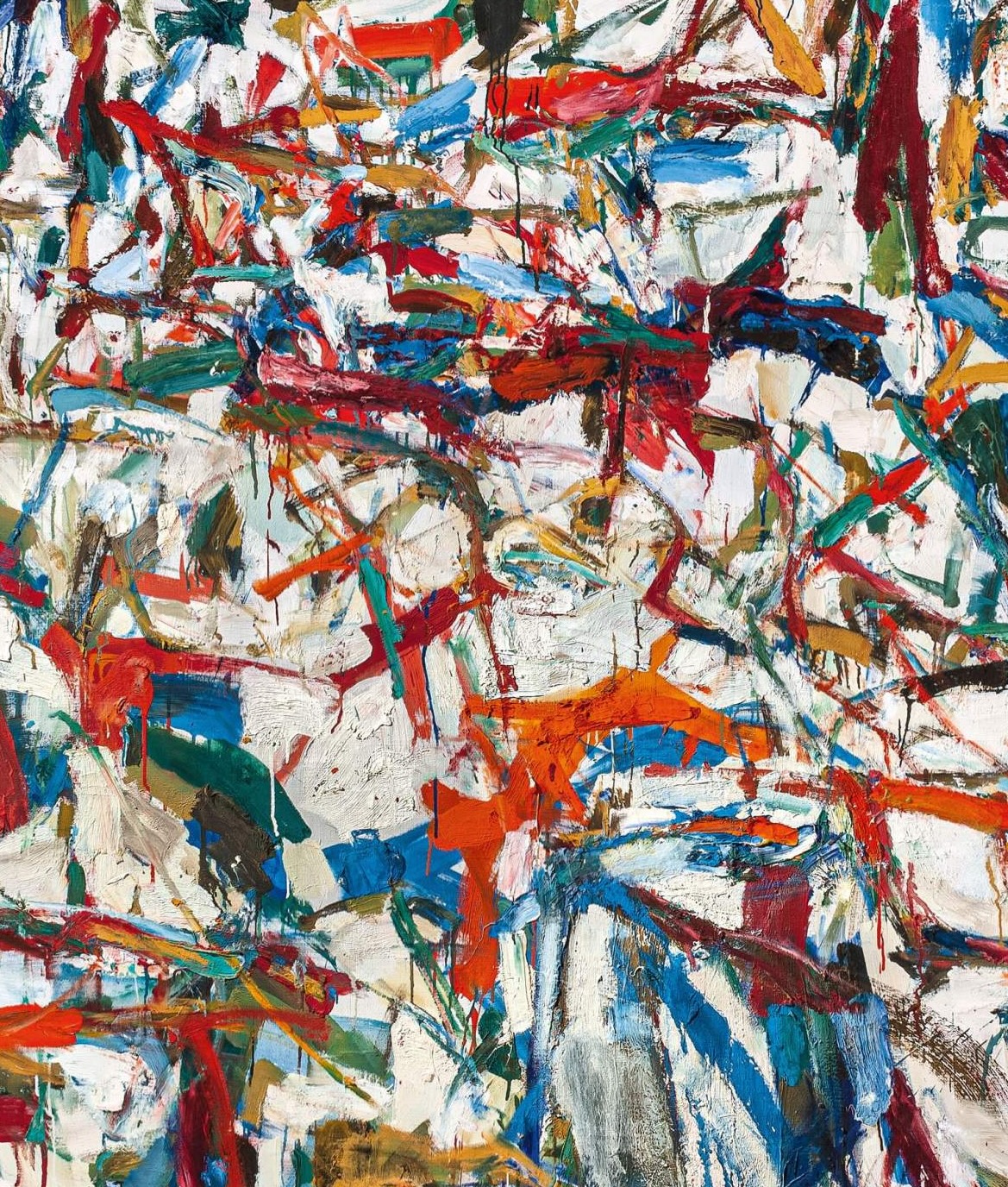
What her paintings answered, then, was not a procedure handed down but a name they would be read through before they were read at all. They answer it with structure. In Evenings on 73rd Street every stroke keeps its beginning and its end — loaded and broad where it starts, dry and narrowing where it stops, several of them hooking mid-course. Colors cross without going to mud; red passes over blue and both survive the crossing, and in places opaque white sits on top of the color, applied rather than left in reserve. The mass of incident holds high in the field and stops short of the left and right edges, and a few thin threads run down from it into the bare lower canvas. Nothing dissolves. A stroke can be entered where it began and left where it ended. The studio photographs show the same discipline at the scale of a room: sheets pinned to the walls overlapping, edge over edge, some works partly obscured behind others and held together in one field of view, one palette repeating across all of them, the incident gathering inward in nearly every sheet while the margins stay clear.
The later work makes the operation large. In a single La Grande Vallée panel the upper two-thirds is a dense weather of periwinkle and violet-blue, layered and overlapping, paler blues worked through it; the lower third gathers into darker green and black, with yellow and chartreuse massed toward one corner and a small red held among them. The eye does not travel through it freely. It is pulled to the yellow, returned to the blue, delayed in the dark lower mass, sent down the vertical runs of paint that descend toward the bare canvas at the bottom edge. The color disperses across the whole surface without going slack, because the dispersal is placed: every release is answered by a return that holds a center while the field spreads from it. Hung as a suite along a low wall, the panels carry that return across their full width, so the eye is drawn out and recalled along the row the way it is drawn out and recalled inside a single canvas. What she was said to have inherited turns out to be this: relation placed, and return, holding a field that would otherwise scatter.
Each of these paintings arranges its viewer differently, and the arrangement is the surest sign that no single method is at work. Pollock makes you move, because no mark can be followed as the one to follow. Newman fixes your distance, because the division arrives all at once. Rothko makes you wait, because the panels appear only after the eye has given them time. Mitchell returns your eye through placed relation before it can drift. Four bodies, four positions, four different demands made on the same act of looking — and what reads across them as continuity is only adjacency, works that share a surface condition and diverge in every decision that produced it.
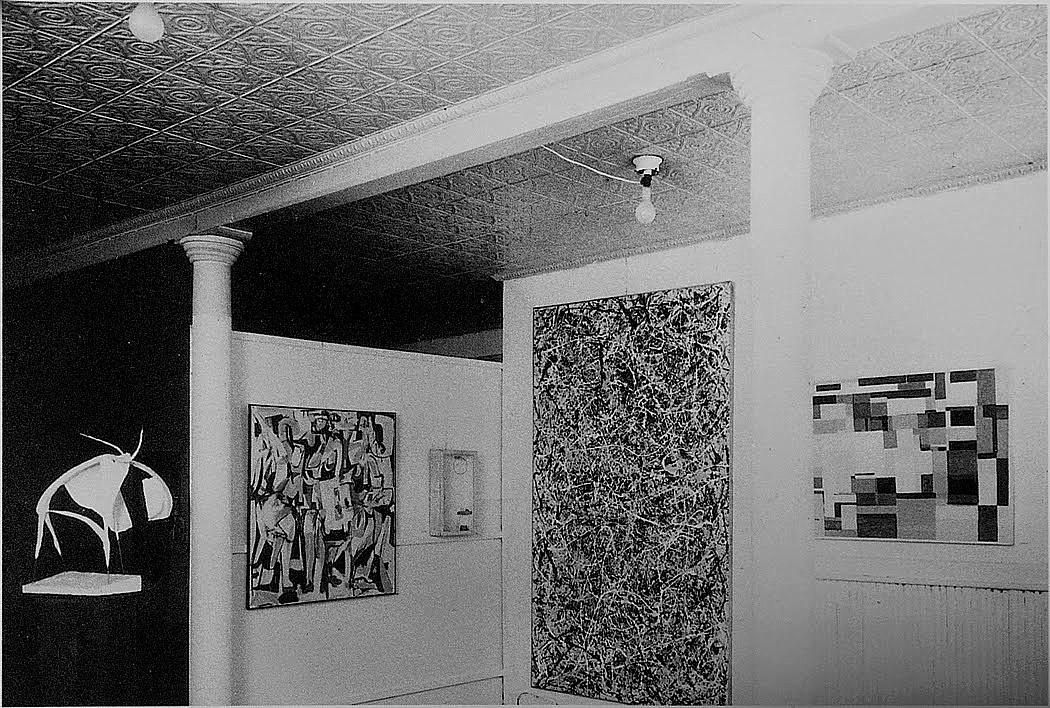
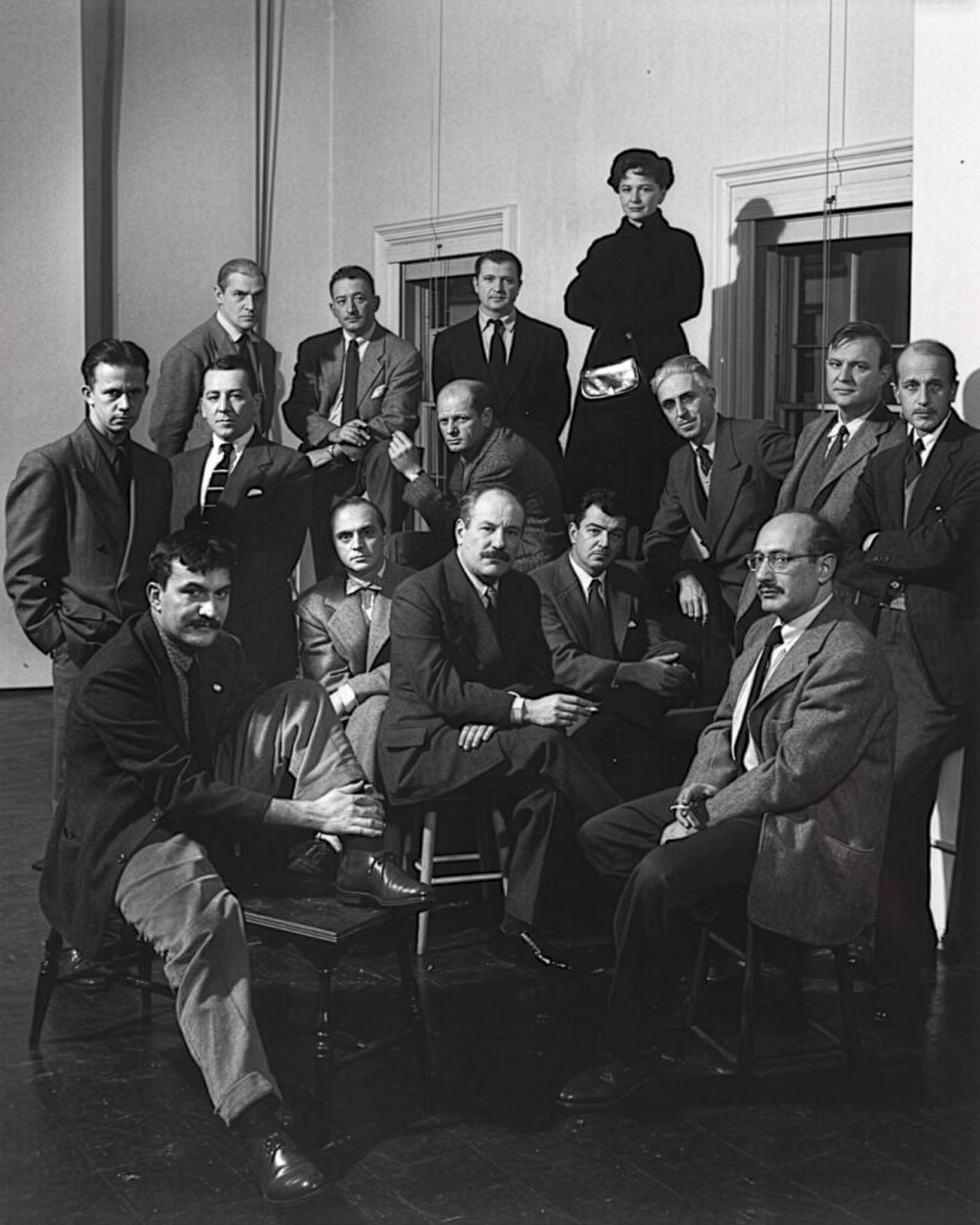
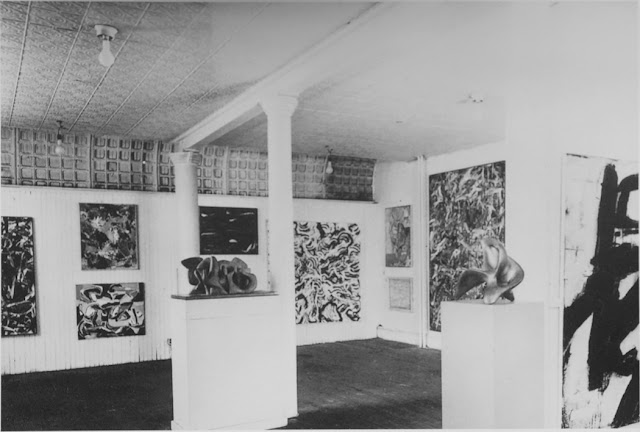
A grouping this unstable should have stayed provisional. It hardened instead, through a sequence of acts that never depended on the works sharing a method, only on the names continuing to appear together. It began with a list. Franz Kline’s poster for the Ninth Street Show set some sixty names in one typeface at one size, bulleted, no images, no hierarchy — Mitchell among the participants — under the flat title Exhibition of Paintings and Sculpture, so that before a single work was seen the names already stood level with one another. Then a room made the list visual: on the ground floor of a condemned building at 60 East 9th Street, since razed and rebuilt within three years, a brushed canvas hung beside a poured field beside a hard-edged grid beside a sculpture, and the proximity carried on the argument the names had started. The picturing, in fact, had come first — four months before the show opened, Life had published a photograph of fifteen painters posed together, fourteen men in suits and one woman standing above them, no work in the frame. The photographed group and the installed group did not share a stable membership. Groupness circulated anyway. What began as a single occasion then became a habit: the Stable Gallery carried the grouping forward from 1953 to 1957, until recurrence made the adjacency look like a fact about the work rather than a decision about the hang. And once it looked like a fact, it could travel. The New American Painting, assembled by the Museum of Modern Art’s International Program, crossed Europe in 1958–59 and reached the Tate in February 1959, placing works of radically different procedure under one title, in one institutional sequence, before audiences who met them as a national formation already formed.
None of it required a method. Installation produced the coherence, the market priced it, criticism repeated it, teaching made it inheritable. A category built this way does not have to resolve its contradictions. It only has to stay visible.
Abstract Expressionism is real as history. It names an adjacency, a reception, a market, a set of rooms, and a line of inheritance, and it will not go away, because it is infrastructural before it is critical. What it does not name is a way of making. The critique leaves the machinery standing and restores the one distinction the machinery hides — between what the paintings do and what the grouping says they do. The room still holds. The name still arrives first. The agreement is visible. But once you have seen the procedures — poured, divided, held at threshold, placed and returned — the grouping no longer explains what is in front of you.
A room can hold them.
A history can inherit them.
A method cannot.
The category persists through repetition in institutions and criticism. The works separate when named by their operations.
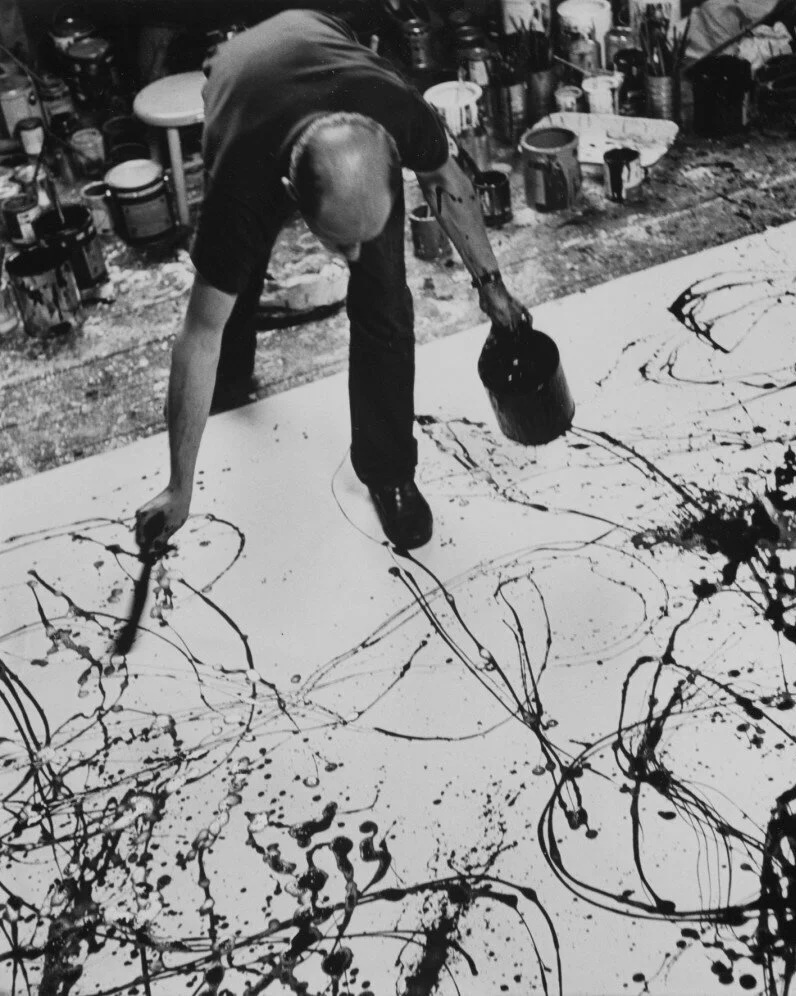
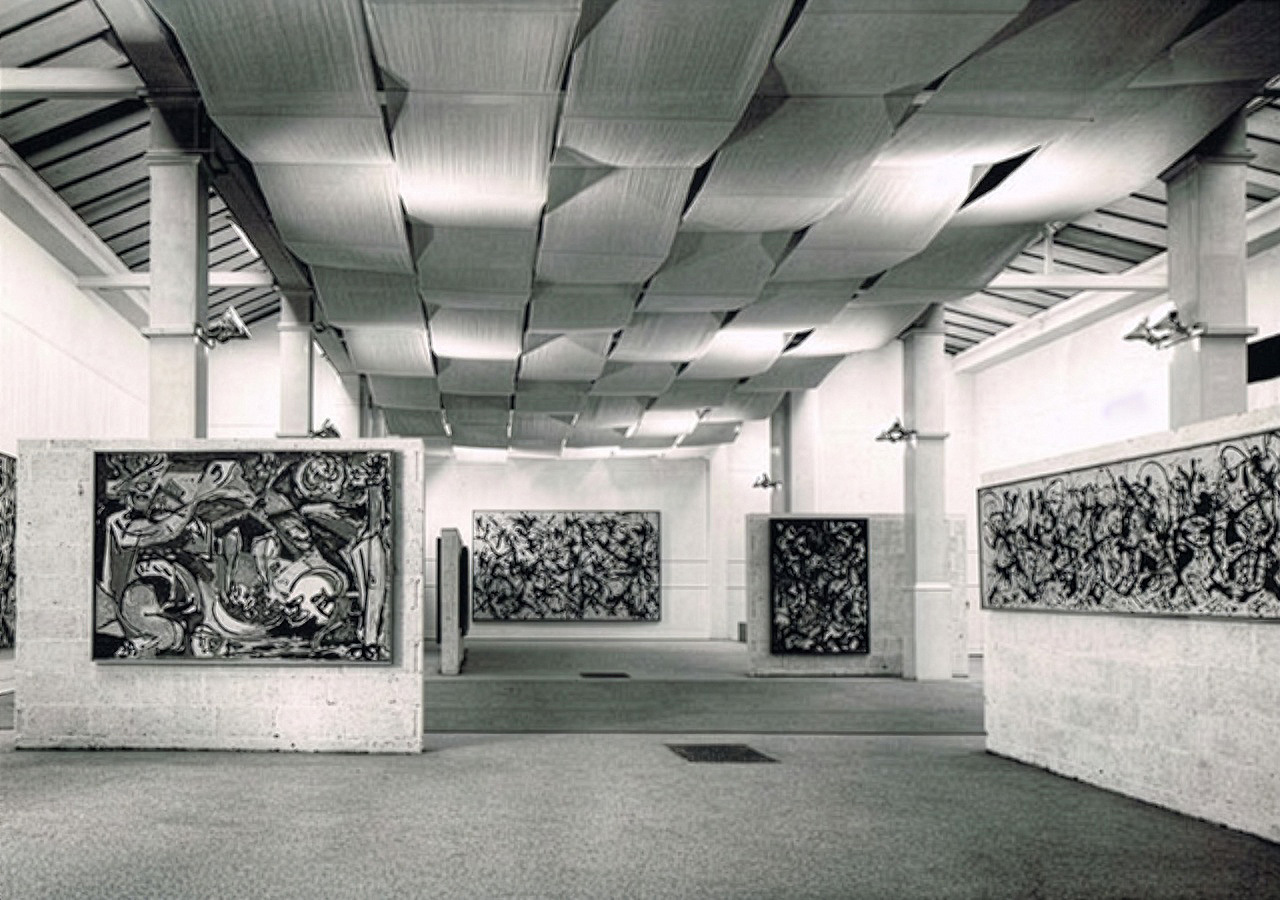
Cover: Jackson Pollock in his studio in Springs, New York, 1949. Photo © Martha Holmes / LIFE Magazine.
All images © their respective rights holders.