

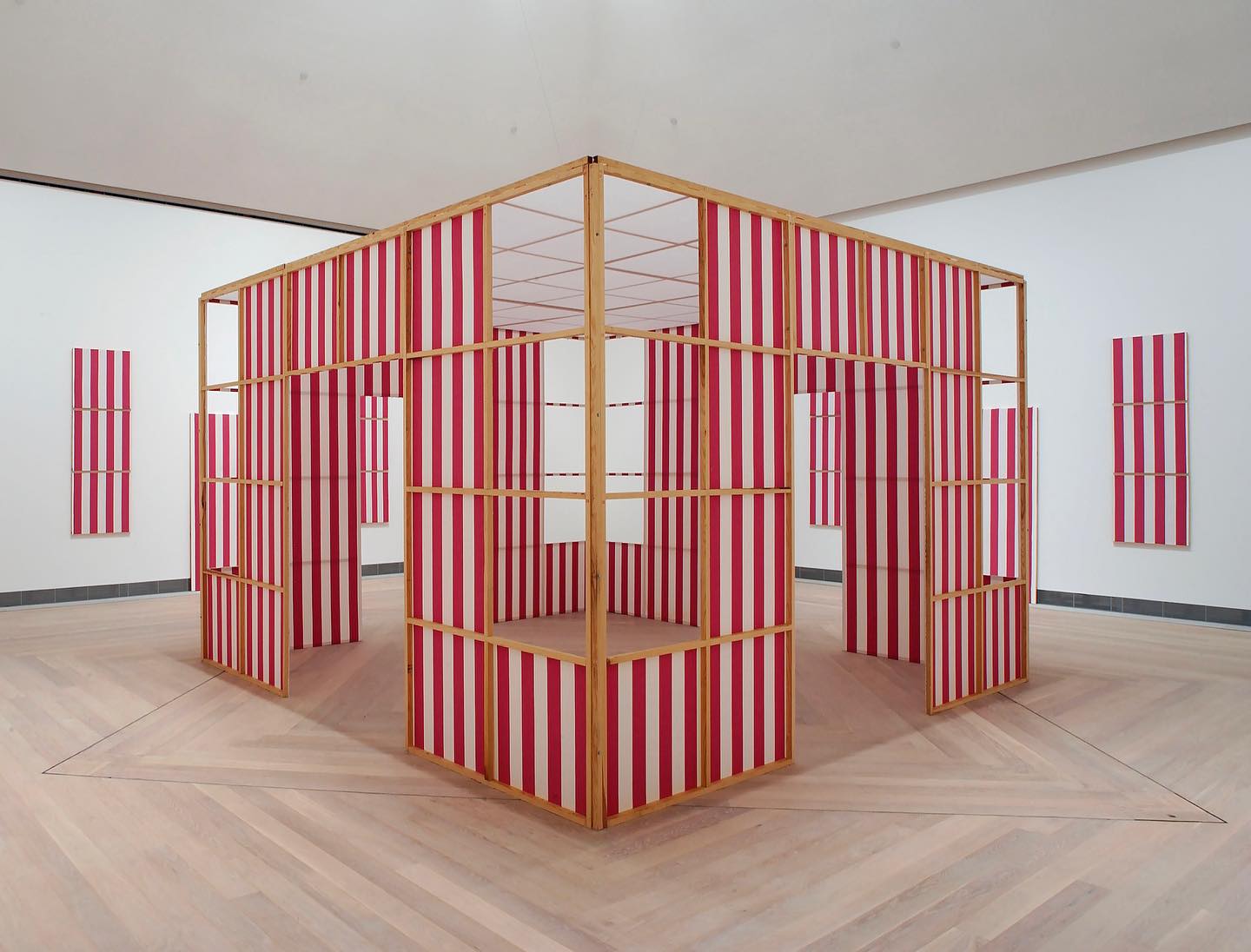
The first fact of the exhibition was that the gallery could not be entered. A visitor reached for the door and met striped fabric where access should have been. The street remained behind. The gallery remained in front. The work was not inside the room. It was the failure to enter it.
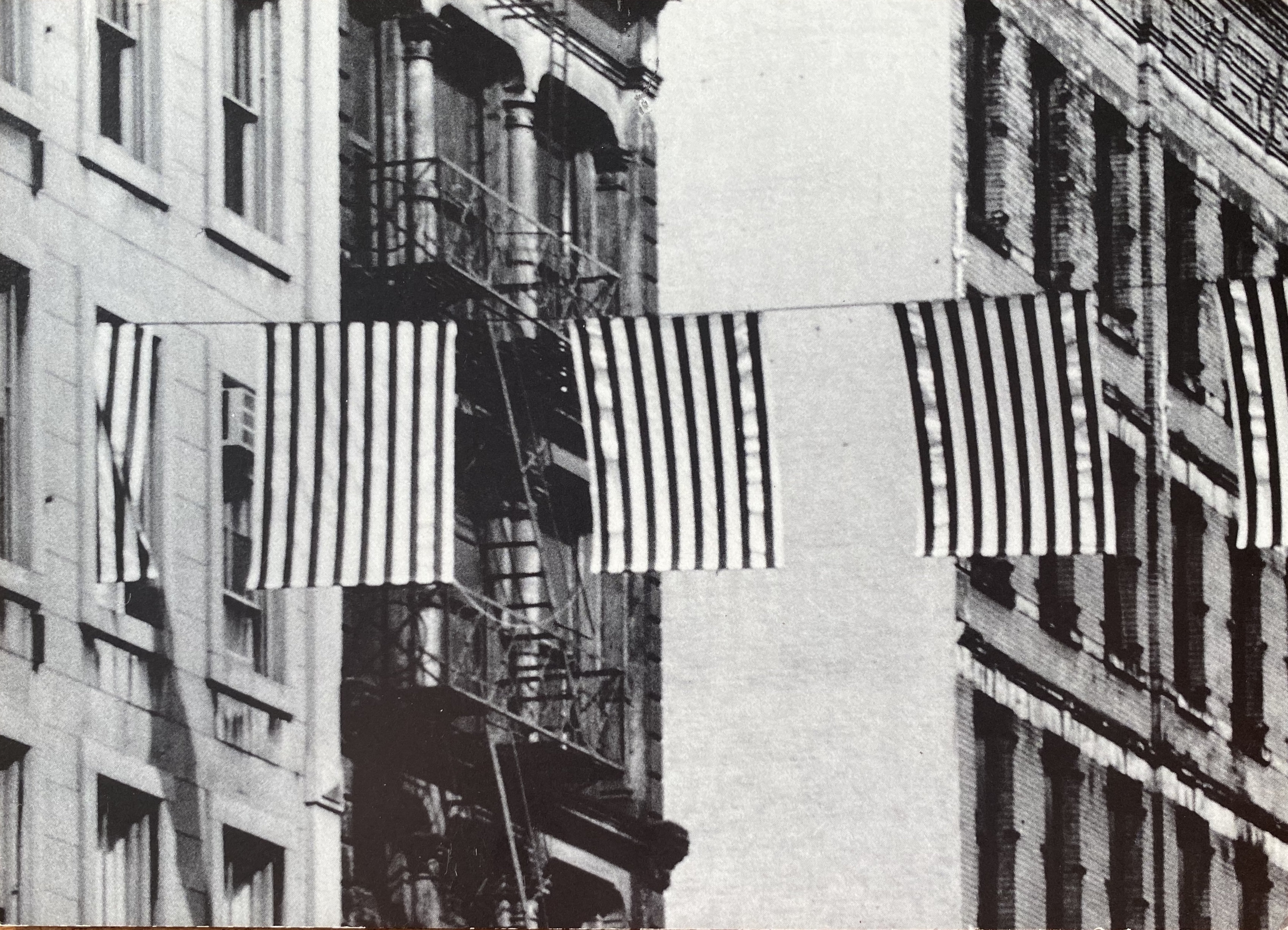
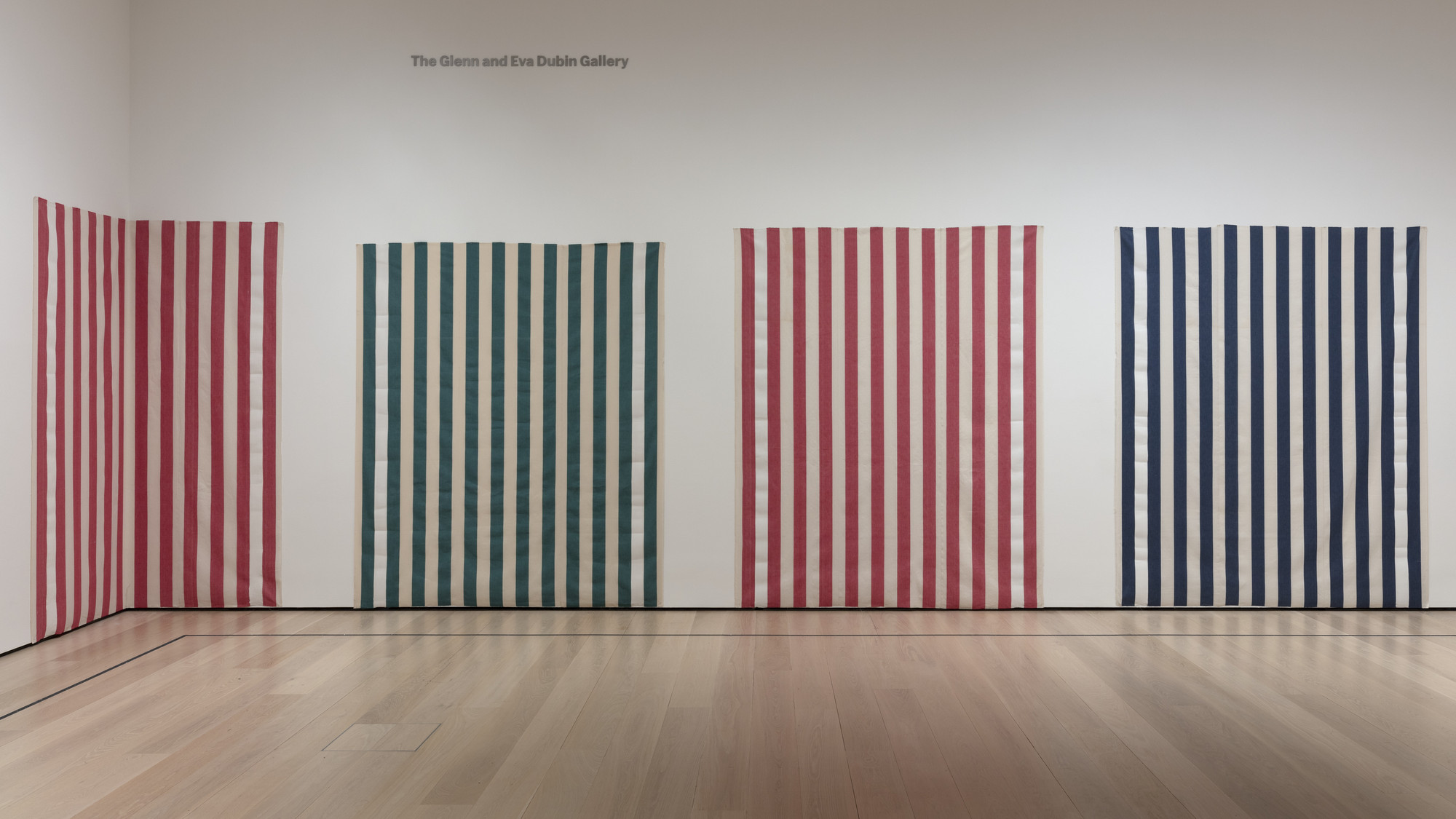
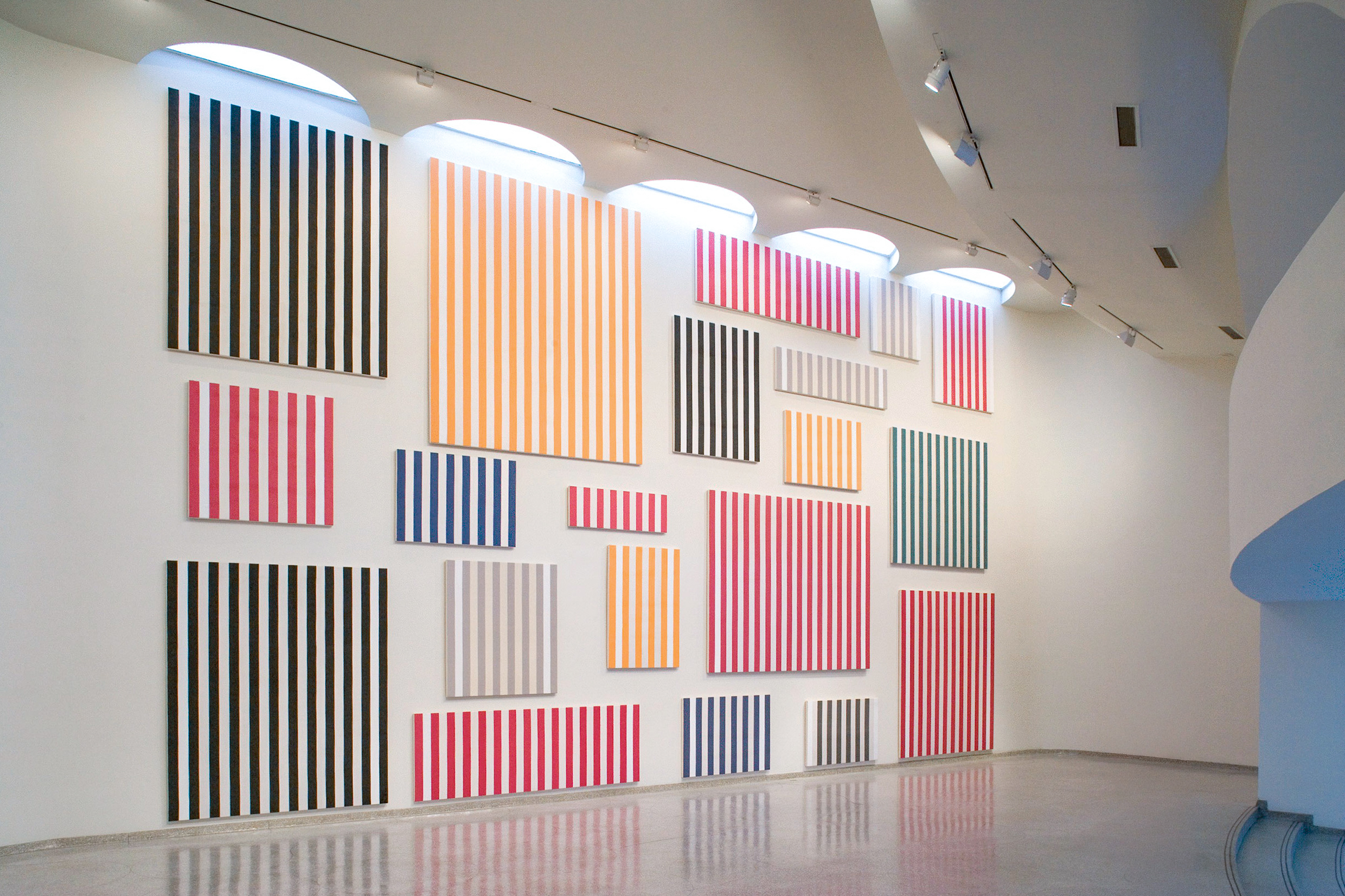
The stripes looked close enough to painting for the expectation to begin. Vertical bands, mechanically even, industrially flat, alternating white and one color. Their width was fixed. Their rhythm did not vary. The cloth was ordinary before it was art — the kind of fabric made to cover a shopfront or shade a window. Buren did not invent the stripe. He selected it.
A painting asks the surface to hold the work. Buren’s stripe asks the surface to fail at holding it. It still looks enough like painting to be asked to behave like one. The stripe holds the surface just long enough for the surface to give way.
Exposure was produced by subtraction. Nothing inside the gallery had to be added because the apparatus was already there: doorway, wall, threshold, expectation, institution. Buren removed access, and the room appeared as condition. The work did not occupy the site. It made the site unable to remain background.
This is why in situ cannot mean only “made for a place.” In Buren, it means made for a place with an end. The work is built to terminate when the condition terminates. It does not survive as an object after the placement ends. What remains is not documentation of a stable work but the photo-souvenir: the trace of a condition that no longer exists in the form that made it work.
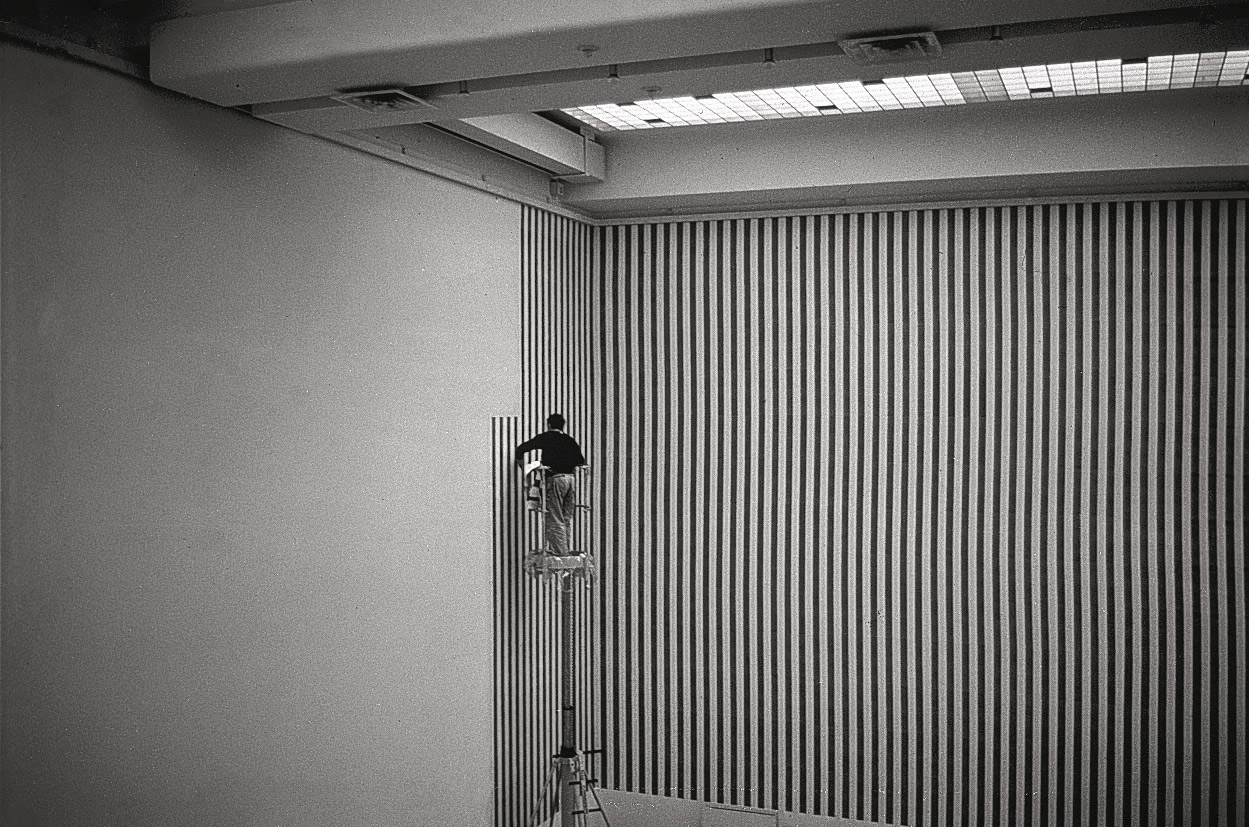
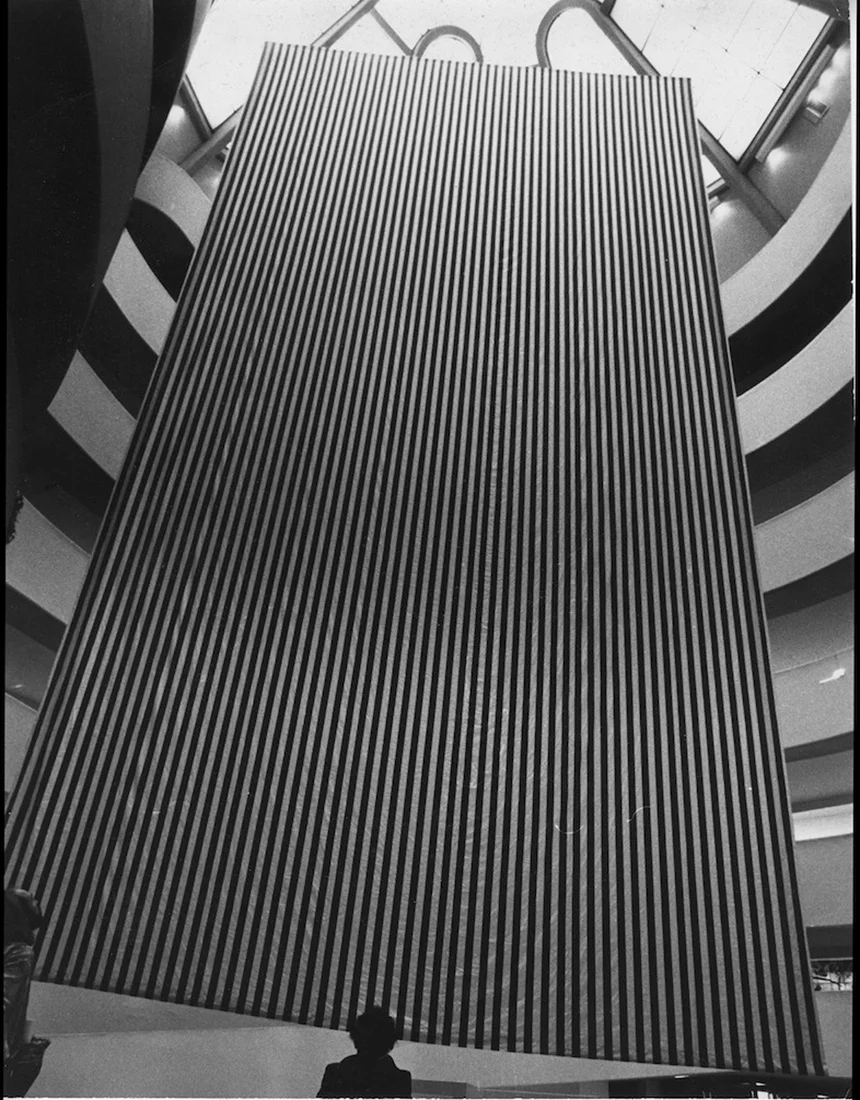
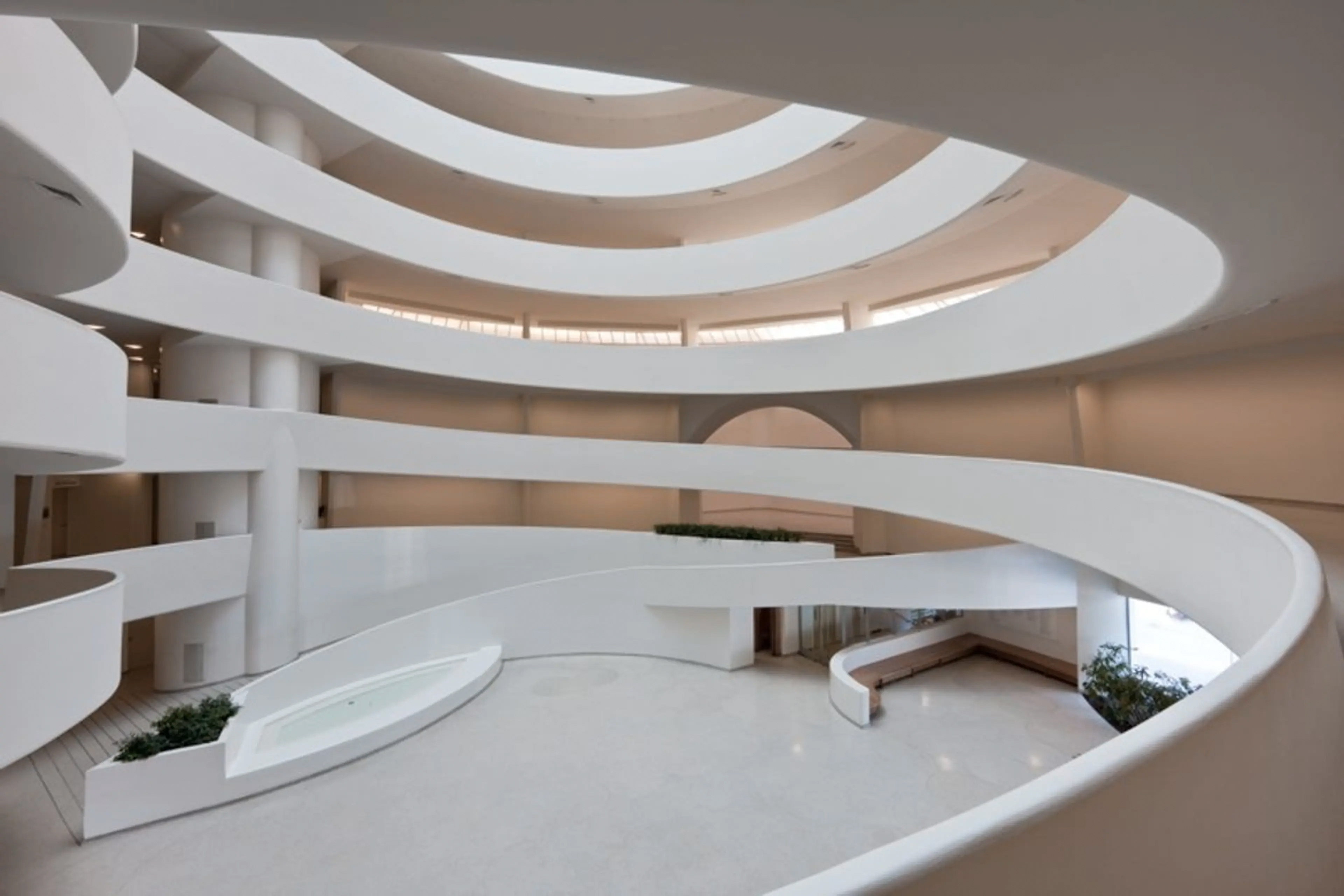
The Guggenheim made the incompatibility public. Buren hung a striped banner through the rotunda, and the banner did what his stripe always does: it interrupted the room’s ability to disappear behind the art it contained. The museum could not treat it as neutral. Judd and Flavin objected, and by the terms of their own practices they were right. Their works required the object to persist as the work. Buren’s required the object to give itself up to the condition it produced.
Two ontologies occupied the rotunda at once: object as work, object as terminating instrument. The museum removed one and, in doing so, made the incompatibility visible. The reaction did not expose a misunderstanding of Buren’s work. It confirmed its operation.
That is where the usual readings become too easy. To call the stripe decorative is to stop at its appearance. To call it institutional critique is to stop at its effect. To call it site-specific is closer, but still too stable. Site-specific work binds a work to a place. Buren’s in situ work binds a work to the duration of its condition. When the condition ends, the work ends with it.
The failure is not incidental. It is the mechanism. The stripe must remain visible enough to be mistaken for painting and insufficient enough to release what painting normally contains. If it disappeared entirely, nothing would happen. If it resolved as painting, nothing would appear. The work exists in the contradiction between those states.
At the door, the fabric still looked like a surface. In the rotunda, the banner still looked like an object.
That contradiction is what gives the stripe its force. It is painting and not-painting at once, surface and release, object and instrument. Neither term can be resolved without losing the work. The stripe does not empty itself into context. It holds just long enough to make holding impossible.
What appears after that is not an image. It is the doorway, the wall, the room, the institution — the conditions that had been doing their work before the stripe made them visible.
The surface does not hold. That is not the failure of the work. It is the work’s duration. What survives is not the work but the trace of the condition that allowed it to occur.
The work does not remove the surface. It prevents it from functioning as painting. The stripe carries none of the decisions the viewer expects to find there. What remains visible is not the image but the conditions that allow it to appear.
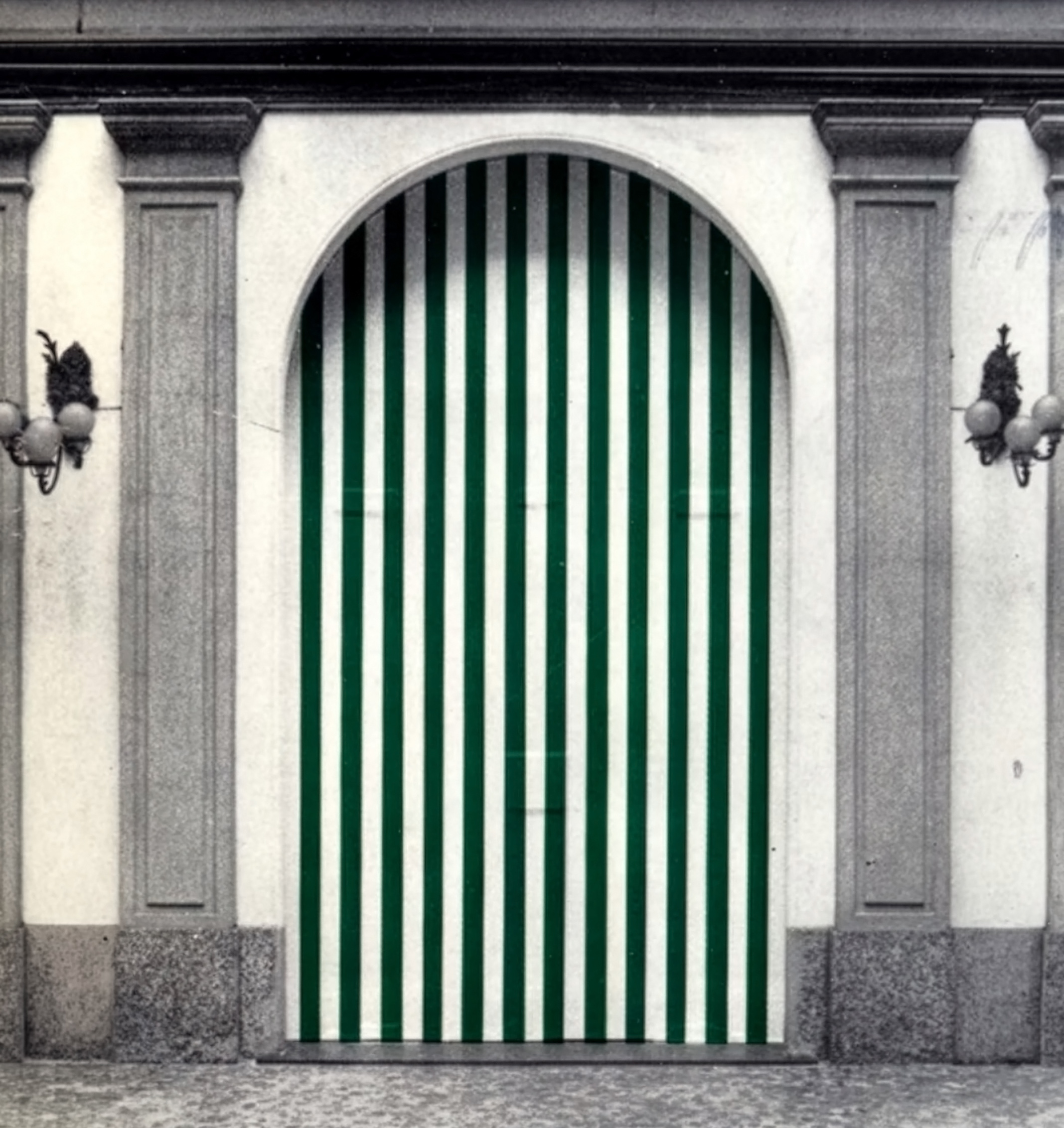
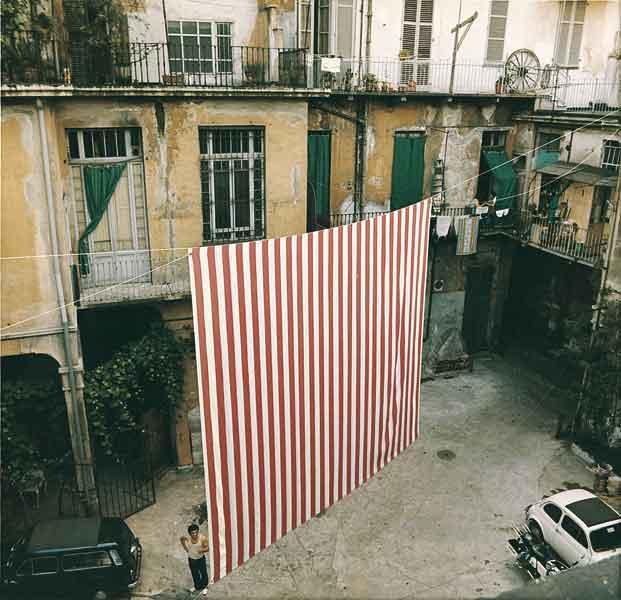
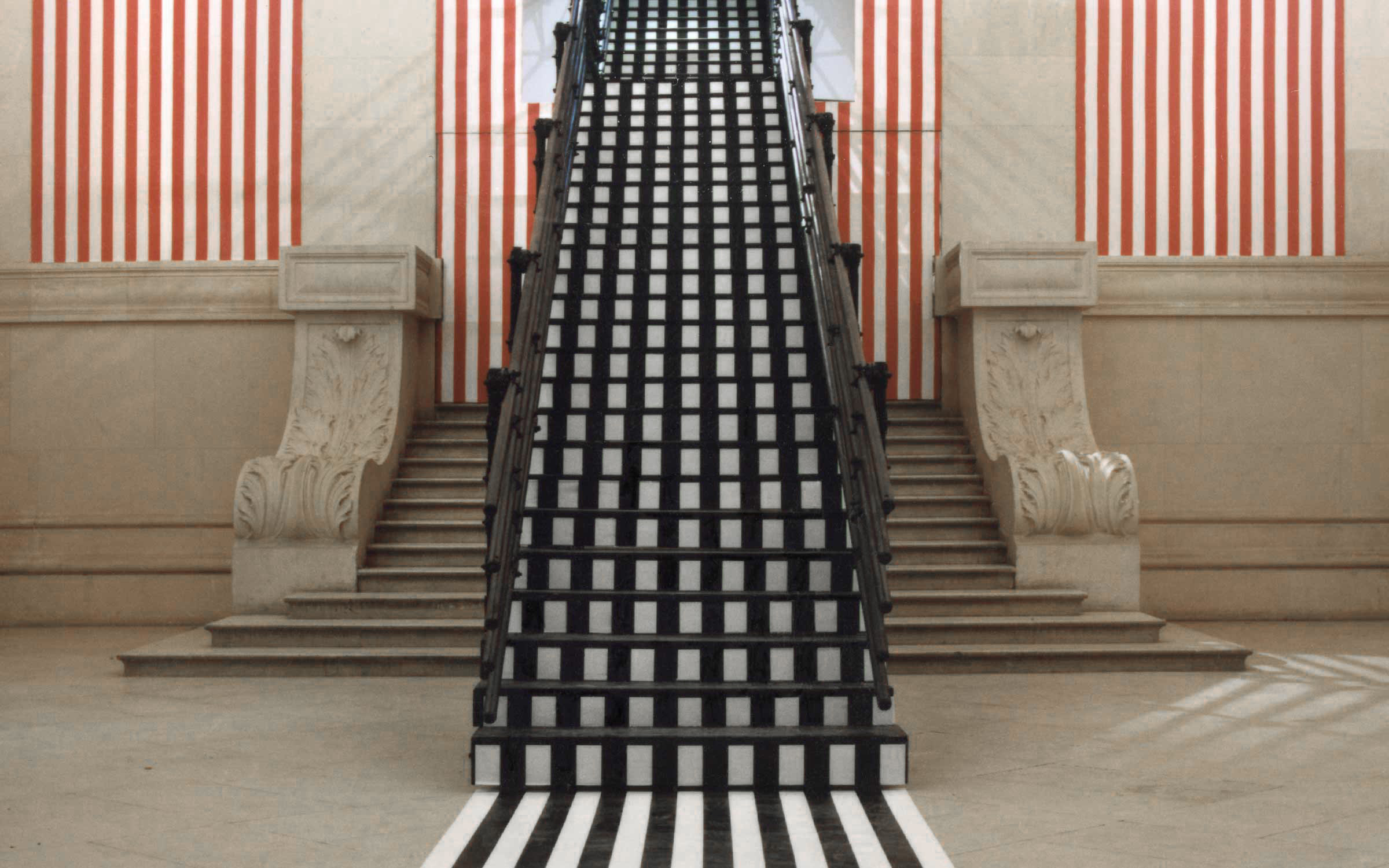
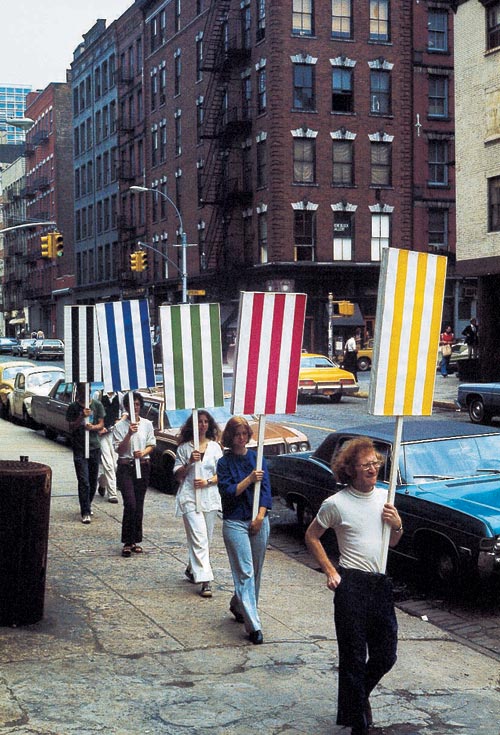
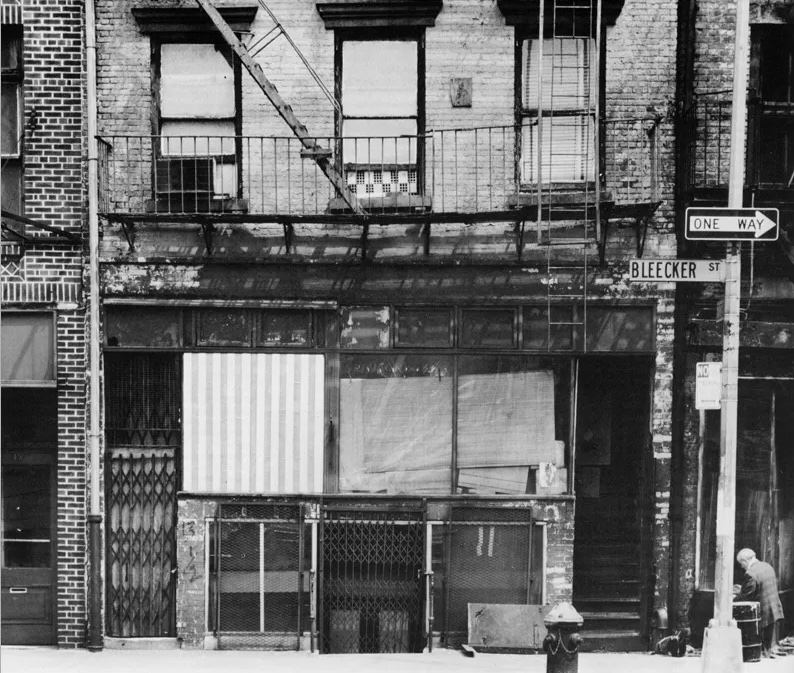
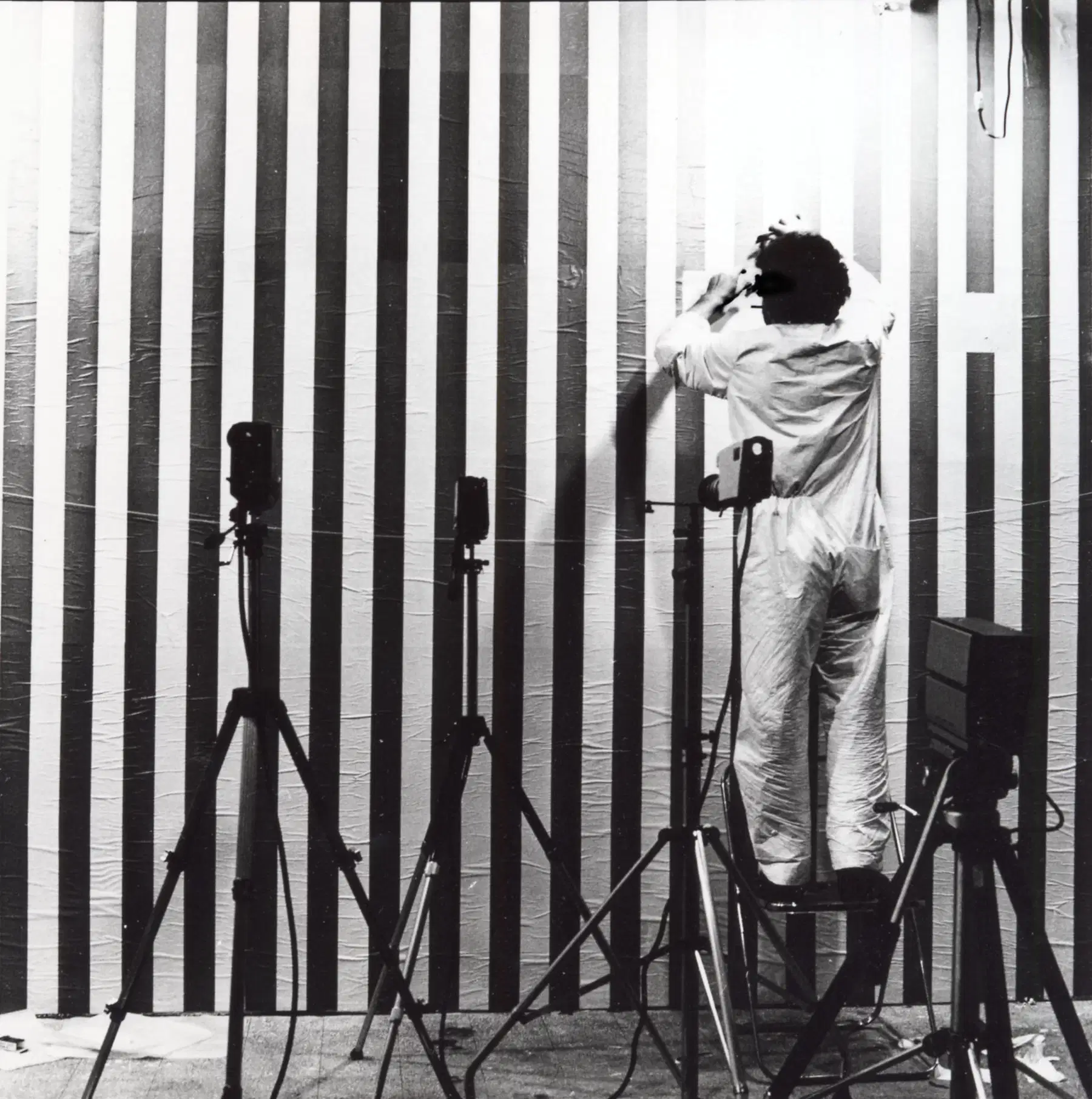
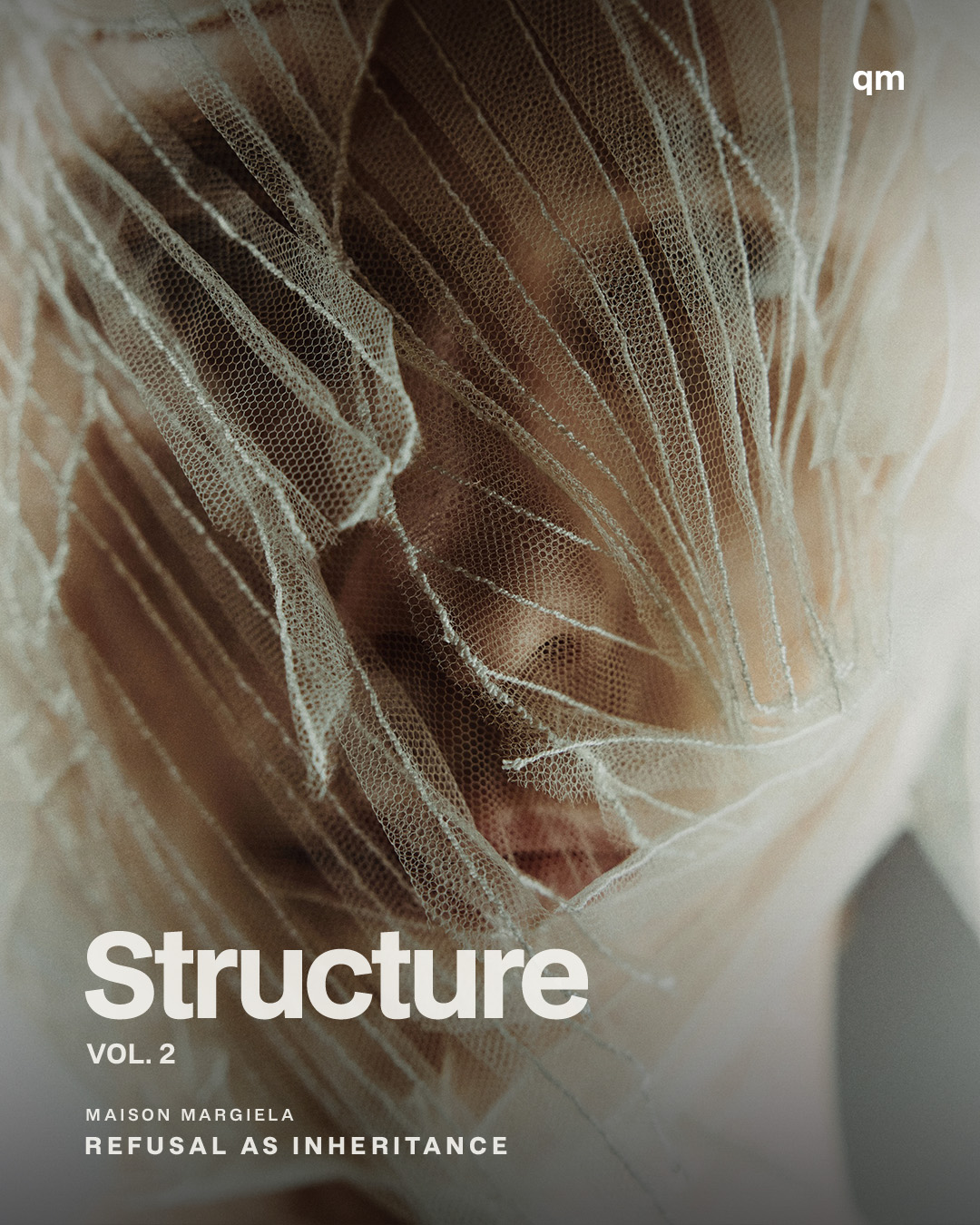
Cover: Photo-souvenir : Papiers collés blanc et vert, travail in situ, galleria Apollinaire, Milan, 1968. Détail.
© Daniel Buren - ADAGP Paris 2026