

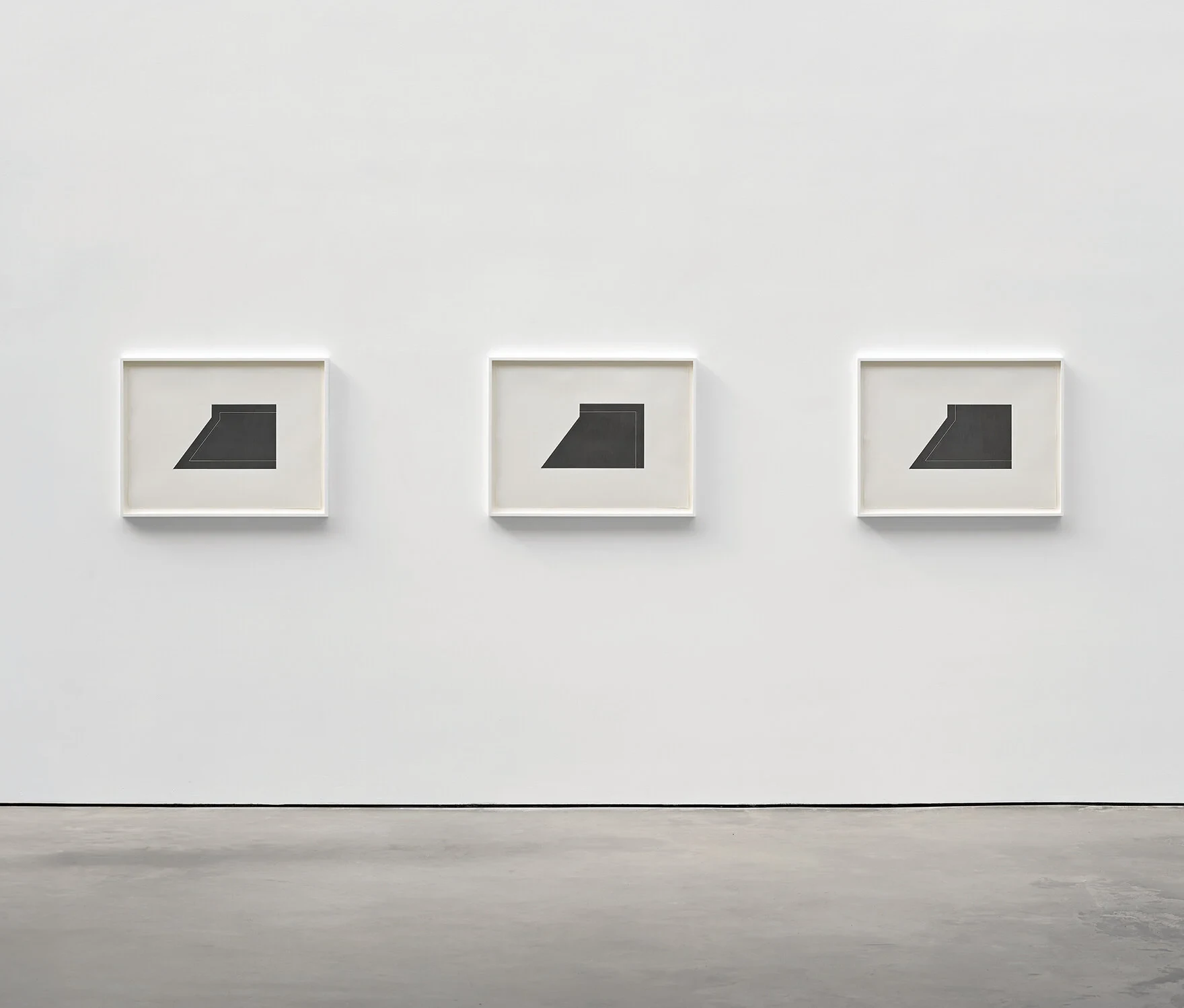
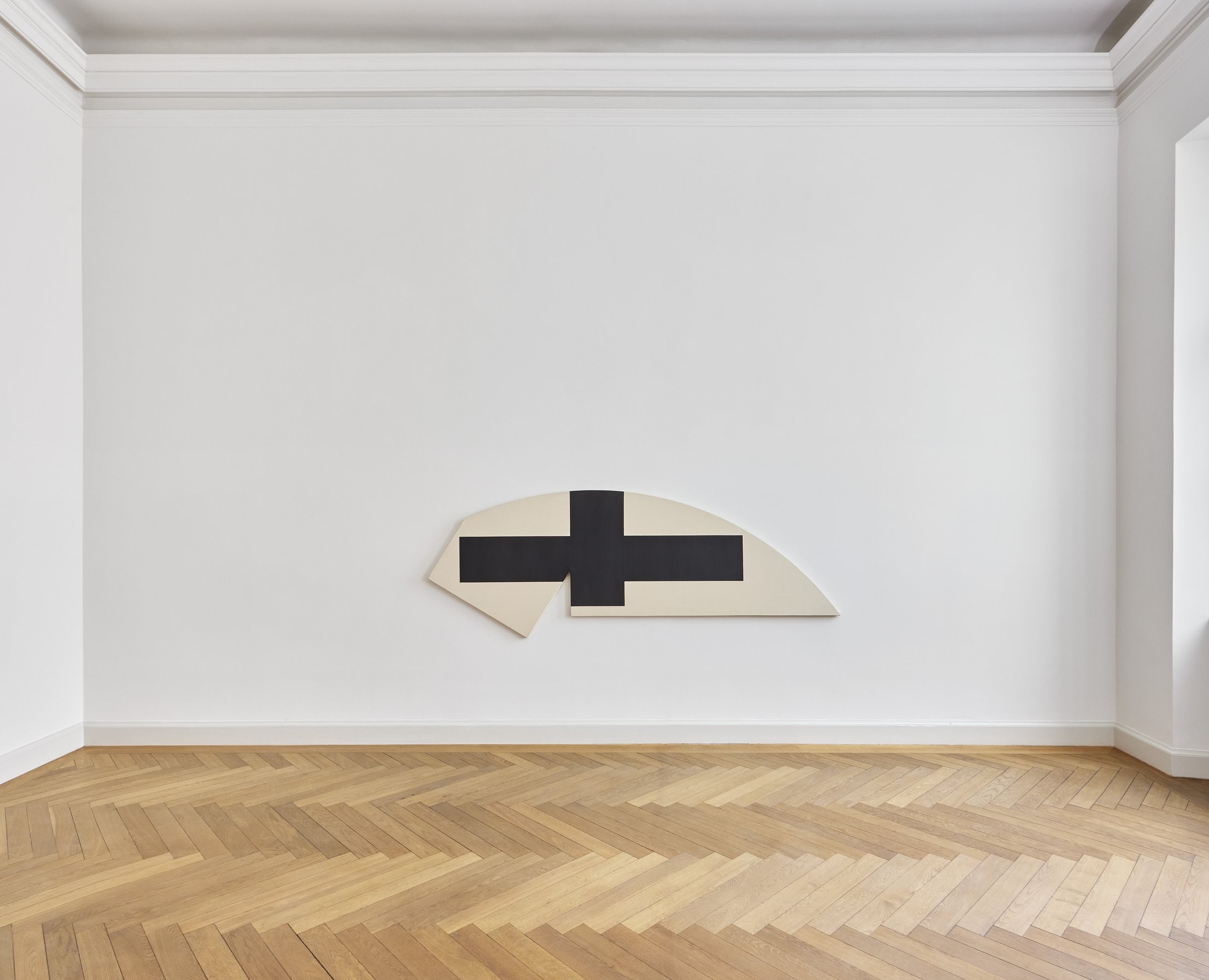
Hung a few inches above the floor, Low Wooster changes the body before it changes the painting. The eye drops first, the head following a moment later, and the wall stops behaving like background. Not far. Just enough that the usual contract of painting loosens. The work no longer gathers itself at eye level or asks the wall to clear space around it as an image. It meets the wall lower than painting should, and because it does, the floor enters. Height enters. Position enters.
The shape is still reduced, still exact, still held by a hard edge. But the edge is no longer doing only pictorial work. It is fixing a placement.
The shape had not begun as a canvas. Stamm first encountered it near his Wooster Street loft: a rectangle with a shorter triangle attached, ordinary and undeciphered, neither sign nor image, just a form the street had left available. The street is no longer where the painting later travels. It is already part of the form’s origin.
Expanded painting names a movement outward from the canvas. Stamm’s work has no such simple direction. The sidewalk, the studio, the wall, the parked car, and the photograph belong to the same circuit. The form does not begin as painting and then leave. It is found, named, placed, carried, and held by whatever surface can receive it.
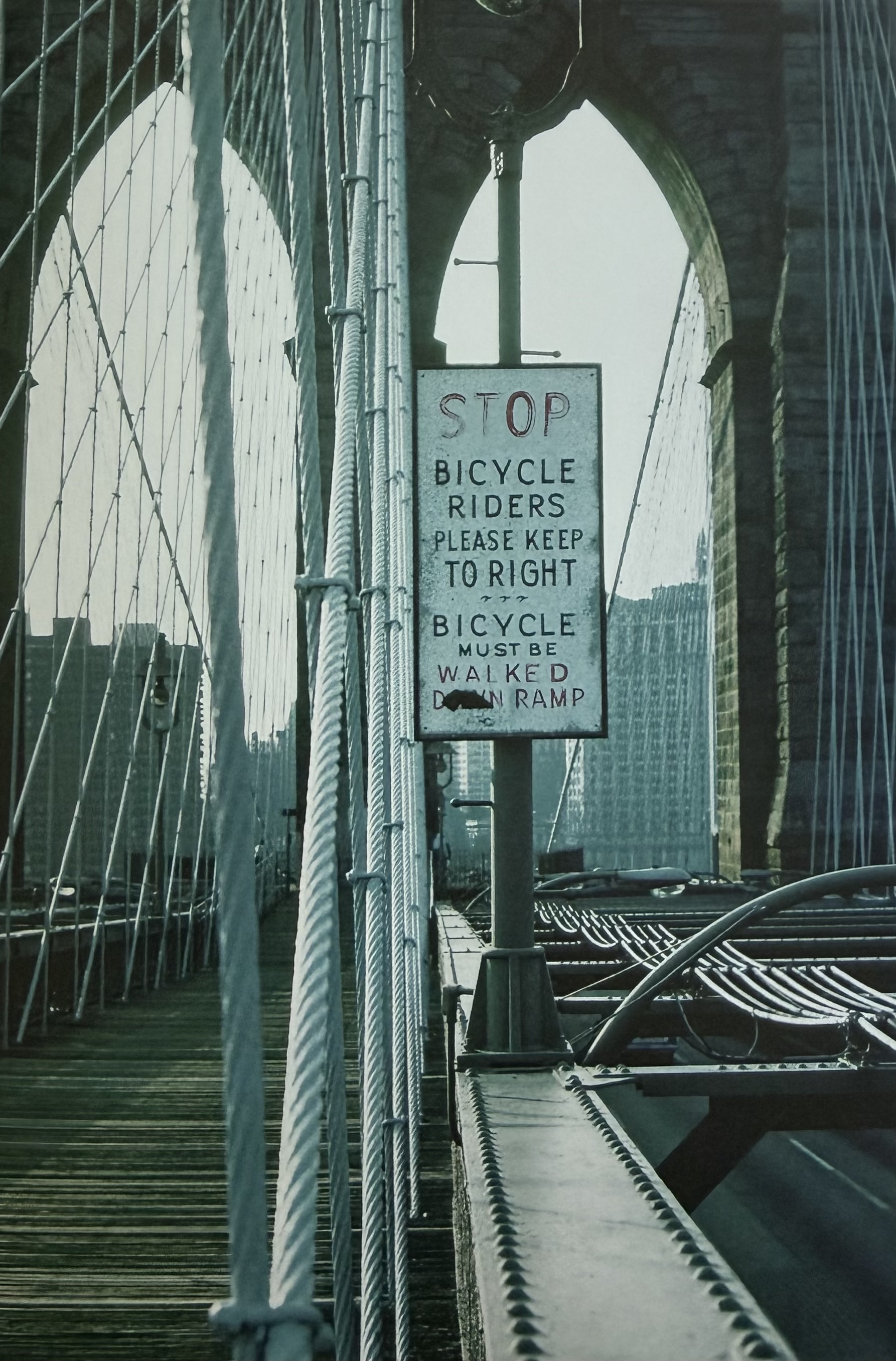
In SoHo in the late 1970s, the street was not a backdrop. It was a working surface: walls, doors, hydrants, bumpers, license plates, and sidewalks carrying marks, messages, interruptions, and claims. Stamm’s form enters that field quietly. It does not announce a name. It does not deliver text. It makes a surface carry a designation.
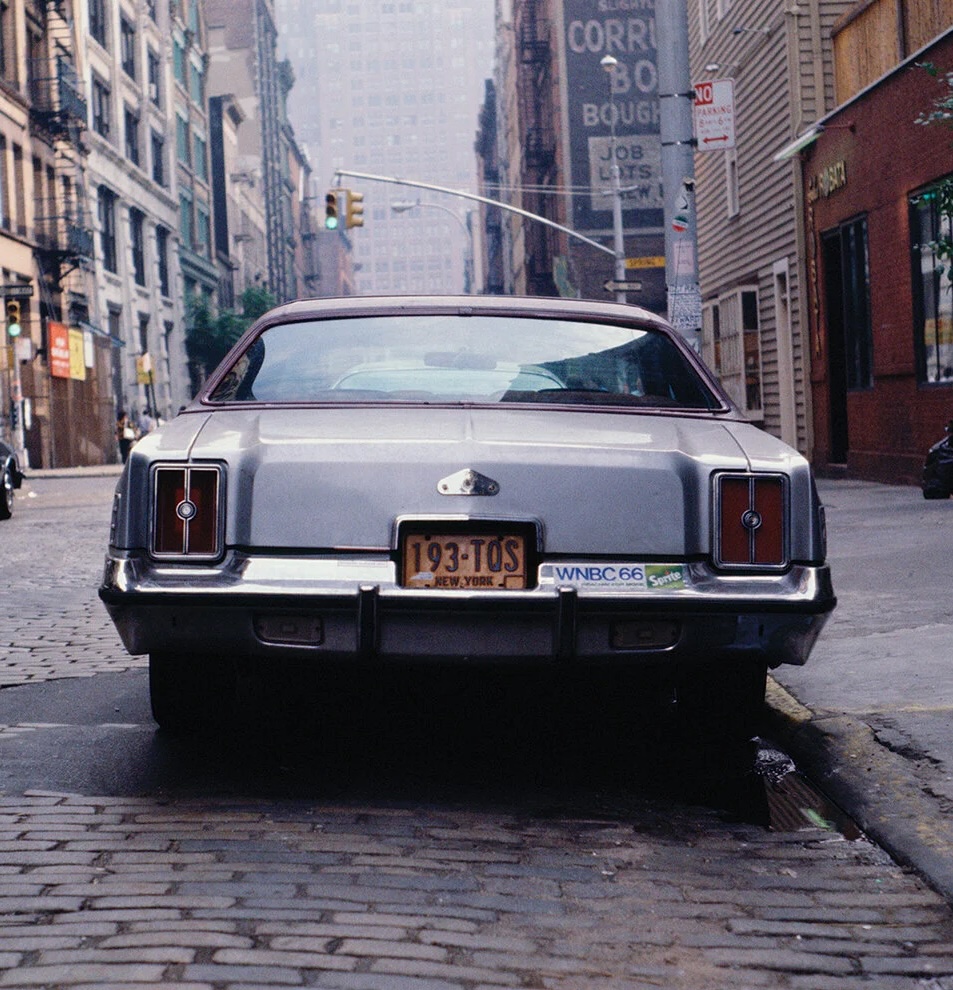
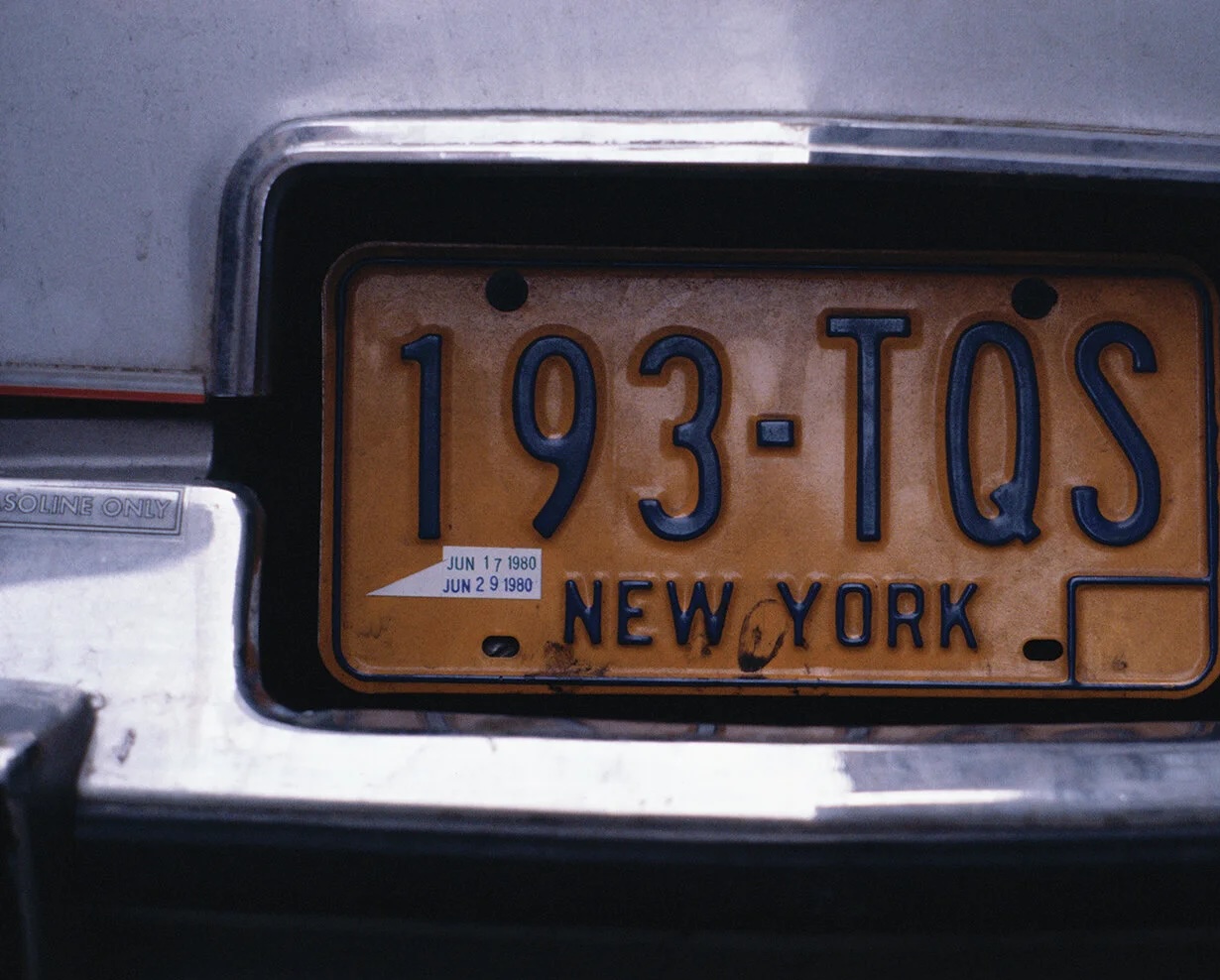
By 1980, the Wooster shape is on parked cars in SoHo, fixed as white adhesive labels to license plates. To place the label, the body drops to the height of the bumper. The same lowering that Low Wooster asks of the eye now happens in the street. White paper meets stamped metal; the Wooster shape sits over a plate already built from registration, number, permission, and movement.
Stamm does not add a message to the car. He adds another designation.
The same hard-edged shape that met the gallery wall near the floor now sits at knee height, exposed to traffic, weather, cleaning, motion, disappearance. It does not adapt itself to the car. It does not compose itself around the plate. It arrives intact and waits to move with whatever carries it. The car may remain parked, or it may drive away. Either way, the placement has changed what the surface is being asked to do.
This is where “painting” stops being a large enough word. The shape is not leaving one medium for another. It is testing whether a form can hold its identity when the support is no longer stable, frontal, or still.
That is why the photograph matters. The sticker alone cannot hold the relation the work has made. It will weather, loosen, peel, disappear, drive away. Each placement is fixed twice: once close, where the white shape sits flat against the plate; once stepped back, where the car reenters the street around it. One photograph presses the mark against the carrier. The other returns the carrier to the city.
Together they do not document the work after the fact. They are where the designation stops moving long enough to become work.
The canvas closes at the stretcher. The Designator closes at the frame.
The titles make the operation clearer. C-DGR-5 does not describe what a work looks like after the fact. It specifies what is being carried out. DGR is Dodger. C-DGR is Concorde Dodger. NRB is Non-Reflective Black. ZYR is Zephyr. These codes sound less like titles than inventory: part number, route marker, material abbreviation. Even when the references carry motion — Dodger, Concorde, Zephyr — the title strips them into designation.
This is not the language of description. It is the language of parts, routes, materials, and procedures. The title does not decorate the object with reference. It tells the work how to proceed.
The name does not follow the object. The object follows the name.
Once Stamm names the work this way, the shape stops being the subject and becomes one element in a repeatable operation. It can be painted, stenciled, adhered, photographed, reissued. The important thing is not whether it belongs to canvas or street, but whether the relation holds.
With the Dodger stencils, the designation is no longer held by one placement alone. It has to survive change. A stencil appears in a place connected to Stamm’s movements through the city. If altered, the work is not over. Stamm returns and marks it again. The designation absorbs interruption into its own procedure. A site has been chosen, a form applied, a change registered, a return made. The work is not fixed by permanence. It is fixed by the sequence of acts that keep the designation legible.
Three closures appear. The canvas closes through the stretcher. The license plate Designator closes through the photograph. The Dodger stencil closes through return — the mark altered, revisited, and marked again. Medium is not the difference. Closure is. A medium, here, is not a kind of object. It is a way of holding a relation long enough for it to become work.
Seen beside the street works, the canvases stop looking like origins. ZYR-4, from 1979, is not a studio version of the Designators. It is another branch of the same operation. The Zephyr title enters the same abbreviated register. The form is still exact, still reduced, still hard-edged, but the canvas is no longer the privileged source from which the rest extends. It is a surface capable of holding the designation without the extra work of photographic closure. The stretcher keeps what the license plate cannot.
The usual terms begin from the wrong primitive. Shaped canvas begins with the canvas. Expanded painting begins with painting. Proto-graffiti begins with message. Site-specificity begins with place. Indexicality begins with trace. Stamm begins earlier: with designation. The work is not a painting that enters the world, a message that enters the street, or a trace that points back to an event. It is a form named and placed so that a surface becomes responsible for carrying it.
That is why the biographic reading is only partly useful. Stamm’s movements through SoHo matter because they give the work its circuit: loft, sidewalk, street, wall, car, photograph. But biography is not the structure. The fact that a place mattered to Stamm does not explain what the work does there. What matters is that a surface becomes a site of carrying. The work does not tell the story of where Stamm went. It tests what can hold the designation as it moves.
By then, Low Wooster can be seen again. Its low hang is not an installation choice added to a painting. It is the condition that lets the work close. The shape meets the wall where painting should not quite be. The floor enters. The body adjusts. The image does not ask to be contemplated at a stable height. It asks the wall to become a surface of placement.
The same operation appears on the license plate. The same operation appears in the photograph. The same operation appears on the canvas. Each support changes the terms of holding. None is the origin.
This is Stamm’s difference from the surrounding language of hard edge, Minimalism, and expanded painting. The edge remains, but it is no longer there to stabilize composition alone. Reduction remains, but it is no longer tied to an autonomous object. The form remains, but it is no longer the whole work. What comes first is designation: a form named, placed, carried, and made to hold.
The works differ because the placements differ. The operation does not.
Art history often treats the mark as the moving thing and designation as fixed — title, date, attribution, record. Stamm reverses that relation. The mark remains stable. What moves is the operation that makes each surface count.
The mark stays fixed.
The designation moves.
The form does not develop through decisions made in the act of making. It is identified, named, and placed according to a system that precedes the object. The surface carries the result of that designation. What appears is not constructed but located.


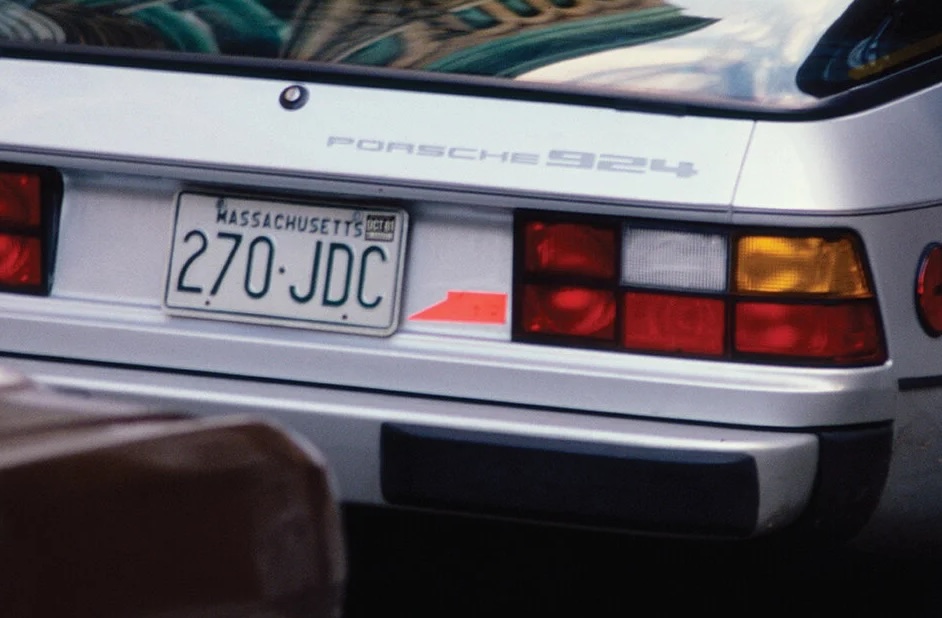




Cover: Ted Stamm, Designator (on Porsche 924), c. 1978–1980. Stenciled intervention on urban object, New York City. Photo © Ted Stamm Estate / Lisson Gallery. © Estate of Ted Stamm.
All images © their respective rights holders.