

The eye follows the line.
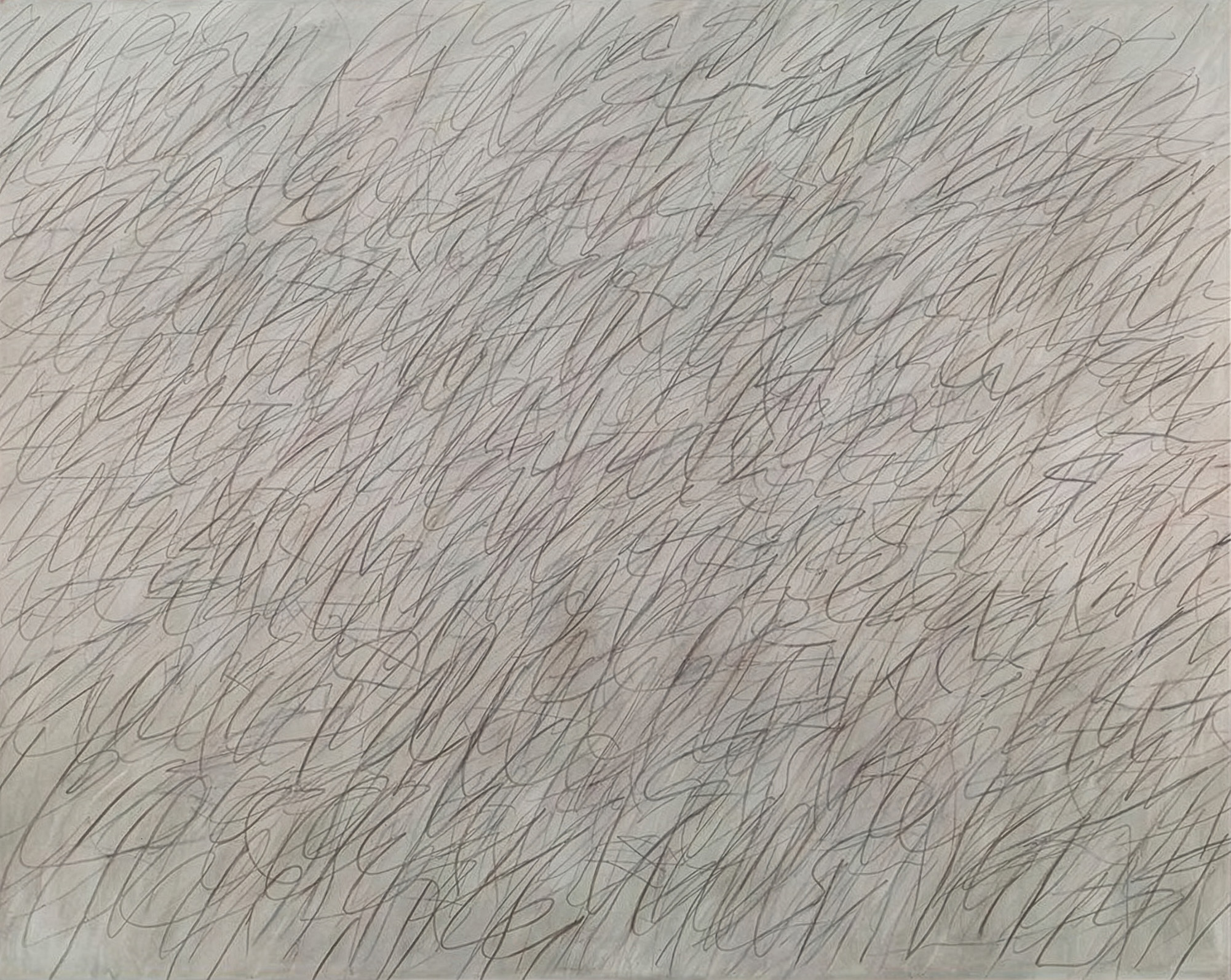
It moves left to right, holding one loop long enough for the next to matter. The hand has already decided the direction. The line continues, and the eye continues with it, waiting for something to close. A letter begins, almost forms, opens again, and carries on. Another follows. Then another. The movement settles into sequence before anything can be read.
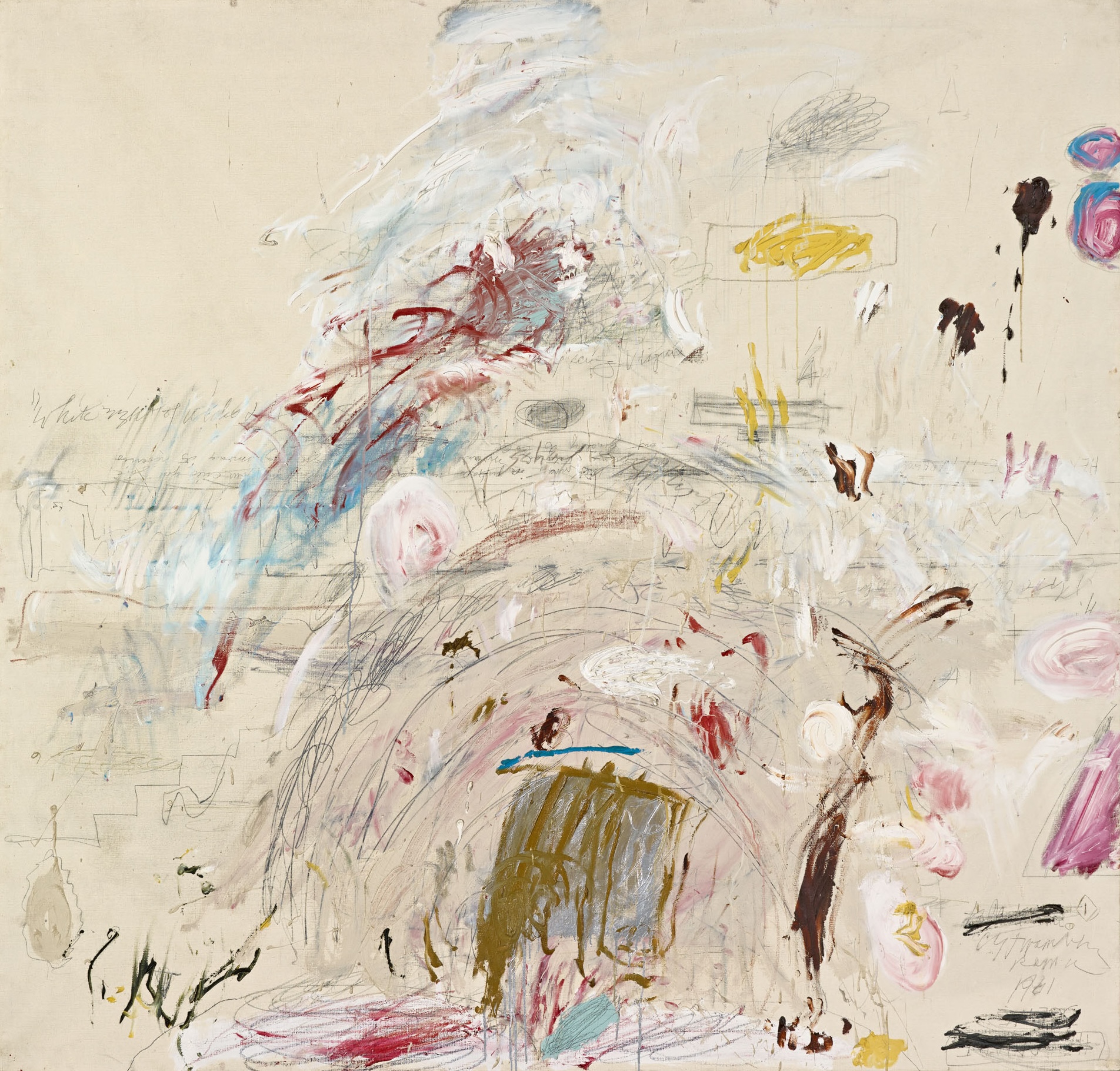
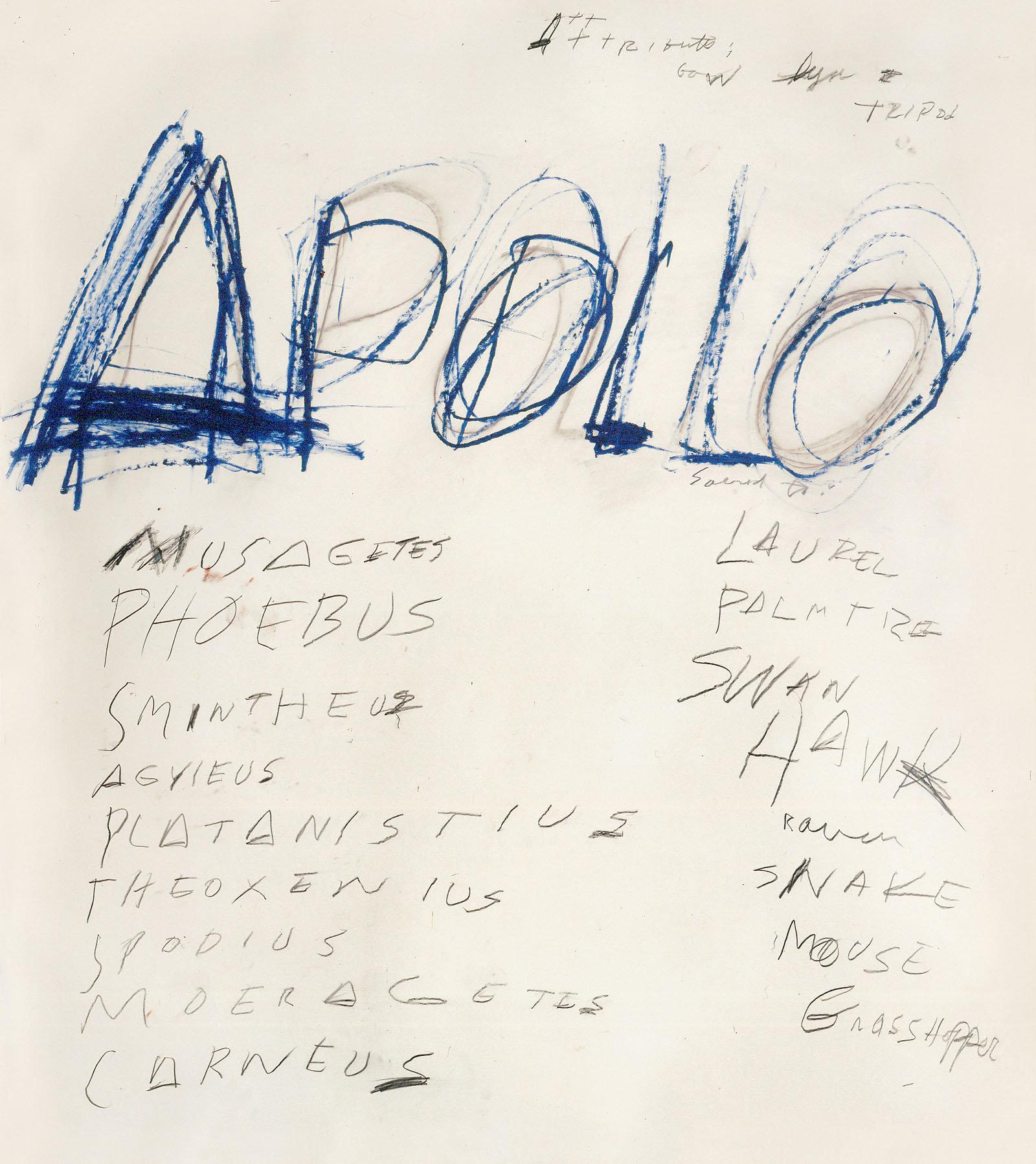
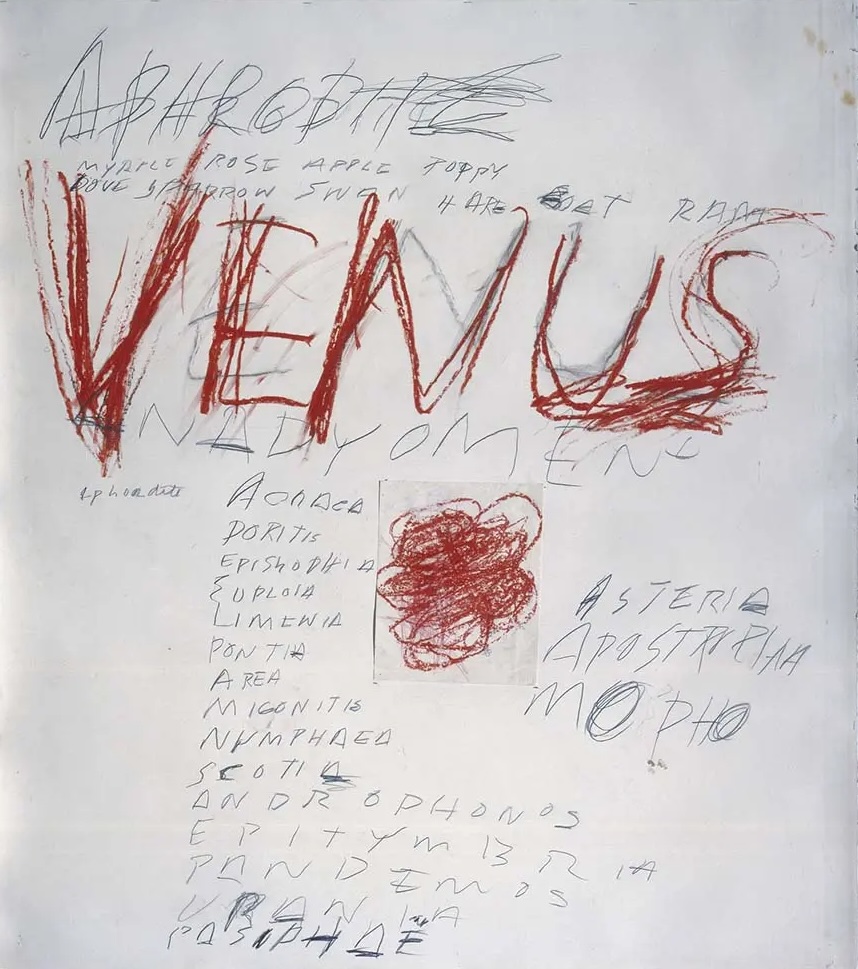
Names appear often enough to confirm it. Virgil. Apollo. A dedication. A line of verse. They do not interrupt the field. They secure it. The surface holds as inscription, language moving close to the hand, writing before it has fully resolved.
Nothing resists this at first. Direction is there. Repetition is there. The marks extend as script extends. The eye does what it always does with writing: it follows, it waits, it assumes something will hold.
Then it doesn’t.
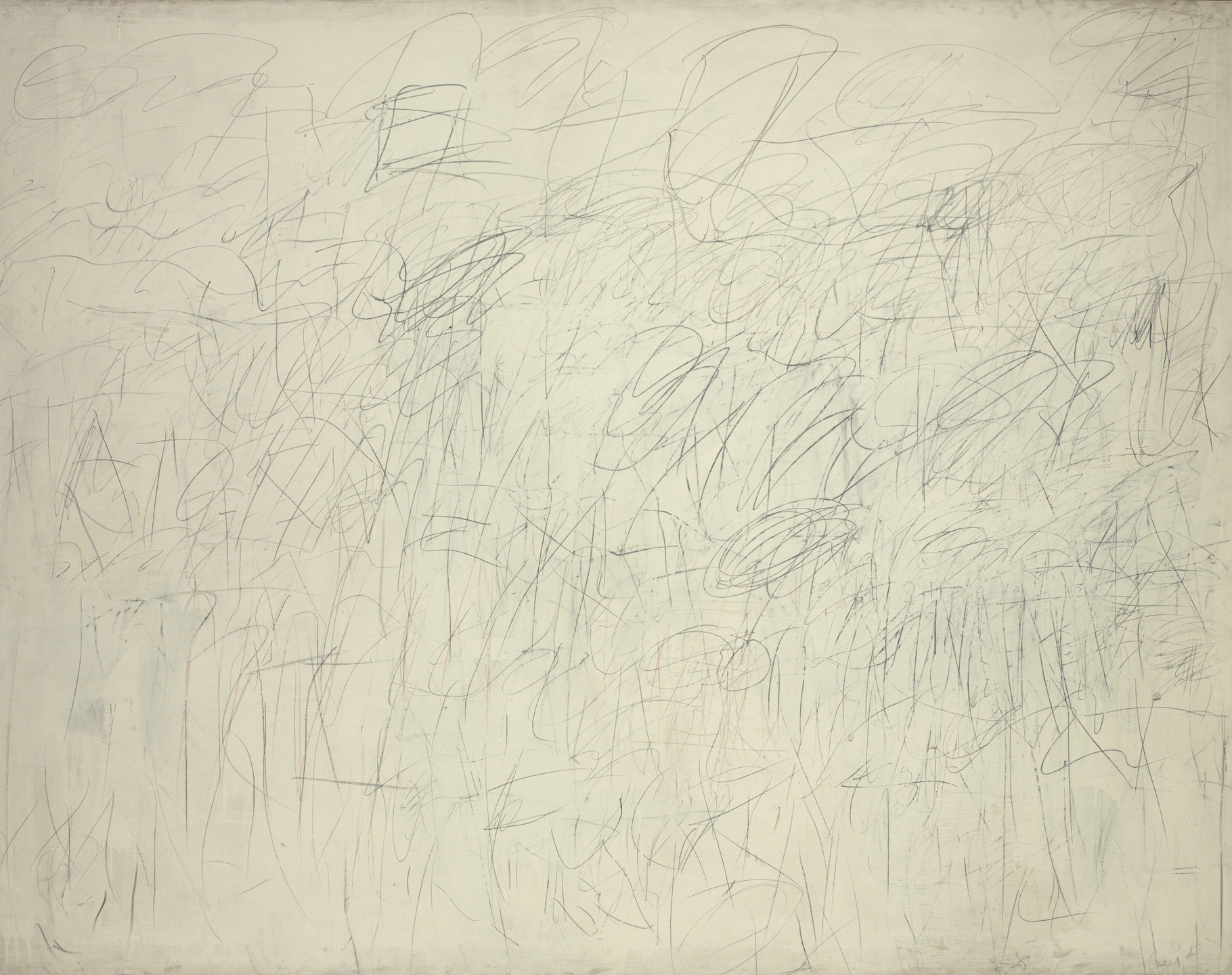
A loop passes the point where a letter should close and continues. The eye returns and finds nothing to return to. A sequence forms without fixing. What looked continuous does not accumulate. What looked like it would hold does not stay. Nothing remains fixed long enough to be followed through as part of a sequence.
The Blackboard paintings bring the condition forward. They are now encountered so often in reproduction that their familiarity can hide what they are actually doing. The ground behaves as a chalkboard — a surface built for marks that will not be kept. The wipe is visible. Chalk residue remains. What has been cleared is still partly there. The surface shows its own removal. Mark, use, erase: that is the specification. What is preserved is not the mark itself, but the condition under which marks do not remain. Non-retention is not the outcome. It is the condition declared before the first line is drawn.
Across that ground, the hand repeats a trained movement: looping, continuous, carried forward before it becomes a letter. The line does not stop to form a word. It keeps going. This is not gesture. It is the movement writing is built from — the repeated loops that train the hand before it forms letters, known as the Palmer Method. The continuity is complete. The letter never arrives.
Each loop resets the line rather than advancing it. Continuity is maintained, but nothing accumulates. The surface fills without ever resolving into anything that can be read.
Twombly trained as a cryptographer. The association presents itself — a hand trained in codes, marks that resist reading. But a cipher preserves what it obscures. It holds something in place so it can be returned to, worked through, recovered. Nothing here behaves that way. Nothing can be decrypted because nothing has been stored.
He worked under another condition. The drawings were made in the dark. The hand moves across a surface it cannot check. No visual correction brings the line toward a letter as it is being made. What reaches the surface does not arrive as something that can be adjusted into writing.
A surface that does not retain. A movement that does not resolve into letters. A hand that does not correct itself as it proceeds. They hold at once. Nothing is removed afterward. The mark is complete as it is made, and it does not become writing.
What disappears with it is specific. Closure, so no loop resolves into a character. Syntax, so one mark does not secure the next into language. Personal signature, replaced by repetition that carries no variation. Correction, removed by the dark. Accumulation, prevented by the ground. Nothing holds long enough to be returned to.
Across other works, names remain — Virgil, Apollo, fragments of text. They can be returned to. They hold. They show that writing can occur. What surrounds them does not fail to write. It refuses to. The presence of language does not extend into the field in which it sits.
Illegibility is often treated as preservation — thought held before it stabilizes, meaning not yet fixed. The surface appears to contain something that cannot be read. But nothing can be returned to here. Nothing can be followed back or recovered. A mark that cannot be returned to does not preserve anything.
Work that prevents retention reproduces without loss. There is no content the photograph fails to carry, no meaning the reduced scale diminishes, no nuance the backdrop flattens. The Blackboards became among the most reproduced paintings in contemporary art not despite what they do but because of it. A painting that performs reading without storing content passes intact into reproduction. The wall gives way to the screen and nothing is lost, because there was nothing there for reproduction to keep.
The hand performs what writing requires. The surface receives it fully. Nothing is kept long enough to become record.
What remains is notation: the trained movement of writing held on the surface after writing no longer forms. The marks do not conceal a message, encode meaning, or preserve a trace. They present inscription after record has been removed.
In Cy Twombly’s work, form emerges through repeated inscription, drift, and interval, allowing the mark to operate as a structural event rather than as readable language.
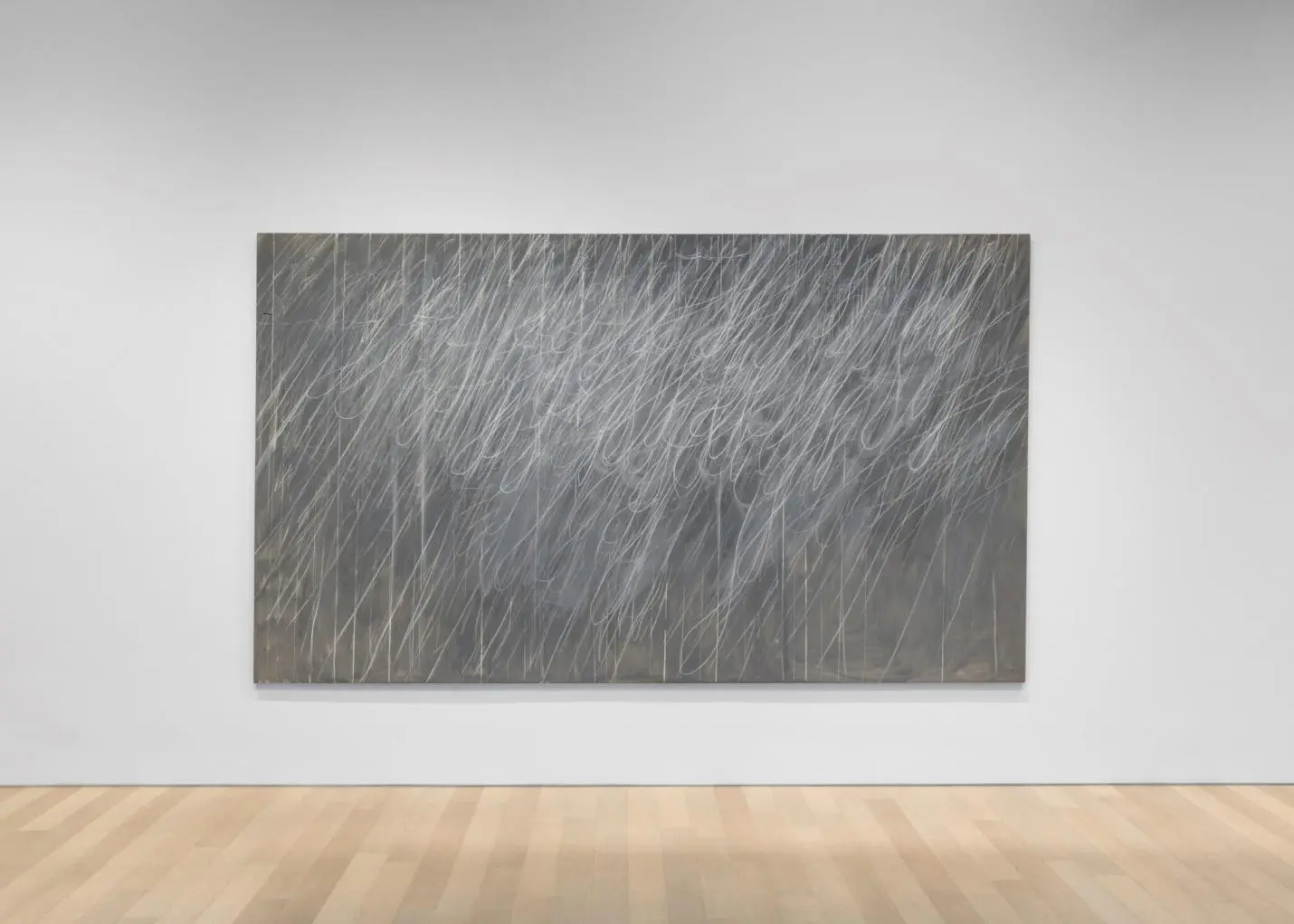
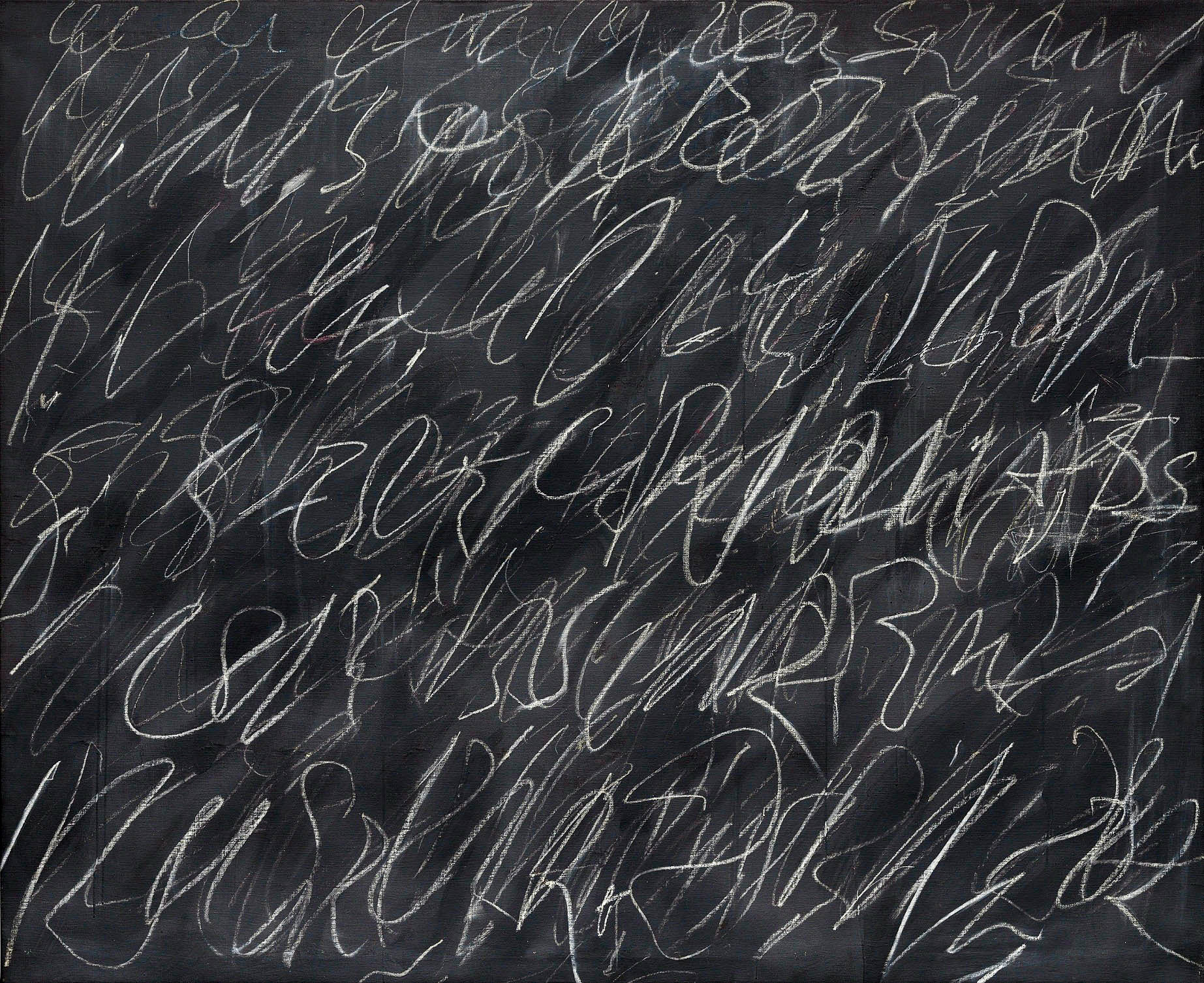
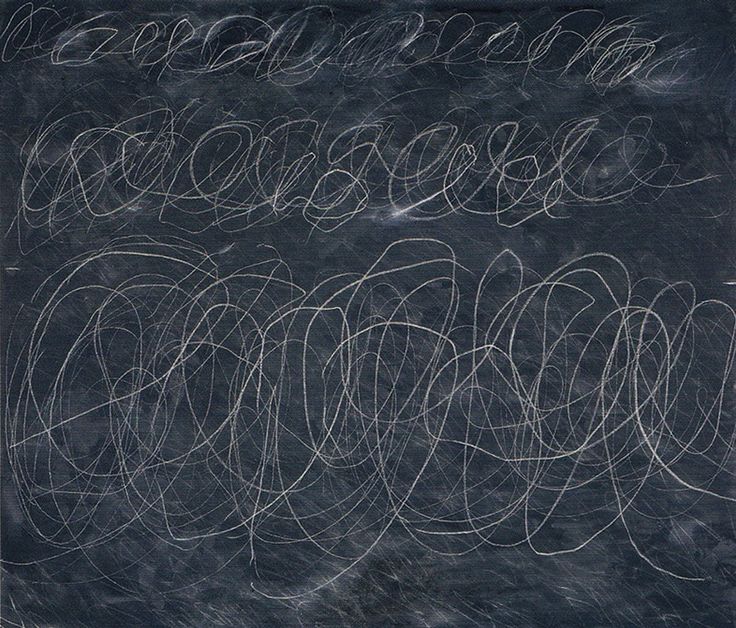
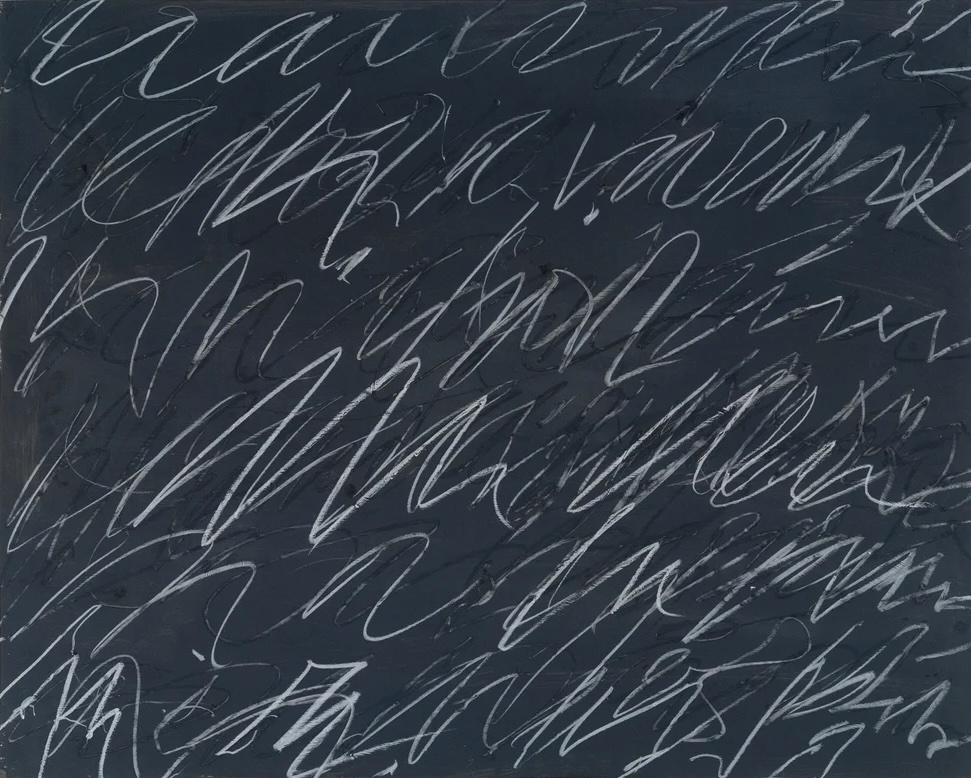
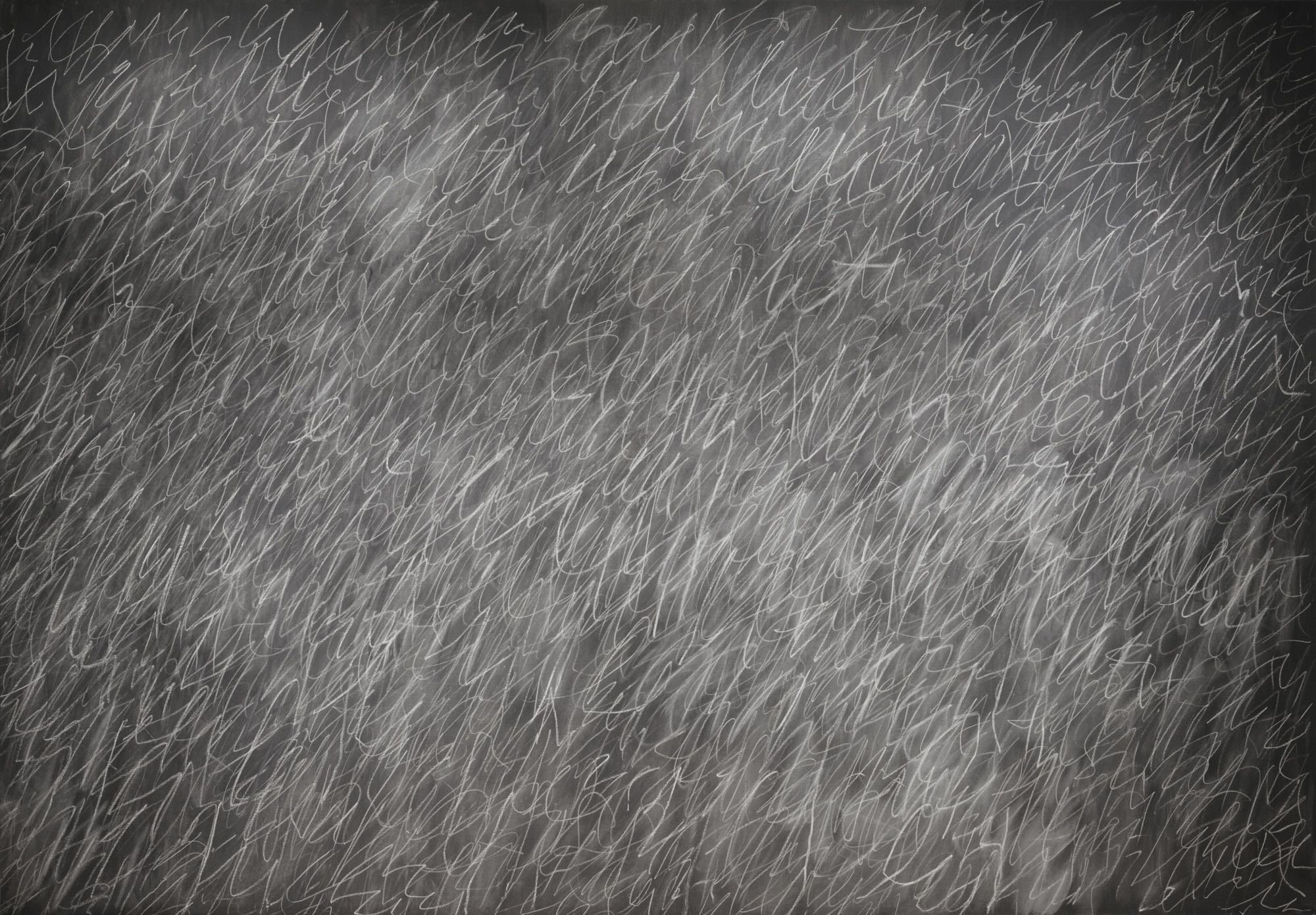
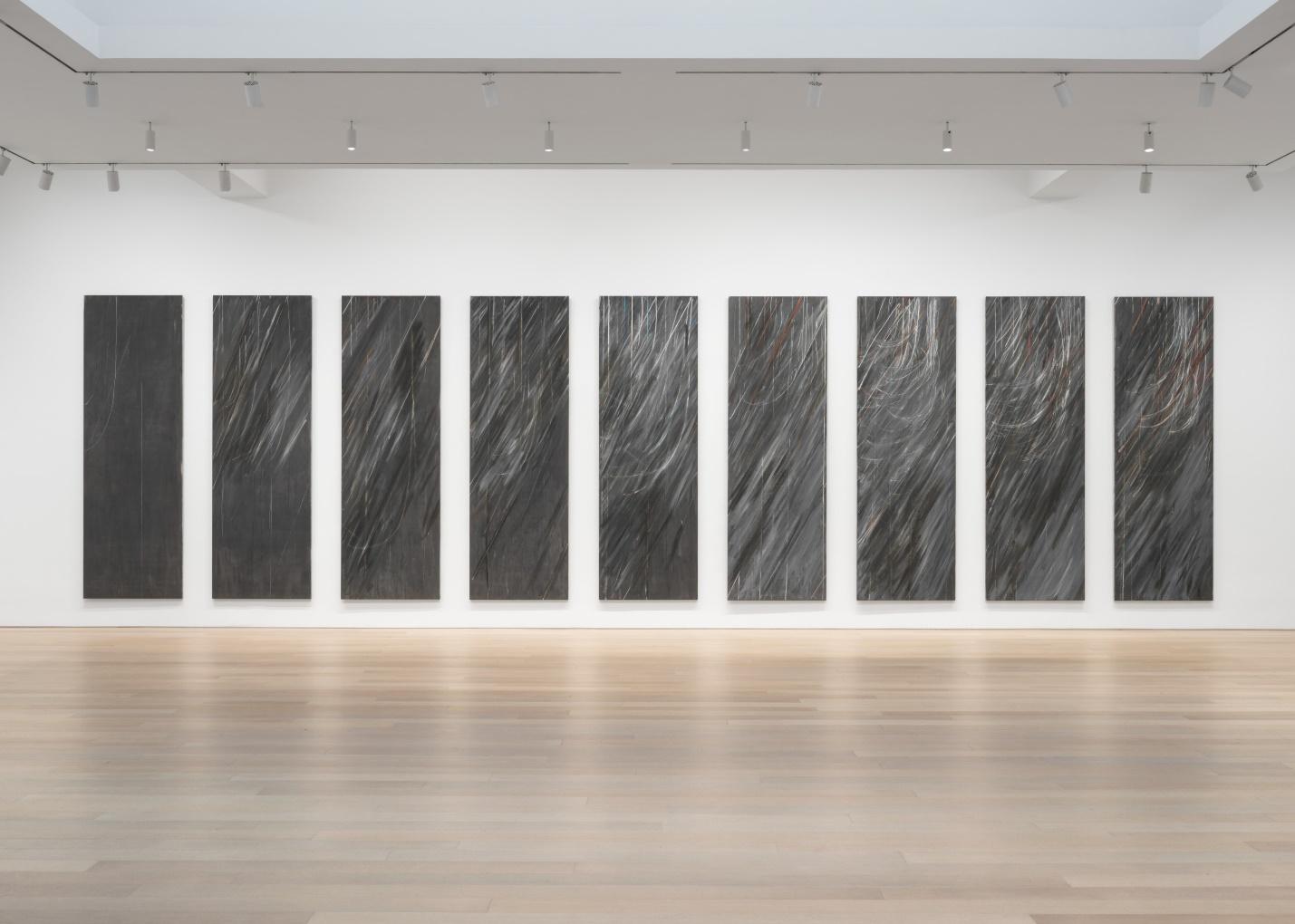
Cover: Cy Twombly, Untitled (Blackboard series), 1970. Oil-based house paint and wax crayon on canvas. © Cy Twombly Foundation.
All images © their respective rights holders.
Image rights & attribution →