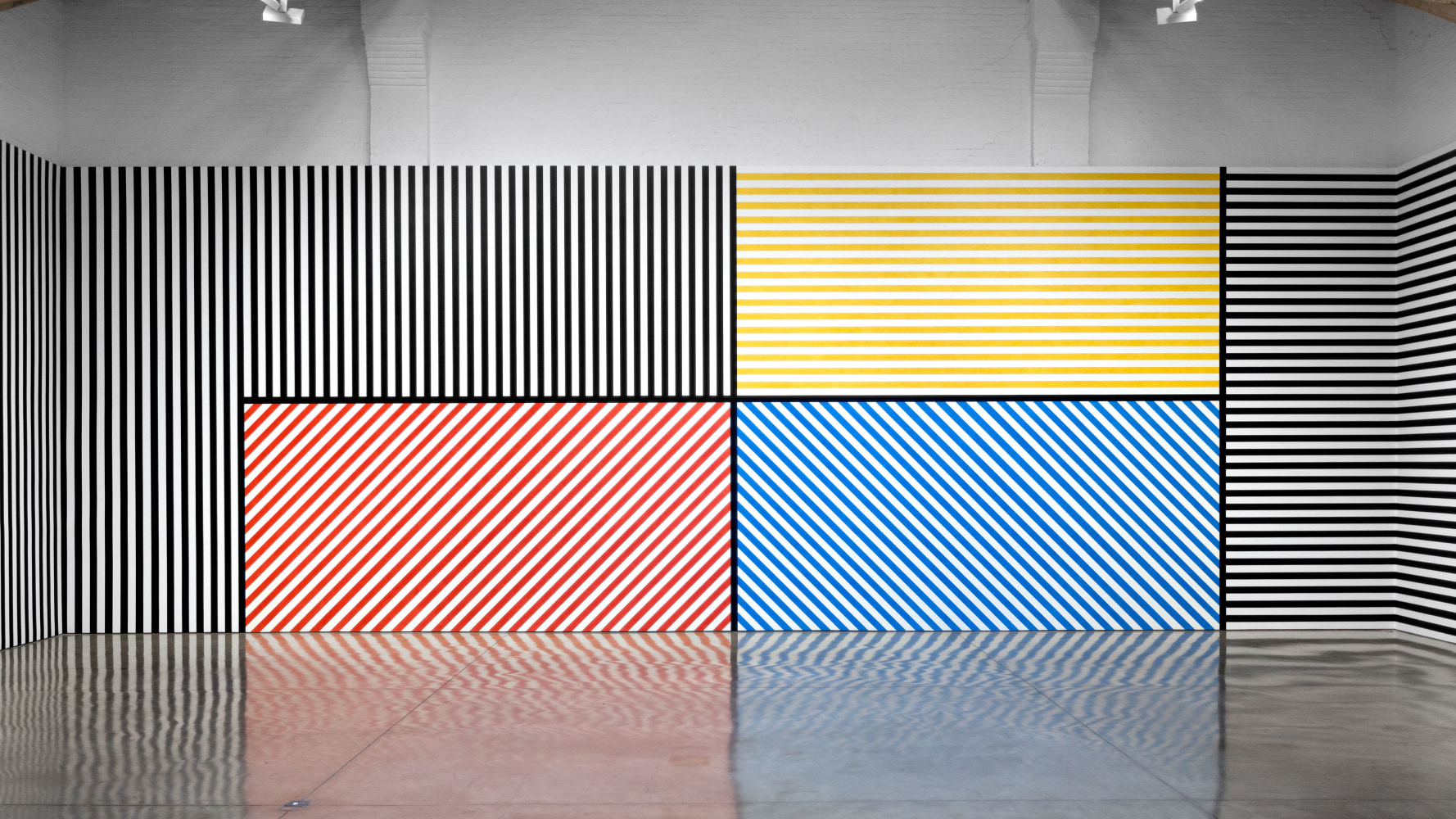


Seven Twists I–VI, 1979. The title names seven; the Roman numerals give six. The tension is not incidental to the reading. It is the first cut the work asks the viewer to make.
Count them once, then again: six photographs. Maurer holds a square photograph in front of her face. The image is turned and held again. A photograph contains the photograph before it. The frame folds into the next frame. The face that began near the edge recedes toward the center. Hands multiply around it. The number in the title keeps asking for another image the work refuses to give.
That mismatch is not outside the work. It is the pressure inside it. The title keeps the operation open. The visible sequence withholds completion. Before painting, geometry, or displacement have been named, Maurer has made the cut visible.
The stop is the work.
Displacement is Maurer’s word, and the word is right. The problem begins when displacement is treated only as visible movement: forms shifting, positions altering, perception recalibrated. Something moves from here to there. The eye follows.
Maurer named something less stable. She described displacement as “a polysemantic but elementary process in time and space.” Movement is only one register. A displacement changes position, but it also changes what counts as an image, where a work begins, and how much of a procedure the surface is allowed to hold.
If displacement remains visual movement, the image survives intact. It stays a complete thing whose parts have been rearranged. Maurer’s work does something more severe. It refuses the image’s claim to wholeness.
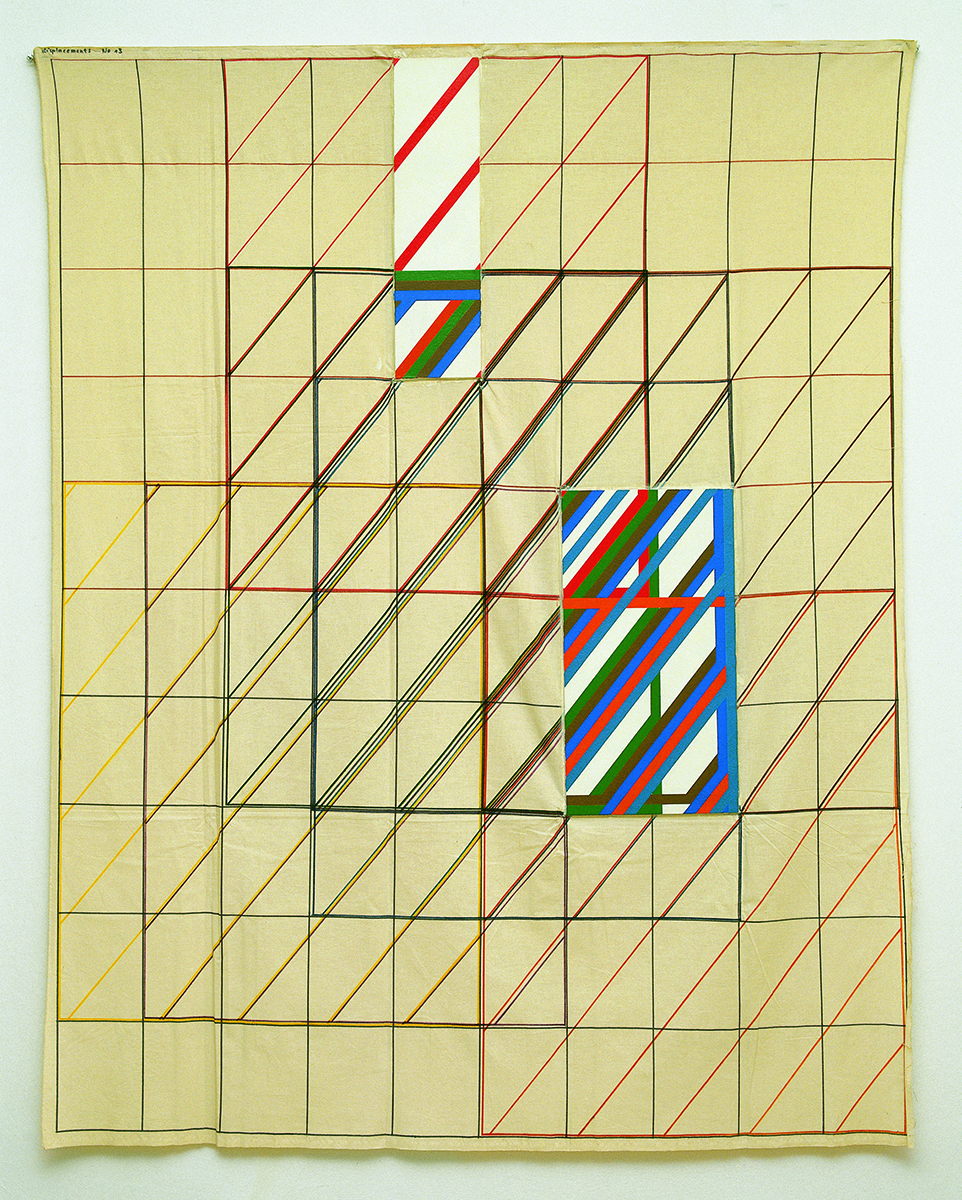
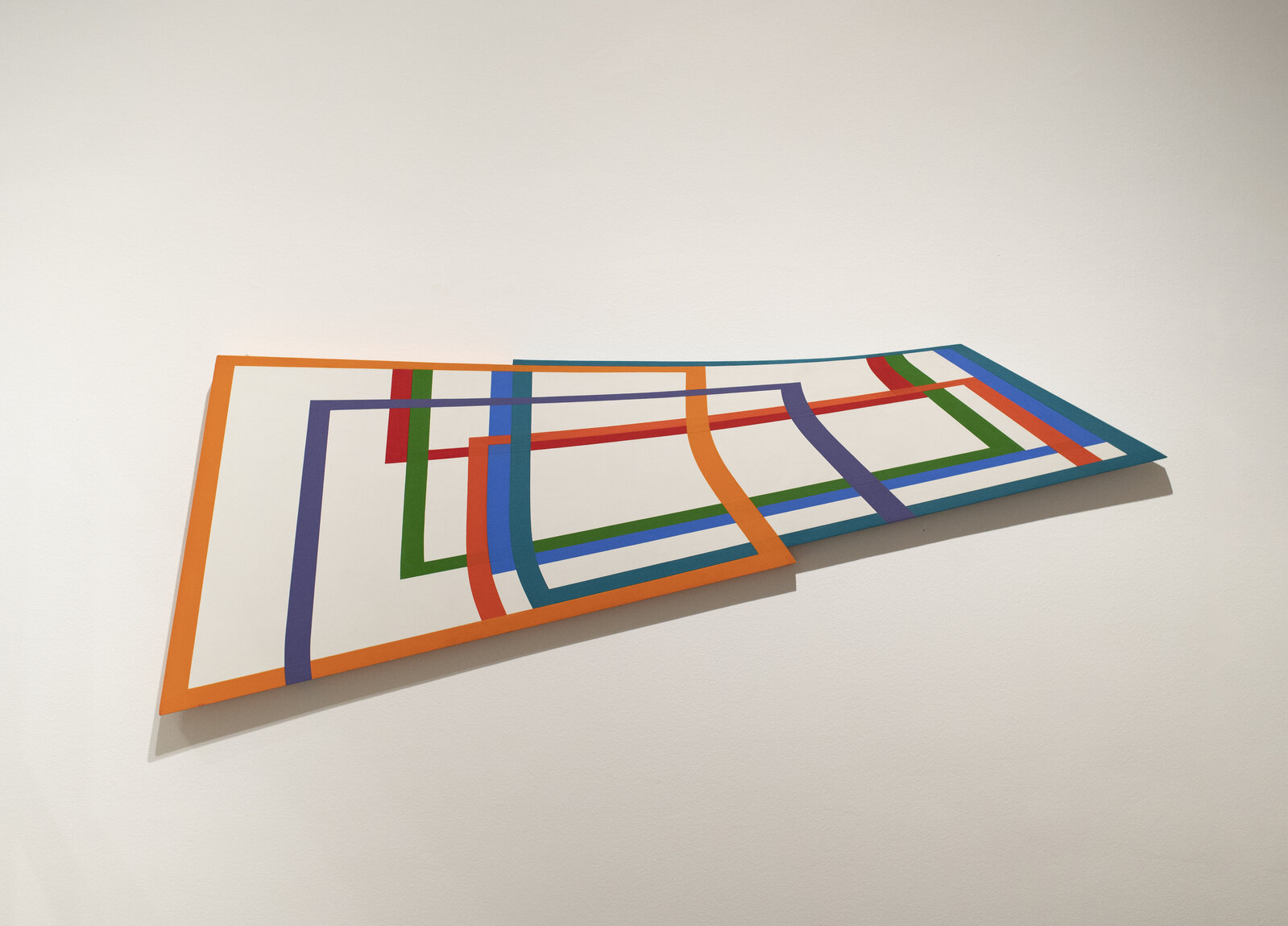
A rectangular surface in 4:5 proportion is divided by a 10 × 10 grid. Ten by ten: one hundred squares. Warm and cold elements move through it as borders and diagonals, step by step. The warm elements move horizontally and vertically. The cold move diagonally. The procedure is clear. Each permitted position can be calculated.
Then the surface begins to seem too small for the rule.
The rule does not need the painting in order to continue. It can run past the frame, past one state, past one surface, past one image. What looks at first like a method for making a geometric picture becomes something else: a procedure capable of producing more than any picture can hold.
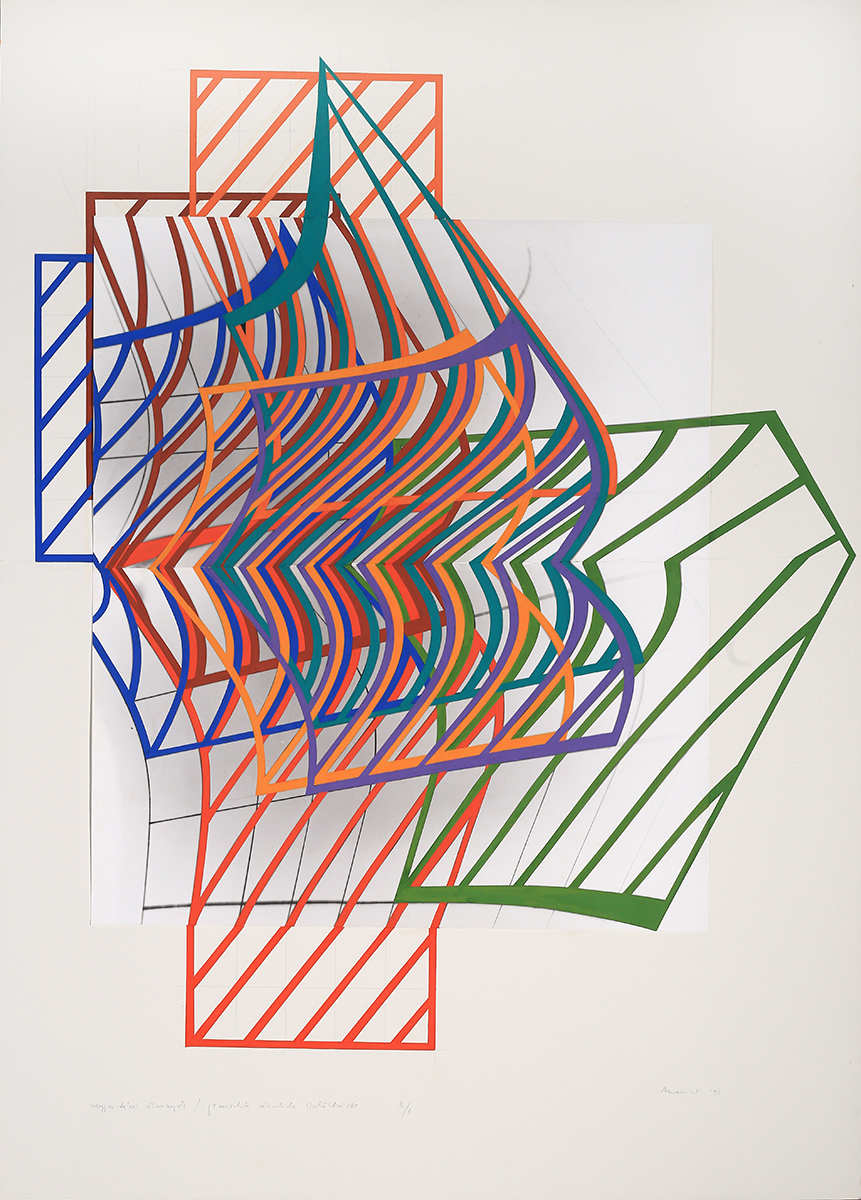
Before there is a painting, there is Displacements (System Drawing). Ink on paper, seventy by fifty centimeters. Lines and diagonals hold a displacement principle without asking it to become a finished image. Nothing is completed there. Nothing is composed into a final surface. The drawing sits before the painting as a fact the painting will later cut from.
The image is not the origin.
By 1976, Maurer begins painting only specific fragments of the Displacements series — first selected by random numbers, later by aesthetic consideration. The fact matters because it changes where authorship sits. At first, the cut is assigned. A number chooses the fragment, and the artist follows the selection the way the painting follows the rule. Later, when aesthetic consideration enters, the cut becomes more openly authorial.
Composition has not returned to the surface. It has moved to the decision of where the surface ends.
Displacements, Step 18 with Two Random-Quasi-Images, 1976, makes this visible inside a single work. Step 18 names a position in the rule’s execution. The painting shows one state of the field, but the field is not left alone. Two denser passages appear within it. They do not feel like decoration or emphasis. They feel like further selections, cuts inside the cut.
The eye first reads the system, then loses its scale. A line enters from outside the visible field and leaves before it resolves. A color relation appears, then reappears as a selected zone. The painting does not complete the rule. It does not show the system whole. It shows one step, then two further decisions inside that step.
The rule runs. The field is generated. The painting is taken from it.
Another tradition had already given painting to rules. In Lohse or Bill, the system is defined, the surface carries it, and the painting presents the rule’s completion. That is why concrete art matters here more than hard-edge. Hard-edge is the surface resemblance: clean color, clear boundary, flatness, geometry. Concrete art is the structural neighbor.
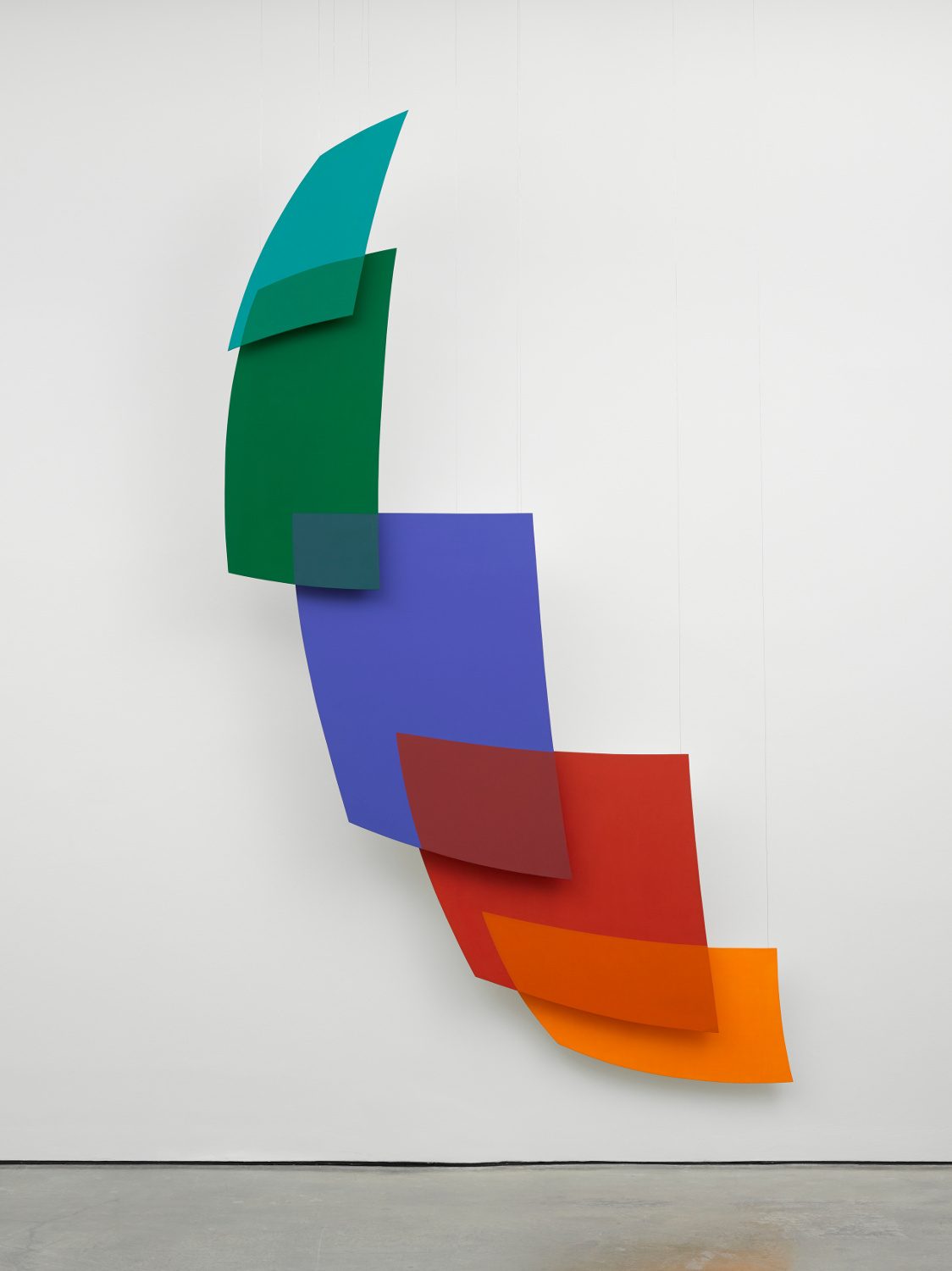
In classical concrete art, the rule and the surface operate at the same scale. The painting completes the system because the system has been built to fit the painting. Maurer changes the scale. The rule exceeds the surface. The painting is not the rule’s completion. It is a selected fragment from what the rule has produced.
The surface is not the system.
It is what the frame kept.
At this point, the word image begins to fail. Step 18 is visible. It is painted. It has a surface, edges, color, structure. But it does not behave like a finished image. It keeps pointing outside itself: to the rule that produced it, to the field it came from, to the selections made inside it, to the parts not shown.
This is why Maurer’s word quasi-image matters. She called them quasi-images because they “fail to comply with the requirements of image.” The sentence is exact. A proper image claims completion. It asks to be received as self-contained. Its frame is the world it needs. A quasi-image cannot make that claim because it does not lack information; it refuses the premise that wholeness belongs to the image.
In a proper image, the frame encloses. In Maurer, the frame cuts. It marks the place where a rule that could continue is made to stop, and where that stopping becomes visible as work.
The quasi-image shows enough of the rule to make the field legible, and enough of the cut to make completion impossible. The viewer does not stand before a finished composition. The viewer stands before evidence that something larger has been interrupted. The image remains. Its authority does not.
The Met’s Displacements 1–6 shows the procedure walking across six sheets. One state follows another. The rule advances. The viewer sees progression.
Step 18 does something different. It does not show progression across sheets. It shows extraction from within the field. One work makes the rule legible as sequence. The other makes the cut legible as structure.
The numbers are not incidental. They mark where the rule was stopped.
Six. Eighteen. Seventy.
The title is the location of the cut.
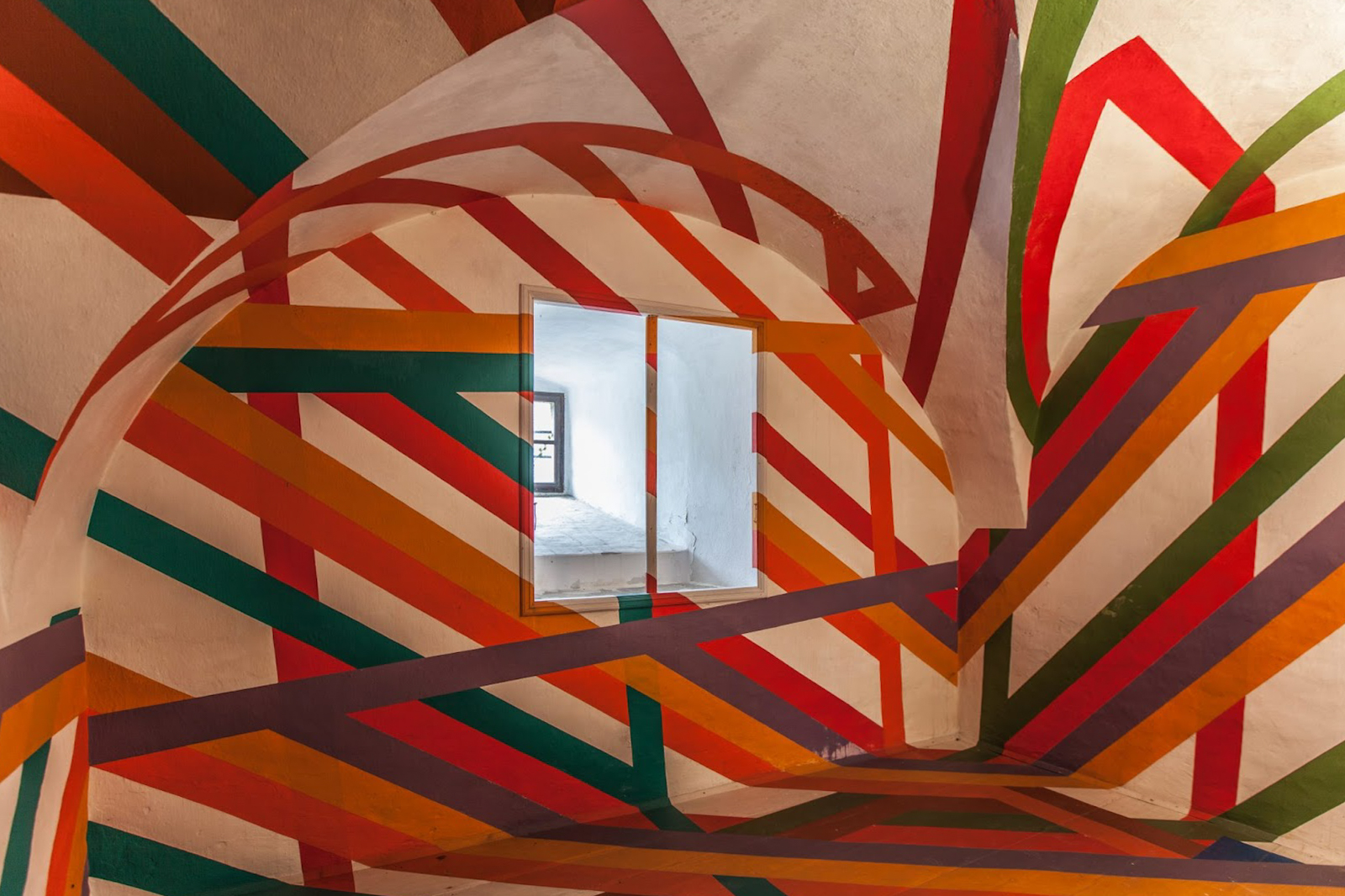
At Buchberg, the step is no longer in front of you. It is around you. In 1982, Maurer was given a vaulted tower room at Schloss Buchberg, west of Vienna. She described the room — three hundred and twenty centimeters high, sixteen square meters of ground space — as a box placed on the seventieth step of the Displacements series.
The room is small, irregular, vaulted. Color turns with the wall and rises into the curve above you. What had been a step on paper is now something entered. The body does not look at the cut from outside. It stands inside it.
The paintings are two-dimensional cuts. Buchberg is a spatial one. Seven Twists is photographic. The system drawing is diagrammatic. The medium changes. The operation does not.
A rule can move through paper, canvas, photograph, and room. It becomes work only when a portion is held. The cut decides where the procedure takes form.
Return to Seven Twists I–VI. The title names seven; the Roman numerals give six. The sequence turns inward, photograph after photograph, until the face is reduced to a small center held inside the accumulated frames. The procedure could keep folding. It could make another image. It could satisfy the number the title has placed before it.
Maurer stops before it does.
That stop is not an aesthetic limit applied to a finished sequence. It is the moment the work becomes visible as a work. The missing image is not outside the structure. It is the structure’s refusal to complete itself.
Displacement generates the field. The cut makes the work.
Once displacement is understood this way, composition has nowhere left to live except in the cut.
The image does not disappear. It loses its claim to completeness. What is shown is a portion of something that continues beyond it. The decision is not what to place, but where to stop.


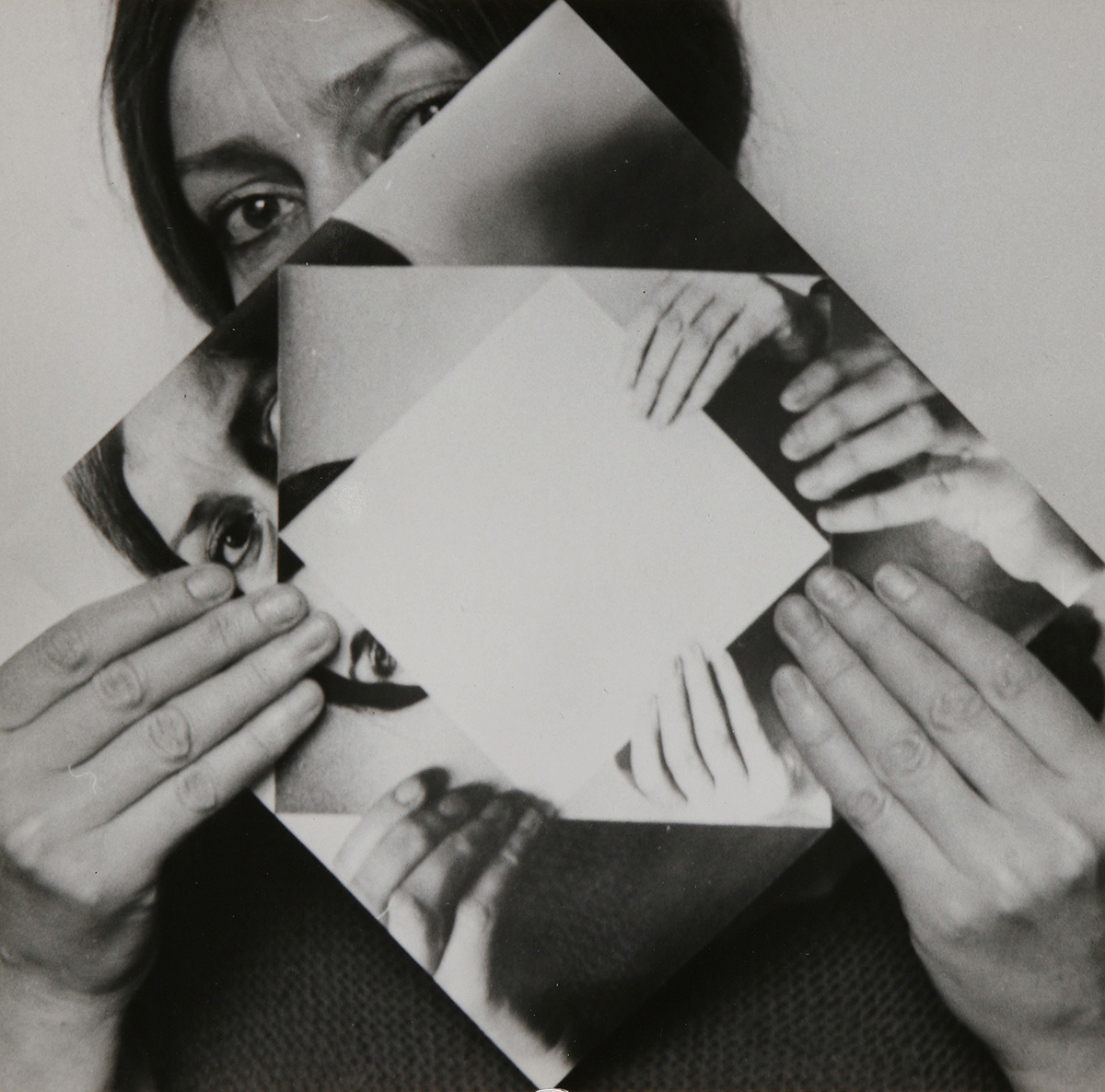
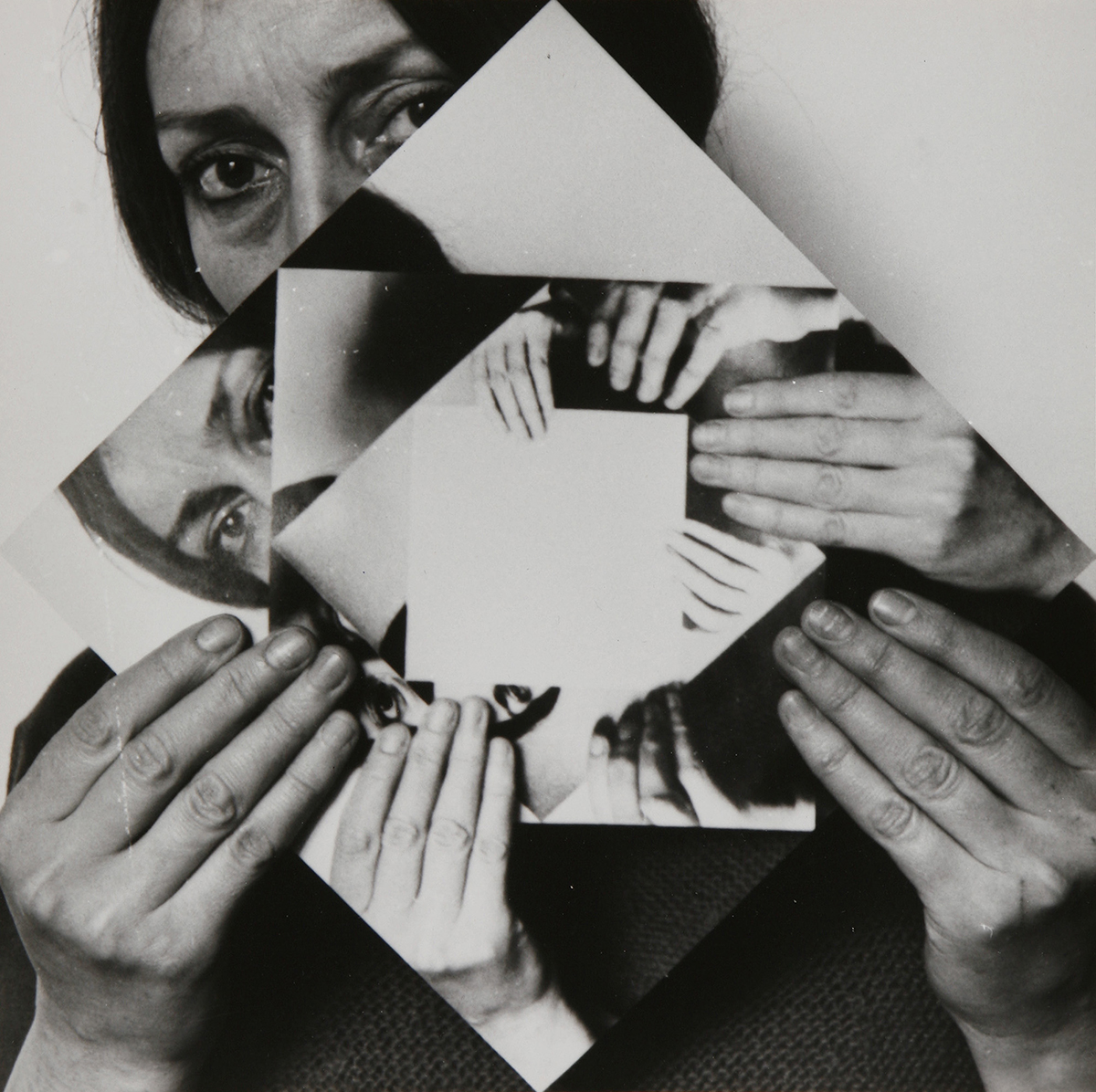
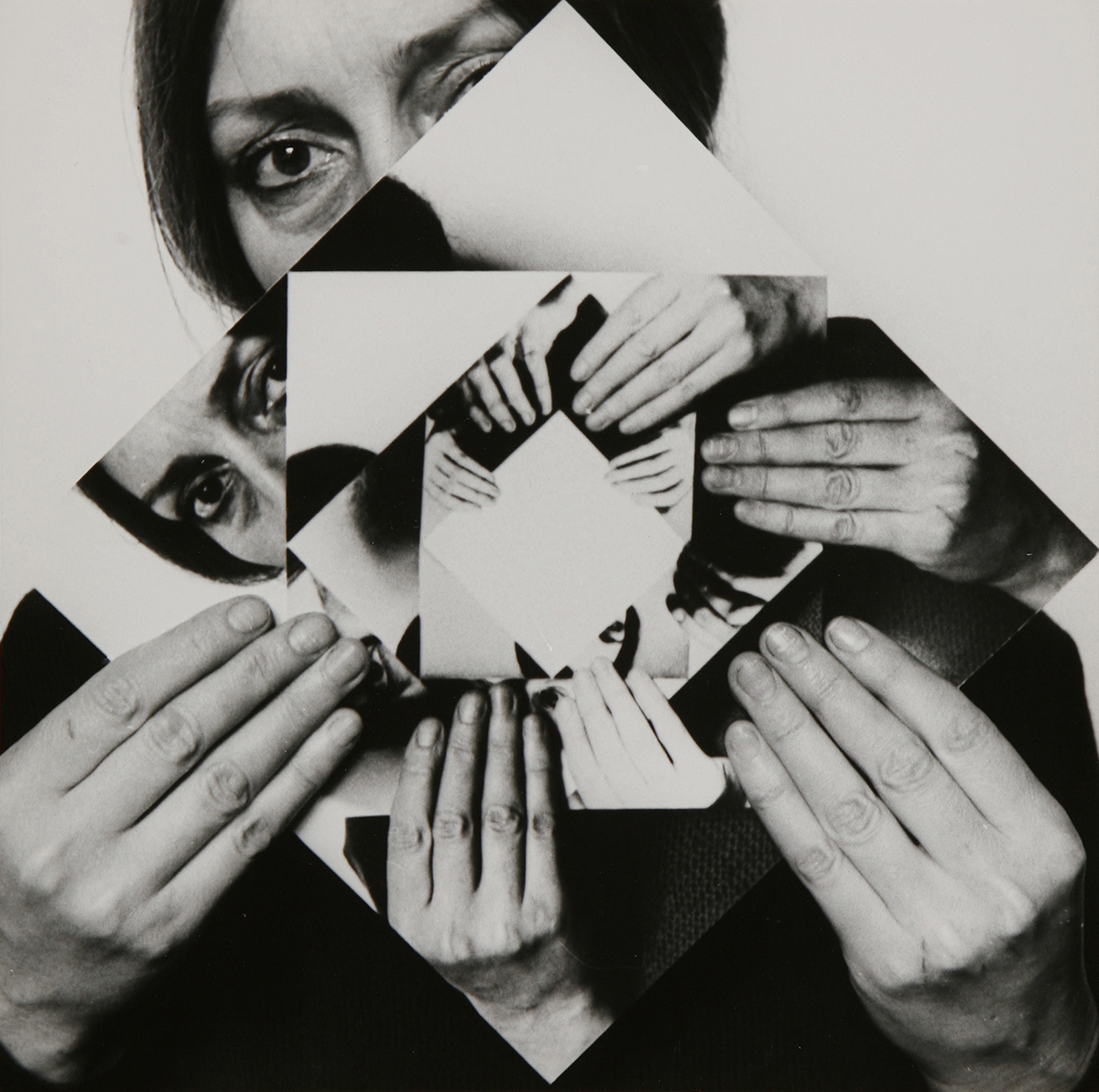




Cover: Dóra Maurer, Seven Twists I–VI, 1979 (composite/document version c. 2010s). Gelatin silver print / archival document. Tate Photography / András Bozsó. © Dóra Maurer.
All images © their respective rights holders.