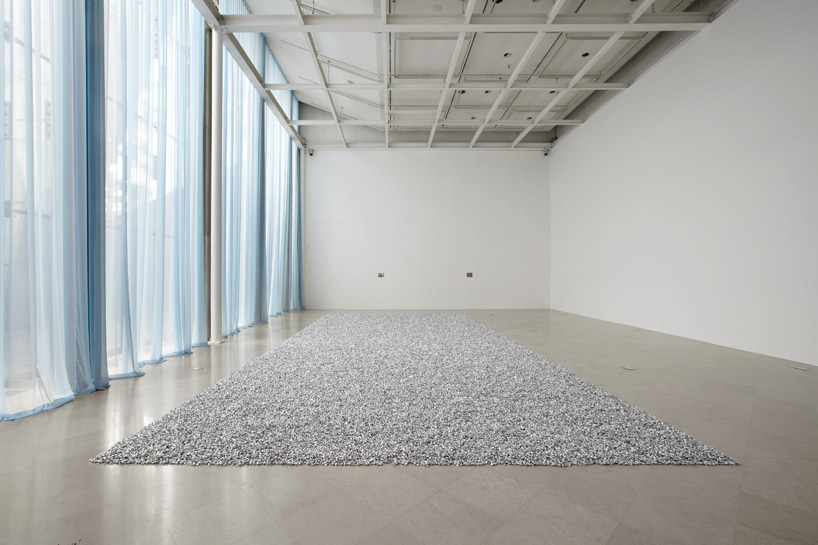
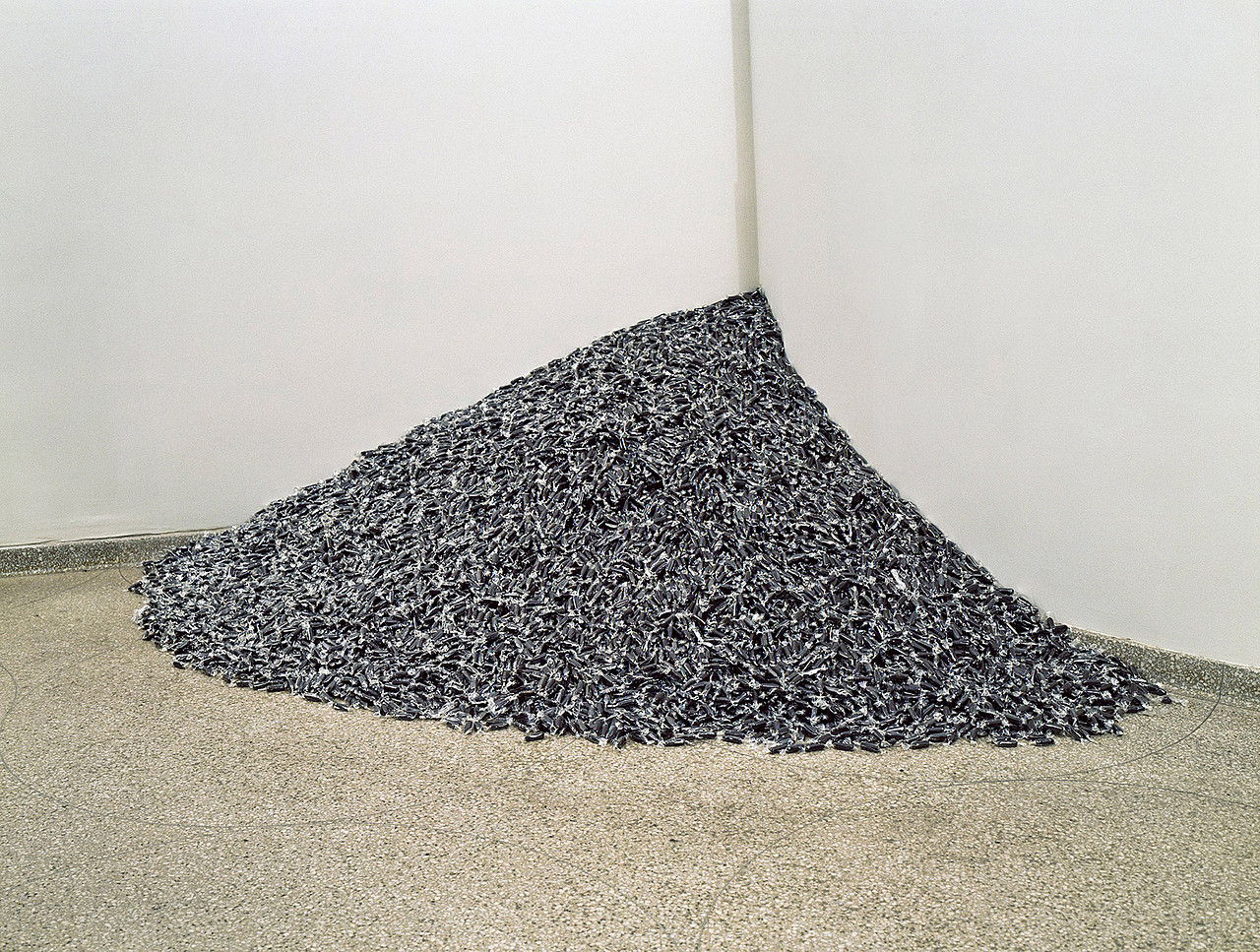
González-Torres built a world where light strings, candy piles, and paper stacks become emotional architecture — forms shared, taken, or depleted.
His works clarify tenderness as political space.

González-Torres built a world where light strings, candy piles, and paper stacks become emotional architecture — forms shared, taken, or depleted.
His works clarify tenderness as political space.
Repetition is typically treated as pattern or gesture rather than a structural condition. In Félix González-Torres’ work, repeated units such as strings, candy piles, or paper stacks function as structural regulators. Quantity, spacing, and arrangement determine the form’s accumulation and depletion over time, creating a temporal system.
The work’s operation is defined by how units increase or diminish within the rules of repetition, producing relational order without expressive or narrative overlay.