




The title carries a small trap. Easy Assembly sounds like IKEA language: a box opened on the floor, parts laid out, steps clarified, a final object promised in advance. The phrase belongs to a world where difficulty has been organized into sequence. Nothing is supposed to surprise you. If the instructions are followed correctly, the result should already be known.
Foam offers something stranger. It has ingredients, not instructions. It can be triggered, but not directed. Agitation, surface tension, liquid, air — and a temporary structure appears. But no one can specify exactly how each cell will settle, where each edge will press, or how long the arrangement will hold. It assembles easily without becoming obedient.
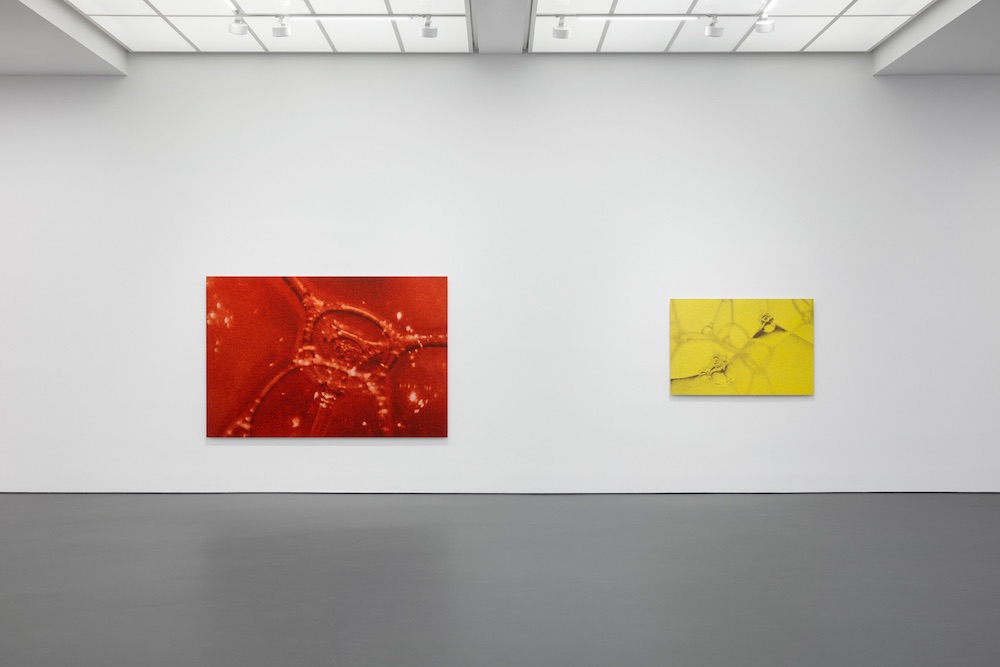
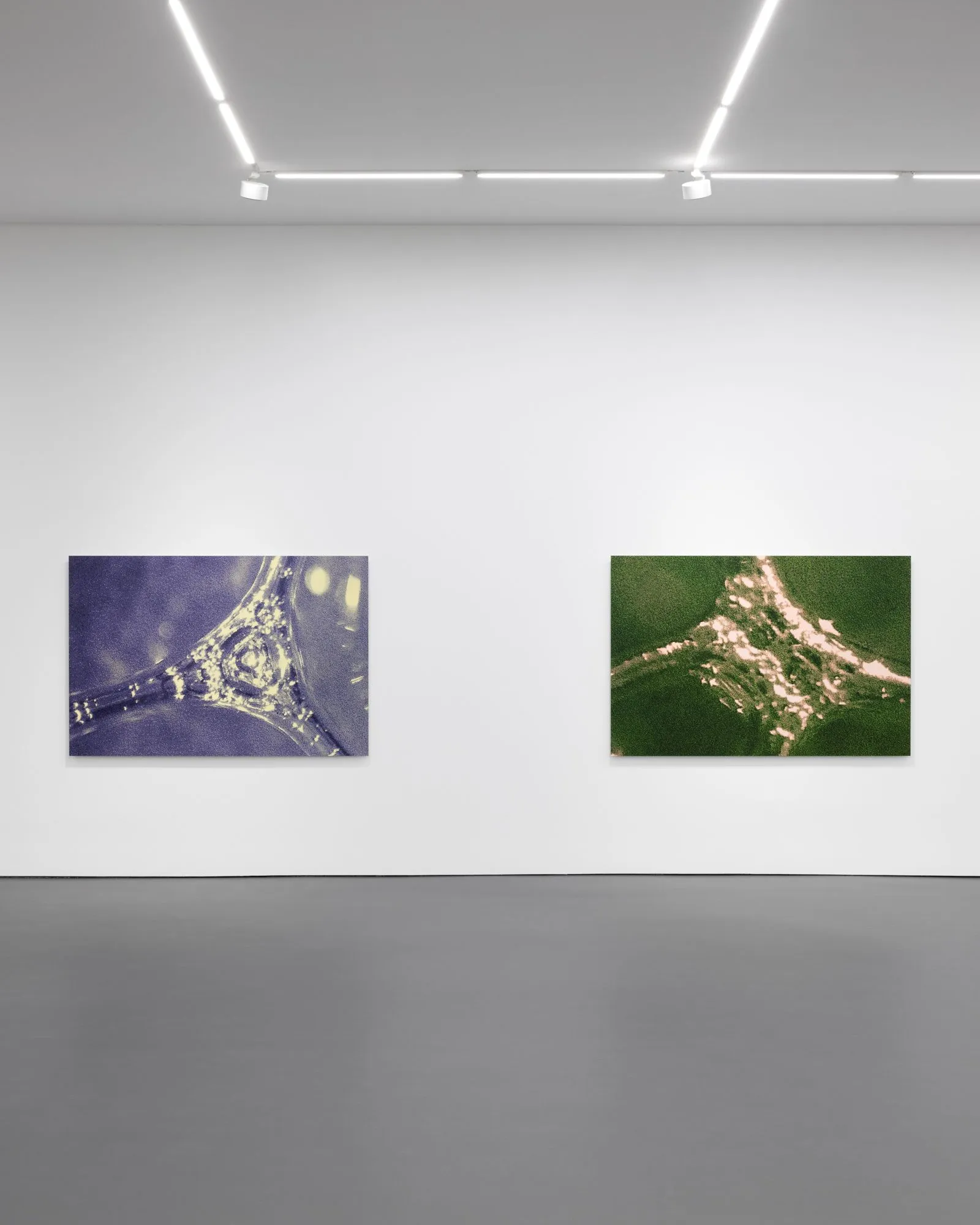
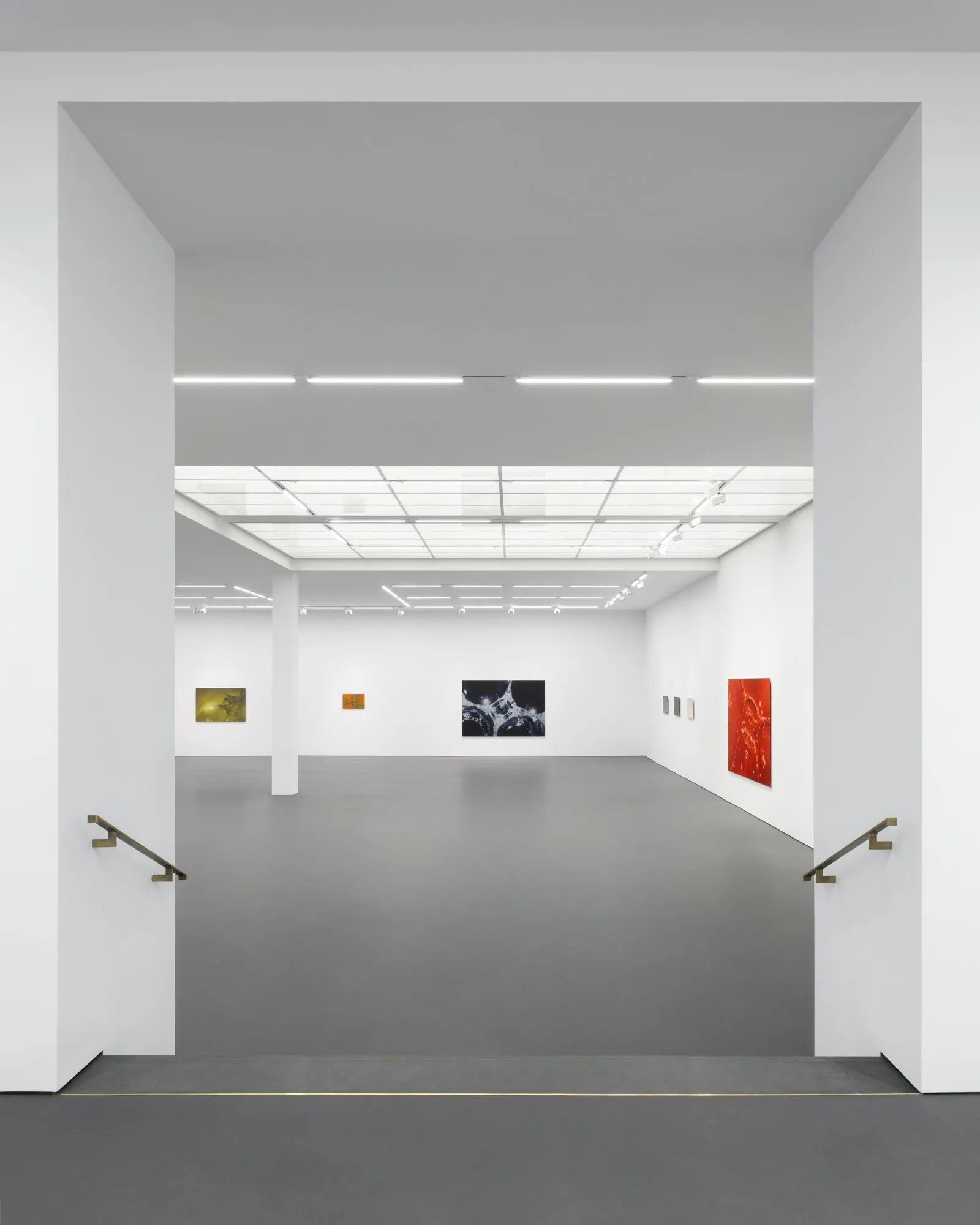
At Esther Schipper, Auerbach’s paintings float slightly off the wall, separated enough to read as sequence rather than immersion. The works do not pull the viewer into one continuous field. They hold apart. Each panel asks to be seen beside the others, with shifts in color, scale, and density altering how the same cellular surface is read.
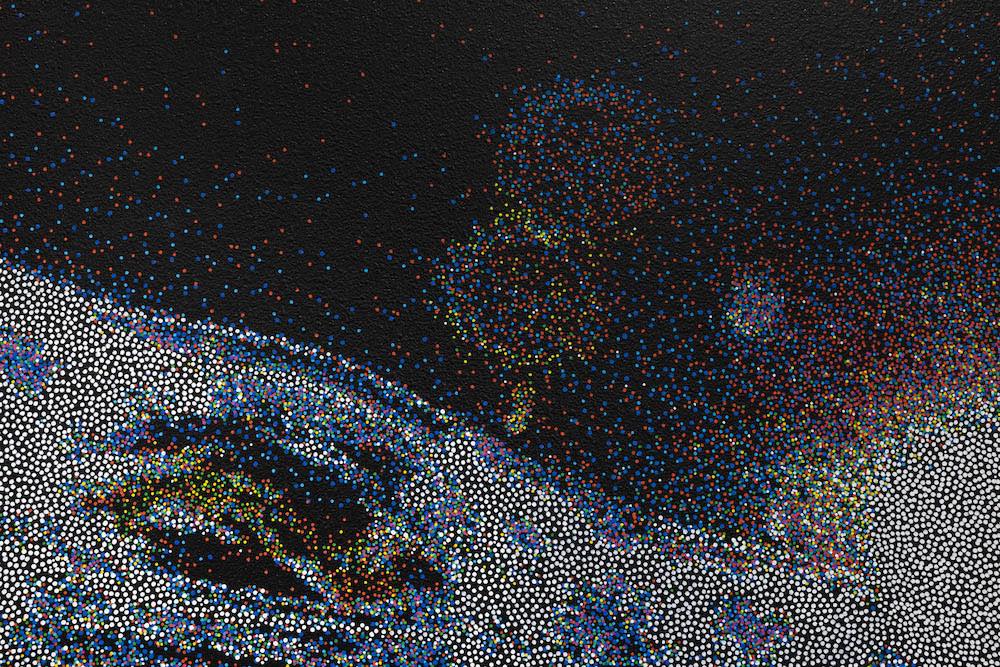
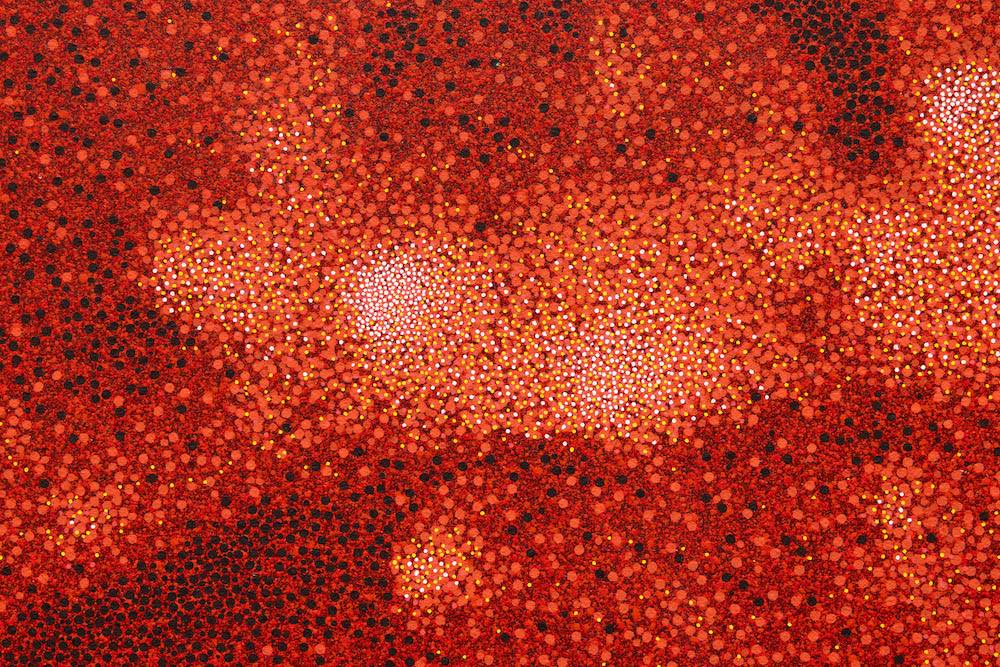
The eye keeps changing distance: close enough for the dot to remain a dot, far enough for the foam to gather. The work begins in that unstable interval.
The source is soap foam photographed through a microscope: aerated, unstable, already organizing itself before painting begins. Foam matters because it is not only an image. It is a structure of relation. Each bubble exists because another bubble presses against it. Its edge is not private. It is shared. Space is partitioned and connected at the same time.
What looks loose or accidental is held by local physical constraint. Each membrane adjusts against its neighbors. Soap films meet through fixed angles, each edge adjusting to minimize surface tension. No single bubble directs the arrangement, and no central pattern governs the whole. Order appears through contact, pressure, and adjustment. The structure holds, but only temporarily.
That difference matters. Foam receives order from physics. Each membrane adjusts because it must; each cell presses against another under conditions it did not choose. A painted dot has no such necessity. It does not share an edge, minimize surface tension, or respond to pressure from its neighbor. It has to be placed.
The painting begins in that gap. Auerbach is not making paint behave exactly like foam. Auerbach is rebuilding, through decision and duration, a structure that foam receives instantly from physical law.
Foam’s logic does not belong only to painting. It appears wherever structure forms through local relation rather than central design: in cellular tissue, in the soap-film experiments of Frei Otto, in lightweight structures that use membrane tension to discover form. Foam is not a motif Auerbach borrows from science. It is a model of organization — one in which each unit only knows its neighbors, yet the whole holds.
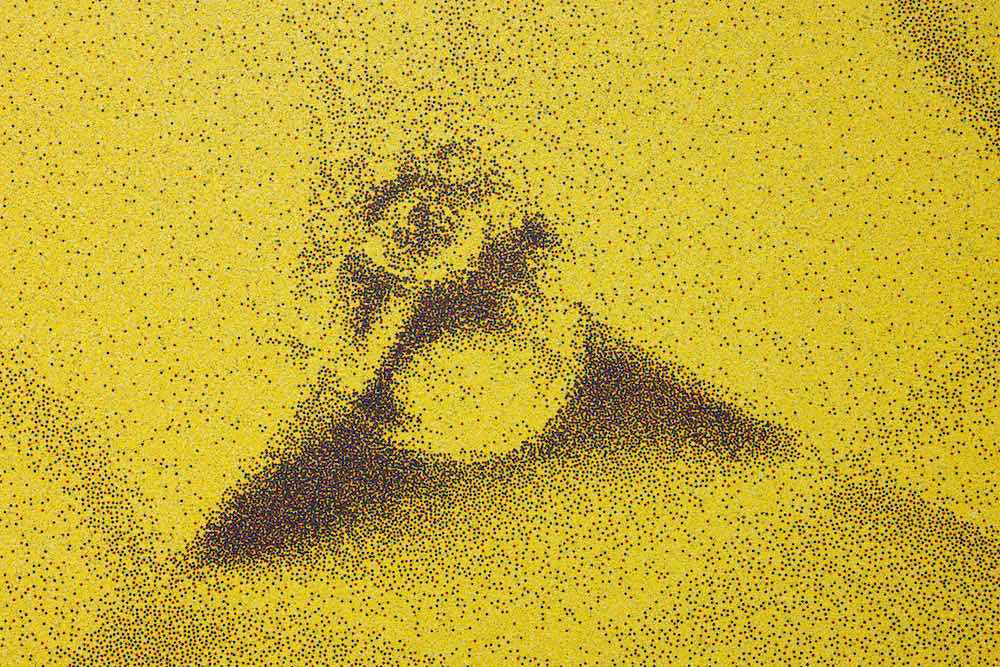
The available art-historical word is pointillism. It arrives quickly because the evidence seems to support it: discrete marks, optical field, color accumulating through units. The surface is made from dots. The image changes with distance. Up close, the eye meets individual marks. Farther back, those marks gather into a field. The comparison is almost too useful.
Pointillism gives the viewer an entry point. It says: look near, then far. Look at the unit, then the image. Notice how the surface changes as distance changes. But after that first orientation, the word begins to narrow the paintings rather than clarify them.
Seurat’s dot dissolves into optical mixture. Lichtenstein’s dot remains visible as a sign of mechanical reproduction. Auerbach’s dot does something else: it remains visible as paint while carrying the pressure of a structure that, in nature, would not require a painter at all.
The mark does not dissolve into perception, and it does not quote mechanical reproduction. It stays close to the thing being shown without becoming identical to it. It is not simply rendering foam. It is remaking, through labor, a condition that foam gets for free.
What emerges is distributed assembly. Not the absence of control, and not a claim that paint and foam assemble in the same way. Distributed assembly names the translation between them: physical necessity rebuilt through repeated local decisions. Dot beside dot, edge beside edge, density against density. No single mark governs the field, but the field cannot exist without each mark holding its place.
Repetition has carried many kinds of intelligence in painting. For Sol LeWitt, it could become instruction — a system set in advance and completed elsewhere. For Bridget Riley, it became optical pressure, a field activated by the eye. For Agnes Martin, repetition thinned into attention, a grid where difference approached silence. Auerbach enters that history from another direction. The order in the Foams is not invented as a rule, engineered as perception, or refined into calm. It is taken from matter. Foam arrives with constraints already organized by physics, and painting has to rebuild that order without inheriting the force that produced it. No membrane pulls the dot into place. No surface tension corrects the field. What foam receives as law, painting must recover through attention.
Auerbach photographs the foam, processes the image digitally, projects it onto Dibond, and paints from the projection dot by dot over sprayed fields of color. Dibond matters here. The dots do not sink into fiber. They sit against an industrial surface, cool and flat, closer to a constructed support than an absorbent ground. The process is controlled at every stage, but the control does not produce composition in the old sense. It produces a field in which no single unit governs. One dot enters relation with another. Density accumulates. Color passes through the surface. The image gathers without becoming centralized.
A dot is not a bubble. But in these paintings, the dot becomes the painted unit through which the logic of bubbles can be rebuilt: unit beside unit, edge beside edge, field emerging from contact. The resemblance is not exact, and that is where the work becomes painting. Foam assembles through necessity. Auerbach assembles through return.
These works are all Foam, 2025–26. The exhibition is not moving from subject to subject. It stays with one condition and tests how differently it can hold. Difference does not come from motif. It comes from assembly.
Across the thirteen Foam paintings, color does not behave like variation for its own sake. Heat, pale suspension, cooler density: each shift tests whether the same foam logic can hold under different pressure. Some works seem to thicken into atmosphere. Others feel sharper, more cellular, closer to diagram without becoming one. The subject remains the same. The assembly changes.
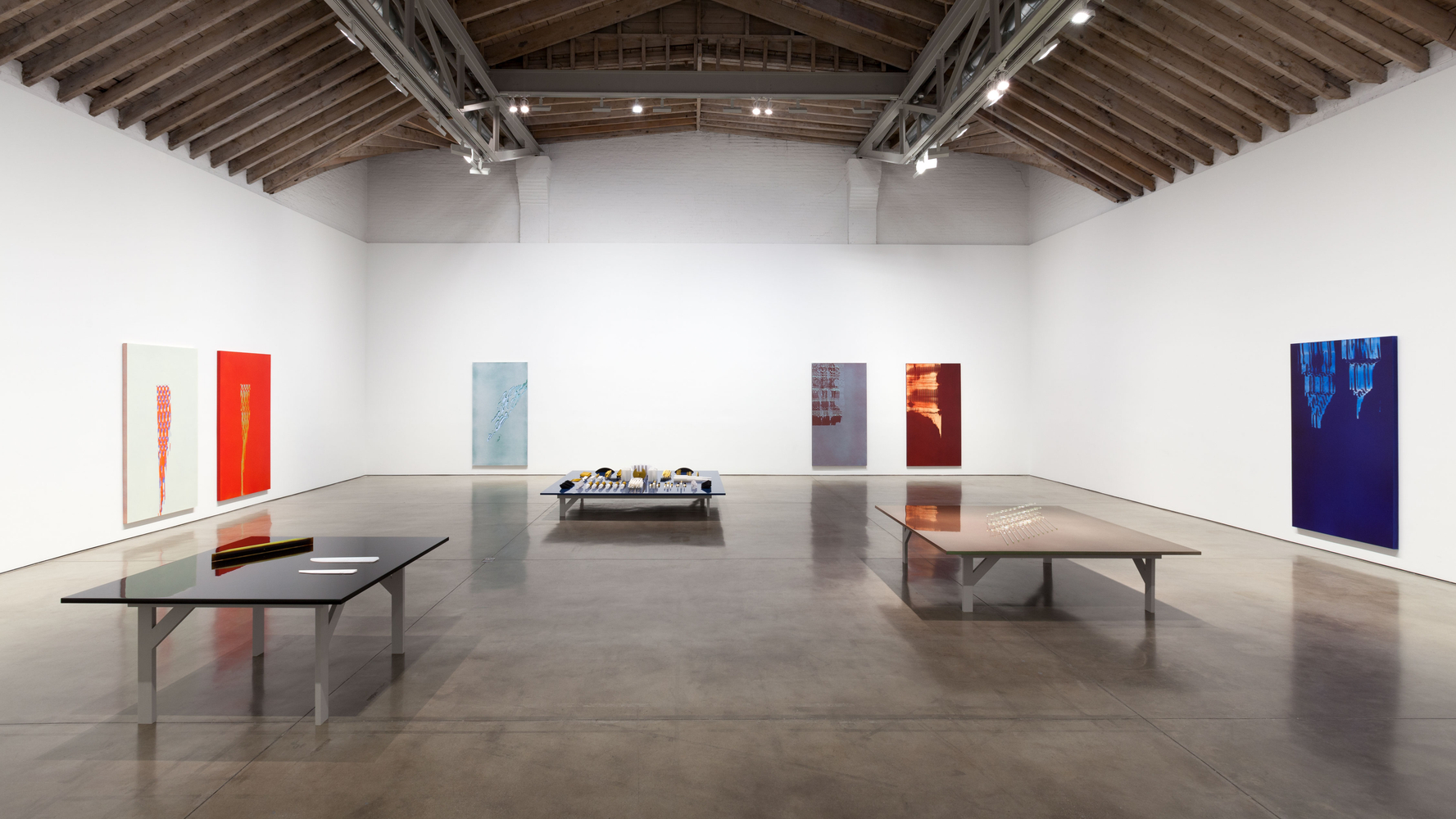
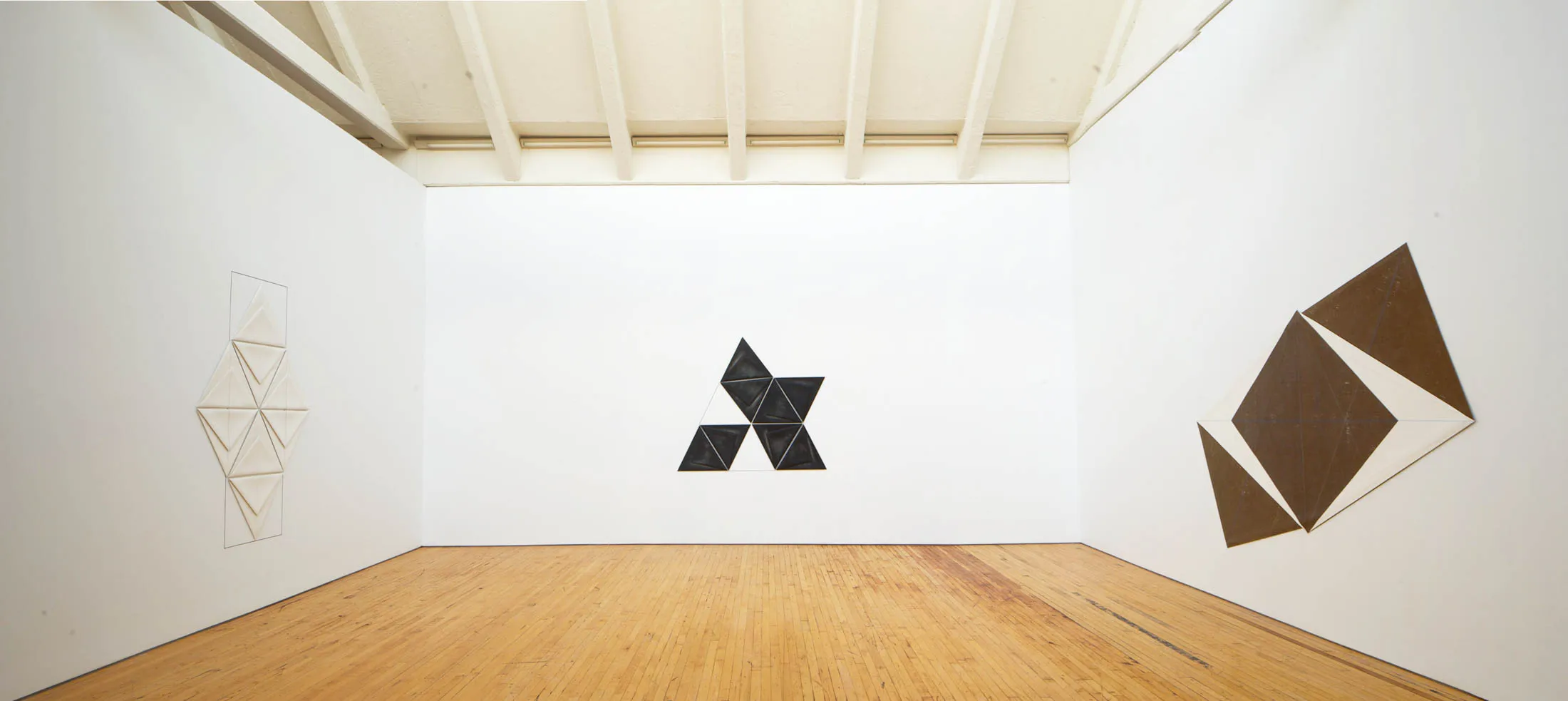
Auerbach’s earlier work gives this condition a longer arc. The Fold paintings held the memory of a surface’s former dimensional state. The weaves let image emerge through strip, position, and shadow. Extended Object followed fluid behavior through custom tools. These works are not experiments in medium as novelty. They ask what happens when form is allowed to arise from a system already under pressure. In the Foams, that question enters the smallest repeated act of painting.
Foam assembles in seconds and disappears almost as quickly. The paintings reverse that time. They take an instant structure and rebuild it through duration, mark by mark, until a temporary condition becomes slow enough to see.
The paintings force two kinds of assembly to occupy the same surface: the natural assembly of foam and the manual assembly of painting. One happens through physical tendency. The other happens through labor so repetitive it almost disappears into continuity. Neither cancels the other. Foam remains visible as foam. The dot remains visible as dot.
They do not let the mark dissolve into the image, and they do not let the image detach from the mark. The surface stays caught between unit and field, depiction and structure, microscopic source and painted duration.
Easy Assembly is strongest where it refuses both comforts its title and its surface first offer. The title promises obedience: parts, steps, outcome. The surface offers pointillism: dot, distance, image. Auerbach gives neither. Foam receives structure by necessity. Painting has to earn it through time.
Pointillism describes the dots.
It does not describe what they are being asked to hold.
Foam assembles through physical necessity. Its cells press, adjust, and hold because surface tension gives them no other choice. Auerbach’s paintings rebuild that instant structure through a slower condition: dot beside dot, decision beside decision, until the surface begins to carry what foam receives automatically. Pointillism describes the dots. It does not describe what they are being asked to hold.
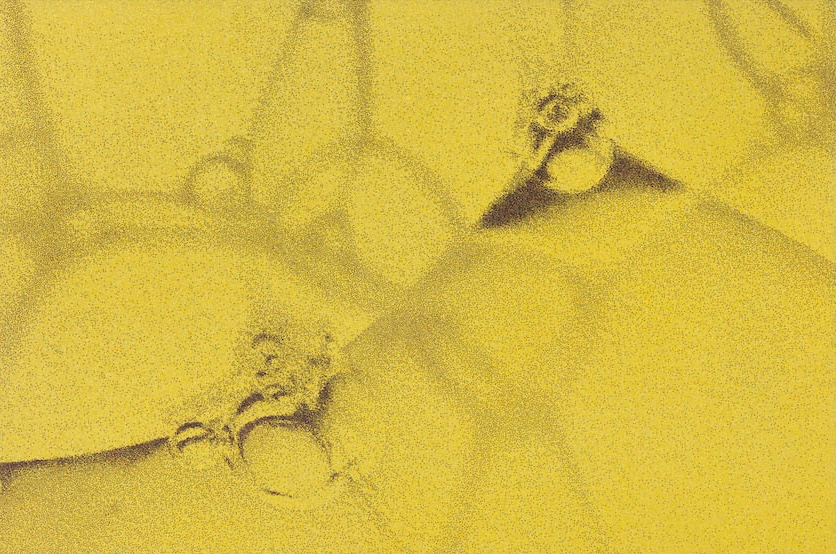
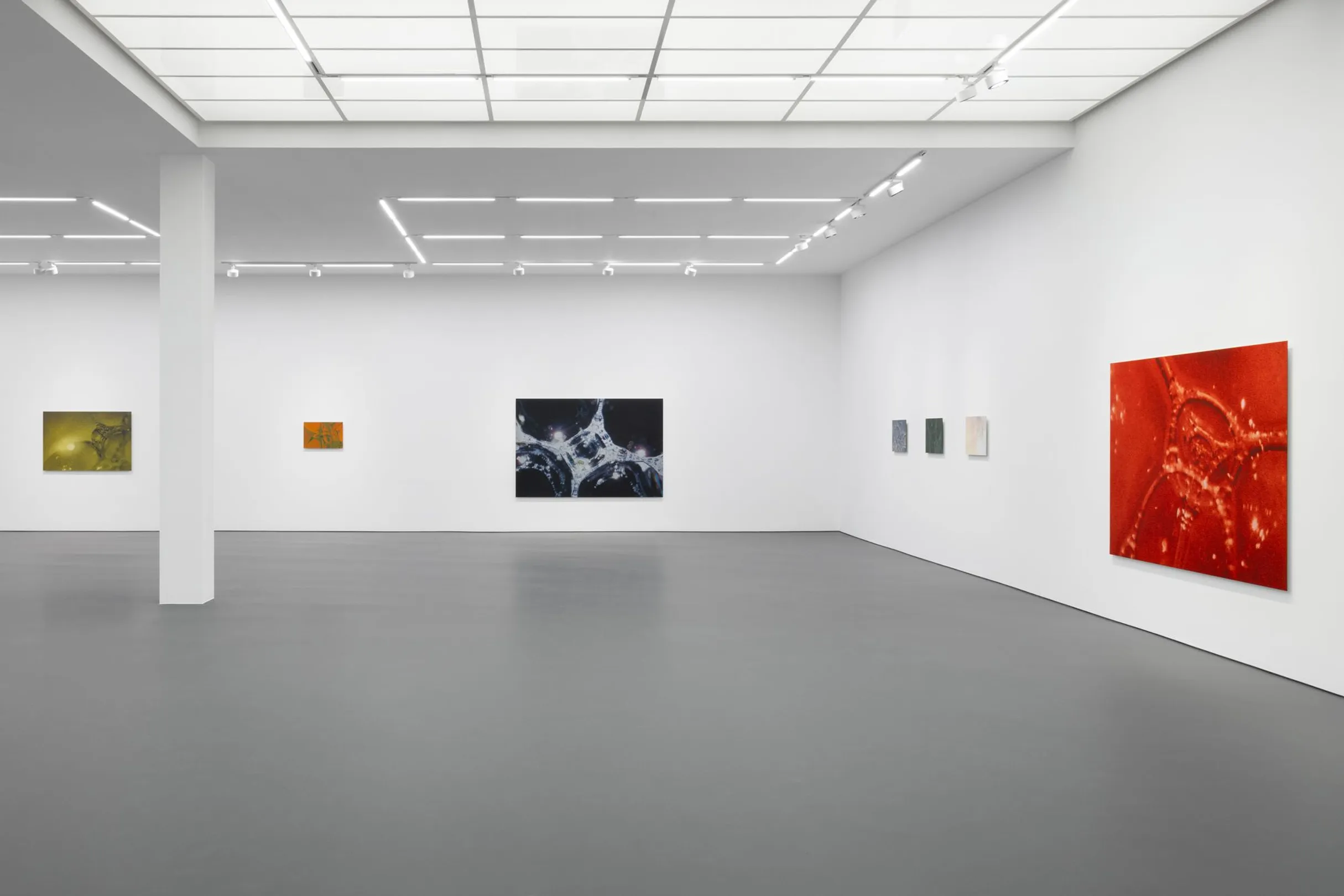
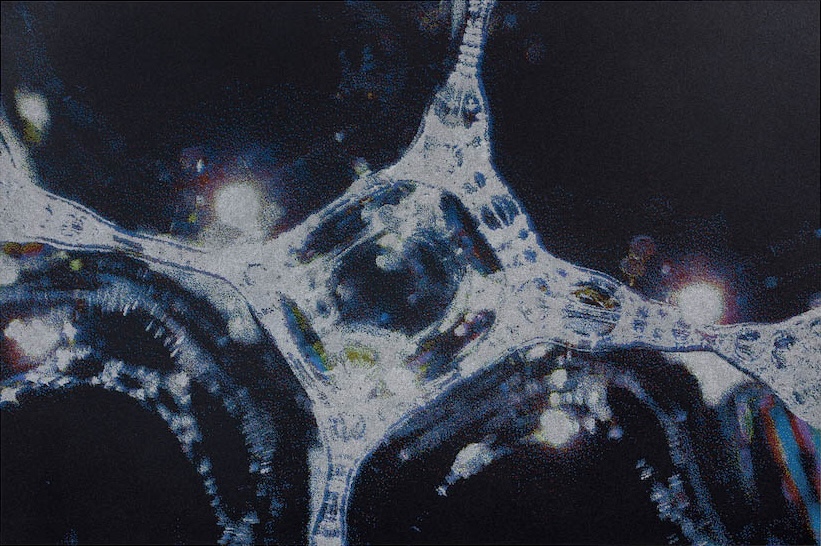
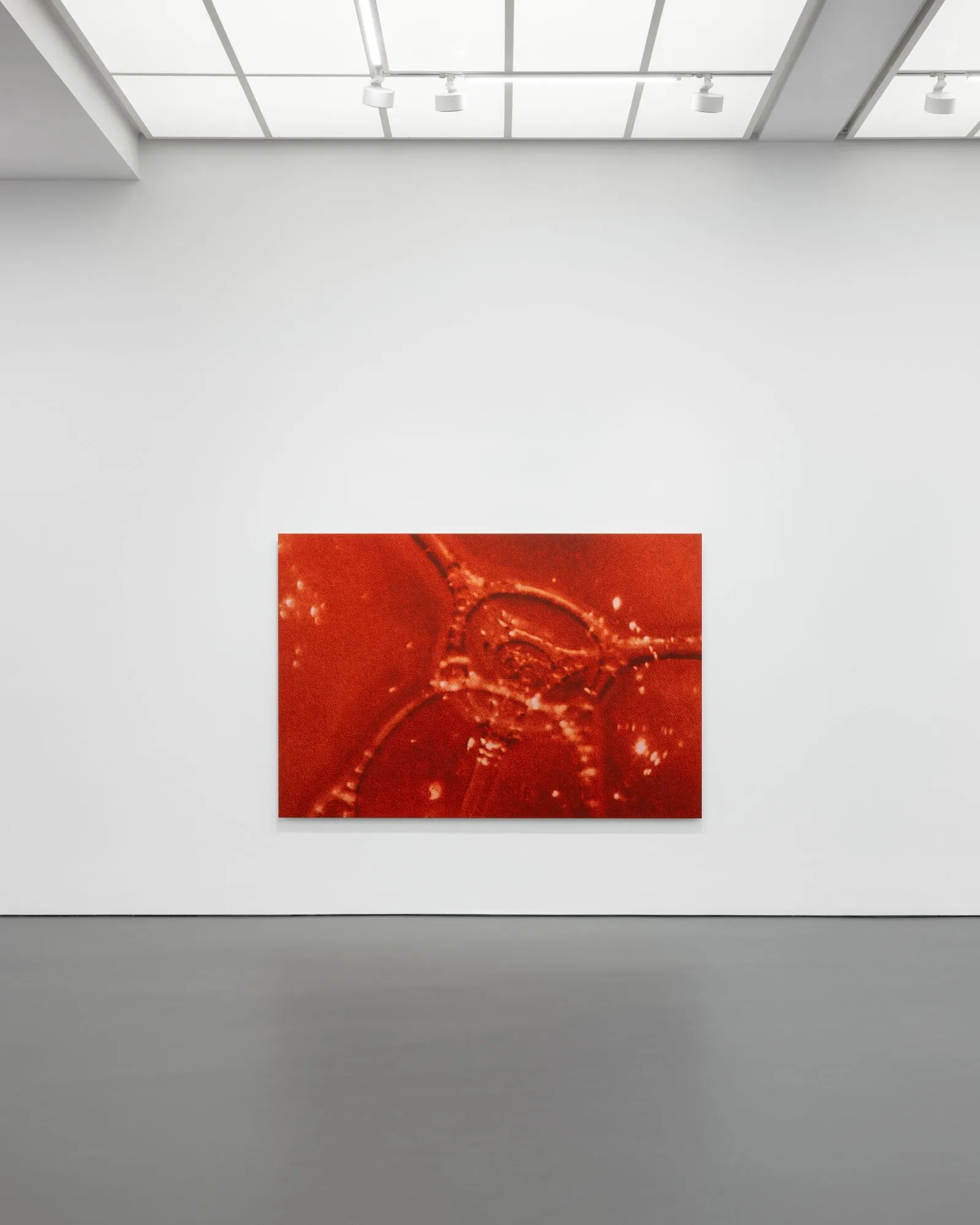
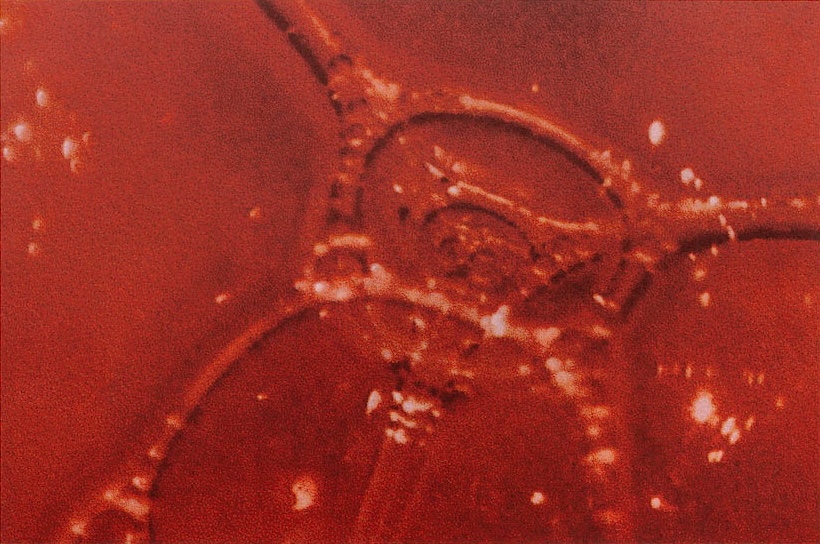
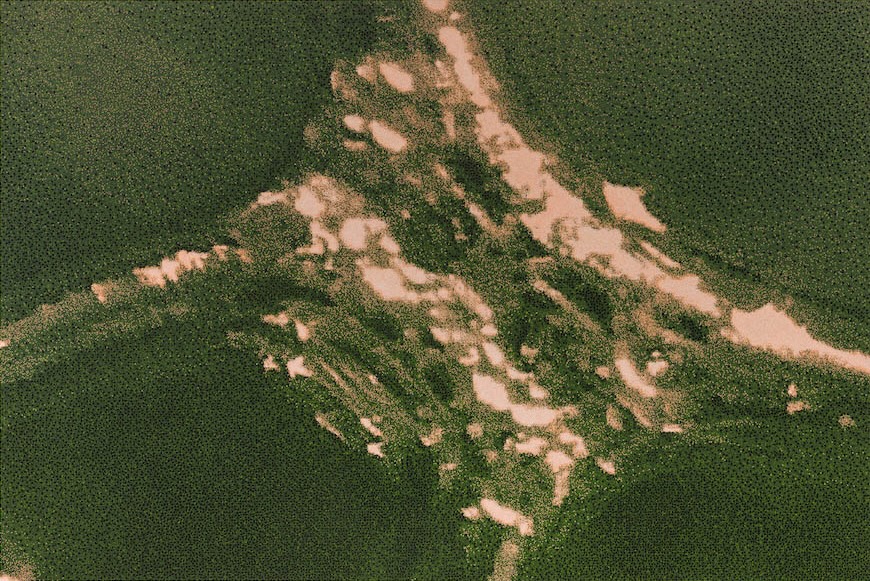
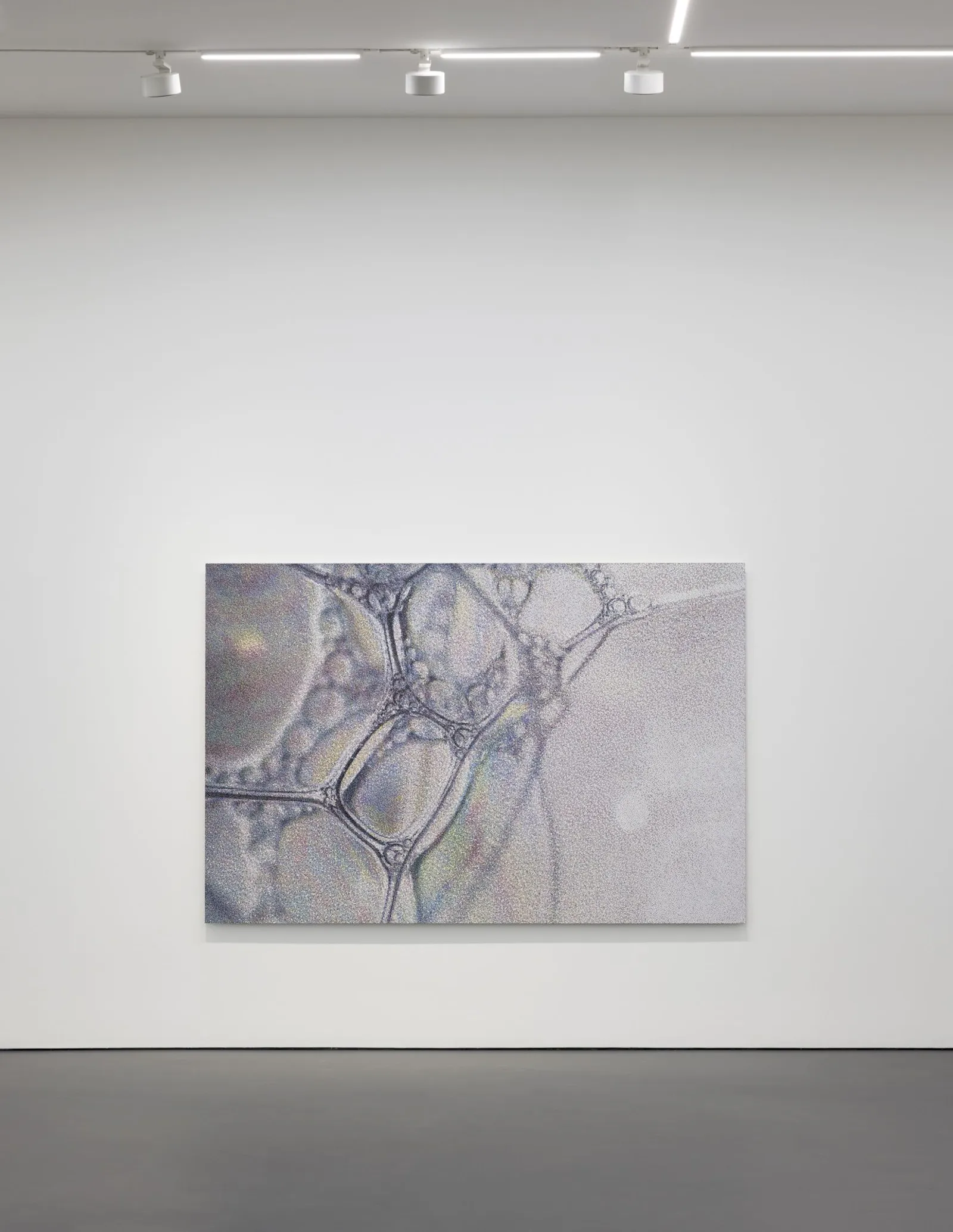
Cover:Tauba Auerbach, Foam, 2026. Acrylic on Dibond, 152.4 × 228.6 cm (60 × 90 in.). © Tauba Auerbach. Photo © Andrea Rossetti. Courtesy the artist and Esther Schipper.
All images © their respective rights holders.
Image rights & attribution →