

Savage Beauty works before the garment appears.
The phrase is not neutral. It repairs while seeming only to name. It does not choose between McQueen’s violence and his grace, between the wound and the cut, between theatre and construction. It lets the contradiction remain visible, and that is why it is useful. Savage keeps the charge. Beauty makes the charge admissible. The title gives the viewer a way to stay with what might otherwise have to be rejected, defended, or enjoyed too openly.
For fashion, this matters because it gives admiration a discipline. The work does not have to be defended as shock, excused as biography, or purified as art. It can be approached through the forms of attention fashion considers serious: cut, silhouette, staging, construction, historical reference, technical nerve. The phrase does not ask the viewer to look away from the violence. It gives the viewer a refined way to keep looking.
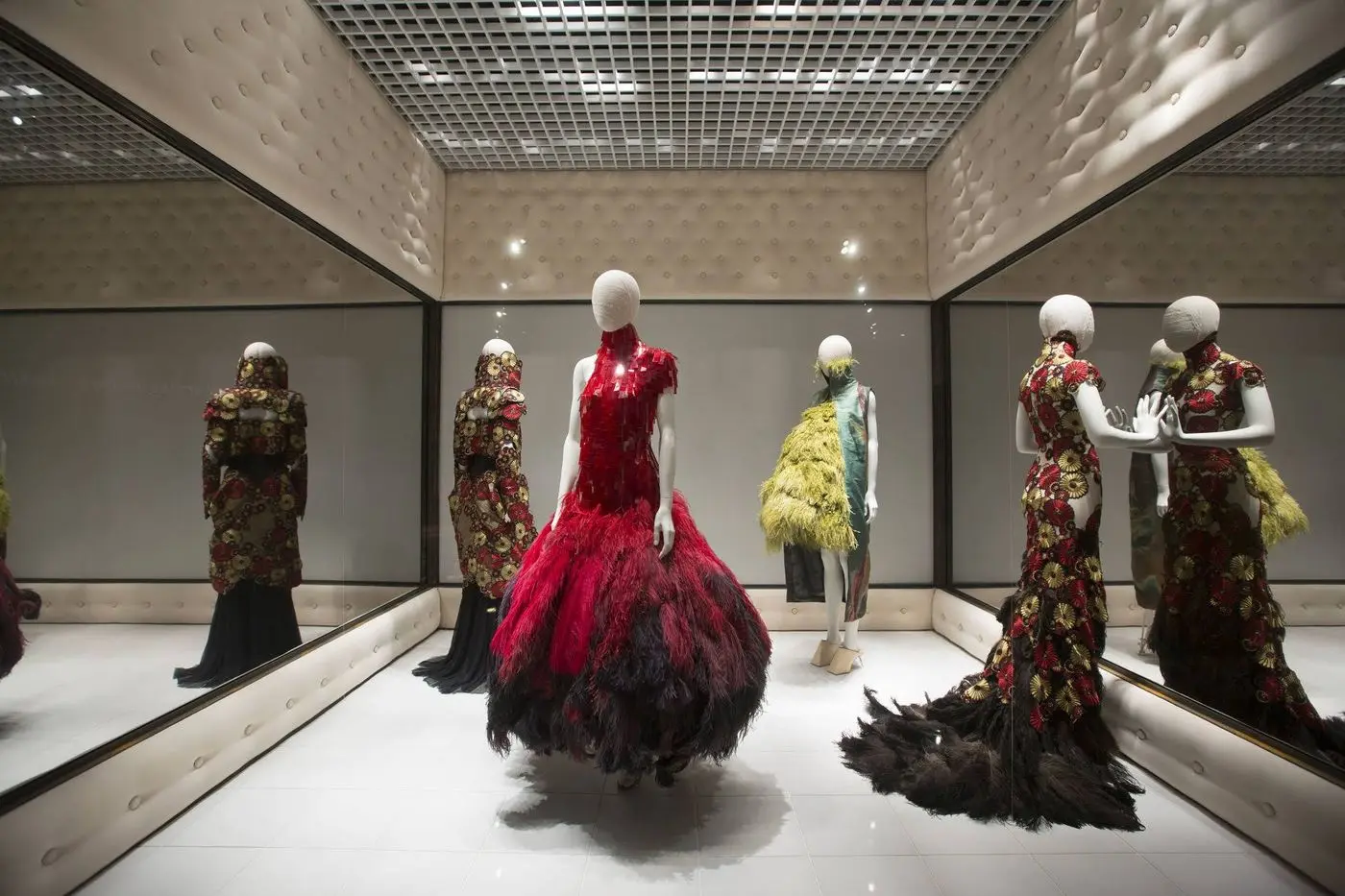
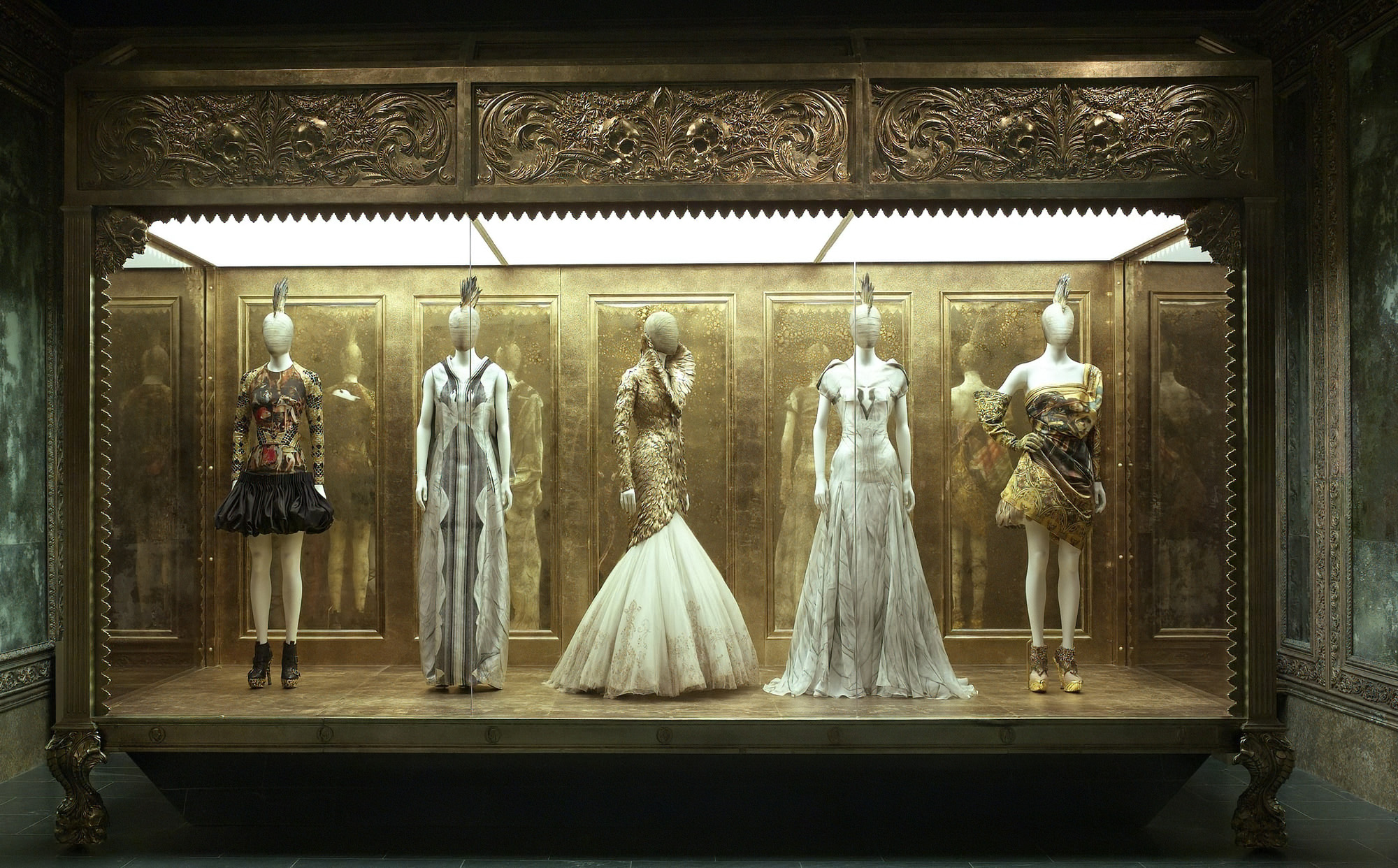
The Met’s 2011 retrospective, curated by Andrew Bolton, understood the same operation. It did not make McQueen polite. It did not remove the blood, the torn lace, the broken glass, the bandaged heads, or the bodies placed under pressure. It arranged them under a title and a sequence large enough to hold them: Romantic Mind, Romantic Gothic, Romantic Nationalism, Romantic Primitivism, Romantic Naturalism, Romantic Exoticism. The title came, by the curator’s account, from Lévi-Strauss’s The Savage Mind and its distinction between the bricoleur and the engineer — McQueen as both scavenger and artist. The work was not emptied of difficulty. It was given a house in which difficulty could be approached as intensity, history, psychology, and form.
That is the stranger fact. The museum did not need to neutralize the violence. It preserved the violence and made preservation the form of softening. The question is not whether the Met betrayed the difficulty of the work by removing it. It did not remove it. It kept the difficulty visible. That is how the repair worked.
A phrase that preserves a contradiction also teaches the viewer how to stand in front of it. A room that makes violence legible also sets the atmosphere in which the violence will be felt. Nothing here is censored. The work is named, housed, lit, captioned, photographed, mourned, and restaged, and by the time the garment is in front of the viewer the encounter has already been arranged.
The room completes something it does not need to falsify.
Highland Rape was shown in March 1995, as McQueen’s Autumn/Winter 1995–96 collection, in a British Fashion Council tent at the Natural History Museum. It was his fourth collection, made from the edge of London fashion rather than from inside the authority that would later receive him. The show arrived with no museum language around it. It arrived as an injury to the room. Models came down the runway over heather and bracken in torn tartan and ripped lace, some staggering, some marching, some smiling. Garments were slashed to expose the body. One dress was ripped open at the chest, and the model who wore it returned as the show’s final image, cowering against the back wall. The clothes carried bleach stains read as fear; watch fobs hung between the legs; the title carried the word rape.
The British press read it at once as violence against women. Reviewers described misogyny, rape victims, dresses clawed at the breast, and models made to perform abuse. The wound was being converted into a career event in real time, and even warmer reviews did the converting: provocation, ideas, breakthrough, conversation. The violence was already being made into something a career could use.
McQueen spent a decade explaining, and the explanations do not agree. The collection, he later said, was about England’s rape of Scotland — the Clearances, the Jacobite risings, his father’s family from Skye. In 1996 he aimed it more precisely: not only at Scotland’s history but against what he called the fake history of Vivienne Westwood, against tartan made lovely and romantic, against Scotland returned to fashion as drifting fabric and picturesque rebellion. In another account, answering the charge of misogyny, he moved the work again: not toward the models’ feelings, but toward his own. By 2006 he could also call it hedonistic, wild women in the Highlands. He has been described as an unreliable narrator of his own work. The unreliability keeps stated intention from closing what the runway opened.
McQueen had built Highland Rape against prettified Scotland and romantic tartan. The Met placed it inside Romantic Nationalism, where it could be received through heritage, personal history, psychology, and patriotic feeling.
The Scottish frame is not false, and it is worth being exact about what it does. The Clearances happened; the tartan was his family tartan; the frame genuinely clarifies part of the slashing — torn tartan and ripped lace read as heritage codes cut open. But clarification is not absolution. The Scottish frame explains the tartan and gives the title a history. It does not explain why that history had to appear on bodies presented as assaulted. To resolve the collection as national injury, the reading has to set those bodies aside as evidence. The garments do not.
The garment does not permit the division. The slash that opens the tartan is a construction decision and an exposure of the body in one gesture. The tear is the seam. To say the show was really about Scotland, not women, would only repeat the operation: it resolves the contradiction the garment refuses to resolve. The garment keeps both. To hold both is not to balance them, or to make the violence elegant.
The quietest thing the museum does adds nothing and denies nothing. The object is simply stopped. In 1995, Highland Rape is movement: bodies, staggering, styling, accusation, a room of critics deciding in real time what they are looking at. In the museum, it is a garment. The same torn lace that moved on a body inside a hostile room is isolated, lit, photographed against a stylized ground, captioned, credited, and made collectible. Nothing has been removed. The tear is still there.
The formal defense quietly joins the same move. Later scholarship often separates the achievement from the charge: the cruelty was not only theme but cutting technique and construction method. This is true and useful. It is also the point at which fashion’s most serious form of attention becomes most vulnerable. To look at McQueen properly is to look at the cut. It is to say that shock is never only shock when it has been built this precisely. But that is exactly where the repair becomes most refined. To read McQueen properly is already to use the instrument the procedure depends on. The trained eye is not outside the procedure. It may be the procedure’s most delicate instrument.
The museum makes the instrument harder to see. A stilled cut looks like a decision rather than an act. Stillness reads, in a museum, as composure. The violence becomes classifiable, which is quieter and more durable than being removed.
The bumster makes the reflex quicker. It is remembered as the low-rise shock garment — a cut dropped so far below the waist that it exposed the top of the cleft, the designer mooning the press in place of a bow. The correction comes quickly and feels like rigor: it was not exposure, it was architecture. McQueen said so himself, consistently and across years — an experiment in elongating the body, the erotic charge located at the base of the spine rather than the buttock. The cut does not reveal more body; it changes where the body begins to signify, lowering the visual waist, lengthening the torso, moving attention from the obvious site to a less available one. All of this is correct.
And all of this is also a repair. To translate a shock garment into proportion and silhouette is to make it respectable — to file it under construction, where it can be admired without discomfort. The reading is accurate and rehabilitative at the same time. The bumster is the place where it becomes possible to feel how fast shock becomes craft once someone supplies the intention.
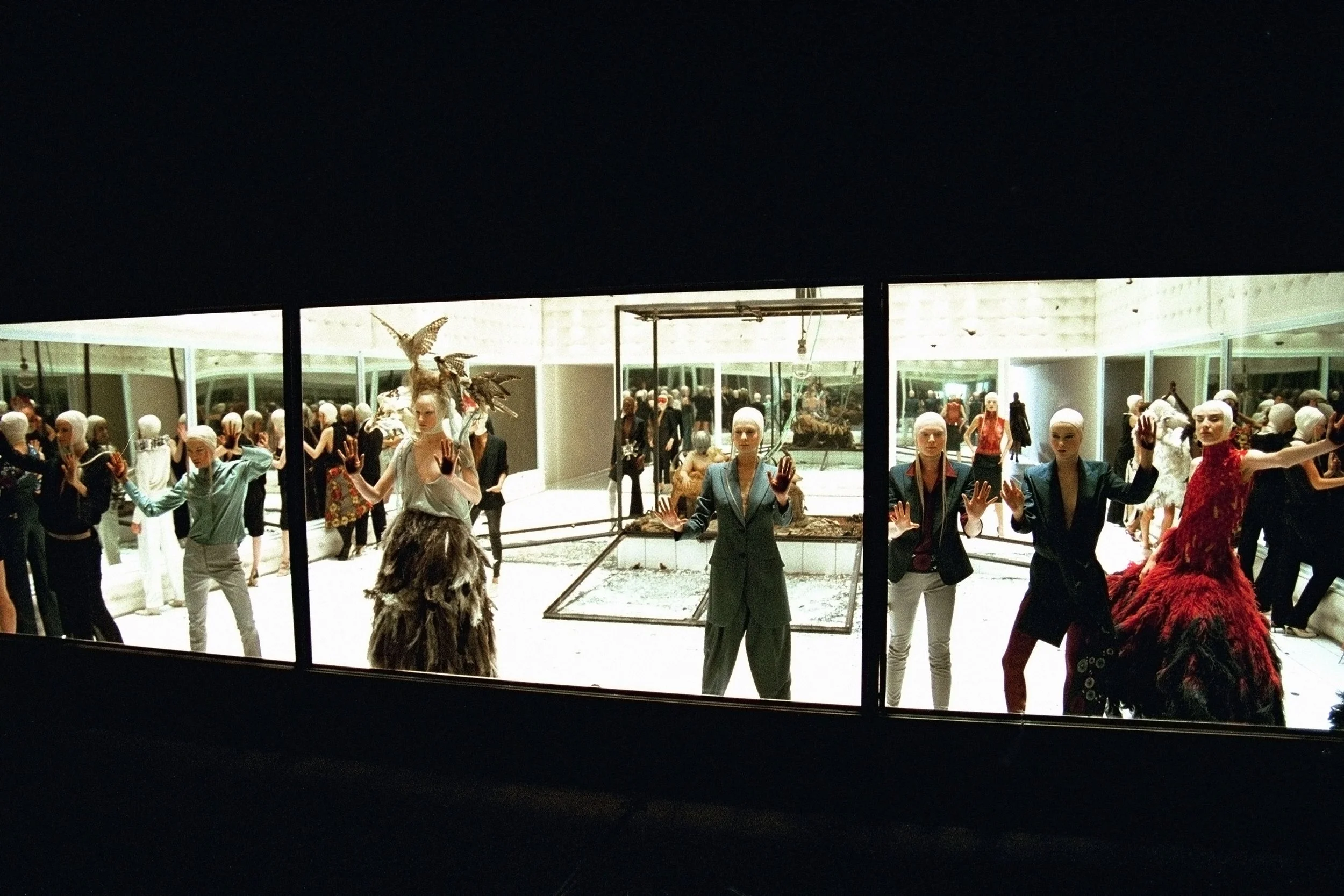
In VOSS, spring/summer 2001, the room appears inside the work. The show is usually kept at a flattering distance by the words used to praise it — theatre, spectacle, genius, one of McQueen’s great runway events. Those words admire the show and soften it in the same motion, because spectacle implies distance: it stays in front of the viewer. VOSS was built so the distance would fail.
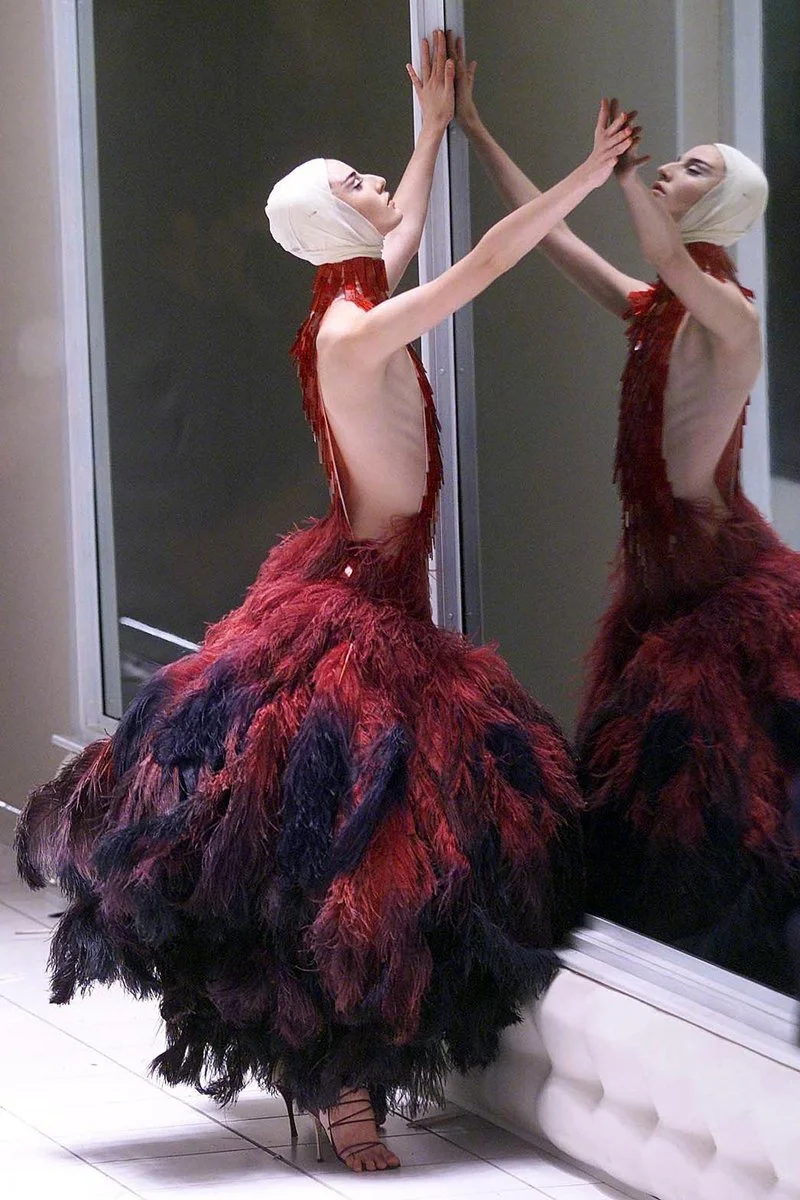
The staging was a room-sized cube, mirrored on every side, the audience seated outside it. McQueen started roughly an hour late and held the house lights up, so that for an hour the audience — fashion professionals, mostly — had nothing to look at but its own reflection, growing visibly uncomfortable while he watched their discomfort on a monitor from the wings. He said he wanted to turn their faces back on themselves. Only when the show began did the mirror reverse: the cube went transparent, revealing an interior built as a padded asylum cell, models with bandaged heads moving as though mid-breakdown. The finale was a second, inner glass box that shattered to reveal a nude, masked body attached to a breathing tube, reclining among live moths — a recreation of a Joel-Peter Witkin image.
The monitor matters. McQueen was not only staging discomfort. He was watching the apparatus process the room he had built. The audience’s unease was not an accidental response to a difficult image; it was the material of the staging, held on screen before the clothes appeared. The viewer, the delay, the mirrored wall, the controlled reveal, and the watched discomfort were all inside the work.
The familiar reading is that McQueen implicated the viewer, made the audience complicit in its looking. That is correct and too metaphorical for what the show did. VOSS did not comment on the viewer’s distance from the image. It built that distance into a room — a viewer, a prepared encounter, a controlled relation to looking, a delayed reveal — and then took it apart: the mirror denying the audience any object but the self, the delay making time the medium, the reversal making the watchers watched, and finally the glass falling.
The museum did not teach McQueen how to make difficulty admirable. He had already made that his medium. VOSS is a machine for managing spectatorship, run on a live audience, ten years before the Met would run a gentler version of that relation on a larger one. The retrospective did not impose a method on a body of work innocent of one. It completed something McQueen had already shown he understood.
Before Savage Beauty became the name on the wall, the room, the delay, the light, and the viewer had already entered the work.
McQueen died in February 2010. Fifteen months later the retrospective opened, drew 661,509 visitors, became one of the most-attended exhibitions in the Met’s history, and traveled to the V&A in 2015, larger than before. Obituary language and documentary afterlife helped fix the figure of the troubled genius. None of this made the work less violent. It changed the apparatus through which the violence was received. After a death, genius becomes easier to say. The wound becomes easier to read as destiny, torment, prophecy, truth — easier to admire, because admiration now feels like respect for the dead rather than appetite for the difficult.
The death did not prove the darkness was real; a suicide does not authenticate an oeuvre. The biography does not explain the work and must not be used to. Once McQueen could no longer answer, difficulty could become depth with very little resistance. The thing that could not be comfortably looked at in 1995 became the thing one was moved to have witnessed.
Run once, this would have stayed a controversy. Savage Beauty ran twice, larger the second time, and the title came loose from either building and became portable — the name one reaches for when reaching for McQueen at all.
Savage Beauty is not false. McQueen was savage; he was beautiful; the work earns both words. The procedure succeeds because it preserves the wound in a form that can be admired, repeated, visited, photographed, catalogued, and loved, and it asks nothing difficult of the people preserving it. The objects, looked at closely, do refuse it — Highland Rape will not settle into Romantic Nationalism, the bumster’s craft does not cancel its shock, VOSS will not stay theatre.
You do not get to side with the art against the museum, because the place you are standing when you admire the art is the museum, and the admiration is the machine working on you in real time. Nor does expertise rescue you. The reverence before the vitrine, the relief of construction, the eye that knows to look at the seam before the scandal — these are not responses outside the procedure. They are how the procedure becomes intimate enough to feel like judgment.
The problem was never that McQueen was savage, or beautiful, or dark. The problem is that the field found a procedure capacious enough to keep the violence and soften the encounter with it at the same time, ran it twice, and hung its name on the wall where the work begins.
Savage Beauty was not the wound. It was the procedure that made the wound available again. Because the procedure worked, it became the name.
McQueen’s violence did not become legible because it disappeared. It became legible because the frame learned how to keep it visible while making the encounter bearable: the title, the room, the vitrine, the trained eye, the death, the second run. Savage Beauty was not the wound. It was the procedure that made the wound available again.
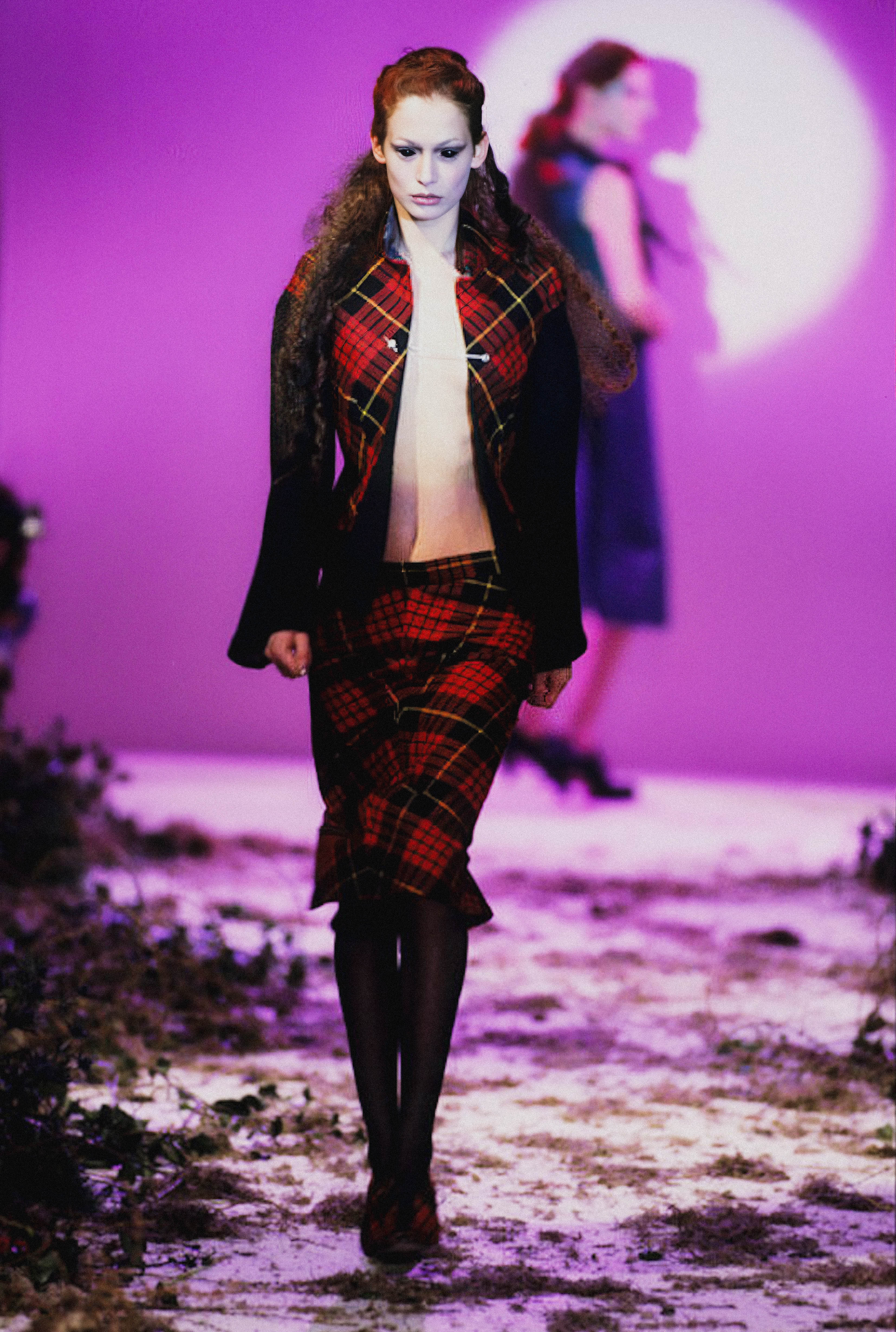
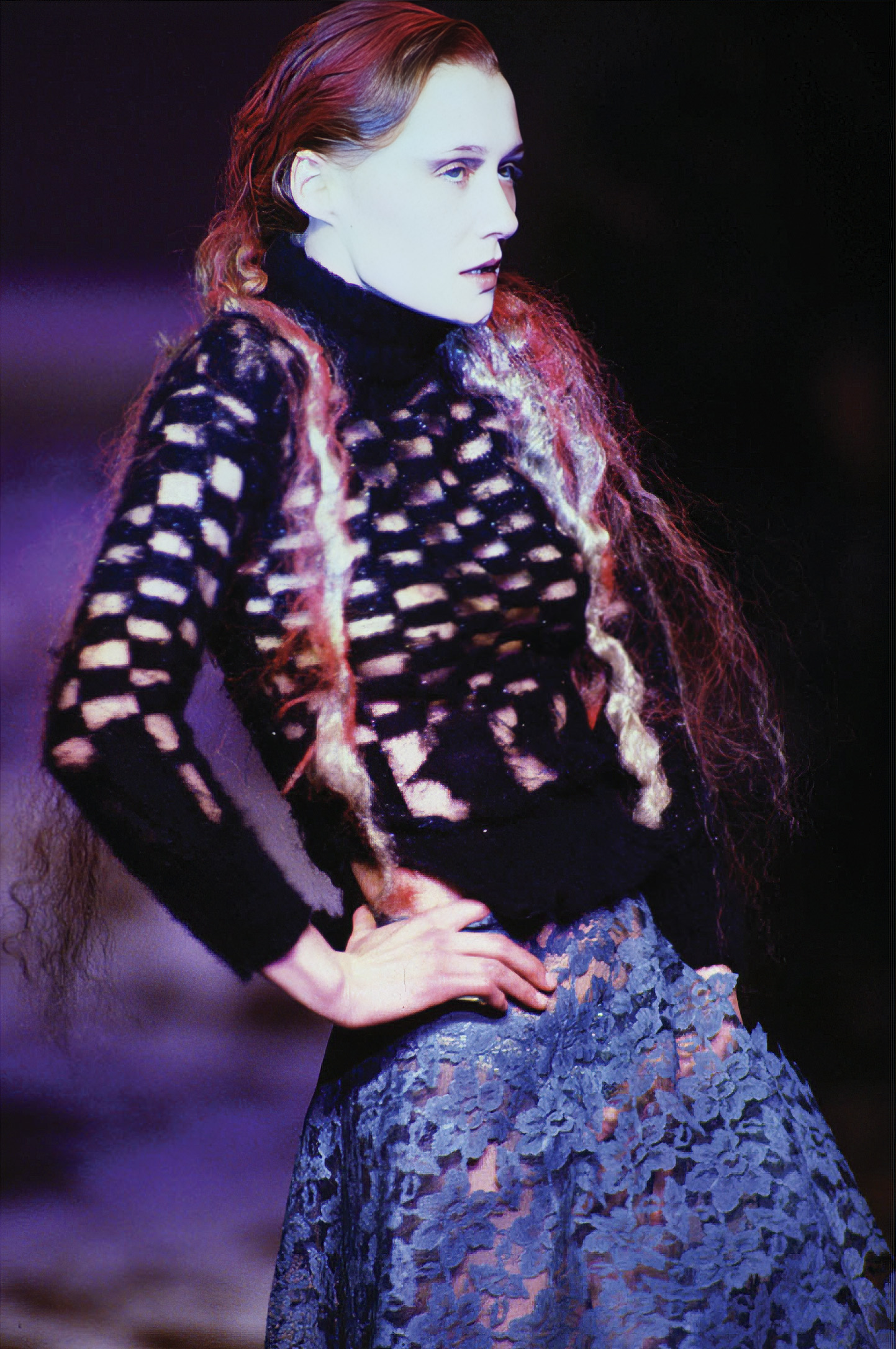

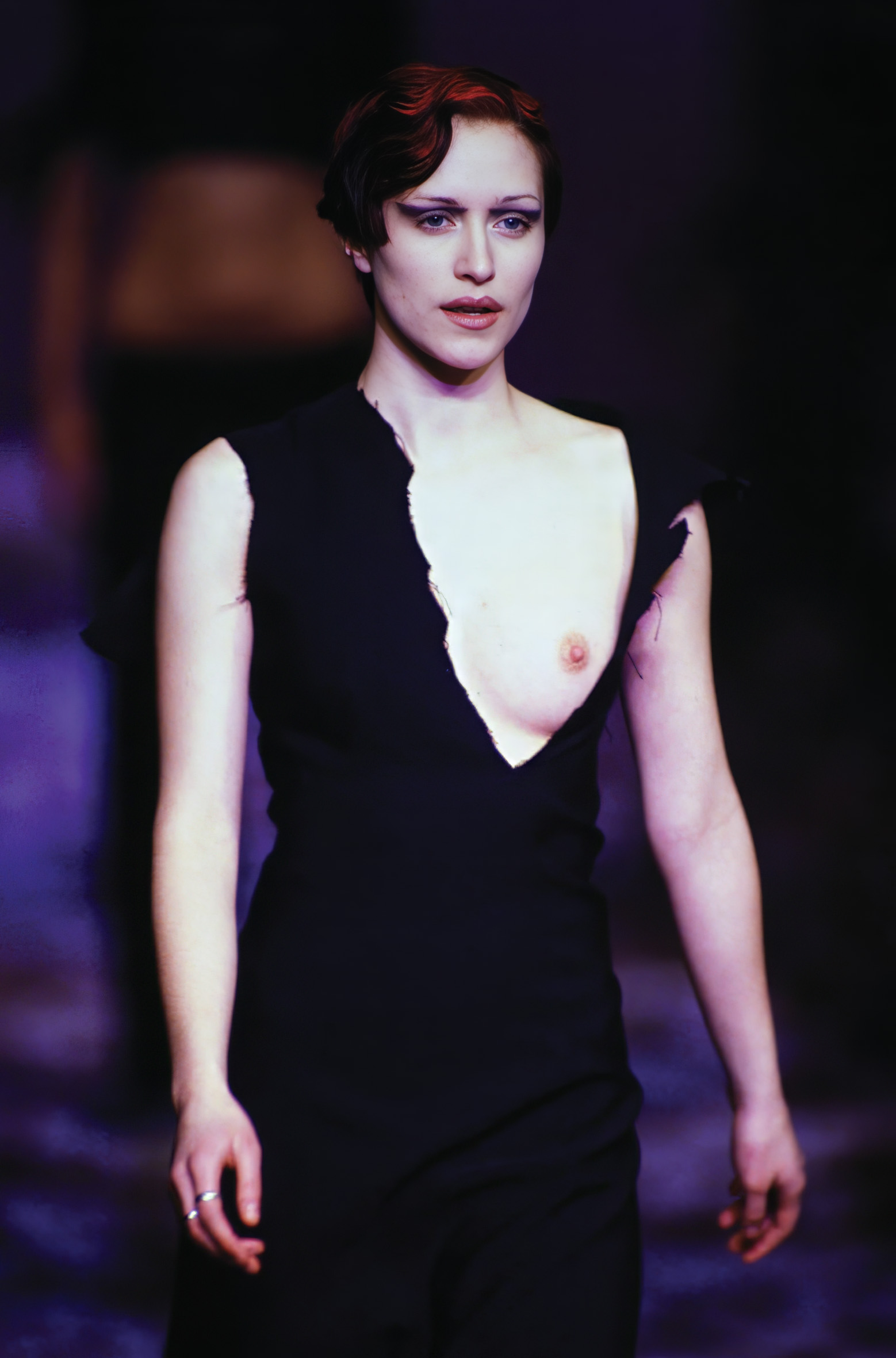


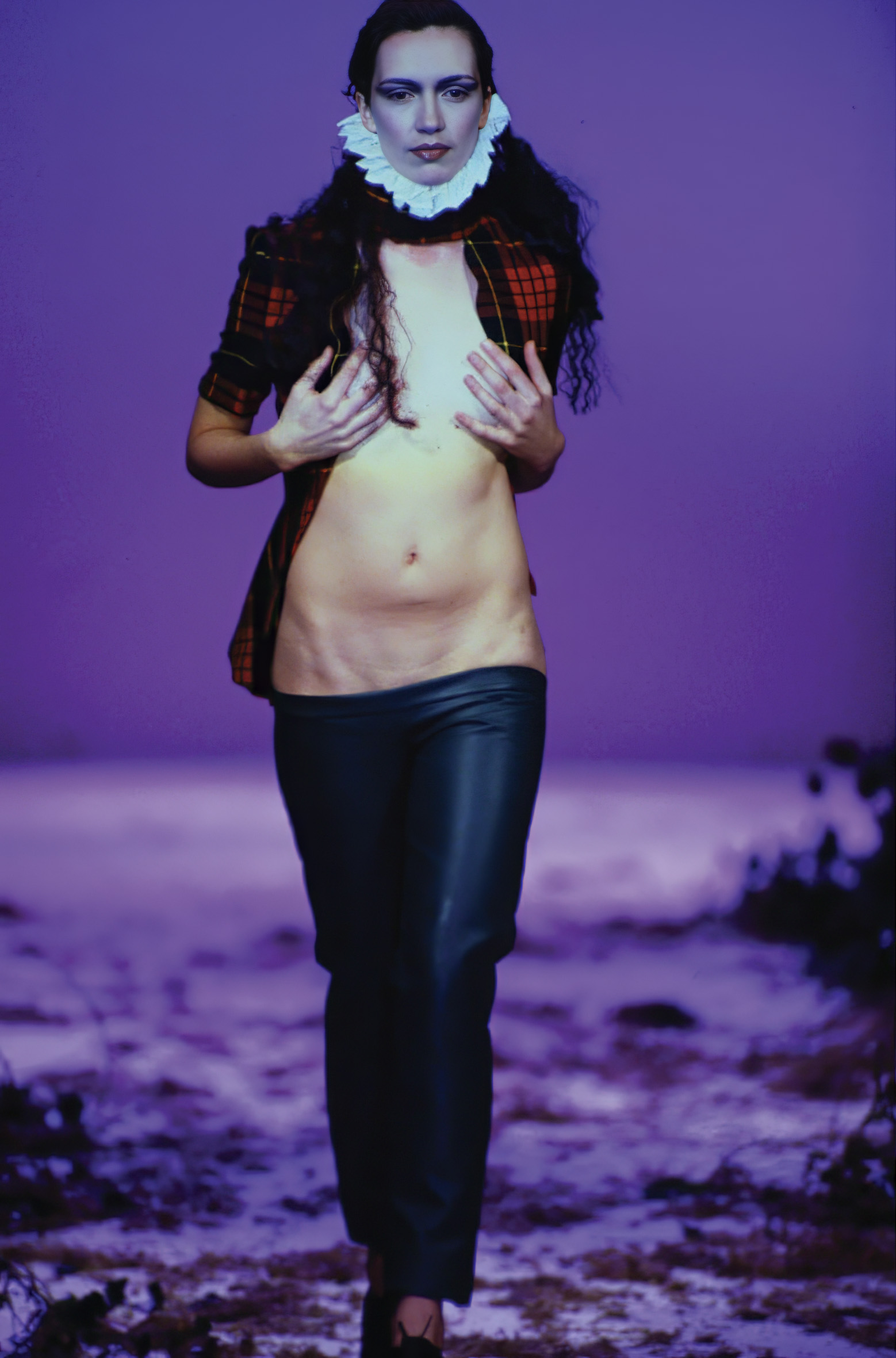

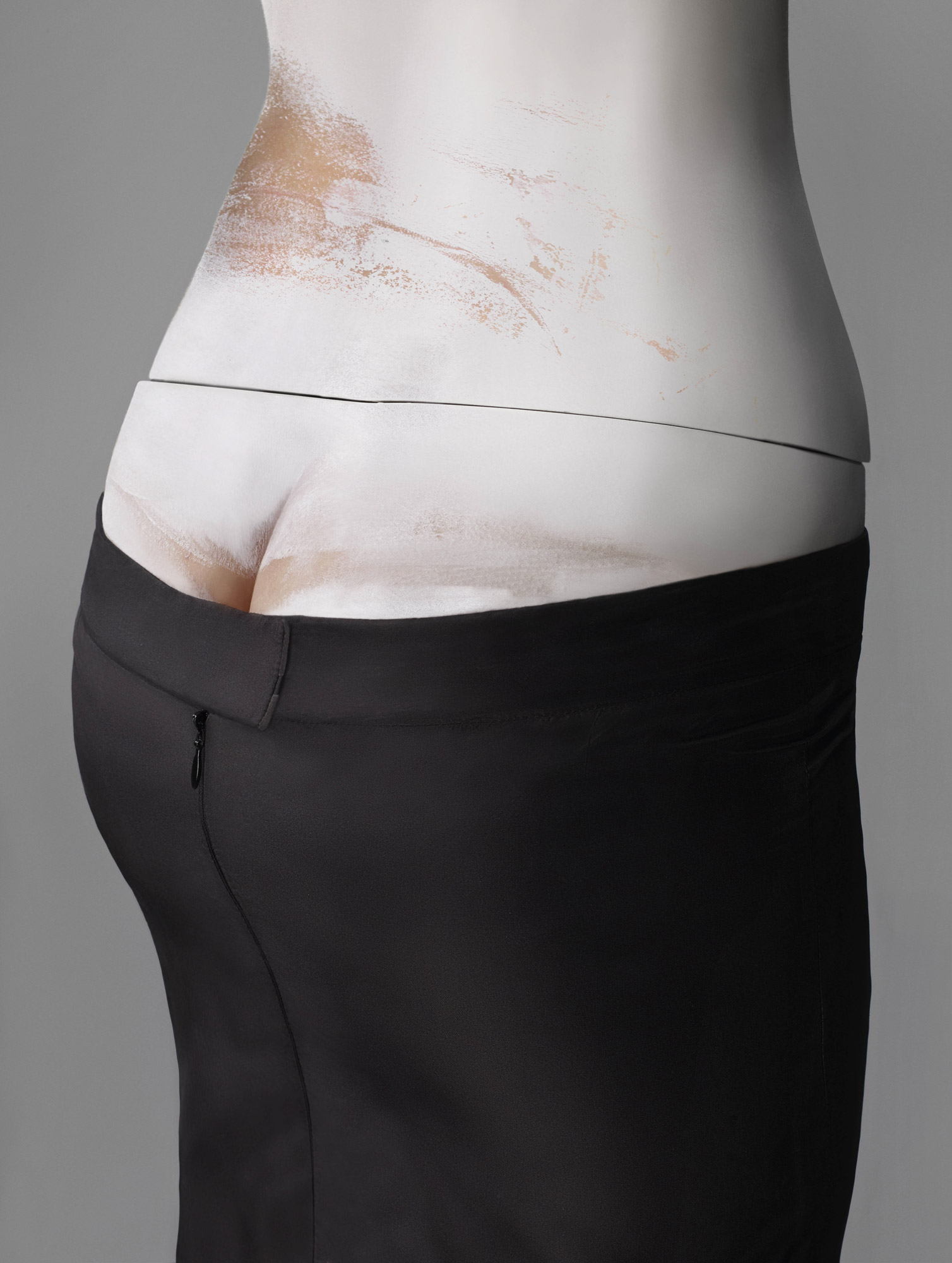
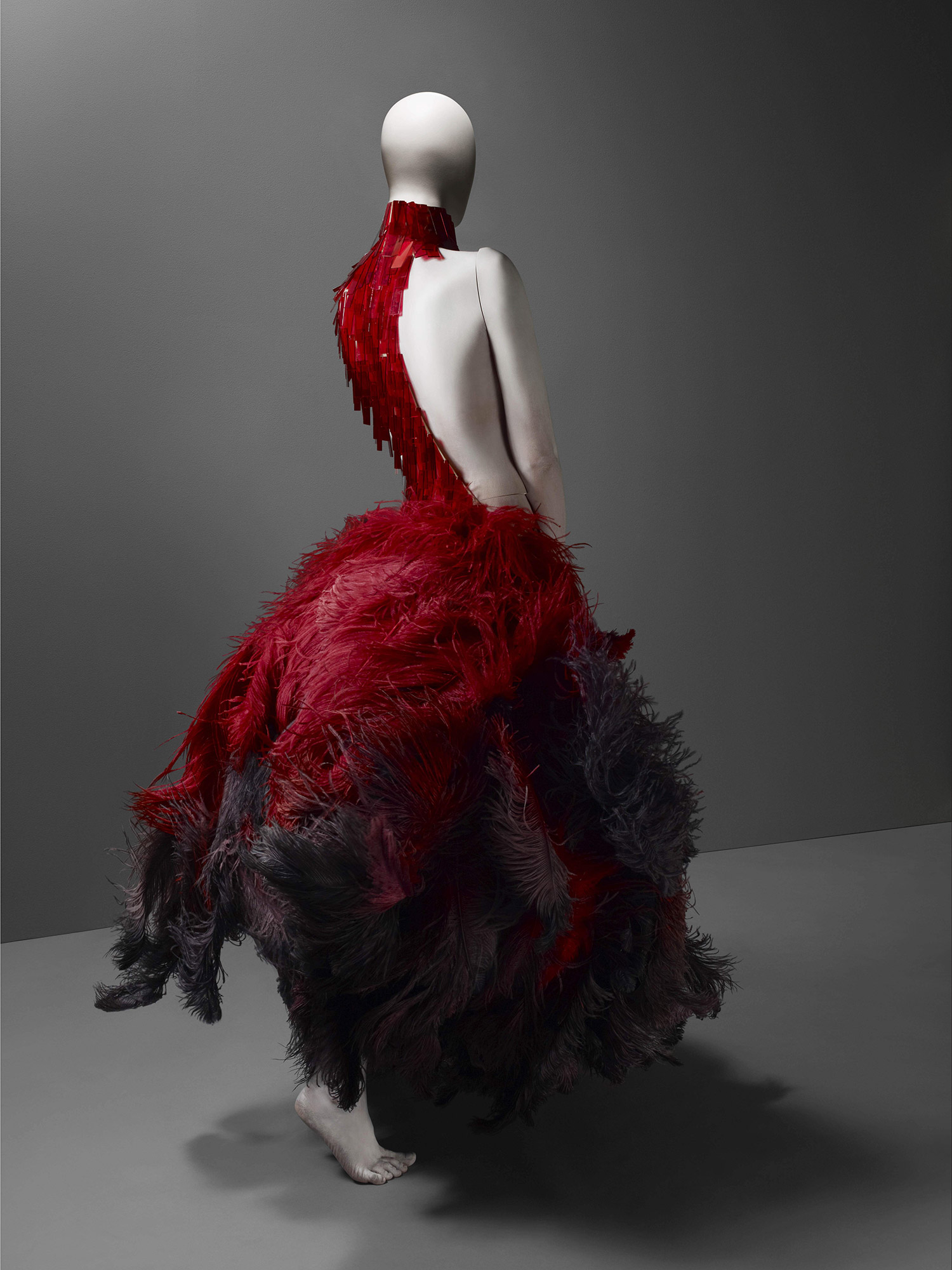


Cover Image: Alexander McQueen, Bumster Skirt, “Highland Rape” Collection, Autumn/Winter 1995–1996. Photo: Sølve Sundsbø. Courtesy of The Metropolitan Museum of Art. © The Metropolitan Museum of Art 2011.
All images © their respective rights holders.
Image rights & attribution →