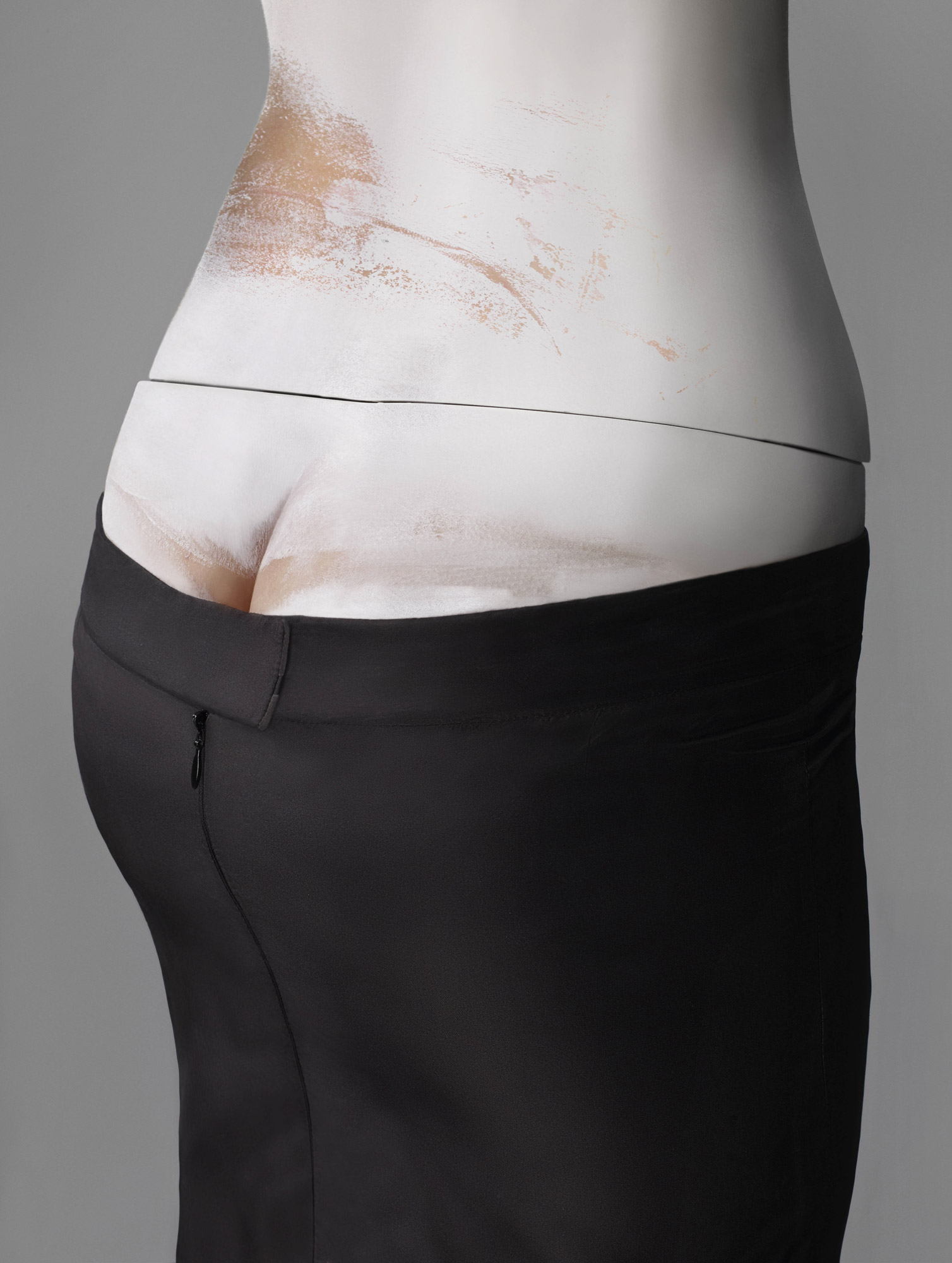


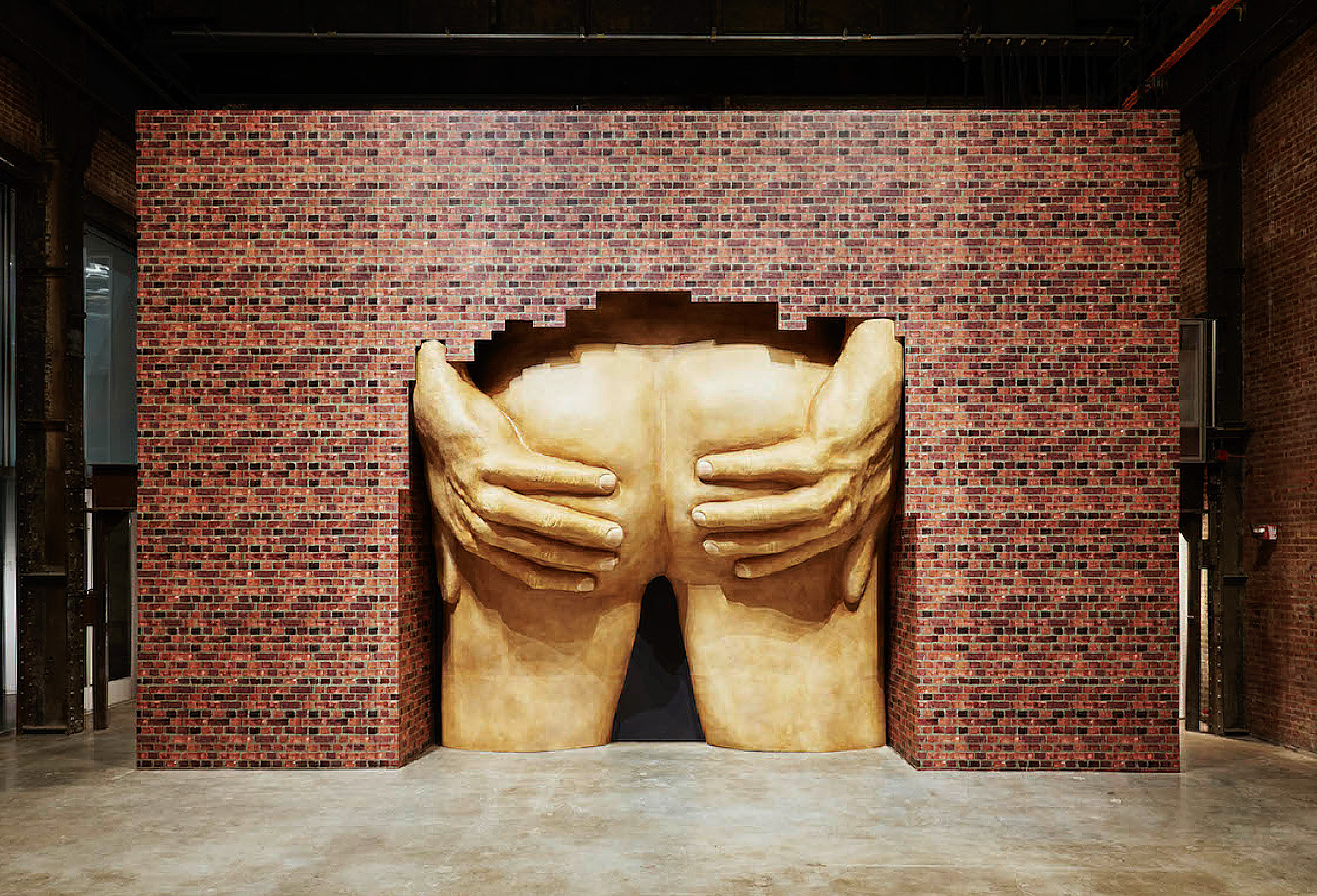
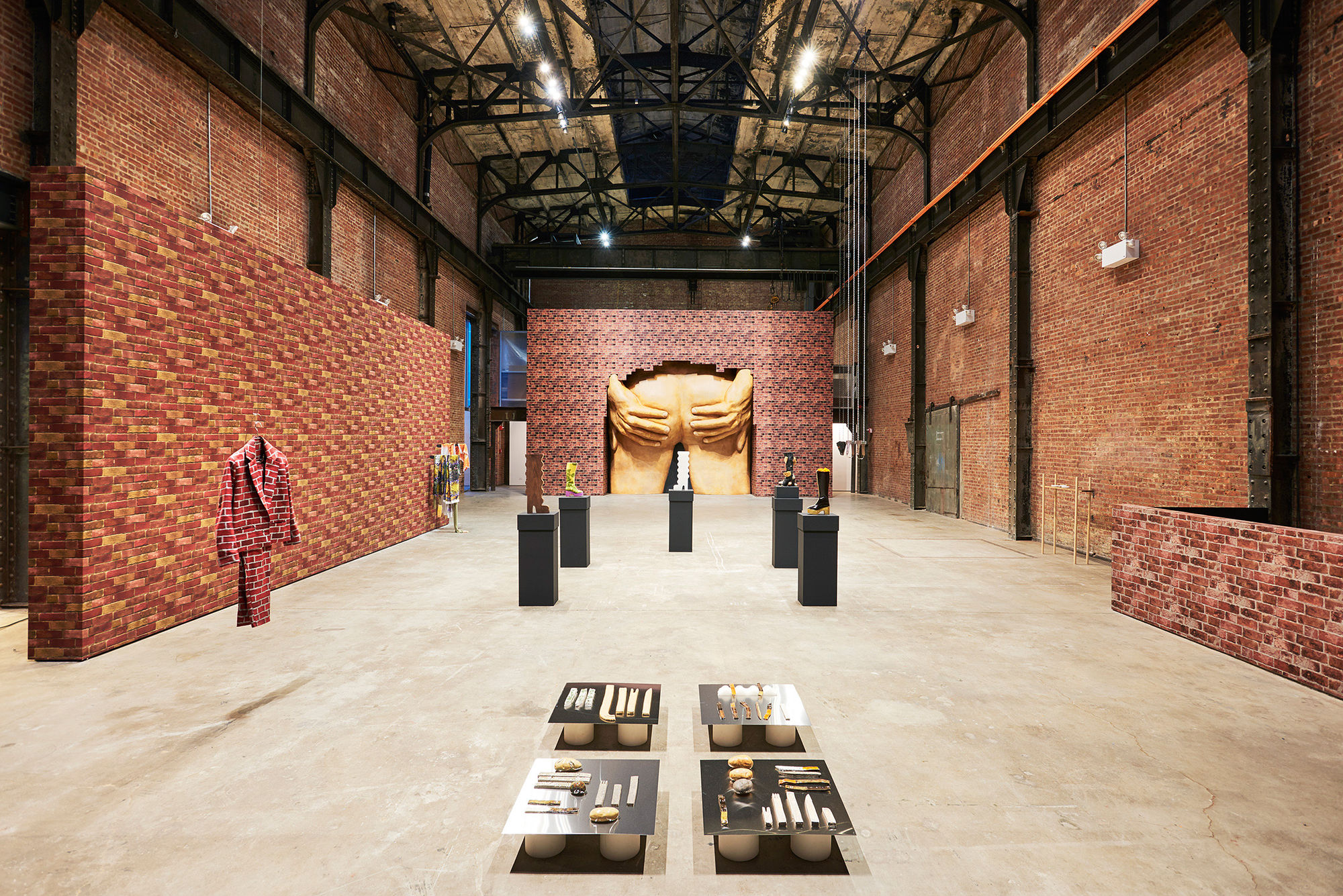
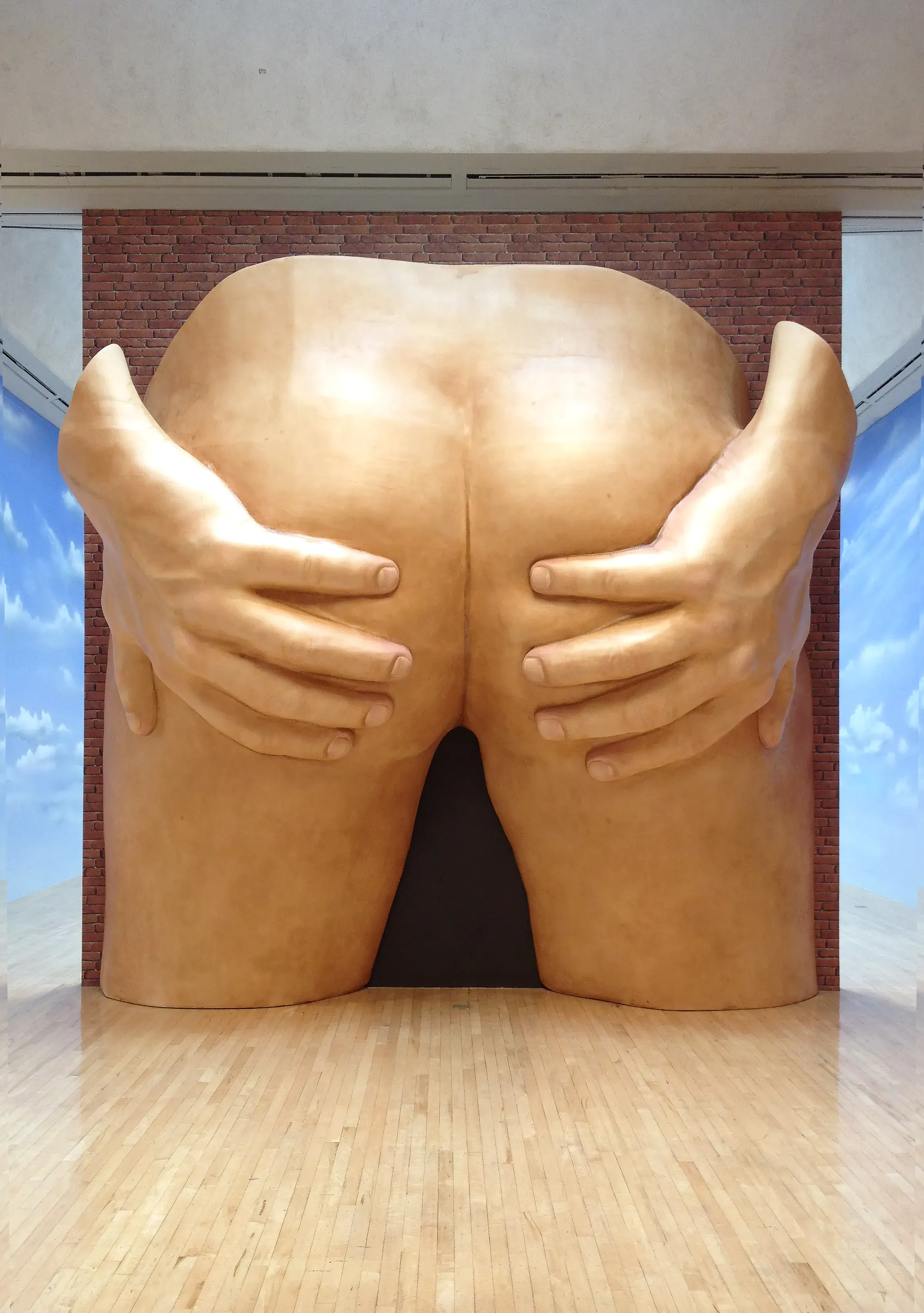
In Anthea Hamilton’s Project for Door (After Gaetano Pesce), a pair of colossal buttocks stands inside the gallery wall with the bluntness of comedy and the authority of an entrance. The hands spread the cheeks. The thighs open beside the route through the room. The work does not escape the joke. It uses it. Laughter, embarrassment, and movement begin in the same place. But the body does not remain an image long enough to belong only to that response. It interrupts the room as a threshold.
The visitor does not pass through the buttocks. That distinction matters. The body has been placed where passage is being organized, so that movement through the room has to acknowledge the charged image beside it. Its force — erotic, comic, faintly shaming — is not cancelled by enlargement or absurdity but built into the condition of entry. Flesh becomes architectural pressure; looking becomes movement.
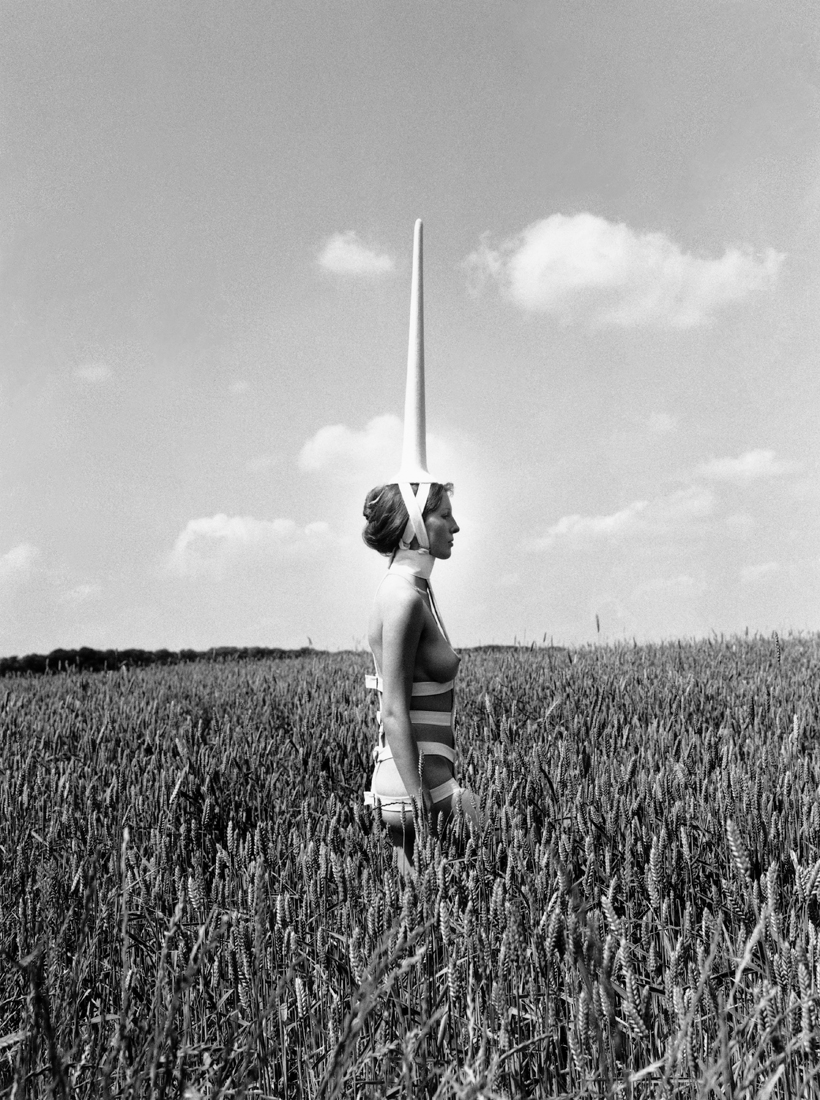
Hamilton has a phrase for this, taken from Antonin Artaud: the physical knowledge of images. An image one only looks at leaves the body where it stands. An image set into the terms of passage moves the feet. But Hamilton’s images do not stop with the body they show. They keep working after the body has been displaced into frame, furniture, costume, surface, or rope. What her work keeps asking is not only what a body looks like, but what bodily relation an image leaves behind — whether it asks one to enter, to stop, to touch, to be held back, to know through the body what looking alone cannot complete.
The door is a threshold with a body still in it. What Hamilton builds from there is the threshold without one. The opening keeps working after the figure that justified it has been turned into a wall, a frame, a passage. Once set, it does not require the body to stay.
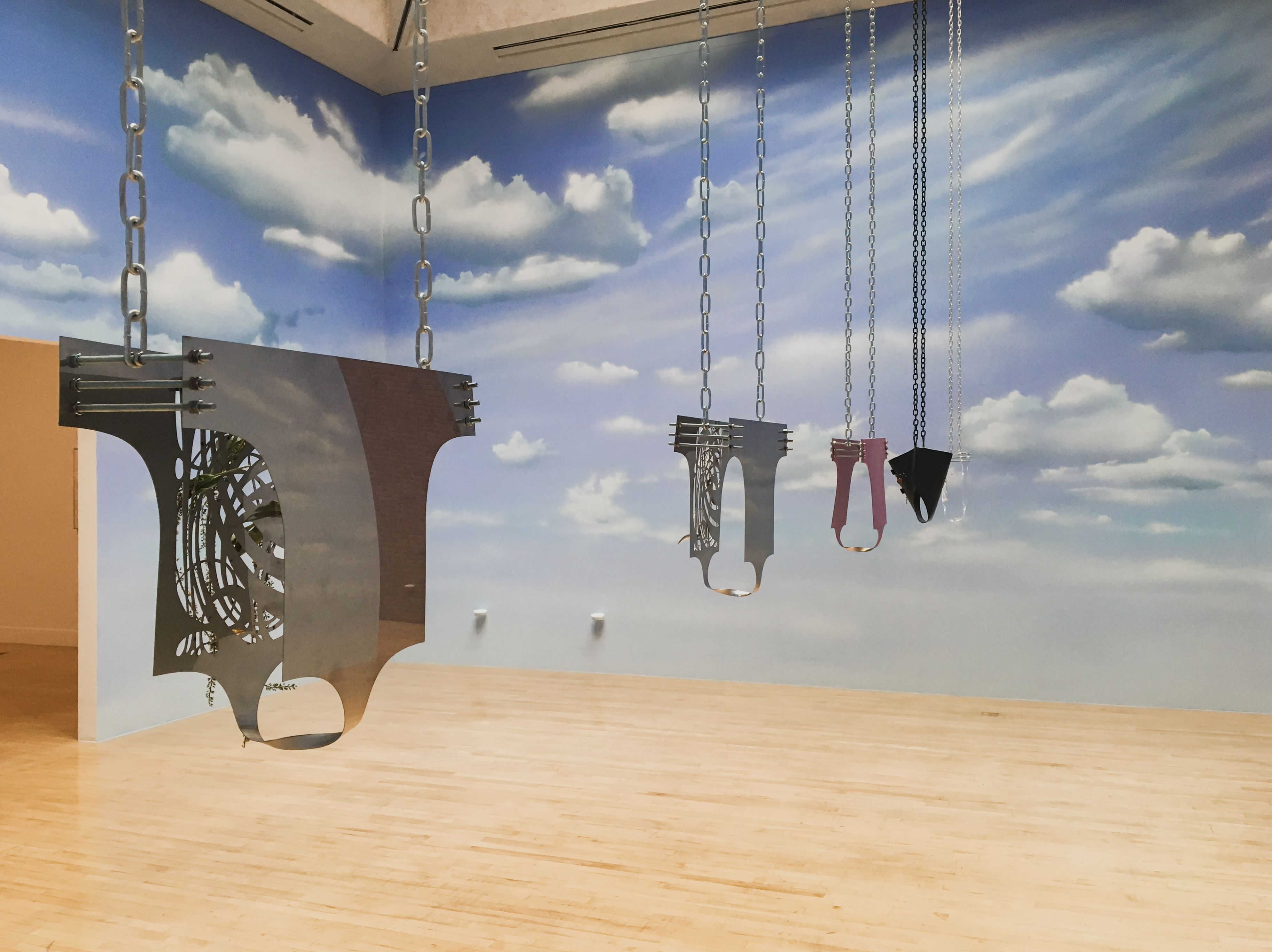
The threshold without a body appears first in its simplest negative form. In Lichen! Libido! Chastity!, the chastity belts hang from the ceiling like swings — knicker-shaped, lockless, with no way to be worn. Hamilton drew their form from two kinds of protection she had been looking at in New York: Hector Guimard’s filigree padlocks for the Paris Métro and the battlefield armour of Henry VIII. Both exist to keep the world off a body. Hamilton leaves only the prohibition, with no wearer and none wanted. The guarding has outlived the thing it guarded; only the guarding is left.
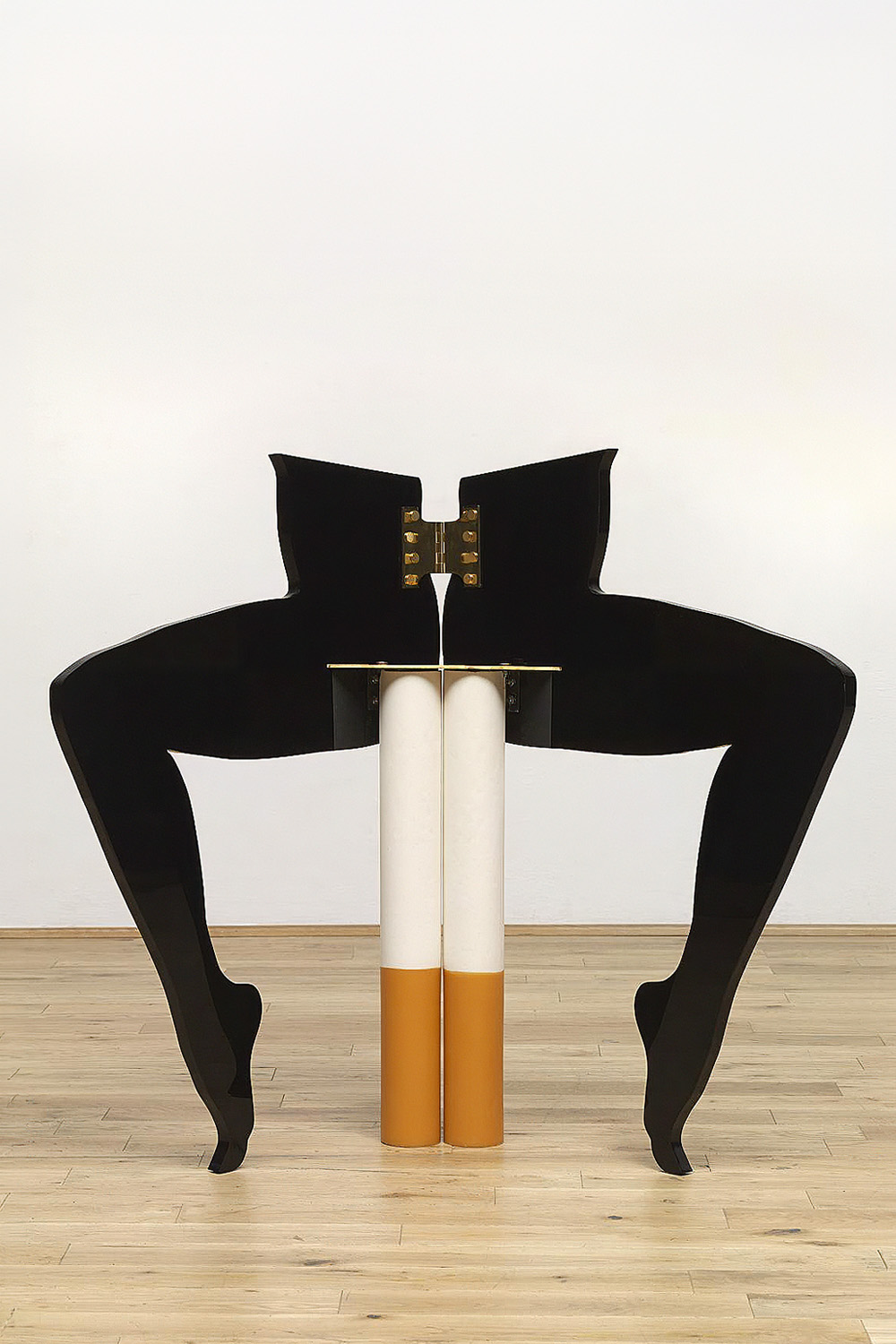
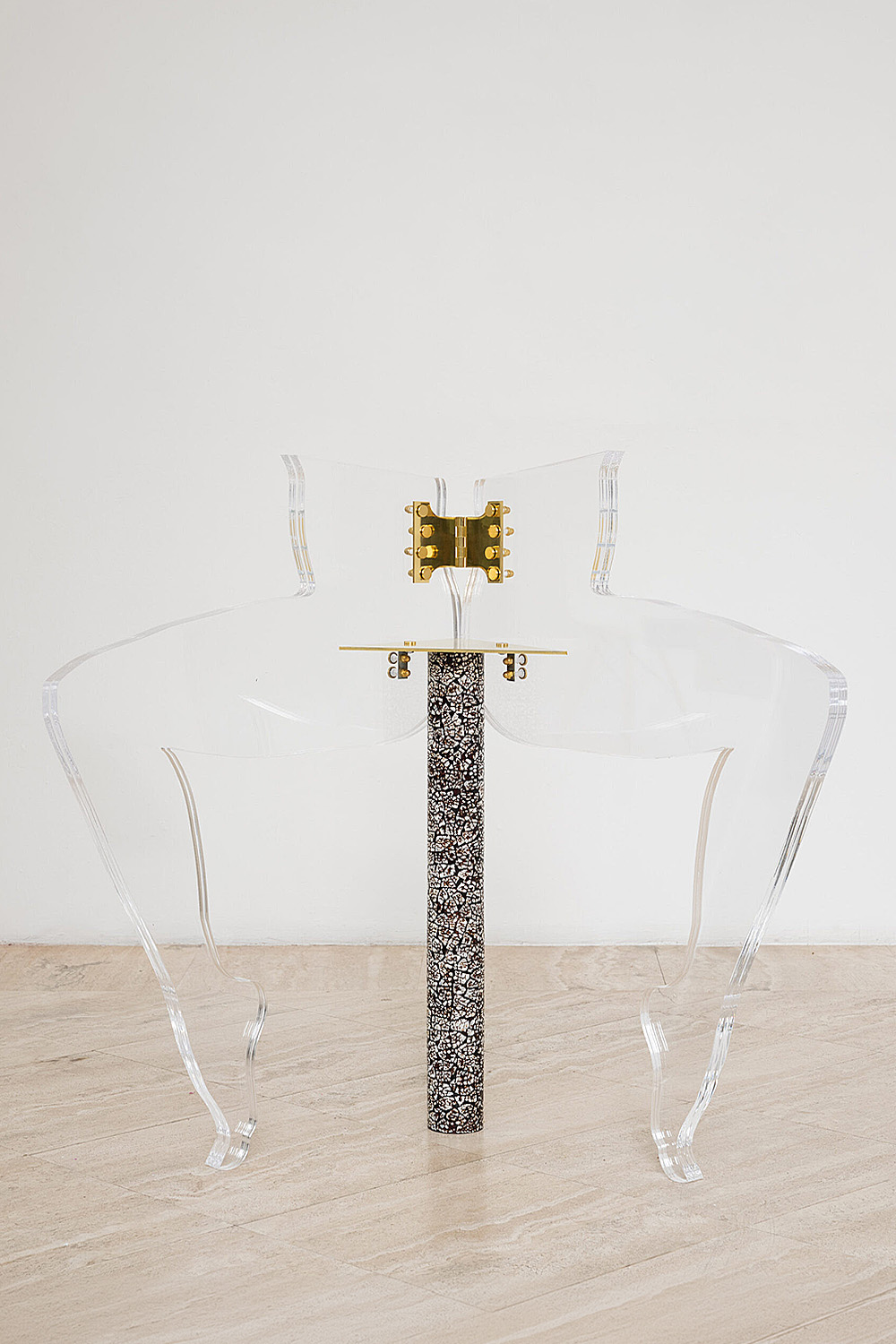
The Leg Chairs hold that disappearance inside an offer. They have a stand, a seat, and the artist’s own legs cut from Perspex and splayed at either side. They are also chairs that cannot be sat on. “They’re called chairs,” Hamilton has said, “but you can’t sit on them” — fetishised objects, prototypes, design classics holding the shape of furniture without its use. The precision is in the broken promise. The form says use me; the object says you may not. The legs open; the seat refuses the body it appears to invite. The chair is the belt wearing the costume of furniture. There is no sitter, as there was no wearer. The invitation stands with nobody in it, and goes on refusing.
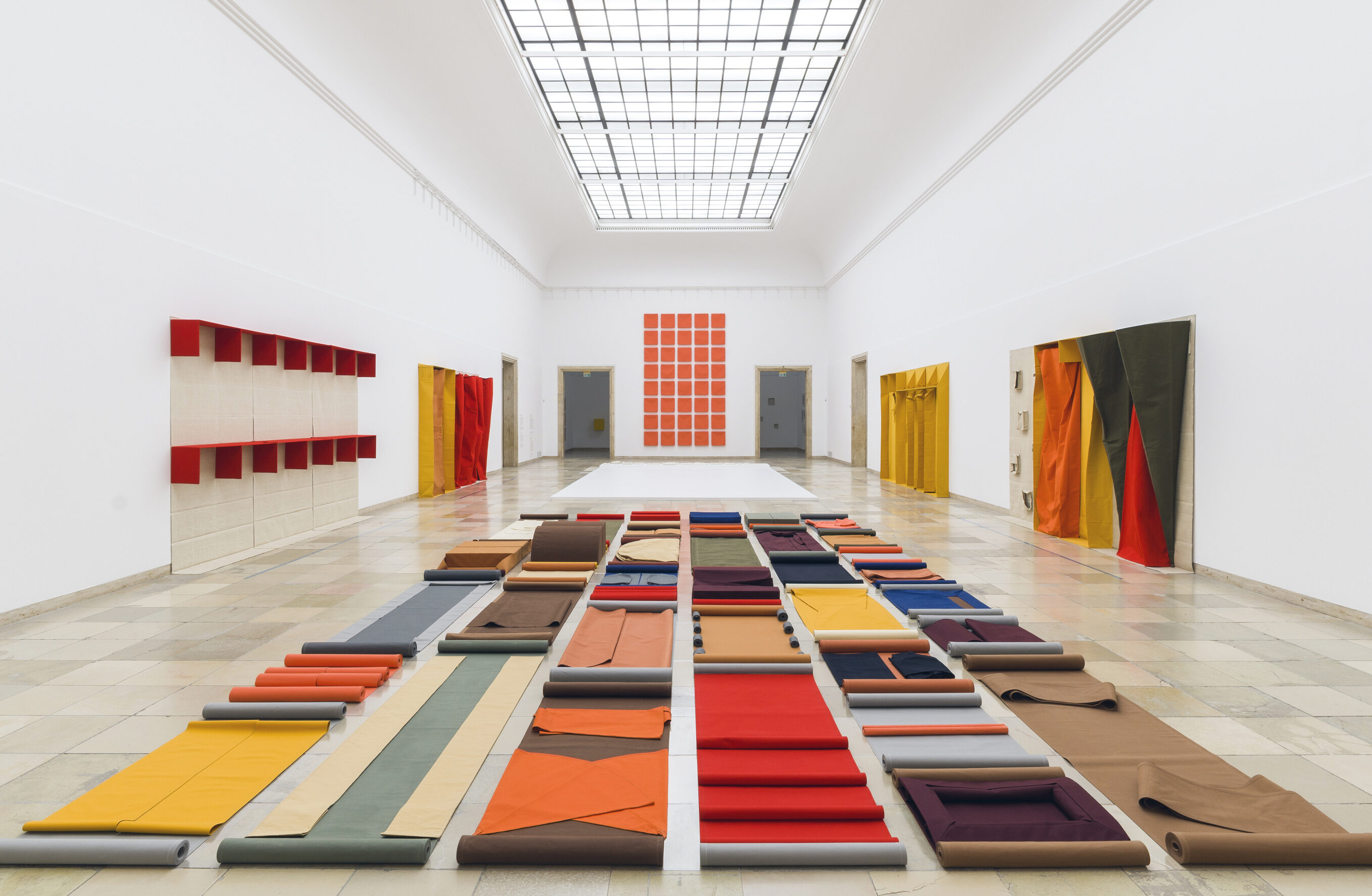
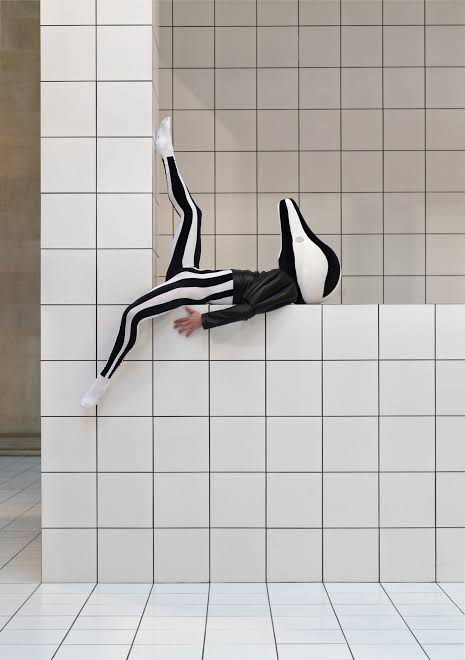
For a while the body comes back. For the 2018 Tate commission, Hamilton laid more than seven thousand white tiles down the length of the Duveen Galleries, raised the floor into podiums for sculptures she drew from the collection, and set a single performer into the space — one costume a day, a different one each morning, for six months. She spent, by her own account, a month deciding the width of the grout between the tiles, so the grid would not dominate the body standing inside it. A month, on the gap between tiles, calibrated around a body. The room was measured against a figure before any visitor arrived — the pressure the grid could place on a body without flattening it, set to a tolerance and built in.
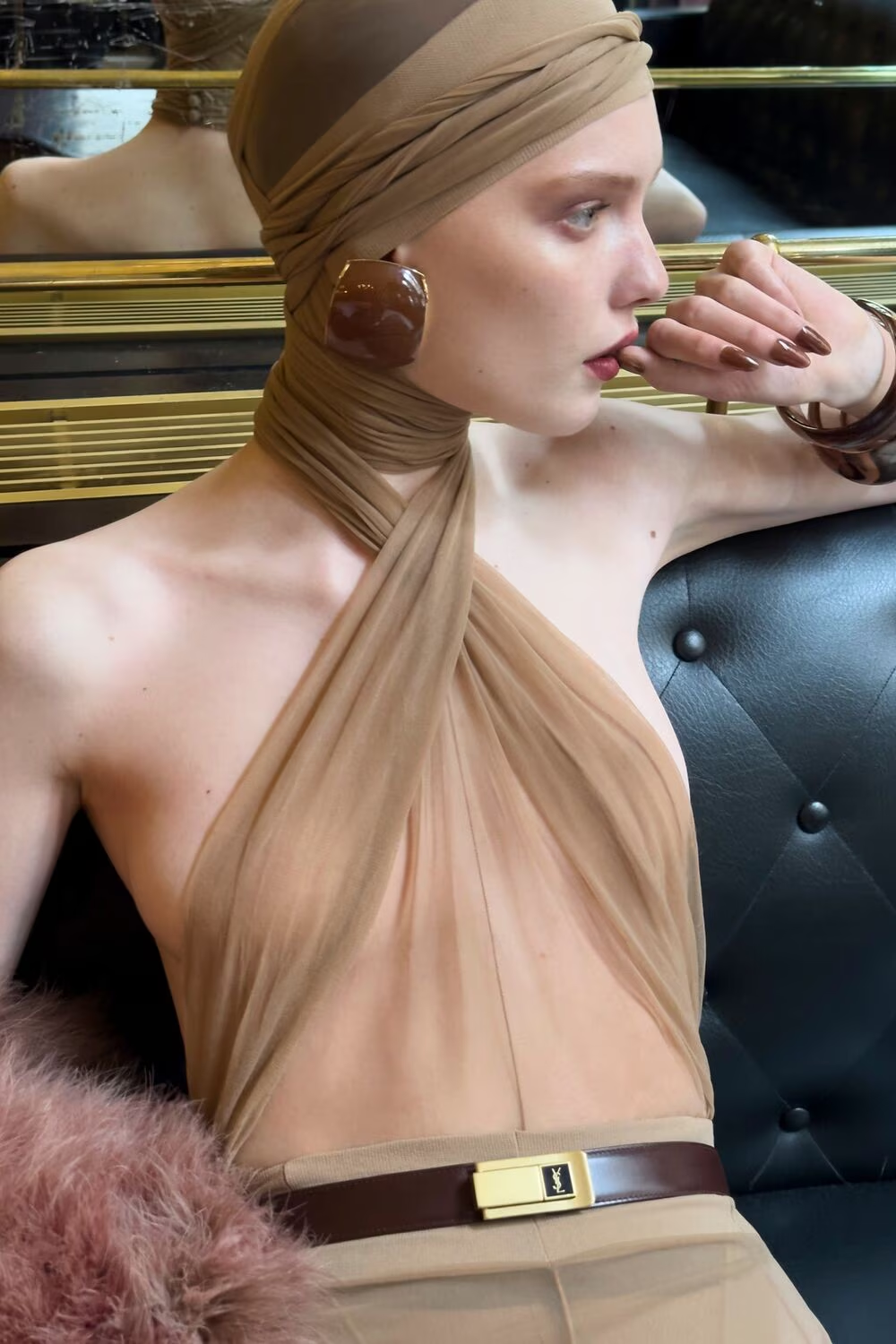
The costumes mask the head completely. The body at the centre of the work is wholly present and wholly withheld: breathing, moving among the objects, and unreachable. The rule is fixed as architecture and reissued every morning; the figure inside it is changed and recostumed daily, while the field it walks does not move. The field was made to hold the body that would be issued into it. The visitor stands inside the same measurement, watching the contact go elsewhere.
The performer walks the grid, handles the collection sculptures the visitor may not, completes the bodily relation the room was built to stage. The contact is not removed from the work; it is assigned to someone else. Hamilton has said vision was the least important sense in the room, and chose the sculptures for how they would feel under the hand — a tactile programme the visitor is mostly forbidden to finish. The viewer shares the field and watches another body receive the touch the room has made desirable.
The gallery does not interrupt this. It makes it official. The institution that builds The Squash around touch and presence is also the one that fences the performer, posts the rule, and turns bodily knowledge into something one watches being assigned elsewhere. The split between the body in the work and the body watching it is the museum’s resting condition, exposed rather than softened.
The same threshold reaches back to the door of the institution itself. Hamilton was the first Black woman commissioned for the Duveen Galleries, and the fact reached the room ahead of the work, framing the encounter before anyone arrived at the tiles. The terms on which the artist was allowed to enter the room were set, like the grout, before the work could speak — measured at the threshold, before any object could begin.
The earlier work did not make race its stated content. It sent pressure elsewhere — into surfaces, thresholds, costumes, rules. That displacement left pressure in the work: the body could be read as architecture while the racial conditions of that reading stayed held beneath the object, like everything else the work withholds.
Soft You does not abandon the mechanism; it removes one of its covers. The title comes from Othello, the outsider undone in a city that will not hold him. The room’s perfume, made for Black skin, keeps race at the surface of sensation — present now as language and scent and structure rather than as a condition left unspoken. The cover that had been there from the start is the one thing taken away.
After that removal, the desk changes the problem again. In Soft You, the Shibari Desk is a working writing desk, black-lacquered, wrapped in bondage rope until it reads less as furniture than as a bound body. The function is not taken away; it is tied shut.
Hamilton went to a Shibari master to ask why the rope ran to such lengths and learned that binding is also a way of holding time — more knots, longer to tie and free; rougher rope, slower hands. “It’s about the speed of the act.” The desk keeps that time in its surface. One can see how long it took to stop it working.
By the time the desk is bound, use has become something the object remembers rather than permits. A thing made for contact, labour, writing, and touch becomes a body whose use is charged by obstruction. Here too the body has gone: the desk is bound as if it were a figure, with no figure present. The restraint holds around an absence.
Return to the door, and to whoever stands near it with a phone raised. It looks like a way out: the old reflex of turning the body back into an image, of stepping outside the embarrassment and the spectacle by making a picture of them. But the phone is not outside the work. It is the last object in the sequence. The visitor stands where the body has placed them, deciding how another body will be seen. They make an image only after the body has organized their position. To continue, they do not pass through the body. They pass through the condition it has made.
Hamilton’s bodies are not only images. They become entrances, guards, furniture, costumes, and rooms — structures that decide whether another body may pass, sit, touch, watch, or remain outside. The viewer does not arrive freely. The work has already prepared a position for them.


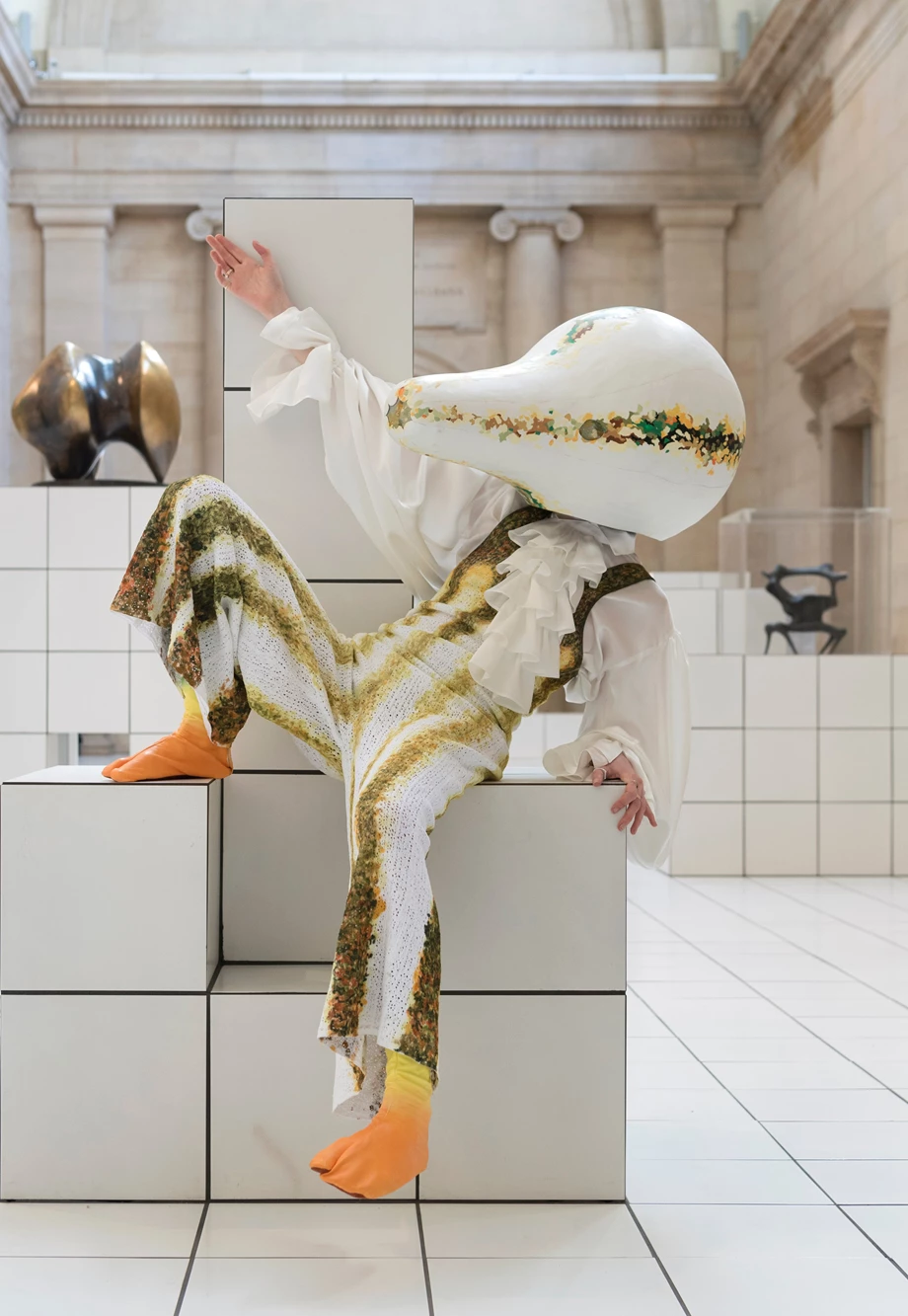

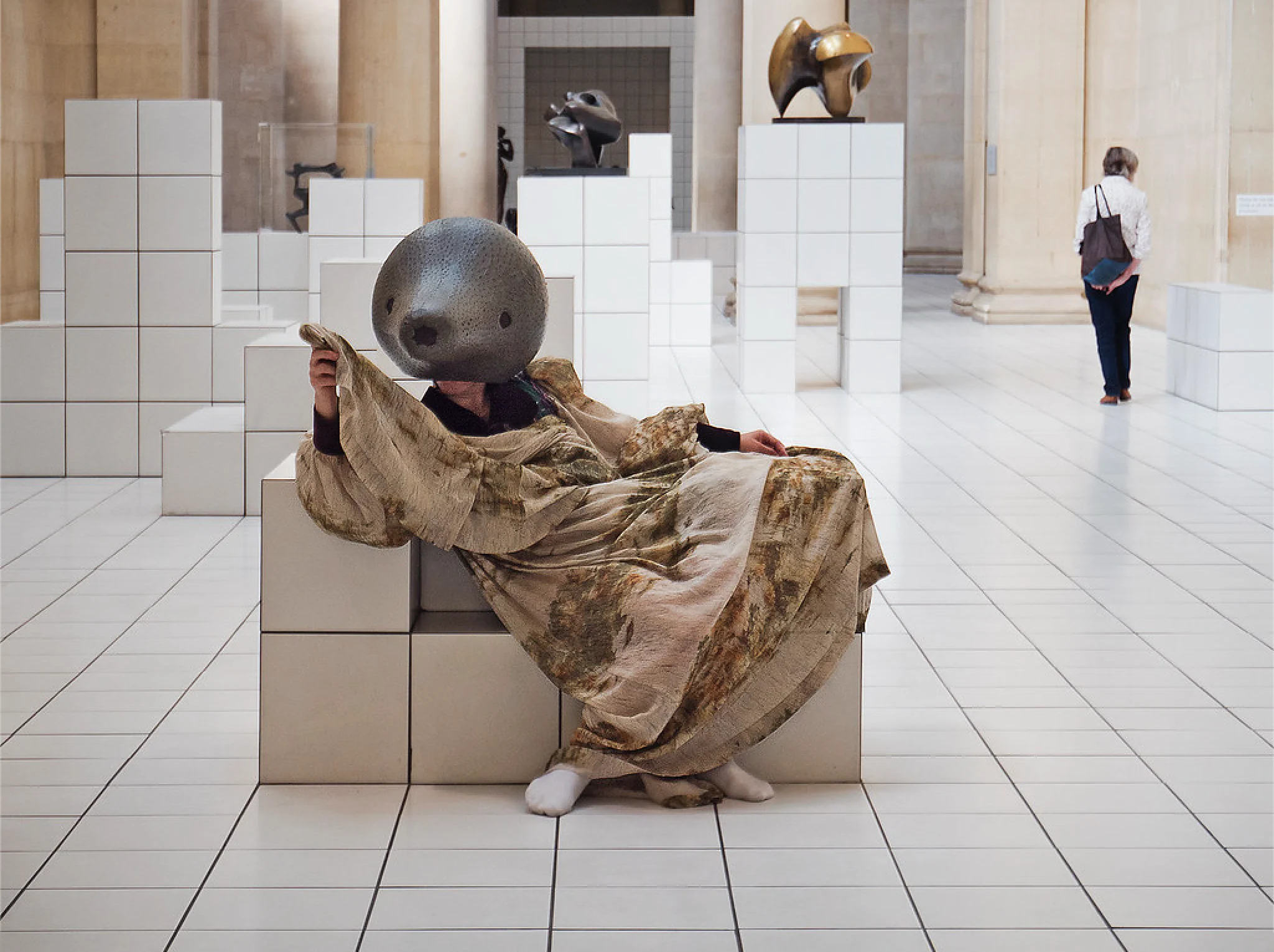
Cover Image: Anthea Hamilton, The Squash, 2018. Exhibition view, Tate Britain, London, 2018. Photo: © Tate (Seraphina Neville). Courtesy the artist and Tate © Anthea Hamilton 2018.
All images © their respective rights holders.
Image rights & attribution →