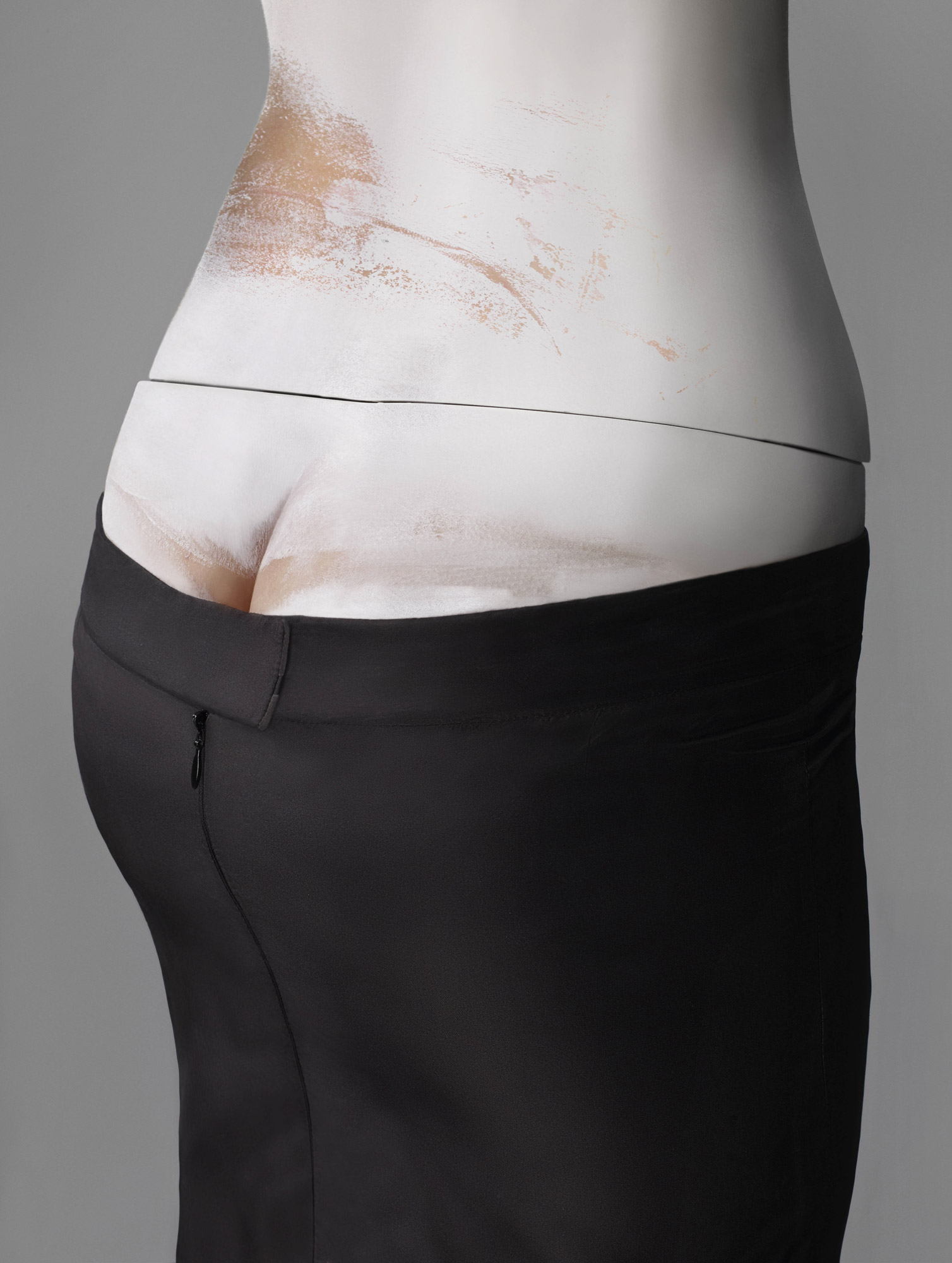
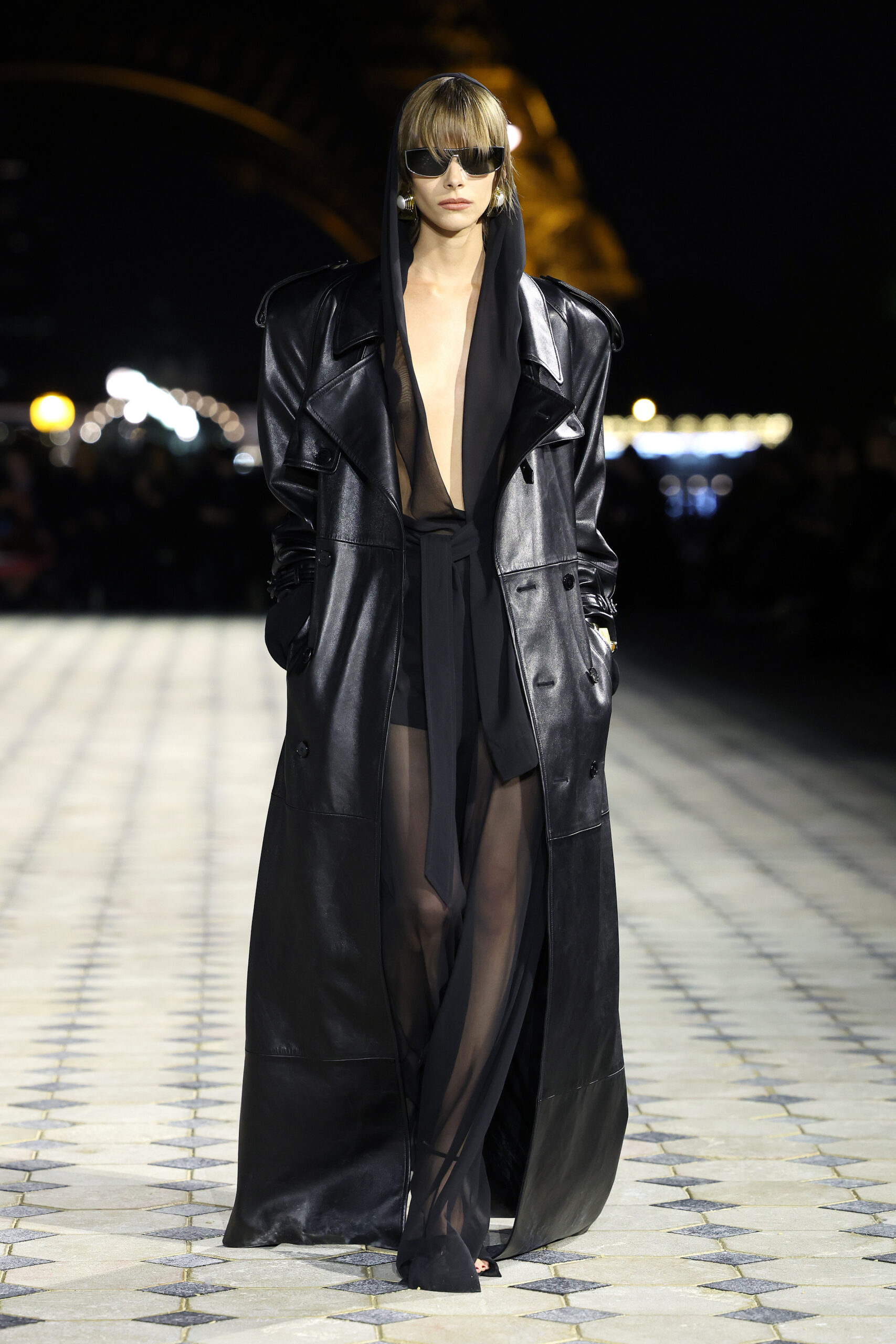
At Vaccarello’s Saint Laurent the body is brought close and then held. It comes closer than almost anywhere else in fashion, close enough that nearness can look, for a moment, like permission. Then the same image decides where that nearness will stop. A coat hardens the outline. A shoulder widens at the edge. A belt fixes the center. Dark glasses close the face. Hands go into pockets and stay there. The garment thins until it seems to lose its claim as garment, and skin is placed under exact discipline — lit, framed, offered, and never made available. There is nearness everywhere, and almost nothing to keep.
This is usually described as erotic distance, and Vaccarello has given that distance its sentence: “You think you can have her, but you cannot.” The line sounds, at first, like a statement about sex — the body offered as image and withdrawn as fact. It is that. But the sentence also makes a position. It places someone at the edge of the frame, asks the body to be read as near, lets wanting begin, and then prevents the movement from becoming possession.
Saint Laurent has long had a vocabulary for this kind of withheld meaning. In French, le non-dit names what remains unsaid — not simply silence, but the meaning a work carries by refusing to state it. At Vaccarello’s Saint Laurent that unspoken charge is usually located in the clothes: in the body exposed and held back, in desire made visible and kept from possession. But the unspoken is not only a mood in the garment. It is a structure of completion. The image brings the body close, then moves the point of arrival elsewhere.
The body is where this first becomes visible, because the body is the hardest term to own. In Winter 2024 the house brought clothing almost to the point of disappearance. Transparency, one of Saint Laurent’s oldest inheritances, was not used as a single scandalous event but as an atmosphere. Cloth came so close to skin that garment and body seemed to approach the same surface — dresses built from hosiery, in powdery tones near the body’s own, the fabric thinning as if it might evaporate while still holding the figure exactly. Tailoring and marabou interrupted the sheerness, giving the eye moments of weight against the nearly vanished cloth.
The obvious category is naked dressing. That category is too quick. When a garment approaches disappearance, the expected reward is the body underneath: the cloth gets out of the way and delivers what it had covered. This delivery does not come. The body is not simply revealed. It is held by the belt at the waist, by the counterweight of marabou, by the harder line of a coat, by the exactness of the distance the image keeps. The closer the fabric comes to nothing, the more precisely the body is described and the less it can be taken. Exposure is made exact rather than loose, and possession is made less possible in the same gesture.
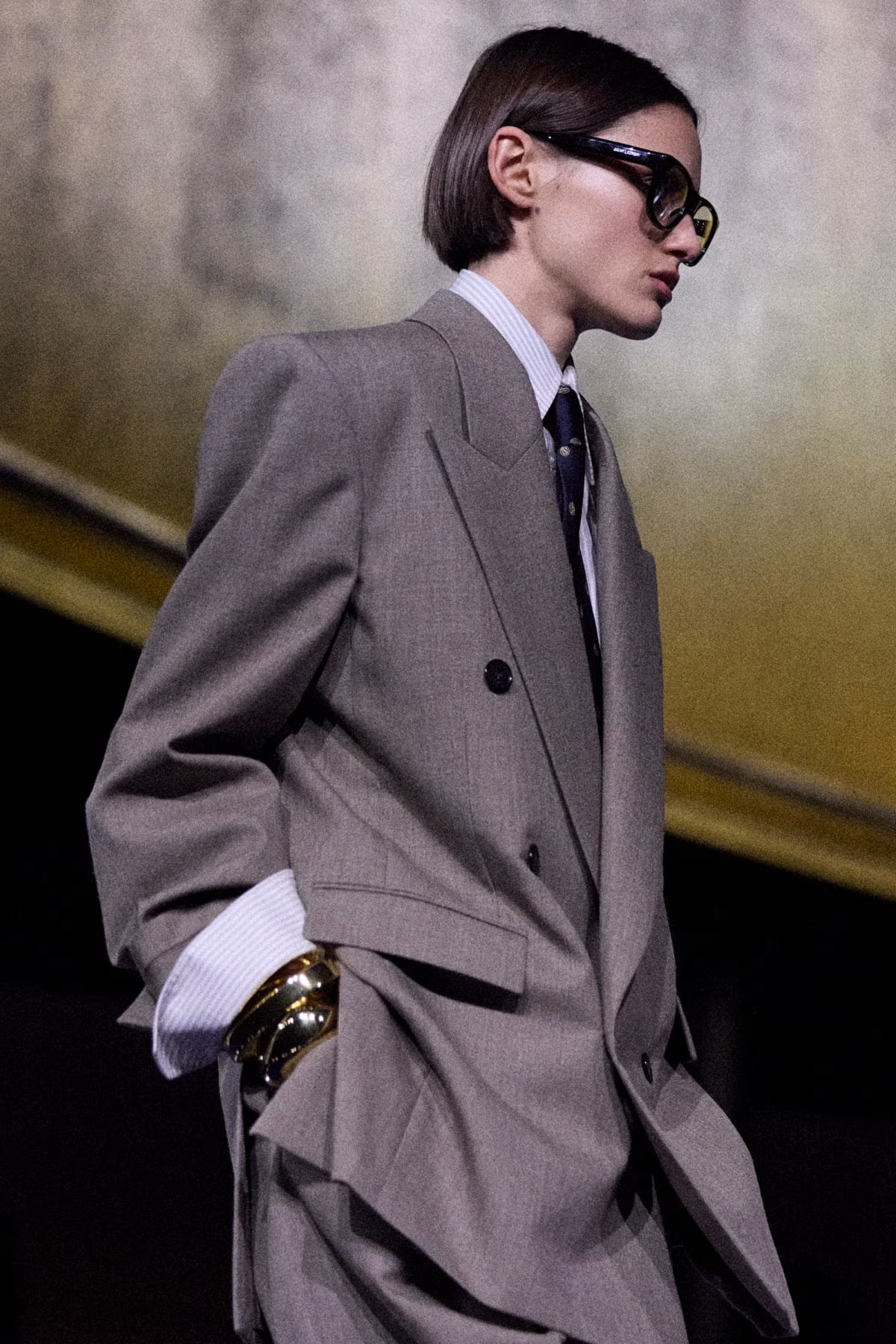
The shoulder is one of the things that decides where nearness stops. It is not one garment but a decision that can move from tailoring to leather to a blouse, until the padding carries even where no jacket is worn. In the sheer looks the body appears as a narrow vertical column, almost continuous with skin, while the coat or jacket around it expands into a harder outline; leather carries the weight the fabric refuses. The shoulder widens the figure at its edge and sets a frame around a body that otherwise looks nearly given away. It is one of the house’s movable architectures.
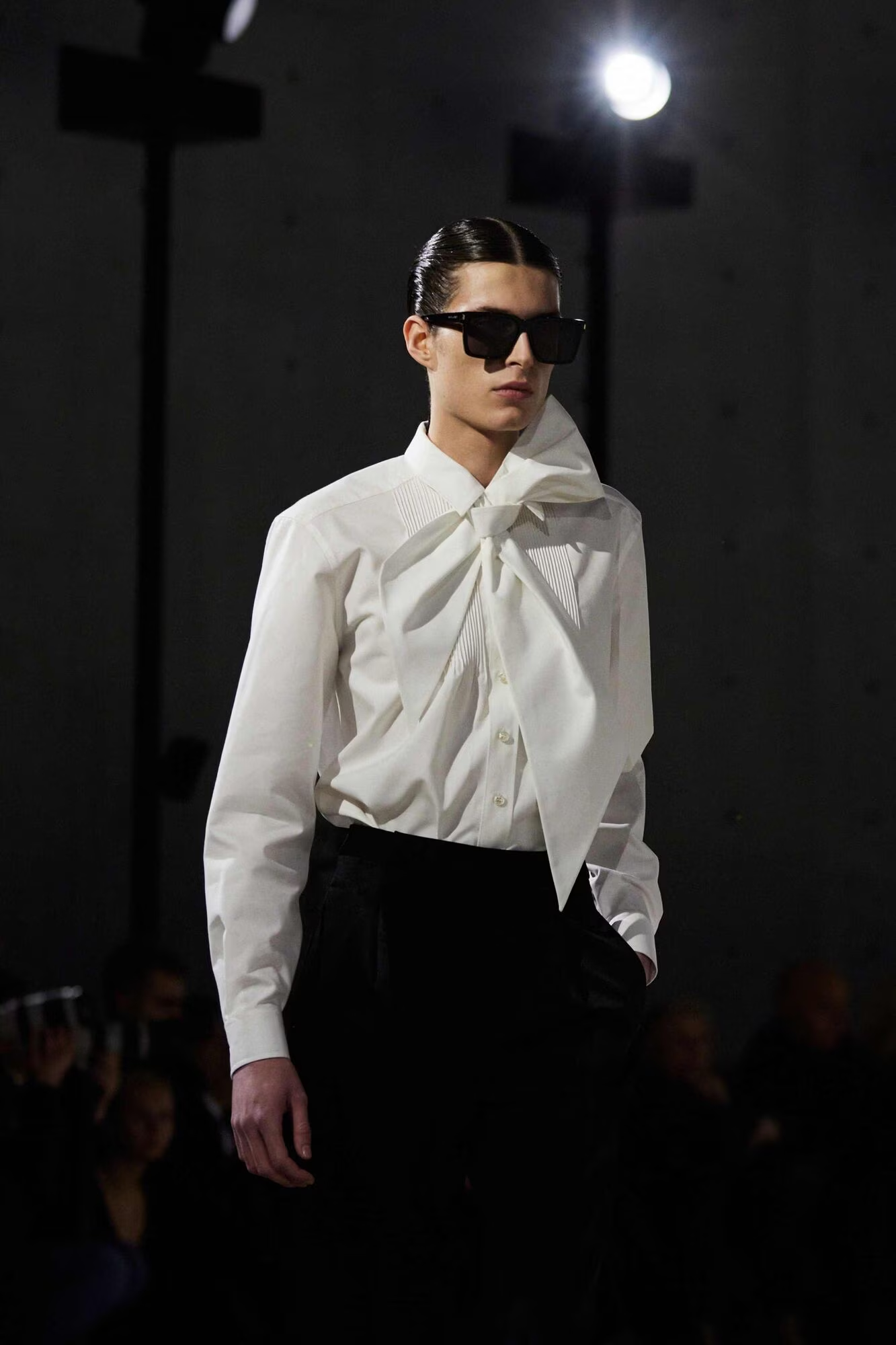
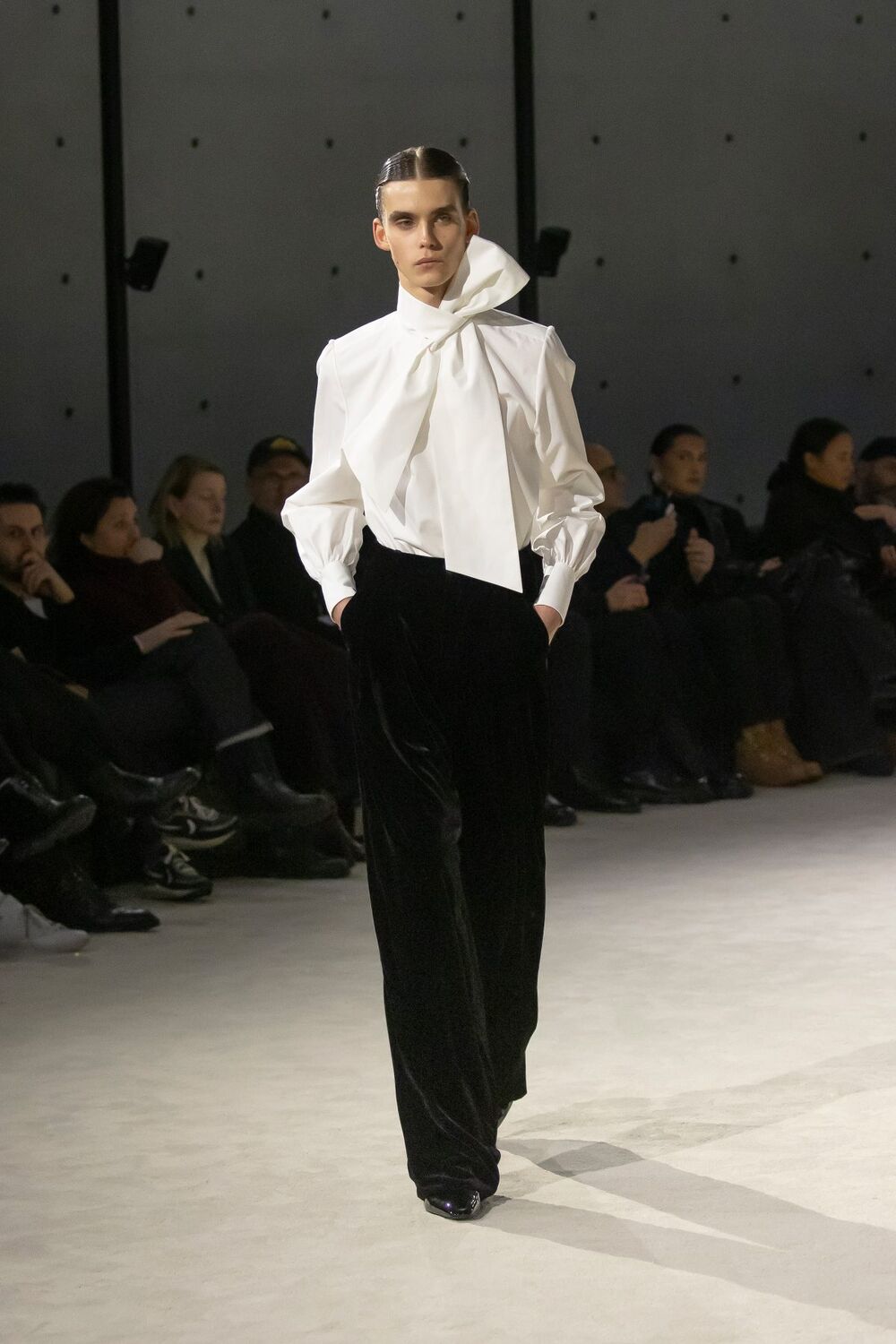
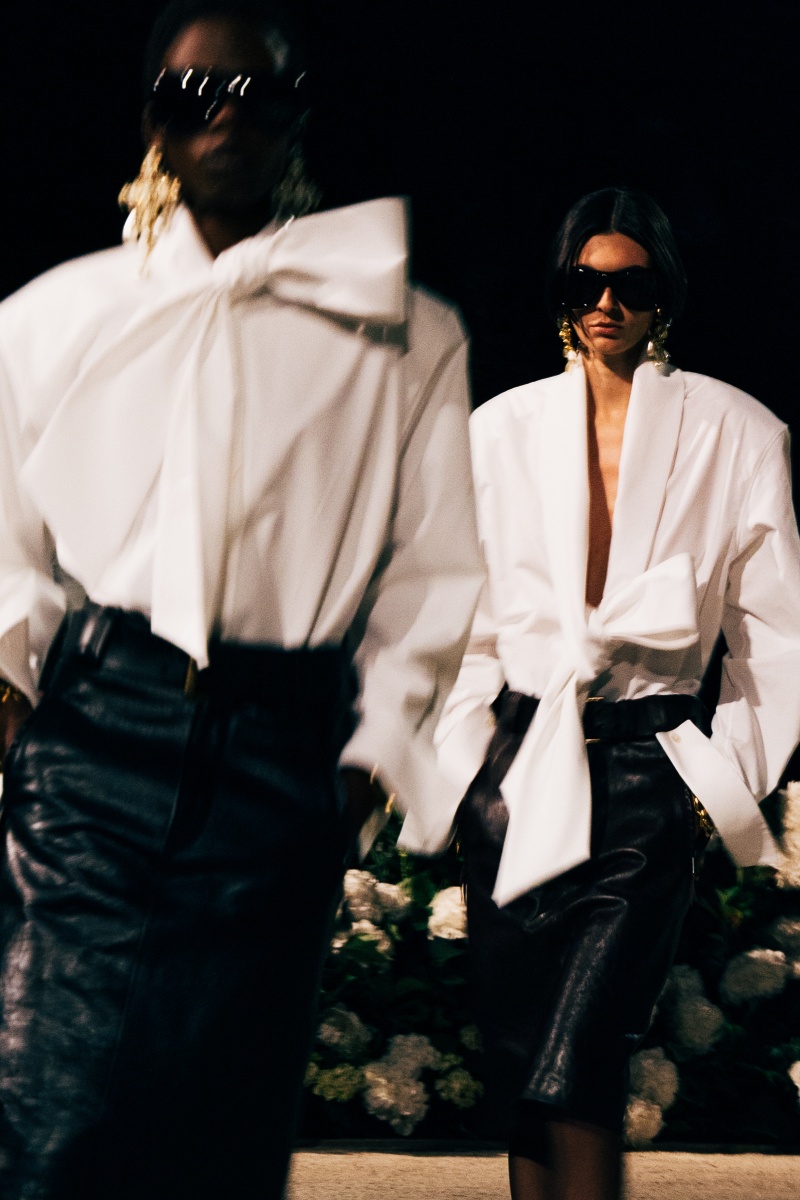
One thing, though, is built to move differently. It is the knot. The bow at Vaccarello’s Saint Laurent is not fixed femininity carried from one wardrobe into another; it is a fastening that travels. In one look it rises to the throat as a blouse or a tie. In another it drops to the waist, gathers against leather, doubles the belt at the body’s center, the long white ends spilling down the front of a skirt. The house describes it this way in its own notes — a scarf that may merge with the bow of a blouse or extend down like a stole. One sign, several stations, white against the dark frame so that wherever it lands the movement remains visible.
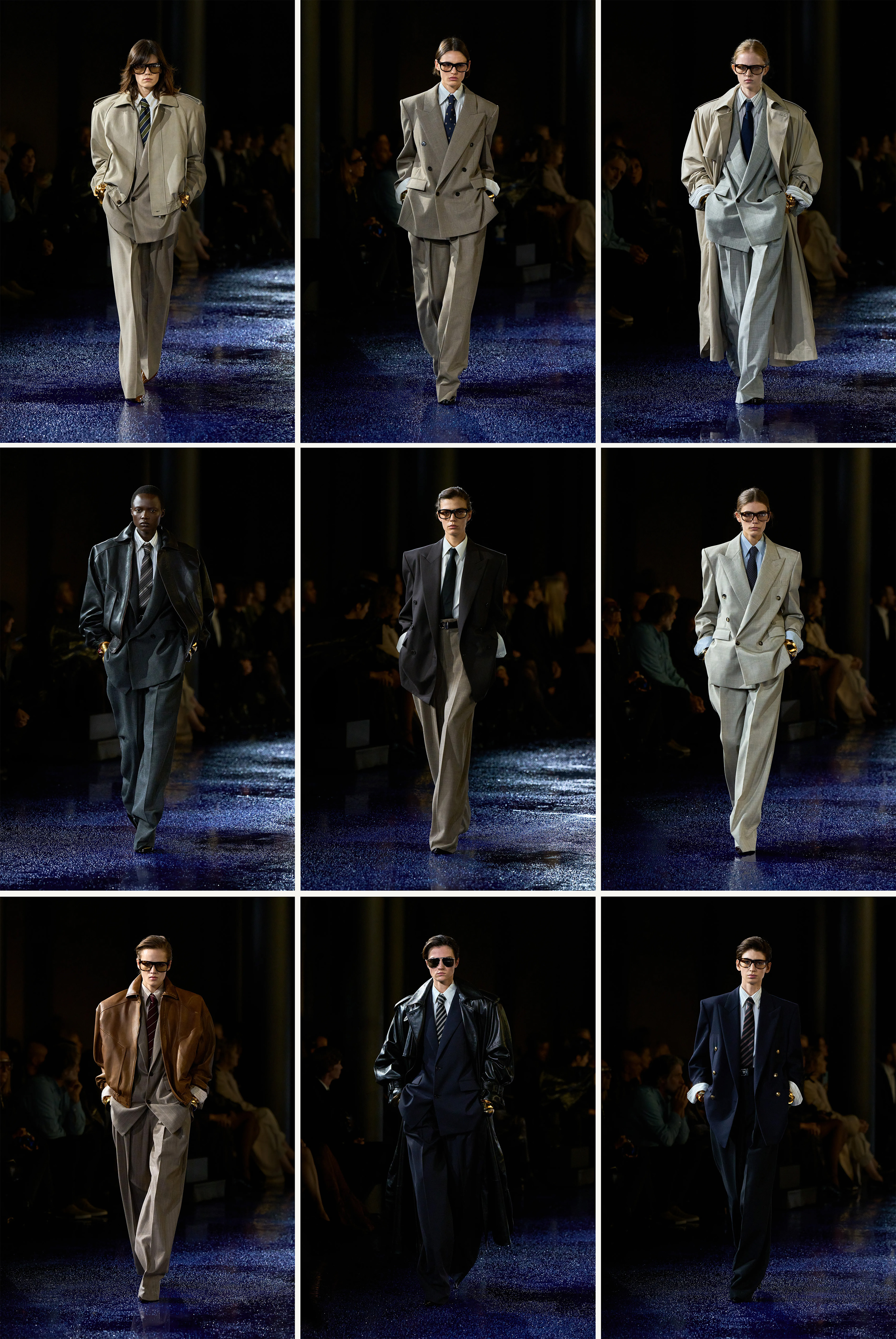
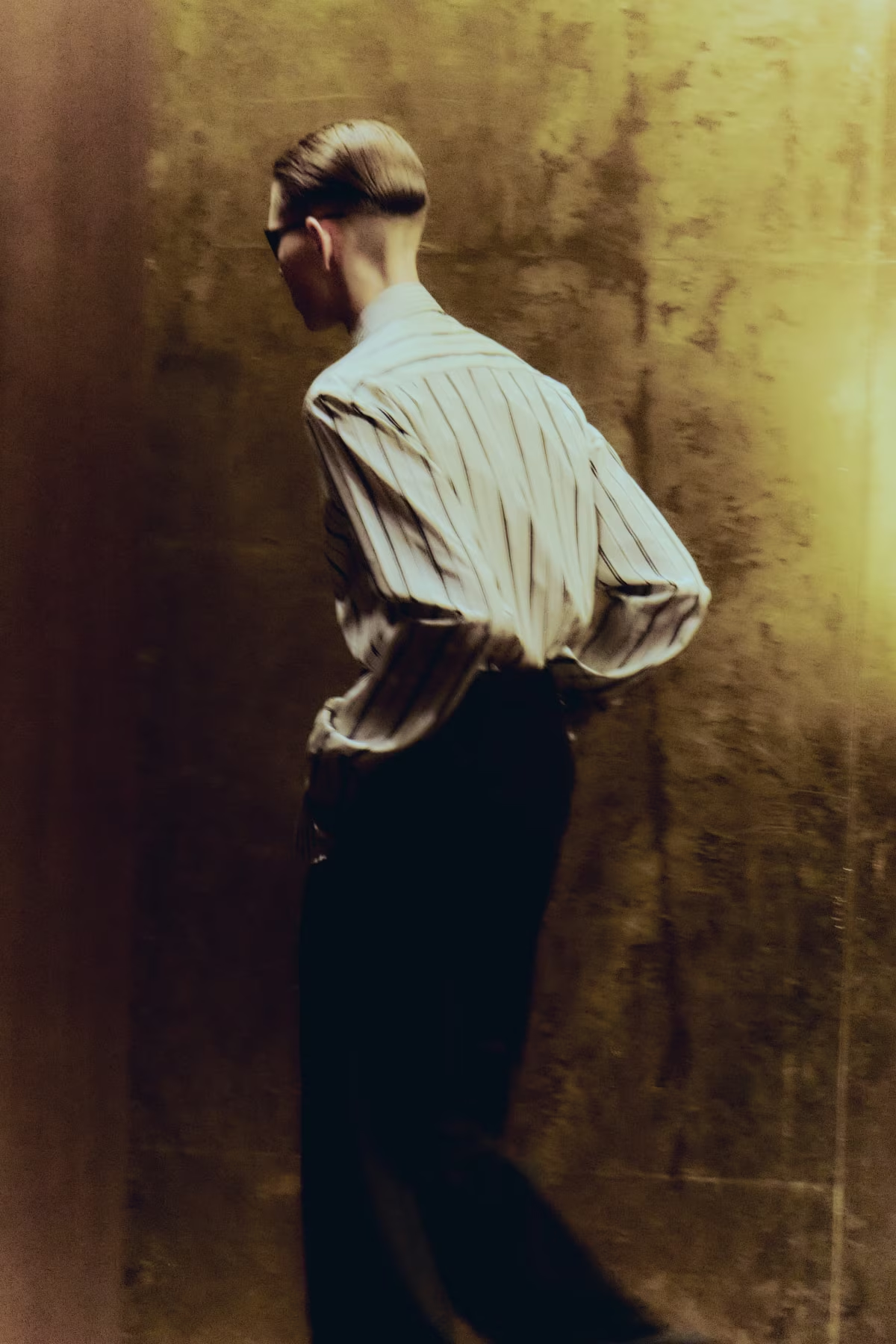
In the men’s collections the bow enters the masculine line without dissolving into it: white fabric rising at the neck, knotted against black trousers, leather, long coats, and in one season cut in white rather than black, as if to keep the sign legible as a sign.
In the women’s collections the same knot returns and hardens: an oversized bow tied low and tucked under a belted aviator coat, worn over a leather skirt, the face shut behind dark glasses, the hands in the pockets. On the men the knot exposes; on the women it stiffens into authority. The available word is androgyny, and it is too quick, because androgyny names a place the codes arrive and rest. These do not arrive. A tie becomes a bow, a blouse enters a suit, a knot slides from throat to waist and doubles a belt. The code crosses, and wherever it lands it ties something down. It does not settle, and it does not free the body. It fastens the crossing in place.
The same holding occurs at the scale of the run. Vaccarello often fixes a unit and repeats it until the form stops behaving like a single look: a wet leather coat with high neck, belt, hidden hands, dark glasses, walked past again and again as the color shifts; a dark trouser suit worn with nothing underneath, opened as a counted sequence and returned to before the show was finished; a ruffled column changing color while the cut stays almost still. The variation is not casual variety. It removes the burden from any one instance. A single look could become a statement, a thing the house might be asked to defend. A run turns the statement into a system. Color moves, closure shifts, length adjusts; the body stays held in the same grip. The repetition does not release the form into meaning. It keeps the stopping point in place.
The object obeys the same delay. Saint Laurent sells the bag and depends on the sale; the refusal is not from commerce but from the image. The point is not that the object is unavailable, but that the runway refuses to let it resolve the wanting it has produced. The boutique closes the transaction. The image declines to.
Then desire comes due, and it comes due in a room that already belongs to someone else. The Winter 2026 menswear turns toward Giovanni’s Room, and Baldwin’s novel cannot be softened into deferred longing. It is desire becoming consequence: shame, self-denial, the impossibility of a life, the knowledge that refusal does not stop the bill from arriving. It is one of the most severe accounts of love in the language, because desire there does not stay beautiful by staying suspended. It comes due, and what comes due is ruin.
Vaccarello’s clothes hold the instant before that becomes final. The figure is dressed at the threshold, returning to the world, returning to the Maison, unable to carry the desire forward as a life. Smoking jackets sit like armor. The tie is drawn tight — the knot that moved so freely between the wardrobes, here closed on one man and held. Lapels fall low enough to show skin without making the exposure casual. A scarf is folded under the collar as if tenderness had been tucked into discipline. Surfaces look lived in, even crumpled, but the disorder is kept inside the line. Darkness behaves less like a backdrop than a material. Conventional tailoring carries a sensual undercurrent it will not name.
The danger of such a citation is obvious: the collection can seem to borrow Baldwin’s consequence without paying it — the book carries the catastrophe, the clothes receive its atmosphere. But the borrowing is staged, not hidden. The room is named. The desire is named. The house does not pretend the confession originates in the garments; the voice that carries the exposure stays Baldwin’s. This is the closest Saint Laurent comes to speaking the want directly, and even here it speaks through another writer’s room. To confess directly would be to let atmosphere become consequence, to let desire become a life, to let the form settle into an account.
There is one more room, and it is not a runway. In 2023 Vaccarello launched Saint Laurent Productions, bringing cinema inside the house without turning it into ordinary brand content — producing and costuming films by Almodóvar, Cronenberg, Sorrentino, Audiard, while insisting the films are not there to promote the house. The phrase is blunt enough to survive paraphrase: there is no Saint Laurent T-shirt in a film. The point is not purity against commerce. It is where completion lands. These films can be as unfinished in feeling as anything on the runway; resolution is not the issue. Survival is. A film enters the world as a dated and credited object, screened under a title, returned to after the season around it has gone — and the closure is signed by the director, not the house. Vaccarello enters the work materially and lets the finished thing belong to someone else. Completion is allowed, under another name.
A little market pressure sharpens this without becoming the subject. Saint Laurent operates inside an economy built to convert prestige into product, atmosphere into accessory, desire into something carried home. Under that pressure Vaccarello’s most distinctive gestures do not refuse conversion so much as move it out of the image. The body does not become a possession because possession waits elsewhere. The runway keeps the bag from answering too quickly because the boutique can answer later. The film is costumed by the house and protected from becoming merchandise because completion is signed to the director. This is not refusal from outside the system. It is how the system keeps the approach while moving the point of completion elsewhere.
It would be easy to turn all of this into a higher form of mastery — the hand that declines to close, the house that understands distance better than anyone. Some of that is true, which is why it is useful. Admiration is one of the distances the image knows how to produce. The control feels complete because the image has made completion unavailable. Once a thing closes, it begins to leave the house’s immediate possession. The confession remains Baldwin’s. The lasting film returns under a director’s title. The body stays at the edge of the image, described exactly and withheld from use. The bag waits for the boutique. What the house keeps is the approach. The finished thing keeps moving out of its hands.
That position is already built into Vaccarello’s Saint Laurent. The body is seen and not received. The garment thins into atmosphere. The shoulder holds the column; the knot crosses the frame and ties it shut; the belt fixes the center; the lens closes the face; the coat gives the body an architecture that cannot be passed. The object that might settle the image is deferred. The confession belongs to another voice. The finished film is signed elsewhere. By then the position has already been made.
The desire could not arrive because arrival was never where the image had placed it. The body, the bag, the confession, the film: each is brought close enough to produce wanting, then closed or signed elsewhere. What remains is not possession, and not refusal alone, but the viewer left holding a desire the image has already finished with. The unspoken was not waiting behind the image. It was in the viewer the house had made. A desire built elsewhere can still become the thing one is left carrying.
Saint Laurent builds access as a discipline. Sheer cloth, shoulder, knot, belt, lens, coat, citation, and film bring the body close, then decide where nearness must stop. What looks like access becomes the frame that withholds it.
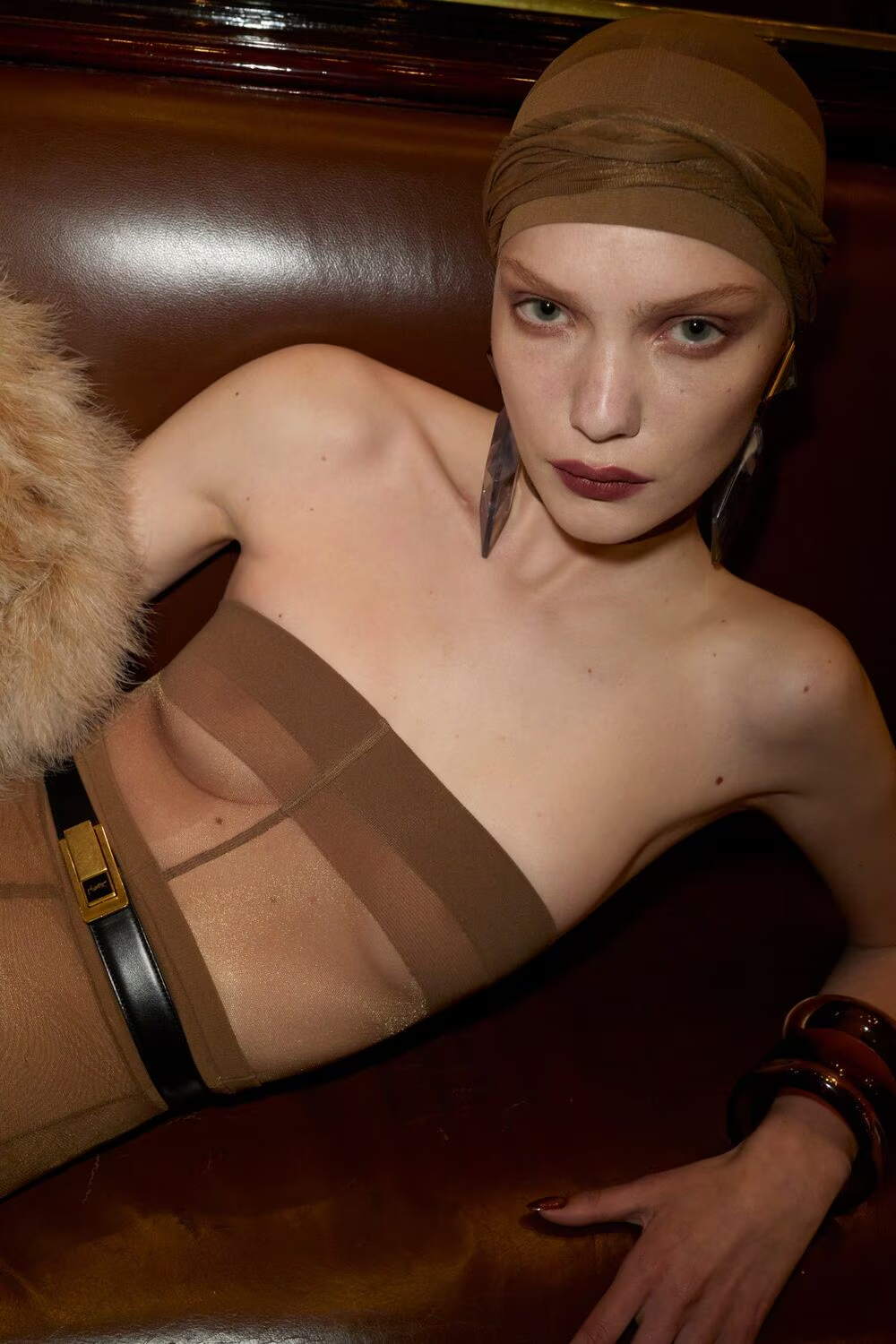
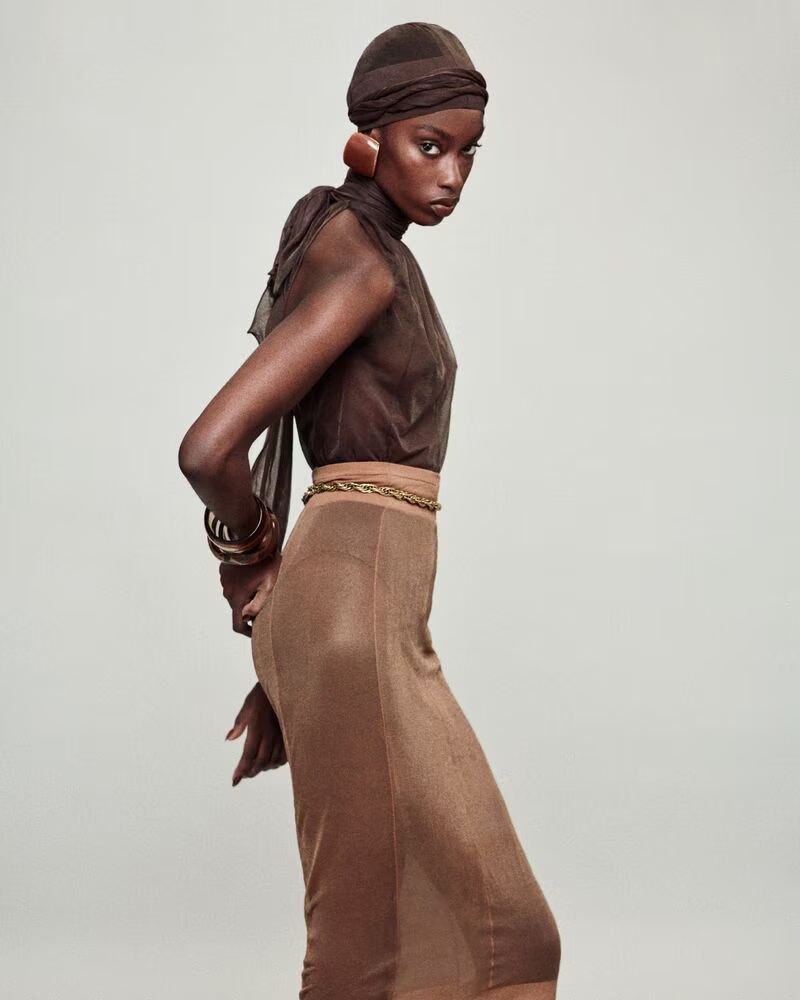
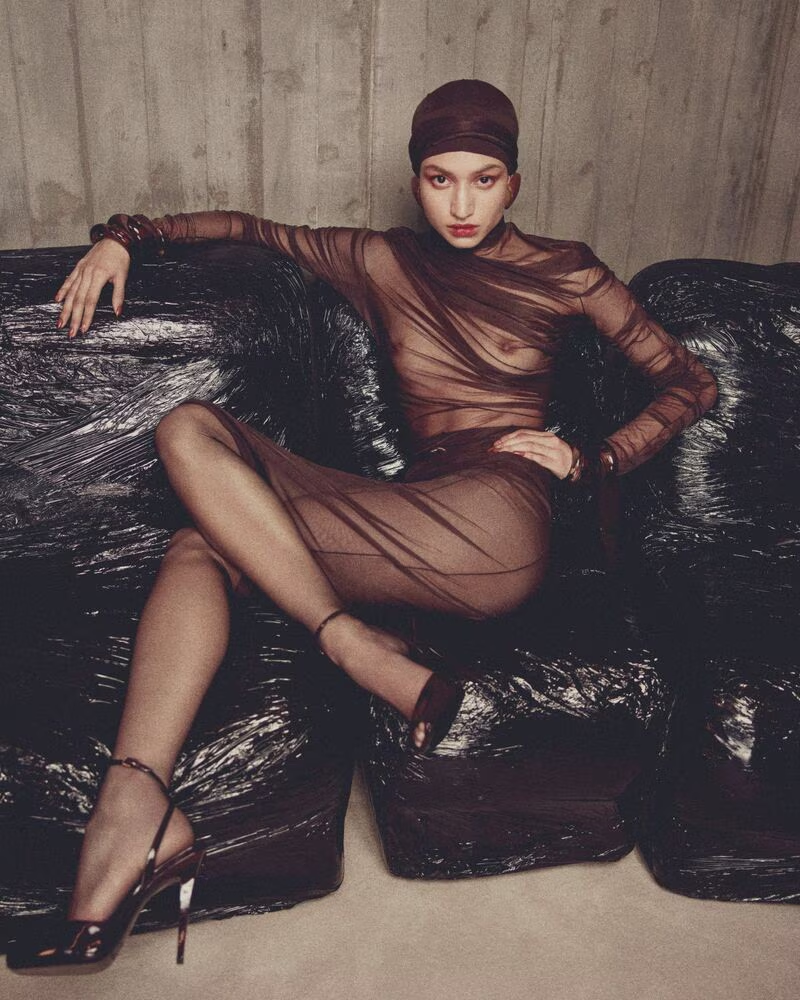





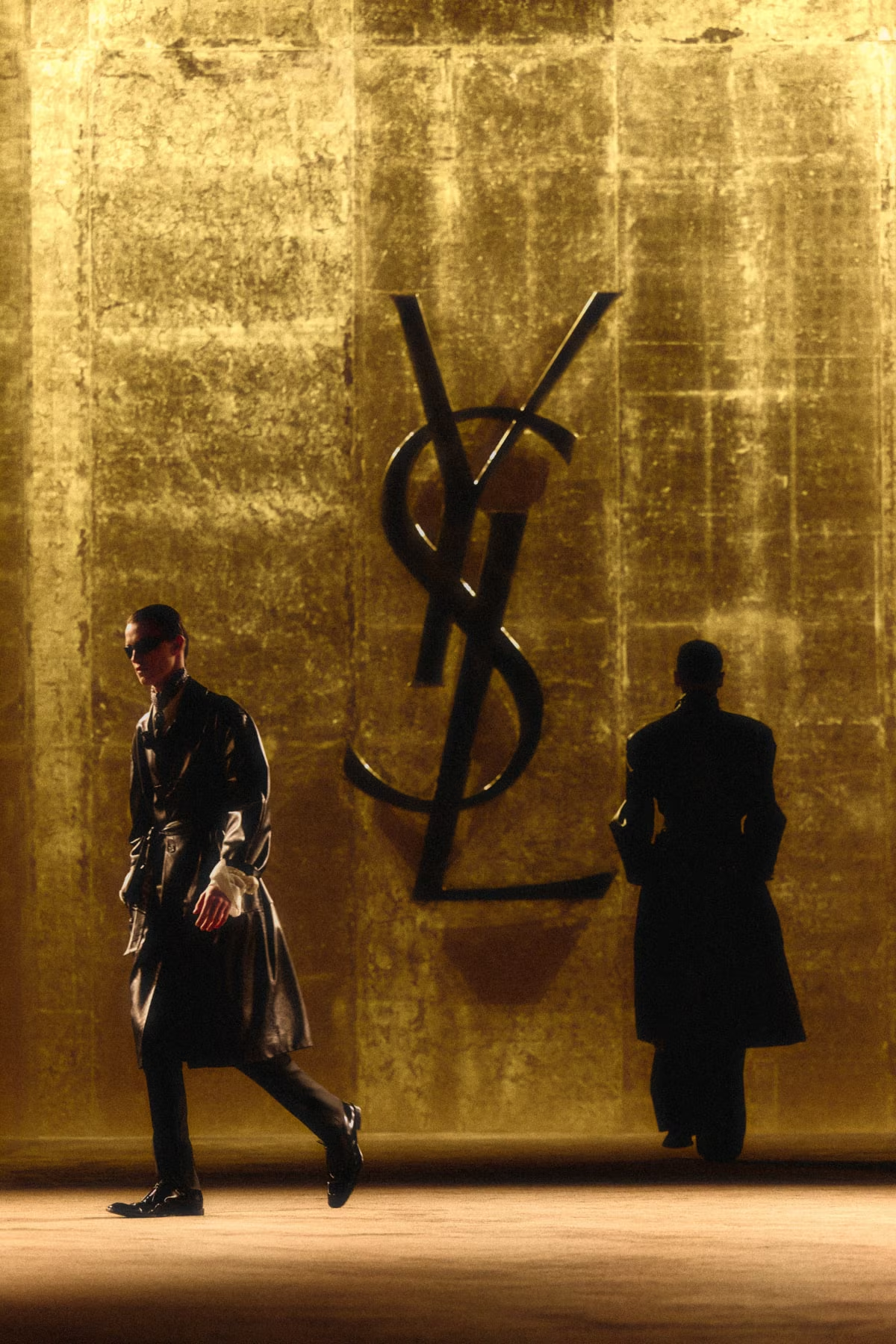
Cover Image: Saint Laurent, Winter 2024 Ad Campaign, 2024. Photo: Juergen Teller. Courtesy Saint Laurent © Saint Laurent 2024.
All images © their respective rights holders.
Image rights & attribution →