

The first image did not show the collection.
It showed Galliano. Hat, pinstripe suit, white collar, hand at the throat. The theater of authorship placed inside a Zara announcement. The caption named a two-year partnership, the re-authoring of an archive, seasonal collections, a couture process, September 2026.
Not a sleeve. Not a seam. Not a hem. No fabric had been cut. No fitting had failed. No body had entered the clothes. The only clothes in the image belonged to Galliano. The collection had already been given a public form: portrait, caption, archive claim, release date.
The image was complete enough to circulate without one. The first body to meet the collection was not wearing it. It was reading it.
That body is not outside the announcement. It is one of the announcement’s working surfaces. A reader can feel doubt, excitement, fatigue, suspicion, desire, or contempt before the object exists. The reaction is real. Its object is absent.
A name has always been able to precede a garment. A new appointment could gather months of expectation before a collection entered the room. Invitations, rumors, seating charts, house mythologies, campaign images, and editorials all belonged to fashion before the first look appeared. But anticipation pointed toward something. The collection could confirm it, embarrass it, cheapen it, or make the language fall away. The object did not always win, but it still had to answer.
Galliano and Zara do not bring the same kind of time into the announcement. Galliano’s name carries Dior, public disgrace, and the Maison Margiela Artisanal years in which construction became the route back to fashion. His authority is couture as theater, archive as atmosphere, making as spectacle. Zara brings rail, hanger, replenishment, scale: the capacity to move fashion through the market before the work has settled as an object.
The announcement attaches one tempo to the other before either has had to prove the attachment can hold.
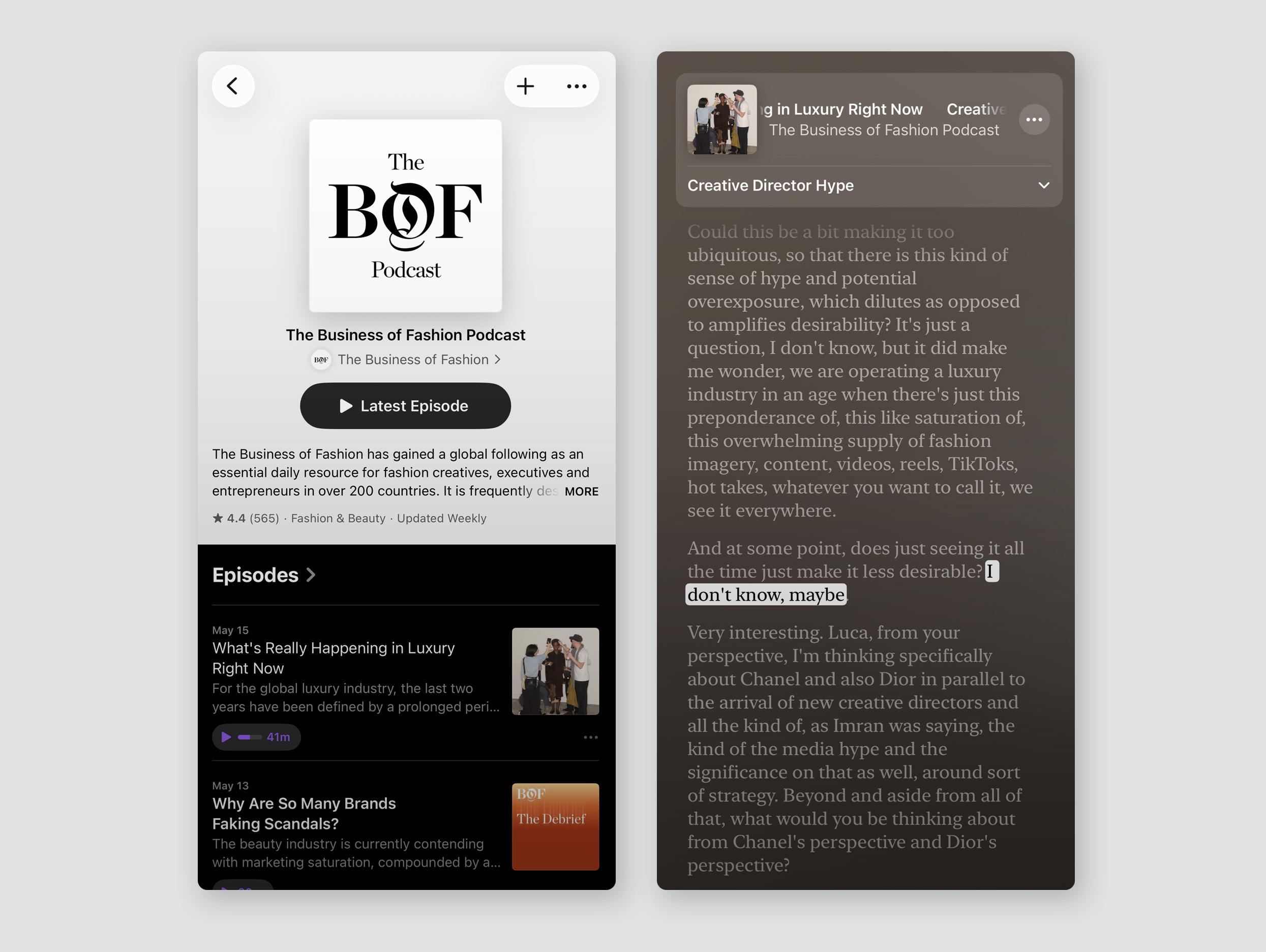
A May 2026 BoF Podcast conversation gives that attachment language. In the Galliano × Zara discussion, the partnership is framed through the promise of a designer reaching a mass public, a move described through the question of how “democratic and modern” such access might be. Galliano’s involvement is treated as giving Zara “the right to play in this higher segment.” The sentences do not describe a garment. They describe permission.
In the same discussion, Zara’s production scale, waste, supply-chain, and labor problems are acknowledged as still holding. The recognition and the elevation coexist. The problem does not have to be resolved before the announcement performs value.
The garment has not arrived to test the relation, so the relation can hold as language.
The old words still sound plausible: collaboration, access, influence, prestige, democratization, archive. They do not sound wrong because they once named real relations. Collaboration presumed something made. Influence presumed circulation. Access presumed a thing to approach. Prestige named value already held elsewhere. The words carry the authority of the conditions that produced them. They allow the announcement to sound as if something has already been earned.
The portrait does the same work more quietly. Galliano’s own clothing gives the absent collection a surrogate body. The hat, suit, collar, pose, and hand at the throat do not preview a product. They provide a figure through which the product can be imagined before it appears. Authorship stands in for evidence. Style stands in for cloth. The archive is made visible through the person who is said to be re-authoring it.
The front row gives the same condition a room. The editor, celebrity, ambassador, influencer, and client are seated and photographed before the collection can settle. One of a show’s first images is now a room arranged around expectation. The mediator has entered the frame it was meant to read.
Media Impact Value converts the room into a number. Images, mentions, posts, and appearances become legible as value. The metric is not the problem by itself. It is useful because it makes the condition visible. Visibility becomes something that can be priced before it has proved anything beyond its own spread.
The limit is sometimes named in business terms: noise alone is not enough. Attention has to convert, engage, bring bodies toward the store or the object. Visibility by itself does not yet prove that anything has become necessary.
But the warning does not stop the machine, because the machine is not built only to sell the object after it appears. It is built to make the object feel expected before it can be judged.
The condition becomes clearer when attention turns to other debuts and drops. The frenzy around a first product release can be read as strategy: editors already in Paris, stores becoming sites of attention, images circulating before broader use could take shape. The hype works. It makes the product feel present, talked about, emotionally charged.
Then the question turns. Could the same saturation that amplifies desirability begin to weaken it? Could luxury become too visible, too available as image, too continuously supplied by posts, reels, videos, hot takes, and editor reactions? Could seeing it all the time make it less desirable?
“I don’t know, maybe.”
The sentence is small. It does not need to carry the essay. Its value is that it comes from inside the system: the same field that knows how to produce fashion’s visibility hearing, for a moment, that visibility may no longer be doing the work assigned to it.
The hesitation belongs to one conversation. The condition does not. Galliano × Zara is the announcement-without-clothes version of the same pattern: reception forming before the object can answer.
That interval was not delay. It was a test.
Same-day databases, livestreams, front-row photography, social circulation, instant recaps, MIV: each step shortened the distance between appearance and assessment. Each removed another layer of protection: the garment from the room, the critic from the atmosphere, the object from the announcement, desire from immediate measurement, necessity from instant simulation.
Hype can explain the heat around the announcement. It cannot explain why the space where the object should be already feels occupied.
The announcement gives permission. The portrait gives authorship. The caption gives category. The date gives futurity. The front row gives scale. The image feed gives ubiquity. The metric gives a number. The recap gives memory before memory has had time to form. By the time the object arrives, it does not enter silence. It enters a reception already waiting for it.
The imitation can carry authority, attention, scale, confidence, institutional language, measurable value. It can make a collaboration feel already ratified. It can make a collection feel already important. What it cannot carry is the test. It cannot make the garment survive the body, the season, the store, the repeat use, the disappointment, the second look. It can only prepare the space where that survival will either happen or fail.
That space is not abstract. It is the place now occupied by the reader’s own reaction.
The Galliano × Zara collection is still absent, but a position may already have formed around it. The collaboration feels brilliant, cynical, democratic, compromised, inevitable, exhausting, or necessary before a garment has had to bear any of those words. The response has content. It has temperature. It has confidence. It may even have memory. What it does not yet have is an object equal to itself.
That is the condition the announcement produces. It does not only circulate information about a future collection. It gives the reader a reception before the collection can be met.
Fashion media has not stopped covering fashion. It has begun to arrive ahead of it. The garment will come later. The reception is already there, waiting. The object may earn it by becoming necessary. It may refuse it by becoming something other than what was promised. It may outlast it by surviving after the first language has passed.
Those are different futures. Each requires the object to arrive.
The interval once protected that question. Now the answer begins to circulate first.
The object has not failed. It has not yet had the chance. But the space it was meant to enter has already been filled by a feeling, a headline, a portrait, a metric, a caption, a judgment. The collection will still come. The test has not disappeared.
It has been made late.
The object still has to arrive, but it no longer enters silence. The announcement, portrait, caption, metric, podcast, and feed can prepare a reception before the garment is tested by body, use, repetition, or disappointment.
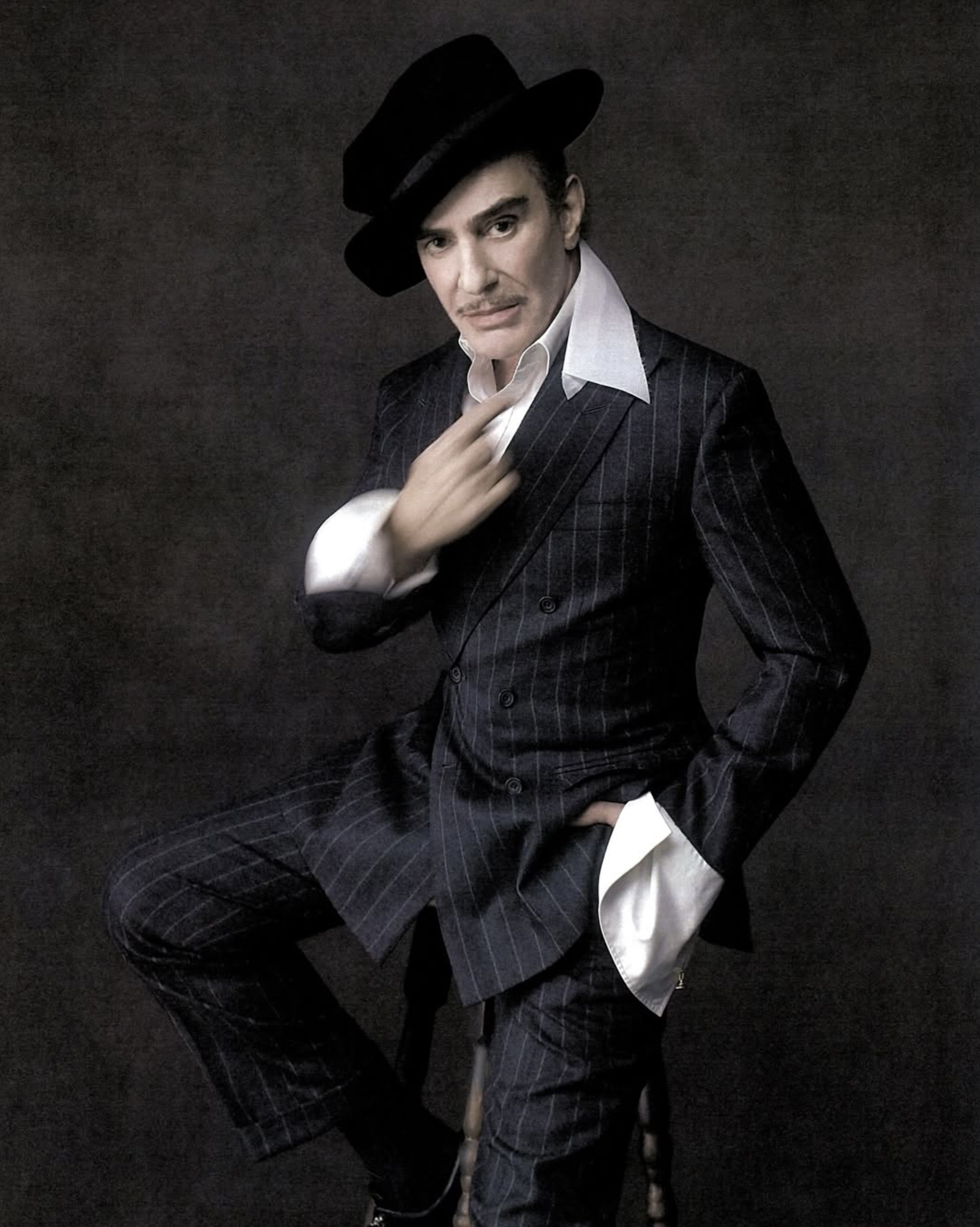
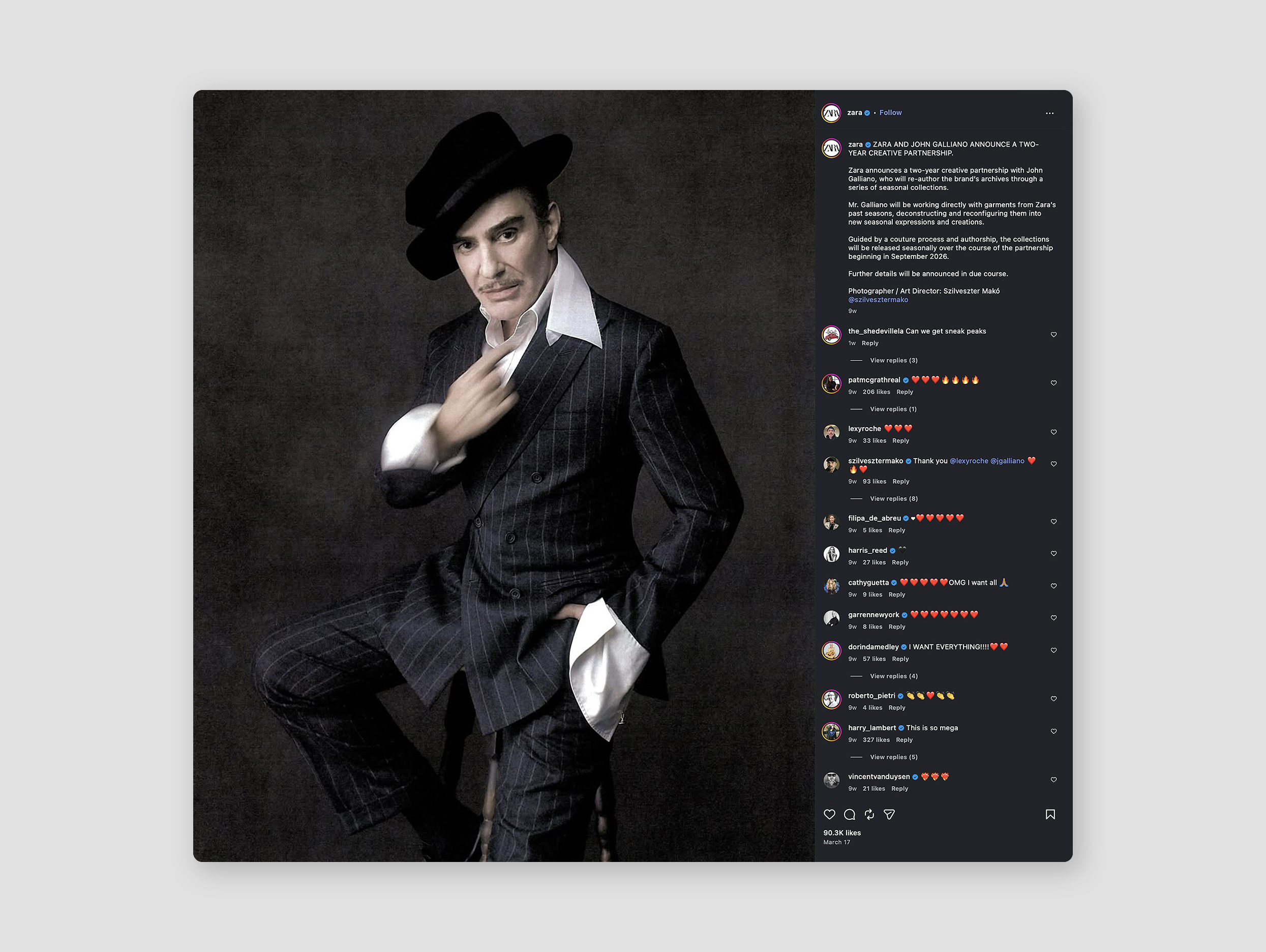
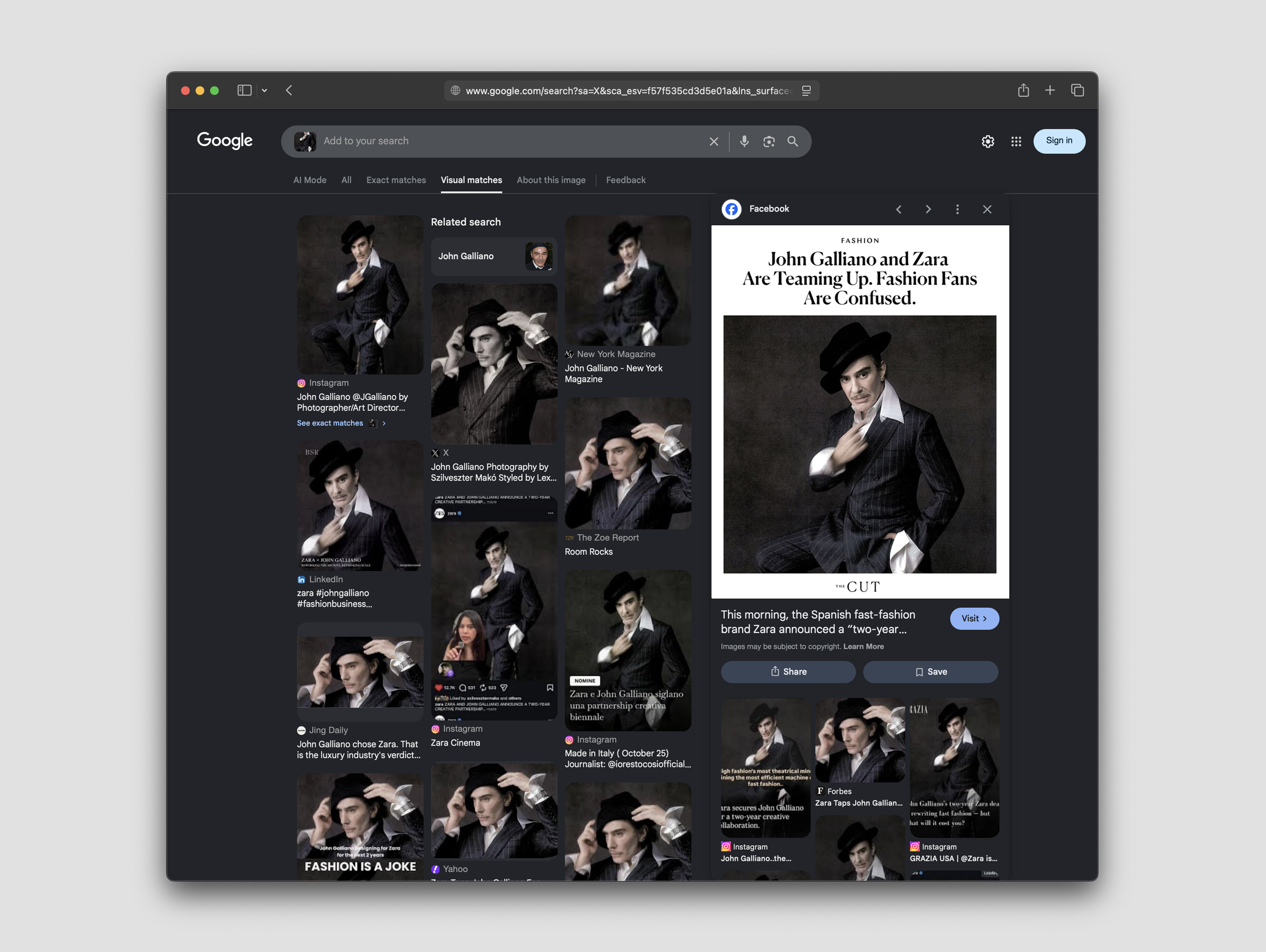
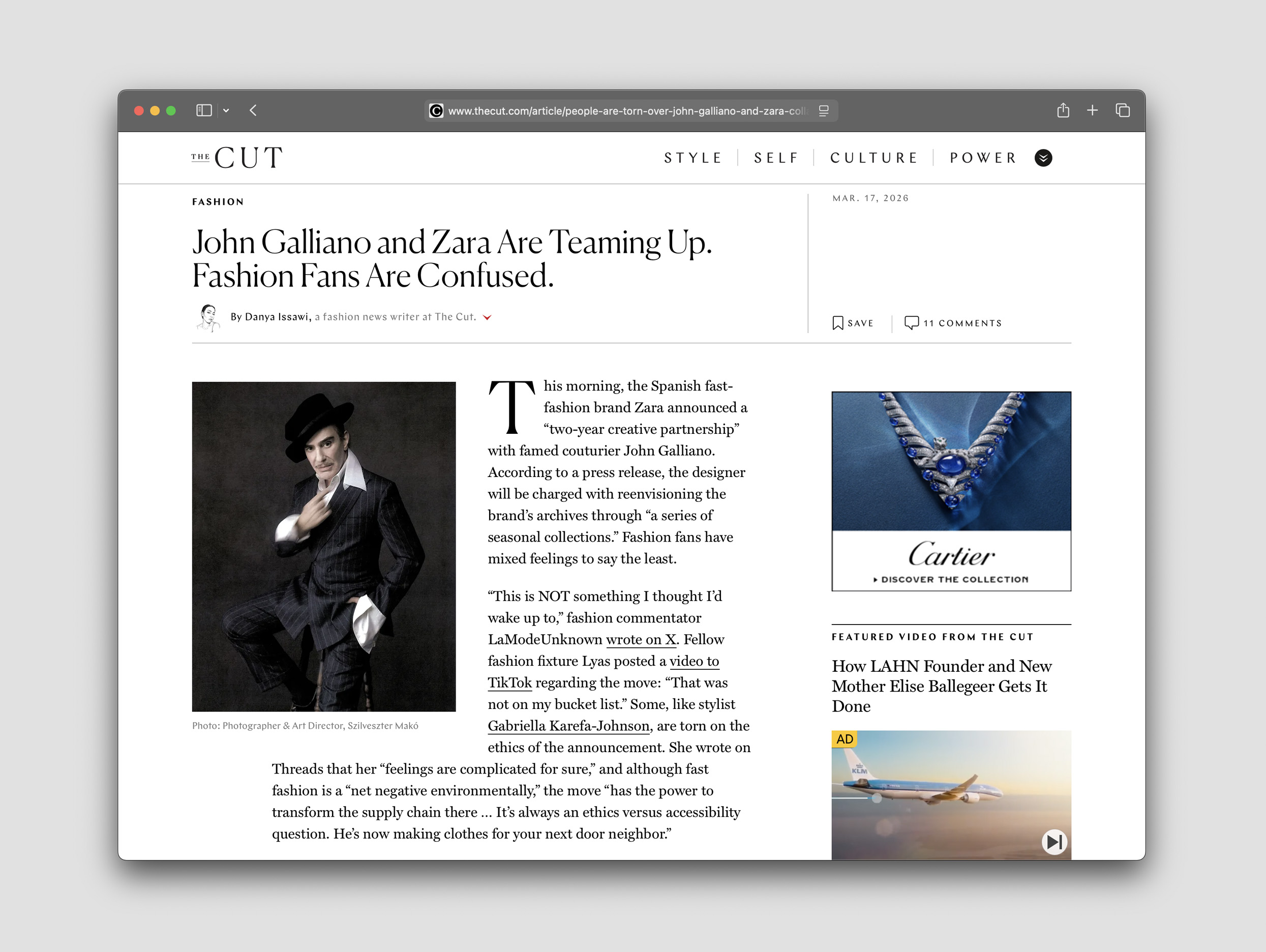
Cover: Portrait of John Galliano. Photographer / Art Director: Szilveszter Makó, 2026.
All images © their respective rights holders.
Image rights & attribution →