

The garment does not begin as outerwear.
It begins as a bed that has learned to stand.
White volume rises around the body until the face nearly disappears. The sleeves fall short and swollen. The front crosses the torso like a duvet pulled from a mattress and fastened before the body has fully woken. At the floor, sneakers are the clearest proof that someone is inside it. The garment does not begin as outerwear. It begins as a bed that has learned to stand.
Then the labels begin to speak. One tag says Feather Filled, in the language of pillows, comforters, down, filling. Another is sewn into the lining with the familiar H&M script. Beneath the care symbols is an instruction that seems to have wandered in from bedding: “PLACE TENNIS BALLS IN THE TUMBLE DRYER TO DISTRIBUTE THE DOWN.” The sentence is practical, almost comic, and it gives the garment away. This is not a coat pretending never to have been a duvet. It carries the maintenance language of the thing it has transformed.
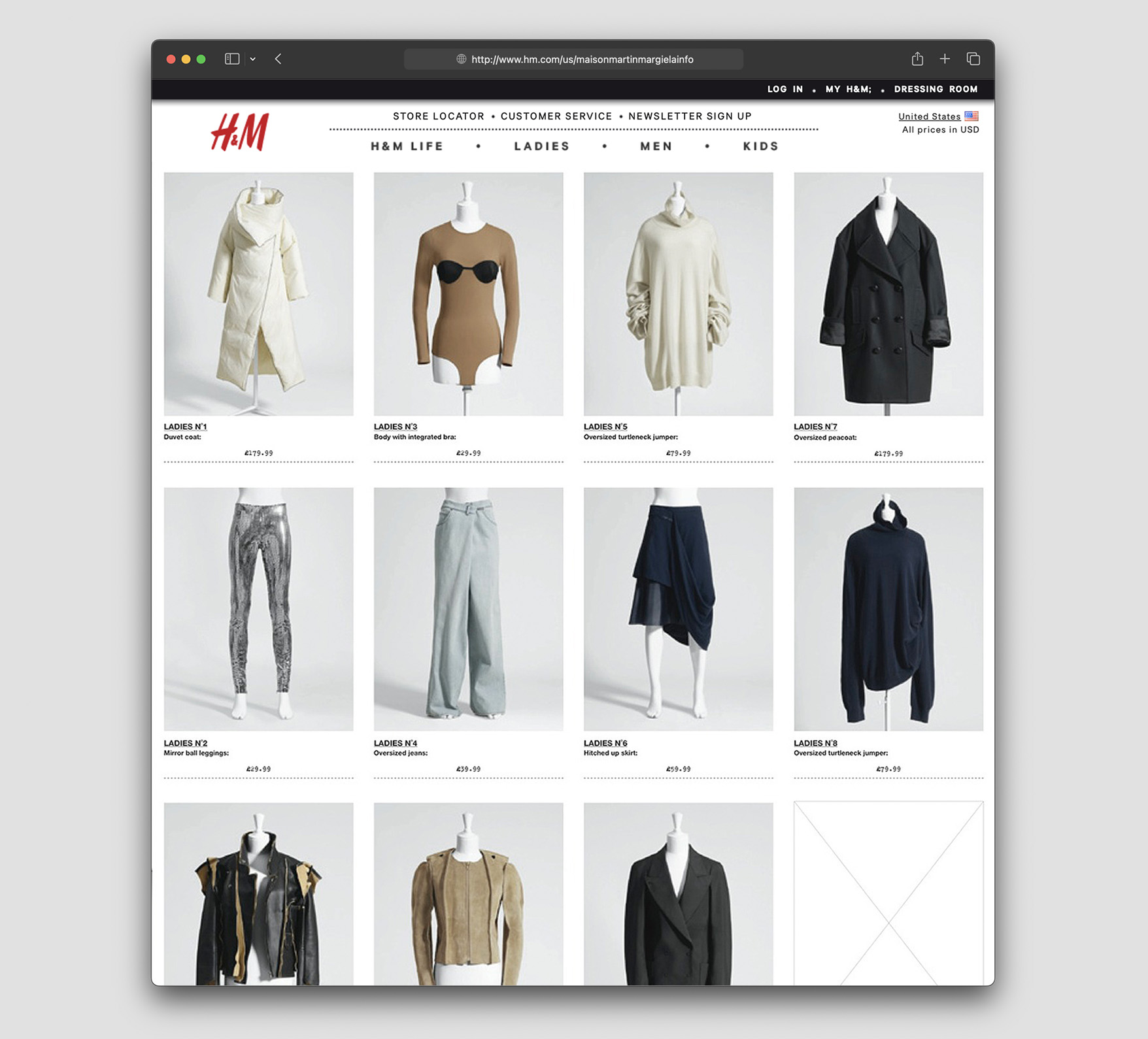
The re-edition tag makes the second time visible. RE-EDITION OF MAISON MARTIN MARGIELA GARMENTS FROM VARIOUS SEASONS. Style description: Duvet coat. Season: Autumn–Winter 1999/2000. The date is not an archive note added later by a critic, collector, or museum. It is attached to the garment by the garment itself. Then the price arrives: €179.99, a barcode, a size, a register code. The original season and the retail present sit on the same paper architecture, museum-label language on one side, mass-market transaction on the other. The garment belongs to Autumn–Winter 1999/2000 and to H&M, 2012. It belongs to the maison’s archive and to a checkout line.
Only then does the room come into focus. This is not a Margiela archive, not a museum loan, not a maison appointment, not a collector’s rail. It is H&M. The coat hangs inside a mass-market collaboration, surrounded by the ordinary facts of fast retail: hanger, size, barcode, register, bag. The pleasure comes before the problem. Margiela can be held. The white volume, the duvet joke, the seriousness of the construction, the numbered label, the printed season — all of it is suddenly near the hand, near the body, near purchase. The distance between maison and store appears to have shortened.
Inside the usual grammar of designer collaboration, this should read as access. The archive priced down, the signature made seasonal, the house language made consumable. But the coat refuses that reading. It does not behave like a watered-down version of a hidden original. It behaves like an entry. The date does not disappear. The origin is not disguised. The distance between first appearance and retail present is printed into the garment’s identity.
One belongs to the collaboration: H&M, 2012, fast circulation, barcode, register, bag, street. The other belongs to the archive: Autumn–Winter 1999/2000, the original form, the first moment the garment entered Margiela’s system. The collaboration does not collapse those times into one. It makes them touch. The piece arrived already cited.
The numbered Margiela label makes that citation physical. The grid runs from 0 to 23, a house system rather than a decorative logo. One number is circled; the garment is placed inside a line before it is placed inside a store. The Maison Martin Margiela name sits above the H&M label, both sewn into the same lining. Neither label erases the other. The maison system remains intact, and the mass-market label sits beneath it, close enough to show the transfer.
The Tabi, the candy-wrapper clutch, the wig coat, and the faceless watch repeated the operation. Each arrived as a Margiela signature already carrying a prior appearance. The archive was not behind the product. It was inside it.
Speed was not the carrier. The carrier was already there: tag, date, form, system, repeatable sign. Mass circulation strips away the protective atmosphere around fashion. What remains is whatever can still identify the work when the room, the author, the show, and the original conditions are gone. The collaboration did not flatten authorship. It made visible where authorship had been stored.
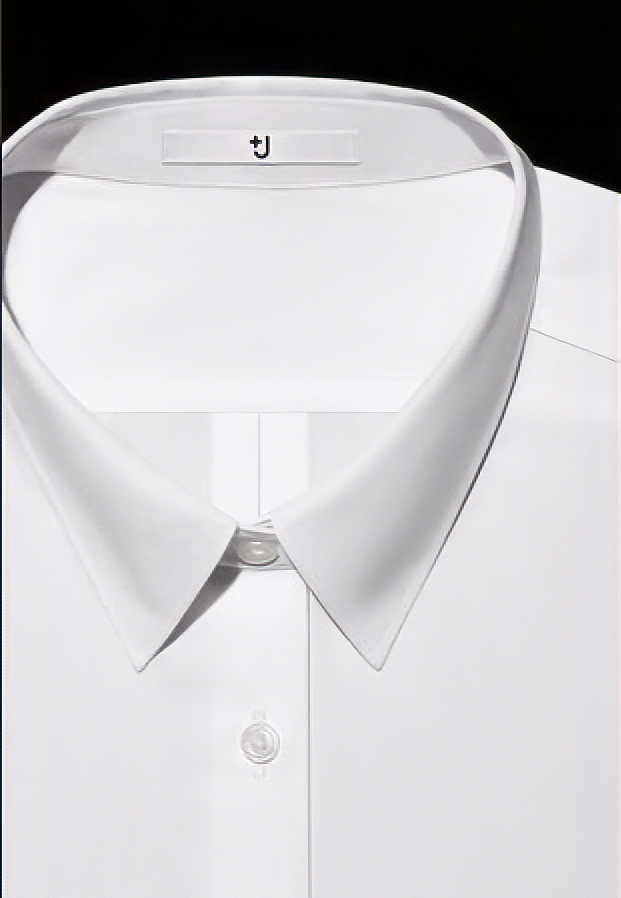
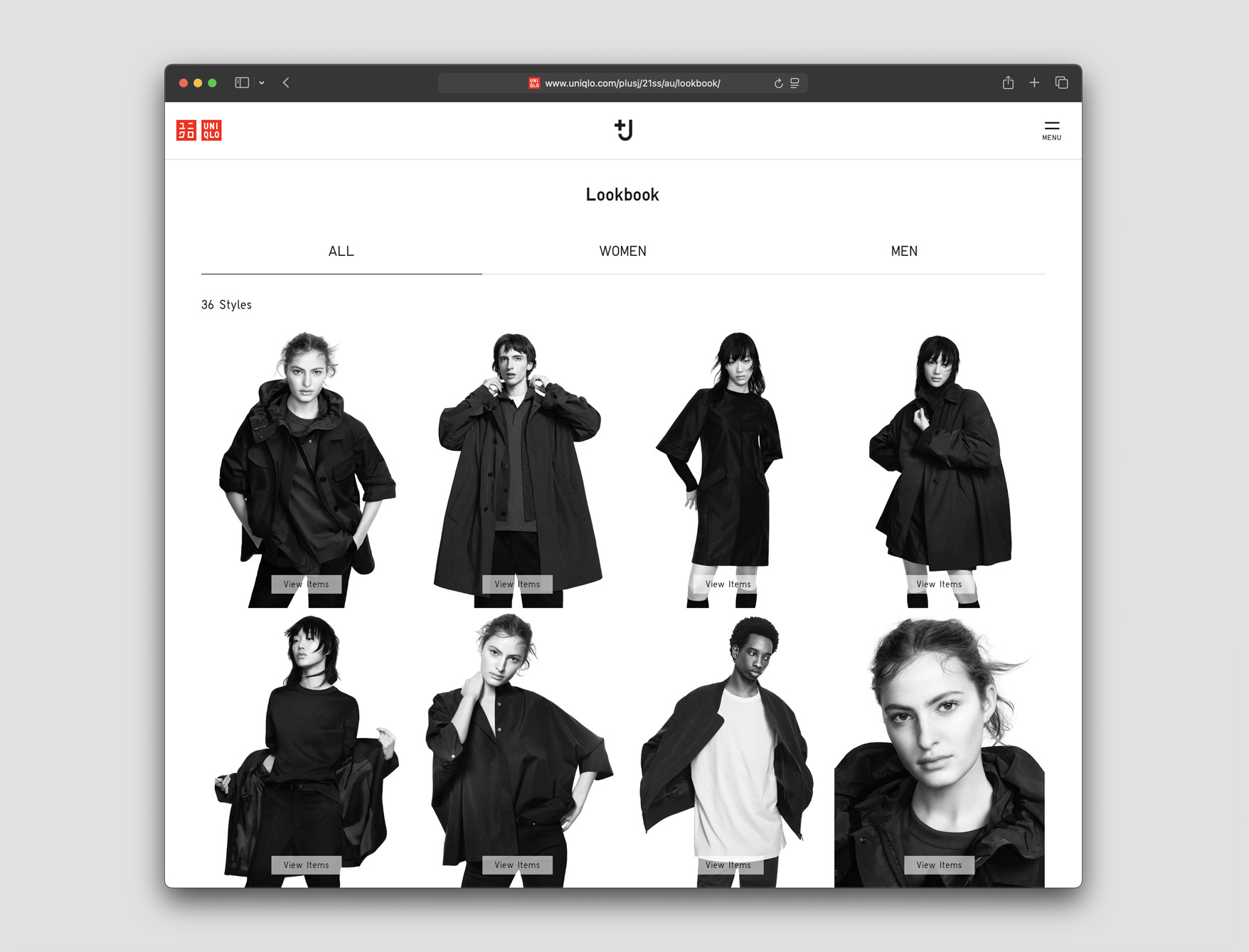
A white shirt at Uniqlo offers another answer. Collar set without ornament. Shoulder cut by measurement rather than mood. Sleeve length adjusted to the body, not the trend. The +J collaboration did not soften Jil Sander’s grammar for industrial production. It revealed how much of that grammar had already been written in terms industrial production could understand. Restraint was not mood. It was measurement: length, edge, interval, fabric weight, the distance between body and garment. A shirt could hold its authority without styling. A coat could keep its volume without drama. A trouser could become legible through proportion rather than novelty. The +J clothes were not interesting because minimalism became cheaper. They were interesting because Sander’s authorship could survive as specification.
Lemaire extended that condition from transfer into repetition. What began as a capsule became Uniqlo U, a permanent line shaped through correction season after season: shoulder, pocket, nylon, cotton, volume, color, the same ordinary categories reconsidered until they became wardrobe architecture. Sander proved that a language of proportion could survive transfer. Lemaire proved that it could survive continuation. The designer’s hand becomes less important when the system knows how to continue.
The question of authorship after the author cannot be solved by asking who designed the piece. After Helmut Lang left his label in 2005, the vocabulary kept moving through fashion: narrow utility, technical fabric, tailoring pulled toward the street, the severity of function turned into a recognizable mood. Some forms continue after the person who organized them has left. Their survival is not preservation. It is evidence that authorship had already become legible as a transferable structure.
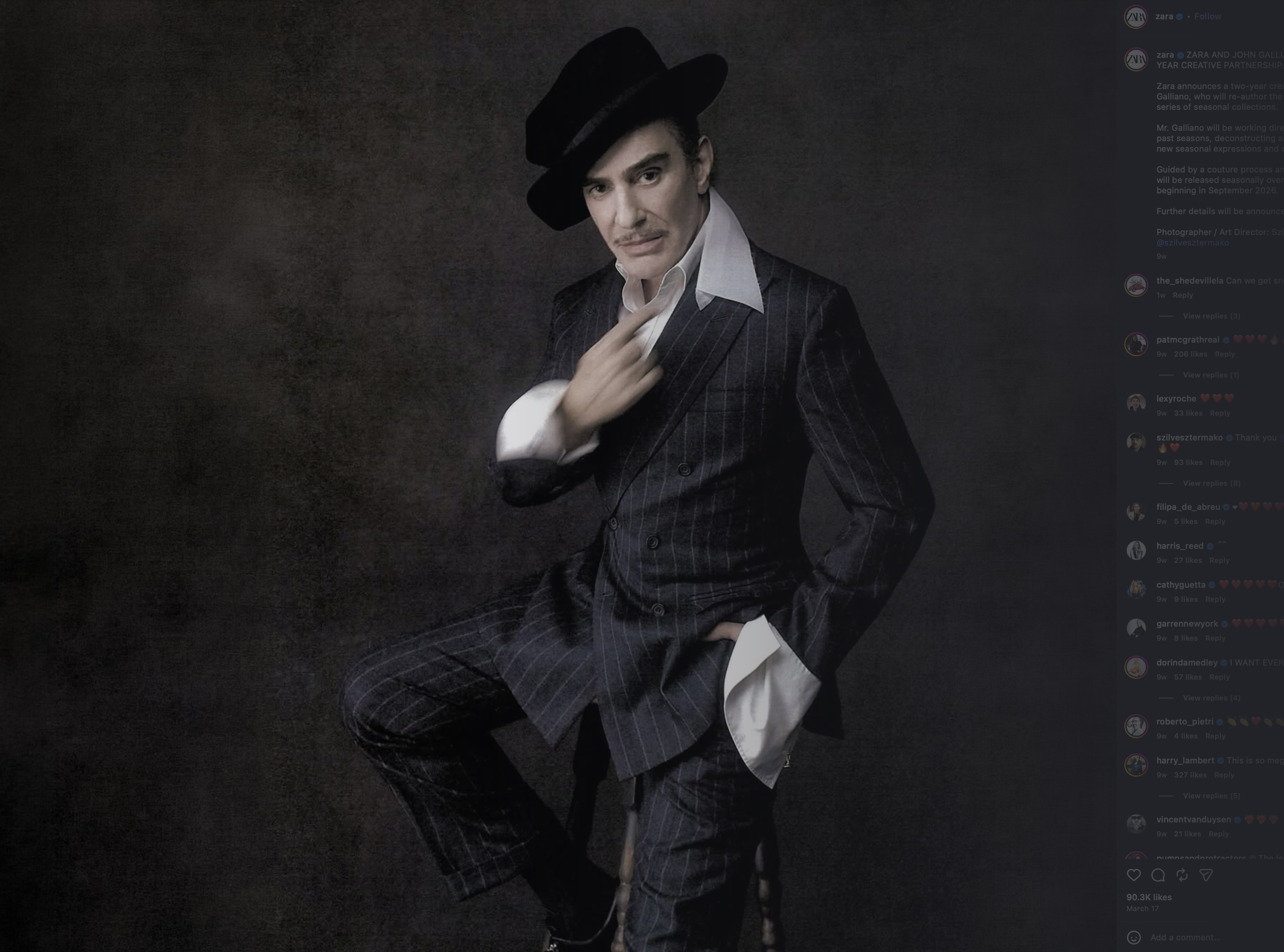
At Galliano, the argument reaches its limit. A bridal piece in a candle-lit room. Bias, ruin, romance. Makeup applied like painting. Hair as period sculpture. Casting as citation. The runway built as scene rather than passage. Galliano’s authorship — at Dior couture, later through Margiela Artisanal — does not sit in one detachable element. It is held in the total arrangement of garment, body, face, light, set, reference, movement.
That atmosphere travels constantly: editorials, student collections, mood boards, red-carpet styling, fast copies. It travels because it is seductive before it is understood. The viewer remembers the face before the seam, the candlelight before the cut, the historical fragment before the construction that made the fragment stand. But it travels damaged. Detached from the cut, the casting, the hand, the staging, and the historical pressure that made it intelligent, the atmosphere becomes costume, nostalgia, or mood. The copy can arrive before the construction because the scene is easier to repeat than the garment.
The archive is not only a garment room, a foundation, a runway record, a museum loan. It is whatever can continue when the designer is no longer present: tag, date, line number, specification, repetition, vocabulary, atmosphere.
Mass circulation did not only copy fashion. It located where authorship had been stored.
Continuation is not preservation. Some things travel intact. Some travel damaged. The archive is held by what can keep moving, even when it does not survive whole.
It shows what can travel when the designer, show, room, and original conditions are gone. Some authorship survives as system. Some survives as specification. Some travels damaged. Collaboration does not create portability; it exposes it.



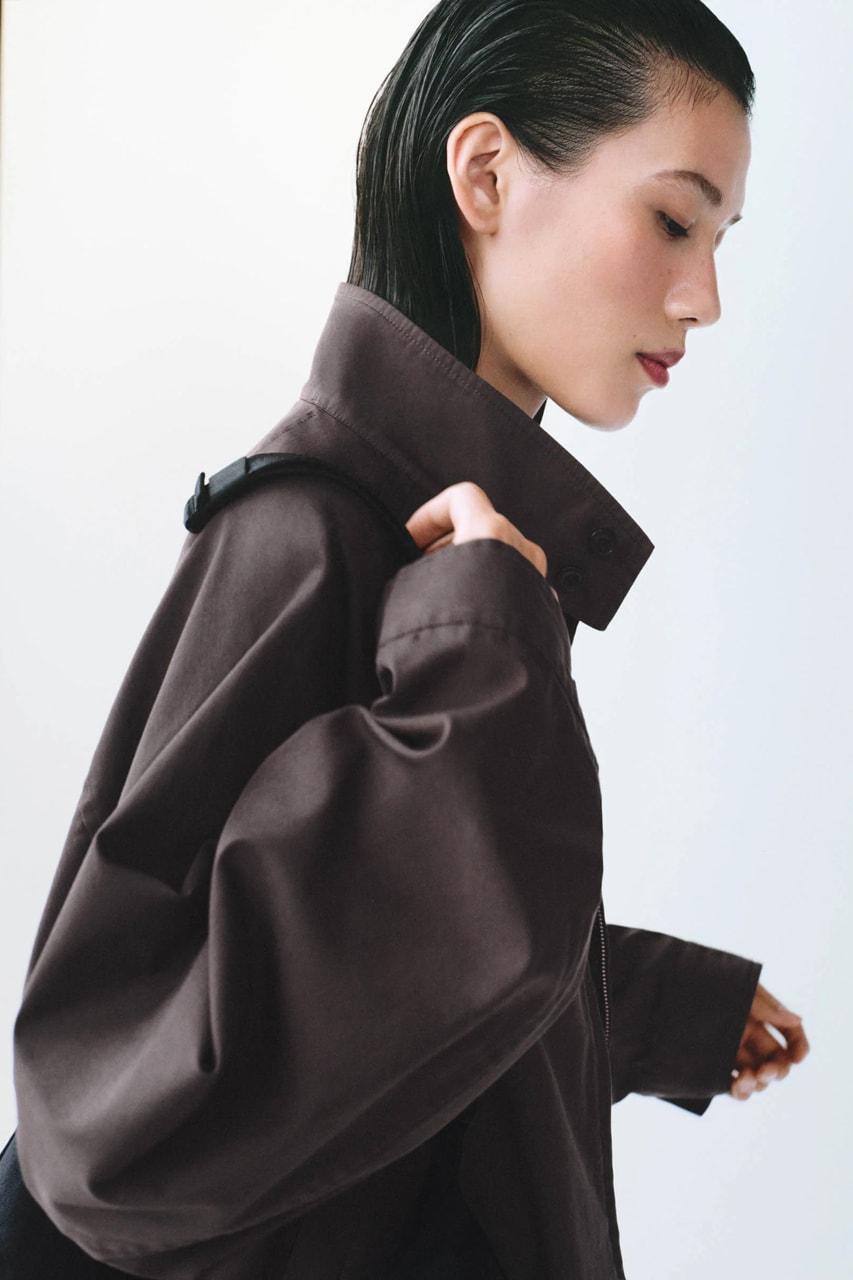
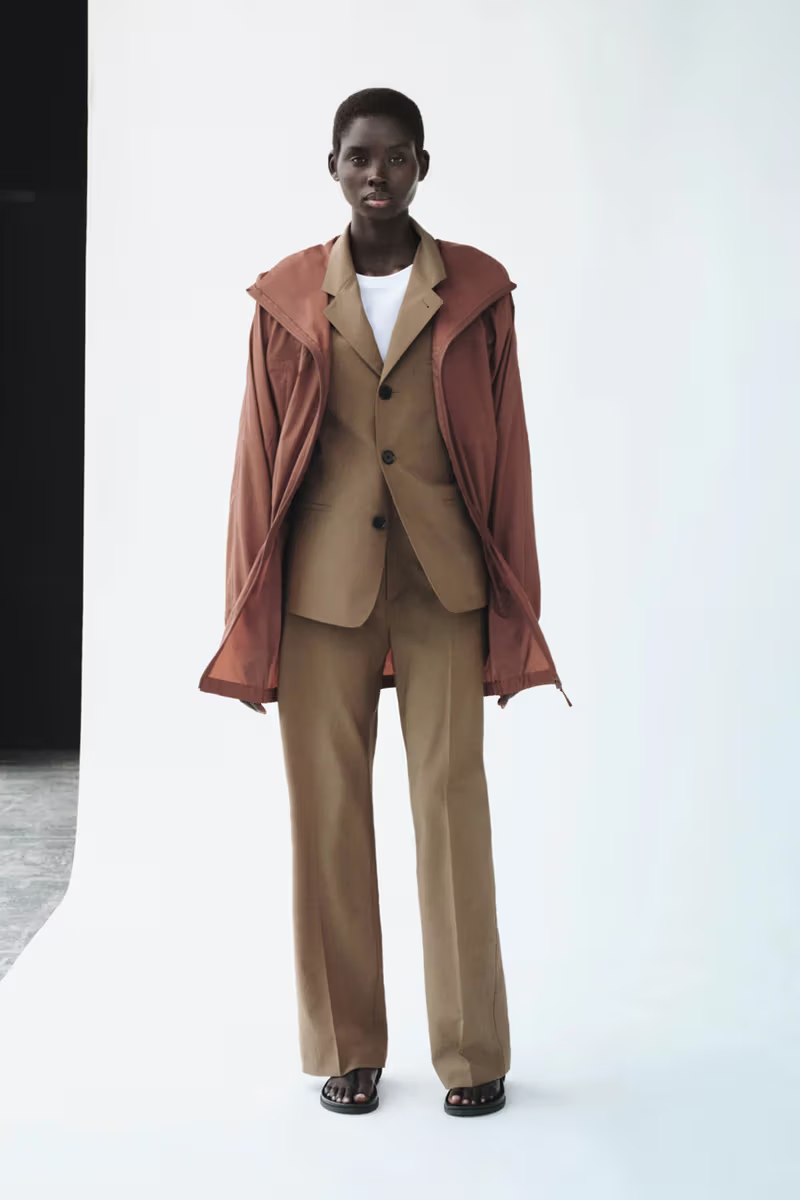
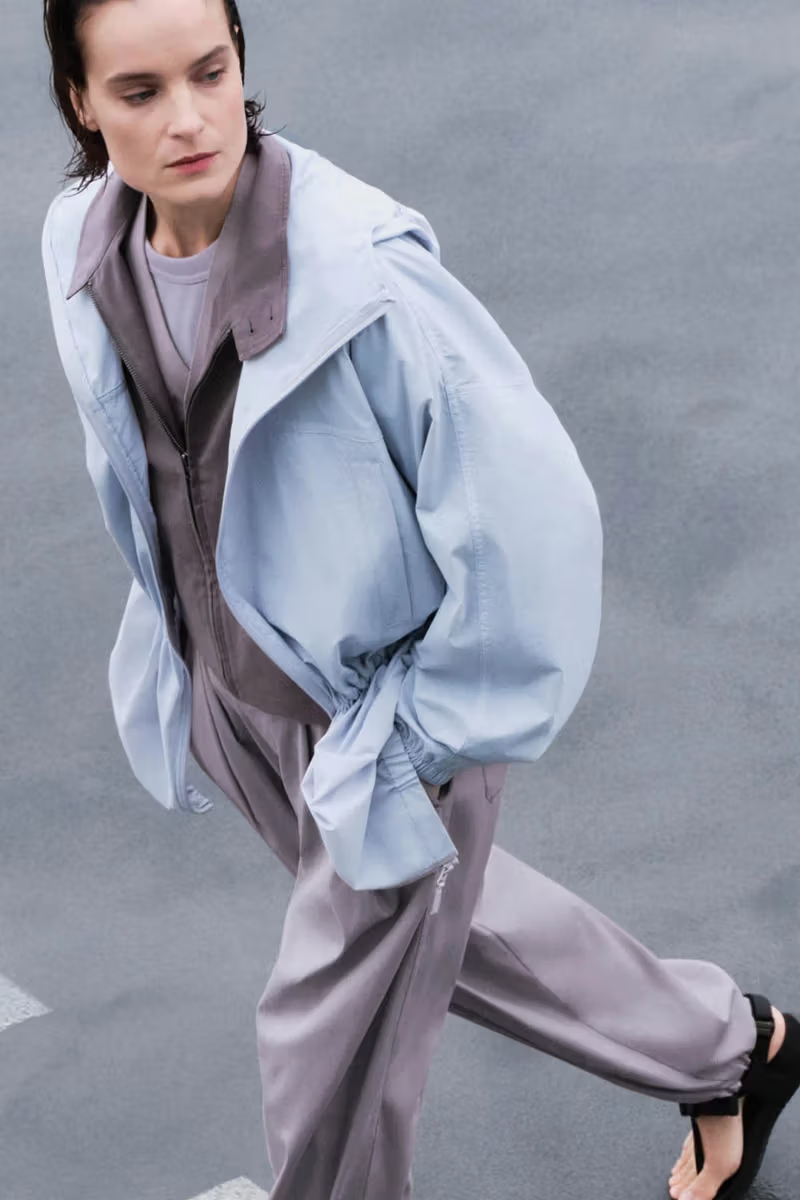
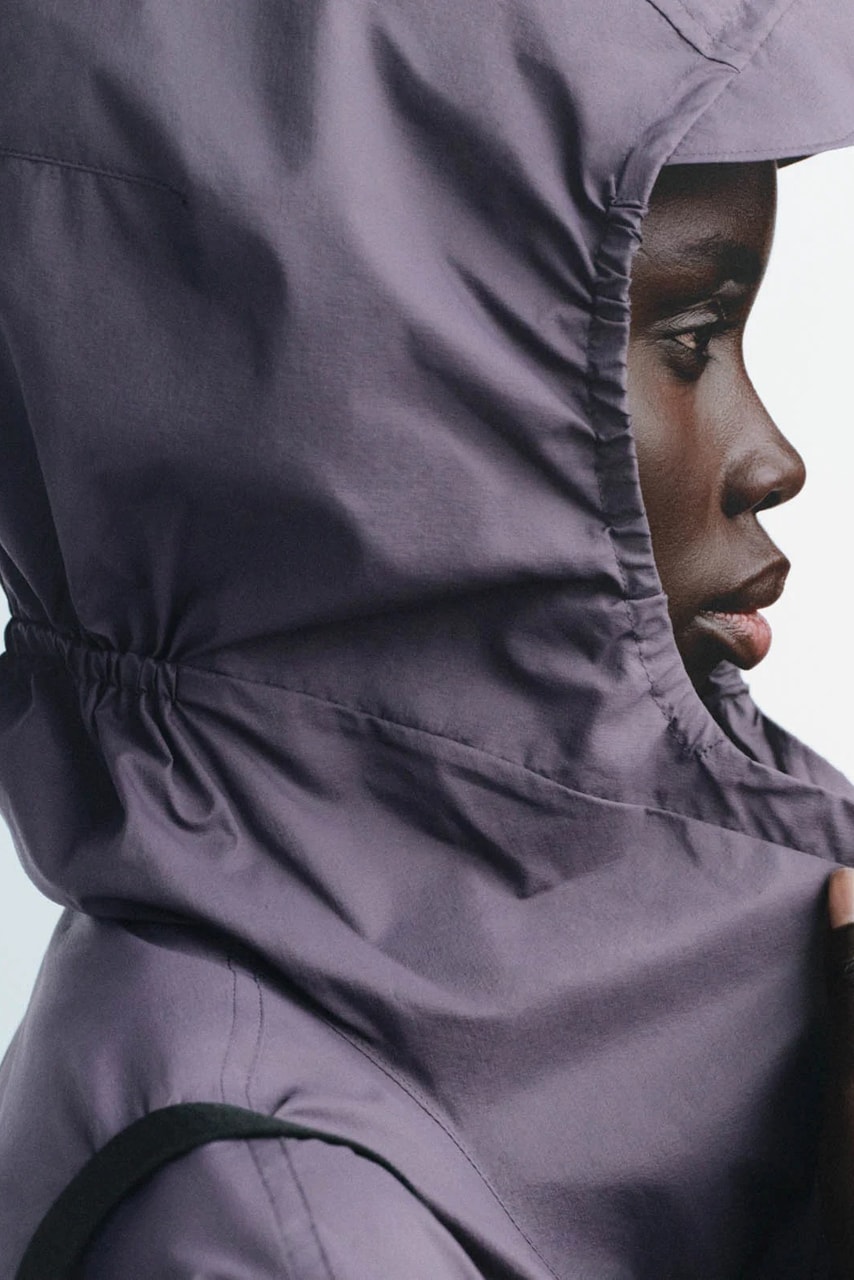
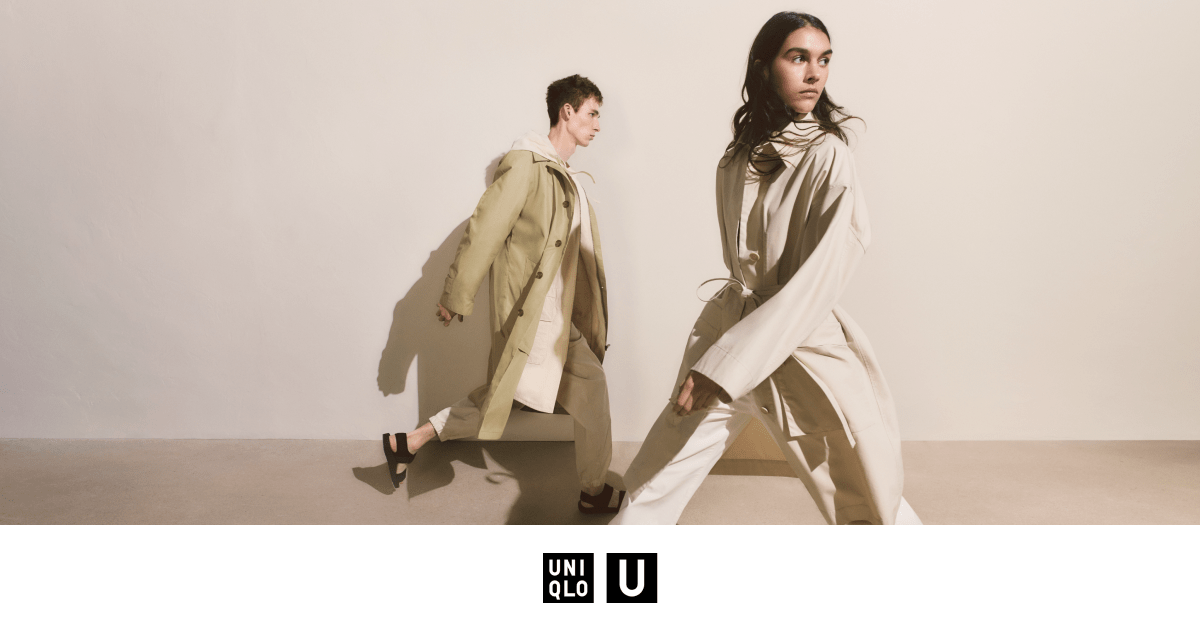



Cover: Uniqlo U, Spring/Summer 2026. Courtesy Uniqlo.
All images © their respective rights holders.