The room is quieter than the rest of the store.
Two tan leather chairs face each other. Between them, a round table. A recessed niche is lit above the seating. The walls are paneled in wood. A small bottle of mineral water has been set down. The room has been arranged before anyone sits.
On the table, an orange box. On the box, a bag. Beside it, a small folded clutch in pink leather. A dust bag, creased, set to one side. The bag has appeared. The box has not yet opened. At the lower edge of the room, a foot in a sandal enters the frame — the body present, partial, not yet in possession of anything on the table.
A preference has been remembered: leather, color, hardware, size. Perhaps not the thing first named. Perhaps the thing the sales associate believes would be more correct. Another object may arrive first: a scarf unfolded across the table, a belt, a tray in leather, a conversation about color that is really a conversation about patience. Nothing is exactly refused. Nothing is exactly promised. The pleasure of the room is that everything is close.
She has come for an object, but the object does not behave like merchandise. It is not placed before her for selection. It is approached through relation, delay, memory, and substitution. Before leather enters the hand, the house has already begun to read the hand.
Outside the room, this is usually called scarcity. Or exclusivity. Or, less elegantly, the Hermès game. The bag is not on the shelf. The waiting is real; the list is not. Desire circulates before possession. Resale values are discussed before leather is touched. A bag becomes known as difficult before it becomes known as handled.
The beginning is not price. It is permission.
Hermès belongs to luxury’s market of restriction, opacity, price increases, resale attention, and mythology. None of that should be softened. But its strongest objects do something more difficult than restrict access. They make access feel like admission into a life the object is already built to outlast.
Luxury has trained the owner to fear life. The surface should remain close to its first image: clean, complete, untouched. The box preserves the beginning. Tissue delays contact. Condition becomes the language through which the world is priced as damage. A scuff has to be explained. A corner has to be hidden. A handle darkens and the object begins its descent from newness into use.
This fear is not abstract. It belongs to the hand before it belongs to the market. The first mark on a valued object changes the owner’s relation to it. The thing has crossed from possession into exposure. It can no longer be returned to the image that made wanting safe.
Hermès does not remove that fear. It gives the fear a structure in which use can be authorized.
Before the Kelly, before the Birkin, before allocation and resale, there is leather under strain. A harness has to hold. A saddle has to resist pressure, weather, repetition, sweat, movement, and the risk of failure. Beauty is not yet the question. The question is whether the object survives contact with the world.
The saddle stitch answers that question. Two needles pass through the same hole from opposite sides, carrying a single waxed thread through leather under tension. Each stitch holds its own place, so that one failure does not undo the seam. The line that results — angled, slightly raised, precise without becoming mechanical — is now one of the house’s recognizable signs. It did not begin as a sign. It began as a solution.
The bags inherit this discipline before they inherit mythology. The Haut à Courroies was made for saddles and riding boots. The Kelly formalized a carrying structure that later became an image of privacy. The Birkin began as a complaint about capacity before becoming a myth of access. These origin stories are often used to rescue the bags from status, as if utility could clear luxury’s charge. It cannot.
Use is not an alibi. It is the field where qualification begins to look material. A bag that can answer to the body can also make access feel earned through suitability, patience, relation, and care. The object does not simply prove the myth. It gives the myth a body durable enough to enter.
That is why the mythology holds. It is not detached from use. It recruits use as its proof. The customer is not being offered an image alone. She is being admitted to a structure of handling that has already been made credible by function.
Leather, silk, metal, stitch, handle, hem: each is treated not as surface but as terrain, something learned through the hand before it is fully understood by the eye. Use is not beneath beauty. It is the discipline through which beauty is allowed to last.
A Hermès object does not ask to remain untouched. It is designed to be carried, folded, opened, closed, softened, darkened, repaired, and carried again. Contact is not the accident that threatens value. It is one of the ways value becomes visible. Box calf deepens with handling. Barenia darkens and absorbs marks into its surface. Corners soften. Handles remember the hand. The lock, the clochette, the sangles, the small weight of metal against leather — these are not ornaments detached from use. They are the places where opening, closing, carrying, and recognition become tactile.
A handle darkens where it is held most often. The mark is intimate before it is aesthetic. It does not describe the owner, but it records repeated entry into a life. In many luxury objects, evidence of use is treated as diminishment. At Hermès, it can become part of the object’s authority.
That sentence is true, and it is also the trap. Use becomes value only after the object has entered the right system. The same mark that looks like damage elsewhere can appear as patina here because the house, the owner, the market, and the repair structure have agreed to receive it that way. The scuff is not magically redeemed by touch. It is redeemed by belonging.
The carré proves that this is not only a leather argument. Silk should be the countercase. It does not carry saddles, hold hardware, or resist the same strain. Its pressure is repetition: folding, knotting, loosening, storing, reopening, wearing again. The ninety-centimeter scarf is built for that recurrence — enough weight to fall, enough lightness to move, a hand-rolled hem that gives the edge structure without stiffness.
The edge matters because it is where failure would begin. A scarf that is only an image cannot survive repeated folding without the edge betraying it. A carré returns to the drawer differently after it has been worn. Folded back along lines it already knows, it is no longer only a printed square. The silk has learned the throat, the handle, the hand that refolds it. Leather must endure strain. Silk must endure repetition. Both are judged by what they allow the hand to do again.
Repair is where the claim becomes hardest to dismiss. Hermès tells clients to return objects to its workshops for maintenance: cleaning, restitching, repolishing, restoration. Other luxury houses repair, too; the distinction is not the existence of aftercare. It is the place repair occupies in the life of the object. Here, repair does not behave like an apology for damage. It belongs to continuation.
A bag returns without the body that carried it, but not without the body’s evidence. The handle, the corner, the seam, the edge — these are the places where use has gathered. Someone decides what should remain and what must be strengthened. The workshop does not erase the life of the object. It makes the object able to continue carrying it.
But preservation through use still requires a gate. The waiting at the beginning and the repair at the end are not separate. Both keep the object inside a relation before and after ownership: the customer enters before the bag is offered; the object re-enters after use. The same continuity that lets the object go on also decides who is allowed to begin.
Waiting becomes qualification. Relation becomes access. Use becomes permission.
The customer who fears the first scuff is not outside this structure. Her fear is one of its working conditions. The house offers a way for use to stop feeling like damage, but only after use has been placed inside its own discipline: the appointment, the preference, the remembered leather, the repair desk, the return to the workshop, the resale record, the inherited object. The mark becomes acceptable because it has passed through a system that knows how to read it.
Resale matters only after everything else has been established. A used Hermès object can circulate beyond the original owner and still be understood. Condition matters, but condition is not the same as untouchedness. A bag with careful use, visible patina, and documented repair does not leave the structure simply because it has lived.
Inheritance is the quieter version of the same proof. The object outlives the first owner without becoming detached from use. The mark of life is not what has to be forgiven before value can return. It is one of the ways the object becomes more fully itself.
The original Birkin’s auction value depended on provenance; that has to be admitted. But the object was not restored into fantasy before value could appear. Its marks, residue, and signs of use remained visible. The auction did not pay to erase use. It paid because use had become inseparable from the object’s authority.
Price is not the beginning, and it is not proof by itself. It is the visible edge of a sequence already in motion: made, offered, handled, worn, repaired, returned, carried again.
The customer who enters for a Kelly or a Birkin may think the story ends when the bag is offered. It does not. Acquisition is one point in the sequence. The object has already passed through one discipline before reaching her, and it will enter another once she begins to carry it.
The first box may or may not have opened. The scarf on the table, the remembered leather, the patience asked before the offer — these were not preliminaries. They were the first terms of continuation. She thought she was waiting for an object. She was being read for entry into the life the object would be allowed to carry.
The object continues. The permission does too.
Because its best objects do not fear use. A Hermès bag, scarf, stitch, handle, or repair does not depend on remaining untouched. Its authority gathers through contact, maintenance, patina, and continuation.


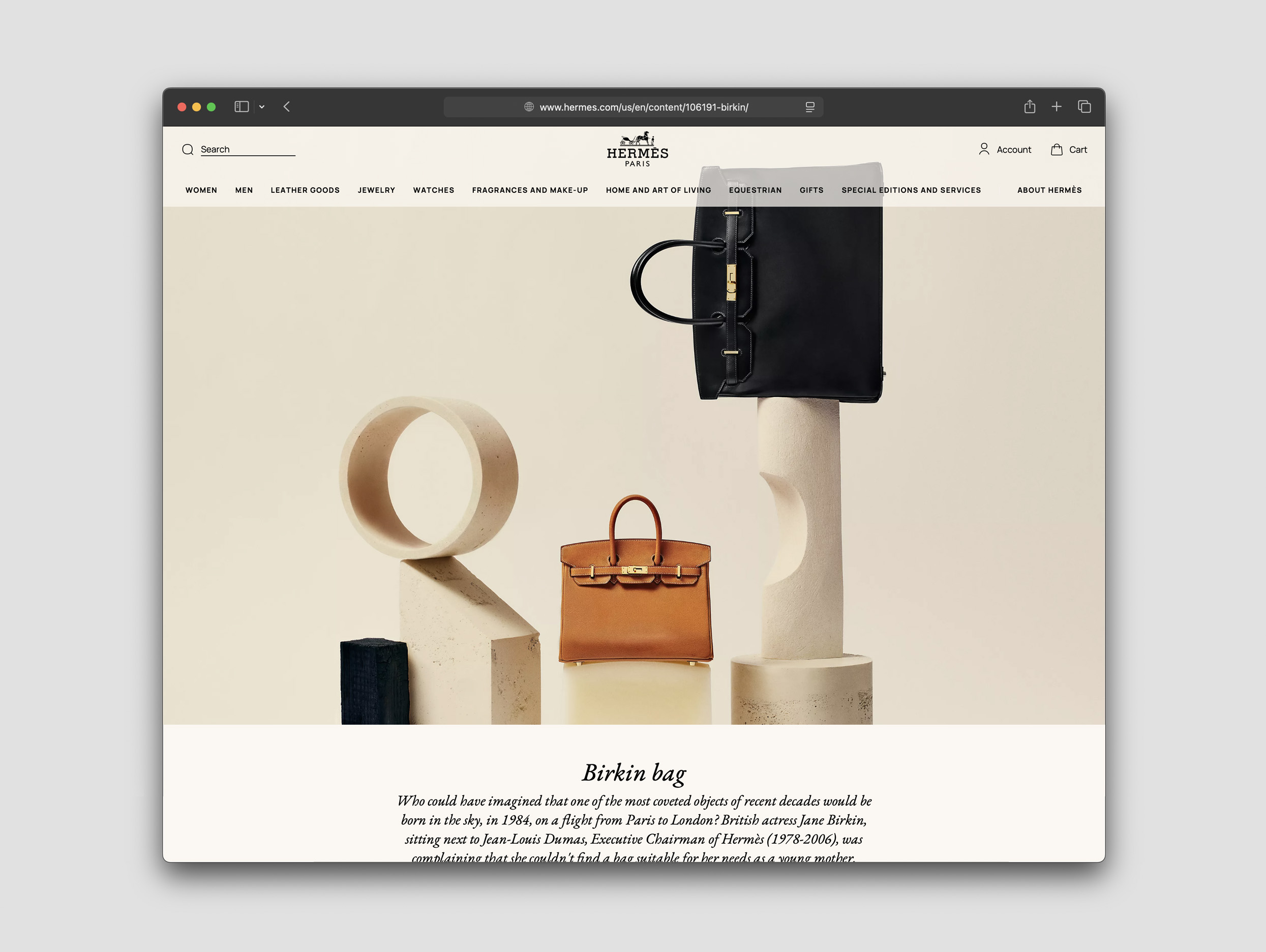
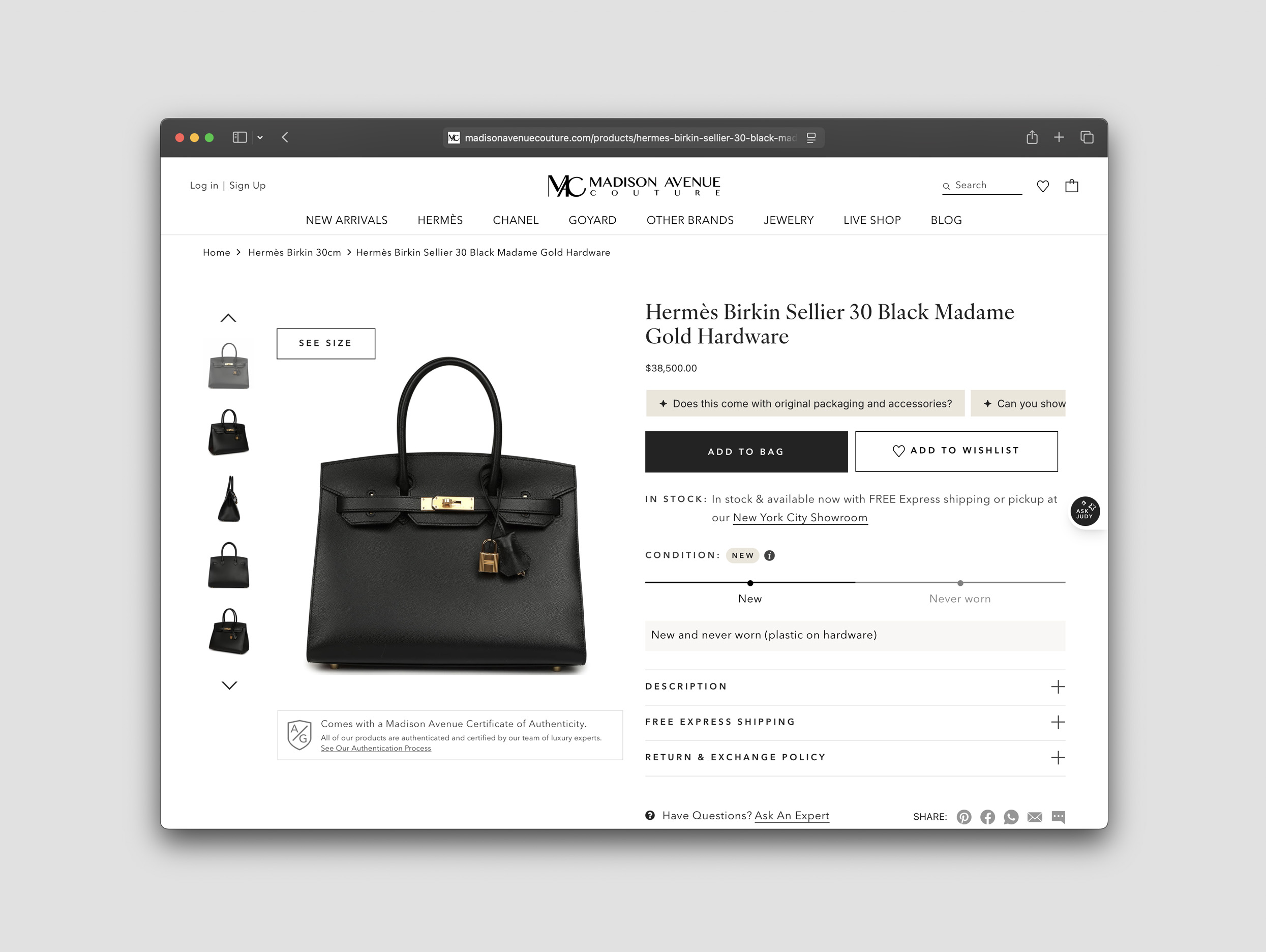

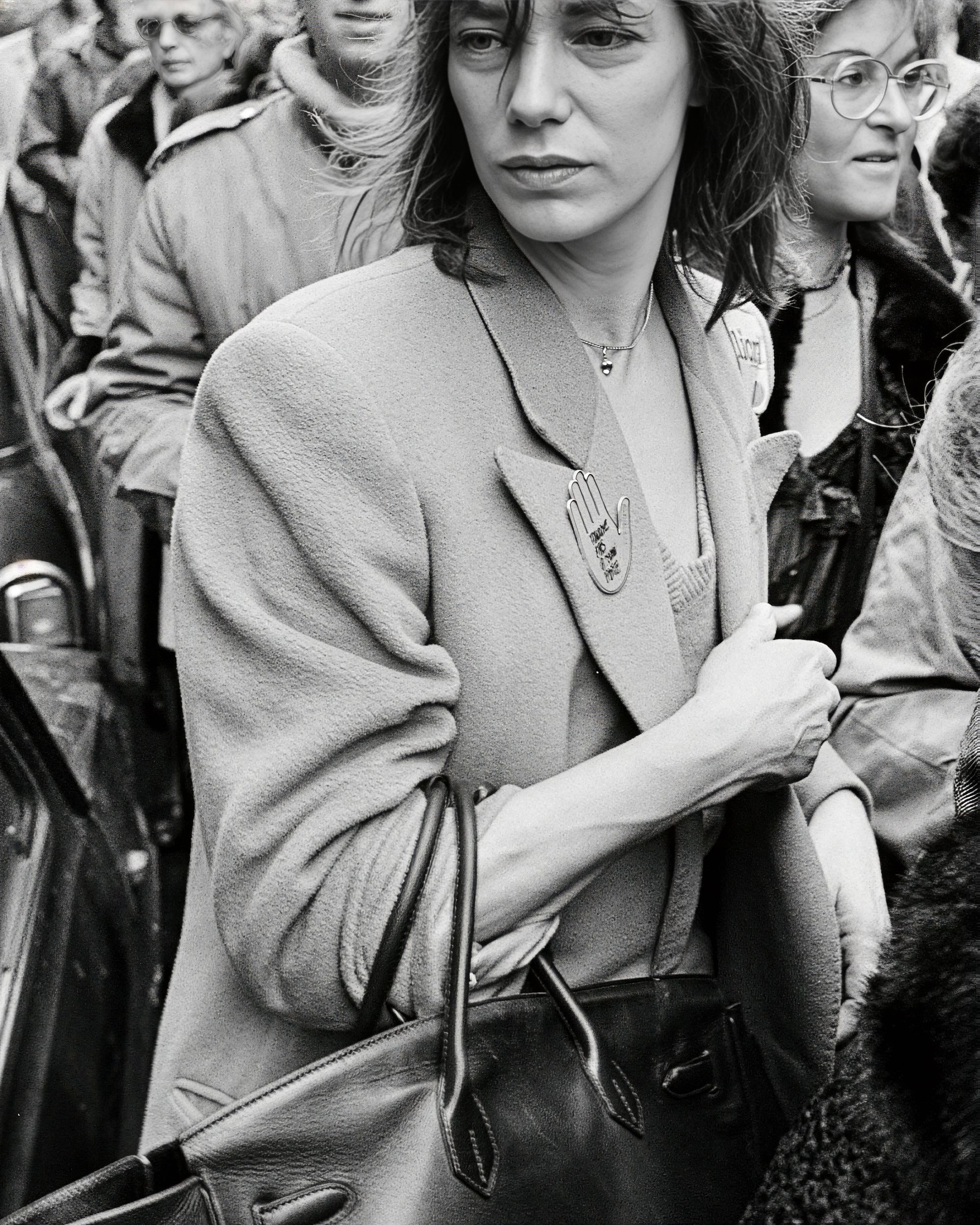
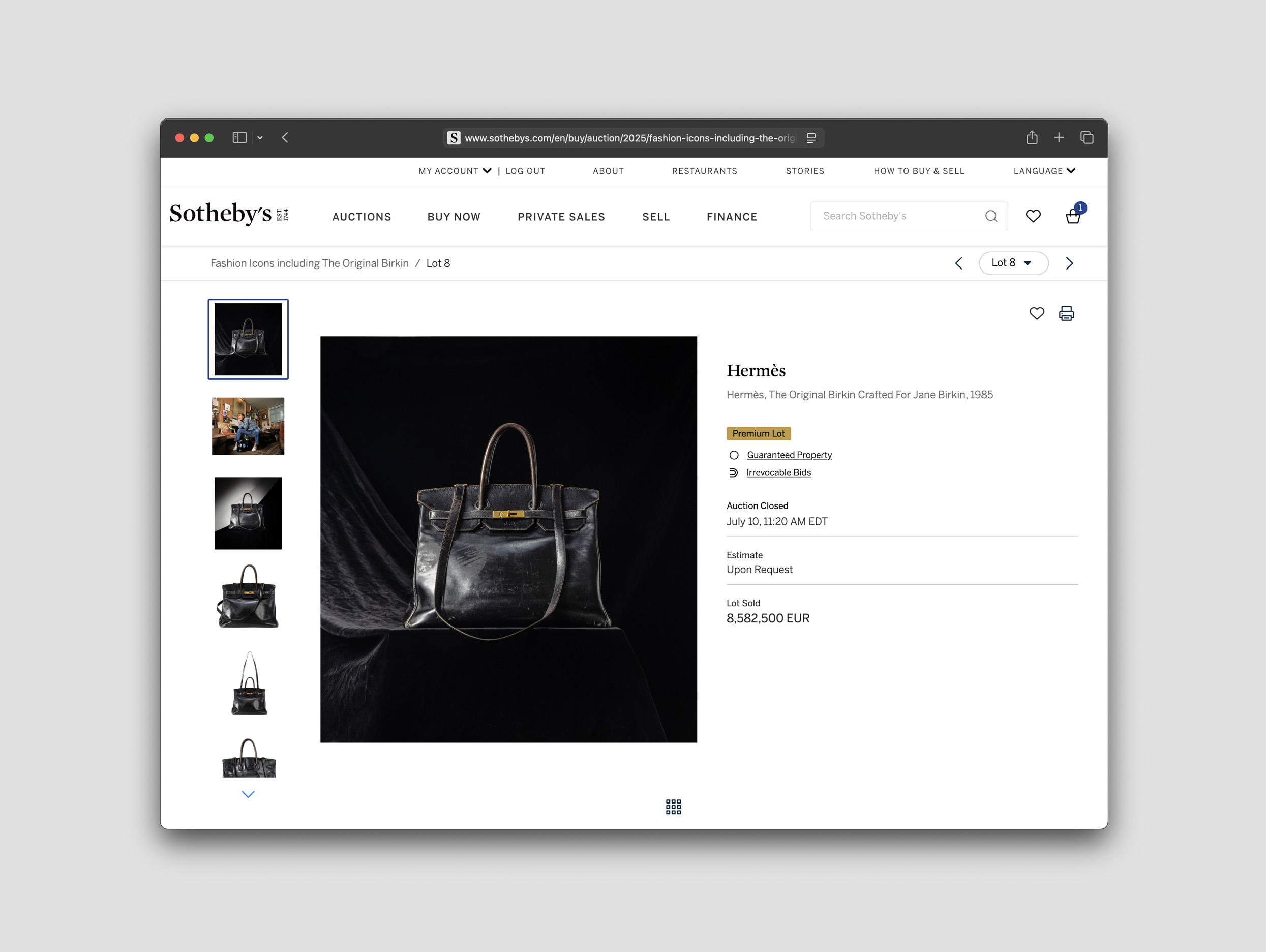
Cover: Jane Birkin archival photograph. The cover holds the essay’s pressure: the bag before myth, before auction, before platform circulation — attached to the person whose public use made the object legible. Photo by Pierre Guillaud / AFP.
All images © their respective rights holders.