

The directory has seven folders, numbered.
They do not look mysterious. That is the first disturbance.
1_Maison Margiela folders Announcement. 2_Preparation & Teaser. 3_Fall-Winter 2026 Show. 4_Artisanal Exhibition. 5_Anonymity Exhibition. 6_Tabi Exhibition. 7_Bianchetto Experience. The names sit in white type on a dark background, arranged with the ordinary grammar of a working week. Nothing is veiled. Nothing asks to be decoded. The folders wait to be opened. Inside them, the language becomes even plainer: Project Logo, Archive Research, Save The Date, Press Release. Inside Archive Research, two subfolders: 01 Printed Archive, 02 Digital Archive. The second folder contains Project Brief, Itinerary & Planning, Packing Documentation, Teaser Assets. These are not the names of myth. They are the names of preparation — the office before the image, the shipment before the exhibition, the document before the room.
The house codes appear inside that grammar: Artisanal. Anonymity. Tabi. Bianchetto. Folders 4, 5, 6, 7. Inside the Tabi folder: Initial Research, Tabi Collectors, Exhibition Capture, Press Release. Inside the Bianchetto folder: Initial Research, Bianchetto How-to, Experience Capture, Press Release. The code names belong to the house. The frame around them — Initial Research, How-to, Exhibition Capture — belongs to production. This is the new strangeness of Maison Margiela: the house that built itself by removing the label, covering the face, withholding the author, and leaving finish unsettled has made its refusals navigable.
Nothing in the directory performed mystery. Its strangeness came from the opposite condition: refusals that had once operated through absence, obscurity, and withheld authorship had been given the plain grammar of folders.
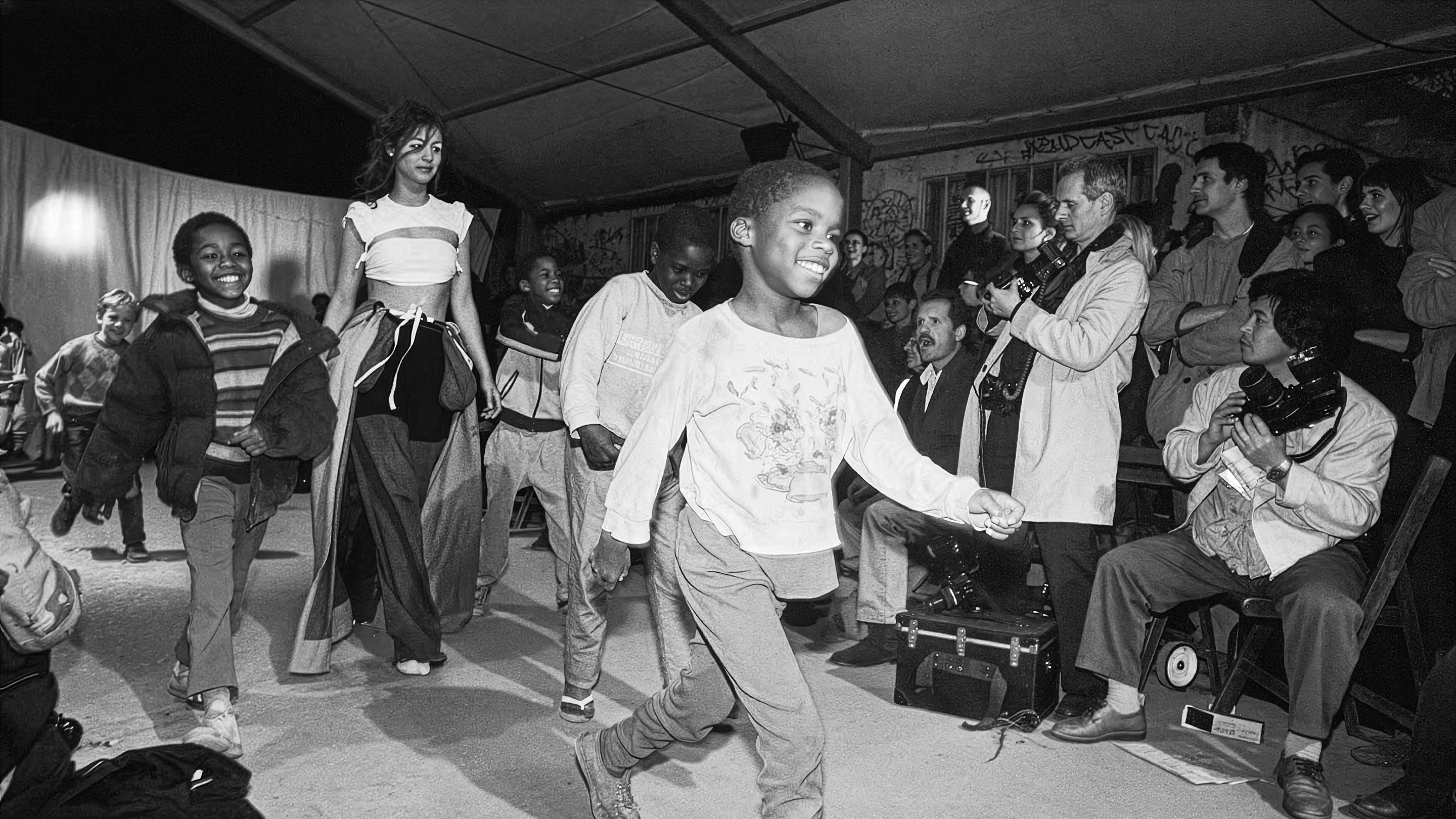
Before the directory, before the numbered label, before Replica had a name, the room heard the work being made. Café de la Gare, October 1988. A small venue in the Marais, outside the central geography where Paris fashion usually arranged its authority. The audience did not first meet Maison Martin Margiela through a logo, a face, or a completed image. They heard the backstage room before they saw the finished one: feet shifting, cloth being pulled from racks, a voice giving direction, the interruptions of adjustment before a garment becomes appearance. That interval was normally hidden. Fashion asked the hand to disappear before the image arrived. The fitting was removed. The pin was removed. The support was removed. The garment came forward after the work that made it possible had withdrawn.
Here, the hands entered first.
The runway was laid in white cotton, more surface than stage, waiting to receive evidence. Models wore split-toed boots. The soles had been dipped in red paint. As bodies crossed the white surface, the floor began to change: steps became marks, movement became record, and the cotton stopped behaving like runway covering. By the end, it held the evidence of the bodies that had passed over it. The garments carried the same disturbance. Linings turned outward. Tailoring samples remained partly finished. Seams and supports stayed visible where finish should have closed them. The room had not been asked to believe in completion. It had been asked to look at the conditions usually removed before completion could appear.
When it was over, no one came out to take the room. What stayed was not yet a logo or a code. It was a mark before a category. This would later be called deconstruction. The term held because the garments showed their construction, but the exposed seam was only the visible part of something deeper. The supports through which fashion ordinarily secured identity — name, face, finish, author — were being removed, and meaning was being forced to land somewhere else. Refusal did not stay pure. The cotton did not remain documentation. The following season, the red-stained material returned as a garment. What had been the floor became clothing. The trace of one appearance entered the next. Before Replica had a name, Margiela was already letting prior life become material.
The blank label made that refusal wearable: a square of white cotton inside the garment, tacked down with four loose stitches at the corners, visible from the outside as four small white marks. The buyer could clip it free without damaging the cloth. The refusal was offered as an action. It removed the place where the designer’s signature usually fixed the object, the place at the back of the neck where a name bound the wearer to the maker. But refusal became complicated once it was worn. Many wearers did not cut the label out. The four stitches stayed in. What had been offered as absence became, for those who recognized it, its own visible sign.
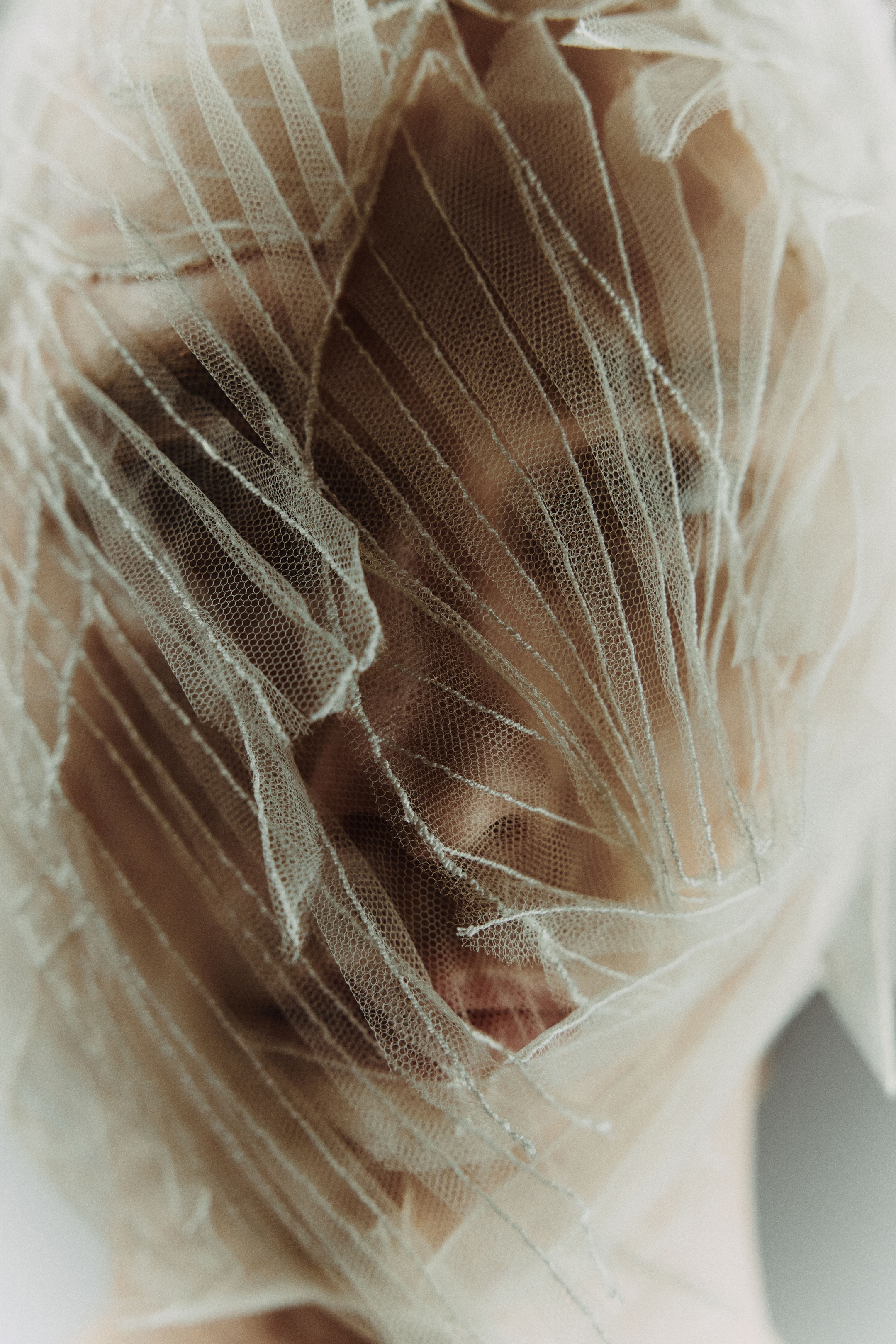
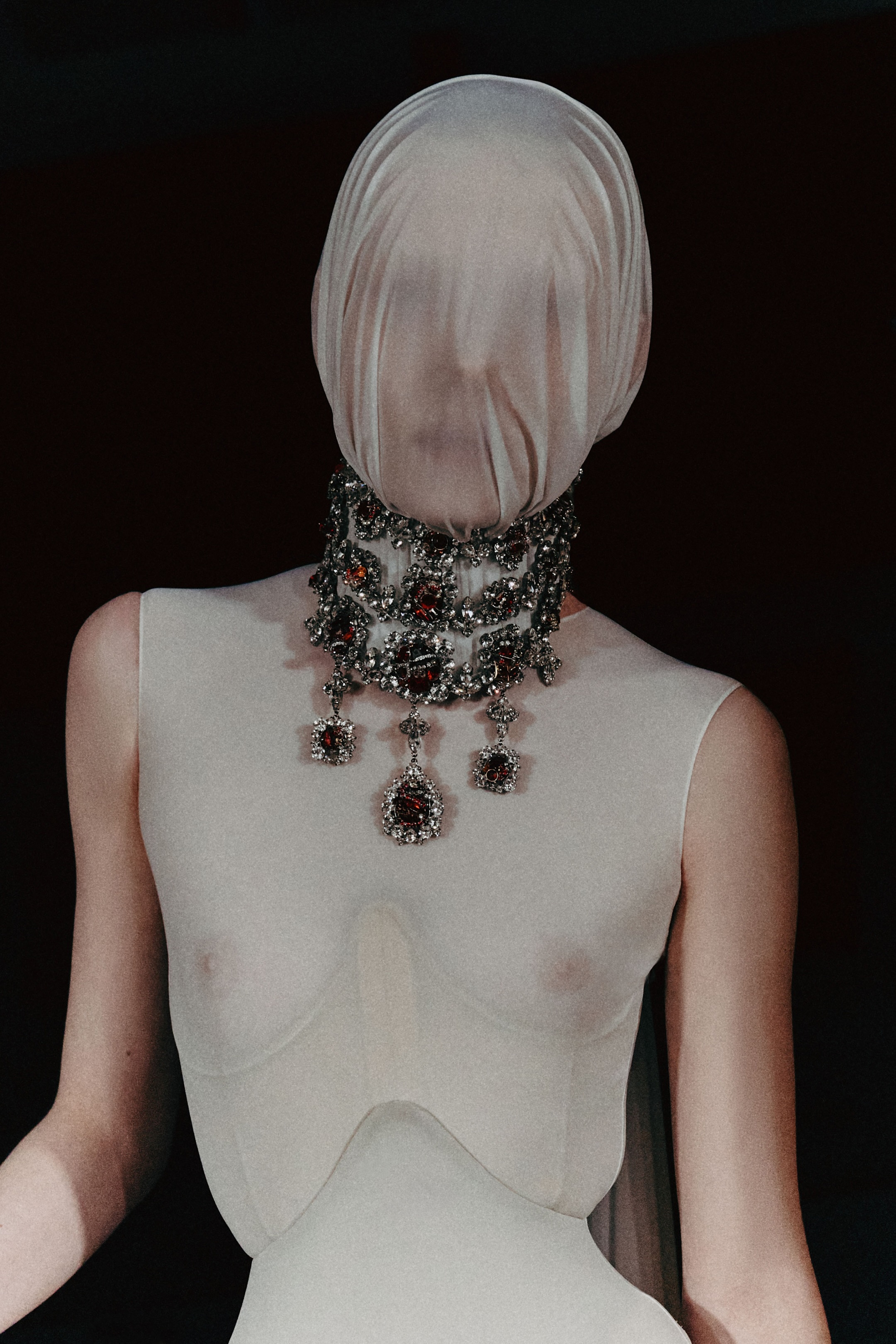
The team extended the condition through the house’s working image. Staff wore identical white workshop coats at shows and presentations: the costume of execution rather than authorship. The workforce was present, but not named. The house did not replace the designer’s persona with another persona. It replaced the author with a working condition. The model’s face was rerouted as well: a fine veil at first, then wigs, paint, masks, mouthpieces, glass skin. A campaign often resolved at the face; the image found its projection surface there. Margiela removed that surface. The model did not disappear so much as become unavailable for the usual transaction. To call this anti-glamour was too small. The gesture did not refuse beauty, seduction, or image. It refused the face as the place where those things would be secured.
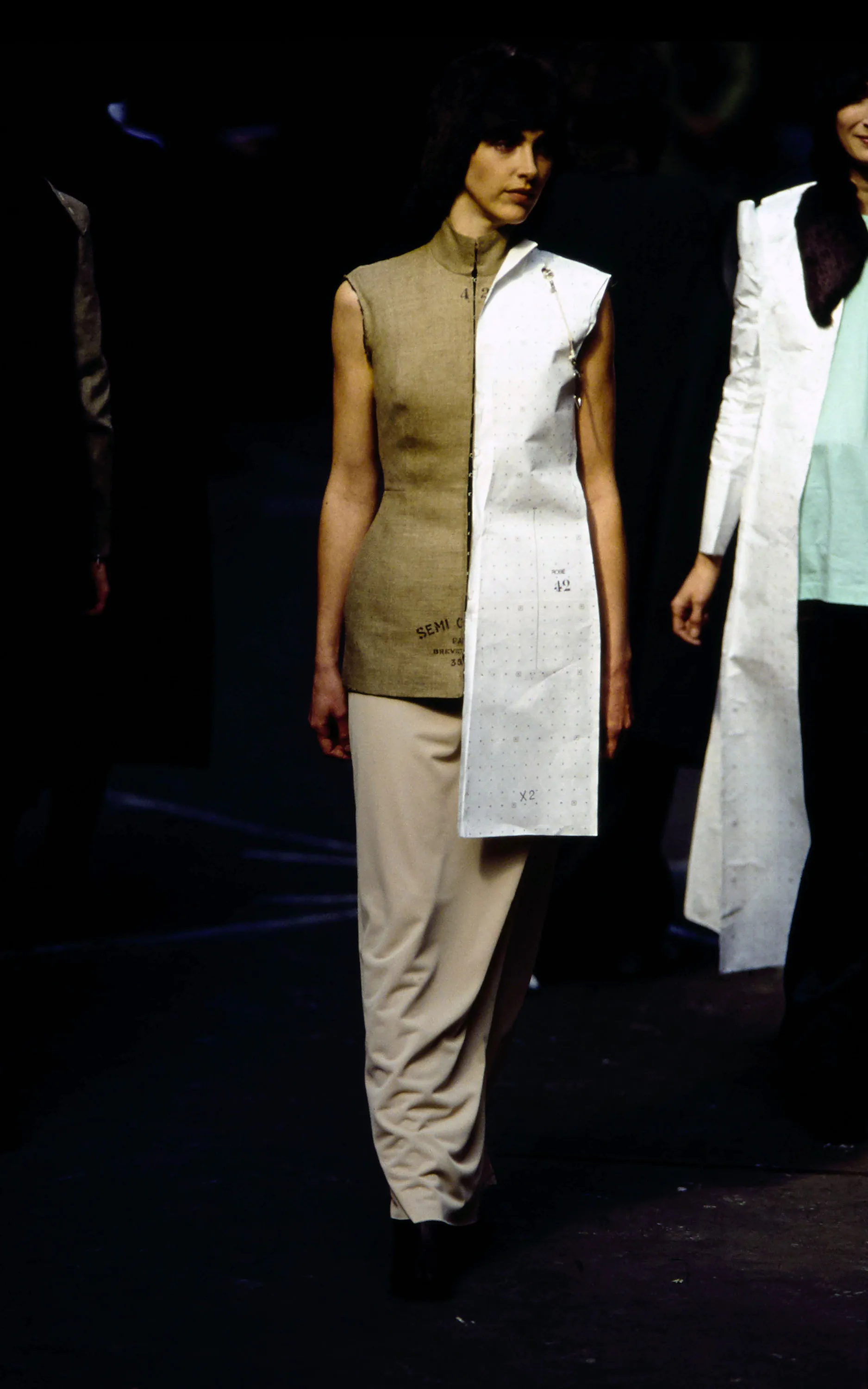
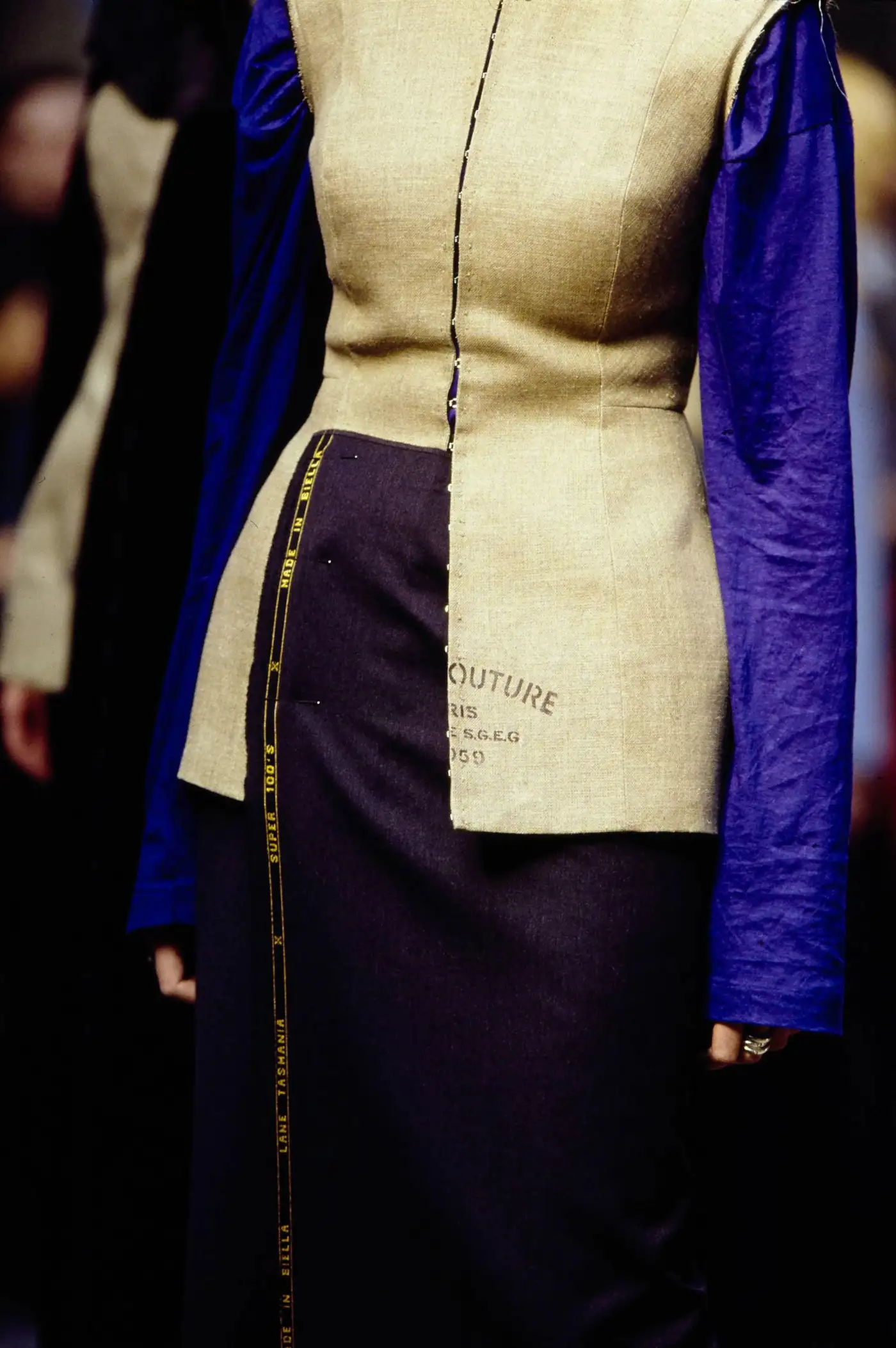
The same movement happened inside the garment. Linings became outer surfaces. Basting threads remained. Chalk marks stayed on cloth. The Stockman, normally the body before the body, could be brought forward as garment: the support that waited beneath fabric made visible on the person it was supposed to precede. What the tailor would have erased remained. The garment held the trace of its own making. The support became part of the object’s authority.
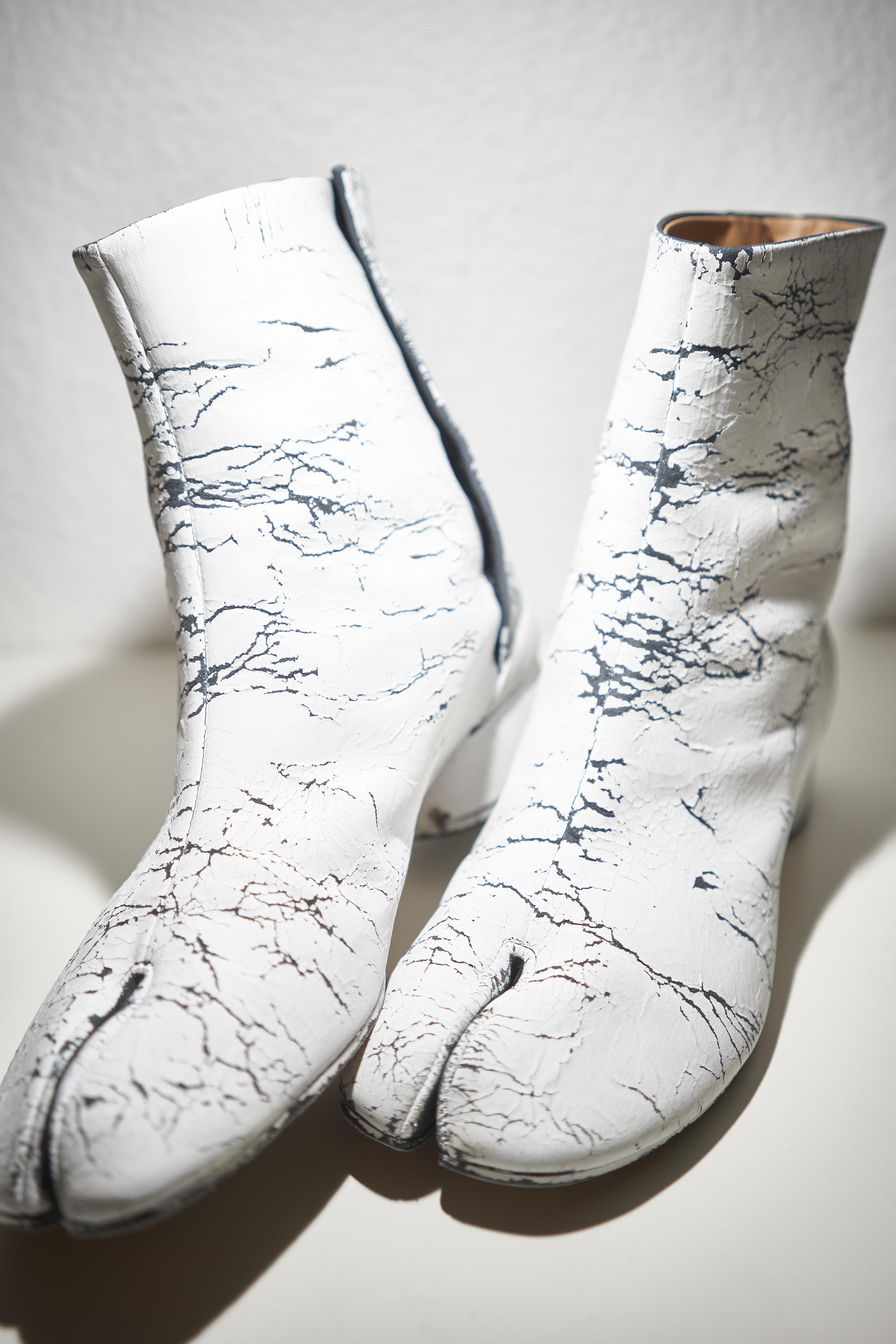
The Tabi moved the operation into the body. Its silhouette comes from a Japanese sock, the toe split between the big toe and the rest so that the thong of a sandal can pass through. Margiela took the form and made it a shoe: a leather boot with the split running up the front, a heel underneath the cleft, the upper cut around the actual division of the foot rather than the shape fashion ordinarily imposed on it. The Tabi interrupted the silhouette at the place fashion does not ordinarily argue with: the body itself. To wear it is to meet the split before anyone else sees it. The big toe finds its own chamber; the rest of the foot gathers beside it.
The blank label disturbed attribution. The covered face disturbed projection. The unfinished garment disturbed closure. The absent author disturbed legitimation. The Tabi disturbed the body from inside the shoe. These removals did not produce incompletion. They produced another structure for where identity could land.
Gradually, that structure acquired a system. Early in the house’s life, Margiela staged his own retrospective: ten white rails in an abandoned supermarket, one rail for each previous collection. Garments from earlier seasons were reproduced and dated to their original season. The retrospective usually arrived after a career, when institutions gathered the work and stabilized its meaning from the outside. Margiela performed that operation on himself while still producing.
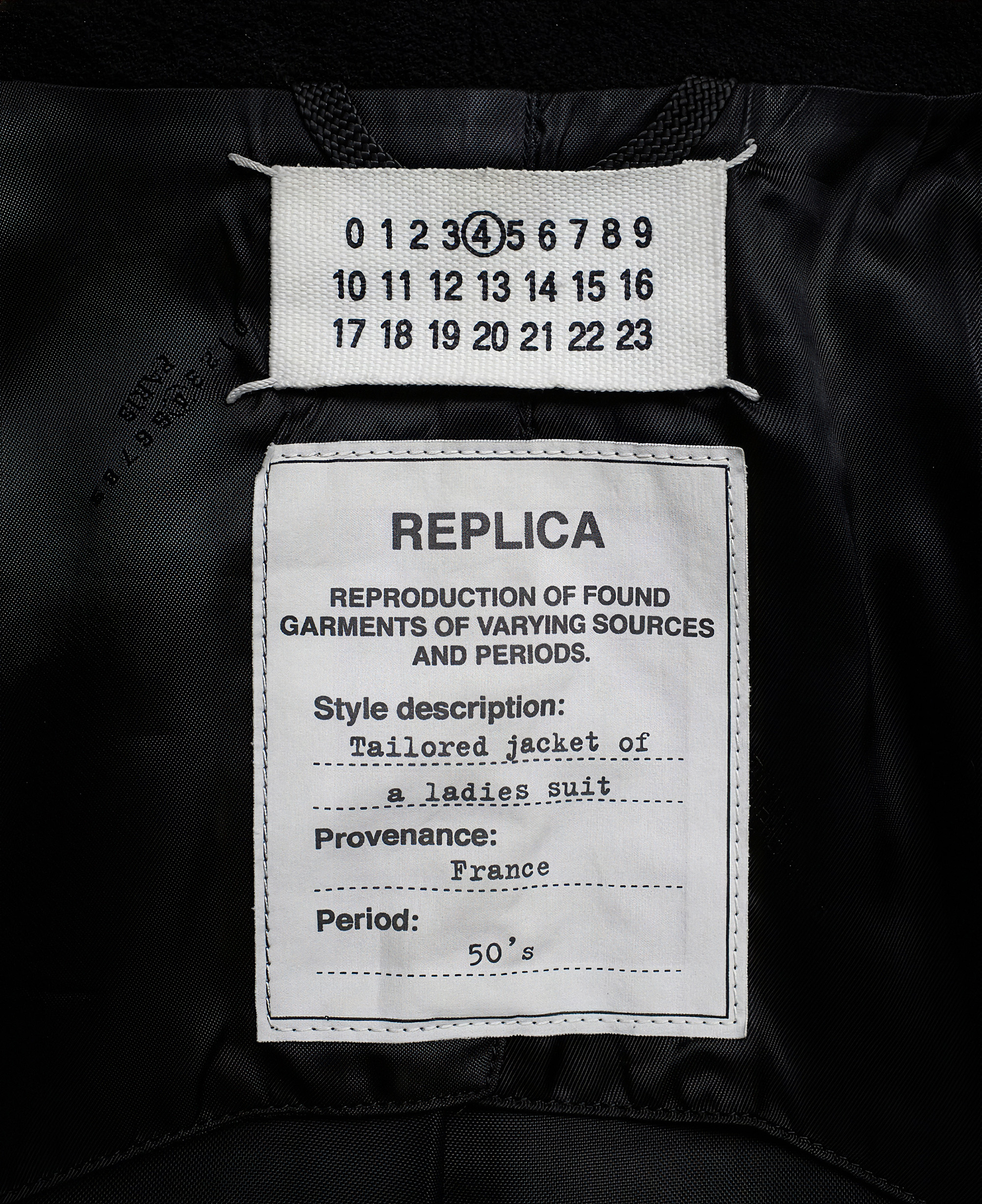
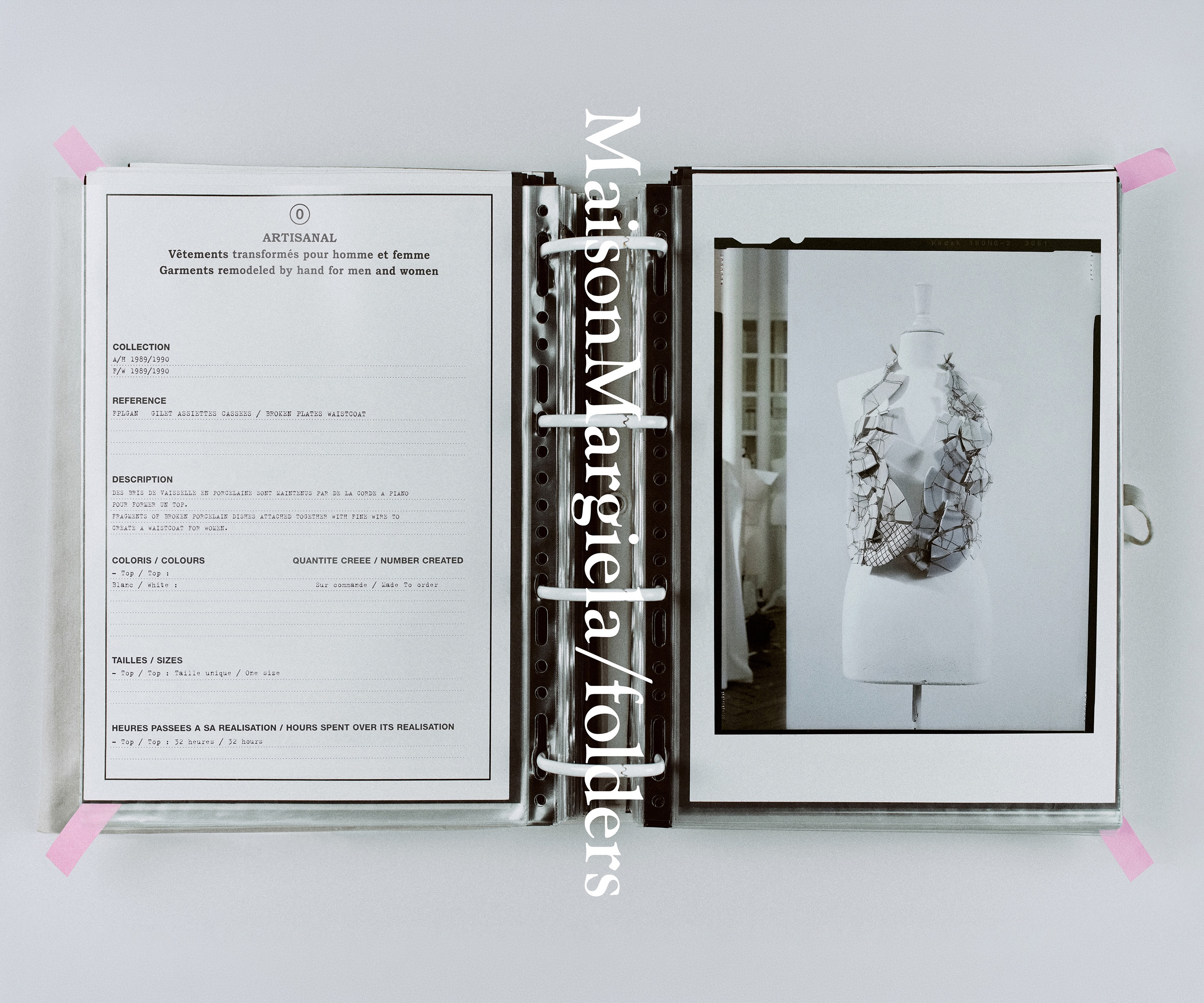
Later, the blank label acquired numbers. Zero through twenty-three, one number circled to mark the line. The label still asked to be cut, but it could also be read. The wearer could choose; the choice now had a system. Refusal did not disappear. It became legible. That change mattered because a code could carry refusal farther than silence could. It could teach the refusal, reproduce it, let others enter it. But it also changed the refusal’s condition. The blank label had asked the wearer to decide what to do with absence. The numbered label made absence into something that could be read before it was acted on. The sign no longer had to be explained by the garment alone.
By the anniversary show, the house had already staged the problem of inheritance. A note on each seat asked what was left after twenty years, forty shows. The founder did not appear at the end. He never had. The staff emerged instead in white coats, a collective bow replacing the designer’s body. When Martin Margiela left soon after, the house had already rehearsed the condition it would inherit: a structure built on the removal of the designer now had to continue without him.
Then Galliano was given the house. From outside, the fit looked wrong: a theatrical author taking over a house built on authorial withdrawal. The contradiction was real, and it was the point. Margiela had not left a property to guard. It had left an operation that could be used. Galliano did not make the house quiet in order to belong to it. He allowed spectacle to pass through the removals already built. The face became mask. The body became construction. The garment exposed its making. The author appeared at the end of his first Artisanal collection in the white coat, and that visibility mattered. He had to find out what kind of visibility the house could survive. Spectacle could enter because it did not restore the supports Margiela had removed. It theatricalized their absence.
Replica had been one of Martin’s defining lines: existing garments reproduced and labelled with the date, provenance, and source of the original. The line kept the prior garment as reference. Galliano extended the operation through Recicla. Components from the past were not copied; they were taken, sourced, the actual object, and built into new pieces. The prior life of the cloth remained physically inside the new garment. Replica kept the prior garment as reference. Recicla kept it as inhabitant. At the Pont Alexandre III Artisanal show, visibility reached its limit: porcelain-doll skin, extreme heels, corseted bodies, glassed-over faces, silhouettes compressed and released into spectacle. The collection circulated far beyond fashion. For weeks, the images moved as signs of Margiela before many viewers could name what they were looking at.
Galliano did not appear at the end. There was no bow. The author who had once taken the bow refused it at the moment when he could most easily have claimed the room. The question the show raised was not whether refusal could be beautiful; it already was. The question was whether refusal could survive being seen this widely. After Galliano, Glenn Martens inherited not secrecy but legibility: a house whose refusals were already named, collected, photographed, archived, and ready to be opened before the garment appeared.
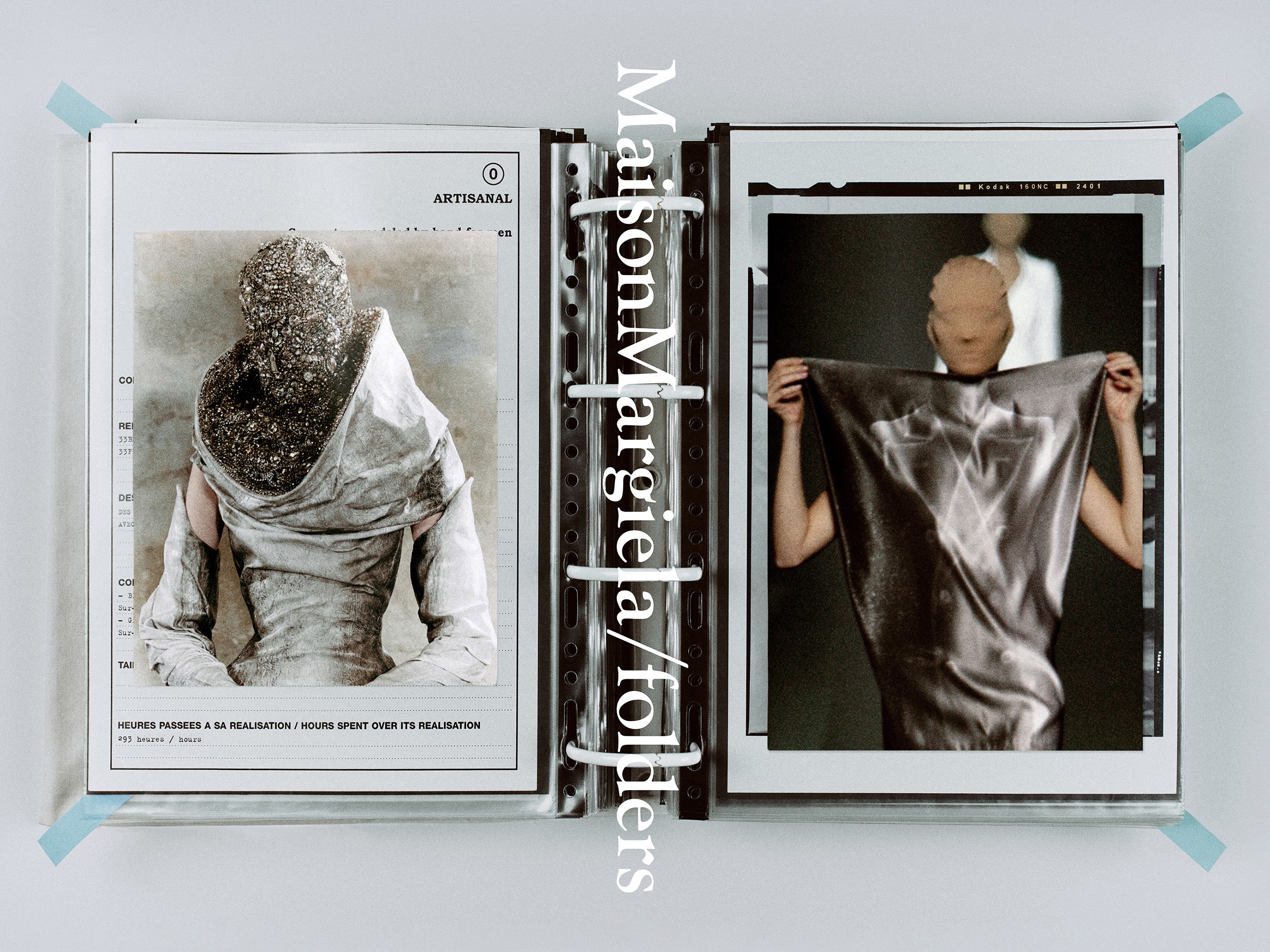
MaisonMargiela/folders returned the condition at full scale. Artisanal, Anonymity, Tabi, and Bianchetto were presented as codes a visitor could enter. The Artisanal exhibition gathered looks from across the house’s history in shipping containers on a Shanghai street, turning the archive into an architecture of files, rooms, and categories. The folder marked a change in the operation. A rail still asked the visitor to move toward a garment. A folder allowed the visitor to arrive first at the category. The garment was no longer the only place where the method began.
The blank label invited cutting. The numbered label invited reading. The folder invites access.
Anonymity carried the greatest pressure because it had once depended on withholding. In the folder, it was no longer only a condition of disappearance. It was called foundational. It began with the four white stitches and extended through white coats, veils, wigs, paint, mouthpieces, and masks. The mask began as a refusal of the face. In the folder, that refusal became a lineage. The mask was no longer only an interruption of legibility. It was something legibility could hold.
The Tabi folder operated differently because recognition had not ended the encounter. The Tabi was among the most photographed objects the house had made, but the operation it performed at the level of the body had not closed. The wearer who knows what the Tabi is still cannot wear it without feeling the split. Recognition does not exempt the encounter. Bianchetto sharpened the new condition because white was never only blankness. White paint was an erasure code: coverage that prepared a surface for re-use, the wall of the workshop, the painted-out ground from which a new mark could be made. In the folder structure, Bianchetto appeared not only as history but as instruction: How-to, Experience Capture, Press Release. Erasure became something one could enter, perform, and document.
This was not the failure of refusal. It was what refusal became once it had produced a language strong enough to be inherited. MaisonMargiela/folders was the form refusal took once its operations had become recognizable. The codes were public now, and they were being asked to do publicly what they once did silently. The risk was not that the operation had stopped. The risk was that the known category began to move faster than the operation inside it.
The folder is open, and that is the new condition of inheritance. Martens inherits not the absence of a language, but the difficulty of working after the language has been made public. The task is no longer to keep the codes hidden. It is to keep their legibility from arriving before the garment does — to keep the category from finishing the work before the work begins.
Margiela once displaced identity by removing the label, face, author, finish, and stable body. Now those refusals have become public categories. The task is no longer to keep the codes hidden, but to keep their legibility from arriving before the garment does.





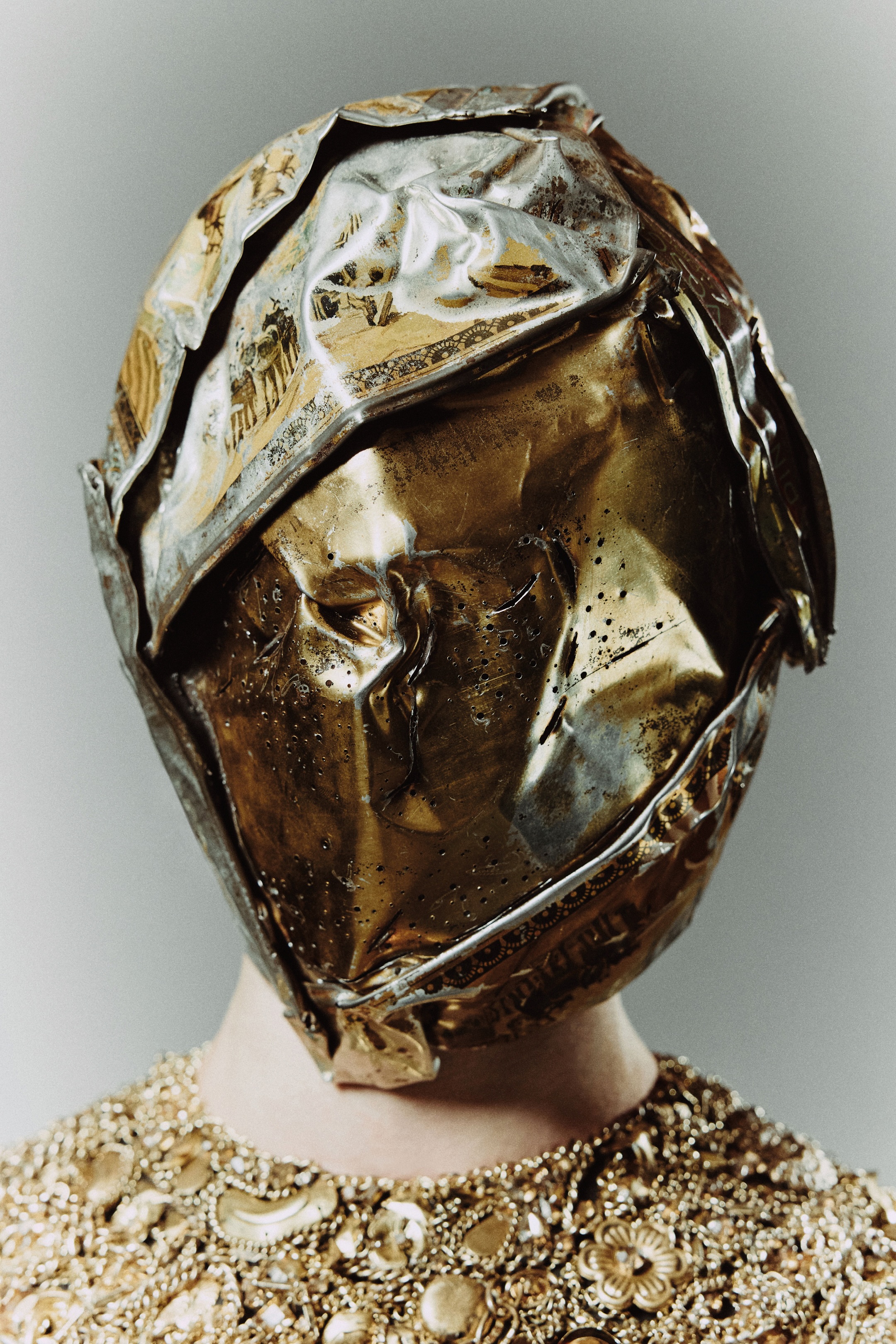


Cover:
All images © their respective rights holders.