


The room is made from cuts.
A yellow panel occupies the wall, the lower half of a circle removed so that the wall completes the curve. A black sheet holds a white circular absence inside it. A smaller black disc hangs nearby. In front of them, a red oval hangs from a thread thin enough to vanish in the light. Beneath it, the polished floor returns a darker, softer version of the same body, stretched and slightly displaced.
The reflection does not behave like a shadow. It behaves like a second object, less certain than the first.
At first, the installation appears to be made of painted forms lifted off the wall.
That reading is available immediately. In CUTOUTS, Antonio Ballester Moreno has taken flat shapes, enlarged them, fabricated them in powder-coated aluminium, and placed them where they no longer behave as paintings. Some stand against the wall. Some hang in air. Some keep the missing part of the cut as part of the work. The gallery’s framing emphasizes a movement from painting toward sculpture, and the description fits the work well. The cutouts have left the canvas. They have acquired edge, weight, placement, and a relation to the floor.
Then the titles begin to change what the shapes are. Half Sun. Moon. New Moon. Half Moon. Sun. Sun (red). Planets. Planet (green). The yellow panel was a half-sun before it was a cutout. The red oval was a sun. The black disc was not only a circle. The white absence inside the black panel was not only negative space. It was a body in another phase.
Phase is not a shape. It is a moment.
The cut installs partiality. The title converts partiality into phase. What first looked like a formal absence begins to behave as time: waning, rising, eclipsed, returning. A circle is no longer only a circle. It is one condition of a body that cannot be shown in full. The installation is no longer simply a set of painted forms made spatial. It is a system of bodies at different moments, arranged so that wall, thread, floor, and corner become positions inside that cycle. The medium story does not disappear. It stops being sufficient.
The flat forms have become sculptural, but not by overcoming flatness. Flatness is what allows the phase to be read. A sphere can occupy space; a disc can show eclipse with exactness. It can be cut, halved, blocked, returned by reflection. The red oval is a panel turned on edge. The yellow half-sun is still a plane. The black cutout still reads through the wall behind it. Their force comes from placement, not volume. A suspended form produces a second body on the floor. A missing semicircle completes itself through architecture.
Calder is available for suspension, balance, hanging form, and spatial activation. He helps explain how a shape detaches from the wall and becomes active in air. But once the titles begin to operate, suns, moons, planets, half-forms, and new moons draw another history into the space.
The titles carry a Spanish pressure as well. Ballester Moreno’s own institutional history has already placed his vocabulary of moons, suns, rain, and stars near Klee, Miró, and Albers; his 2017 exhibition at La Casa Encendida invoked Alberto Sánchez and the Escuela de Vallecas. In Spanish modernism, the celestial title could carry more than formal innocence. In the 1937 Spanish Pavilion in Paris, Alberto Sánchez’s tall sculpture The Spanish People Have a Path That Leads to a Star stood in the same historical field as Miró’s The Reaper, Calder’s Mercury Fountain, Picasso’s Guernica, and González’s Montserrat. Star, peasant, fountain, wound, monument: elementary forms carried political and material pressure.
At Pedro Cera, that history arrives at the level of vocabulary rather than reconstruction. No pavilion is being restaged; no political allegory is declared. But the celestial terms do not arrive from nowhere. They belong to a longer Spanish history in which suns, moons, stars, and elementary forms were asked to do more than decorate abstraction. They carried politics and time through simple shape.
Another pressure passes through Ferrant. In 2019–20, Ballester Moreno worked with Ángel Ferrant’s archive at the Museo Patio Herreriano, where the connection was less cosmological than structural: simple form, sculpture, and teaching brought into contact. Circles, half-circles, combinations, fragments: these were not minor because they were elementary. They were elementary because they could become structural units.
The red oval is still hanging. The yellow half-sun still holds its cut. The black moon still contains its white absence. The grey moon, longer and narrower, leans against another wall like a body about to enter. The green planet hangs by itself, separated, its color softer than the others. None of these is an illustration of history. The installation moves through that history without making it its subject.
From one place, the red oval is a suspended sun. From another, its reflection is the stronger body. The viewer’s body becomes one more position in the system. The yellow half-sun is not complete until the wall enters it. The black cutout is not legible until absence is read as phase. Each work is flat, partial, and exact, but none is fixed to a single state.
The cutout does not leave painting behind. It gives painting a way to enter space without becoming heavy. What hangs in the room, doubled by the floor, is not only shape. It is a body learning how to occupy space by remaining partial.
The sun is half. The moon is new. The planet is green.
Only through the cut can each appear as one moment of a body the room cannot show in full.
The cutout does more than move a painted form into space. It makes the form partial. In CUTOUTS, that partiality becomes phase: a sun can be half, a moon can be new, a planet can appear as color, absence, reflection, or suspended body. The works remain flat, but flatness is what lets them carry time. Each cut turns shape into one moment of something the installation cannot show in full.
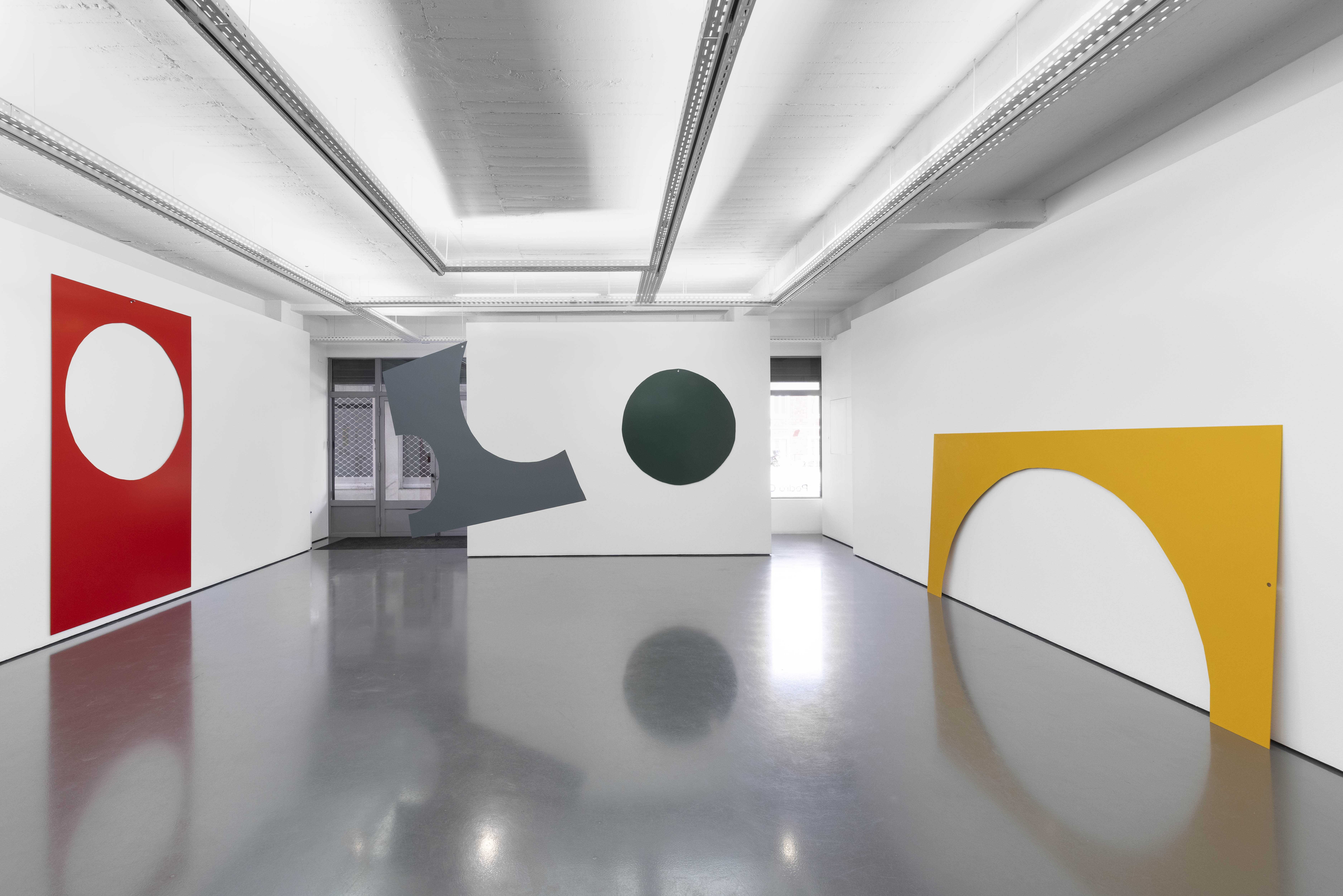

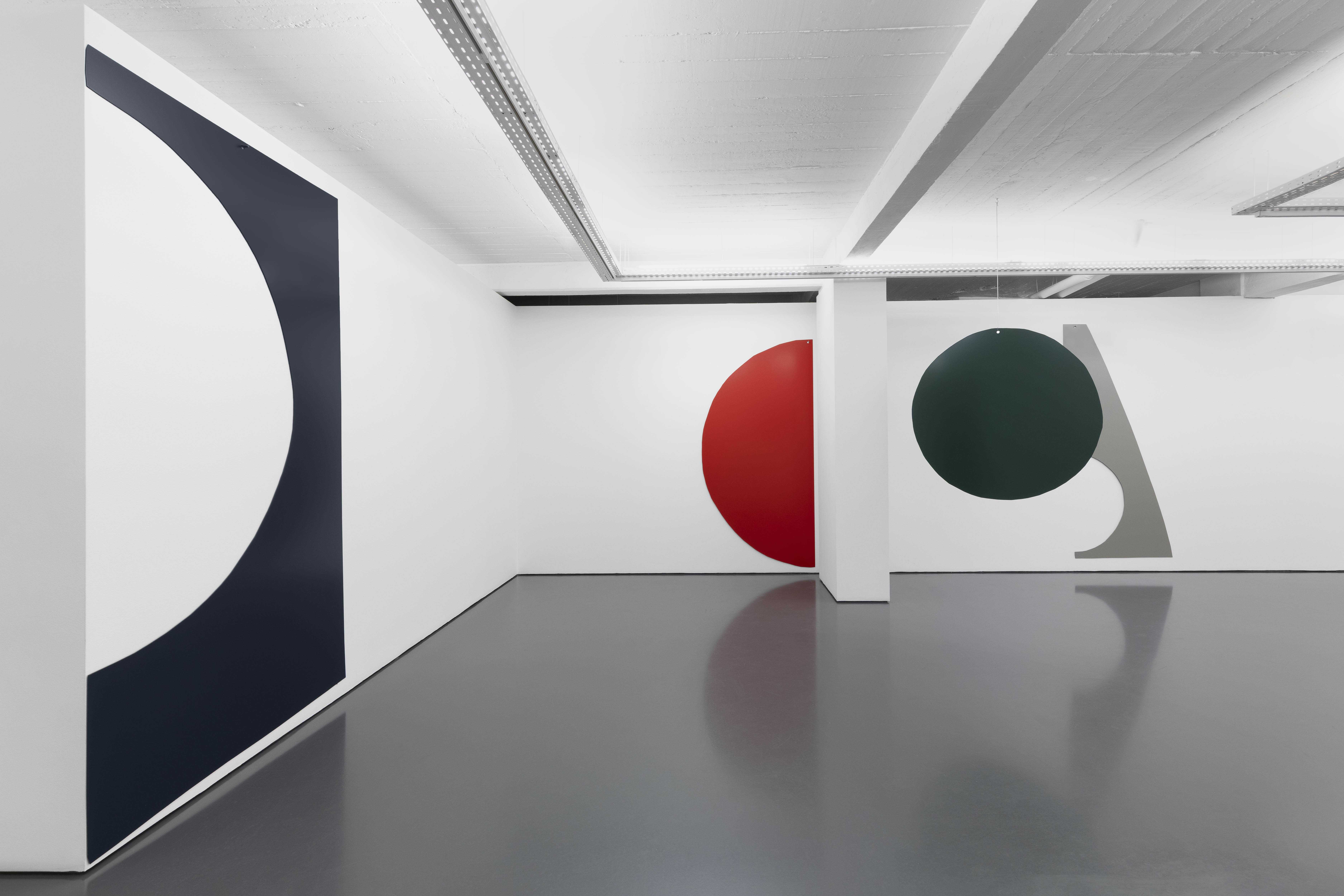
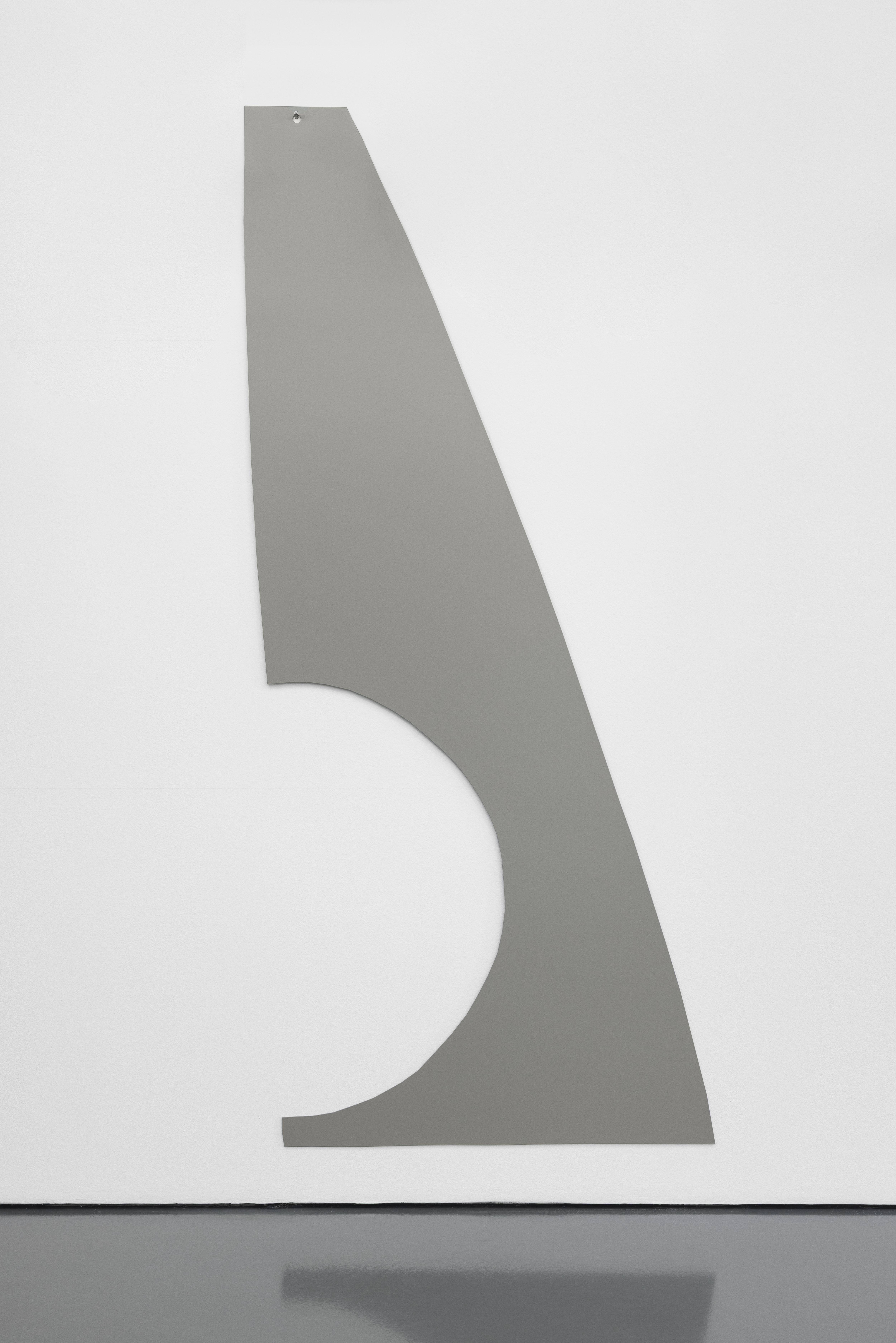
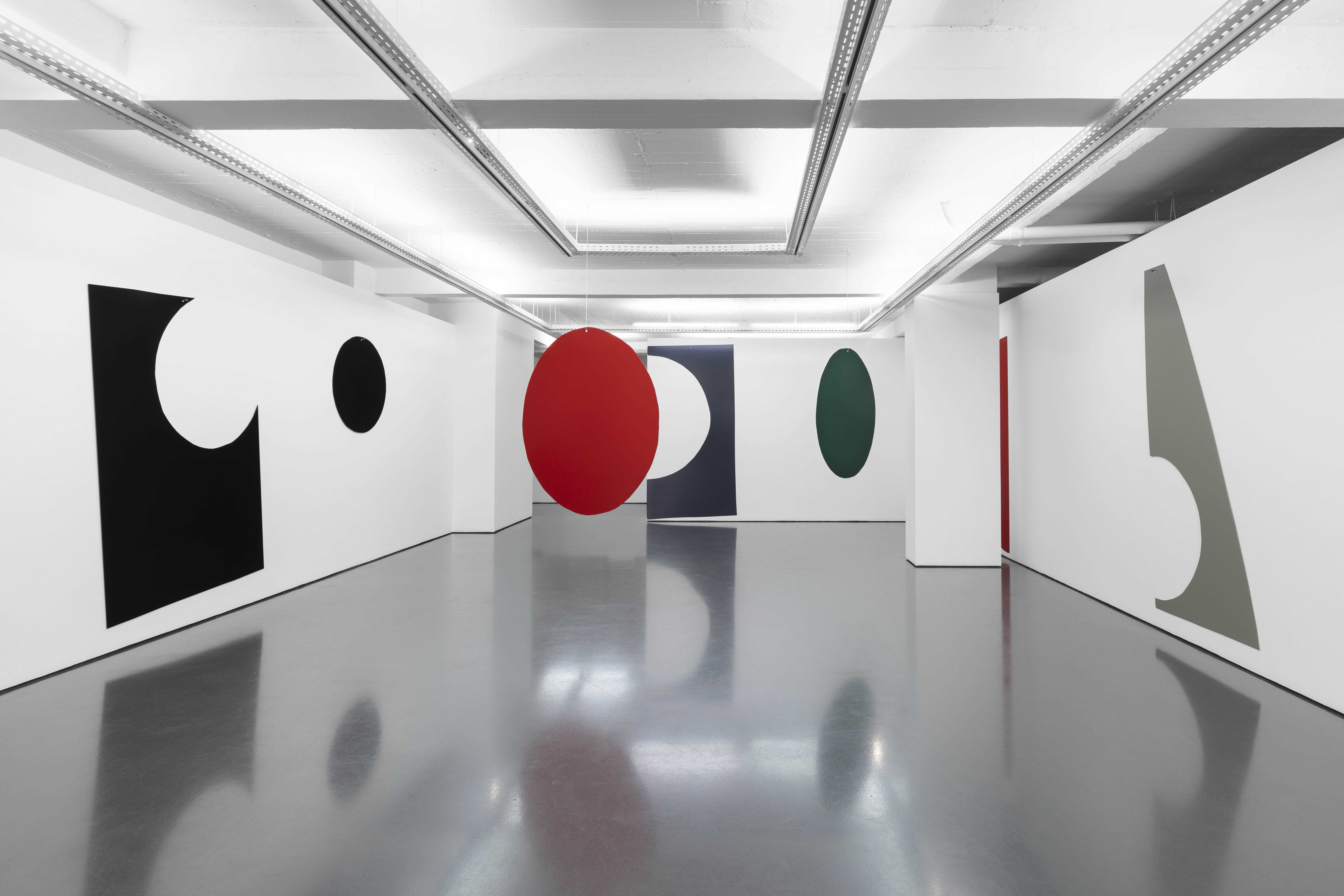

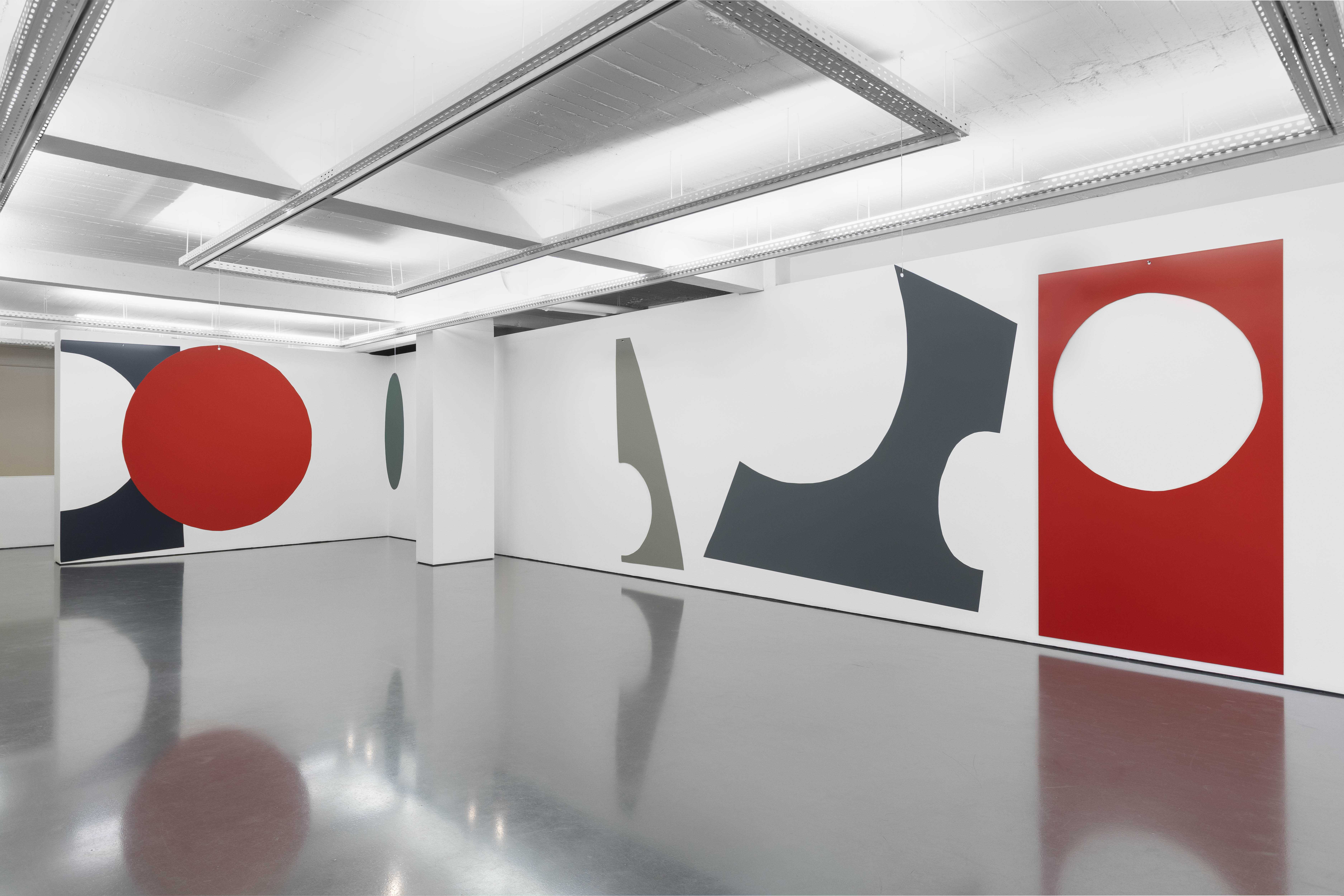


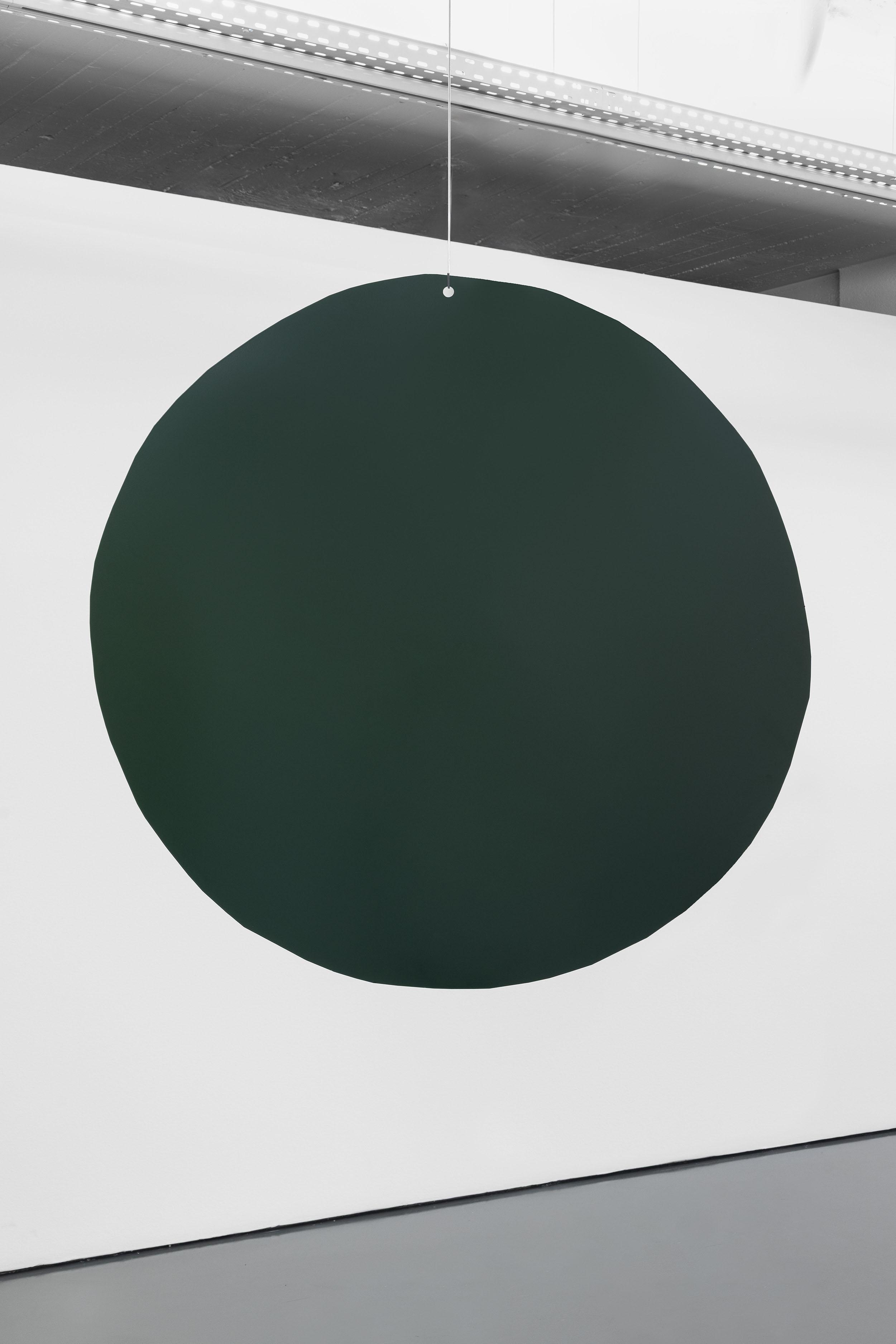
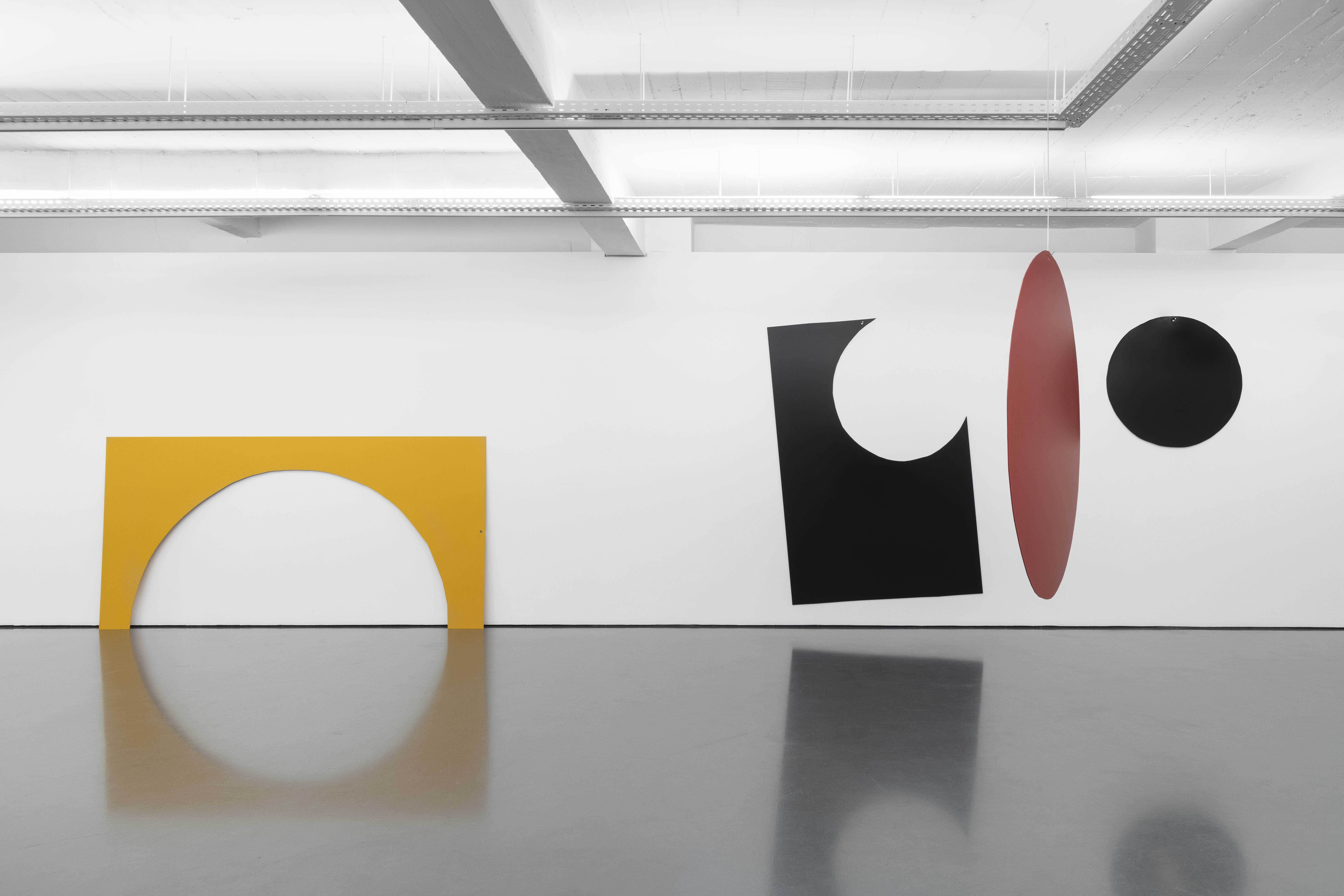

Cover: Antonio Ballester Moreno, CUTOUTS, 2026. Installation view, Pedro Cera, Lisbon. Photo: Bruno Lopes. Courtesy the artist and Pedro Cera.
All images © their respective rights holders.
Image rights & attribution →