


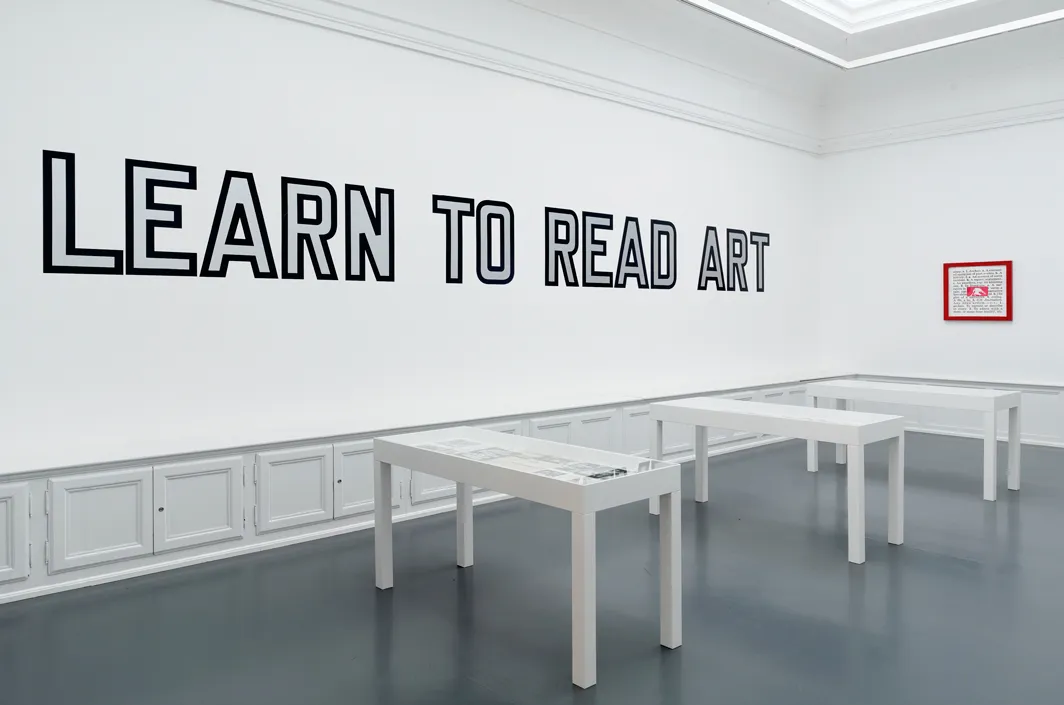


At first, the exhibition seems to divide itself cleanly. Rose Nolan gives the room red and white, scale, wall, address. Gordon Walters sits more quietly nearby: small grey and white fields held in exact relation. The expectation forms quickly. Nolan will be the artist of language. Walters will be the artist of abstraction.
The expectation fails.
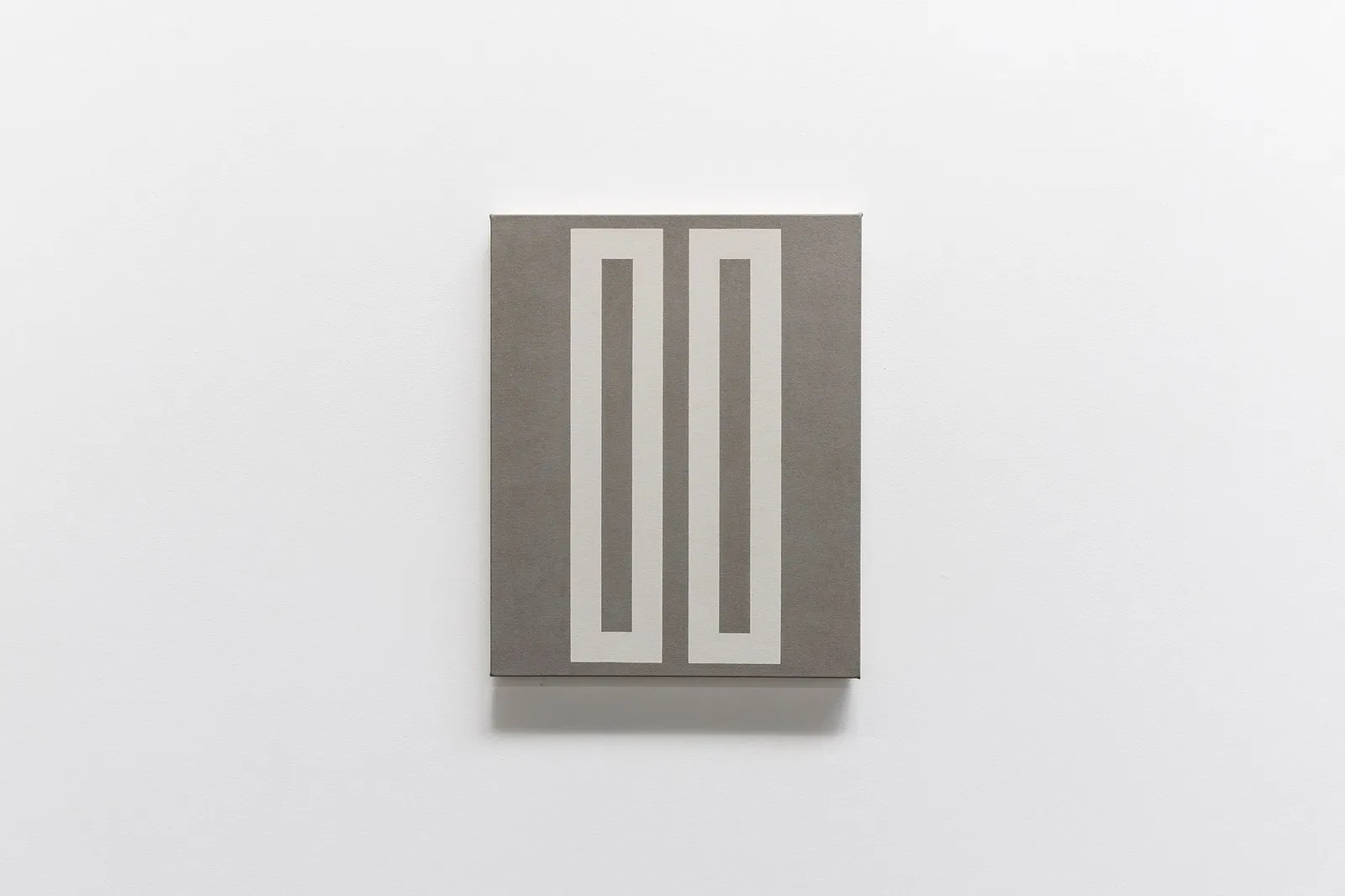
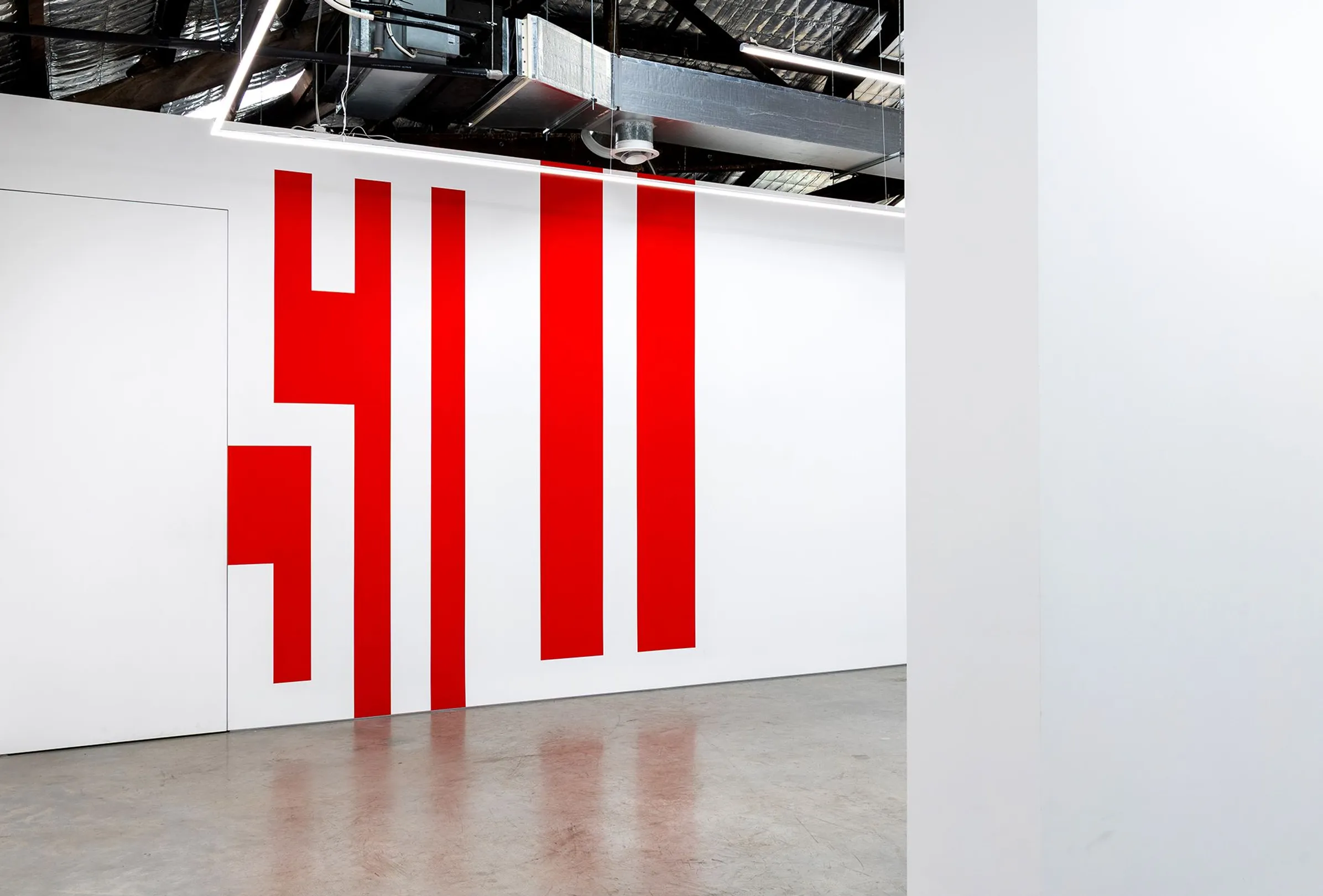
The large red word is not the work that reads most easily. The small Walters begins to feel closer to reading than the word beside it. Nolan’s letters loosen into architecture. Walters’ bars and intervals begin to behave like signs. What appeared as contrast becomes an inversion: Nolan moves word toward form; Walters moves form toward word.
Walters once described his work as an investigation of positive and negative relationships within a “deliberately limited range of forms.” Nolan, working almost sixty years later, describes red and white as a “deliberately limited colour palette,” a productive constraint. The repetition matters because it does not come from influence. Walters arrives through geometric abstraction, Māori sources, and graphic discipline. Nolan arrives through Constructivism, Arte Povera, Store 5, and found language treated as material. These are not compatible traditions meeting naturally. They are different histories arriving at the same method.
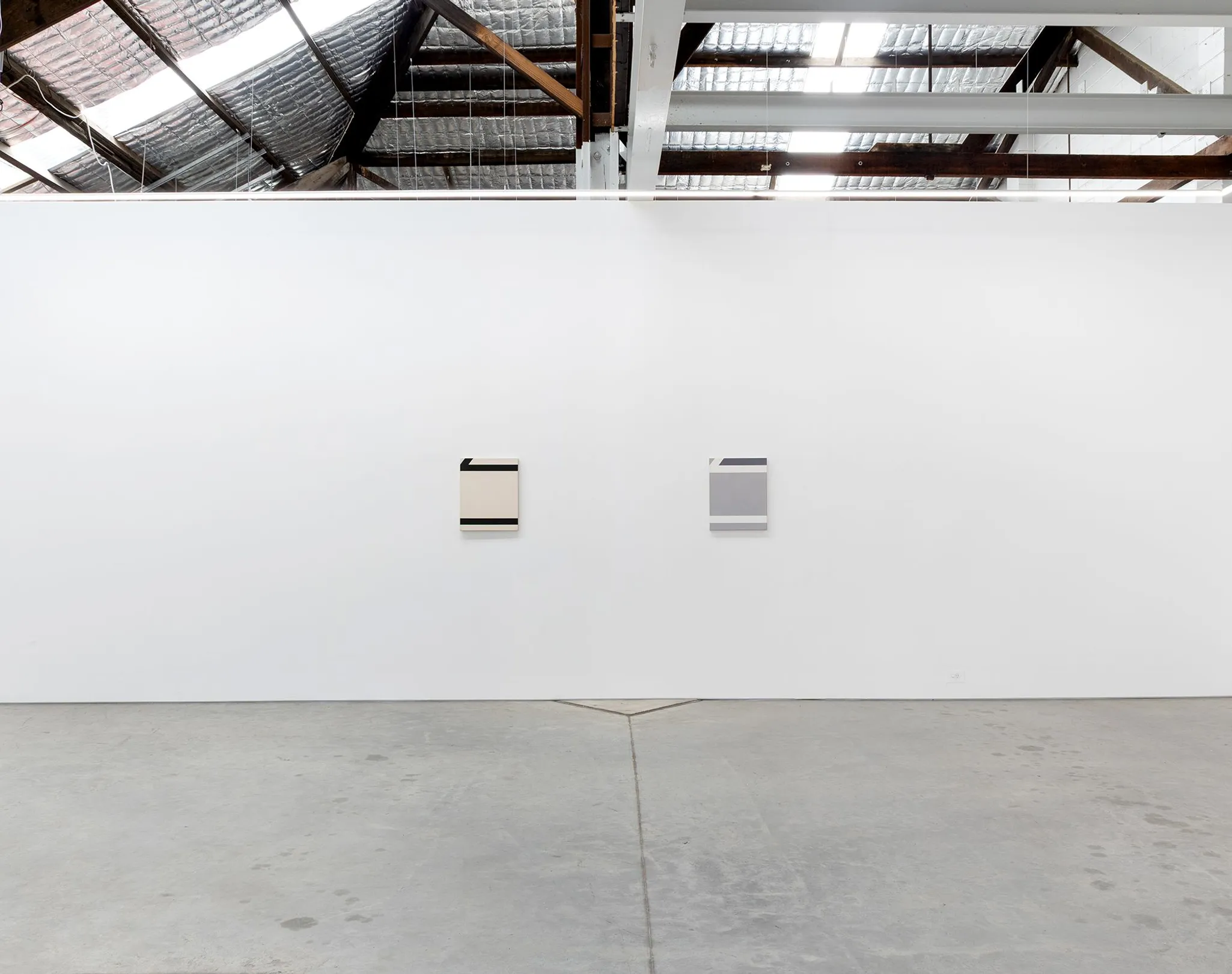
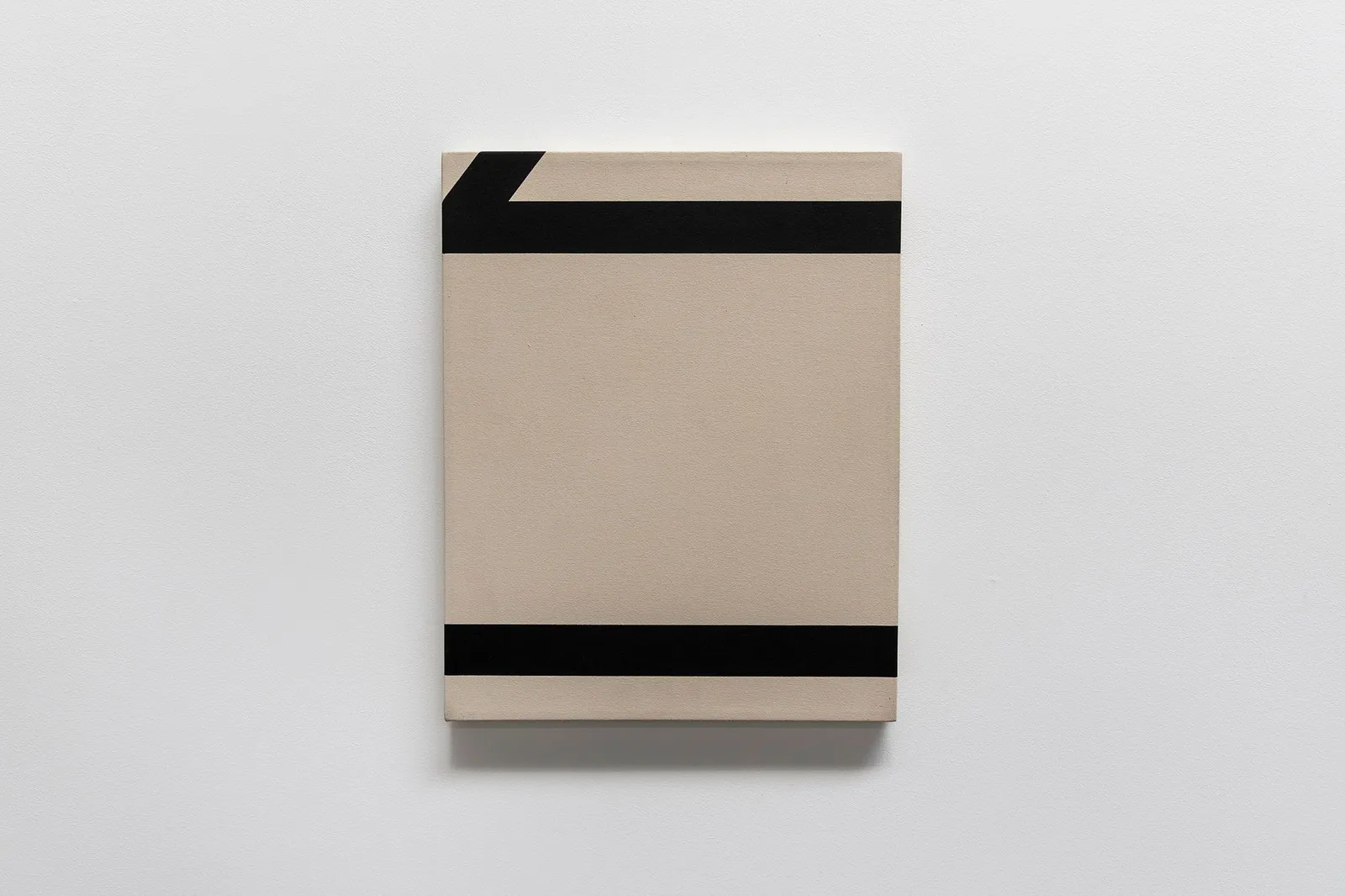
Walters’ late works do not spell anything. Their pressure is earlier than spelling. In the 1994 collages, bars, blocks, and intervals are held inside small fields of green, grey, black, and white. First the vocabulary is narrowed. Then it is compressed. Then it is kept just short of semantic resolution. The forms do not become letters, but the eye starts to prepare for reading. Nothing is decoded. Something is waiting to be decoded.
That is the precision of these works. They do not need to become symbols to borrow the posture of sign. Positive and negative relation, held with enough restraint, produces a field that feels almost readable before meaning arrives.
Nolan reaches the same point from the other side. In EVEN, the word is present, but scale interrupts its ordinary function. Step back, and the word returns. Step forward, and the letters become red architecture cut by white space. Reading becomes dependent on distance, movement, and the body’s position before the wall. SO behaves differently. The word is shorter, almost emptied by its own simplicity, readable at once and still unstable as text. In the vertical works, language is compressed into stacked red-white structure: column, stripe, interval, object.
Nolan does not enlarge language to make it clearer. Nolan enlarges language until reading becomes uncertain. The word survives, but it has been pulled back toward form.
The exhibition does not announce this convergence. It lets the convergence form through placement. A small Walters work is held within the larger field Nolan’s paintings establish, quiet enough to register almost as an internal term. In one glance, the eye catches Nolan’s red-white architecture and Walters’ grey-white interval, and neither fully resolves into category. The word has not fully become word. The form has not fully become sign. What remains between them is a perceptual residue: after seeing, before reading.
The selection of Walters is exact, and its exactness matters. The koru works are absent. That absence is not simply the omission of a famous body of work. It is the condition that allows this convergence to register. The debate around Walters’ use of Māori form asks whether the koru could be abstracted into modernist structure without becoming appropriation. A show that offers Walters through late elemental works, without those paintings, clarifies one part of the practice by holding the contested part at a distance.
This is not a false Walters. But it is a selected Walters. The Walters who meets Nolan here is the Walters of positive and negative operation, vertical bar, compressed interval, late collage, and form approaching sign without crossing into symbol. That arc has force. It also has a cost. The exhibition’s structural clarity depends on the Walters who can meet Nolan at the level of method rather than motif.
That pressure does not undo the pairing. It keeps the pairing from becoming merely elegant. Nolan does not answer Walters. Walters does not prepare Nolan. What appears between them is not shared lineage, not style, not the institutional comfort of formal rhyme. It is the discipline of limitation — separately reached, independently held, and pursued until abstraction and language begin to touch the same problem.
This is why “visual language” is too soft for the show. It makes the convergence sound metaphorical. What the exhibition demonstrates is more exact: under constraint, form can approach reading and language can return to structure. Walters brings form to the edge before spelling. Nolan brings language back to the edge before reading.
The show is not a conversation. It is the moment two incompatible histories reduce themselves to the same condition.
Rose Nolan and Gordon Walters meet at the edge where form and language have not yet separated. Walters’ late works hold bars, intervals, and positive / negative relations until they begin to behave like signs before meaning arrives. Nolan’s enlarged words move in the opposite direction, pulling language back into wall, column, stripe, and physical address. The pairing is not influence or dialogue. It is a convergence produced through limitation — and made possible by a selected Walters, with the koru works held outside the room.
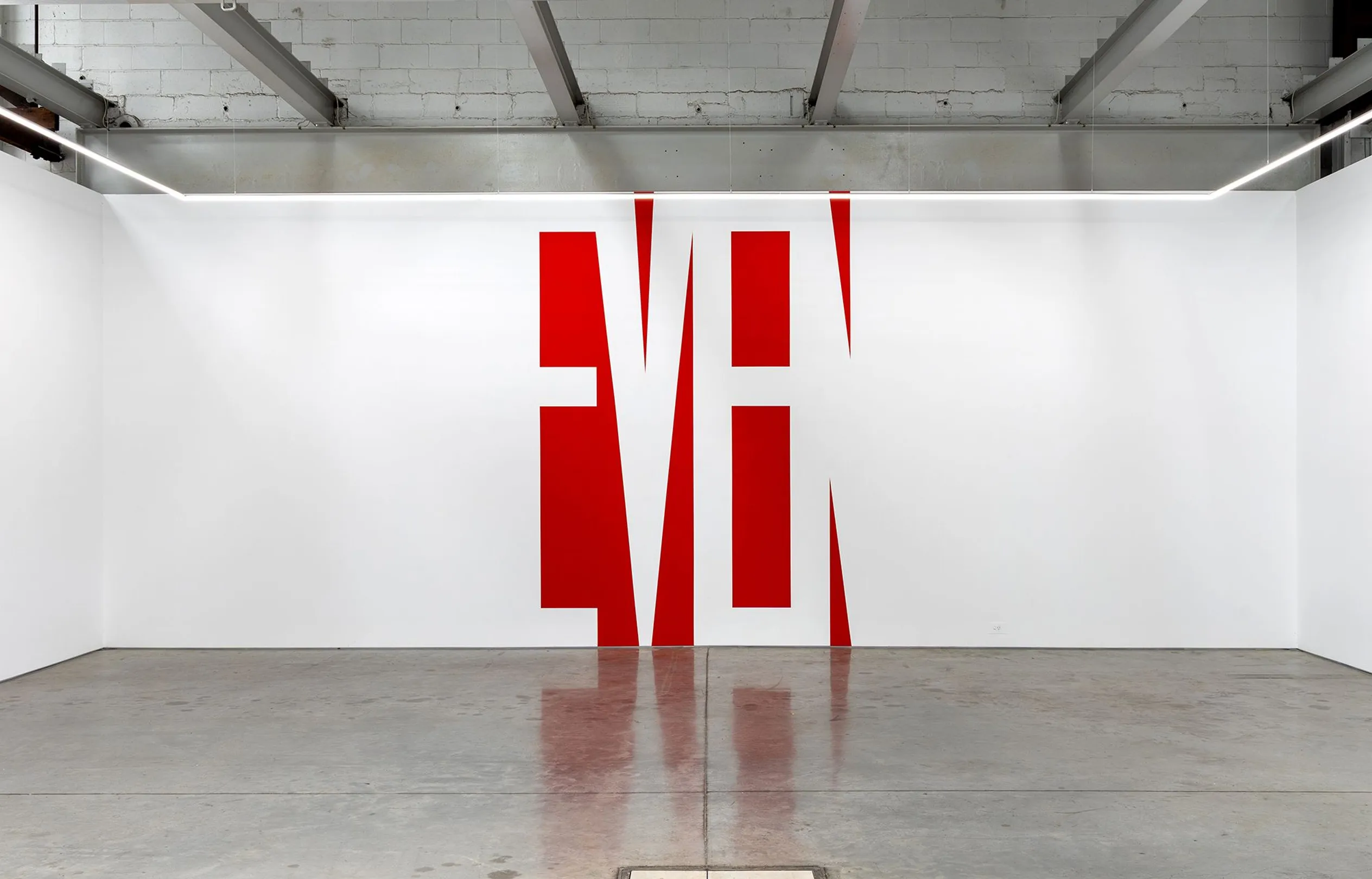
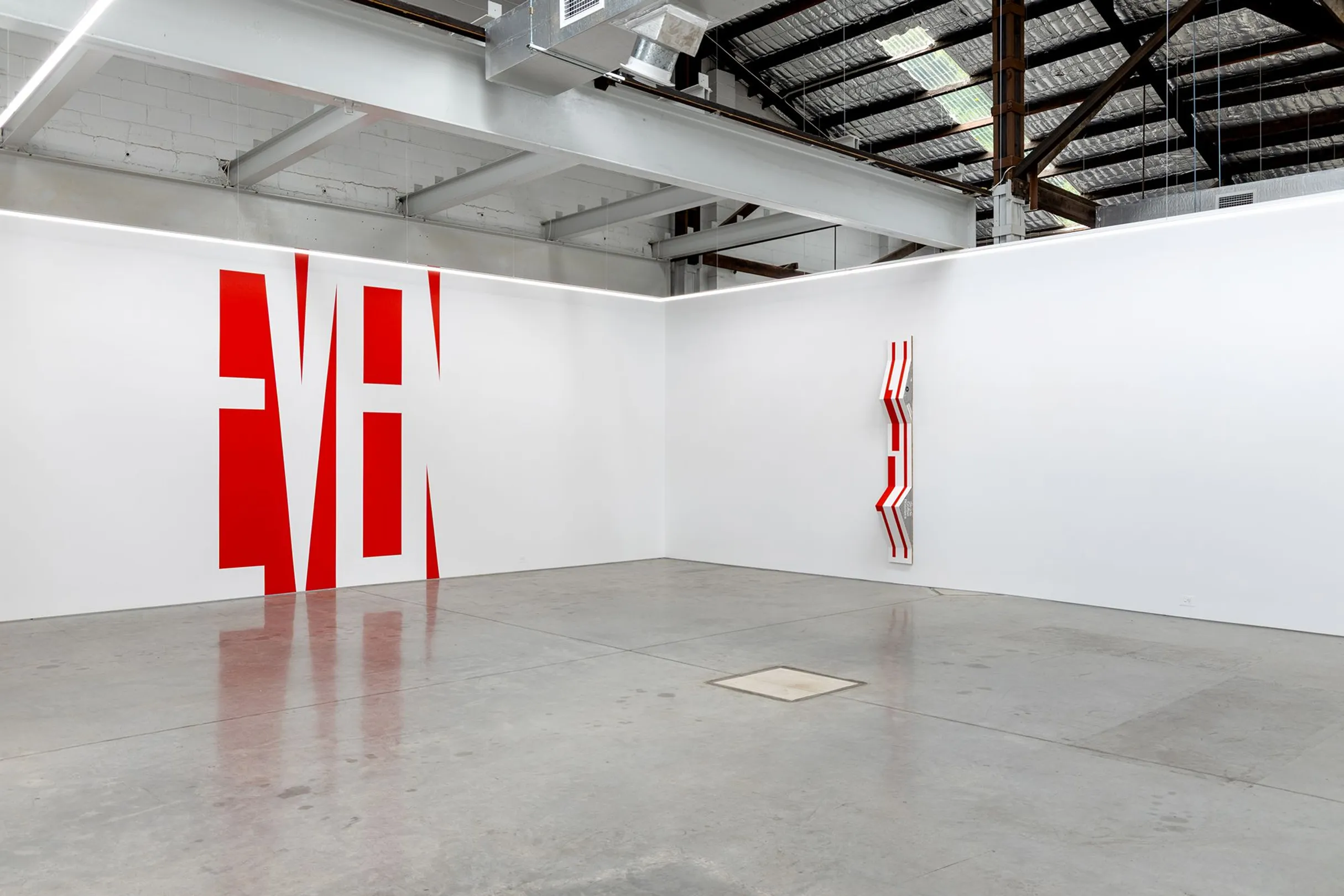
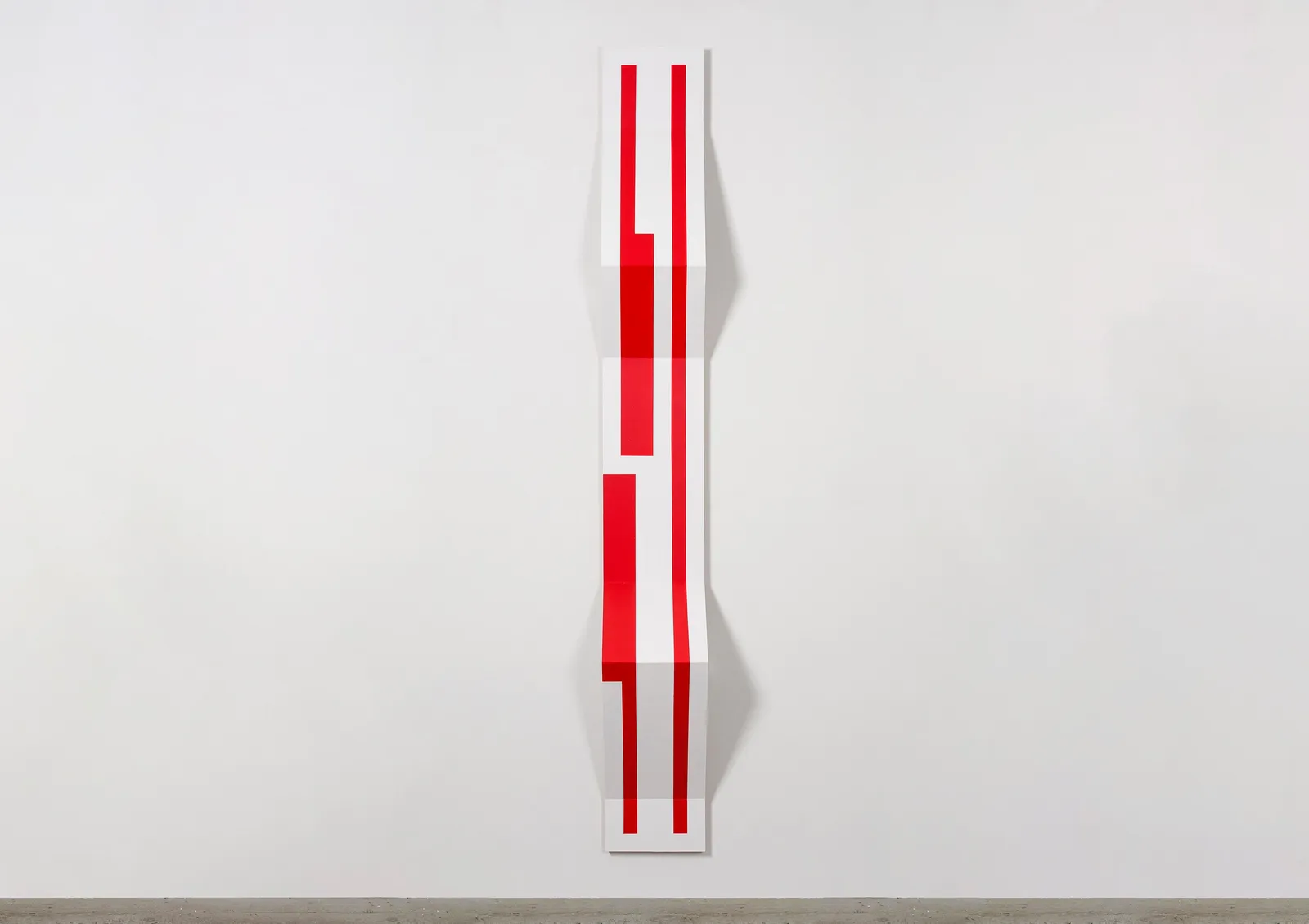
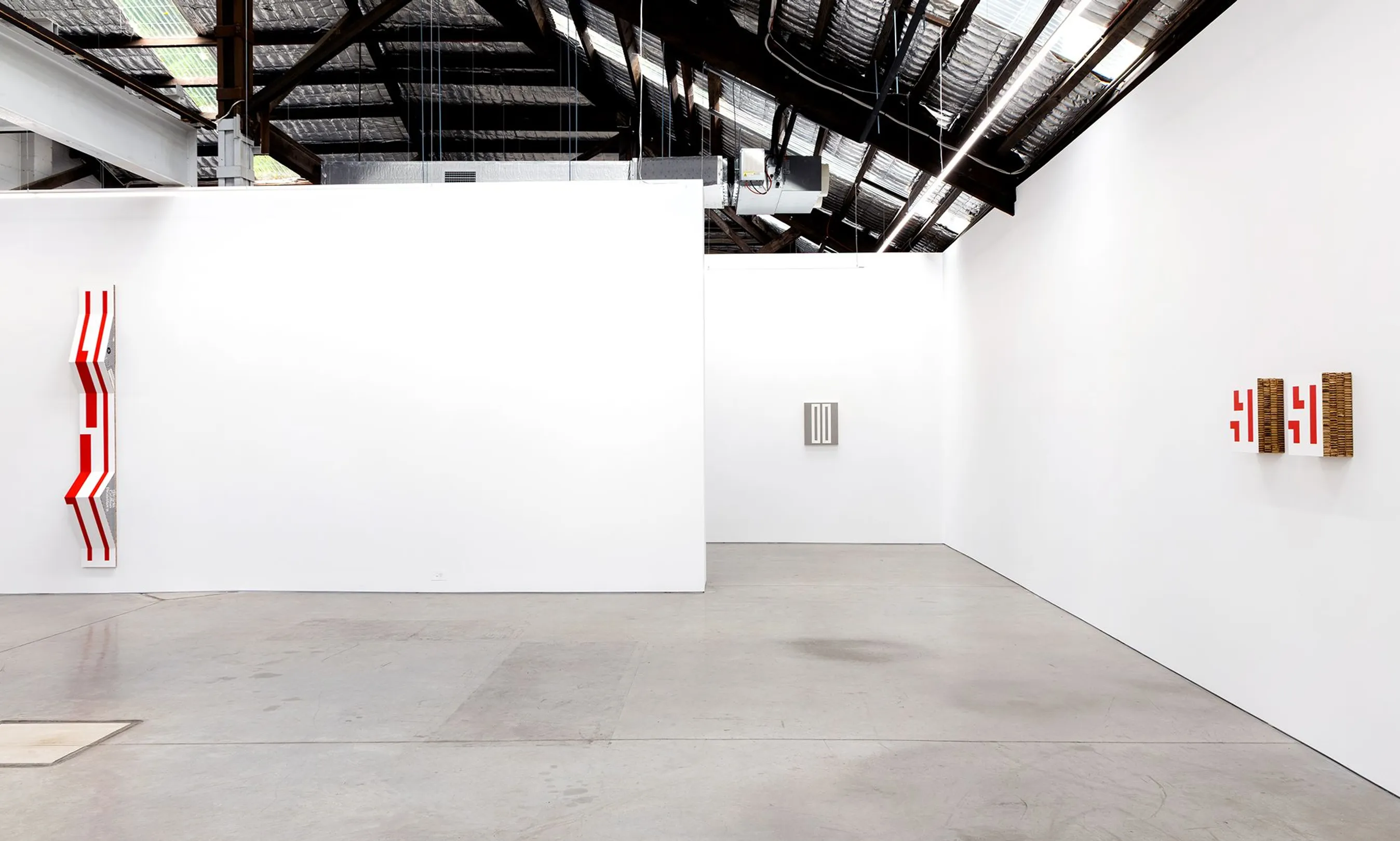
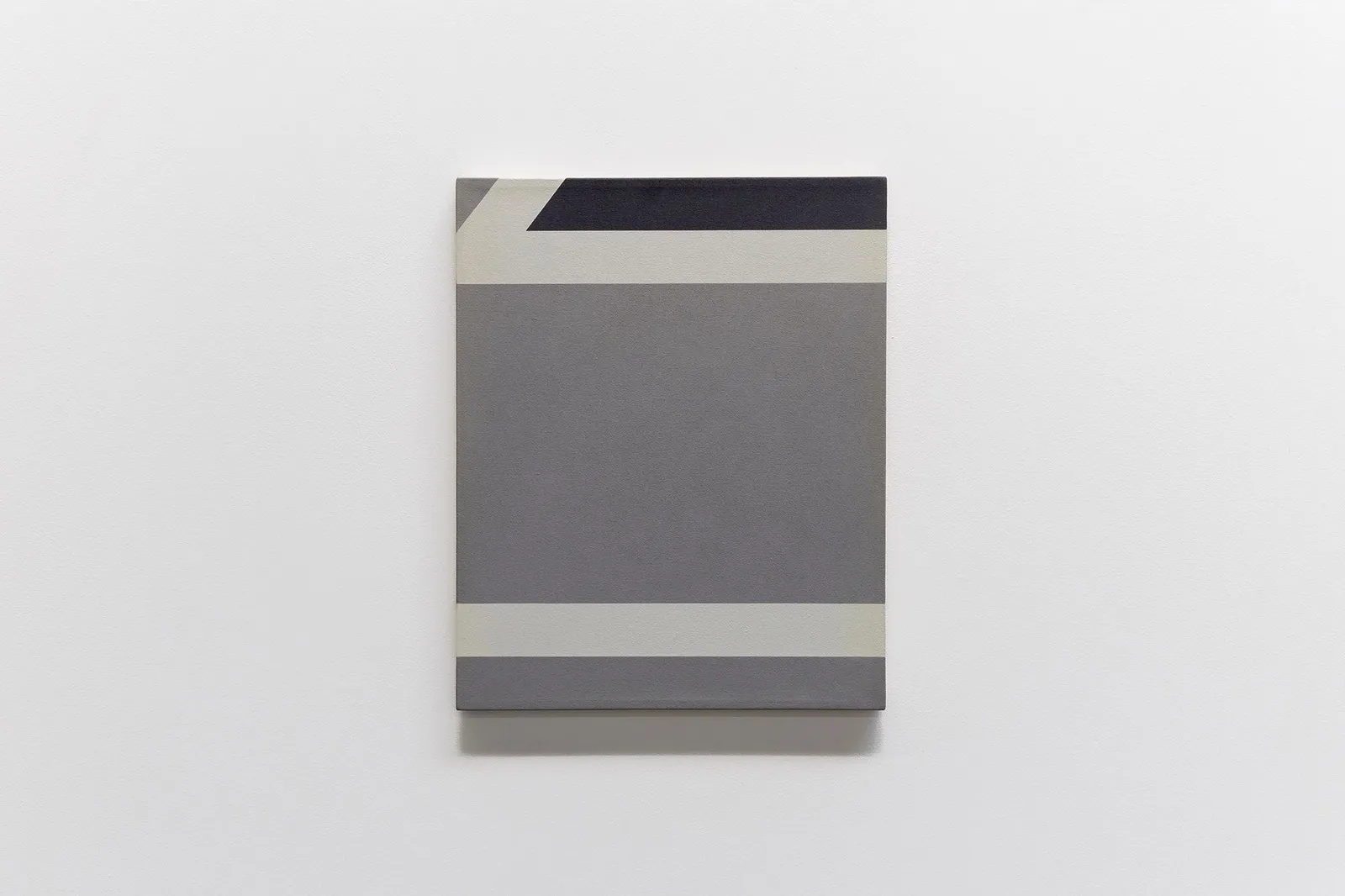
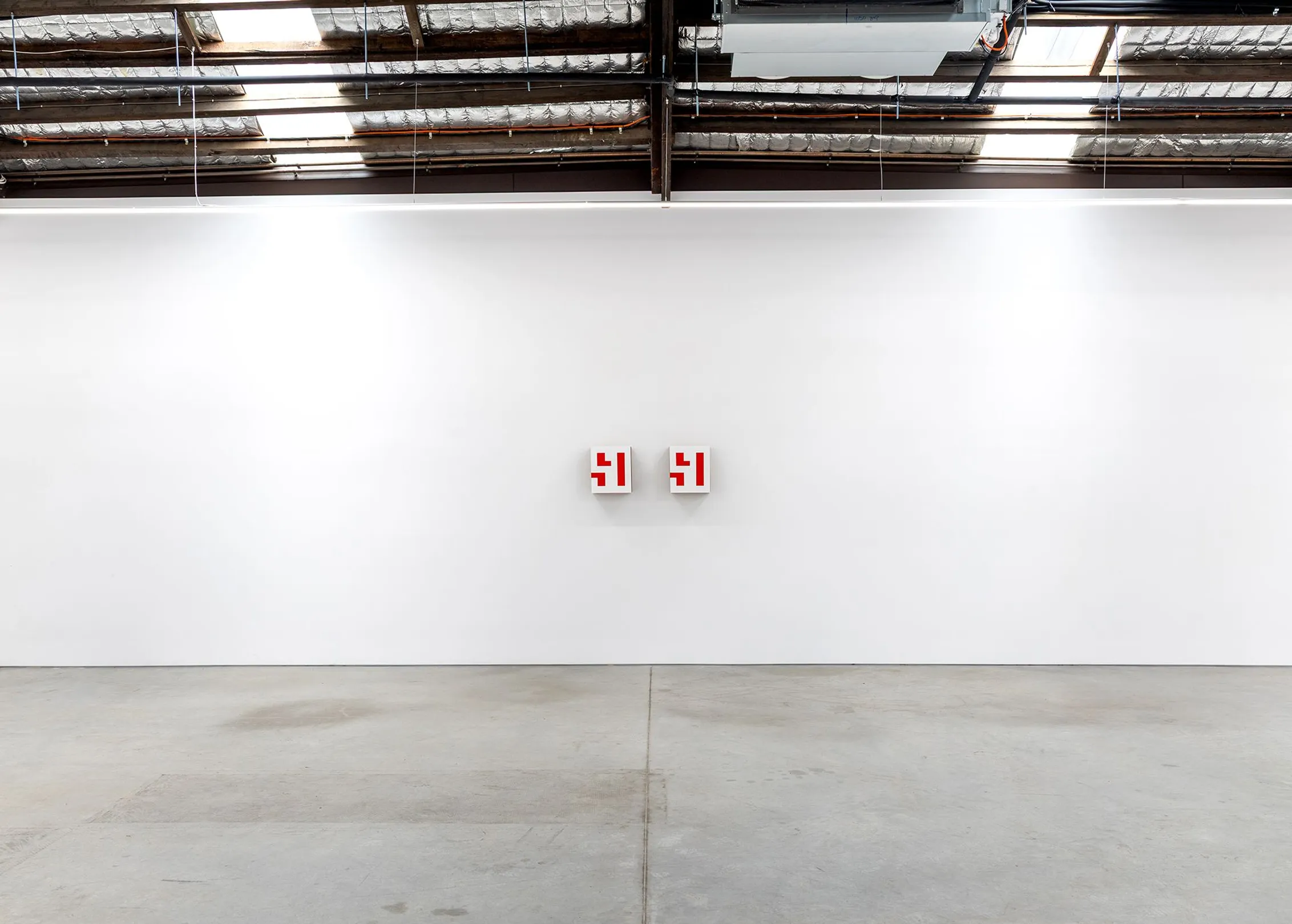
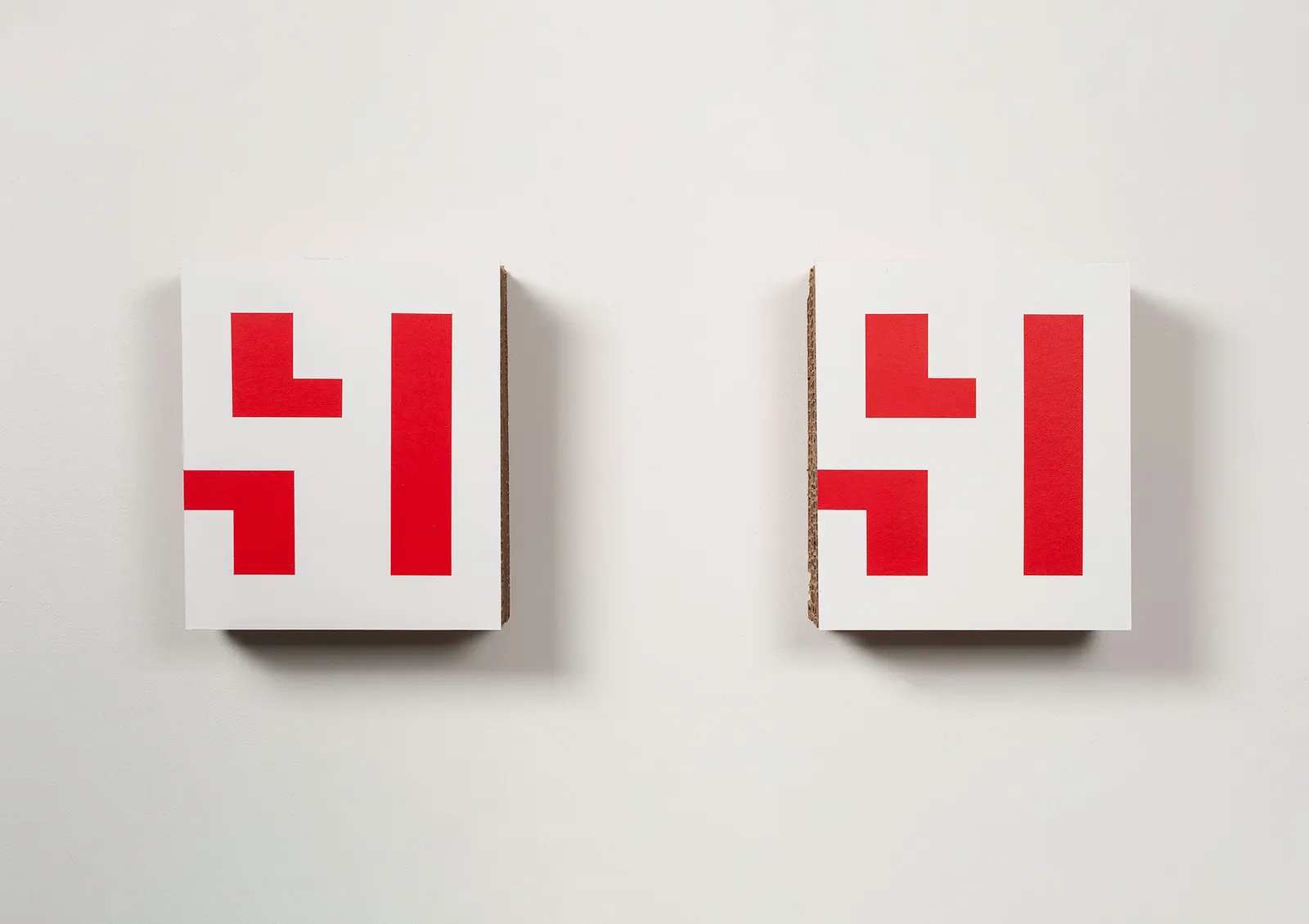
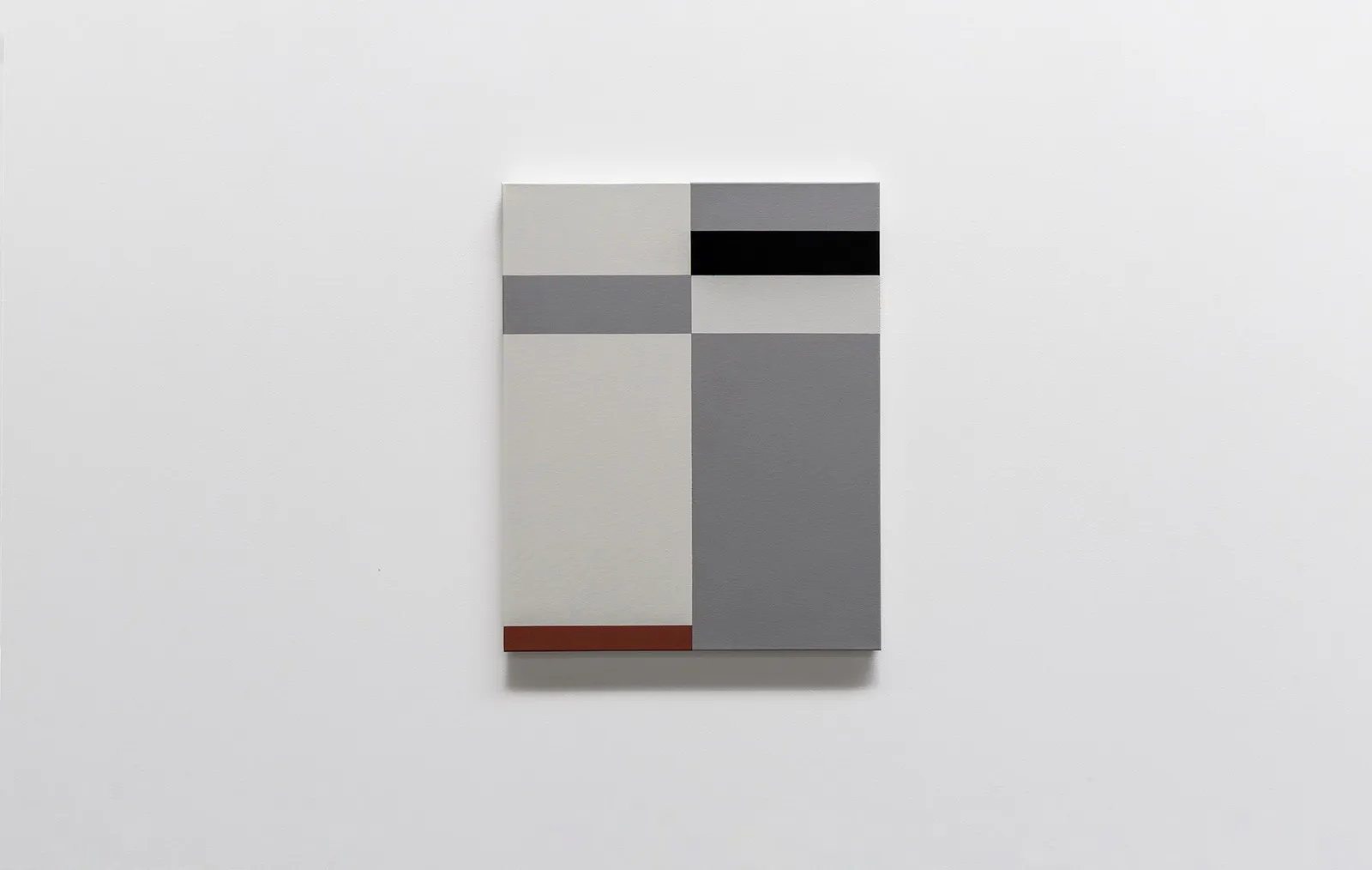
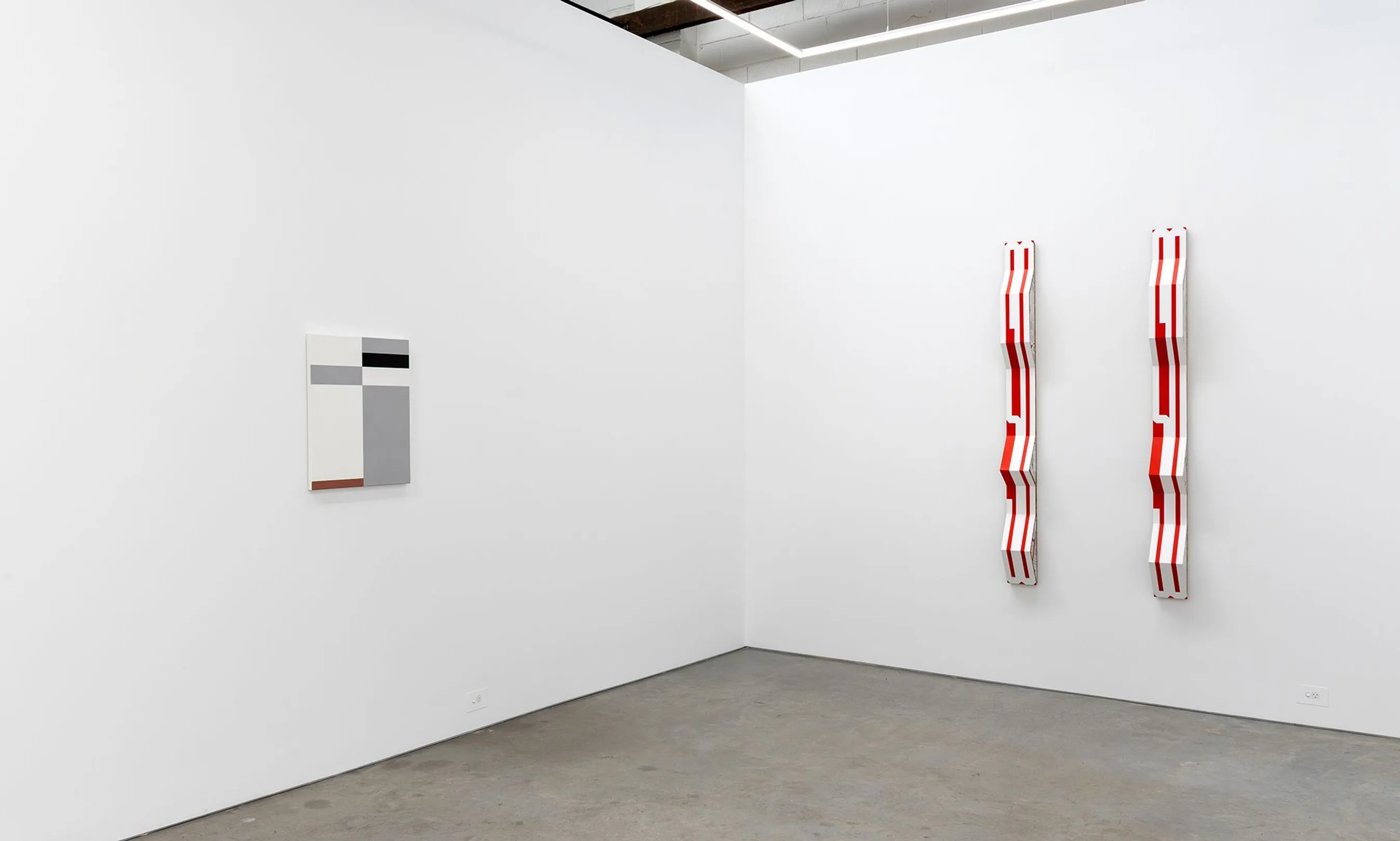
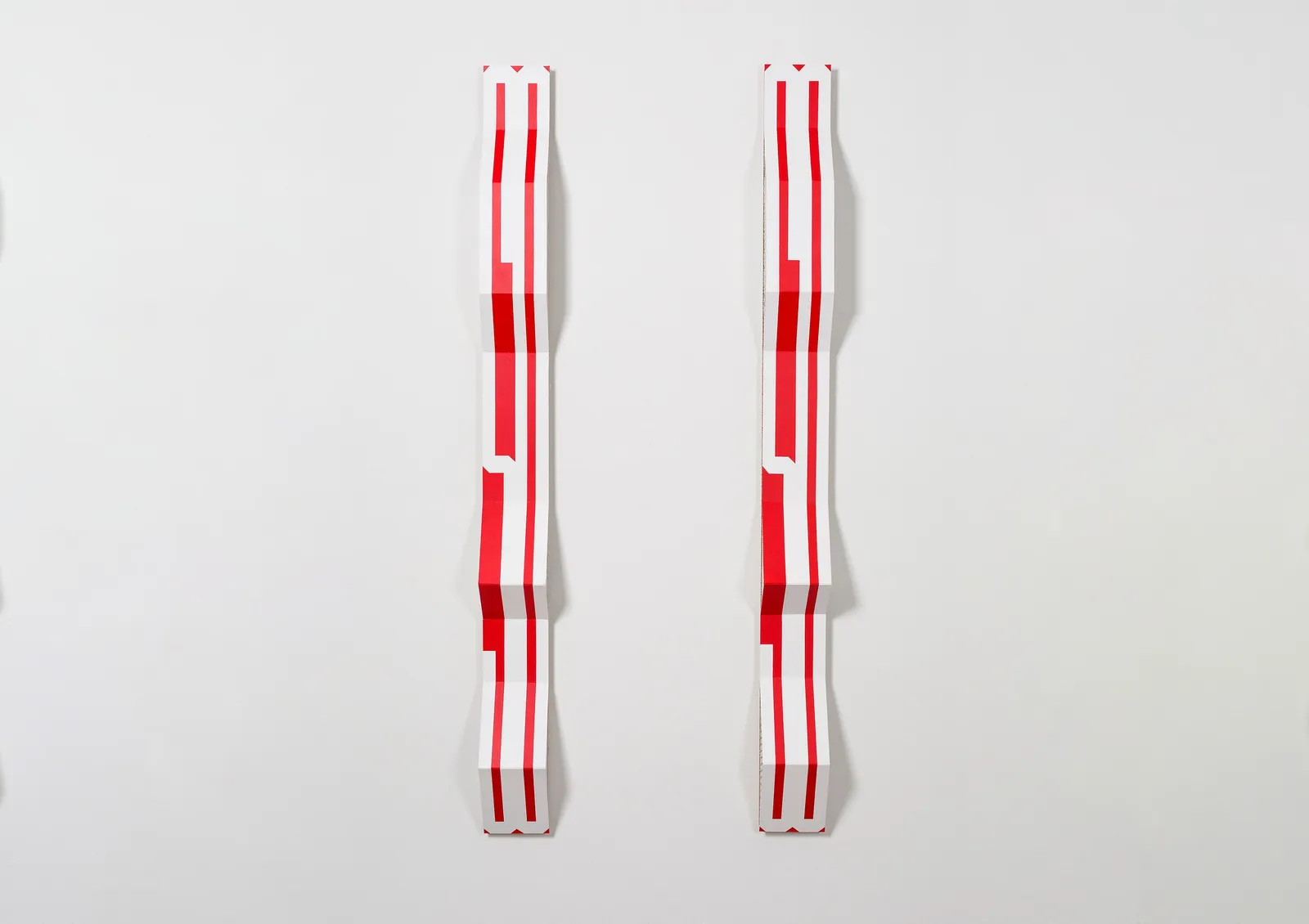
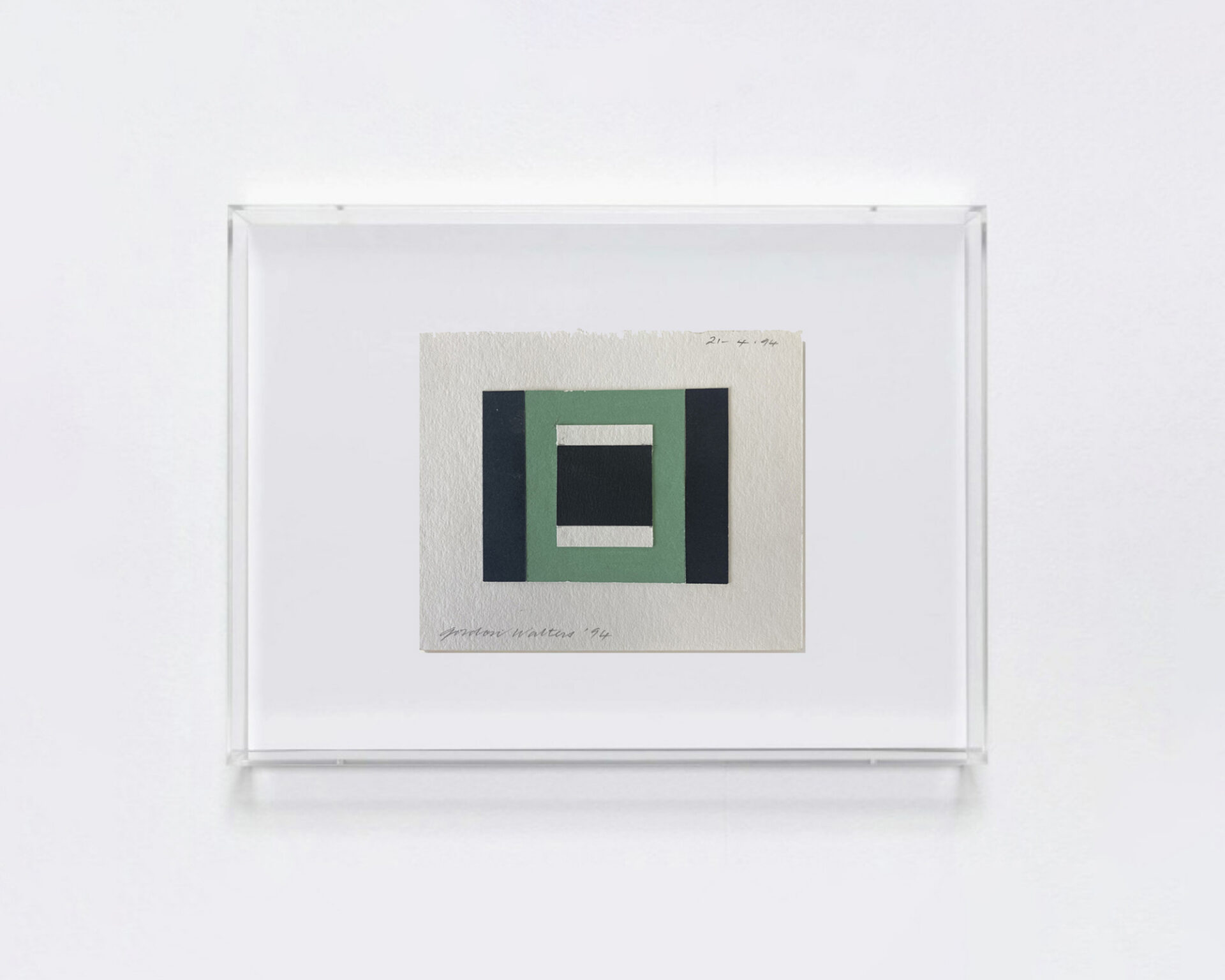
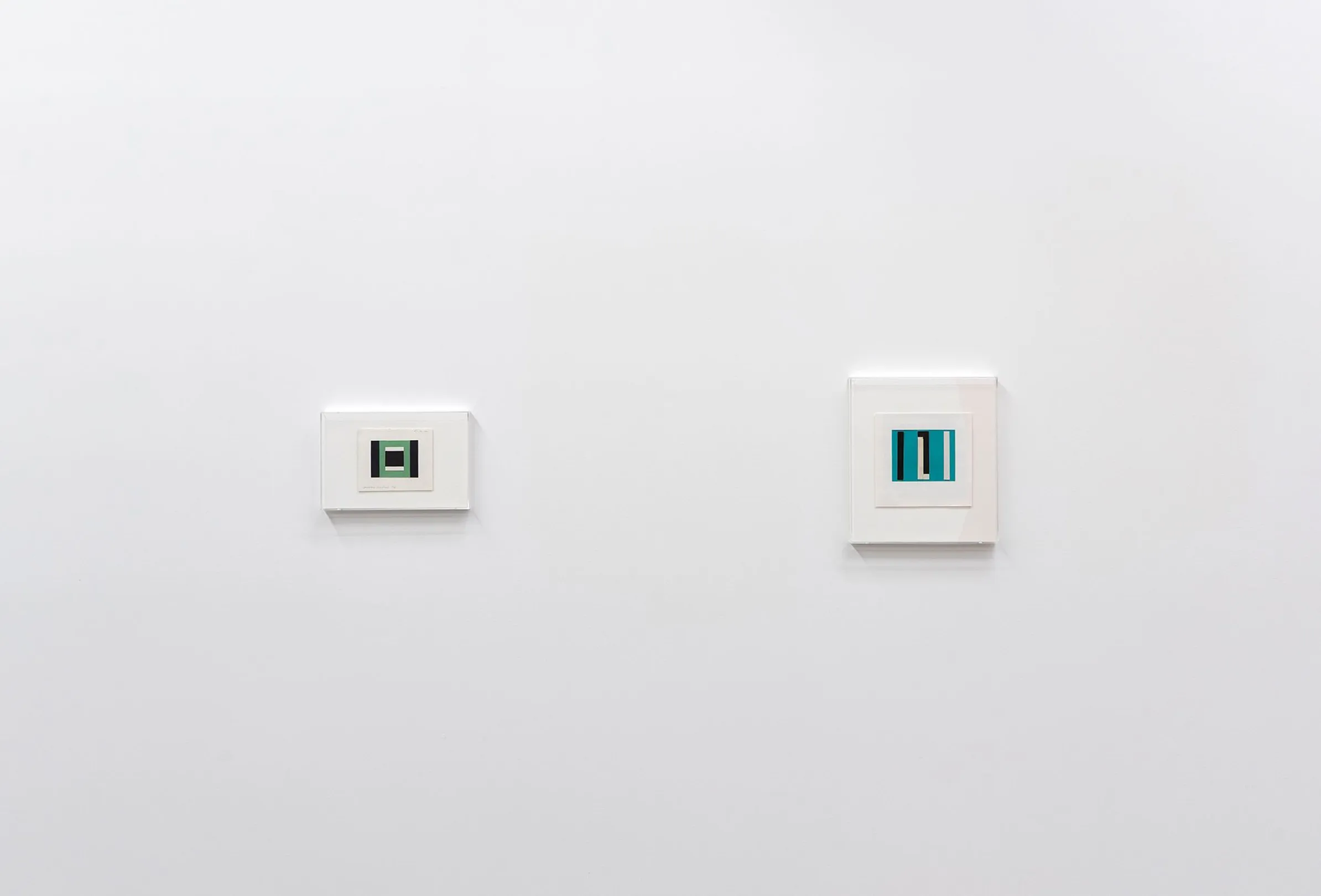


Cover: Installation view, Rose Nolan and Gordon Walters, 1301SW, Sydney, 2 May–30 May 2026. Courtesy 1301SW, Sydney.
All images © their respective rights holders.
Image rights & attribution →