



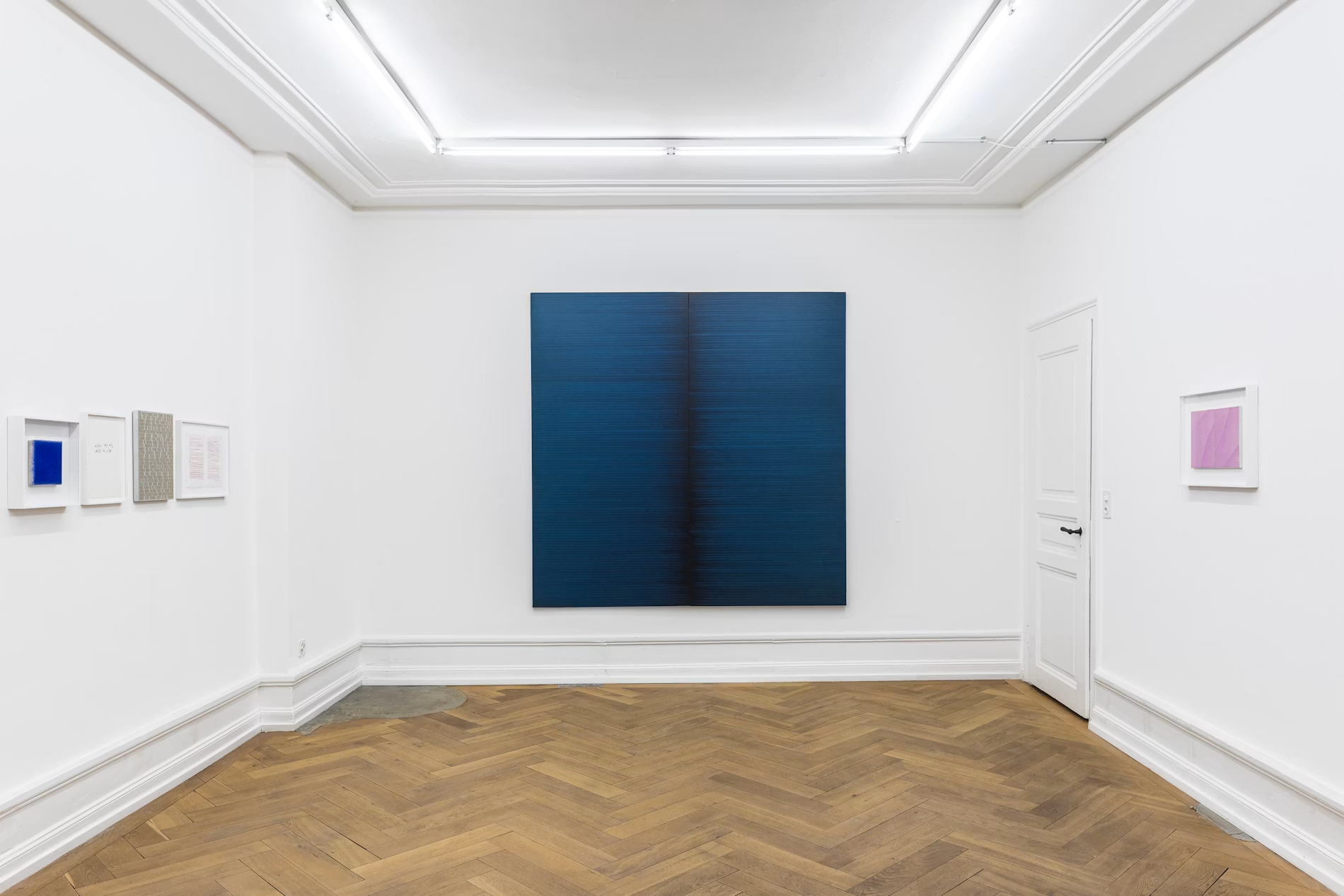
A row of small framed works runs the length of one white wall, held to a single eye-line, evenly spaced, so that different formats are made to align: a grey block set like a paragraph, a ruled grid, a maroon double page, a violet sheet scattered with looping strokes, a horizontal blue band, a saturated blue square, a near-empty sheet carrying one or two faint marks. The frames differ in size; the eye-line does not. Held to that line, at that interval, the wall is arranged to be read before any of it is legible. The room proposes a sentence, and the eye starts along it on the strength of spacing and order alone.
That arrangement matters because Being Here is not built as a retrospective sequence. It does not lead the viewer through Blank’s work as chronology, biography, illness, recovery, or late style. It holds different moments of the practice on one eye-line and lets them behave as a grammar. Blank once described writing as her way of being here: scrivere è il mio modo di esserci. The posthumous condition sharpens that sentence rather than sitting outside it. The work is fully present, arranged with care, held by gallery and estate, but the author can no longer answer for it. Care has become decision. Presence and availability have separated.
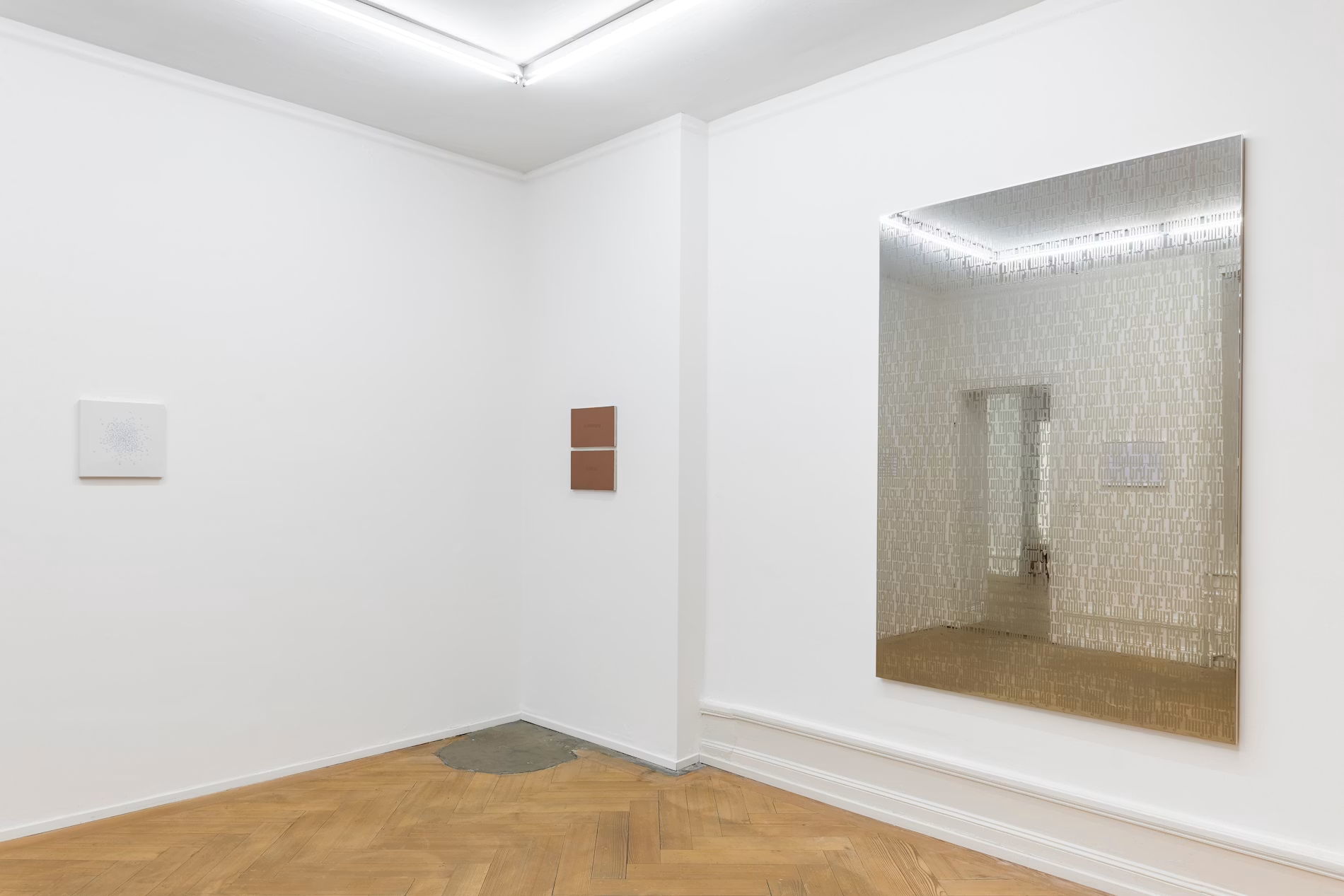
The pressure sharpens at the works that come nearest to legibility. The terracotta-colored Global Writings works are among the sparest things here: a matte earth-colored field, one short line of small dark signs set across the middle, the rest of the surface left open. The proportions are a caption’s, or a single line of verse: one line, centered, given the whole field. The emptiness around it is not rest but pressure. It isolates the line the way a page isolates its one important sentence, and stakes everything on the expectation that this, at last, is meant to be read.
The subtitle La lingua ritrovata promises a refound language. The surface does not issue it. The signs are near-letters, held close enough to writing to activate the reader’s expectation and far enough from ordinary reading to leave that expectation without use. What is withheld is not structure. It is access.
A page does not wait for words to begin its work. Margins, spacing, line, and spread already tell the eye that an answer has been prepared. Blank keeps those habits of reading intact and lets their promise fail from inside. The signs behave impeccably as writing and refuse the one service writing is supposed to perform. The mark lacks nothing: density, cadence, justification, the weight of deposited ink are all present. The page has done everything required of it except become available.
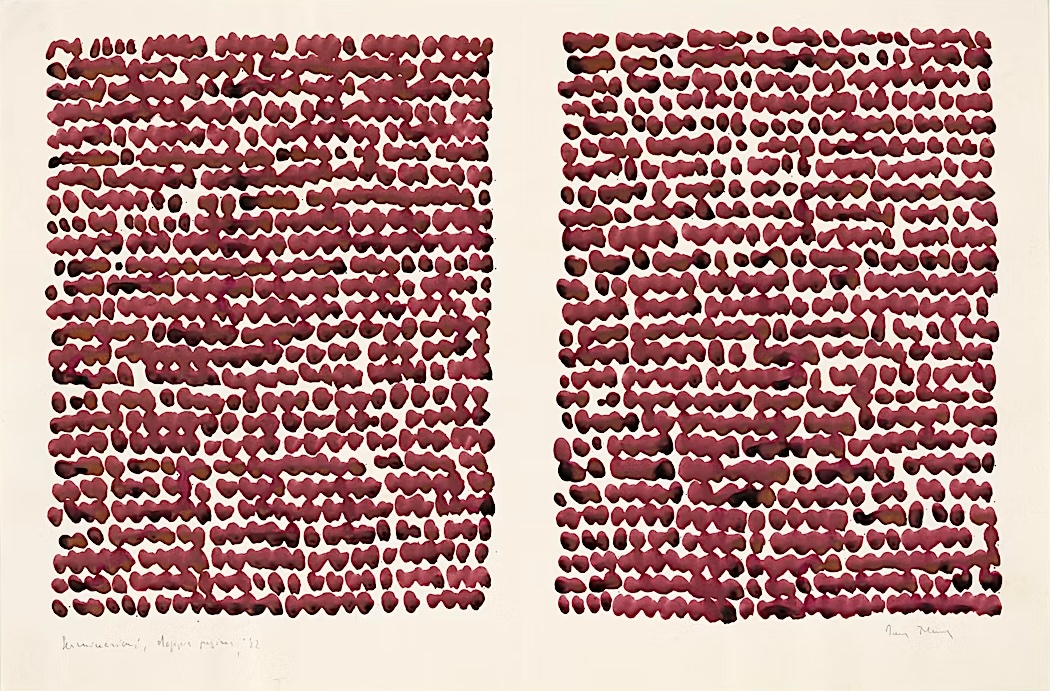
Germinazioni, doppia pagina from 1982 asks for another kind of looking. It sets two justified blocks of marks side by side on cream paper, wide margins around them, in the format of an opened book. The marks are not thinned letters. They are thick, discrete deposits: short loaded touches of maroon and oxblood, rounded, pressed into rows like beads or seeds, each one standing up off the sheet as its own small mass rather than joining the next. They have gathered into the shape of text — justified edges, even lines, the rectangle of a paragraph — without gathering into script. There is a tenderness in this suspension: the marks are not failed letters, but forms still held before the obligation to mean.
The germination is in the marks: sign thickening toward language rather than language coming apart. In Germinazioni, writing has not been emptied of meaning; it has not yet crossed into meaning. Around it, the show often withholds an answer after the forms of reading are in place. Here there is no answer yet to withhold. Blank works both edges of legibility. Sometimes the answer has been withdrawn. Sometimes it has not yet arrived.
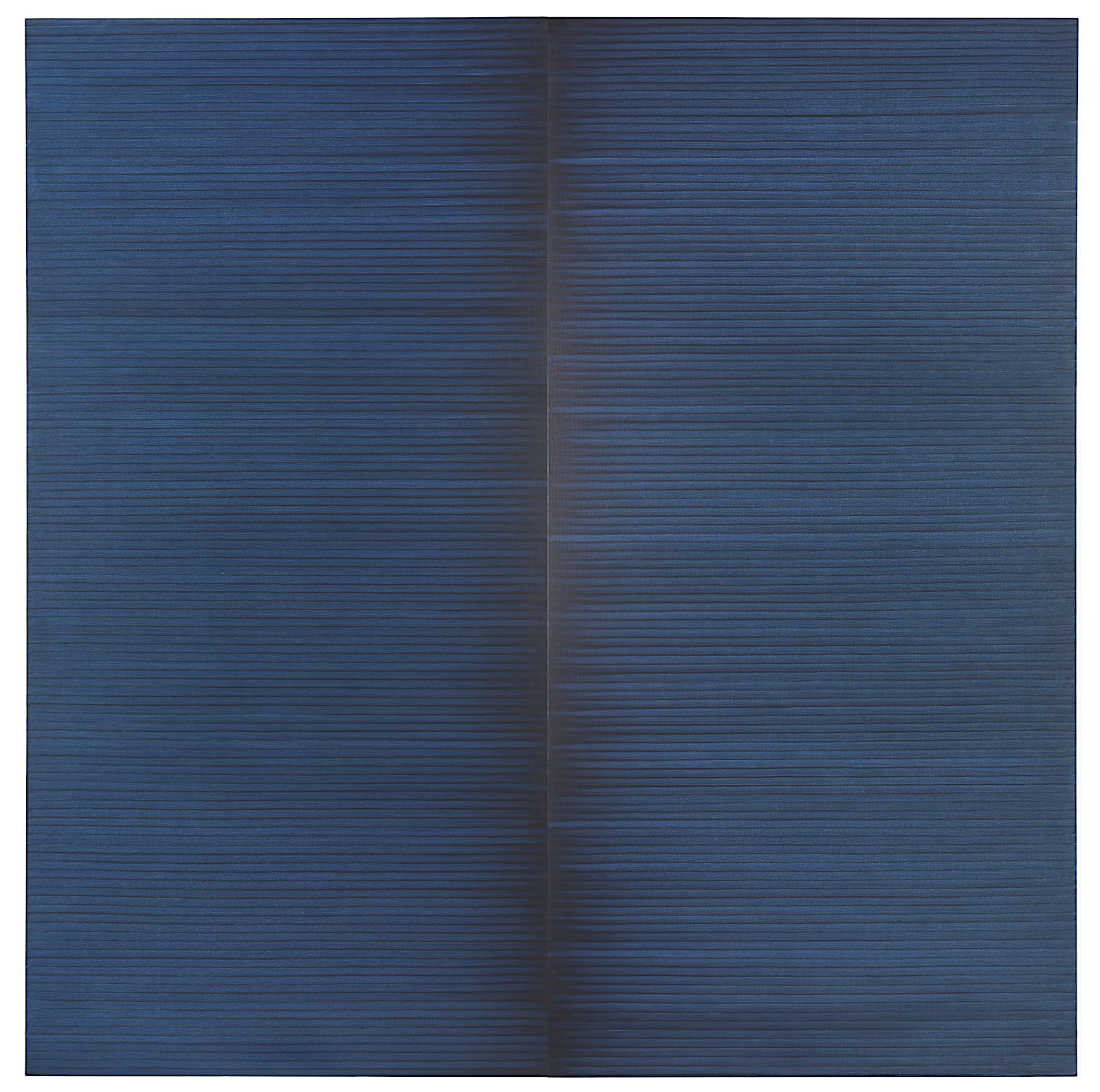
The cobalt diptych turns sequence into density. Two panels meet along a dark central seam that reads at once as a gutter and the fold of an opened book. Across the surface, close horizontal striations run line under line, each moving left to right in the measure of breath, laid down and repeated until the panel is full. It is the exact figure the eye follows in reading: ruled lines, top to bottom, in order. From across the room, the figure holds and the reading of it gives way. The eye cannot travel the lines as it traveled the row; they pack too close and stand too tall, and the panel arrives all at once as a saturated blue field. The spread is entirely there: seam, order, left-to-right. It is too large to read, too ordered to take for a field. It has to be stood in front of instead.
The mirror-polished steel panel makes the turn optical. Blocky printed signs sit on a reflective steel ground: silkscreened, digitally set, the body of writing translated into another register rather than removed. The steel holds the room: the ceiling light, the floor, the doorway, the works on the facing wall, all returned in the same plane as the script. The room enters the writing before reading does. Signs and reflection share one surface; the printed marks lie across the reflected room and the room shows through the gaps between them, neither settling to the front. Reading has to pass through the room that interrupts it.
From a doorway in an adjoining room, the page-row aligns and collapses into a single distant band of marks, framed by the doorframe like a line set inside a margin. The architecture offers the condition at a distance: not a route through the exhibition, but a line of reading briefly made spatial.
The last change risks leaving the page altogether. A tall, narrow blue column hangs vertically at body height, worked inside with the same horizontal striations as the diptych but stood on end, flanked by two small horizontal Horizont works that keep the line of reading in view beside it. For a moment, the premise seems to fail. Page, spread, margin, and row have depended on the horizontal contract of reading, and this work no longer lies in front of the viewer as a page to be crossed. It stands in the room. But the line has not disappeared. The posture has changed. Writing is no longer only followed by the eye. It is faced, as one faces a body or a doorframe. The page has not disappeared. Its conditions have been turned upright.
Every text around Blank risks repairing what the work has withheld. Caption, chronology, review, and explanation all want to give the page back an answer. Being Here asks for a stricter form of attention: not decoding, not silence, but the recognition of a structure that remains present without becoming available.
The caption line gives the whole field to a sentence it will not release. The seed-marks gather into paragraphs before language has arrived. The blue breath-lines keep the order of reading until sequence becomes density. The steel surface lets the room interrupt the script. The doorway turns the wall into a distant line. The column stands the page upright.
The forms stay intact to the end: row, block, spread, line, surface, column, composed exactly as writing is composed. Silence, if it enters at all, enters last, as the result of forms that have done everything required of reading and returned nothing.
The page is fully here.
The page does not answer.
Blank’s marks keep the posture of writing: line, sequence, page, column, breath, repetition. But the signs do not become words. The viewer follows them as writing and meets silence instead. The work holds the act of inscription after legibility has disappeared.
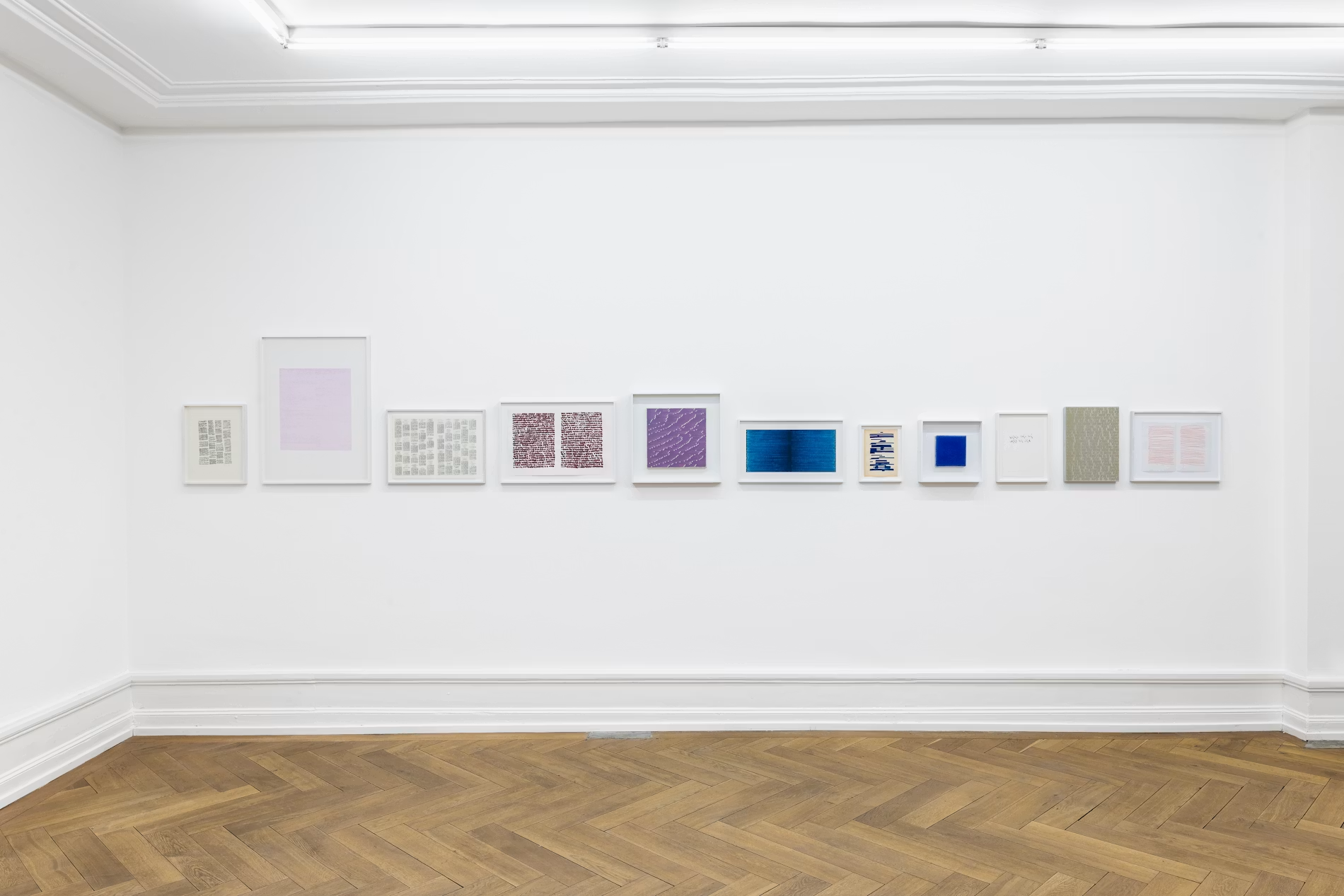


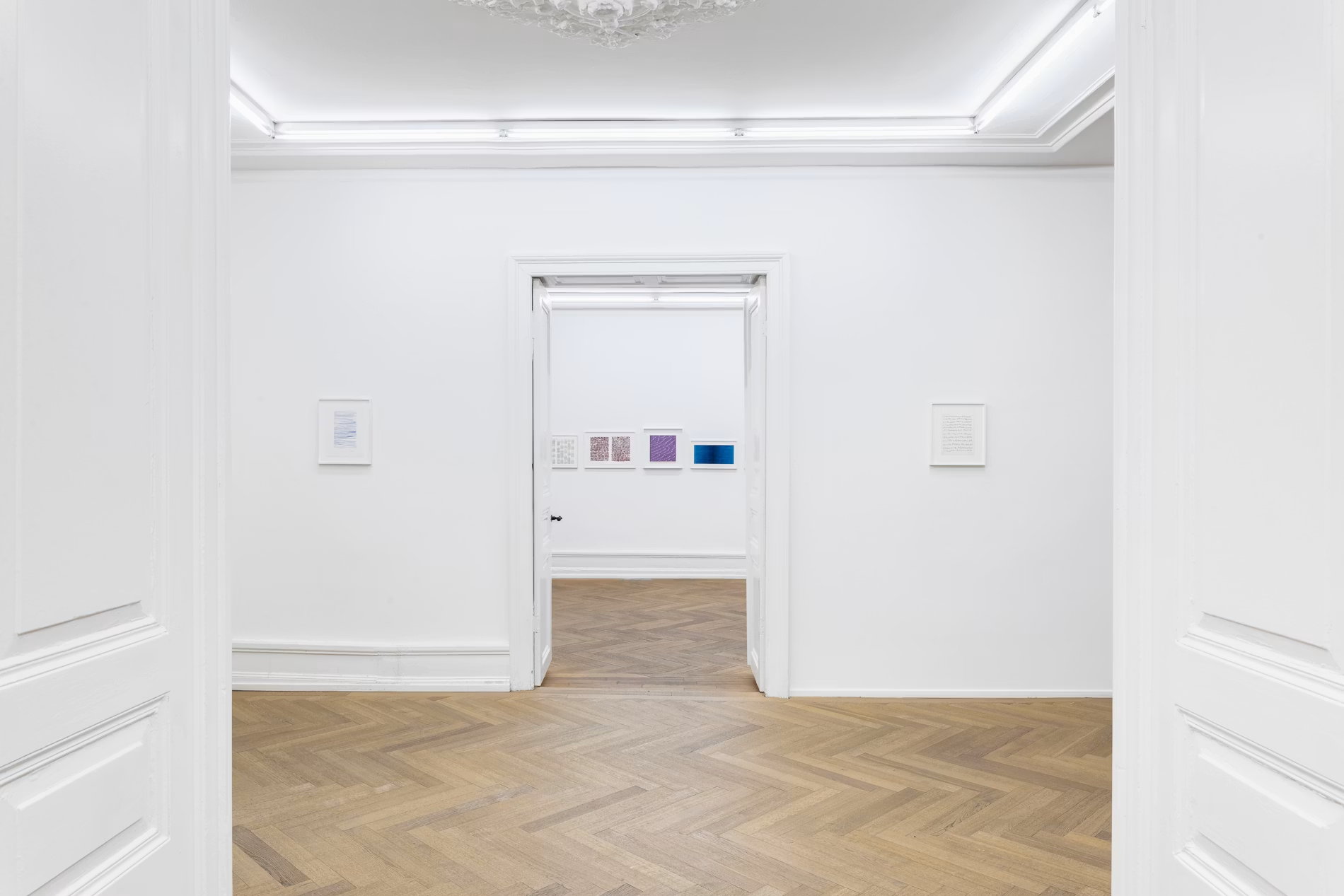
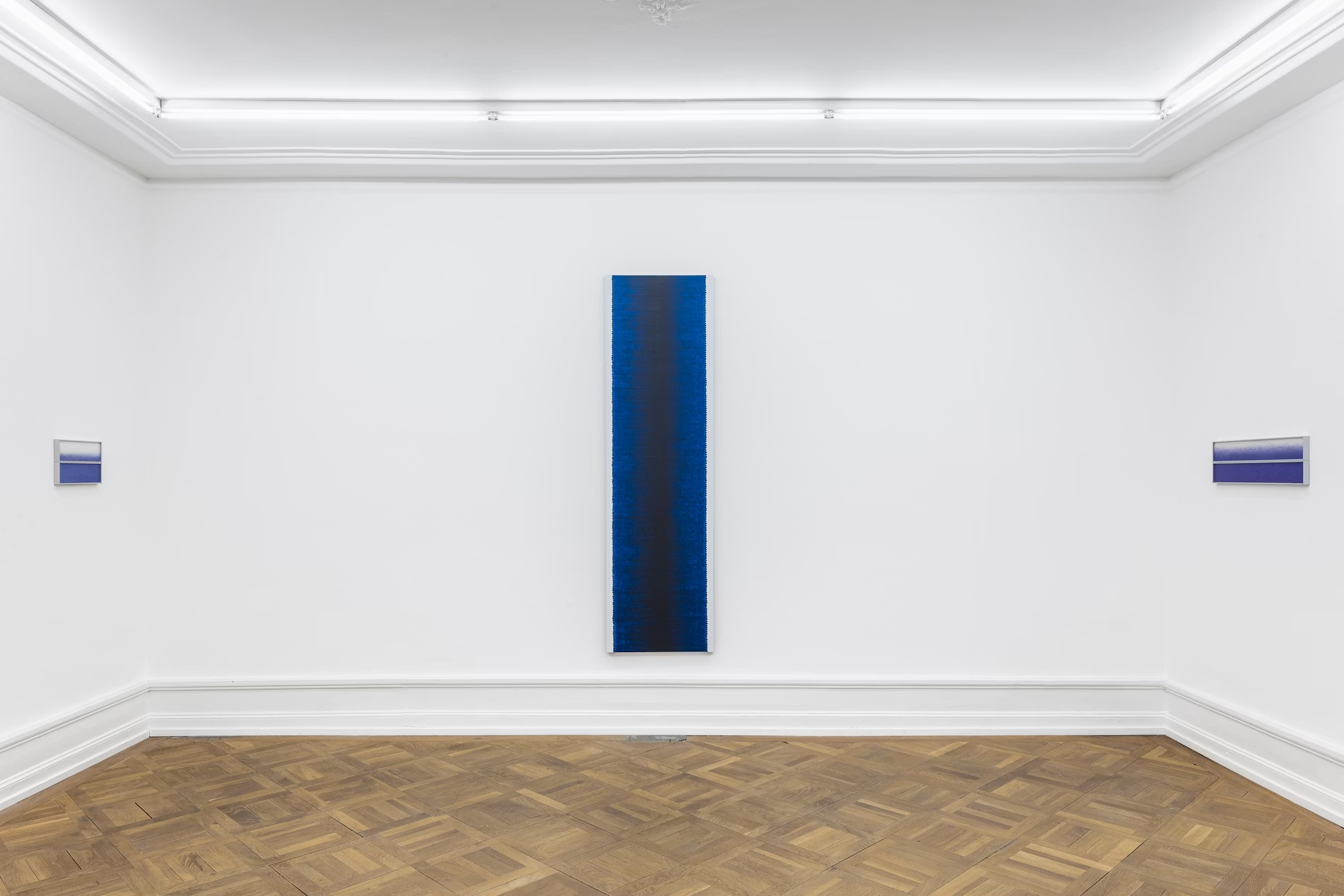
Cover Image: Installation view, Irma Blank, Being Here, Mai 36 Galerie, Zurich, 12 June – 8 August 2026. © Irma Blank Estate. Courtesy the Irma Blank Estate, P420, Bologna and Mai 36 Galerie, Zurich. Photo: Peter Baracchi.
All images © their respective rights holders.
Image rights & attribution →